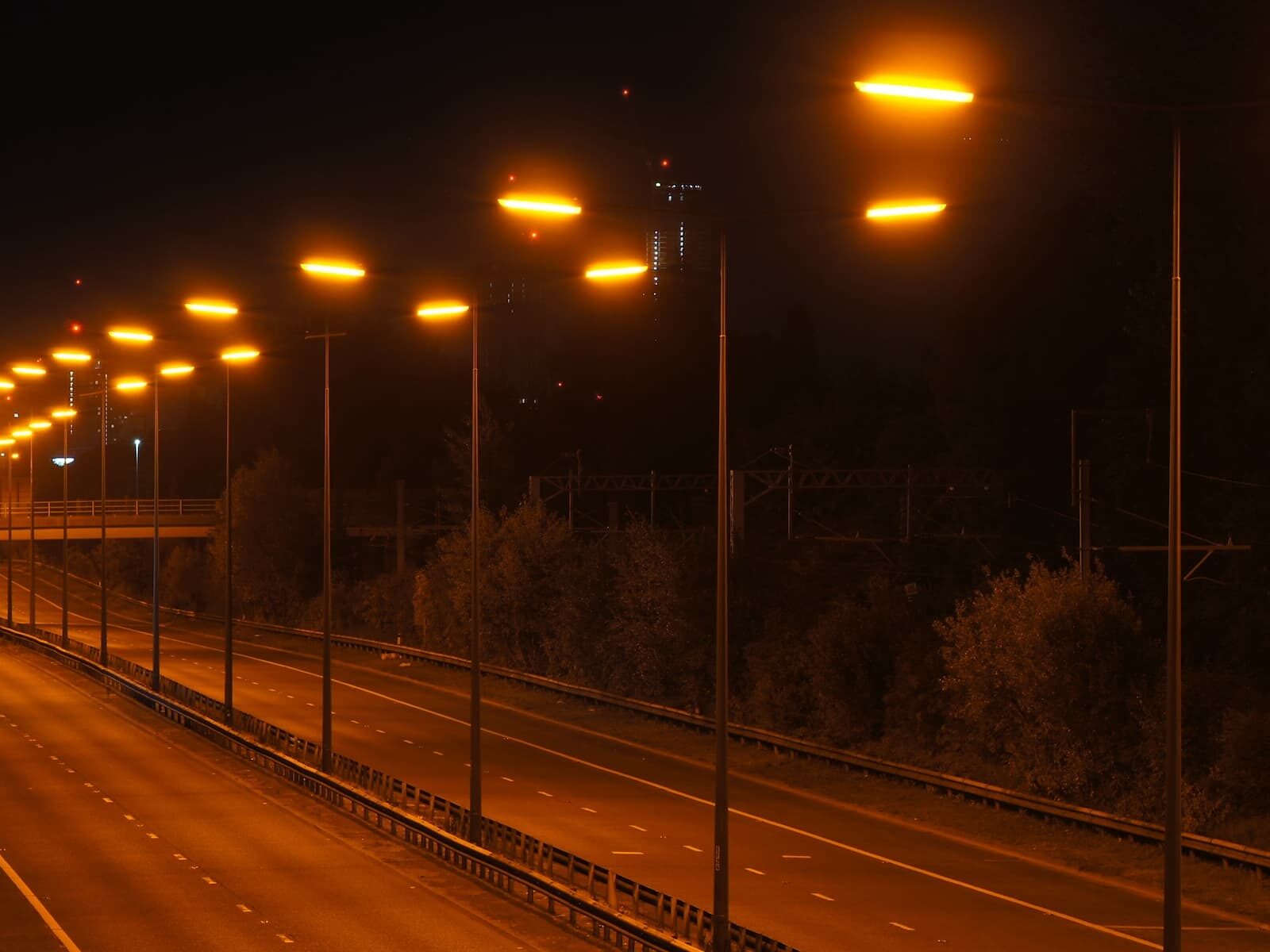
Why Are Street Lights Orange? The Sodium Vapor Science
Street lights glow orange because most of them use high-pressure sodium vapor lamps, which emit nearly all their light at a single 589-nanometer wavelength — not a full white spectrum. That narrow wavelength cuts through fog and rain far better than white light, which is why cities relied on it for decades despite modern LEDs now using 50-70% less energy. This guide covers the sodium science, the fog-visibility physics, the wildlife trade-offs, and why some cities are switching lighting colors again.
This post contains affiliate links. As an Amazon Associate we earn from qualifying purchases.
Quick Answer
Most orange street lights are high-pressure sodium (HPS) lamps, which glow orange because sodium gas emits light at almost one single wavelength instead of a full spectrum. That narrow wavelength scatters less in fog and rain, which is why HPS dominated street lighting from the 1970s through the 2010s — but modern LED streetlights are now more energy-efficient, so most cities have been phasing sodium lights out since roughly 2015, and a growing number are choosing warm amber LEDs over cool white ones for wildlife and sleep-health reasons.
History Of Street Lighting
Street lights have changed a lot over time. Long ago, people used oil lamps for light. Then came gas lights. These were brighter and safer. Later, electric lights took over. They were even brighter and used less energy. Today, most street lights are electric.
Orange lights became common with high-pressure sodium lamps, introduced commercially in the 1960s and widely adopted through the 1970s and 80s. Compared to the mercury-vapor and incandescent lighting they replaced, sodium lamps were a major efficiency upgrade at the time, and their narrow-spectrum orange light cuts through fog better than white light. Most cities have been replacing them with LED since the 2010s, but plenty of sodium lamps are still in service today.
Composition Of Orange Light
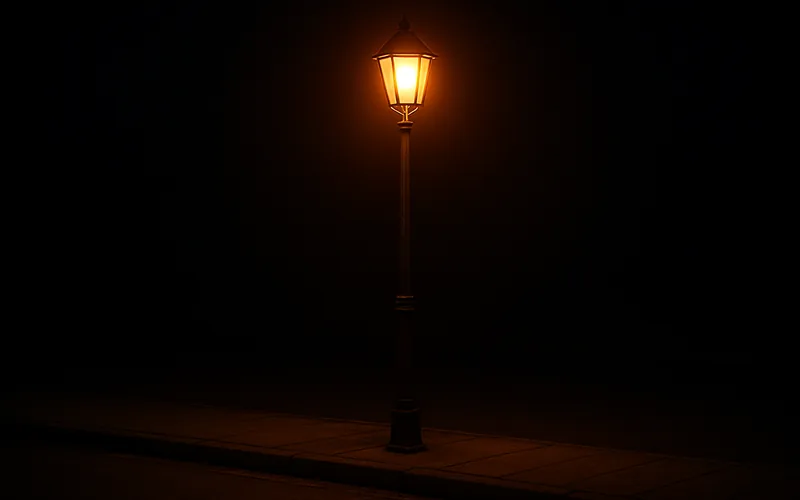
A high-pressure sodium lamp is a gas-discharge light that produces its glow by passing an electric arc through vaporized sodium sealed in a glass tube. Unlike a white LED or incandescent bulb, which emit a broad mix of wavelengths, sodium vapor emits nearly all of its visible light in a narrow yellow-orange band — which is why everything under a sodium light looks like a shade of the same amber-yellow color, with almost no true reds, greens, or blues visible.
The lamp has a glass outer tube surrounding a smaller ceramic arc tube. Inside, a small amount of solid sodium and mercury sits alongside a starting gas. When you turn on the light, electricity heats and ionizes the gas, vaporizing the sodium, which then glows with its characteristic orange light as electrons in the excited sodium atoms fall back to a lower energy state.
📊 High-pressure sodium lamps emit nearly all of their light at a single 589.3 nanometer wavelength — this near-monochromatic output is also why low-pressure sodium lighting has historically been favored near astronomical observatories, since a single narrow wavelength is far easier for telescopes to filter out than the broad spectrum of white LED light. — Source: Flagstaff Dark Skies Coalition
Benefits Of Orange Street Lights
Orange sodium street lights cut through fog and rain better than white light because their narrow-wavelength output scatters less off water droplets in the air. This is the main safety reason cities relied on them for decades — drivers and pedestrians could see silhouettes and road edges more consistently in poor weather, even if fine color detail was harder to make out.
High-pressure sodium lamps were also a major efficiency upgrade when they replaced older mercury-vapor and incandescent street lighting starting in the 1970s, and their long service life — typically 24,000 to 28,000 hours — meant fewer bulb replacements and lower maintenance costs for cities. That efficiency advantage is a big reason sodium lighting became the default for so long.
Why Fog Looks Orange Under a Sodium Streetlight
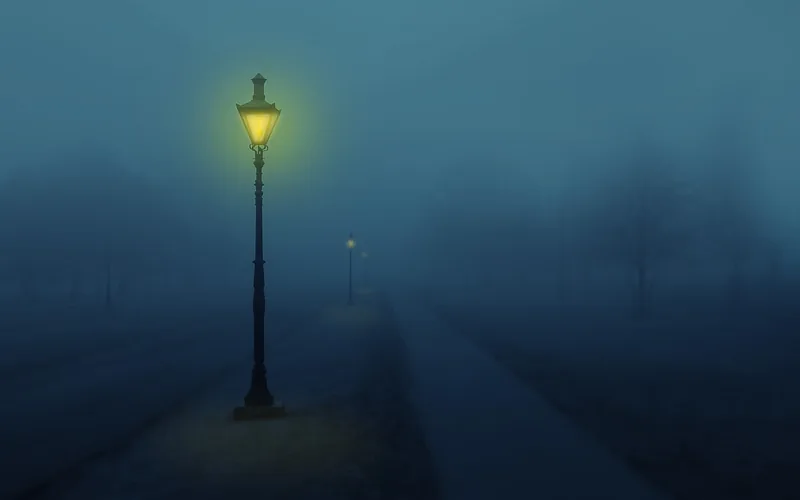
Monochromatic light is light concentrated at essentially one wavelength instead of spread across the visible spectrum. Because a high-pressure sodium lamp emits almost all of its output near 589 nanometers, fog droplets illuminated by it have only that one wavelength to scatter — so the entire glowing halo around the lamp, and any fog or mist nearby, reads as the same yellow-orange color as the light source itself. Under a white LED, by contrast, fog scatters a full mix of wavelengths, which is why LED-lit fog looks closer to a hazy white or blue-white.
This is also part of why sodium lighting became the standard choice for airports, ports, and coastal roads that regularly deal with fog: the light doesn’t just tolerate fog better, the color of the fog itself becomes a visible confirmation of how the light is scattering.
Comparing Light Colors
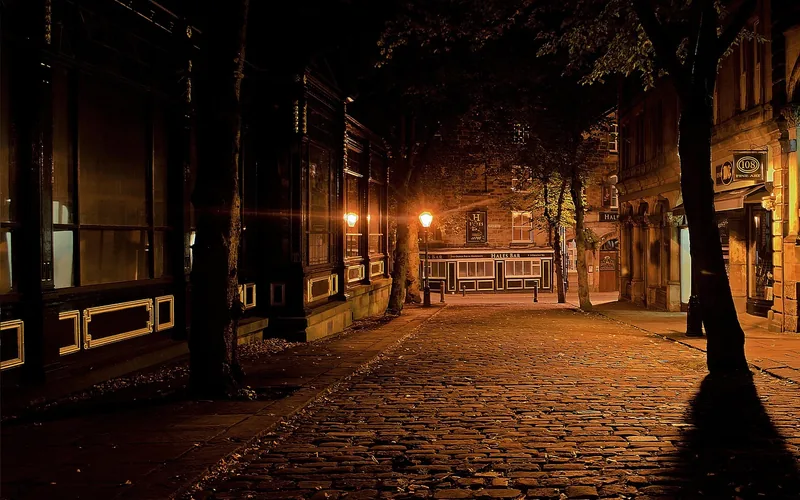
Orange light is warm and soft. It creates a calm and cozy feeling. People feel relaxed under orange lights. White light, on the other hand, is bright and sharp. It helps people see clearer and better. White light is often used in offices and schools. It makes people more alert.
Colors affect how we feel and see. Orange light makes streets look friendly at night. White light can make places seem clean and new. Both colors have their own uses. Choosing the right light depends on the place and purpose.
Orange light is less harsh on the eyes and causes less glare, which is one reason it’s still used in some street lighting. Bright white or blue-rich light can improve fine detail and color recognition, but it also produces more glare and disrupts sleep-regulating melatonin more than warmer light does. Each color has real trade-offs, not a simple better-or-worse answer.
Environmental Impact
Sodium street lights carry a mixed environmental record. Their narrow wavelength produces less blue-light scatter and less sky glow than white LED lighting, which is genuinely better for stargazing and observatories. But like any outdoor lighting, they still contribute to overall light pollution and can disorient nocturnal wildlife.
Light Pollution Concerns
Any outdoor light — orange or white — adds to light pollution when it isn’t shielded or aimed carefully. Sodium’s advantage is spectral: because it emits almost no blue wavelengths, it scatters less in the atmosphere and creates a dimmer sky glow than blue-rich white LED lighting does, which is why some observatory towns like Flagstaff, Arizona still specify sodium or amber lighting near their facilities.
Ecological Effects On Wildlife
Insects are far more strongly attracted to the blue-rich wavelengths in white LED light than to the warm, blue-poor spectrum of sodium lighting. Research comparing the two found white LED streetlights attracted roughly 48% more flying insects than sodium lamps at matched sites, and moth caterpillar numbers dropped more sharply near white LED lighting than near sodium lighting. Birds and other nocturnal animals are similarly more disoriented by bright, blue-rich white light than by warmer, longer-wavelength orange light.
Best Wildlife-Friendly Amber Bulb Pick
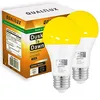
Qualilux Dusk to Dawn Amber Bug Light Bulb (1900K) – $11.99
Want the same insect-friendly, blue-light-poor spectrum this guide describes for sodium streetlights — but on your own porch? This bulb’s amber spectrum mimics the wavelength range shown to attract far fewer flying insects, and its dusk-to-dawn sensor mirrors how municipal streetlights switch on automatically.
- Best for: Porches and patios where bugs swarm white or blue-tinted bulbs
- Why we picked it: Automatic dusk-to-dawn sensor, 1900K amber spectrum matches the low-blue-light research this guide covers
- Main drawback: Amber tint isn’t ideal for tasks needing true color rendering
Compare more amber/bug-light bulb options
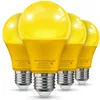 Option 1 L LOHAS Amber Porch Light Bulb, Dusk to Dawn – $21.99
|
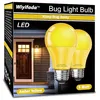 Option 2 Wiyifada LED Bug Light Bulbs Outdoor (2-Pack) – $9.99
|
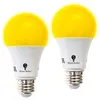 Option 3 Solray Amber Yellow LED Bug Light Bulb, No Blue Light (2-Pack) – $6.99
|
As an Amazon Associate we earn from qualifying purchases.
Technological Advances and Where Street Lighting Is Headed
Most cities have been replacing sodium lamps with LED street lights since the early 2010s, largely because modern LEDs deliver 50-70% energy savings over equivalent-output sodium fixtures and last far longer — often 100,000 hours versus 24,000-28,000 for sodium. Early LED conversions mostly used cool white or blue-rich LEDs, which is where the story gets more complicated.
Since around 2023, a growing number of U.S. cities — including Boulder, Colorado and Cleveland Heights, Ohio — have begun replacing those cool-white LED streetlights again, this time with warmer amber-toned LEDs closer to 2700K. The reasons cited include worse glare for night driving, disrupted sleep-regulating melatonin from blue-rich light, and the same insect and wildlife disruption discussed above. In other words, cities aren’t going back to sodium, but many are deliberately choosing LED products that mimic sodium’s warmer color instead of staying with cool white.
A separate, unrelated LED issue has also made headlines: since around 2022, a number of white LED streetlights across U.S. highways have visibly shifted from white to purple. Investigations attribute this to a manufacturing defect — the phosphor coating that converts the LED’s raw blue-violet light into white light degrades and delaminates over time, letting the underlying blue-violet light show through unconverted. It’s a separate phenomenon from the sodium-to-LED color story, but it’s become one of the most visible current issues in street lighting.
Looking ahead, solar-powered LED fixtures are also spreading in new installations, cutting both energy costs and the need to run new electrical wiring to remote locations.
“The giveaway that a streetlight is sodium rather than LED is simple: stand under it and look at your own hands, or a green street sign. Under true high-pressure sodium, colors barely register at all — everything reads as a shade of amber. Under LED, even a warm-toned one, you can still tell a red car from a blue one.”
Frequently Asked Questions
Why are street lights orange in color?
Most orange street lights use high-pressure sodium lamps, which emit nearly all their light at a single 589-nanometer wavelength instead of a full spectrum. That narrow-band orange light is energy-efficient compared to older mercury-vapor and incandescent lighting, and it scatters less in fog and rain than white light does.
Do orange street lights save energy?
They did compared to what came before them — high-pressure sodium lamps were a major efficiency upgrade over 1960s-era mercury-vapor and incandescent street lighting. But modern LED streetlights are now more efficient still, typically cutting energy use by 50 to 70% compared to sodium, which is the main reason most cities have been replacing sodium lighting with LED since the 2010s.
Are orange street lights better for visibility in fog?
Yes. High-pressure sodium’s narrow-wavelength orange light scatters less off fog and rain droplets than the broad-spectrum white light from LEDs, which is why airports, ports, and fog-prone coastal roads have historically favored sodium lighting for visibility.
What color does fog look like under an orange streetlight?
Fog under a sodium streetlight looks like the same yellow-orange color as the lamp itself, because the fog droplets only have that one narrow wavelength of light to scatter. Under a white LED, by comparison, fog scatters a full mix of wavelengths and looks closer to hazy white or blue-white.
What are the disadvantages of orange street lights?
High-pressure sodium lights render color very poorly — most colors appear as shades of amber, making it hard to identify a car or clothing color at night. They also produce less crisp detail than white LED lighting, and most manufacturers have stopped producing new sodium fixtures, making LED the default choice for new installations.
Why are some street lights turning purple instead of white?
Purple-tinted LED streetlights are the result of a manufacturing defect, not a deliberate design choice. The phosphor coating inside some white LED fixtures — mostly units made between 2017 and 2019 — degrades and delaminates over time, letting the underlying blue-violet LED light show through unconverted. It’s unrelated to the sodium-to-LED color transition discussed above.
Conclusion
Street lights glow orange because high-pressure sodium lamps emit almost all their light at one narrow wavelength — a property that made them efficient in their day and still makes them better at cutting through fog than white light. That same narrow spectrum is also why they’re gentler on nocturnal wildlife and produce less sky glow than blue-rich white LEDs. But modern LED technology is now more efficient than sodium overall, which is why most cities have phased sodium out since the 2010s — and why a growing number are now choosing warm amber LEDs over cool white ones, for the same wildlife and glare reasons sodium light offered all along.
Sponsored / affiliate links. As an Amazon Associate I earn from qualifying purchases. I may earn additional commission from eligible campaigns.