How Do You Remove Glue From Fabric Without Damaging It: Essential Guide
Quick Summary:
Removing glue from fabric is achievable without damage by acting fast and using the right method. Gentle scraping, cold application, or common household solvents like rubbing alcohol or dish soap are effective. Always test a hidden spot first to ensure fabric safety and avoid harsh scrubbing to protect the material.
Welcome, DIY friends! We’ve all been there. A craft project goes wonderfully, or maybe a quick repair is made, and then… there’s that stubborn glue smudge left behind on your favorite shirt or cozy blanket. It can feel like a real bummer, right? You worry about ruining the fabric, leaving a permanent mark, or making the situation worse. But don’t you worry! Just like fixing a wobbly chair leg or patching a small hole, removing glue from fabric is a common home fix that anyone can master. With a few simple steps and common household items, you can often get that fabric looking good as new. Let’s dive into how to tackle this sticky situation with confidence!
Why Glue Gets Stuck and Why It’s Tricky
Glue, by its very nature, is designed to stick. That’s its job! When it gets on fabric, it dries and bonds with the fibers. Different types of glue (like craft glue, fabric glue, super glue, or even sticky residue from labels) have different chemical compositions, which means they can react differently with fabrics. Some glues are water-soluble, while others are oil-based or permanent. The type of fabric also plays a huge role – delicate silks need a much gentler touch than sturdy denim. This variety is why there isn’t a single magic bullet for every glue-on-fabric scenario. But with a little know-how, we can navigate these differences safely and effectively.
Before You Start: Key Principles for Success
Before we grab any tools or cleaning agents, let’s cover some essential ground rules. These principles will help you avoid making things worse and ensure the best possible outcome for your fabric.
- Act Fast: The sooner you address the glue stain, the easier it will be to remove. Fresh glue is much less stubborn than dried, hardened glue.
- Identify the Glue (If Possible): Knowing what kind of glue you’re dealing with can guide your approach. Was it a craft glue stick, liquid craft glue, super glue, or something else?
- Identify the Fabric: Check the care label on your garment. Is it cotton, polyester, silk, wool, or a blend? Delicate fabrics require more caution.
- Test in an Inconspicuous Area: This is crucial! Before applying any cleaning solution to the visible stain, test it on an inside seam, hem, or the garment’s lining. This ensures the solution won’t cause discoloration or damage to the fabric.
- Be Gentle: Avoid harsh scrubbing, especially on delicate fabrics. Vigorous rubbing can spread the glue, damage the fibers, or cause pilling.
- Patience is Key: Some glue removal processes take time. Don’t rush it; repeated gentle applications are often more effective than one aggressive attempt.

Gathering Your Supplies: What You Might Need
You probably have most of these items around your home already. Having them ready will make the process smooth.
- Clean cloths or paper towels
- A dull knife, spoon, or plastic scraper
- Cotton balls or swabs
- Ice cubes or a small freezer bag
- Mild dish soap
- Rubbing alcohol (isopropyl alcohol)
- White vinegar
- Nail polish remover (acetone-based, use with extreme caution)
- Commercial fabric glue remover (optional, but can be very effective)
- A toothbrush (soft bristles)
Step-by-Step Guide: Removing Glue from Fabric
Let’s get down to business! Here’s how to tackle that glue, starting with the gentlest methods and moving to stronger options if needed. Remember to always test first!
Method 1: For Fresh, Wet Glue
If you catch the glue while it’s still wet, you’re in luck! This is the easiest scenario.
- Blot Excess: Gently blot up as much of the wet glue as possible with a clean cloth or paper towel. Don’t rub, as this can push the glue deeper into the fabric.
- Rinse (if water-safe): If the fabric is washable and the glue is water-based, try rinsing the affected area under cool running water. Hold the fabric so the water runs from the back of the stain to push the glue out.
- Gentle Soap: If rinsing alone doesn’t remove it, apply a tiny amount of mild dish soap directly to the spot. Gently work it in with your fingers.
- Rinse Again: Rinse thoroughly with cool water.
- Launder: If the stain is gone, wash the garment as usual. If any trace remains, proceed to other methods before drying, as heat can set stains.
Method 2: For Dried Glue (Scraping & Cold)
For dried glue, we need to break its bond with the fabric. Cold is often your best friend here.
- Freeze the Glue: Place the fabric in a plastic bag and put it in the freezer for at least 30 minutes. The cold will make the glue brittle and easier to break apart. Alternatively, hold an ice cube directly against the glue until it hardens.
- Scrape Gently: Once the glue is frozen and brittle, use a dull knife, the edge of a spoon, or a plastic scraper to gently chip or scrape away as much of the dried glue as possible. Work from the edges of the glue spot inward. Be careful not to snag or tear the fabric.
- Brush Away Debris: Use a soft brush or even your fingernail to remove any small flakes of glue.
- Assess and Repeat: See how much you removed. If a residue remains, you might need to move on to a solvent-based method.
Method 3: Using Household Solvents
When scraping isn’t enough, certain household items can help dissolve the glue. Always, always test these on an hidden spot first!
Option A: Rubbing Alcohol (Isopropyl Alcohol)
Rubbing alcohol is a fantastic solvent for many types of glue and is generally safe for most fabrics, but testing is still wise.
- Prepare: Place a clean cloth or paper towel under the stained fabric to catch any drips.
- Apply Alcohol: Dampen a cotton ball or clean cloth with rubbing alcohol.
- Dab the Glue: Gently dab the glued area with the alcohol-soaked cotton ball. Work from the outside of the stain inward. You should see the glue start to soften and lift.
- Scrape and Blot: As the glue softens, gently scrape away loosened bits with your dull scraper or spoon. Blot the area with a clean, dry cloth to absorb the dissolved glue and alcohol.
- Repeat: Continue applying alcohol, dabbing, scraping, and blotting until all the glue is removed.
- Rinse and Launder: Once the glue is gone, rinse the area with cool water and then wash the garment as usual.
Option B: White Vinegar
Vinegar is a mild acid that can help break down certain adhesives. It’s a good option if you prefer to avoid harsher chemicals.
- Prepare: Place a clean cloth or paper towel under the stained fabric.
- Apply Vinegar: Dampen a cotton ball or cloth with white vinegar.
- Soak the Glue: Gently dab the glued area with the vinegar. Let it sit for a few minutes to allow the vinegar to work.
- Scrape and Blot: Use your scraper to gently lift the softened glue. Blot the area with a clean, dry cloth.
- Repeat: Continue this process until the glue is removed.
- Rinse and Launder: Rinse the area with cool water and then wash as normal.
Option C: Mild Dish Soap (for water-based glues)
For water-based craft glues, a good quality dish soap can sometimes do the trick after the glue has dried.
- Prepare: Place a clean cloth or paper towel under the stained fabric.
- Apply Soap: Mix a small amount of mild dish soap with a little warm water to create suds.
- Dab and Work: Apply the suds to the glued area with a cloth or cotton ball. Gently work it into the glue with your fingers or a soft-bristled toothbrush.
- Let it Sit: Let the soapy solution sit for about 10-15 minutes.
- Scrape and Blot: Gently scrape away the softened glue and blot with a clean, damp cloth.
- Rinse and Launder: Rinse thoroughly and wash as usual.
Method 4: For Tougher Glues (Super Glue, Permanent Fabric Glue)
These glues are designed to be strong, so removing them requires more care and potentially stronger solutions. Always test these methods on an inconspicuous area first!
Option D: Acetone-Based Nail Polish Remover
Acetone is a powerful solvent. It can dissolve super glue and some permanent adhesives, but it can also damage or discolor certain fabrics, especially synthetics like acetate and rayon. Use with extreme caution.
- Ventilate: Ensure you are in a well-ventilated area.
- Protect Surfaces: Place thick layers of paper towels or a clean cloth under the fabric to absorb excess acetone.
- Test First: Apply a tiny amount of acetone to an inside seam or hem. Wait a few minutes and check for any damage or color loss. If it looks good, proceed.
- Apply Acetone: Dip a cotton swab or the corner of a cloth into the acetone-based nail polish remover.
- Dab Carefully: Gently dab the glued area. Avoid soaking the fabric. The acetone should start to break down the glue.
- Scrape and Blot: As the glue softens, carefully scrape it away with a dull scraper. Blot with a clean, dry cloth to lift the dissolved glue.
- Repeat Sparingly: Work in small sections, reapplying acetone and scraping/blotting as needed. Do not over-saturate.
- Rinse Immediately: Once the glue is removed, rinse the area thoroughly with cool water.
- Wash: Wash the garment immediately according to its care label. You may need to wash it a couple of times to ensure all traces of acetone are gone.
Option E: Commercial Fabric Glue Remover
There are products specifically designed to remove fabric glue. These can be very effective and often contain ingredients that are safer for fabrics than pure acetone.
- Read Instructions: Always follow the manufacturer’s instructions precisely.
- Test: Even with commercial products, testing in an inconspicuous area is recommended.
- Apply: Apply the remover as directed, usually by dabbing it onto the glue.
- Wait: Allow the product to work for the recommended time.
- Scrape and Blot: Gently scrape away softened glue and blot with a clean cloth.
- Rinse and Launder: Rinse the treated area thoroughly and wash the garment.
You can often find these specialized removers at craft stores or online. For instance, products like Goo Gone Fabric & Carpet Cleaner or specific fabric adhesive removers are designed for this purpose. Always check product reviews and fabric compatibility.
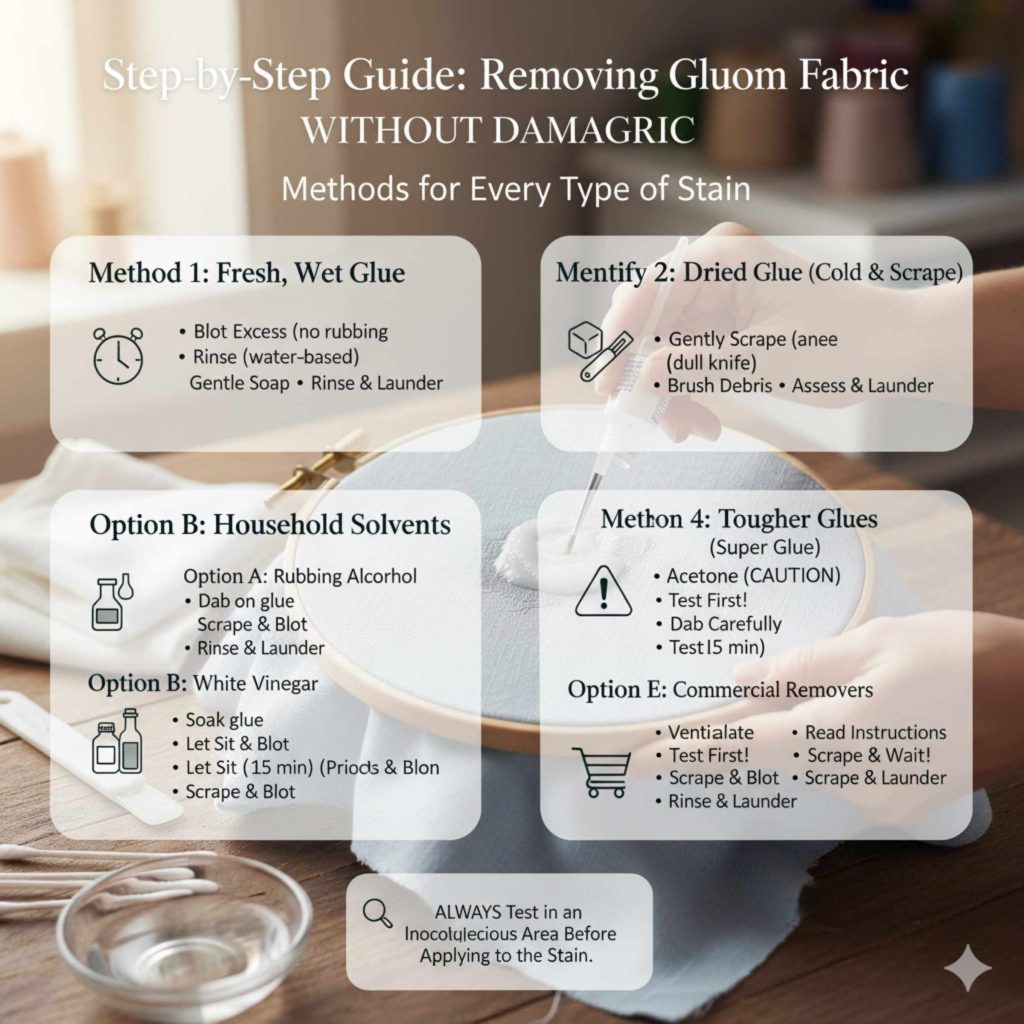
Table: Choosing the Right Method for Different Glues
Here’s a quick guide to help you select the best approach based on the type of glue. Remember, fabric type and freshness of the glue are also important factors!
| Type of Glue | Best Initial Approach | When to Move To | Cautionary Notes |
|---|---|---|---|
| White Craft Glue (e.g., Elmer’s) | Scrape (if dry), Rinse/Blot (if wet) | Dish Soap, Rubbing Alcohol | Water-based glues are generally easier to remove. |
| Fabric Glue (water-based) | Scrape (if dry), Rinse/Blot (if wet) | Rubbing Alcohol, Commercial Fabric Glue Remover | Can be more stubborn than craft glue. |
| Super Glue (Cyanoacrylate) | Freeze & Scrape (can help), Rubbing Alcohol | Acetone-based Nail Polish Remover (with extreme caution) | Acetone can damage synthetics. Act quickly if possible. |
| Hot Glue | Freeze & Scrape | Rubbing Alcohol (may help soften residue) | Can melt into fibers if not cooled properly. |
| Adhesive Residue (from tape, labels) | Rubbing Alcohol, Dish Soap | Commercial Adhesive Remover (e.g., Goo Gone) | Test removers on fabric first. |
When to Call a Professional
While most glue stains can be handled at home, there are a few situations where it’s best to seek professional help:
- Delicate Fabrics: If the item is made of silk, fine wool, velvet, or other very delicate materials, the risk of damage from DIY methods is higher.
- Valuable or Sentimental Items: For cherished garments or expensive pieces, a professional cleaner has specialized solvents and techniques.
- Stubborn, Set-In Stains: If you’ve tried multiple methods without success, a professional cleaner might have more potent solutions.
- Uncertainty: If you’re unsure about the fabric type or the best approach, it’s safer to consult an expert.
Frequently Asked Questions (FAQ)
Q1: Will washing the fabric remove the glue?
Washing can help with fresh, water-based glues, especially if you pre-treat the spot. However, for dried or strong glues, washing alone is often not enough and heat from a dryer can set the stain, making it harder to remove.
Q2: Can I use hairspray to remove glue?
Some hairsprays contain alcohol, which can act as a solvent. While it might work on very small, fresh glue spots, it’s not the most reliable or efficient method and can sometimes leave a sticky residue itself. Rubbing alcohol is a more direct and effective choice.
Q3: What if the glue is colored? Will that stain the fabric?
Yes, colored glues can leave a stain. If the glue itself is colored, you’ll need to remove the glue substance first. Once the glue is gone, you might have a color stain left behind. You can then treat that with a fabric stain remover or by washing the garment.
Q4: Is it safe to use acetone on all fabrics?
No, absolutely not. Acetone can damage or dissolve synthetic fabrics like acetate, rayon, and modacrylic. It can also affect dyes. Always test acetone on an inconspicuous area of the fabric first to ensure it’s safe.
Q5: How do I know if I’ve removed all the glue?
Once you’ve finished your chosen removal method, let the area air dry completely. Feel the fabric; it should feel normal, not stiff or gummy. Inspect it closely under good light for any remaining residue or a change in texture or color.
Q6: Can I iron over a glue spot?
Never iron over a glue spot, especially if it’s still wet or hasn’t been fully removed. Heat from the iron can melt the glue, causing it to spread and bond even more strongly with the fabric fibers, potentially creating a permanent mess.
Conclusion
There you have it, fellow DIYers! Tackling glue on fabric doesn’t have to be a dreaded chore. By understanding the basics of glue and fabric interaction, acting promptly, and choosing the right method for the job—whether it’s a gentle scrape, a touch of cold, or a common household solvent—you can successfully remove most glue marks without causing damage. Remember to always test your chosen method in a hidden spot first, and be patient. With these techniques, you can confidently restore your fabrics and keep your projects looking their best. Happy fixing!