How to Change a Toilet Paper Roll (All 3 Holder Types)
Changing a toilet paper roll takes under 30 seconds: lift or slide the empty core off the holder, then load the new roll to match your holder type. Spring-loaded spindles pop back out unless you squeeze both ends evenly with two fingers — that’s the one step most people get wrong. This guide covers all three holder types, the over-vs-under debate, roll-size compatibility (1.5-inch standard vs 3-inch jumbo cores), and how to fix a spindle that won’t stay compressed.
Mastering the Art: How To Change A Toilet Paper Roll Like a Pro
Whether you have a simple spring-loaded bar, a modern fixed post, or a decorative cover, the core concept is the same: remove the old, install the new. This guide breaks it down by holder type — see our full bathroom fixtures hub for related repairs and upgrades.
Tools You Won’t Need (But Should Know About)
The beauty of this job is that it truly requires no tools. You won’t need a screwdriver, pliers, or even a utility knife. Your hands are the perfect tools for this job.
- No Tools Required: This is purely a manual task.
- The Essential Item: One full roll of toilet paper.
Step 1: Assessing Your Current Toilet Paper Holder Type
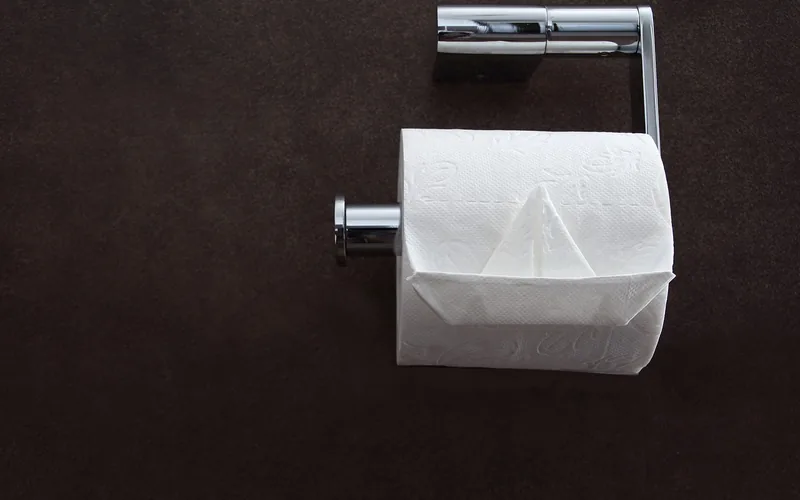
Before you can swap the roll, you need to know what kind of holder you are dealing with. There are three main types you will commonly find in homes. Identifying yours helps you approach the swap confidently.
Type A: The Spring-Loaded Spindle Holder (The Most Common)
This is the classic holder found in most homes. It features a rod that goes through the middle of the roll, and this rod has a spring mechanism on one end. This spring allows the rod to compress so you can fit it between the two brackets attached to the wall.
Type B: The Fixed Post or Hook Holder
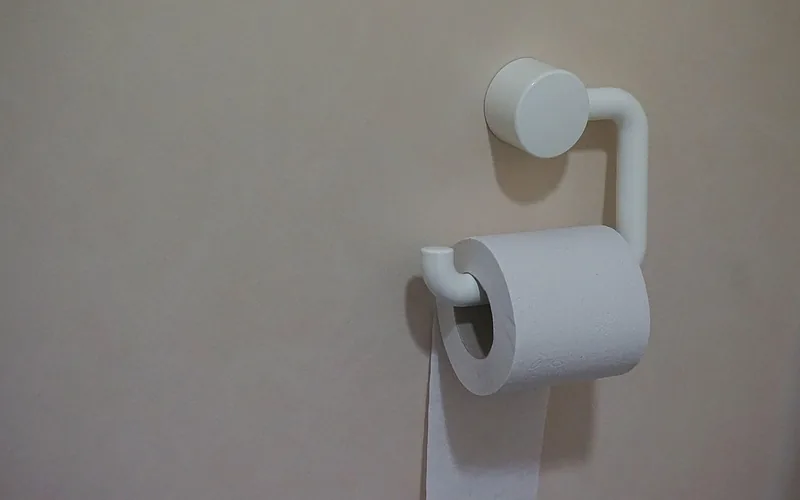
These holders don’t use a removable spindle. Instead, the toilet paper roll sits directly on a fixed peg, hook, or rod extending from the wall or vanity. Sometimes, there might be a small knob or cover that slides off to allow the roll to be added.
Type C: The Covered or Recessed Holder
Often seen in slightly older or more custom bathrooms — and in the same family as the recessed dispensers used in public restroom toilet paper dispensers — this holder is enclosed within a metal or ceramic box built into the wall. You usually have to pull the spindle or the roll itself out from the front opening.
Best Replacement Spindle Pick
Universal Spring-Loaded Replacement Spindle, Chrome – $6.99
If your Type A holder’s spring won’t stay compressed (see the Troubleshooting section below), this drop-in replacement fixes it without replacing the whole wall bracket.
- Best for: A worn-out spring on an existing Type A spindle holder
- Why we picked it: Tool-free install, fits most standard spring-loaded brackets
- Main drawback: Plastic construction, not as durable as a metal factory-original rod
Compare more toilet paper holder options
 Option 1 Moen Brantford Toilet Paper Holder – $16.55
|
 Option 2 Delta Foundations Holder – $13.47
|
 Option 3 2-Pack Replacement Rods – $6.49
|
As an Amazon Associate we earn from qualifying purchases.
Step 2: Removing the Empty Roll
Once you know your holder type, removing the old cardboard tube is the next easy step. Safety first: make sure you are steady and not reaching awkwardly over a toilet bowl.
For Spring-Loaded Spindles (Type A):
- Grip the Spindle: Hold the empty cardboard tube near one end.
- Compress the Spindle: Using your thumb and forefinger, gently squeeze the end cap or the tip of the spindle inward toward the center of the roll. You are manually compressing the spring.
- Lift and Release: While holding it compressed, lift the spindle end up and out of its bracket on one side. Once one side is free, simply pull the entire spindle out.
- Dispose: Place the empty cardboard tube in your recycling bin. Most curbside programs accept toilet paper cores as mixed paper — check your local guidelines to confirm.
For Fixed Post or Hook Holders (Type B):
- Slide Off: Simply grab the cardboard tube and slide it straight off the fixed post or hook.
- If There’s a Cover: If there is a decorative cover blocking the end, gently lift or slide this cover off first. Then, slide the roll away from the wall bracket.
For Covered or Recessed Holders (Type C):
- Access the Interior: Look for an opening at the front.
- Pull Out: Often, the old spindle assembly will slide or pivot out of the housing opening. If the spindle stays inside the housing, you might just need to pull the roll far enough forward to get the cardboard tube off.
Step 3: Preparing the New Roll
Choosing the correct orientation is key to comfort and ease of use.
The Great Debate: Over vs. Under
This is a matter of personal preference, but the way the paper hangs affects how easy it is to grab the leading edge.
Here is a quick comparison based on common usage patterns:
| Orientation | Pros (Why people like it) | Cons (Potential issues) |
|---|---|---|
| Over (Paper hangs on the outside, away from the wall) | Easier to grab the paper end; looks tidier; generally preferred by most people. | Easier for pets (like curious cats) to unroll accidentally. |
| Under (Paper hangs close to the wall) | Harder for pets or small children to unravel; looks very sleek. | Can be harder to find the edge, especially in low light. |
“After swapping enough holders to know the difference, I recommend the ‘over’ orientation — it’s the one that actually saves you from fumbling for the edge with wet or full hands.”
What Roll Size Fits My Holder? (Core Diameter Guide)
Most home holders are sized for a standard core, roughly 1.5 to 1.75 inches in diameter. If a bulk or commercial-style roll won’t slide onto your spindle, that’s usually why: jumbo commercial rolls use an industry-standard 3-inch (76mm) core built for jumbo-roll dispensers, not home holders.
Mega rolls (more sheets, same core size) fit standard home holders fine. True jumbo or commercial rolls need a different holder entirely — check the roll’s packaging for “core diameter” or “fits standard holders” before buying in bulk.
Step 4: Installing the New Roll
Placing the new roll correctly ensures smooth operation right away.
Installing on a Spring-Loaded Spindle (Type A):
- Compress Again: Squeeze the spindle ends together again, just like you did when removing the old one.
- Insert One Side: Insert the compressed end of the spindle firmly into one of the wall brackets until it clicks or rests securely.
- Release and Center: Slowly release the pressure on the other end. The spring will expand, locking the spindle securely into the second bracket.
- Test It: Give the roll a gentle spin to make sure it moves freely without catching on the wall or the holder mechanism.
Installing on a Fixed Post or Hook Holder (Type B):
- Orient the Paper: Make sure the leading edge of the paper is hanging in your preferred direction (over or under).
- Slide On: Slide the new roll onto the post until it rests snugly against the wall bracket or stopper.
- Replace Cover (If Applicable): If you removed a small cover or knob, slide it back onto the post end to keep the roll from sliding off sideways.
Installing on a Covered or Recessed Holder (Type C):
- Insert Spindle: If the spindle mechanism slides out, feed the new roll onto it first.
- Reinsert: Slide the entire loaded spindle back into the housing until it locks into place. You might need to jiggle it slightly to align it with the internal stops.
Troubleshooting Common Holder Issues
Here are solutions for the most common holder frustrations.
Problem 1: The Spindle Won’t Stay Compressed
If you squeeze the spring-loaded spindle, but it pops right back out before you can get it into the second bracket, the spring might be old, weak, or you might not be squeezing hard enough.
- The Fix: Try squeezing the spindle as close to the center tube as possible, using both hands if necessary. If the spring is truly worn out, you may need a replacement spring spindle, which are very inexpensive and easily found at hardware stores (or see our pick above).
Problem 2: The Roll Spins Too Freely (or Not at All)
A roll that spins too fast can unravel itself quickly. A roll that is too tight will tear when pulled.
- Too Fast: This happens when the spindle tension is low. Try replacing the spindle with a new one that has stronger spring tension.
- Too Tight: If you are using a very wide, commercial-sized roll on a standard home spindle, it might bind (see the core diameter guide above). You may need a holder designed for larger rolls, or slightly loosen the tension on the spindle if possible.
Problem 3: The Holder Mechanism is Stuck or Loose on the Wall
If the entire fixture wiggles when you pull the paper, it’s not the roll’s fault — the holder itself is loose.
- The Fix: This requires a minor wall repair. For metal holders attached by screws, tighten the screws. If the screws are stripped, you might need to fill the hole with wood filler (if attaching to wood studs) or use a proper wall anchor rated for the holder’s weight if attaching to drywall.
Why Holder Choice Matters for Longevity and Style
While function is key, the type of holder you choose impacts the look and feel of your bathroom space. Match function with form for the best long-term result.
Durability Comparison of Holder Styles
Understanding how long these systems last can save you headaches down the road:
| Holder Style | Typical Material | Expected Lifespan (With Normal Use) | Maintenance Level |
|---|---|---|---|
| Spring-Loaded Spindle | Metal (often chrome plated) | 5–10 years (spring may weaken sooner) | Medium (Requires spring replacement) |
| Fixed Post/Hook | Solid Metal, Ceramic | 15+ years | Low (Only needs cleaning) |
| Covered/Recessed | Die-cast Metal or Plastic Housing | 10–20 years | Medium (Housing can crack or jam) |
Tips for Perfect Toilet Paper Loading Every Time
A few quick pointers to install the roll perfectly and maximize comfort for everyone using the bathroom:
- Always Check the Tension: Before you walk away, spin the roll quickly. It should spin a few times easily and then slow down smoothly. If it stops immediately, it’s too tight.
- Keep Spares Handy: Mount a small, attractive holder nearby that holds one or two extra rolls. This prevents you from ever running out unexpectedly.
- The Two-Finger Rule: When installing a spring spindle, use two fingers on one end and your thumb on the other. This gives you better leverage to compress the spring evenly.
- Clean While You Change: Since you are already handling the holder, take a quick moment to wipe down the exposed spindle or post with a damp cloth. A clean holder lasts longer.
📊 Frequently-touched bathroom fixtures rank among the more contaminated household surfaces tracked in home hygiene testing — a quick wipe of the holder while you change the roll is a genuinely useful habit, not just a nice-to-have. Source: NSF International Household Germ Study
Frequently Asked Questions (FAQ) for Beginner Homeowners
Why does my toilet paper roll keep falling off the holder?
This usually means the holder is not secured correctly. If you have a spring-loaded spindle, it might not be compressed enough, or the spring is too weak. For fixed posts, check if there is a stopper or cover missing from the end that should keep the roll from sliding off sideways.
Is there a “right” way to put the roll on — over or under?
There isn’t a building code, but most user-preference surveys favor the “over” orientation (paper hanging away from the wall) as easier to use and find. Install it whichever way makes you happiest.
My spring-loaded spindle broke. Can I fix it?
Yes. You don’t need to replace the entire wall bracket. You can usually buy just the replacement spindle (the rod part) for a few dollars at any hardware store. Make sure the new spindle’s total length matches the distance between your wall brackets.
What if the new roll is too wide for my holder?
Some decorative or high-end holders are sized only for a standard 1.5 to 1.75-inch core. If your roll uses a 3-inch jumbo core and doesn’t fit, you have two options: unroll a bit of paper until it fits snugly, or install a universal or open-arm holder that accommodates any roll size.
How often should I clean the toilet paper holder?
At minimum, wipe down the visible parts of the holder every time you change the roll — this takes just five seconds. If you have a spring mechanism, occasionally remove the spindle and give it a good scrub to prevent buildup that could slow the spring action.
Can I put the empty cardboard roll in my regular trash?
Cardboard is generally recyclable. If your local recycling service accepts mixed paper and cardboard, toss the empty tube into that bin instead of the trash.
Conclusion: Confidence in the Little Things
Changing a toilet paper roll is one of the quickest home tasks to master once you know your holder type. Assess whether you have a spring-loaded spindle, a fixed post, or a recessed housing, then load the roll securely — ideally in the “over” position for easy grabbing. If the holder itself is loose or the spring won’t stay compressed, the fixes above (and the replacement parts linked in this guide) solve both in a few minutes without a full holder replacement. For related bathroom fixes, see our guide to changing a toilet water supply valve.
Sponsored / affiliate links. As an Amazon Associate I earn from qualifying purchases. I may earn additional commission from eligible campaigns.