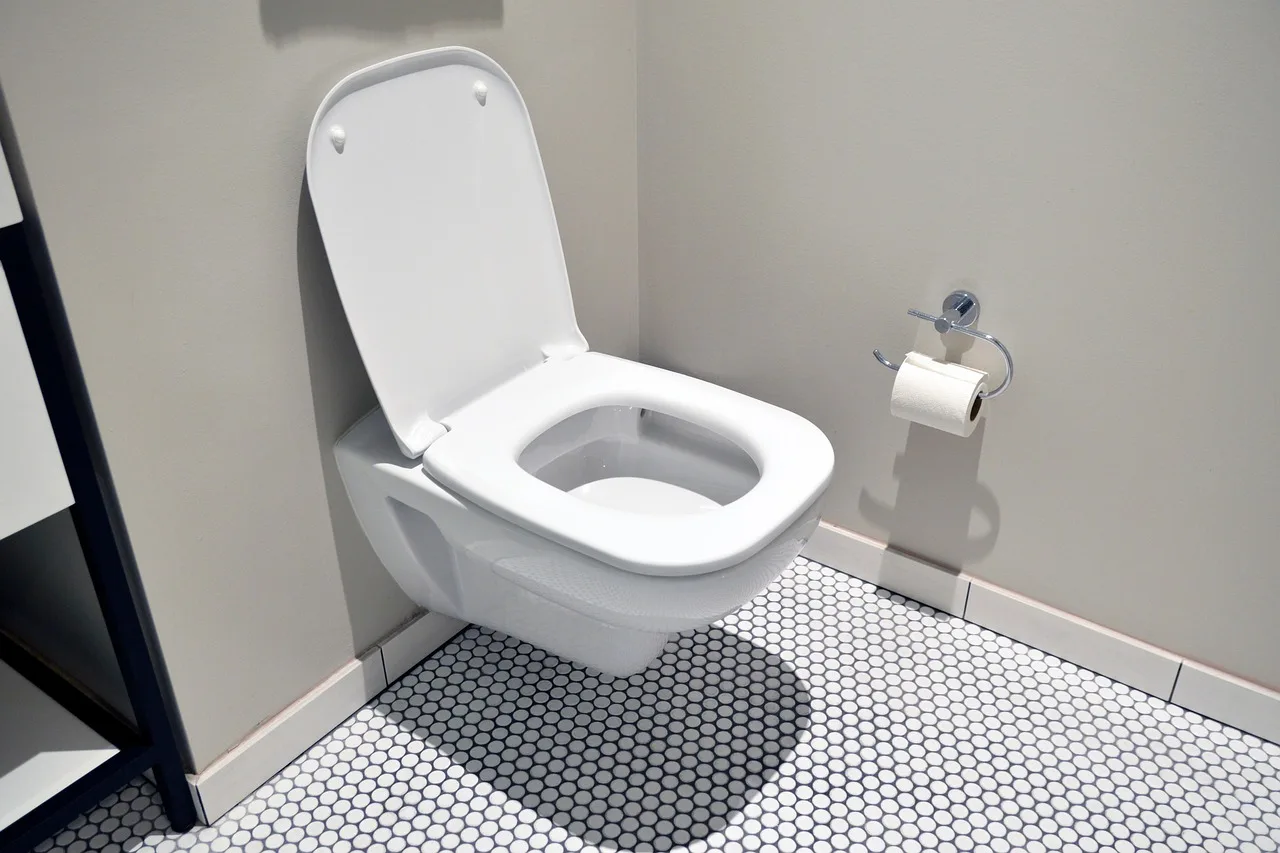
How to Clean Under the Toilet Rim and Jets
Clean under the toilet rim with a nylon brush, white vinegar, and a bent zip tie for the jets. If several jets stay weak after soaking and brushing, the problem is likely scale or a plumbing issue, not surface grime. Ignoring it can leave slow flushes, ring stains, and repeated clogs. This guide shows how to identify mineral scale, biofilm, or a flush-pattern problem and clean the rim jets without scratching porcelain.
What you’ll need


- Rubber gloves
- White distilled vinegar
- CLR or a similar descaler for hard-water scale
- Stiff-bristled nylon toilet brush
- Plastic-bristle brush
- Old towel
- Bucket
- Paper towels
- Bent zip tie or plastic zip tie for the jet openings
How do you clean the rim jets?
Lower the water level first, so cleaner stays on the ports instead of thinning out in the bowl. Then soak the toilet rim jets with undiluted white vinegar or a label-directed descaler, work each opening gently with a plastic tool, and flush to check whether the spray pattern comes back evenly.
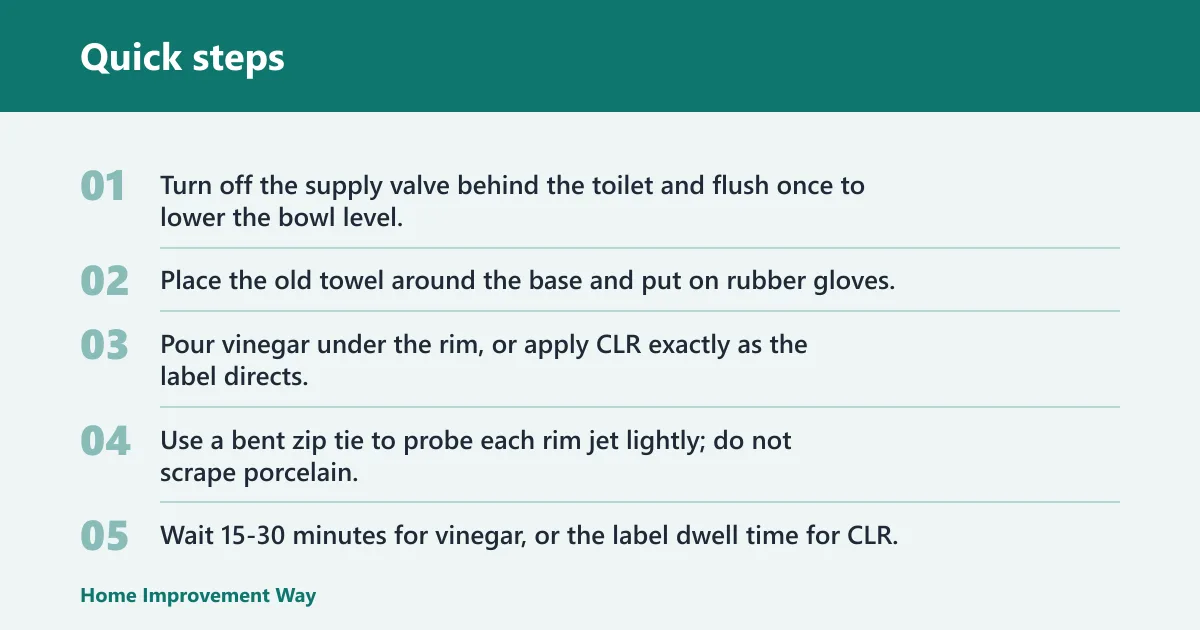
- Turn off the supply valve behind the toilet and flush once to lower the bowl level.
- Place the old towel around the base and put on rubber gloves.
- Pour vinegar under the rim, or apply CLR exactly as the label directs, so it sits on the ports.
- Use a bent zip tie to probe each rim jet lightly; do not scrape porcelain.
- Wait 15-30 minutes for vinegar, or the label dwell time for CLR, then scrub with a stiff-bristled nylon brush.
- Flush and inspect the spray. If one side still misses, repeat the soak once before escalating.
Say your toilet sprays strongly on the back left but barely reaches the front right. That pattern usually points to partial jet blockage, not a dirty bowl. A second soak helps when mineral scale is thin; if the gap stays after two rounds, the obstruction is likely deeper than the visible ports.
How do you clean clogged siphon jets?
Siphon jets sit lower in the bowl and can clog even when the rim looks clean. Treat them as a separate maintenance area. Soak first, then loosen residue with a plastic-bristle brush so you do not miss buildup hidden from the normal viewing angle.
- Locate the siphon jet openings near the bottom of the bowl.
- Apply vinegar or a descaler directly to those openings and let it sit.
- Scrub the openings with a plastic-bristle brush, not wire or metal.
- Flush, then repeat the soak if the spray still looks uneven.
- If the bowl remains slow to empty after the jets look clear, move to the tank check.
A common first-timer mistake is cleaning only the visible rim line and calling the job done. That can leave siphon jet buildup in place, which means the toilet still flushes weakly even though the bowl surface looks polished.
What if the buildup is mineral scale or biofilm?
Look at the symptom, not just the stain. Brown or chalky deposits point to hard-water scale. Slippery residue, odor, and quick reappearance after scrubbing point more toward biofilm. Vinegar is usually enough for light to moderate mineral buildup; heavier scale often needs CLR or a similar descaler with the full label dwell time.
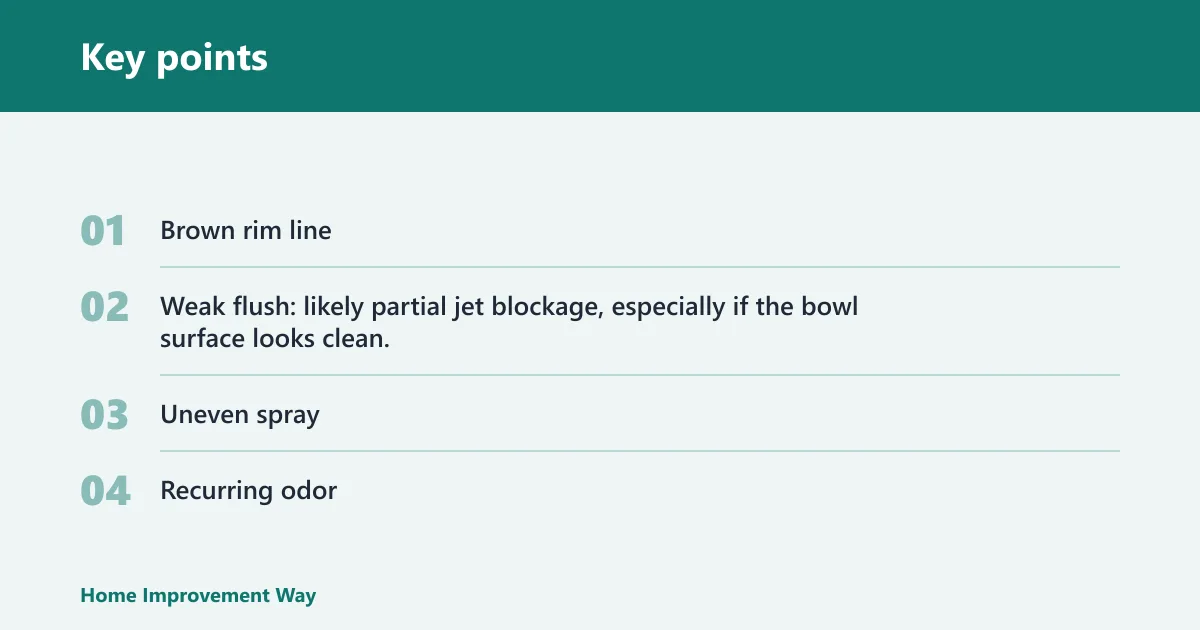
- Brown rim line: more often mineral scale or rust than plain grime.
- Weak flush: likely partial jet blockage, especially if the bowl surface looks clean.
- Uneven spray: a clogged rim jet or siphon jet on the weak side.
- Recurring odor: biofilm in the ports, brush, or tank path.
Use white distilled vinegar first when the deposits are light and the jets still pass some water. Choose CLR or a similar descaler when the ports feel crusted or the toilet has hard-water scale that returns fast after cleaning. If odor or weak flush comes back soon after treatment, move beyond the bowl surface and inspect the tank.
Rim jets troubleshooting table
| Symptom | Likely cause | Exact fix and escalation trigger |
|---|---|---|
| Weak flush but bowl looks clean | Partial rim jet blockage | Shut off the valve, lower the bowl, soak with undiluted vinegar for 15-30 minutes, then probe each opening with a bent zip tie. If the flush stays weak after two rounds, check the tank. |
| Uneven spray around the rim | One or more blocked rim jets | Target the weak side with CLR or vinegar, wait the label dwell time or 15-30 minutes, then scrub with a stiff-bristled nylon brush. Escalate if the same side keeps missing water. |
| Brown rim line keeps returning | Mineral scale or rust | Use a descaler made for hard-water deposits, not a general disinfectant. Reclean after the dwell time. If the line returns in days, inspect the tank for rust or scale feed. |
| Recurring odor after cleaning | Biofilm in the ports, brush, or tank path | Clean the jets again, then wash or replace the brush. If odor returns after a full clean, open the tank and look for slimy buildup or deteriorating parts. |
Common mistakes
Do not scrub porcelain with wire brushes or other abrasive tools. Cleanipedia warns that wire brushes can damage the toilet surface, and a plastic-bristle brush is safer for the glaze. Keep the brush and holder clean too; Cleanipedia recommends that to reduce contamination.
- Stopping after the bowl looks clean: test the spray pattern before you call it done.
- Using the wrong cleaner: vinegar is for light scale; a descaler is better for heavy hard-water deposits.
- Mixing chemicals: never mix vinegar or another acid with bleach.
- Ignoring the tank: repeat clogging can mean the feed parts are sending scale or rust into the bowl.
Experts recommend replacing a well-maintained toilet brush about every six months. Wirecutter also notes that the OXO brush head is replaceable, which helps if the bristles flatten before the handle wears out.
When should you check the toilet tank?
Check the toilet tank when rim jets clog again soon after cleaning, when flush strength drops after a good rinse, or when rust and scale keep returning. The tank can feed debris into the bowl, so bowl-only cleaning may not solve the cause.
- Lift the tank lid and look for rust, scale, or slimy buildup near the fill parts.
- Flush once and watch whether the refill and flush sound change halfway through the cycle.
- If water entry is weak, noisy, or erratic, schedule a plumber to inspect valves and internal buildup.
- If the tank looks clean but the toilet still flushes poorly, the flush pattern problem may be inside the bowl passages.
Suppose the rim jets clear after vinegar, but two days later the right side blocks again and the flush gets thin. That pattern points away from the bowl surface and toward an upstream source, often the tank or aging parts that keep shedding scale.
Prevention
Deep-clean the toilet roughly once a week, especially in hard-water homes. Keep the brush clean and dry between uses, and replace it when the bristles bend or hold residue. A stiff-bristled nylon toilet brush works best for regular bowl cleaning without scratching porcelain. (Wikihow)
- After cleaning, flush once and check the spray pattern.
- Wipe under the rim with paper towels if residue remains after rinsing.
- Store gloves and brush only for bathroom use.
Sponsored / affiliate links. As an Amazon Associate I earn from qualifying purchases. I may earn additional commission from eligible campaigns.