Are Toilet Bowl Gels Worth It? Costs, Benefits, Limits
Toilet bowl gels are worth it only if they save you at least a few minutes of scrubbing each week. If you still need regular brushing, the ongoing cost usually beats the benefit. Ignoring that tradeoff means paying for a cleaner-looking bowl without reducing labor, and the product can become a recurring expense with little payoff. This guide breaks down how gels work, what they cost per month, and when they make sense for your toilet.
Gel pays off for light upkeep, not heavy mineral scale
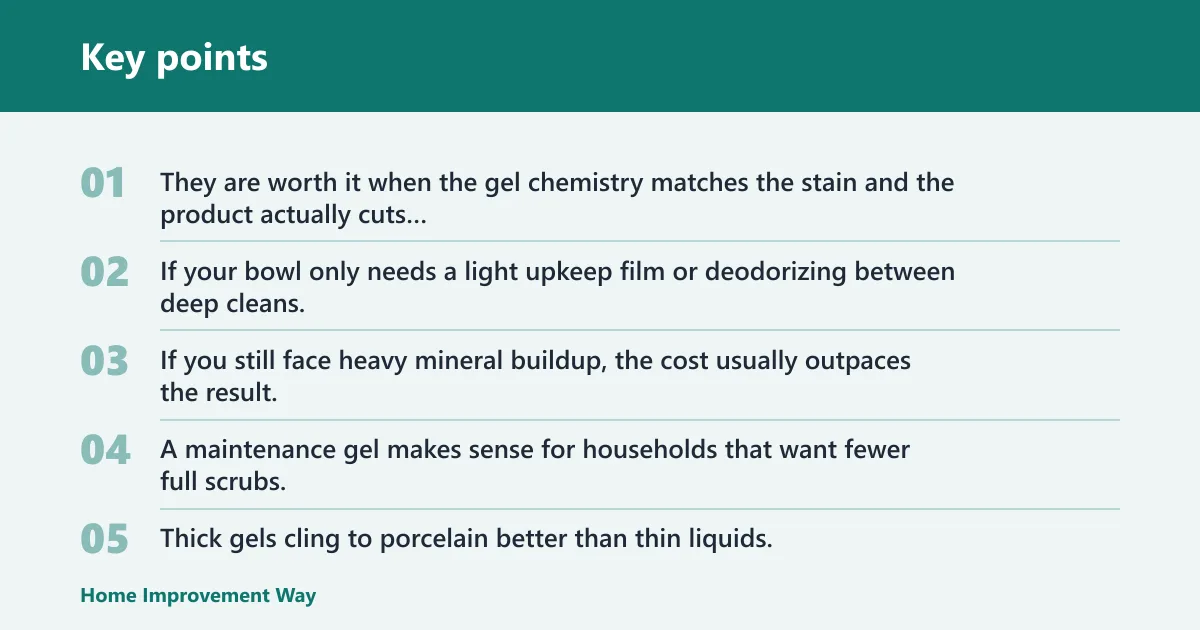
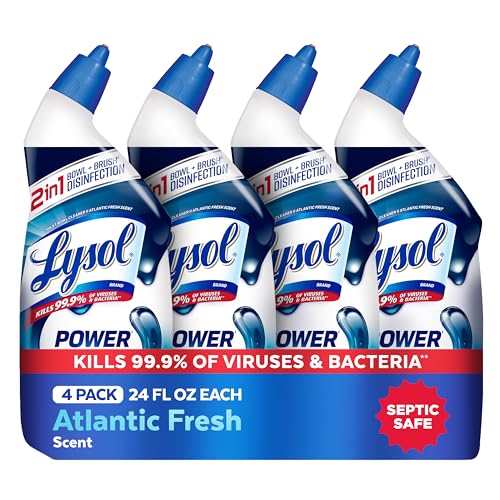


They are worth it when the gel chemistry matches the stain and the product actually cuts down your weekly brushing time. If your bowl only needs a light upkeep film or deodorizing between deep cleans, a gel can pay for itself in saved labor. If you still face heavy mineral buildup, the cost usually outpaces the result.
When a gel pays off
A maintenance gel makes sense for households that want fewer full scrubs, especially where the bowl gets light organic grime, mild ring buildup, or frequent guest use. Thick gels cling to porcelain better than thin liquids, so they can keep working between flushes. That matters more than the scent.
Say your toilet shows a light ring every week and you currently scrub it twice. A gel that cuts that to one quick brush may be worth the refill cost. The value comes from fewer minutes at the bowl, not from a fresher smell.
When it does not
If you already need a brush and a stronger cleaner every week, a gel is usually a weak buy. It also loses value when the bowl has severe hard-water scale, chalky mineral deposits, or rust staining. In those cases, dwell time alone will not fix the chemistry mismatch.
A common first-timer mistake is buying a gel stamp for a bowl with old mineral rings. The stamp may freshen the water and leave a scent, but it will not dissolve a stubborn crust. That is when a real acid cleaner or manual scrub is the better tool.
Toilet gel decision table
This table links the problem to the chemistry that is most likely to help, how long it needs to sit, and when to skip gel altogether. Use it as a buy-or-pass checklist before you spend on refills.
| Bowl problem | Best gel type | Likely success | Expected dwell time | Refill cadence | Skip gels when |
|---|---|---|---|---|---|
| Light organic grime or bacterial film | Bleach gel cleaner or peroxide gel | Good for surface cleaning and hygiene | 5 minutes to 30 seconds for some claims, depending on label | As needed, often weekly | The bowl needs mineral removal, not surface cleaning |
| Toilet rings from everyday soil | Thick-clinging toilet bowl gel | Moderate if you clean before buildup hardens | 5 minutes to 20 minutes | Weekly or after several flushes | The ring is chalky, white, or crusted |
| Hard-water rings, lime, calcium | Acid or limescale gel cleaner | Good when the formula is made for minerals | 20 to 30 minutes | Deep-clean use, not constant dosing | You need a quick cosmetic refresh only |
| Rust or uric scale | Acid or limescale gel cleaner | Better than bleach for mineral deposits | 20 to 30 minutes | Deep-clean use | The stain is mostly organic film |
| Low-maintenance freshness between cleanings | Gel stamp or rim gel | Good for maintenance, not deep cleaning | Works across many flushes | About 12 days or 150 flushes per stamp in some listings | You need to remove existing buildup |
How different gel types work
These products do different jobs, even when the packaging looks similar. Some are for daily upkeep, some are for stains, and some are mainly for scent or residue control. Matching the chemistry to the stain is the part that matters.
Thick-clinging gels and under-rim coverage
A toilet bowl gel is a thick formula that clings to porcelain, usually applied under the rim with an angled-neck squeeze bottle. That shape helps reach the hidden band where grime collects. Contact time matters because the gel needs minutes on the stain before brushing and flushing.
Under-rim application is useful for hidden buildup, but it is not magic. If the buildup is mineral scale, the gel must be acidic enough to dissolve it. If the issue is bacterial film or organic grime, a bleach or peroxide formula may make more sense.
Bleach gel vs acid gel vs peroxide gel
A bleach gel cleaner uses sodium hypochlorite as the active ingredient and is positioned for organic grime and bacterial film. It is a poor main fix for hard-water rings. A hydrogen peroxide toilet gel is often sold as a bleach-free option and one competitor page says it sanitizes in 5 minutes while naming rust and lime scale as targets.
An acid or limescale gel cleaner targets calcium, lime, and rust deposits by dissolving mineral scale. HG recommends leaving its toilet gel to work for 20 to 30 minutes, says it can remove stubborn limescale and uric scale, and states the product does not contain hydrochloric acid. That long dwell time is part of the performance.
Rim gels and gel stamps
Gel stamp cleaners, also called rim gels, are flush-activated adhesive stamps used for maintenance rather than deep cleaning. Some listings rate them for 150 flushes or 12 days per application, and one competitor says a stamp should survive multiple flushes before dissolving. A 120-count set can also come with nine scent varieties.
Quality matters here. A poor stamp can leave residue or break down too fast, which cuts the value fast. A good stamp is best thought of as a maintenance aid, not a stain remover.
Do toilet bowl gels stop rings?
They can help prevent some rings, but only when the ring is mild and the gel chemistry matches the mess. They work best as routine upkeep before deposits harden. Once a ring becomes crusted mineral scale, the gel may slow return but will not erase the buildup on its own.
Organic grime and bacterial film
Bleach gel and peroxide gel can help with the film that causes many everyday rings. That is why some listings position bleach gel as best for organic grime and bacterial film. With regular use, the bowl can stay cleaner between full scrubs.
Hard-water, lime, and rust rings
Hard-water rings are mineral deposits, so a bleach gel is not the main answer. Acid or limescale gels are the better choice because they are designed to dissolve calcium, lime, and rust. If your water leaves a chalky white line, chemistry beats fragrance every time.
Where gels fall short
Gels fall short when the bowl has neglected buildup, rough porcelain, or a long-standing mineral crust. They also struggle when dwell time is too short. A rinse after a minute will not give an acid gel enough time to work, and a quick wipe will not rescue the wrong chemistry.
How long does a toilet bowl gel last?
It depends on the format. A gel stamp may last about 12 days or 150 flushes per stamp in some listings, while a cartridge system may be described as a 30 day supply per cartridge. Deep-clean gels last until you rinse them off, but they only work well if you leave them in place long enough.
Typical dwell time by formula
For maintenance cleaning, dwell time can be as short as 30 seconds in one bleach-free Lysol gel listing, or about 5 minutes for a hydrogen peroxide gel. For mineral work, a longer wait matters more. The same source recommends 20 to 30 minutes, which is the kind of timing mineral stains often need.
That difference is why users should read the label instead of assuming all gels work the same. Short-contact products may sanitize quickly, but they are not the right answer for a crusted ring. Long-contact products can remove more scale, but they ask for patience.
Weekly cost per toilet
Without brand pricing, the cleanest way to judge cost is by use rate. If a stamp lasts about 12 days, that is roughly 3 stamps per month. If a 120-count set is used as a maintenance supply, the household is buying a very long runway of refills, not a one-time cleaner.
| Use pattern | Estimated product use | Weekly cost logic | Best for |
|---|---|---|---|
| Maintenance gel stamp | 1 stamp every 12 days, or about 150 flushes per stamp | Cost per toilet equals package price divided by weeks of coverage | Busy households, guest bathrooms, low-touch upkeep |
| Cartridge-style gel | 1 cartridge described as a 30 day supply | Monthly cost is the cartridge price plus any replacement hardware | Set-it-and-forget-it upkeep |
| Deep-clean-only use | Applied only when the bowl needs a scrub | Lower weekly cost, higher labor per cleaning | Homes that do not want ongoing refills |
For a rough decision rule, compare the refill cost to the labor you avoid. If a maintenance gel saves one 10-minute scrub each week, the product has a chance to justify itself. If it still leaves you scrubbing, it becomes an extra line item with little return.
Are toilet bowl gels safe for septic systems?
Sometimes, but only when the label says so and the product is used as directed. Septic-safe toilet cleaner is a formula claim, not a universal category. A product that is gentle enough for septic use may clean less aggressively, so the tradeoff is real.
Reading label claims
One gel cleaner is listed as septic safe when used as directed. That wording matters. It means the claim belongs to that exact formula, not to every gel on the shelf. If the label does not say septic-safe, do not assume it is.
Using the product as directed
Septic systems are sensitive to overuse, mixing chemicals, and overly strong doses. Follow the contact time, dose, and flush directions on the package. Do not combine bleach, acid, and peroxide products in the same bowl or storage container.
When to choose a milder formula
If your home depends heavily on septic performance and the toilet only needs routine upkeep, a milder gel or a clearly labeled septic-safe product may be the smarter choice. You may give up some cleaning strength. That tradeoff is better than chasing a stronger formula that is not meant for your system.
When should you skip gels and scrub instead?
Skip gels when the stain is too heavy for the chemistry, or when you need a one-time reset rather than upkeep. Severe mineral buildup, rusty crust, or neglected uric scale needs more than a scented film. At that point, a manual scrub or a proper acid cleaner does the real work.
Severe mineral buildup
Chalky white deposits and rusty bands are the clearest signs that a standard gel is the wrong fix. Use an acid or limescale cleaner with enough dwell time, then brush. If the surface is rough after treatment, repeat only as the label allows.
Chalky white or rusty rings
These stains point to calcium, lime, or rust, not everyday grime. That is why bleach is not the main fix for hard-water rings. Acid chemistry does the dissolving; a brush removes what loosens.
Bowl cleaning with an acid product
- Flush to wet the bowl.
- Apply the acid or limescale gel under the rim and onto visible scale.
- Let it sit for the label time, often 20 to 30 minutes for mineral work.
- Brush the bowl, especially the waterline and under-rim band.
- Flush and check whether the ring lightened.
Suppose a guest bath sits unused for weeks, then shows a rusty waterline after one weekend visit. A gel stamp may help keep the bowl fresher after the cleanup, but the first job is removing the mineral ring with the right cleaner. Upkeep comes after the reset.
What is the difference between a gel cleaner and a gel stamp?
A gel cleaner is a direct-clean product you apply, wait on, brush, and flush. A gel stamp is a flush-activated upkeep product that keeps releasing material over many flushes. One is for cleaning jobs. The other is for keeping the bowl from sliding back too fast.
Direct-clean gel
This is the thicker under-rim product most people picture when they hear toilet bowl gel. It can target grime, rings, scale, or odor depending on chemistry. The key variable is dwell time.
Maintenance stamp
A rim gel or stamp works after installation and continues through repeated flushes. It is useful if you want a less hands-on routine. It is not a substitute for a deep clean when the bowl already has buildup.
Frequently asked questions
Are toilet bowl gels worth it?
They are worth it when they reduce brushing time enough to offset their refill cost. That usually means light to moderate buildup, regular use, and the right chemistry for the stain. If the bowl still needs a full scrub every week, the value drops fast.
Do toilet bowl gels actually prevent toilet rings?
Yes, but only to a point. Maintenance gels can slow the return of organic film and some light rings. They do not stop hard-water scale as well, and they cannot prevent a ring that is already mineral crust.
Do gel cleaners work on hard water stains?
Only if the cleaner is made for mineral scale. Acid or limescale gels are the better choice for calcium, lime, and rust. Bleach gels are better for organic grime and bacterial film, not chalky hard-water deposits.
Will a toilet bowl gel disinfect the bowl?
Not every gel disinfects. Some only clean or deodorize. If disinfection matters, look for a product with an explicit disinfecting claim and follow the stated contact time, which may be 30 seconds, 5 minutes, or longer depending on the formula.
Sponsored / affiliate links. As an Amazon Associate I earn from qualifying purchases. I may earn additional commission from eligible campaigns.