Best toilet bowl cleaner for stains: gels, foams, liquids
The best toilet bowl cleaner for stains matches the soil: use an acid gel for hard water and rust, a bleach-free or enzyme liquid for urine scale, and foam only when you need longer cling on vertical porcelain. Pick the wrong format, and you waste time, leave rings behind, or risk dulling the finish.
Toilet bowl cleaners: gel vs foam vs liquid
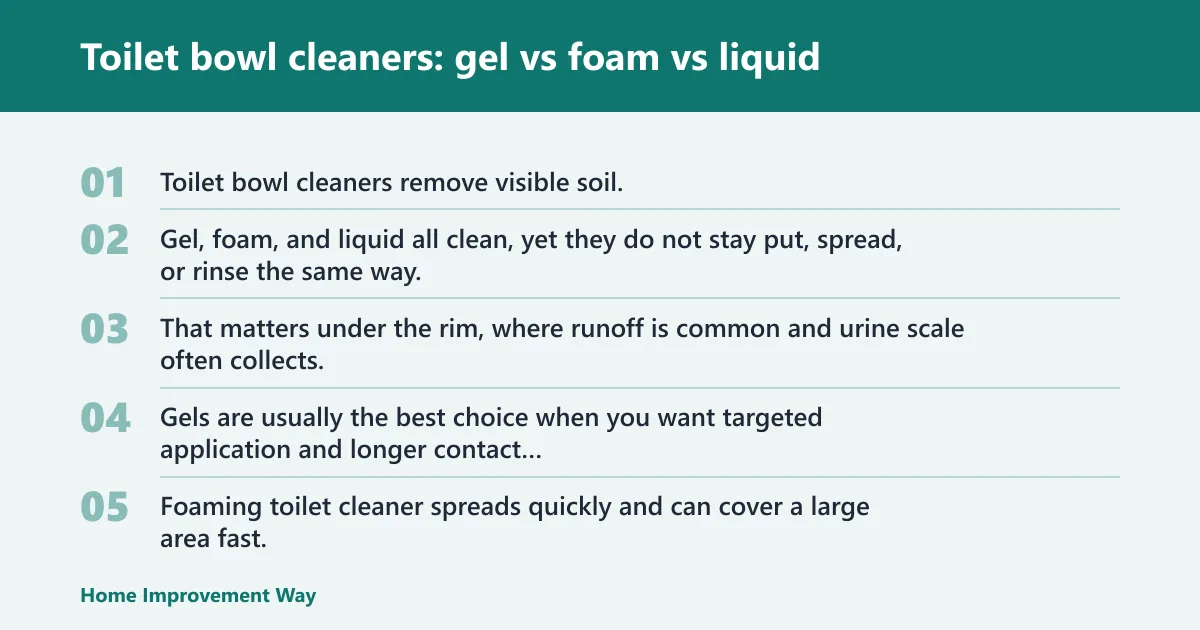


Toilet bowl cleaners remove visible soil, but results depend on two things: the stain chemistry and how the formula behaves on porcelain. Gel, foam, and liquid all clean, yet they do not stay put, spread, or rinse the same way.
What each format does differently
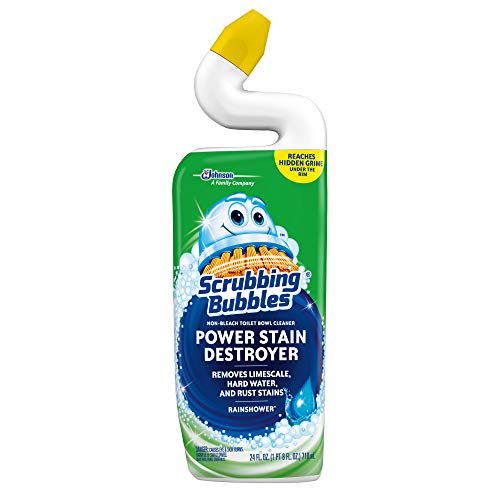
Gel toilet cleaner clings longest. That matters under the rim, where runoff is common and urine scale often collects. Gels are usually the best choice when you want targeted application and longer contact time on vertical porcelain.
Foaming toilet cleaner spreads quickly and can cover a large area fast. The foam action helps reach more surface at once, which is useful for general bowl cleaning and odor control. Foam usually gives up some cling compared with gel, so very heavy mineral rings may still need brushing.
Liquid toilet cleaner moves fast and can run off sooner. That makes it useful for spot treatment and broad coverage, but it is the least forgiving format when the stain sits high under the rim or on a dry, steep surface.
How stain type changes the best choice
Hard water stains, rust, and urine scale are different problems. Hard water stains are mineral buildup and are often white or chalky. Rust is iron-based staining and is usually orange-brown. Urine scale is alkaline buildup that can yellow the bowl and may leave odor near the rim. Matching the formula to the stain matters more than brand loyalty.
What to expect from dwell time and scrubbing
Most toilet bowl cleaners need time on the surface before scrubbing. Longer dwell time usually helps, but it does not fix the wrong chemistry. A brush with firm but not harsh bristles often makes the difference on older stains, especially where buildup is layered.
| Stain type | Best format | Why it fits | Typical dwell time | Scrubbing need | Porcelain-safety note |
|---|---|---|---|---|---|
| Hard water stains | Acid gel | Clings to mineral buildup and stays on chalky rings longer | 5 to 15 minutes; repeat if heavy | Usually needed for ring edges and old deposits | Safer than abrasives; avoid scouring pads |
| Rust stains | Acid gel or targeted liquid | Helps lift iron-based discoloration without scratching | 5 to 10 minutes; second application is common | Light brushing only; do not scrub aggressively | Use non-abrasive methods to protect glaze |
| Urine scale | Gel first, foam second | Gel clings under rim; foam reaches more area quickly | 10 to 20 minutes for buildup | Often needed under the rim and at waterline | Generally safe if label allows; avoid abrasive tools |
What is the best toilet bowl cleaner for stains?
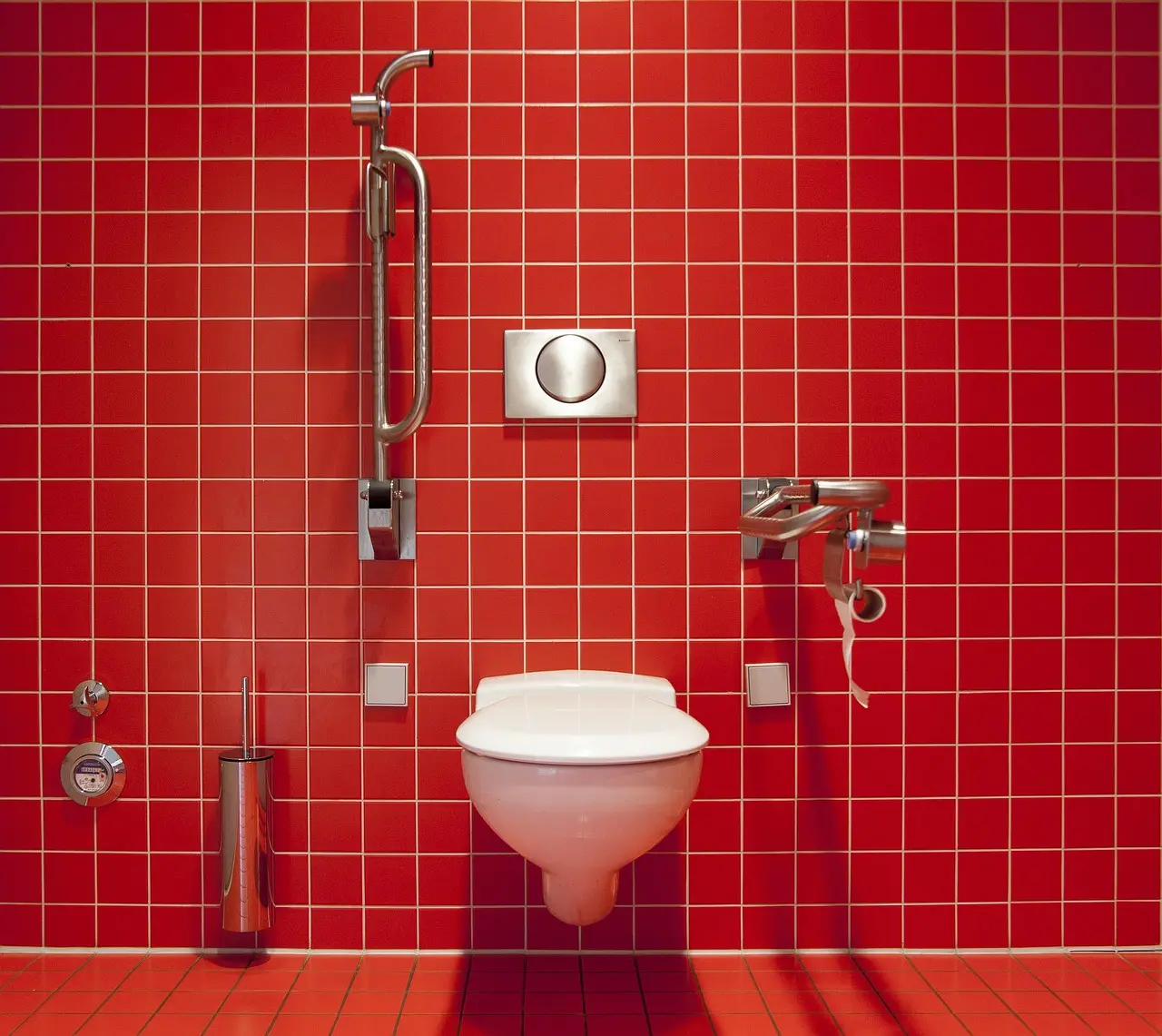
The best toilet bowl cleaner for stains is the one that matches the stain type and stays on the porcelain long enough to work. Acid-based gels are usually the strongest choice for hard water and rust. Bleach-free liquids or enzyme formulas are often better for urine scale and odor-linked buildup.
Surface dirt is easier than mineral buildup. If a stain wipes away but a ring remains, the problem is likely deposits, not grime. That is why one cleaning cycle can fail even when the product is labeled “heavy duty.”
How to identify the stain before you buy
- White or chalky ring: likely hard water mineral buildup.
- Orange-brown streaks: likely rust or iron deposits.
- Yellow film or odor under the rim: often urine scale or hidden deposits.
Picture a guest bath used daily with hard water and a pale ring at the waterline. A general bowl cleaner may make the bowl look cleaner, but the ring returns because the mineral layer was only partly lifted. An acid gel is the better first move there.
Are gel, foam, or liquid toilet cleaners better for hard stains?
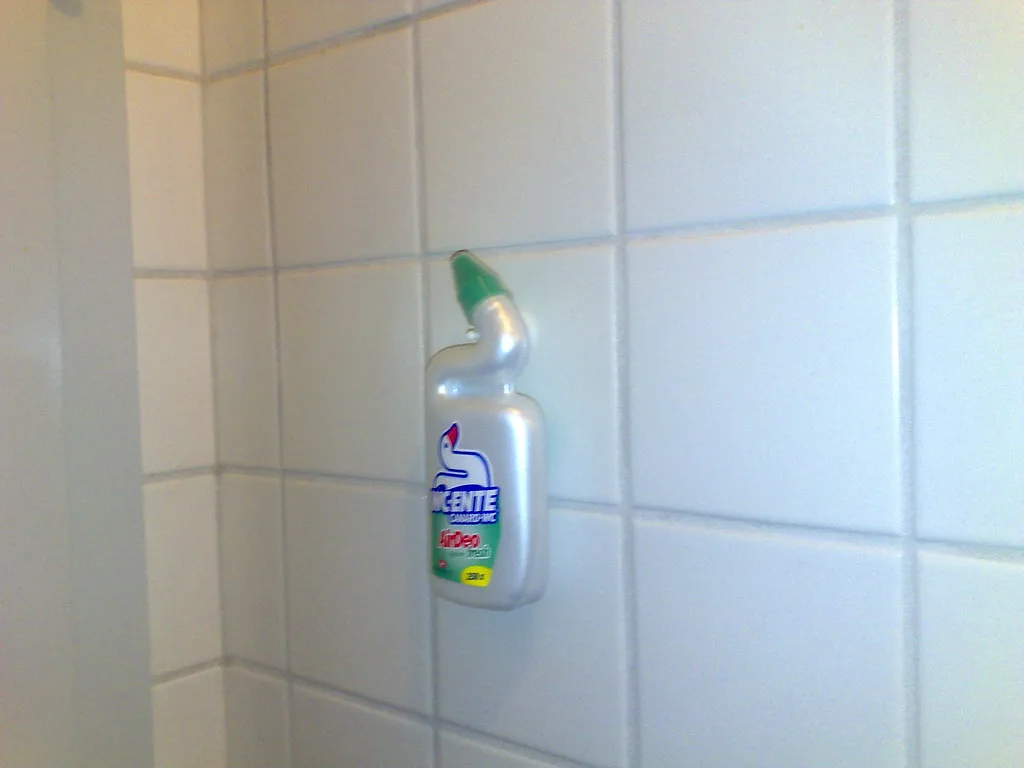
For hard stains, gel is usually the best starting point because it clings longest and keeps acid in contact with mineral buildup. Foam can help when you need quick coverage, while liquid is least useful on vertical porcelain unless the stain sits low and accessible.
Hard stains are usually layered. Old mineral buildup can resist one pass, then soften on the second treatment. That is normal for chalky rings, especially in homes with hard water and infrequent bowl cleaning.
When repeated treatments are normal
Repeated treatment is reasonable when the stain is old, thick, or above the waterline where product contact is short. Let the cleaner sit for the time printed on the label, scrub lightly, rinse, and repeat if the stain lightens but does not disappear. Skip abrasives if the porcelain finish is intact.
What works best for hard water stains?
Hard water stains are mineral buildup, so an acidic cleaner is the right tool. Look for a gel that can cling to the bowl and stay in contact with the white or chalky residue. If the ring is old, expect a second treatment rather than a one-pass fix.
Hard water stains are not the same as ordinary soil. They are often calcium or other mineral deposits that bond to porcelain, which is why general cleaners may leave the outline behind. Acid helps loosen the deposit so brushing can remove it.
Signs the stain is mineral, not dirt
- The ring looks white, gray, or chalky rather than brown.
- It sits at the waterline and comes back after cleaning.
- It feels rougher than the surrounding glaze when dry.
Use a toilet brush with enough reach to work under the rim, but avoid stiff or abrasive heads that can scratch if you press hard. A medium-stiff brush is usually a better balance than a very soft one that only moves liquid around.
What works best for rust stains?
Rust stains respond best to a non-abrasive cleaner that can work on iron-based discoloration without scratching porcelain. Acid gels are often the first choice because they cling to the stain and help dissolve the orange-brown film before light brushing.
Rust often comes from metal in water, a corroding tank part, or a fixture nearby. If the stain returns quickly, the cleaning cycle may be treating the symptom, not the source.
When a second application is reasonable
A second application is reasonable when the first pass lightens the stain but leaves a halo. That usually means the iron deposit is still bonded in part. Avoid scrubbing harder to force the result. On porcelain, a second chemical treatment is safer than an abrasive shortcut.
What works best for urine scale?
Urine scale is usually alkaline buildup, often yellowed and concentrated under the rim where spray and residue collect. A gel is usually the best first choice because it clings longest. Foam can help with wider coverage and odor control when buildup is spread around the bowl.
Odor is a clue. If the bowl looks only lightly stained but smells persistent after flushing, there may be hidden deposits under the rim or just below the waterline. That is where cling time matters more than scent alone.
Why under-rim buildup is common
The underside of the rim stays wetter, dries more slowly, and gets less direct flushing action. That makes it a common place for urine scale to accumulate. A targeted application nozzle helps place cleaner where a brush cannot reach immediately.
Choose gel if… / choose foam if… / choose liquid if…
Use the format that matches the job. Gel is best when contact time and under-rim cling matter most. Foam is often best when you want fast coverage over a broader surface. Liquid is often best for quick spot treatment, but it runs more easily and can leave higher areas untreated.
Choose gel if…
- You are treating hard water rings or rust stains.
- You need the cleaner to stay under the rim.
- You want targeted application on a specific stain.
- You expect to brush after a short dwell time.
Choose foam if…
- You want quick coverage across more bowl surface.
- Odor control matters as much as stain removal.
- The stain is spread out rather than concentrated.
- You want easier rinsing after treatment.
Choose liquid if…
- You are spot-treating a lower stain or waterline mark.
- The bowl shape allows the liquid to stay in place long enough.
- You need a simpler bottle application for a small area.
- You are willing to reapply if the cleaner runs off too quickly.
Suppose a rental bathroom has an orange ring under the rim and a second pale ring at the waterline. A gel is the practical first choice because it can address both the cling problem and the stain chemistry without flooding the bowl and running off the target area.
Which toilet cleaner is safest for porcelain?
Cleaners that avoid abrasion are generally safest for porcelain. The porcelain finish is hard and scratch-resistant, but it can still lose gloss if you use abrasive pads, stiff scouring tools, or repeated harsh scrubbing. A non-abrasive gel or liquid is usually the safest starting point.
Safety is not only about chemical strength. A cleaner that sits properly and lifts the stain with light brushing can protect the glaze better than a weak product paired with aggressive scrubbing.
What to avoid on porcelain
- Abrasive pads and powders.
- Metal scrubbers.
- Repeated hard pressure with stiff bristles.
Do toilet bowl cleaners work without scrubbing?
Some toilet bowl cleaners can loosen light staining without much scrubbing, but that is not reliable for hard water, rust, or heavy urine scale. Dwell time helps, yet a brush is often still needed to remove bonded residue and lift material from under the rim.
Think of scrubbing as the final step, not the only step. The cleaner loosens the stain first; the brush removes what has been softened. A toilet brush with good rim reach matters because many stains collect where the nozzle cannot fully direct product.
Brush choice and safe use
- Bristle stiffness: medium is usually best for balance.
- Reach: choose a head that reaches under the rim.
- Safe use: rinse the brush after chemical contact and store it dry.
Keep the bathroom ventilated and follow the label. Gloves are sensible whenever you handle toilet cleaners, especially acidic or bleach-based products.
How long should toilet cleaner sit before scrubbing?
A common rule of thumb is around 5 to 20 minutes, depending on the formula and the stain. Acid gels for hard water and rust often need roughly 5 to 15 minutes. Urine scale can need roughly 10 to 20 minutes. Use the label’s stated dwell time if it gives one.
Longer is not always better. Once a cleaner dries out, it may lose contact with the stain. If the product starts to dry before the dwell time is complete, reapply according to the directions rather than waiting on a dry film.
Are bleach-free toilet cleaners effective on stains?
Bleach-free toilet cleaners can be effective, especially on urine scale, odor, and routine bowl soil. They are often a better fit when scent sensitivity matters or when you want stain removal without bleach smell. For heavy rust or hard water, an acid-based bleach-free formula may still be the better choice.
Bleach is not the answer for every stain. It can help with some organic discoloration, but it does not solve mineral buildup by itself. That is why bleach-free cleaners with the right chemistry can outperform a bleach product on the wrong stain.
When bleach vs bleach-free matters
- Choose bleach-free if odor control, scent limits, or routine upkeep matter more than whitening alone.
- Choose bleach-based if the label targets organic staining and you want a whitening effect, while still following ventilation and safety directions.
Frequently asked questions
What toilet cleaner works best on rust stains?
An acid cleaner in gel form is usually the best starting point for rust stains. Rust is iron-based, so you want a non-abrasive formula that can loosen the stain without scratching the porcelain. If the stain is old, a second application is often more effective than scrubbing harder.
Can I use a toilet bowl cleaner on hard water rings?
Yes. Hard water rings are mineral deposits, and they usually respond best to acidic toilet bowl cleaners. A gel is often preferred because it clings to the ring long enough to work. Older buildup may need repeated treatment, especially if the ring has been allowed to dry in place for weeks or months.
Sponsored / affiliate links. As an Amazon Associate I earn from qualifying purchases. I may earn additional commission from eligible campaigns.