Silicone Toilet Brush vs. Nylon Brush: Which Lasts Longer?
Silicone brushes usually last longer in practical use because they dry faster and resist odor buildup. Nylon brushes can scrub harder at first, but they often need replacing sooner once the tufts bend, splay, or hold grime. If you judge lifespan by when cleaning quality drops, not just when the head breaks, silicone usually wins.
| Factor | toilet brush | nylon brush | Winner |
|---|---|---|---|
| Shape retention | Holds its form longer; silicone fins or similar heads keep reaching around the bowl after repeated use. | Tufts can bend and splay within 3–6 months, which reduces edge contact and rim reach. | toilet brush |
| Hygiene retention | Non-porous surfaces trap less moisture and residue, so odor buildup is usually slower. | Porous nylon or polypropylene bristles trap water between tufts and can keep smells longer, especially in a closed holder. | toilet brush |
| Cleaning power decline | Good for daily upkeep and routine soil, but less bite on heavy scale. | Starts with stronger scrubbing power, which helps on neglected bowls and mineral marks, but the edge fades as tufts wear. | nylon brush |
| Typical replacement timing | Often stays useful for 12–24 months when dried well and not overloaded with harsh chemicals. | Commonly needs replacement sooner, often in 3–6 months of regular use if the tufts start to spread. | toilet brush |
Silicone vs. nylon brush: which lasts longer?
Silicone brushes usually last longer in total useful life because they keep their shape, dry faster, and stay cleaner between uses. Nylon brushes can feel stronger on day one, but they usually lose cleaning quality sooner as the tufts spread, hold moisture, and stop reaching tight spots under the rim.
That is the main difference. If you judge lifespan by the point where the brush stops cleaning well, silicone usually wins. If you judge only by purchase price or initial scrubbing bite, nylon can look better at first.
What “lasting longer” means in daily use
For a toilet brush, “lasting longer” should mean more than surviving intact. A brush is worn out when it dries slowly, smells stale, leaves streaks, or no longer reaches the bowl edge with enough contact to remove soil.
A common mistake is waiting until the head falls apart. By then, the brush may have been underperforming for weeks.
Silicone and nylon brush
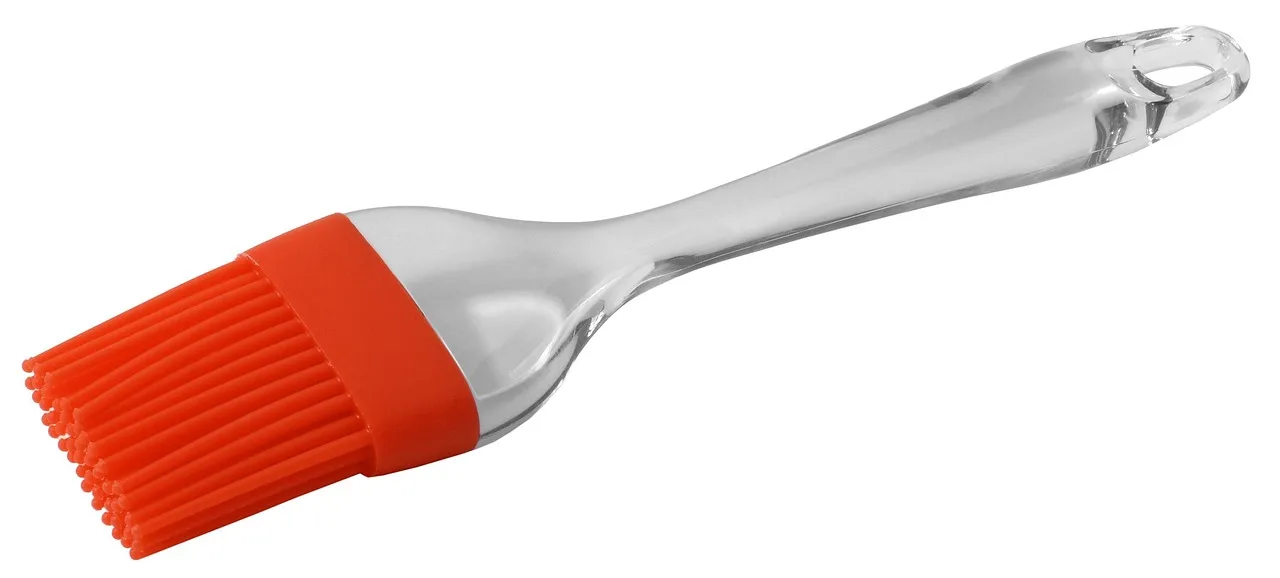
In this comparison, “toilet brush” means a silicone-head brush or a brush with a silicone-like head, since some products use mixed polymers rather than pure silicone. That label matters because material claims vary by brand, and the holder and handle can affect real-world lifespan as much as the head itself.
Shape retention
Silicone heads usually keep their form longer, so they keep sweeping the bowl surface and reaching under the rim. Nylon tufts can flare outward as they wear, which makes the brush feel softer and less precise even before the handle or stem fails.
Say your brush is used every day in a family bathroom. After a few months, the nylon head may still look usable, but the outer bristles may fan out enough that you need extra passes to clean the same spot.
Hygiene retention
Silicone is non-porous, so it traps less moisture and residue. That makes it easier to dry, easier to rinse, and less likely to hold odor in the head itself.
Nylon and polypropylene bristles can hold water between tufts, especially if the holder is closed or has limited drainage. That trapped moisture matters because odor and grime buildup often show up before the brush fails mechanically.
Cleaning power decline
Nylon often starts with more scrubbing bite. That can help on stuck-on residue, mineral streaks, and bowls that have gone too long between cleanings.
Silicone is better for routine maintenance, but it does not replace descaling on heavy mineral buildup. Heavy deposits may need a descaler before either brush can work well, and a soft head alone may not remove scale.
Typical replacement timing
Replacement timing is best tied to use and wear, not a fixed calendar date. In normal household use, nylon often needs swapping sooner because the tufts splay within 3–6 months, while silicone heads can keep shape for 12–24 months when they dry well and are not damaged by cleaners or poor storage.
That timing shifts fast in a bathroom with hard water or a closed holder. A brush that stays damp for days can smell before the head is visibly worn.
Why silicone usually lasts longer in useful life
Silicone lasts longer because the head dries faster and keeps its geometry. That combination preserves cleaning contact, reduces odor, and slows the point where the brush becomes unpleasant to store.
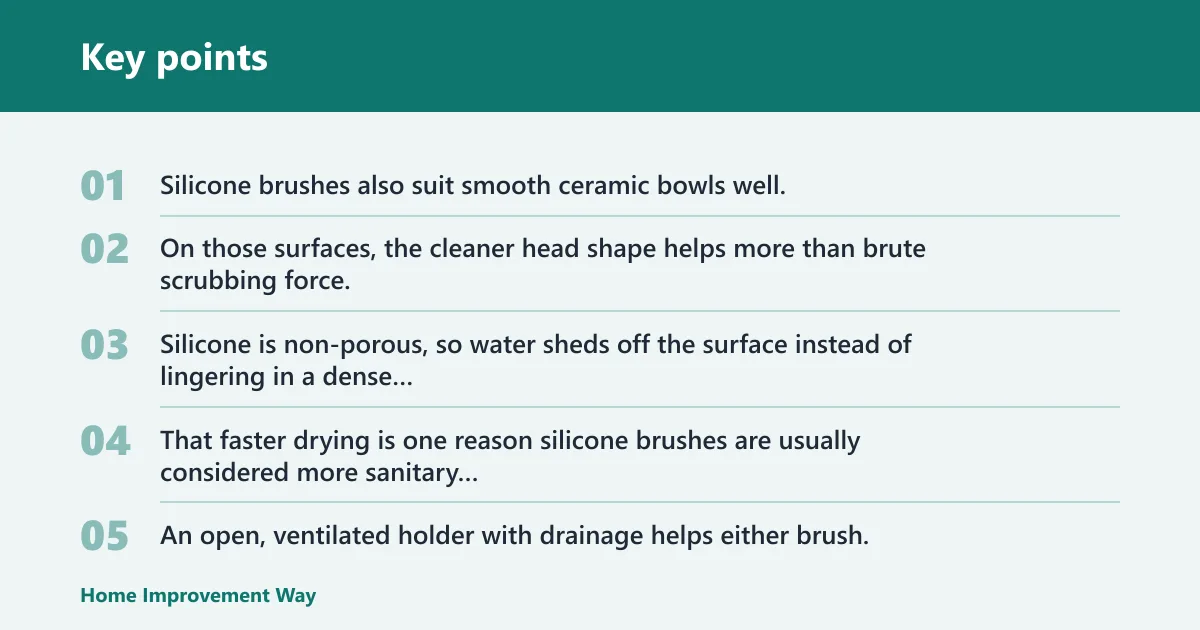
Silicone brushes also suit smooth ceramic bowls well, including many bowls from TOTO and Kohler. On those surfaces, the cleaner head shape helps more than brute scrubbing force.
Non-porous head and faster drying
Silicone is non-porous, so water sheds off the surface instead of lingering in a dense tuft bed. That faster drying is one reason silicone brushes are usually considered more sanitary to store in a bathroom.
Drying still depends on the holder. An open, ventilated holder with drainage helps either brush, but it gives silicone a stronger advantage because the head starts from a drier baseline.
How shape retention affects cleaning over time
When a head keeps its shape, it keeps contacting the bowl where soil collects. That means the brush keeps doing useful work longer even if the user does not change technique.
Nylon loses some of that reach as the bristles bend and fan outward. Once that happens, the brush may still scrub, but it needs more passes and leaves more residue behind.
Best fit for daily upkeep
Silicone is often the better choice for daily or near-daily upkeep in a clean bowl. It is the stronger long-term buy for many households because the head stays serviceable long after a nylon head starts to look tired.
If the goal is to keep a bowl clean with short, frequent cleaning sessions, silicone is the more durable option in practical terms.
Why nylon can wear out faster
Nylon brushes usually start with stronger scrubbing power, but that strength fades as the tufts age. The bristles can spread, stay damp, and keep odors longer, so the brush may stop performing before it physically fails.
Stiff tufts and higher initial scrubbing power
Nylon tufts are better when you need immediate bite against grime. That makes them useful for neglected bowls, especially where scale or dried residue has built up.
The trade-off is wear. Nylon bristles can abrade softened glaze over years, so aggressive brushing is not a good match for every bowl finish.
Why bristles splay and hold moisture
Porous tufts trap moisture between bristles, which slows drying and can hold odor in the brush head. As the tufts bend, they also lose stiffness, so the brush can feel less effective even before the base or handle wears out.
In a closed holder, that problem becomes more obvious. The brush may smell stale even if the bowl itself is clean.
When nylon still makes sense
Nylon still makes sense when you need stronger scrubbing at the start, especially for scale-heavy bathrooms or bowls that have not been cleaned often. It can also be the better pick when you want a lower upfront price and do not mind replacing it sooner.
Picture a guest bath that gets only weekly attention and has visible mineral rings. A nylon brush can cut through the first pass better than silicone, provided you replace it when the tufts begin to spread.
Which brush dries faster, silicone or nylon?
Silicone dries faster. Its non-porous surface sheds water quickly, while nylon bristles hold moisture between tufts and can stay damp longer, especially in a closed holder. That drying difference affects odor, storage hygiene, and the point at which the brush starts to smell stale.
Open versus closed holders
A ventilated holder with drainage matters almost as much as the head material. Open designs let air move around the brush, which shortens drying time and lowers odor risk for both silicone and nylon.
Closed holders can trap moisture at the bottom. If you use nylon in one of those, the brush is more likely to keep a damp smell; silicone handles that setup better, but still benefits from airflow.
Drainage and airflow
Look for a holder with an open base, raised feet, or drainage holes. Those details stop pooled water from sitting under the head and soaking the lower bristles or fins.
The holder choice can extend useful life more than many buyers expect. A good holder can slow odor buildup enough that the brush stays usable for months longer.
In a shared bathroom, odor control matters as much as scrubbing power. Silicone has the edge here because it dries faster and holds less residue, so it is usually the more sanitary option to store.
If several people use the same bathroom, that matters after every flush and every clean. A damp nylon head in a sealed caddy can become the weak point.
Will silicone clean as well as nylon?
Silicone cleans well for routine soil, but nylon usually has stronger initial scrubbing power on stubborn buildup. For daily or weekly maintenance, silicone is often enough; for neglected bowls or heavy scale, nylon has the edge at first, although that edge fades as the bristles wear.
Routine soil versus heavy buildup
For light film, fresh streaks, and everyday residue, silicone is usually the more practical choice because it keeps its shape and dries quickly. That keeps the brush effective over a longer period, not just on the first day.
For dried-on residue or a bowl that has been skipped for a while, nylon is often better for the first pass. It has more bite, which helps lift grime before a second cleaner pass.
Hard-water scale and descaling first
Hard-water scale changes the decision. Mineral deposits need a descaler before either brush can do real work, because scrubbing alone will not remove hardened buildup efficiently.
When scale is the main problem, nylon can help after the descaler softens the deposit. Silicone is less likely to hang up on residue during routine maintenance, but it is not the first choice for scraping mineral crust.
Vitreous china and glaze sensitivity
Most toilet bowls are vitreous china with a glazed surface. That surface can be worn by aggressive brushing over time, especially if the bristles are stiff, dry, or used with too much force.
Specialty coatings such as SanaGloss, CleanCoat, and EverClean can also be sensitive to harsh scrubbing. If the bowl has one of those finishes, a softer, shape-stable brush is often the safer long-term choice.
Replacement timing by use and water hardness
Replacement timing should track cleaning frequency and water hardness. A brush that sees daily use in hard water will wear out faster than the same brush in a softer-water home with a ventilated holder.
| Use pattern | Water condition | Silicone brush | Nylon brush | Practical rule |
|---|---|---|---|---|
| Daily upkeep | Soft water | Often stays useful toward the long end of 12–24 months | Often needs replacement sooner if tufts begin to splay | Choose silicone if the bowl gets quick, frequent cleaning. |
| Weekly cleaning | Mixed water hardness | Usually holds shape long enough for routine maintenance | Works well at first, but watch for flattened tufts and odor | Either can work; holder ventilation becomes a major factor. |
| Monthly or neglected use | Hard water | Can help after descaling, but may not be the strongest first choice | Better for the first scrub on heavy soil and mineral marks | Use nylon for the initial clean, then replace sooner. |
For hard-water bathrooms, the decision rule is simple: descale first, then brush. If the bowl has visible scale every week, nylon is often the better problem-solving tool; if the bowl is cleaned often and the issue is mainly keeping it fresh, silicone lasts longer in useful life.
Replacement signs to watch
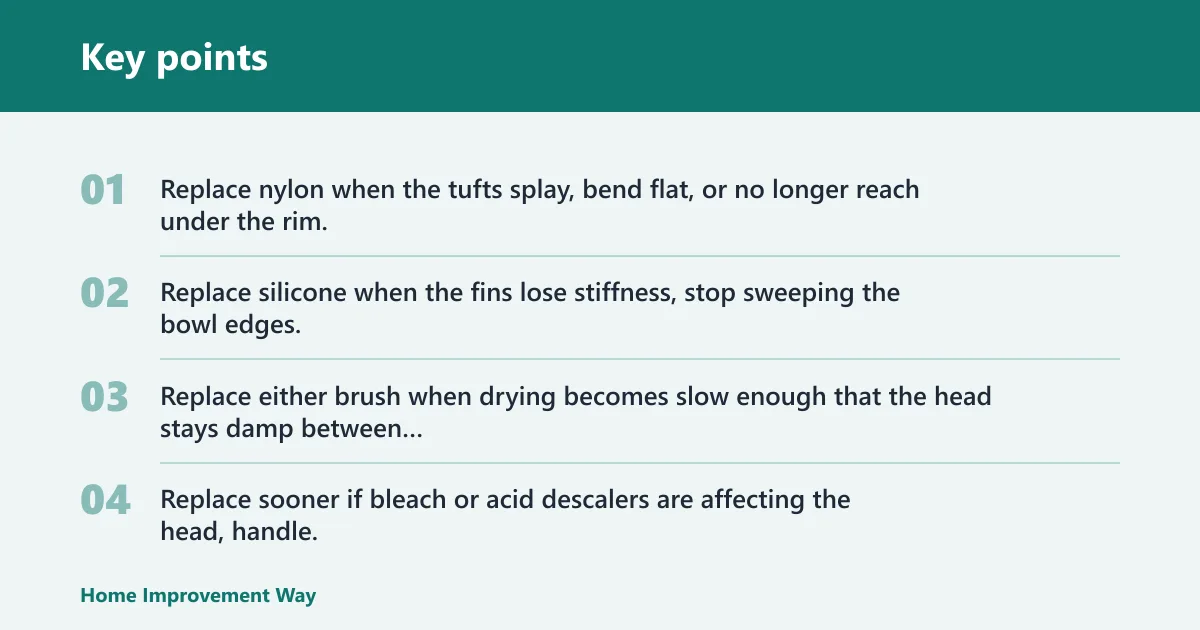
- Replace nylon when the tufts splay, bend flat, or no longer reach under the rim.
- Replace silicone when the fins lose stiffness, stop sweeping the bowl edges, or begin holding odor despite rinsing.
- Replace either brush when drying becomes slow enough that the head stays damp between uses.
- Replace sooner if bleach or acid descalers are affecting the head, handle, or holder parts according to the product label.
Choose toilet brush if… / Choose nylon brush if…
Choose the silicone-style brush if you want the longer useful life, faster drying, and better odor control. Choose the nylon brush if you need stronger first-pass scrubbing on scale, neglected bowls, or stubborn residue and are willing to replace it sooner.
Choose the silicone-style brush if your bathroom gets frequent cleanings, your holder has ventilation, or the bowl is a smooth glazed surface that needs gentle upkeep. Choose the nylon brush if the bowl often carries mineral buildup, the brush needs extra bite, or you want the lower upfront price and accept shorter service life.


Frequently asked questions
Does a silicone toilet brush last longer than a nylon toilet brush?
Yes, in useful life it usually does. Silicone keeps its shape longer, dries faster, and resists odor buildup better than nylon. Nylon may clean harder at first, but once the tufts bend or splay, the brush often stops cleaning well before it physically breaks.
How long does a nylon toilet brush last before replacement?
A nylon brush commonly needs replacement sooner than silicone, often within 3–6 months of regular use if the tufts start to splay. The exact timing depends on drying conditions, holder design, cleaning frequency, and whether the brush is used on heavy scale or routine soil.
How long does a silicone toilet brush last in real use?
A silicone brush often stays useful for 12–24 months when it is stored in a ventilated holder and kept dry between uses. Replace it earlier if the head stops reaching under the rim, holds odor, or loses enough stiffness that cleaning takes more passes.
Which toilet brush dries faster, silicone or nylon?
Silicone dries faster. Its non-porous head sheds water more quickly, while nylon bristles hold moisture between tufts. The holder matters too, so an open, drained caddy will improve drying for either brush and reduce odor in a shared bathroom.
Does silicone clean as well as a nylon toilet brush?
For routine cleaning, yes. Silicone is usually strong enough for daily upkeep and light soil. Nylon still has more initial scrubbing power for stubborn grime and mineral marks, so it may be the better first-pass tool in neglected or scale-heavy bowls.
Will a silicone toilet brush work on hard-water stains and limescale?
It can help after descaling, but it should not be the only tool you rely on. Heavy mineral deposits need a descaler before either brush can work well. Nylon is often better for the first scrub after the buildup has been softened.
Do nylon toilet brush bristles splay over time?
Yes. Nylon tufts can bend and splay within 3–6 months of regular use, especially if they are stored damp or pressed hard against the bowl. Once that happens, the brush loses reach and cleaning power even if the handle still looks fine.
Which toilet brush is more sanitary to store in a bathroom?
Silicone is usually more sanitary to store because it dries faster and traps less moisture and residue. A ventilated holder with drainage improves hygiene for both types, but nylon is more likely to keep odor and dampness if the holder is closed or poorly drained.
Sponsored / affiliate links. As an Amazon Associate I earn from qualifying purchases. I may earn additional commission from eligible campaigns.