Toilet Brush vs. Disposable Wand: Which Is Better?
A reusable toilet brush is often the lower-cost option over time, while a disposable wand is often described as simpler for handling grime and easier to discard. Pick the wrong one and you may spend more, clean less often, or avoid the tool because it feels annoying to use. This guide compares hygiene, cost, reach, storage, and what you throw away after cleaning.
This guide is part of our Toilet care essentials series.
| Decision factor | Toilet brush | Disposable wand | Winner |
|---|---|---|---|
| Upfront cost | Usually lower starter cost for the handle, head, and holder | Starter kit costs more because it includes the wand and preloaded cleaner | Toilet brush |
| Monthly cost | Lower ongoing cost if you replace the brush head only when worn | Higher ongoing cost because each use consumes a refill head | Toilet brush |
| Hygiene risk | Higher risk if the head stays wet or the holder traps moisture | Lower direct-contact risk because the used head is removed and discarded | Disposable wand |
| Rim reach | Good if the head is angled and firm enough | Good, especially since the wand is designed to reach the rim and tricky corners | Disposable wand |
| Bowl-scratch risk | Lower when bristles are soft and bowl-safe | Can be higher if the refill head feels coarse on delicate porcelain or coated bowls | Toilet brush |
| Storage footprint | Needs a holder or caddy, which takes floor space | Includes a storage caddy for organization and contained storage | Disposable wand |
| Disposal burden | Less trash, but you must rinse, dry, and eventually replace the head | More trash because used heads are manually disposed after use | Toilet brush |
| Best-fit household type | Best for budget-focused homes and people who clean regularly | Best for small households that want less post-clean handling | Tie |
What each tool does
Both tools clean the bowl, but they use different upkeep systems. A toilet brush uses a reusable handle, a cleaning head, and a holder or caddy; a disposable wand uses snap-on refill heads, preloaded cleaner, and disposal after use.
Reusable toilet brush
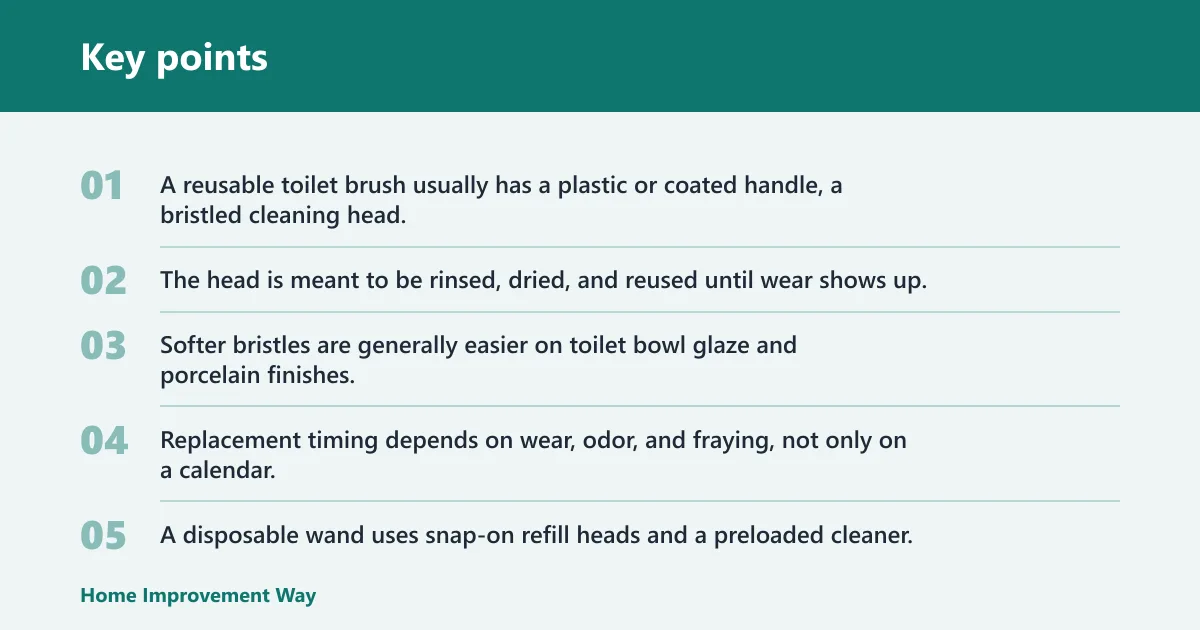
A reusable toilet brush usually has a plastic or coated handle, a bristled cleaning head, and a storage caddy or holder. The head is meant to be rinsed, dried, and reused until wear shows up, which keeps cost down but raises contamination risk if moisture lingers.
Head material matters. Softer bristles are generally easier on toilet bowl glaze and porcelain finishes, while coarse bristles can be too aggressive for delicate or coated bowls. Replacement timing depends on wear, odor, and fraying, not only on a calendar.
Disposable wand
A disposable wand uses snap-on refill heads and a preloaded cleaner, so you do not handle a wet brush head after scrubbing. The Clorox Toilet Wand refills snap onto the wand for quick replacement, and the wand is designed to reach the rim and tricky corners.
This system trades lower contact for recurring supply use. The wand includes a storage caddy for organization, and the used head requires manual disposal after use. Jesun also describes a disposable brush with a 15-inch handle, but the core trade-off is the same: less cleanup handling, more refill spend.
Are disposable toilet wands more hygienic?
They usually reduce direct contact with grime, so many homeowners consider them the cleaner-handling choice. That said, hygiene is not only about what you touch; it is also about where moisture and residue go after scrubbing.
Direct contact with grime
A reusable brush asks you to rinse the head and return it to storage, which adds a handling step after the bowl is cleaned. Disposable wands avoid that by letting you detach and discard the used head.
Moisture retention after use
Reusable brushes can retain moisture and bacteria, increasing contamination and odor risk. If the holder traps runoff or the head dries slowly, that damp environment becomes the weak point. A wand reduces that problem because the dirty head leaves the bathroom workflow instead of sitting in the holder.
Handling the used head or brush
With a brush, the post-use job is rinsing, drying, and keeping the holder clean. With a wand, the post-use job is disposal. A common first-timer mistake is buying a wand for “no mess” convenience, then finding the refill cost high enough that the system gets used less often than it should.
Which costs less over time?
A toilet brush is often the lower-cost option over time because you usually pay once for the handle and holder, then replace the head only when it wears out. A disposable wand shifts cost into each cleaning session, so the bill grows with use frequency.
Brush purchase price and replacement cadence
A reusable brush usually has the lowest upfront cost. Your ongoing cost stays low if you replace the brush head only when the bristles flatten, the head smells after washing, or the handle starts to loosen.
Wand starter kit and refill costs
A disposable wand starts with a kit, then adds single-use heads every time you clean. Clorox Toilet Wand refills use preloaded cleaning heads, so the convenience is built into the refill system. Jesun says its cleaning pad uses 32 layers of 100% wood pulp cotton, which signals a thicker disposable head but also a continuing supply purchase.
Simple monthly cost-per-clean math
The math is straightforward. For a brush, divide the brush and replacement head cost by the number of months or cleaning sessions you expect to get from it. For a wand, divide the starter kit plus the refill heads you use that month by the number of cleanings in that month. More cleaning means the wand’s monthly cost climbs faster.
Do toilet brushes or wands clean better under the rim?
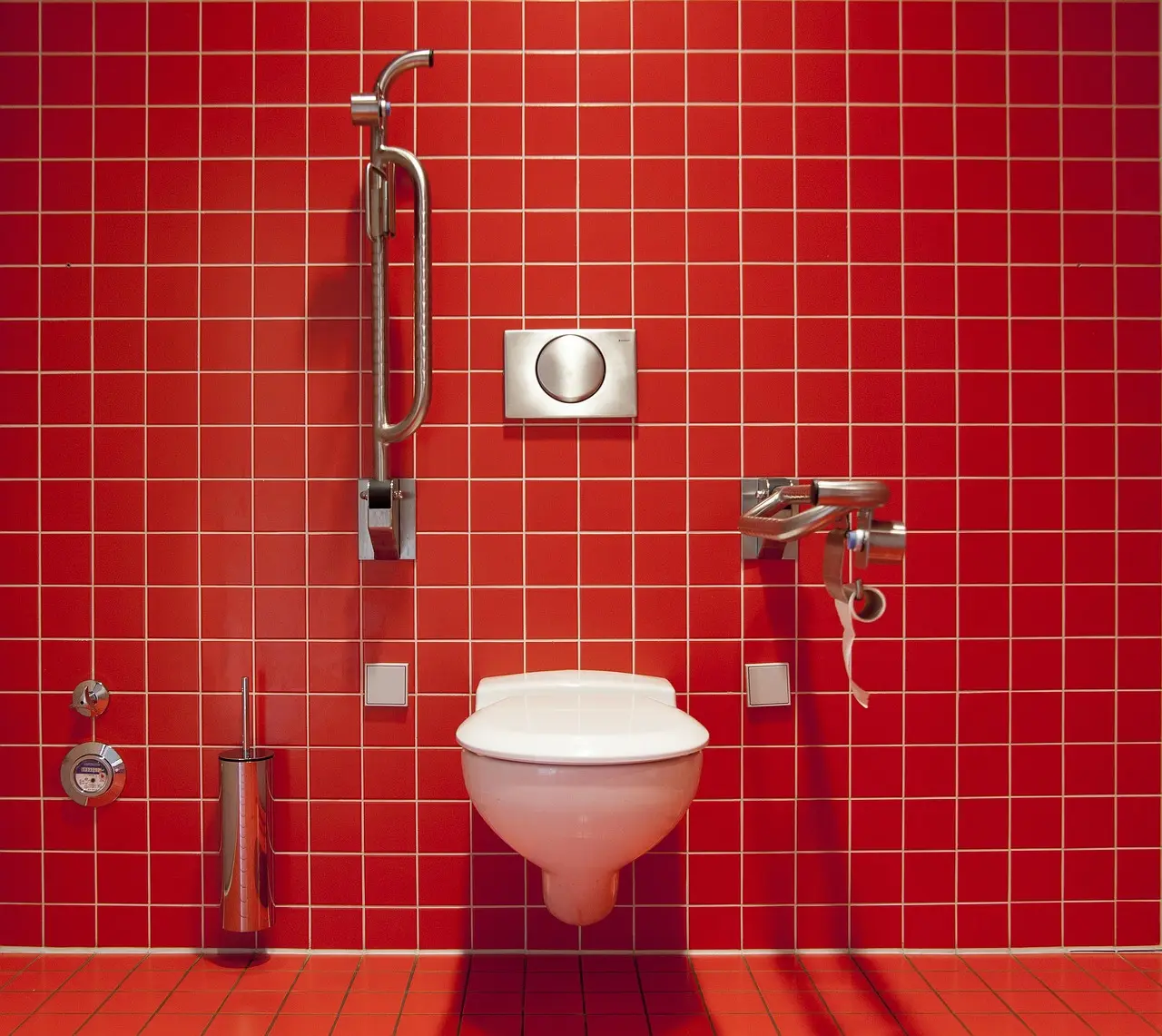
Both can clean under the rim, but head shape and stiffness decide how well they fit the curve. A wand usually has the edge for shaped reach, while a brush can still clean effectively if the head angles well and the bristles are not too soft.
Head shape and reach
The wand is designed to reach the rim and tricky corners, which helps where the bowl curves sharply. A brush head may need more wrist work to track the underside of the rim, especially in bowls with tight contours.
Coarse bristles versus refill pads
Coarse bristles can scrub buildup well, but they also raise scratch risk on toilet bowl glaze or porcelain finish. Refill pads can be gentler, though some feel too stiff for delicate or coated bowls. If the bowl has a special finish, choose the least abrasive head that still reaches the rim.
Heavy staining and hard water buildup
Hard water rings and heavy staining often need more dwell time and firmer mechanical scrubbing than a quick pass. In those cases, a brush with a stronger head can be better for repeat contact, while a wand may be better for routine cleaning and lighter buildup. For frequent clogs, avoid aggressive scrubbing around the waterline if the bowl finish is already worn.
Say your home has a powder room with a coated porcelain bowl and only light daily soil. A disposable wand may be enough because the rim is easy to reach and the refill head stays gentler on the finish. Now change one variable: a main bath with hard water and a visible ring. The reusable brush starts to make more sense because you can scrub the buildup repeatedly without burning through refills.
What are the downsides of using a toilet brush every day?
The main downside is upkeep. A daily-use brush needs rinsing, drying, and holder cleaning, and that routine matters because a wet head can hold odor and bacteria longer than many people expect.
Drying time and odor control
If the brush stays wet in a closed holder, odor tends to become the complaint before visible wear does. A storage caddy or holder helps contain drips, but it also needs airflow or regular emptying so the head does not sit in stagnant water.
Contamination risk
Reusable brushes can retain moisture and bacteria, increasing contamination and odor risk. That is the trade-off for lower operating cost. If the brush is used daily, look for a holder that keeps the head elevated rather than pressed flat against the bottom.
How often should I replace a toilet brush or wand refills?
Replace a toilet brush head when the bristles splay, the head keeps odor after washing, or the scrubbing edge no longer keeps its shape. Replace wand refills every time you clean with one, and replace the wand handle or caddy only if the plastic cracks, the latch fails, or the storage unit stops holding the heads securely.
Brush head and holder
Brush heads do not have a fixed replacement schedule because use varies so much. If the head dries poorly, smells after rinsing, or sheds bristles, swap it sooner. The holder should be cleaned whenever residue collects, because a dirty holder defeats the point of a reusable tool.
Wand refills
Disposable wand refills are single-use heads, so a common setup is to replace them after each cleaning session. That makes the cadence simple, but it also means a steady supply of refills is part of the ownership cost. If the refill is gone, the system is not ready to use.
Which option is better for small bathrooms and storage?
Disposable wands usually fit better in small bathrooms because the system includes a storage caddy for organization and contained storage. A toilet brush can work just fine in a tight space, but the holder needs a footprint, and the wet head can make odors more noticeable in a compact room.
Storage caddy or holder design
A holder is not just a place to park the tool. It controls drips, limits visual clutter, and helps keep the tool organized. In a small bath, a closed or partially enclosed caddy is usually easier to live with than an open brush stand.
Near kids or pets
If children or pets have access to the bathroom, containment matters. A wand in a caddy keeps the used head out of sight after disposal, while a brush in an open holder can invite curiosity or accidental contact. Keep either tool out of reach when possible.
Choose Toilet brush if… / Choose disposable wand if…
Choose a Toilet brush if you want the lowest long-term cost, clean on a regular schedule, or need a gentler head for delicate porcelain and coated bowls. Choose a disposable wand if you want less direct contact with grime, simpler disposal, or a compact system for a small bathroom.
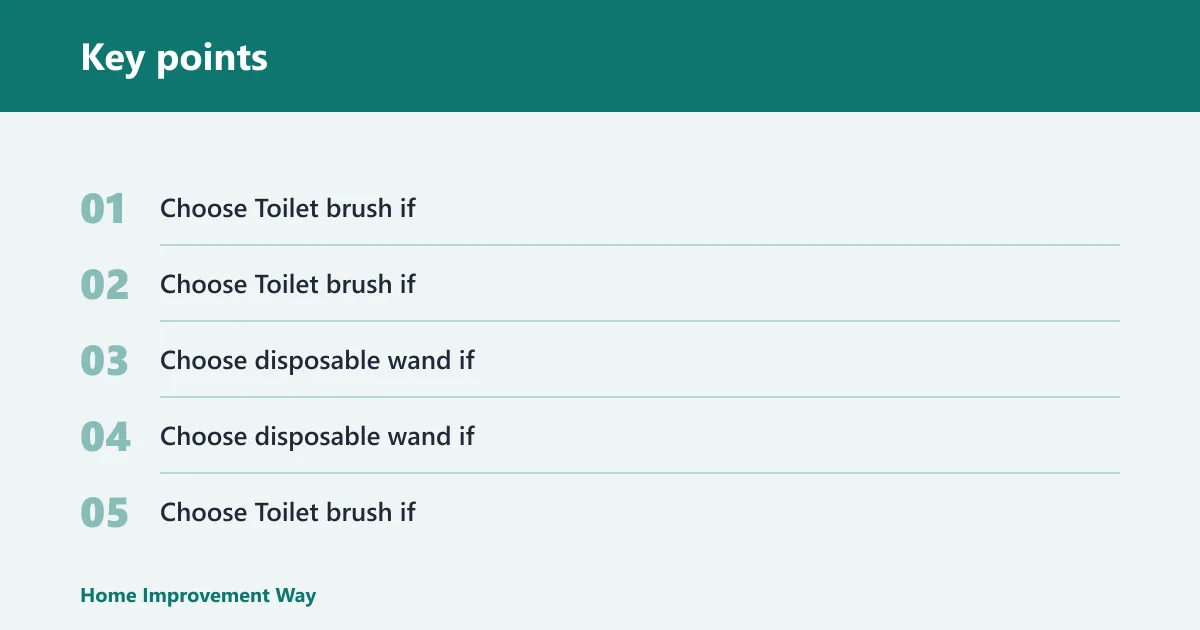
- Choose Toilet brush if you clean often and want to reduce refill spending.
- Choose Toilet brush if your bowl finish is delicate and you can buy a soft, bowl-safe head.
- Choose disposable wand if you want less handling after scrubbing.
- Choose disposable wand if you value a caddy-based system with simpler cleanup in a tight space.
- Choose Toilet brush if you want less trash and do not mind rinsing and drying the tool.
- Choose disposable wand if you are more likely to use the tool consistently when disposal is simpler.


Frequently asked questions
Is a toilet brush better than a disposable wand?
A toilet brush is better when the main goal is lower long-term cost. A disposable wand is better when you want less direct contact with grime and easier post-clean disposal. The right answer depends on whether your priority is budget, handling, or how often you clean the bowl.
Are disposable toilet wands more hygienic than regular toilet brushes?
Usually, yes for handling. Disposable wands reduce contact with the used head, while reusable brushes can retain moisture and bacteria if the holder stays damp. Hygiene still depends on storage, though, because a dirty caddy or an overused refill system can create its own problem.
Which costs less over time: a toilet brush or a disposable wand?
A toilet brush usually costs less over time because the handle and holder are reusable. A wand tends to cost more as you clean more often, since each session uses a refill head. The monthly difference is biggest in busy households or homes that clean multiple toilets on a regular schedule.
Do disposable toilet wands clean under the rim as well as brushes?
Often, yes. The wand is designed to reach the rim and tricky corners, which gives it a strong advantage for quick under-rim cleaning. A brush can still do the job, but the head shape and stiffness matter more, and some bowls require extra wrist angle to reach fully.
Can disposable toilet wands damage a toilet bowl finish?
They can if the refill head is too coarse for a delicate or coated bowl. Porcelain glaze and newer finishes do best with a nonabrasive head. If you are unsure, avoid anything that feels gritty or overly stiff and test the gentlest option that still reaches the rim.
Sponsored / affiliate links. As an Amazon Associate I earn from qualifying purchases. I may earn additional commission from eligible campaigns.