Best Toilet Cleaners for Porcelain (2026): We Compared
The best toilet cleaner for porcelain matches the stain: mild acid for limescale and hard-water rings, an enzymatic or surfactant cleaner for routine soil, and non-abrasive scrubbing only on intact glaze. Pick the wrong type, and you can leave mineral buildup behind or scratch the finish. This guide shows how to choose by stain type, glaze condition, and water hardness.
Quick comparison
| Product | Badge | Best for | Price | ||
|---|---|---|---|---|---|
 |
Bar Keepers Friend Toilet Bowl Cleaner – 24 fl oz Each –Bar Keepers Friend | Our pick | 24 fl oz · Extra thick · Rust remover | $14.25
Price as of 21 Oct 2026
|
View |
 |
Laiyeoy Pumice Stone Toilet Bowl Cleaner, Hard Water StainLaiyeoy | Pair with it | 2 Pack · Long Handle · Pumice | $7.98
Price as of 21 Oct 2026
|
View |
 |
method Antibacterial Toilet Bowl Cleaner, Spearmint, 24 flMethod | Also great | 24 fl oz · Spearmint · Recycled bottle | $5.49
Price as of 21 Oct 2026
|
View |
 |
Lysol Toilet Bowl Cleaner Clinging Gel, Power, 24 oz, 2Lysol | Budget pick | 2 Pack · Bleach Free · 24 oz | $4.49
Price as of 21 Oct 2026
|
View |
Porcelain is glazed ceramic, so surface condition matters as much as the stain. A glossy bowl with fresh soil can take a gentler cleaner; a worn or micro-scratched bowl needs more caution, especially with acids and pumice.
Consumer Reports says it tested nearly a dozen toilet bowl cleaners and examined liquids, gels, sheets, and tabs. It also notes that liquid and gel cleaners can reach under the lip, where buildup often starts. (Consumerreports)
How we chose
The right cleaner for porcelain should balance stain removal, surface safety, odor, and septic compatibility. We compared product types by what they do best, not by brand hype.
The main filters were simple: does it fit routine cleaning or mineral removal, does it work on vertical bowl walls, and does it make sense for sensitive households or septic systems. Stronger formulas only make sense when the stain calls for them.
Also use the published product details and review summaries for the four products below. That keeps the advice tied to what each cleaner is designed to do.
Clinging gel toilet cleaner: best for routine bowl cleaning
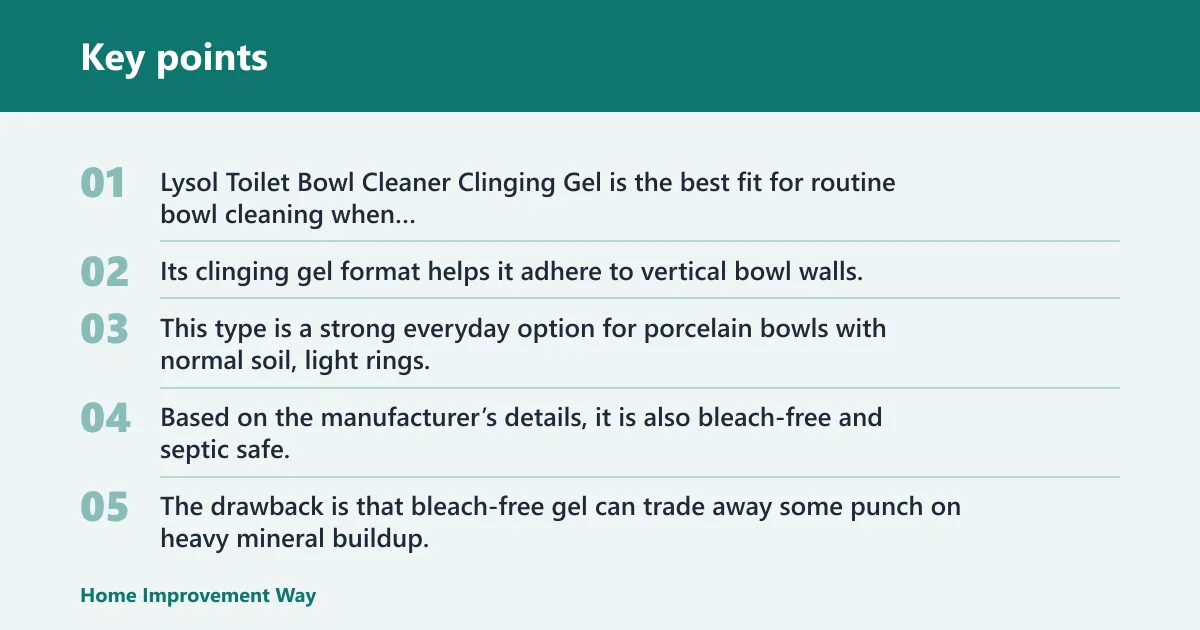
Lysol Toilet Bowl Cleaner Clinging Gel is the best fit for routine bowl cleaning when you want a formula that stays on the surface longer. Its clinging gel format helps it adhere to vertical bowl walls, and the bottle is angled for under-rim application, which matters because grime often hides there.
This type is a strong everyday option for porcelain bowls with normal soil, light rings, and frequent maintenance. Based on the manufacturer’s details, it is also bleach-free and septic safe, which makes it easier to fit into more households than a harsh disinfecting cleaner.
The drawback is that bleach-free gel can trade away some punch on heavy mineral buildup. If the stain is hard-water scale or a stubborn rust line, a routine gel may need a second pass or a stronger acid-based cleaner.
Why gel formulas stay on vertical surfaces
Thick gel matters because it gives the active ingredients more contact time. That helps on the curved sides of a toilet bowl, where thin liquid can run down too fast to work well.
Consumer Reports also notes that liquid and gel cleaners can reach under the lip. That is one reason gels are often the most practical everyday format for porcelain.
When to choose bleach-based versus bleach-free gel
Choose bleach-based gel when sanitizing is the main goal and odor is not a problem. Choose bleach-free gel when you want lower odor, more frequent use, or a better fit for a septic system.
Bleach helps with disinfection, but it does not remove hard-water scale. Mineral deposits usually need acid, not more disinfecting power.
Acidic cleaner: best for hard water stains
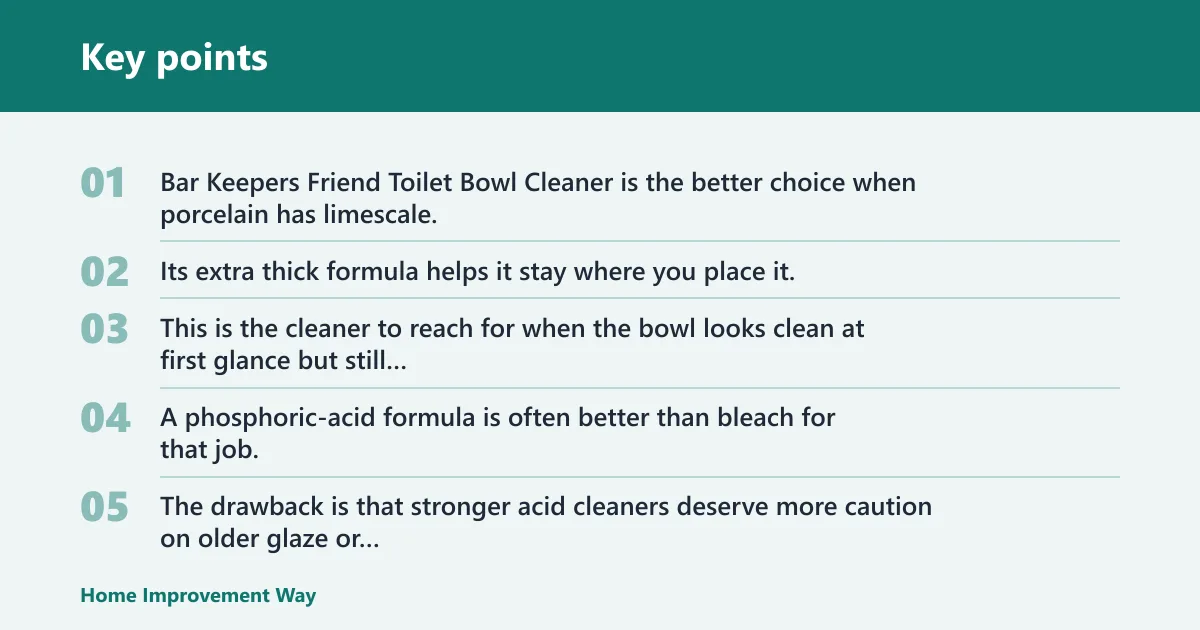
Bar Keepers Friend Toilet Bowl Cleaner is the better choice when porcelain has limescale, rust, or hard-water staining. Its extra thick formula helps it stay where you place it, and the product is aimed at rust stains and mineral deposits, which are the problems acids are made to tackle.
This is the cleaner to reach for when the bowl looks clean at first glance but still shows a chalky ring or orange-brown mineral line. A phosphoric-acid formula is often better than bleach for that job, because bleach does not dissolve scale.
The drawback is that stronger acid cleaners deserve more caution on older glaze or already-scratched porcelain. Use gloves, ventilate the room, and do not leave any cleaner sitting longer than the label says.
What acid cleaners remove well
Acidic toilet bowl cleaners are the main option for limescale and hard-water deposits. They attack mineral buildup, which is a different problem from everyday soil.
That is why water hardness changes the buying decision. If your home has hard water, a gentler daily gel may not be enough on its own.
When to avoid stronger formulas on worn glaze
Glossy, intact porcelain can usually handle routine acid cleaning when the label is followed. Older bowls with dull spots, micro-scratches, or worn glaze need a slower approach, because rougher surfaces hold mineral residue and are easier to damage.
If a stronger cleaner leaves residue or the ring barely changes after the recommended dwell time, stop chasing it with more scrubbing. That is the point to switch methods, not to keep rubbing harder.
Bleach-free cleaner: best for everyday use?
Method Antibacterial Toilet Bowl Cleaner is a good everyday-use option when you want lower odor and a simpler maintenance routine. Based on the product details, it is designed to sanitize and clean in one step, and it uses a naturally derived formula in a recycled bottle.
Bleach-free cleaner makes sense for households that clean often, prefer less odor, or want a milder routine product for porcelain. It is also the safer default when you are not dealing with heavy mineral staining.
The drawback is straightforward: bleach-free formulas can be less aggressive on set-in limescale and rust. If the bowl has a persistent mineral ring, this may be the wrong tool for the first pass.
Lower odor and routine maintenance
Bleach-free cleaners are often easier to live with in small bathrooms and in homes where strong fumes are a problem. They are a better fit for routine soil, light film, and weekly upkeep.
If a bowl only needs maintenance cleaning, there is no reason to jump straight to a harsher product.
Where bleach-free tradeoffs matter
Tradeoffs show up with hard-water homes, neglected bowls, and heavy staining. A gentler formula may clean the visible soil but leave the mineral edge behind.
That is where the cleaner choice should follow the stain, not the label’s marketing language.
Pumice stone cleaner: best for stubborn mineral rings
Laiyeoy Pumice Stone Toilet Bowl Cleaner is the last-resort style pick for stubborn mineral rings, rust, and hard-water stains on porcelain. It includes a long handle, which helps keep your hand clear of the bowl, and pumice is one of the few tools that can physically remove set mineral deposits.
This is useful when a liquid cleaner has done as much as it can but a gray or brown ring still remains. The drawback is the big one: pumice can scratch porcelain if it is used dry or pressed too hard, especially on already worn glaze.
Use it only on wet porcelain, with light pressure, and only on the stained area. If the bowl is glazed and glossy, a liquid acid cleaner is usually the safer first move.
How to use pumice safely on porcelain
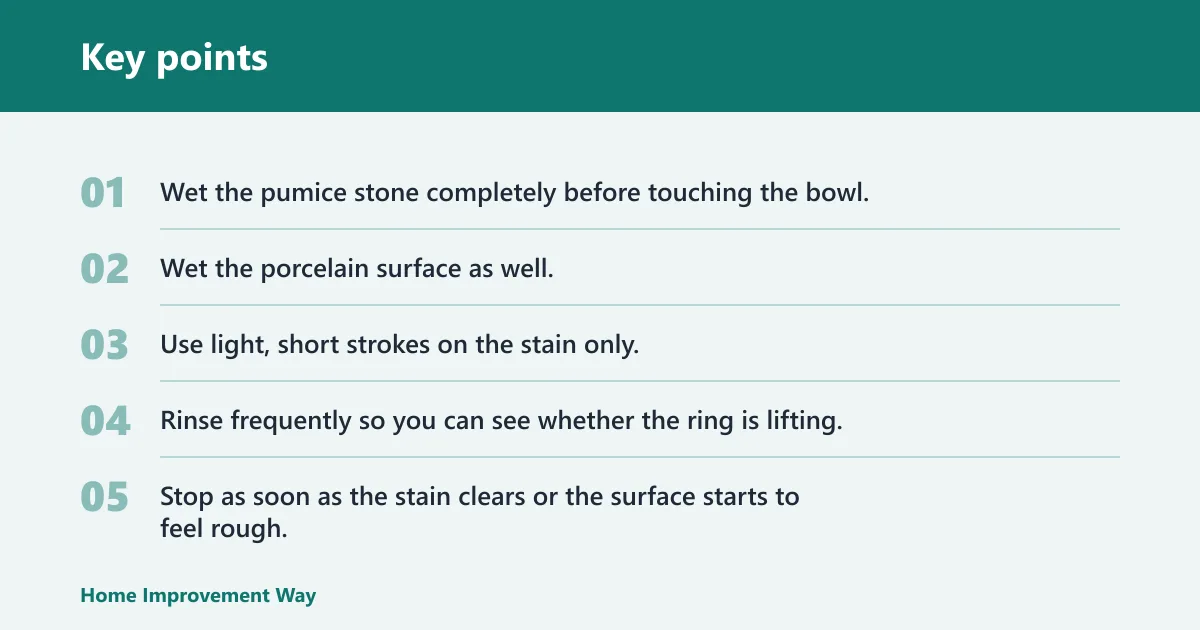
- Wet the pumice stone completely before touching the bowl.
- Wet the porcelain surface as well.
- Use light, short strokes on the stain only.
- Rinse frequently so you can see whether the ring is lifting.
- Stop as soon as the stain clears or the surface starts to feel rough.
Never use a dry pumice stone on porcelain. That is the fastest way to turn a stain problem into a finish problem.
When to stop and call it a fail
If the stain is not changing after careful passes, the issue may be beyond mineral buildup alone. At that point, more pressure increases the chance of scratching.
Stop and switch to a liquid acid cleaner, or bring in professional help if the surface is already damaged and the stain keeps returning.
Porcelain toilet cleaner decision table
This table separates routine cleaning from stain removal. The safest cleaner depends on what is on the bowl and what the glaze looks like.
| Problem | Best cleaner type | Why it works | Risk to porcelain | When to escalate to a pumice stone or professional help | Do not use |
|---|---|---|---|---|---|
| Routine soil on glossy glaze | Bleach-free gel or mild surfactant cleaner | Clings to bowl walls and lifts everyday grime without unnecessary abrasion | Low on intact glaze | Escalate only if stains remain after proper dwell time and normal brushing | Steel wool, abrasive pads, dry pumice |
| Light ring from frequent use | Clinging gel toilet cleaner | Stays in contact longer on vertical surfaces and under the rim | Low to moderate | Move to a stronger acid cleaner if the ring is mineral-based and does not lift | Scrubbing hard with a rough brush or scouring powder |
| Limescale or hard-water deposits | Acidic toilet bowl cleaner | Targets mineral buildup better than disinfecting formulas | Moderate on worn glaze; lower on intact glaze when used correctly | If the ring remains after repeated label-compliant use, try a wet pumice stone carefully | Bleach as the main treatment, abrasive pads, dry pumice |
| Rust stains | Acidic cleaner or rust-focused toilet cleaner | Mineral and rust stains respond better to acid than to routine soap-based cleaning | Moderate | Escalate if the stain has etched the glaze or keeps returning from water supply deposits | Bleach-only cleaning, metal brushes |
| Stubborn mineral ring on intact porcelain | Wet pumice stone | Removes the remaining mineral layer when liquid cleaners stall | Moderate to high if misused | Call for professional help if the porcelain is dull, scratched, or the ring reappears quickly | Dry pumice, aggressive pressure, abrasive pads |
| Septic system with regular maintenance needs | Septic-safe bleach-free cleaner | Less likely to disrupt bacterial balance than harsh bleach or ammonia formulas | Low when label instructions are followed | Escalate with a septic-compatible acid cleaner only when hard-water buildup demands it | Assuming a product is septic-safe just because the bottle says “gentle” |
Which one should you buy?
Choose the Lysol clinging gel if you want one product for regular cleaning, lower odor, and under-rim coverage. Based on the product details, it is the most flexible everyday pick in this group.
Choose the Bar Keepers Friend cleaner if your main problem is limescale, rust, or hard-water staining. That is the stronger match when the bowl looks clean but the mineral ring will not move.
Choose Method if you want a routine cleaner with a milder profile and you are not fighting heavy deposits. Choose the Laiyeoy pumice stone only when the stain is clearly mineral-based and liquid cleaners have already fallen short.
Say your toilet has a white porcelain bowl, a thin gray ring at the waterline, and no visible scratches. Start with a clinging gel and the label’s dwell time. If the ring does not budge, move to a mild acid cleaner before you reach for anything abrasive.
Suppose the bowl is older, the glaze looks a little dull, and you live on hard water. That bowl needs more caution, not more force. A liquid acid cleaner is usually the safer first move, while pumice belongs only after careful wet use and only if the stain is still clearly mineral buildup.
Hard water and cleaning frequency
Hard water changes both the cleaner and the schedule. In those homes, a weekly gel may not prevent scale, so mineral removal has to be part of the routine.
If you see rings returning quickly, cleaner choice alone will not solve the problem. The water is driving the stain, so the maintenance interval has to tighten too.
Septic systems and ingredient labels
Septic-safe should be checked on the ingredient list, not assumed from the front label. Products that rely on harsh bleach or ammonia are not the first choice for every septic system.
Some cleaners are safe for homes with septic systems based on ingredients, as Consumer Reports notes. That is a label-and-formula question, not a marketing slogan.
How do you clean a porcelain toilet bowl?
Clean a porcelain toilet bowl by matching the cleaner to the stain, then giving it enough contact time to work. For routine soil, use a clinging gel or bleach-free cleaner; for mineral deposits, use an acid-based toilet bowl cleaner; for stubborn rings, move carefully to wet pumice only after the liquid cleaner fails.
Steps that work for most bowls
- Flush once so the bowl surface is wet and the cleaner can spread.
- Apply the cleaner under the rim and around the waterline.
- Let it sit for the label-recommended dwell time.
- Scrub with a non-abrasive toilet brush.
- Flush again and inspect the ring or residue.
Under-rim application matters because buildup often hides there and in the water outlets. If the cleaner never reaches that area, the bowl can still look dirty after a full cleaning cycle.
How to clean porcelain without scratching it
Use soft-bristle brushing, non-abrasive formulas, and enough dwell time to reduce the need for force. On intact glaze, the finish should not need aggressive scrubbing to look clean.
A common first-timer mistake is to scrub harder when the stain is really mineral scale. That usually wastes time and raises the risk of scratching the glaze.
Frequently asked questions
What is the best cleaner for porcelain toilets?
The best cleaner depends on the stain. For routine soil, a clinging gel or bleach-free cleaner is usually the best fit. For limescale and hard-water rings, a mild acid cleaner is the better choice. If the ring is stubborn, a wet pumice stone may be needed as a last step.
What is the best rated toilet bowl cleaner?
The same source says it tested nearly a dozen toilet bowl cleaners and found its top performers most effective at removing solid waste from porcelain plates. Among the products here, the Lysol clinging gel is a strong everyday pick, while the Bar Keepers Friend cleaner is better for mineral stains.
Can you use pumice on a porcelain toilet?
Yes, but only carefully and only on wet porcelain. Pumice can remove stubborn mineral rings, rust, and limescale, but it can scratch if used dry or with too much pressure. It should be a last-resort tool after liquid cleaners have failed.
Which toilet cleaner is safe for porcelain?
Most toilet cleaners labeled for porcelain are safe when used correctly, but the surface condition matters. Glazed, intact porcelain is more forgiving than worn or micro-scratched porcelain. Non-abrasive gel cleaners are the safest routine choice, while acids and pumice need more caution.
What cleaner removes hard water stains from porcelain
An acidic toilet bowl cleaner is the best starting point for hard-water stains, limescale, and mineral rings. Bleach does not dissolve scale well. If the deposit remains after careful use, a wet pumice stone can be tried on intact glaze.
Sponsored / affiliate links. As an Amazon Associate I earn from qualifying purchases. I may earn additional commission from eligible campaigns.