Why Does My Toilet Flush Sometimes but Not Others? Tank, Fill, Bowl, and Drainage Checks
A toilet that flushes fine sometimes but weakly or not at all other times usually comes down to inconsistent water levels in the tank, a flapper that doesn’t open fully every time, or partial drain blockages that clear with a strong flush but resist a weak one. Because the problem is intermittent, it’s easy to dismiss until it fails at the worst moment. This guide walks through the tank, fill, bowl, and drainage checks in the order that isolates the cause fastest.
Check the Tank Water Level First
Remove the tank lid and watch a full fill-and-flush cycle. The water should refill to a marked line on the overflow tube, typically about an inch below its top, every single time. If the level varies noticeably between flushes, either an old ballcock-style fill valve with a worn washer, or a modern float-cup valve with a float that’s slowly filling with water or has a cracked arm, is delivering inconsistent volume. Less water in the tank means less force pushing water through the siphon jet and rim holes, which explains a flush that’s strong one time and weak the next with no other change.
Inspect the Flapper’s Full Range of Motion
The flapper needs to lift completely away from the flush valve seat and stay up long enough for most of the tank to drain before dropping back down. A flapper chain that’s slightly too short can yank it back down early on some flushes but not others depending on exactly how the chain lies in the tank; too much slack lets the chain occasionally tangle under the flapper, blocking it from sealing or opening fully. A flapper that’s warped or coated in mineral buildup can also stick partially closed intermittently. Watch the flapper directly during several flushes, if it visibly doesn’t rise all the way or drops early on the weak flushes, that’s your answer, and flappers are a $5 to $15 universal-fit part.
Rim Jets and Siphon Jet Can Clog Partially
The small holes under the toilet bowl’s rim, and the larger siphon jet at the bottom front of the bowl, direct water to create the swirling action and downward force that starts the siphon. Mineral scale (especially in hard-water areas) can partially clog some of these holes while leaving others open, so the bowl still gets some water on every flush but not enough force every time to fully clear waste. Use a small mirror and a flashlight to check under the rim, or feel for weak/absent streams from individual jet holes during a flush. Clearing scale with a wire (a straightened coat hanger works) or a descaling product restores even flow across all the jets.
A Partial Drain Blockage Reveals Itself Under Stress
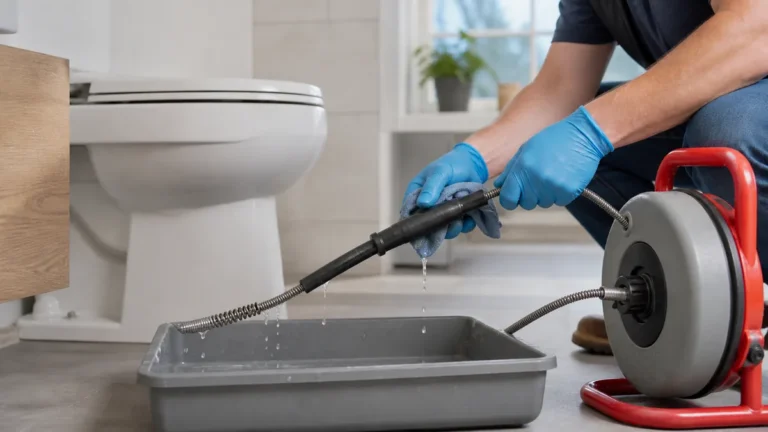
If the tank and flapper check out fine, a partial clog further down the trap or drain line can let a strong flush (more water, more paper) push through while a weaker or smaller-volume flush doesn’t generate enough force to clear it. This is common when a household member flushes less paper on some visits than others, and it isn’t really an inconsistent toilet, the toilet not flushing fully pattern in these cases tracks with how much is going down, not a mechanical fault. A flange-style plunger used a few times, or a small dose of enzyme drain treatment left overnight, often resolves a partial soft blockage without needing to snake the line.
Frequently Asked Questions
Could the toilet’s flush handle itself be the problem?
Yes, a loose handle nut inside the tank can let the handle’s lift arm travel inconsistently, sometimes lifting the flapper fully and sometimes only partially depending on how firmly it’s pressed. Tighten the mounting nut (it loosens counterclockwise, opposite of most threads) and check that the lift chain has a consistent, small amount of slack.
Does a low-flow toilet flush inconsistently by design?
Some older 1.6-gallon or early low-flow models from the 1990s had genuine design flaws that made them flush inconsistently regardless of maintenance. Toilets made in the last 10 to 15 years with WaterSense certification and a wider trapway generally don’t have this inherent problem, so persistent inconsistency on a newer toilet points to a mechanical cause, not the model itself.
How much water should a modern toilet tank hold?
Most toilets made after 1994 use 1.6 gallons per flush, and WaterSense-certified models use 1.28 gallons or less. Adding extra water beyond the manufacturer’s fill line doesn’t improve flush strength and can cause the tank to overflow into the bowl continuously through the overflow tube.
Sponsored / affiliate links. As an Amazon Associate I earn from qualifying purchases. I may earn additional commission from eligible campaigns.