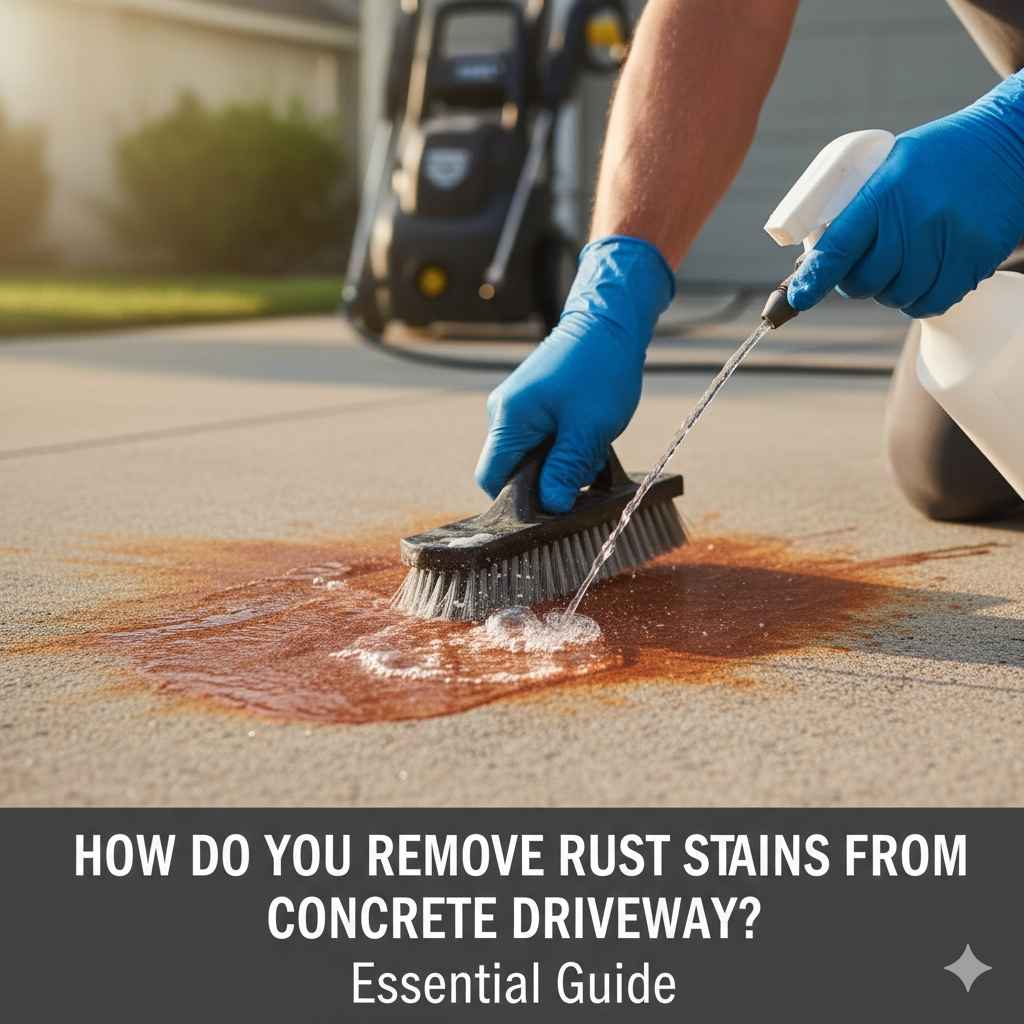
How Do You Remove Rust Stains From Concrete Driveway? Essential Guide
Bolded Quick Summary: To remove rust stains from a concrete driveway, start by scrubbing with a paste of dish soap and water, followed by applying a commercial rust remover or a mild acid solution like white vinegar or lemon juice. Always rinse thoroughly and test in an inconspicuous spot first for the best, safest results.
Seeing those ugly orange-brown rust spots pop up on your nice concrete driveway can feel like a real setback. It happens easily—maybe a leaky metal lawn chair, dropped screws, or fertilizer cans. These stains look permanent, but don’t worry! I’m Md Meraj, and I promise you that cleaning rust off concrete is a manageable DIY job. You do not need heavy machinery or harsh chemicals to restore that clean look. With a few common household items and simple steps, we can tackle this together. Let’s dive into the easy, safe ways to make those stains disappear for good!
How Do You Remove Rust Stains From Concrete Driveway? Essential Guide
Concrete is tough, but it is also porous. That means rust—which is iron oxide—soaks right into those tiny holes, making the stains seem deep-set. The secret to successful removal is understanding that rust needs an acid to dissolve. We will use safe, approachable acids first, moving up to stronger treatments only if needed. Remember, safety is always step one, so let’s get our gear ready before we mix anything.
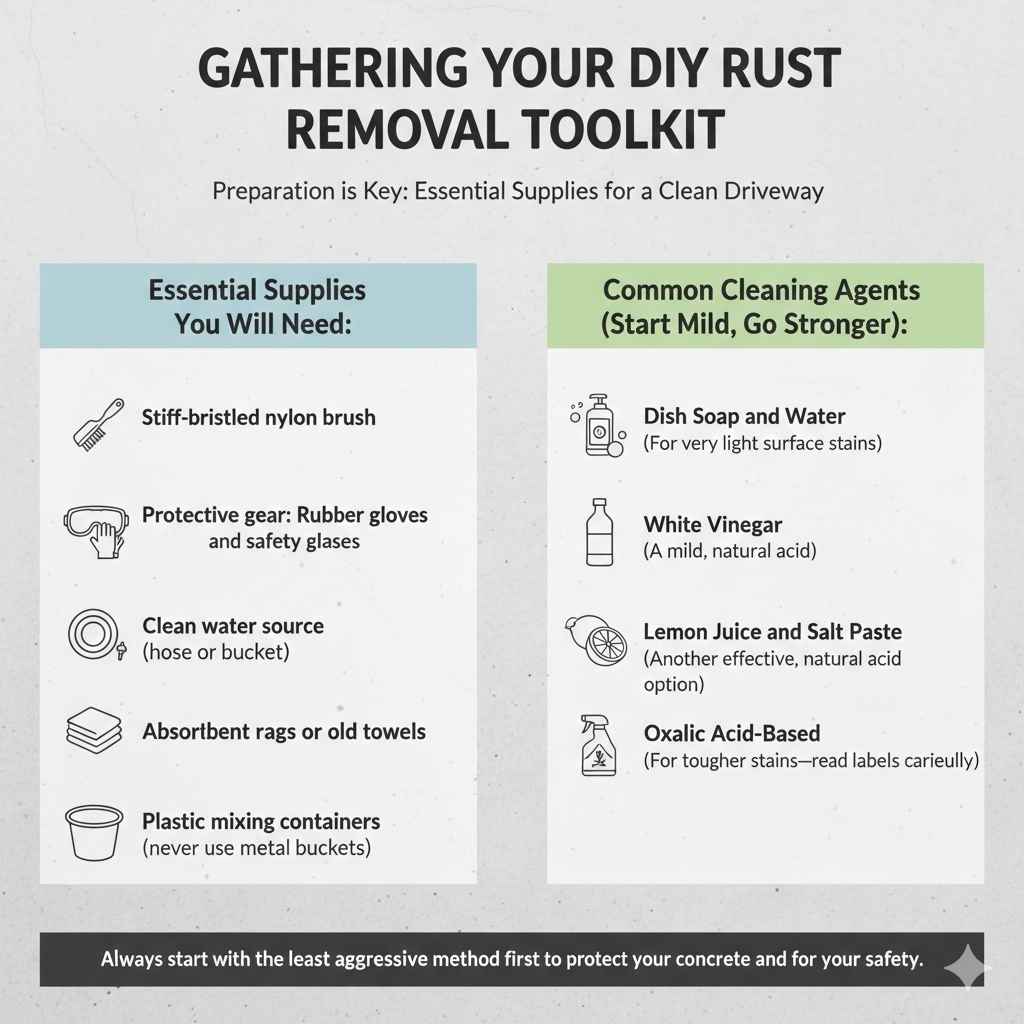
Gathering Your DIY Rust Removal Toolkit
Before you start scrubbing, make sure you have the right tools. Having everything prepared means you can work efficiently and safely. Think of this like setting up your workshop before starting a good woodworking project—preparation is key!
Essential Supplies You Will Need:
- Stiff-bristled nylon brush (avoid wire brushes, as they can scratch concrete and leave behind metal that will just rust again).
- Protective gear: Rubber gloves and safety glasses.
- Clean water source (hose or bucket).
- Absorbent rags or old towels.
- Plastic mixing containers (never use metal buckets).
Common Cleaning Agents (Start Mild, Go Stronger):
We always want to try the least aggressive method first. This protects your concrete and is safer for you.
- Dish Soap and Water (For very light surface stains).
- White Vinegar (A mild, natural acid).
- Lemon Juice and Salt Paste (Another effective, natural acid option).
- Oxalic Acid-Based Commercial Rust Removers (For tougher stains—read labels carefully!).
Step 1: The Prep Work – Safety First and Spot Testing
Every good cleaning or renovation task begins with preparation. This step ensures you don’t damage your driveway or hurt yourself in the process.
Safety Check List:
Since we are dealing with mild acids, even vinegar, we need basic protection. It is easy, but crucial.
- Wear Gloves: Protect your skin from irritation.
- Wear Eye Protection: Keep splashes out of your eyes.
- Ensure Good Ventilation: If you use commercial cleaners, make sure you are outside where air moves freely.
Test Area Importance:
Concrete color and composition can vary widely. What works on one driveway might slightly etch or lighten another. Always perform a test!
- Choose a hidden spot, like near the garage door edge or behind a planter.
- Apply a small amount of your chosen cleaning solution (start with vinegar).
- Let it sit for 5–10 minutes.
- Scrub lightly and rinse.
- Check the area after it dries completely to ensure there is no discoloration or etching. If it looks fine, you are ready to proceed!
Step 2: Try the Gentle Approach (Soap and Scrubbing)
For the newest or lightest rust spots, simple scrubbing might do the trick. This step aims to lift any surface debris before introducing chemical cleaners.
First, sweep the entire area thoroughly to remove any loose dirt, sand, or tiny metal shavings. You want a clean slate.
The Dish Soap Method:
- Mix a few drops of strong dish soap (like one designed to cut grease) into a bucket of warm water.
- Dip your stiff nylon brush into the solution.
- Scrub the rust stain vigorously in a circular motion. Focus your energy on the stained area.
- Rinse the area completely with a hose. Let it dry.
If the stain remains, don’t worry. It just means the iron oxide has bonded a bit deeper. Time to bring out the mild acids!
Step 3: Tackling Stains with Household Acids (Vinegar and Lemon)
This is where we get effective results without needing specialized chemicals immediately. Acids react with rust, breaking its bond with the concrete so it can be rinsed away. Many trusted sources, like the Department of Energy, recommend mild acids for concrete cleaning because they are often less damaging than harsh bleach or specialized solvents.
Method A: The White Vinegar Soak
White distilled vinegar (5% acetic acid) is fantastic because it’s cheap, readily available, and usually safe for concrete when used correctly.
- Pour undiluted white vinegar directly onto the rust stain until it is fully saturated.
- Allow the vinegar to sit for 15 to 30 minutes. For very tough stains, you can lay a piece of plastic wrap over the vinegar to keep it from evaporating too quickly (this is called ‘dwell time’).
- After the soaking time, scrub hard with your stiff nylon brush. You should see the stain begin to lift or turn lighter.
- Rinse the area thoroughly with plenty of clean water. Neutralizing the acid with water is important to prevent long-term damage to the concrete surface.
Method B: Lemon Juice and Salt Paste
This method works similarly to vinegar but the salt adds a slight abrasive quality while the citric acid does its work. This is a classic, time-tested method.
- Create a thick paste using fresh lemon juice and table salt. You want the consistency of thick frosting.
- Generously cover the rust stain completely with the paste.
- Let this mixture sit for at least one hour. Again, covering it with plastic can help keep it moist if you live in a hot, dry area.
- Scrub the paste into the stain using your nylon brush.
- Rinse everything away thoroughly with clean water.
Step 4: Using Commercial Rust Removers (When DIY Fails)
If the household remedies haven’t fully worked, it’s time to bring in dedicated commercial products. These cleaners usually contain stronger acids, like oxalic acid, designed specifically to bind with and remove iron oxides. Always follow the manufacturer’s directions precisely.
When shopping, look for products specifically labeled as “Concrete Rust Stain Remover.” Avoid general acid cleaners unless the product specifically states it is safe for concrete surfaces. For example, products containing Hydrofluoric acid are generally too harsh for standard driveways and can permanently etch the surface.
Key Considerations for Commercial Cleaners:
Using strong chemicals requires respect and proper handling. Referencing guidelines from organizations like the Environmental Protection Agency (EPA) about chemical safety is always a good practice.
| Commercial Product Type | Active Ingredient Focus | Caution Level | Best For |
|---|---|---|---|
| Oxalic Acid-Based Removers | Chelates (binds to iron) | Medium | Deep-set, stubborn stains. |
| Phosphoric Acid Cleaners | Converts rust to iron phosphate | Medium-High | Large rust coverage areas. |
| Muriatic Acid (Avoid if possible) | Hydrochloric Acid | Very High | Professional use only; high risk of etching. |
Application Process for Commercial Removers:
- Safety Gear On: Put on your gloves, glasses, and maybe even a mask if fumes are strong.
- Moisten Concrete: Lightly wet the area around the stain with plain water. This helps prevent the strong cleaner from spreading beyond the stain and potentially damaging surrounding concrete.
- Apply Sparingly: Apply the chemical cleaner directly to the stain as directed on the bottle. Do not over-apply.
- Allow Dwell Time: Let it work for the recommended time—often short, like 5–10 minutes. Never let it dry on the concrete.
- Scrub Gently: Use your nylon brush to work the cleaner into the spot.
- Neutralize and Rinse: This is the most critical step. You must neutralize the strong acid after use. A solution of baking soda mixed heavily with water (or sometimes a specialized neutralizer from the manufacturer) should be applied, allowed to bubble for a few minutes, and then rinsed repeatedly with large amounts of fresh water.
Step 5: Dealing with Specific Rust Sources (Preventative Context)
Sometimes, knowing what caused the stain helps prevent it from coming back, or guides how you clean it. Rust on concrete usually comes from metal objects sitting on the surface or leaching minerals from within the concrete itself.
Common Rust Culprits:
- Metal Furniture/Tools: Ensure metal legs have rubber stoppers or are painted with a rust-proof sealant.
- Fertilizer: Many lawn fertilizers contain iron sulfate, which causes significant rust stains, especially when wet. Sweep up spills immediately and wash the area with water.
- Water Runoff: If water runs off a rusty metal roof flashing or downspout onto the driveway, you need to fix the source higher up!
If the source is a leaky downspout, you can find resources on proper gutter maintenance from reliable construction guides. Preventing the problem is always easier than cleaning the stain later!
The Power of Poultices for Deep Stains
For stains that have penetrated deep into the concrete pores, sometimes scrubbing just won’t cut it. This is where a poultice comes into play. A poultice is a cleaning agent mixed with an absorbent material that slowly pulls the stain out of the concrete as it dries.
Think of it like this: the liquid cleaner dissolves the rust, and the absorbent material acts like a sponge to draw that dissolved rust up and out of the concrete surface. This technique is highly effective but requires patience.
How to Mix and Apply a Rust Poultice:
You can use Oxalic Acid powder (purchased from a hardware store or chemical supplier) mixed with water to form your cleaning solution, or you can use a commercial rust remover mixed into the absorbent material.
Choosing Your Absorbent Material:
- Kaolin clay or powdered chalk (best commercial options).
- Talcum powder (baby powder without added fragrance).
- Diatomaceous Earth (often found at pool supply stores).
Poultice Application Steps:
- Mix the Poultice: Mix your cleaning agent (e.g., oxalic acid solution) with your chosen absorbent material until you achieve a thick, peanut-butter-like consistency.
- Apply Thickly: Apply the paste about 1/4 to 1/2 inch thick, extending about an inch beyond the stain’s edges.
- Cover and Seal: Cover the poultice completely with plastic sheeting (like painter’s plastic). Tape the edges down securely with painter’s tape to slow evaporation. This forces the moisture (and the cleaner) down into the concrete before it is pulled back up.
- Wait Patiently: Allow the poultice to dry completely. This can take 24 to 48 hours, depending on temperature and humidity. This drying process is what pulls the stain out.
- Remove: Once bone dry, carefully scrape off the hardened powder using a plastic or wooden scraper. Do not use metal tools.
- Rinse: Wash the area thoroughly with clean water and check the results. You may need to repeat this process for very old or large stains.
Troubleshooting and Maintenance Tips
Even after cleaning, rust removal isn’t always perfect on the first try, especially on aged concrete. Don’t get discouraged! A little extra care goes a long way.
What If Some Stain Remains?
If a faint shadow remains, try repeating the most effective method you used (usually the vinegar soak or the commercial cleaner) but increase the dwell time slightly, ensuring you are still rinsing completely.
Understanding Concrete Etching:
When using acids, especially commercial ones, you risk etching—a dulling or roughening of the smooth surface finish of the concrete. If you notice the area looks duller after cleaning, it means the acid has eaten away a tiny layer of cement paste. To fix minor etching, you may need to reapply a concrete sealer once the area is completely dry and clean to restore a uniform sheen.
Table: Comparing Rust Removal Methods
| Method | Effectiveness (1-5, 5 being highest) | Ease of Use | Cost | Best Scenario |
|---|---|---|---|---|
| Dish Soap Scrub | 1 | Very Easy | Very Low | Fresh, superficial spots. |
| White Vinegar Soak | 3 | Easy | Low | General, light to moderate stains. |
| Lemon & Salt Paste | 3.5 | Medium (Requires time) | Low | Natural removal preference. |
| Commercial Cleaner | 4.5 | Medium (Safety conscious) | Medium | Stubborn, deep-set rust. |
| Poultice (Oxalic Acid) | 5 | Difficult (Requires patience) | Medium-High | Very old or large, deep stains. |
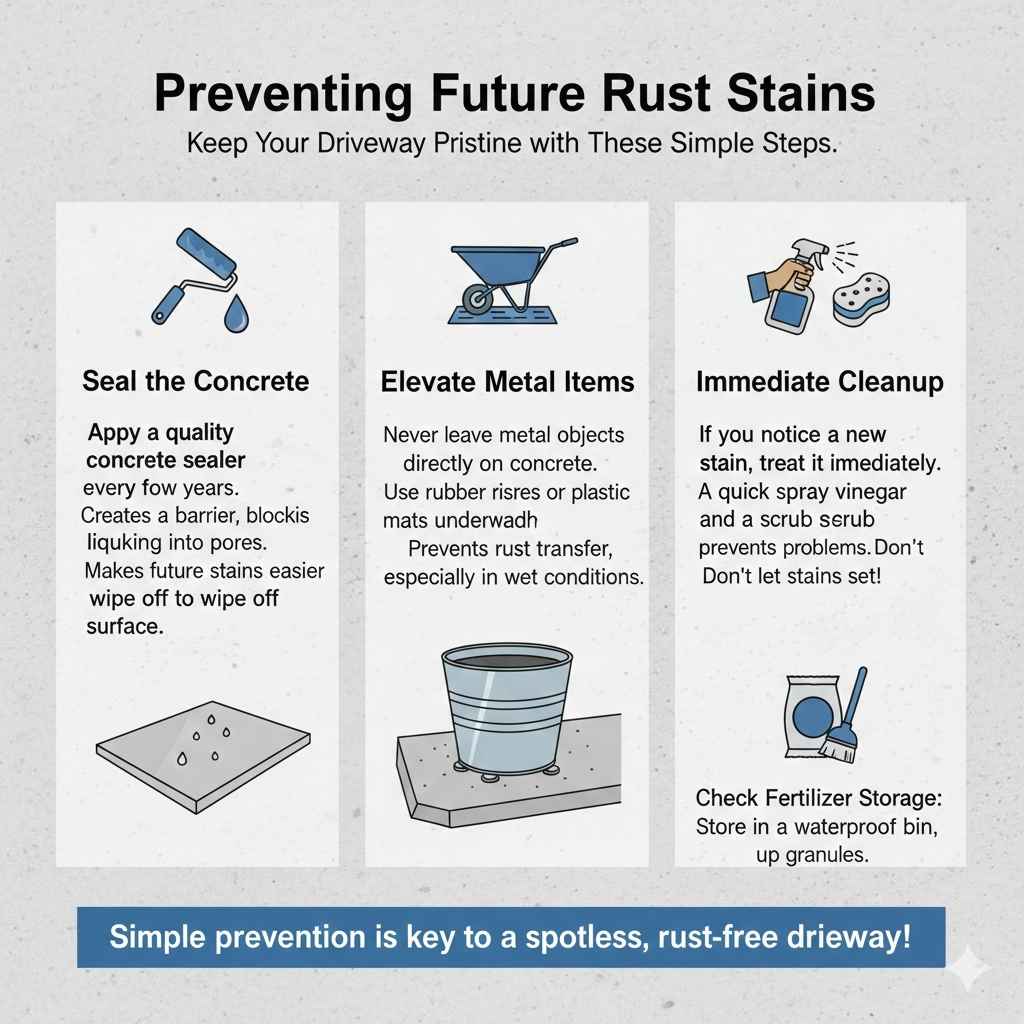
Preventing Future Rust Stains
Now that your driveway looks great, let’s keep it that way! Prevention is much easier than cleaning. This involves managing where metal meets concrete.
- Seal the Concrete: Applying a good quality concrete sealer every few years creates a barrier. This blocks liquids (like rusty water) from soaking into the pores, making future stains much easier to wipe off the surface.
- Elevate Metal Items: Never leave metal objects (wheelbarrows, planters with metal bases, tools) directly on the concrete, especially during rainy seasons. Use rubber risers or plastic mats underneath them.
- Immediate Cleanup: If you notice a new stain, treat it immediately before it has time to set. A quick spray of vinegar and a scrub usually prevents major problems.
- Check Fertilizer Storage: Store lawn fertilizers in a waterproof bin, and sweep up any granules immediately after application before rain hits them.
Frequently Asked Questions (FAQ) for Concrete Rust Removal
Q1: Can I use Muriatic Acid to remove rust from my driveway?
A: While Muriatic Acid (Hydrochloric Acid) is powerful, it is generally too strong for DIY use on standard concrete driveways. It can easily etch and permanently damage the surface finish. Stick to vinegar, lemon juice, or oxalic acid-based commercial products first.
Q2: How long should I leave the cleaning solution on the stain?
A: For household acids like vinegar, aim for 15 to 30 minutes of contact time before scrubbing. For commercial products or poultices, follow the manufacturer’s specific instructions, as leaving them on too long can cause etching.
Q3: My concrete turned lighter after cleaning. Is it ruined?
A: No, it is likely slightly etched, meaning the acid removed a microscopic layer of the top cement paste. If the patch looks dull compared to the rest of the driveway, you may need to clean the entire area evenly and apply a new concrete sealer to restore a uniform look.
Q4: Can I use a power washer to remove rust stains?
A: A pressure washer alone is usually not effective against set-in rust because it relies on mechanical force, not chemical dissolution. You should use the cleaner first to break down the bond, and then a pressure washer (used gently, perhaps under 1500 PSI) can help rinse the loosened stain away effectively.
Q5: What is the absolute safest, most beginner-friendly way to try first?
A: Start with the simplest, safest option: scrub the area with warm water and strong dish soap. If that doesn’t work, immediately try saturating the stain with plain white vinegar for 20 minutes, followed by a good scrub and rinse. This minimizes risk while testing effectiveness.
Q6: Will rust stains come back after cleaning?
A: If you clean the stain but leave the source (like a leaky object) in place, the rust will definitely return. If you have removed the source and thoroughly rinsed the area, the stain should not immediately reappear, though porous concrete might need sealing to ensure long-term protection.
Conclusion
It feels great to take charge of home maintenance, doesn’t it? Removing those frustrating rust stains from your concrete driveway is completely within your ability. We walked through everything from a simple soap scrub to the power of a carefully managed chemical poultice. Remember the golden rules: test first, wear your safety gear, and always neutralize strong acids thoroughly. With patience and the right approach—starting mild and escalating only as needed—your driveway will look clean and sharp again. You’ve got the knowledge now, so grab your gear, and enjoy the satisfaction of a DIY job done right!