How Does a Deadbolt Work? A Simple Explanation
Ever wonder about the simple magic that keeps your home secure? Figuring out How Does a Deadbolt Work? Simple Mechanism Explained might seem tricky at first, with all those tiny parts and the promise of home security. But don’t worry! We’ll break it down step-by-step, making it super easy to follow. You’ll see how a deadbolt really does its job without feeling overwhelmed. Get ready to explore the inner workings of this everyday security device.
What a Deadbolt Does and Why It Matters
Deadbolts are a fundamental part of home security. They are known as a “lock,” and most people associate them with their front door. They are designed to provide a high level of security by using a strong bolt that extends into the door frame, making it difficult for anyone to force the door open. Knowing the basics helps you select the correct deadbolt for your home security requirements. Think of it as a solid piece of metal that acts as a strong barrier.
The Basic Parts of a Deadbolt
A deadbolt isn’t just one piece; it’s a team working together. Each component plays a vital role. Recognizing the different parts gives you a better grasp of how it functions. These parts work hand-in-hand to keep your home safe.
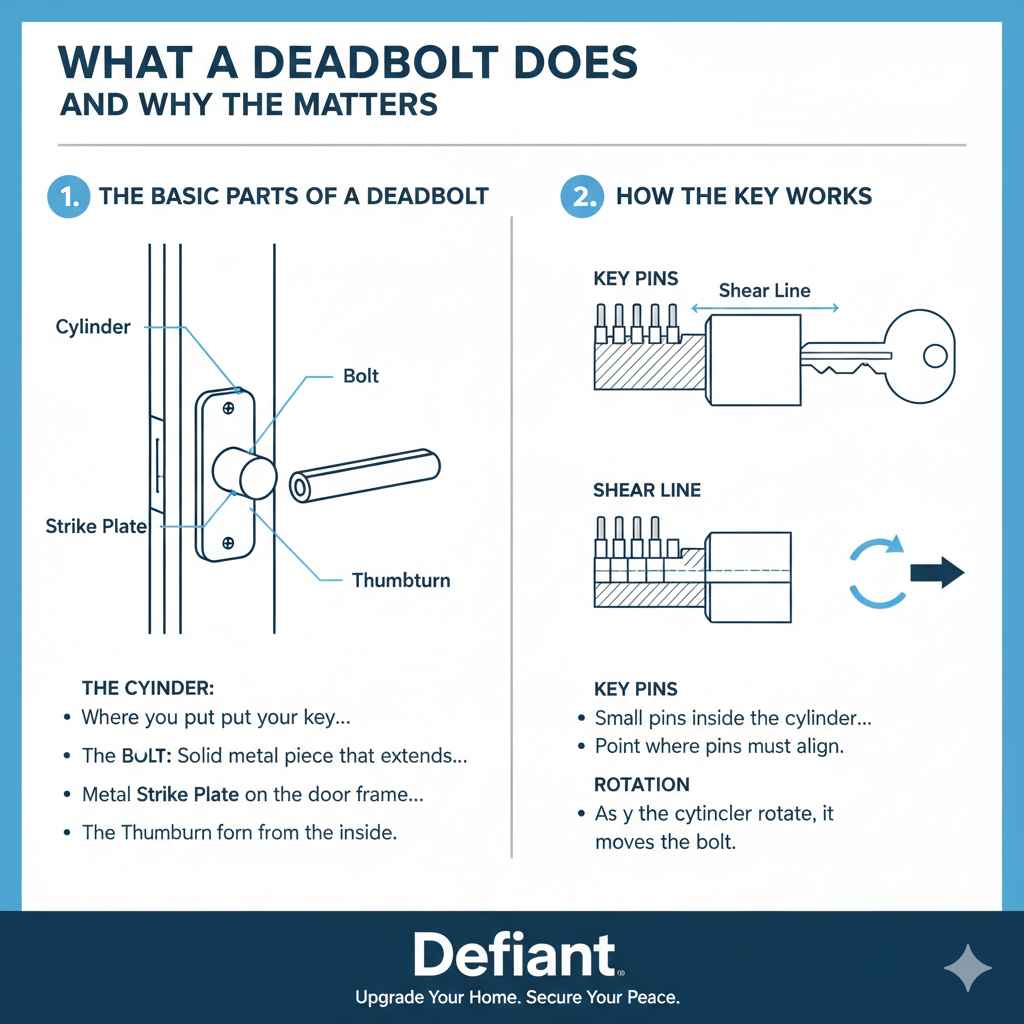
The Cylinder: This is where you put your key. It contains the pins or discs that need to align to allow the bolt to move. The cylinder is the brain of the lock, and without it, the lock is useless.
The cylinder is the part of the deadbolt you put the key into. It houses the lock’s inner workings, like pins or discs, that have to line up perfectly for the bolt to move. When you insert and turn the correct key, the cylinder allows the bolt to extend or retract, locking or unlocking the door. Think of it like a puzzle: the right key arranges everything just right.
The Bolt: This is the metal piece that extends from the door into the frame. It’s the physical barrier that prevents someone from pushing the door open. The bolt is the strong arm of the deadbolt.
The bolt is the solid metal piece that moves out from the door into the door frame when you lock it. When it’s extended, it makes it very hard for anyone to open the door by force. The bolt’s length and strength determine how secure the lock is. A longer and thicker bolt means a more secure door. Think of it like a metal bar that holds the door shut.
The Strike Plate: This is the metal plate on the door frame where the bolt goes into. It reinforces the frame and prevents the door from being easily pried open. The strike plate is the home of the bolt.
The strike plate is a metal plate installed on the door frame that the deadbolt bolt slides into. It reinforces the frame, preventing someone from easily forcing the door open by kicking or using tools. It’s critical because it bears the brunt of any force applied to the door. Quality strike plates have long screws that reach into the door frame, providing extra security. Think of it as the bolt’s safe harbor when the door is locked.
The Thumbturn: This is the part you turn from the inside to lock or unlock the door. Not all deadbolts have this feature, but many do. The thumbturn is the easy way to lock from inside.
The thumbturn is a simple rotating mechanism on the inside of the door that allows you to lock and unlock the deadbolt without a key. This is the convenience feature that lets you secure your door from inside your home. Turning the thumbturn activates the same mechanisms that the key does on the outside. It’s the simple inside control that makes locking and unlocking a breeze.
How the Key Works
The key is the gatekeeper. Understanding how the key interacts with the cylinder is key to understanding the mechanism. The shape of your key is unique for a reason.
Key Pins: These are small pins inside the cylinder. The key has specific cuts that push these pins to the correct height. This allows the cylinder to rotate.
Inside the cylinder are small pins that are different lengths. When you the cylinder can rotate. If the key is incorrect, the pins won’t align, and the cylinder won’t turn. It’s like a code that unlocks the mechanism.
Shear Line: This is the point where the pins must align for the cylinder to turn. When the key pushes the pins to the correct height, they align at the shear line.
The shear line is a critical point inside the cylinder. It’s where the two parts of each pin (the top and bottom pins) meet. Only when the correct key is inserted and the pins are aligned at the shear line will the cylinder turn, activating the locking mechanism. When the pins are out of alignment, the cylinder is blocked, and the key will not work.
Rotation: As the cylinder rotates, it moves the bolt. This movement is what locks or unlocks the door. It’s the key’s final act to help you.
Once the pins are aligned, the cylinder is free to rotate. This rotation connects to the bolt mechanism, pushing the bolt out to lock the door or pulling it back to unlock it. This rotational movement is what activates the locking and unlocking of your deadbolt. Think of it as the direct action initiated by the key.
The Mechanics of Locking and Unlocking
The actual process of locking and unlocking the door involves several steps that work together. It’s not just turning a key; it’s a sequence of precise movements. Grasping the steps helps you see the magic behind the deadbolt’s actions.
Locking the Door
Locking is an active process with multiple parts involved. You push, turn, and everything falls into place. The key components that you’re in charge of working with the mechanics.
Inserting the Key: The first step is to insert the key into the cylinder. Make sure it goes in smoothly and easily.
When locking your deadbolt, you begin by fully inserting the correct key into the cylinder. The key should slide in without any resistance. Ensure the key is the right one, as any other key or object can jam the lock.
Turning the Key: When the key is turned, the pins inside the cylinder are lifted to the correct height, aligning at the shear line. This enables the cylinder to rotate.
As you turn the key, it interacts with the pins inside the cylinder. The cuts on the key push the pins upwards. When the pins are in the correct position, they line up at the shear line, enabling the cylinder to rotate. Any obstruction in the pin alignment prevents the key from turning.
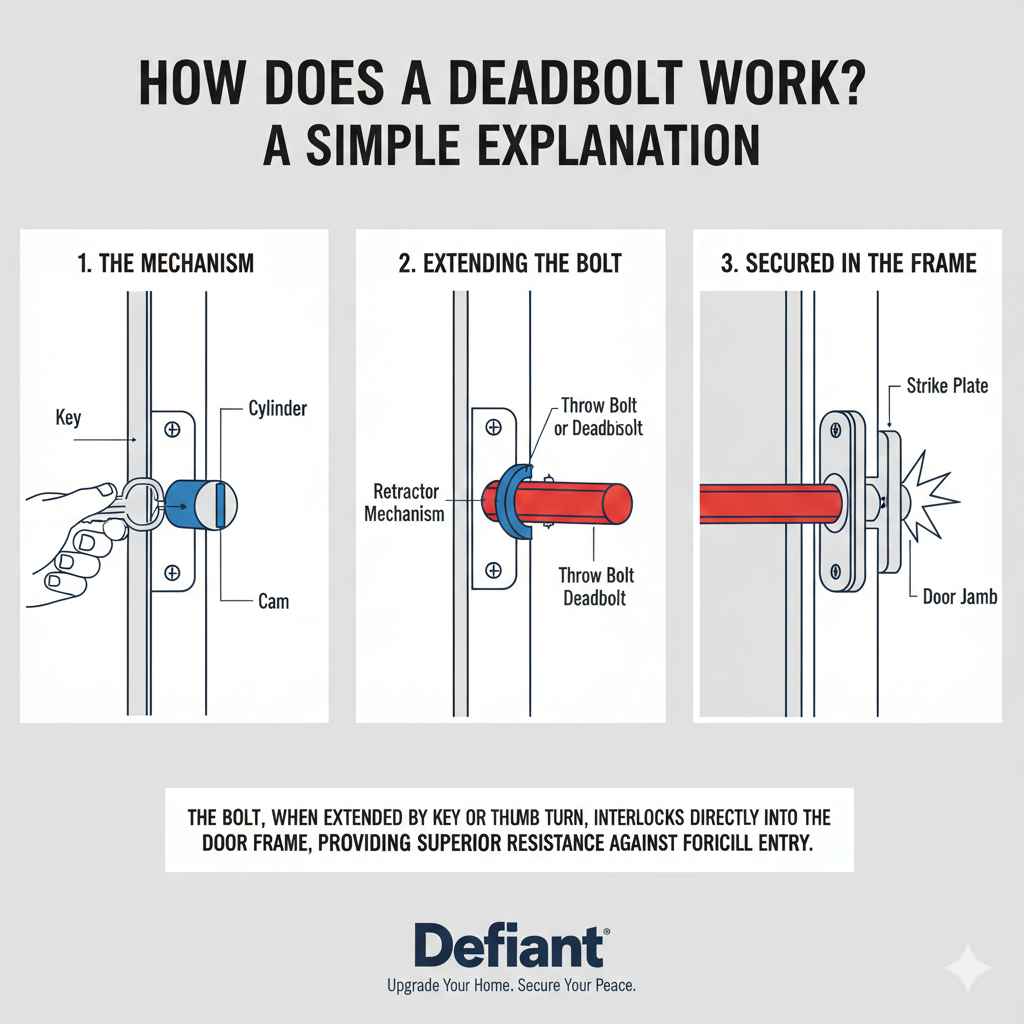
Bolt Extension: As the cylinder rotates, it interacts with the bolt, pushing it outward and into the strike plate on the door frame, thus locking the door.
The rotation of the cylinder engages the bolt mechanism, which extends the bolt out from the door and into the strike plate in the door frame. This bolt extension firmly secures the door in the closed position, making it difficult for anyone to open the door by force without the correct key or a method to circumvent the lock.
Secure Lock: The door is now securely locked. The bolt holds the door firmly closed. The system prevents unwanted entry.
Once the bolt is extended into the strike plate, the door is securely locked. The deadbolt’s strong, solid construction, combined with the way it fits into the door frame, helps to provide a very secure seal that resists force. It’s this design that makes a deadbolt so effective for keeping homes secure.
Unlocking the Door
Unlocking is the mirror image of locking. The mechanics simply work in reverse, bringing everything back to the open position. You’re reversing the actions used to lock the door.
Inserting the Key: The process starts with inserting the correct key, as when locking the door. Make sure the key fits and goes in smoothly.
Unlocking starts by placing the key into the cylinder. The key should fit neatly and easily. Make sure it’s the right key for your lock. This step begins the reversal process that leads to opening the door.
Turning the Key: Rotating the key causes the pins to realign. This permits the cylinder to rotate the other way.
Turning the key inside the lock causes the key cuts to interact with the pins within the cylinder, realigning them. This action allows the cylinder to rotate in the opposite direction. This rotation is an essential action for reversing the locking process.
Bolt Retraction: As the cylinder turns, it pulls the bolt back into the door. This action releases the door from the frame.
As the cylinder rotates, it interacts with the bolt, pulling it back inside the door. This action removes the barrier created by the extended bolt. With the bolt withdrawn, the door is no longer held in place by the lock.
Door Unlocked: The door is now unlocked and can be opened. The strike plate no longer has the bolt inside.
When the bolt fully retracts into the door, the door is free to open. The strike plate no longer houses the bolt. This concludes the process of unlocking the door, granting access without obstruction.
Common Problems and Solutions
Even though deadbolts are sturdy, problems can crop up. Knowing how to fix them can save you time and money. Some issues have simple fixes.
Sticking or Hard to Turn Key
One common issue is when the key is difficult to turn. There are several reasons this could happen. This might be a sign of a small issue that is easily fixed.
Problem: The key is hard to insert or turn.
A common issue is a key that is difficult to insert into the cylinder or turn once inserted. This can be caused by the accumulation of dirt and debris within the cylinder, making it difficult for the pins to move correctly. Sometimes, the issue is caused by the key being slightly bent or damaged.
Solution: Lubricate the cylinder with a graphite lubricant. Avoid using oil-based lubricants, as these can collect dust and make the problem worse. If the key is bent, try to gently straighten it or get a new key cut.
If you encounter a sticking or hard-to-turn key, apply graphite lubricant directly into the keyhole. Graphite helps to ease the movement of the cylinder’s internal parts. If you’re concerned about further issues, call a locksmith to examine and service the lock. For bent keys, you can try to straighten them carefully, but a new key is often the best solution.
Bolt Issues
The bolt itself can sometimes have problems. These problems will cause issues opening and closing the door. Understanding what causes them is the first step.
Problem: The bolt does not extend or retract smoothly.
The bolt may have issues when extending or retracting. This can be due to a few reasons. The strike plate may not align correctly with the bolt, causing the bolt to get stuck. The door or frame might be warped, which can create friction. Another reason is the lock mechanism being damaged. If the bolt is difficult to move, the lock may be damaged.
Solution: Check the alignment of the strike plate and tighten the screws. Lubricate the bolt and mechanism. If the door or frame is warped, consider adjusting the strike plate or the door’s position.
If the bolt’s movement is rough or obstructed, begin by checking the alignment of the strike plate on the door frame and ensuring that the screws are tightened. Next, you can use a dry lubricant to smooth out the bolt’s operation. If the issue is with the frame or the door’s alignment, small adjustments might need to be made. If these methods fail, a locksmith can examine the entire mechanism for damage.
Key Breaks in the Lock
It’s not uncommon for keys to break. This is a big problem. There are techniques for getting the key out. You’ll need to work carefully.
Problem: The key breaks inside the lock.
Sometimes, a key can break while in the cylinder, leaving a piece stuck inside the lock. This often happens because of a damaged key, a lock that is difficult to operate, or excessive force. A broken key leaves the door unusable.
Solution: Try using a key extraction tool or a pair of needle-nose pliers to carefully remove the broken piece. If this is not possible, call a locksmith for assistance.
If a key snaps inside the lock, the most important step is to gently try to remove the fragment without causing further damage. Use a key extraction tool or fine-tipped pliers to carefully grasp the broken piece. Avoid applying too much force, as this can make the issue worse. If you are unsuccessful, you should reach out to a professional locksmith. They have the appropriate tools to extract the broken key and resolve the issue.
Upgrading Your Deadbolt for Better Security
Deadbolt tech keeps improving. Modern upgrades are meant to boost security. They add new layers of safety for your home. You can take steps for better protection.
High-Security Deadbolts
These advanced deadbolts can increase security. They often have designs that resist picking and other tampering. These types of deadbolts provide additional safety measures.
Features: Reinforced strike plates, anti-pick designs, and tamper-resistant cylinders.
High-security deadbolts are equipped with many advanced features to provide excellent protection. These include reinforced strike plates that are secured with long screws, which make it harder for someone to kick down your door. They also have anti-pick designs and tamper-resistant cylinders that resist common methods of lock tampering. They often have internal mechanisms that make them hard to pick. These types of features make them an excellent addition to any home.
Benefits: More resistance to forced entry, enhanced protection against picking, and peace of mind.
The main advantages of high-security deadbolts are enhanced resistance to forced entry and greater protection against common lock tampering methods, like picking or bumping. This security level adds a strong deterrent to potential intruders. They provide peace of mind and improve the overall security of your home.
Smart Deadbolts
Smart deadbolts incorporate technology. They enable remote control and more. They add modern features that help make home security easier.
Features: Keyless entry, remote locking/unlocking via smartphone, and activity logs.
Smart deadbolts are equipped with many advanced features. They often allow keyless entry using a keypad or a smartphone app. They also provide remote locking and unlocking functions, enabling homeowners to control access to their homes from anywhere. Activity logs are often included, recording who enters and leaves and when.
Benefits: Convenience, improved access control, and real-time monitoring.
Smart deadbolts offer convenience, improved access control, and the capability of real-time monitoring. The keyless entry eliminates the need for physical keys. Remote locking and unlocking provide flexible management. You can easily monitor who enters and exits the home. This blend of features enhances convenience and security for homeowners.
Case Studies and Examples
Real-world instances give a better view of how deadbolts work in action. These examples are taken from real-life situations. The following real-world examples highlight the value of a quality deadbolt.
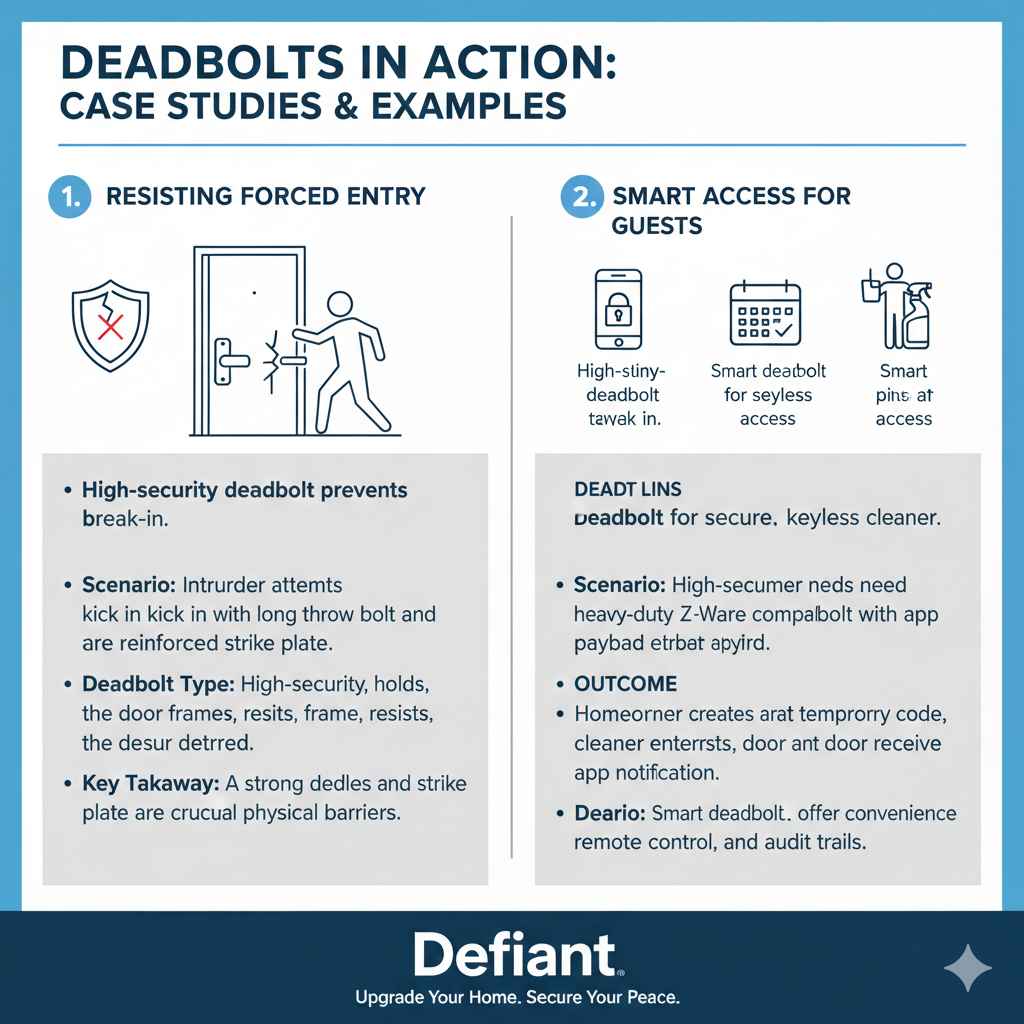
Example 1: A homeowner installed a high-security deadbolt after a break-in attempt. The intruder tried to kick in the door but was unable to breach the deadbolt. The door remained secure, and the intruder was scared away.
This case displays the efficiency of high-security deadbolts. After an attempted break-in, a homeowner decided to upgrade their entry door with a high-security deadbolt. The intruder tried to force entry. The reinforced strike plate and strong bolt effectively stopped the entry attempt. This incident proves the key benefits of high-security deadbolts: they prevent potential intruders from getting inside.
Example 2: A family uses a smart deadbolt to provide access to a house cleaner. The family could grant access without handing over a key. This example offers improved security and convenience.
This situation shows the practical application of smart deadbolts, highlighting both convenience and improved security. A family using a smart deadbolt was able to give their house cleaner temporary access without giving out a physical key. They controlled access remotely and checked the activity logs, ensuring the house was secure at all times. This use illustrates smart deadbolts’ advantages and how they adapt to modern security needs.
How Does a Deadbolt Work? Simple Mechanism Explained in a Table
Sometimes, seeing a comparison side-by-side helps make things clear. The following table highlights the difference between a standard and high-security deadbolt.
| Feature | Standard Deadbolt | High-Security Deadbolt |
|---|---|---|
| Bolt Material | Steel or standard metal | Hardened steel |
| Strike Plate | Standard, short screws | Reinforced, long screws |
| Keyway | Basic pin tumbler | Advanced, pick-resistant design |
| Tamper Resistance | Lower | Higher |
Frequently Asked Questions
Question: Can I install a deadbolt myself?
Answer: Yes, it is often possible to install a deadbolt yourself. Many kits come with instructions. However, if you are not comfortable with basic tools or carpentry, it is best to seek professional installation.
Question: What’s the difference between a single-cylinder and a double-cylinder deadbolt?
Answer: A single-cylinder deadbolt uses a key on the outside and a thumbturn on the inside. A double-cylinder deadbolt requires a key on both the inside and outside, adding security but also posing a safety risk in emergencies.
Question: How often should I lubricate my deadbolt?
Answer: It’s a good idea to lubricate your deadbolt at least once a year, or more often if you notice any sticking or difficulty turning the key. Use a graphite-based lubricant.
Question: Are smart deadbolts more secure than traditional deadbolts?
Answer: Smart deadbolts can be just as secure as traditional deadbolts, depending on the model and features. They often add the convenience of keyless entry and remote access, which is another great feature.
Question: What should I do if my key breaks inside the deadbolt?
Answer: Try using a key extraction tool or a pair of needle-nose pliers to carefully remove the broken piece. If you’re not successful, contact a locksmith.
Final Thoughts
You’ve now explored How Does a Deadbolt Work? Simple Mechanism Explained. Understanding the inside details, from the basic parts to the locking and unlocking processes, gives you the knowledge to keep your home safe. We looked at different aspects, including the cylinder, the bolt, and the key. You also learned how to handle common problems and solutions. This is useful for keeping your home secure. Now that you have this knowledge, you can ensure your home has the right protection. Consider checking your locks and upgrading if needed. This easy step improves home security. That makes you more secure.