How Does a Memory Foam Mattress Work? Comfort Guide
Memory foam softens with body heat and pressure, then spreads weight across a wider area so shoulders and hips take less concentrated load; side sleepers usually do best with medium to medium-soft foam, while back and stomach sleepers often need medium-firm. Pick the wrong build and it can hold heat, wear down fast, and leave you sore. This guide explains support feel, motion isolation, heat control, and how to match foam to your sleep position and body weight.
How does a memory foam mattress work?
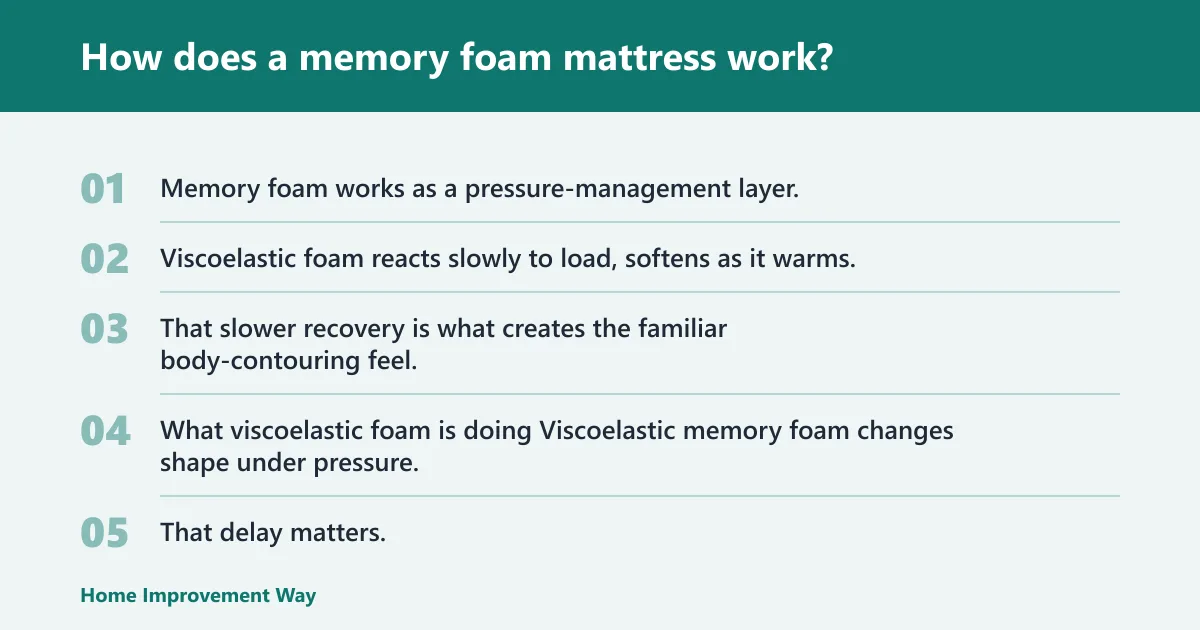
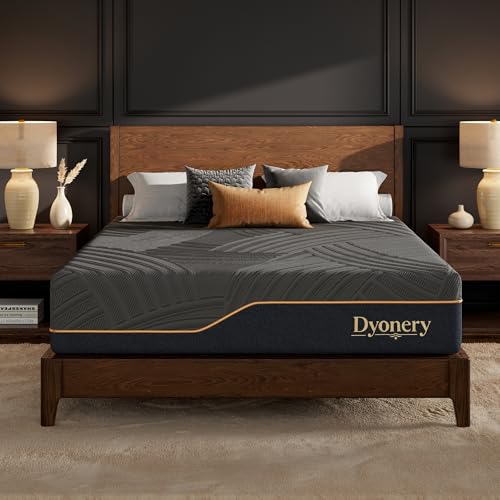
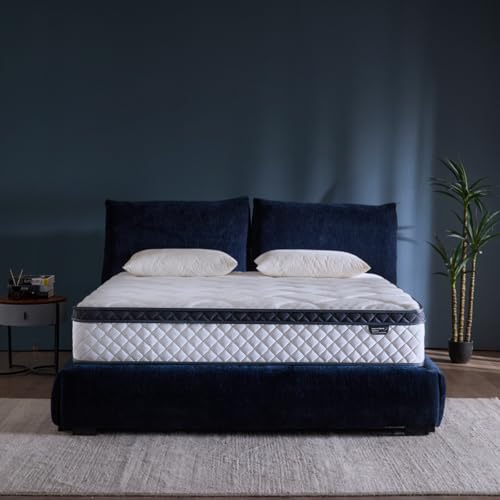
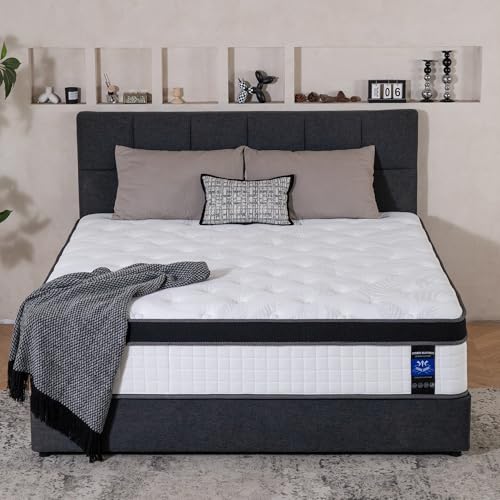
Memory foam works as a pressure-management layer. Viscoelastic foam reacts slowly to load, softens as it warms, and lets heavier areas sink a little more while spreading force away from sharp contact points. That slower recovery is what creates the familiar body-contouring feel.
What viscoelastic foam is doing
Viscoelastic memory foam changes shape under pressure, then returns to form at a delayed pace. That delay matters. A fast-reacting foam springs back before it can spread out load. Memory foam keeps the impression long enough to share weight over a larger area, which is why shoulders and hips feel less hammered.
The feel changes with temperature too. Warmer skin softens the top more quickly, so the surface gives around curves instead of pushing back right away. That helps when the goal is to reduce concentrated force at the contact points.
Why the support core still matters
The foam comfort layer cannot do the whole job. Under it sits the support core, usually base foam or an innerspring layer, and that part controls spinal alignment, firmness, and durability. If the core is too soft, the sleeper sinks too far. If it is too rigid, the foam above cannot spread out load well.
According to matracex.cz — The mattresses are said to support load up to 155 kg per person.
Why does memory foam feel like it hugs your body?
Memory foam feels like a hug because it wraps around the body instead of pushing back evenly everywhere at once. It molds around shoulders, hips, and ribcage, so the sleeper feels held in place while pressure is spread out. That can calm the small muscle corrections people make when they feel poorly supported.
Pressure redistribution versus point loading
Pressure points are the first thing to watch. Side sleepers usually load the shoulder and hip the hardest, and a flat, firm surface keeps that force concentrated in a small zone. Memory foam lets those areas sink more than the waist, which improves load distribution and can ease pain that starts with compression rather than poor posture alone.
That is why the material is often called stress-relieving. When the body stops bracing against hard contact points, the muscles around the torso and hips may relax instead of guarding through the night.
What the “hug” can and cannot do
The hug feel is helpful only when it fits the sleeper. Too much wrap can hold the body in one position, while too little contouring behaves more like generic soft foam. The right balance depends on weight, sleeping posture, and how much support the core provides underneath.
How support layers keep your spine in line
A memory foam mattress supports the body in two parts: the comfort foam manages pressure, and the base layer holds the spine in a more neutral line. That pairing is what separates a useful mattress from one that simply feels soft for ten minutes. Firmness comes from the whole build, not just the top layer.
What happens when support is off
Weak support causes the pelvis to sink more than the upper torso, especially in back and stomach sleeping. That creates a bend through the lower spine. Too much sink can also produce bottoming out, where the sleeper feels the firmer layer underneath and loses the pressure relief the top foam was supposed to provide.
Poor edge support is another common failure. If the mattress collapses at the perimeter, sleeping near the side or sitting on the edge feels unstable. That often shows up first in heavier sleepers and couples who use the full surface.
Why body type testing matters
Good mattress matching depends on body type as much as position. MatraceX describes its mattresses as orthopedic tested, with ergonomics and pressure-point evaluation, and says the products were evaluated for body types. That kind of testing matters because a foam build that works for one body can behave very differently under another.
The mattresses reportedly use foam with an open-cell structure for breathability. Those figures point to how much construction details affect fit, not just feel.
Which sleep positions work best on memory foam?
Memory foam can work for all major sleep positions, but the feel needs to match the way the body loads the bed. Side sleepers usually need more contouring. Back sleepers often do better with enough support under the lower back, usually from a medium to medium-firm feel. Stomach sleepers often need a firmer surface to help keep the hips from sinking too much. Combo sleepers benefit from quicker recovery and easier repositioning.
Sleep-position matrix
| Sleep position | Best memory-foam feel | Typical support target | Common failure signs |
|---|---|---|---|
| Side sleeper | Medium-soft to medium | Deep shoulder and hip relief without waist collapse | Shoulder numbness, hip pain, deep sink, hard-to-turn surface |
| Back sleeper | Medium to medium-firm | Even support with gentle lumbar fill | Low-back gap, pelvis sinking, feeling stuck in the cradle |
| Stomach sleeper | Medium-firm to firm | High hip support and limited torso drop | Lower-back strain, neck twist, chest pressure, bottoming out |
| Combo sleeper | Medium-firm with quicker response | Easy repositioning and balanced contouring | Slow turn response, trapped feeling, excessive body imprint |
How to read the table in real life
Side sleepers usually need a softer top because the shoulder and hip create the highest peaks of pressure. Back sleepers tend to do better when the lumbar area is filled in without the pelvis dropping. Stomach sleepers should be wary of plush builds; a soft top may feel good at first and then pull the spine out of line.
Combo sleepers need the least resistance from the top foam. If a mattress holds an impression too long, turning over takes extra effort. That is where response speed matters as much as softness.
What density, rebound speed, and temperature tell you
Foam density is a useful clue because it often tracks support, resilience, and lifespan. It is usually expressed in kilograms per cubic meter, or kg/m3. Higher density commonly feels more substantial and tends to hold up longer, while lower density often feels lighter and softer but can break down sooner under repeated use.
What density means in practice
Density does not equal firmness on its own. A foam can be dense and still feel plush if the cell structure and formulation allow easy initial compression. But low-density foam usually loses shape sooner, especially in the shoulder and hip zones where load is repeated every night.
A practical buyer should ask how the mattress feels at first press, how deep the body sinks, and whether the support core stops that sink before posture goes off track. Those three checks matter more than a marketing label.
Why memory foam sleeps warmer
Heat retention happens because the foam slows airflow and forms close contact with the body. The more the surface wraps around the sleeper, the more heat stays trapped near skin and bedding. Open-cell construction can help create more airflow, and cooling covers may improve surface comfort, but neither one removes heat on its own.
Hybrid construction often adds airflow because coils create open space under the comfort layer. That usually helps temperature control, though it can also make the mattress feel less enveloping than all-foam builds.
How long does memory foam take to respond to movement?
Memory foam tends to respond more slowly than latex and many hybrid comfort layers. That slower rebound is part of the pressure relief, because the foam has time to reshape around the body instead of snapping back immediately. The tradeoff is slower repositioning, which some sleepers feel as a slight drag when turning over.
Why that speed matters
Slow response reduces motion transfer. When one person shifts, the foam dampens the movement rather than sending it across the bed. That is useful for couples, light sleepers, and anyone disturbed by a restless partner.
The cost is responsiveness. People who change positions often may feel “stuck” if the foam is too thick, too soft, or paired with a weak support core. In that case, the mattress may feel comfortable at rest but annoying in motion.
What density of memory foam is best?
The best density is the one that matches the sleeper’s body weight, position, and durability needs. In general, higher density tends to support longer life and a more substantial feel, while lower density usually feels lighter and softer but may compress faster. Density should be judged alongside the core, not alone.
Practical density ranges to consider
- Choose lower density if the priority is a softer first touch and the sleeper is lighter.
- Choose mid-range density if the goal is a balance of contouring, support, and everyday durability.
- Choose higher density if the sleeper is heavier, sleeps hot enough to compress the bed deeply, or wants better long-term shape retention.
- Check whether the support core is strong enough to keep the body from sinking past the pressure-relief zone.
What is the difference between memory foam and hybrid foam?
Memory foam mattresses rely mostly on foam layers for contouring and support, while hybrid construction combines foam with springs or a spring support layer. The hybrid usually feels more buoyant, breathes better, and makes edge use easier. All-foam builds usually feel more enveloping and damp motion more strongly.
When the tradeoff is worth it
A hybrid is often the better pick for hot sleepers, heavier bodies, and people who want quicker repositioning. All-foam memory beds often make more sense for sleepers who want deeper pressure relief, a quieter feel, and stronger motion isolation. There is no universal winner. The better choice is the one that fixes the sleeper’s main problem without creating a new one.
How do I know if a memory foam mattress is right for me?
A memory foam mattress is a good fit when pressure relief, partner isolation, and a close-contouring feel matter more than a springy surface. It is a poor fit when easy repositioning, maximum airflow, or a very firm push-back feel matters most. Hot sleepers and frequent turners should be cautious.
A quick buyer checklist
- Match feel to position: softer for side sleeping, firmer for stomach sleeping.
- Check the support core for spinal alignment, not only the top layer for comfort.
- Watch for bottoming out in the hips or shoulders.
- Look for open-cell foam, breathable covers, or a hybrid build if heat is a concern.
- Press the edge and sit on it if you use the perimeter often.
- Prefer higher density if long-term shape retention matters.
For shoppers comparing claims, MatraceX says its X-Memory provides comfort for stressed, tired bodies and links the mattress to joint and musculoskeletal relief. Those claims fit the way memory foam is supposed to work when the build is balanced, but they still depend on the sleeper’s size, temperature, and preferred position.
Frequently asked questions
How does a memory foam mattress work?
It softens with heat and pressure, then spreads body weight across a wider area so shoulders and hips carry less concentrated load. The slow recovery gives it the contouring feel. A strong support core underneath is what keeps that comfort layer from letting the body sink too far.
Why does memory foam feel like it hugs your body?
Because it molds around curves instead of resisting them evenly. That close contact around the torso, shoulders, and hips makes the mattress feel cradling. The same effect can calm pressure-related muscle tension, but only when the foam is not so soft that posture collapses.
Is memory foam good for back pain and pressure relief?
It can be, especially when pain is driven by pressure points at the hips, shoulders, or sacrum. It is less helpful when pain comes from poor alignment or a weak support core. Back pain relief depends on matching firmness, foam depth, and body weight to the sleeper.
Does memory foam sleep hot?
It often can. The foam wraps closely and limits airflow near the skin, which holds heat better than more open constructions. Open-cell foam, breathable covers, and hybrid designs can help, but none guarantees a cool night if the sleeper already runs warm.
What density of memory foam is best?
The best density depends on body weight, sleep position, and how long the mattress needs to hold its shape. Higher density usually lasts longer and feels more supportive; lower density often feels softer but may wear faster. Density should be judged with the support core and overall construction.
What is the difference between memory foam and hybrid foam?
Memory foam builds rely on foam layers for contouring and motion damping. Hybrid foam combines those layers with springs, which usually adds airflow, edge support, and a quicker feel. Hybrids often suit hot sleepers and people who turn a lot during the night.
Sponsored / affiliate links. As an Amazon Associate I earn from qualifying purchases. I may earn additional commission from eligible campaigns.
 Prolux New Comfort CA3500 6-Stage Air Purifier & Ozone Generator with True HEPA & UV-C Light, Covers Up to 3,000 Sq Ft, Portable for Home or Commercial Use
 New Comfort SS12000 Ozone Generator Purifier with Adjustable & Auto Shutdown Timer – Ozone Odor Removal for Large Spaces & Industrial Use – Smoke Odor Eliminator for Homes, Offices & Commercial Areas