How Long Does It Take Rustoleum Spray Paint To Dry Fast
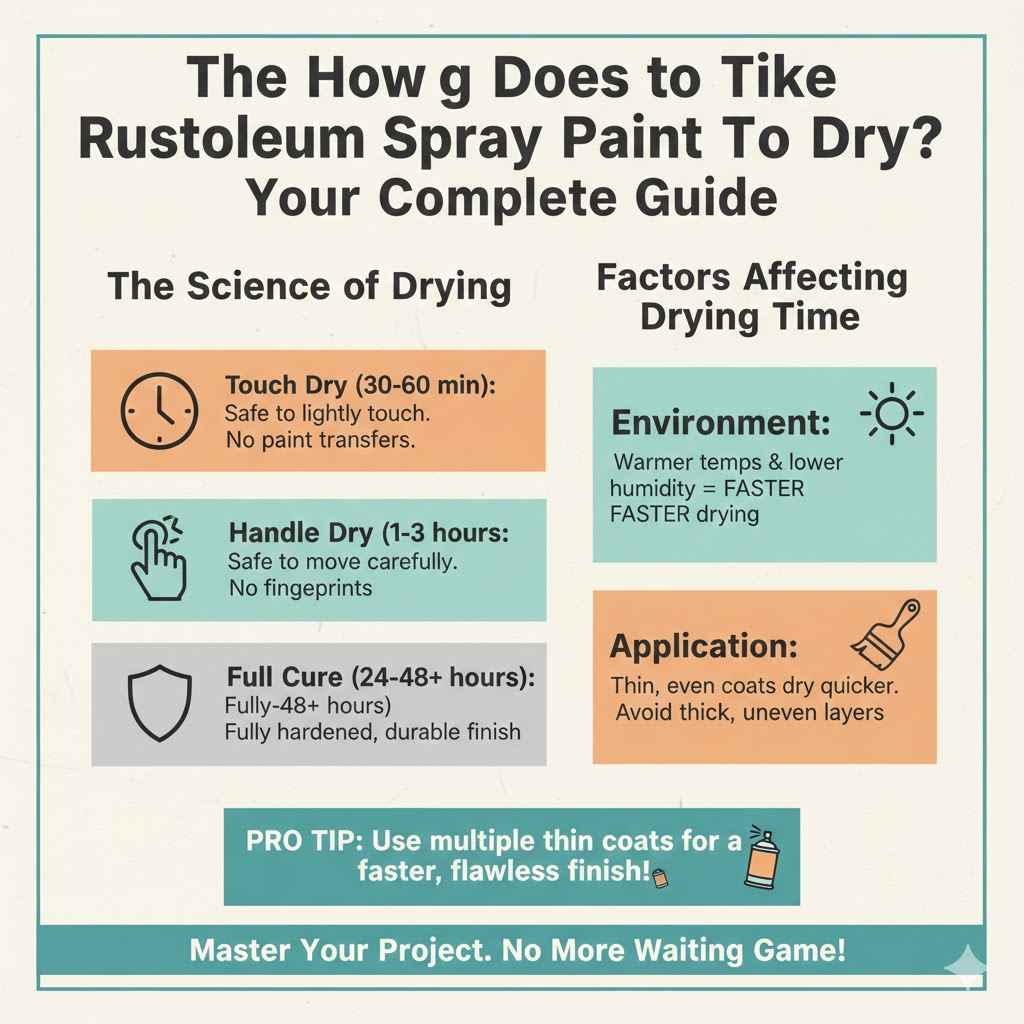
Rustoleum spray paint is typically dry to the touch in 2-4 hours and ready to handle after 5-9 hours. However, for a full, hard cure that provides maximum durability, you should wait at least 24 to 48 hours. Ideal conditions like low humidity and warm temperatures can significantly speed up this process.
There’s nothing more exciting than giving an old piece of furniture or a metal railing a fresh, new look. You grab a can of Rustoleum, give it a good shake, and spray on a beautiful, even coat. It looks perfect! But then comes the hard part: the waiting. You poke at a corner, wondering, “Is it dry yet?” We’ve all been there.
Waiting for paint to dry can feel like a guessing game. If you touch it too soon, you can leave a fingerprint or a smudge, ruining your hard work. But if you wait too long, your project gets delayed. It’s a common frustration for so many DIYers, but don’t worry, I’m here to clear things up.
In this guide, I’ll walk you through everything you need to know about Rustoleum spray paint drying times. We’ll cover the different stages of drying, what factors speed it up or slow it down, and share some simple tricks to help you get a perfect, durable finish faster. Let’s get you back to your project with confidence!
Understanding the Different Stages of Drying
When we talk about paint being “dry,” it’s not just one single moment. Paint goes through several stages to reach its final, hard finish. Knowing these stages will help you understand exactly when you can touch, handle, or use your newly painted item without causing any damage. It’s the key to avoiding those pesky smudges!
Think of it like baking a cake. You can’t just pull it out of the oven and start frosting it. It needs time to cool and set. Paint works in a similar way. Here are the four main stages you should know about:
- Dry to Touch: This is the first milestone. It means the surface of the paint is no longer wet or sticky. You can lightly touch it without getting paint on your finger. However, the paint underneath is still very soft. Applying any pressure will leave a mark.
- Dry to Handle: At this stage, the paint film is strong enough that you can carefully pick up and move the object without leaving fingerprints. It’s still not ready for heavy use, but you can transport it to another area to continue curing.
- Recoat Time: This is the window when you can safely apply another coat of paint. Applying a second coat too early can cause the first layer to wrinkle or bubble. Applying it too late might prevent the new layer from bonding properly. Always check the can for the specific recoat window—it’s usually within an hour or after 24-48 hours.
- Fully Cured: This is the final stage. The paint has completely hardened all the way through and has reached its maximum durability. It is now resistant to scratches, chemicals, and everyday wear and tear. This is the point when you can place objects on the surface or put your item back into regular use.
Here is a simple table outlining the general drying times for a standard can of Rustoleum spray paint under ideal conditions. Keep in mind that these are just estimates!
| Drying Stage | Estimated Time | What It Means |
|---|---|---|
| Dry to Touch | 2-4 hours | Surface is no longer tacky. Avoid pressure. |
| Dry to Handle | 5-9 hours | You can move the object carefully. |
| Recoat Window | Within 1 hour or after 48 hours | Best time to apply another coat to avoid issues. |
| Fully Cured | 24-48 hours (or up to 7 days) | Paint is fully hardened and ready for use. |
Key Factors That Influence Drying Time
Have you ever noticed that paint dries much faster on a warm, sunny day than on a cool, rainy one? That’s because the environment plays a huge role in how quickly spray paint dries. Understanding these factors will empower you to control the drying process and get better results. Let’s break down the big four.
1. Temperature
Temperature is probably the most important factor. Rustoleum, like most spray paints, contains solvents that need to evaporate for the paint to dry and harden. Warm air helps these solvents evaporate much faster.
- The Sweet Spot: The ideal temperature for spray painting is between 50°F and 90°F (10°C and 32°C). This is the range where the paint flows smoothly and dries at a predictable rate.
- Too Cold: If you spray paint in temperatures below 50°F, the chemical reactions that cure the paint slow down dramatically. The paint will stay wet and tacky for a very long time, and it may not ever cure properly, leading to a weak, easily damaged finish.
- Too Hot: Painting in direct sunlight or on a very hot day (above 90°F) can also cause problems. The heat can cause the solvents to evaporate too quickly, before the paint has a chance to level out. This can result in a rough, uneven texture.
2. Humidity
Humidity refers to the amount of moisture in the air. Think of the air like a sponge. If the sponge is already full of water (high humidity), it can’t absorb much more. Similarly, when the air is humid, it’s already saturated with moisture, which slows down the evaporation of the paint’s solvents.
- The Ideal Level: For the fastest drying, aim for humidity levels below 65%. A dry day is a perfect paint day.
- High Humidity Problems: In high humidity, your paint can take two or three times longer to dry. It may also result in a cloudy or hazy finish, especially with clear coats. If you must paint on a humid day, do it in a well-ventilated area and use a fan to keep the air moving.
3. Ventilation (Airflow)
Good airflow is your best friend when it comes to speeding up drying time. As the solvents evaporate from the paint surface, they create a little vapor cloud right above it. If that vapor has nowhere to go, it sits there and slows down further evaporation.
- Why It Matters: A gentle breeze or a fan helps to whisk away these solvent vapors, allowing more to escape from the paint film. This is why painting outdoors on a breezy day or in a garage with the door open is so effective.
- Safety First: Good ventilation is also critical for your health. Spray paint contains volatile organic compounds (VOCs) that can be harmful to breathe. According to the Environmental Protection Agency (EPA), ensuring proper ventilation is crucial for maintaining safe indoor air quality. Always wear a respirator mask and work in a well-ventilated space.
4. Paint Thickness
It can be tempting to lay on one thick, heavy coat to get the job done quickly. However, this is one of the biggest mistakes you can make. A thick coat of paint takes much longer to dry and cure because the solvents trapped deep inside have a hard time escaping to the surface.
- Thin Coats are Key: The secret to a professional-looking and fast-drying finish is to apply multiple thin, even coats. A thin coat allows the solvents to evaporate quickly and uniformly.
- The Right Technique: Hold the can about 10-16 inches from the surface and use a steady, sweeping motion. Overlap each pass slightly to ensure even coverage. It’s much better to apply two or three thin coats than one thick, goopy one.
Step-by-Step Guide to Make Rustoleum Spray Paint Dry Faster
Now that you know what affects drying times, let’s put that knowledge into action! With a few simple steps, you can create the perfect conditions for your Rustoleum spray paint to dry quickly and cure into a strong, beautiful finish. Follow this guide for your next project.
Step 1: Prepare Your Surface Properly
A great paint job starts long before you even shake the can. Proper surface preparation ensures that the paint will stick well and dry evenly. If the paint can’t adhere correctly, it can lead to a soft, tacky finish that never seems to cure.
- Clean the Surface: Use a degreaser or a simple mixture of soap and water to remove any dirt, grease, or oil. Rinse it thoroughly and let it dry completely.
- Sand If Needed: For glossy surfaces like plastic or previously painted metal, lightly scuff the surface with fine-grit sandpaper (around 220-grit). This gives the new paint something to grip onto.
- Wipe Away Dust: After sanding, wipe the surface with a tack cloth or a damp rag to remove all sanding dust.
- Use a Primer: For bare wood, metal, or plastic, applying a coat of Rustoleum primer is a fantastic idea. Primer creates a uniform surface for the paint to bond to, which promotes faster and more even drying.
Step 2: Control Your Painting Environment
As we discussed, temperature and humidity are king. Your goal is to create a “Goldilocks” environment—not too hot, not too cold, not too humid.
- Check the Forecast: If painting outdoors, choose a warm, dry day with low humidity and a light breeze. Avoid painting in direct, harsh sunlight.
- Work Indoors: If the weather isn’t cooperating, move your project into a garage, workshop, or a well-ventilated room. You can use a space heater to raise the temperature or a dehumidifier to lower the humidity. Just be extremely careful about sparks or open flames near flammable paint fumes!
Step 3: Apply Thin, Even Coats
This is where your technique comes in. Remember, thin coats dry faster and cure harder than thick ones.
- Shake the Can Well: Before you start, shake the can vigorously for at least one full minute after you hear the mixing ball begin to rattle. This ensures the paint pigments and binders are perfectly mixed.
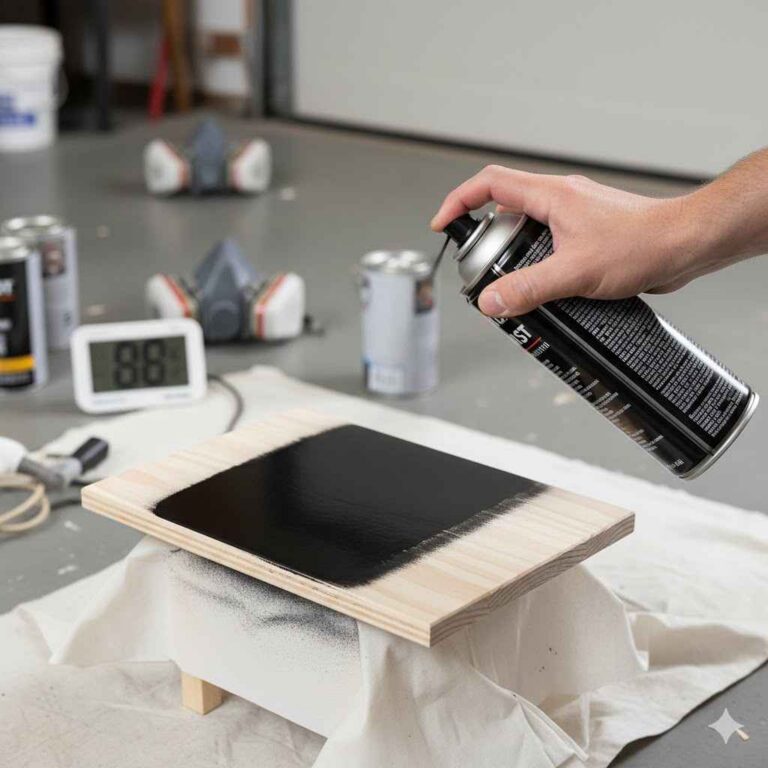
- Maintain Your Distance: Hold the spray can about 10-16 inches away from the surface. Holding it too close will cause the paint to run and pool, creating thick spots that take forever to dry.
- Use a Sweeping Motion: Start spraying just off the edge of your object and move across it in a smooth, steady motion. Release the nozzle after you’ve passed the other edge. Overlap each pass by about 50%. This prevents drips and ensures even coverage.
Step 4: Use Airflow and Gentle Heat (With Caution!)
Once you’ve applied your coat, you can actively help the solvents evaporate faster. Just be gentle!
- Add a Fan: Place a fan in the room, but don’t point it directly at the freshly painted surface. Direct wind can blow dust onto the wet paint and may even cause it to dry unevenly, creating ripples. Instead, aim the fan to circulate the air around the room. This will carry away the solvent fumes and speed up the drying process.
- Use a Heat Gun or Heat Lamp: For advanced users, a heat gun on its lowest setting or a heat lamp can be used to gently warm the surface. Keep the heat source moving and at a safe distance (at least 12-18 inches away) to avoid blistering or scorching the paint. This technique requires care and should not be overdone.
Step 5: Respect the Recoat and Cure Times
Patience is a virtue, especially with painting. Rushing the process is the surest way to ruin your finish.
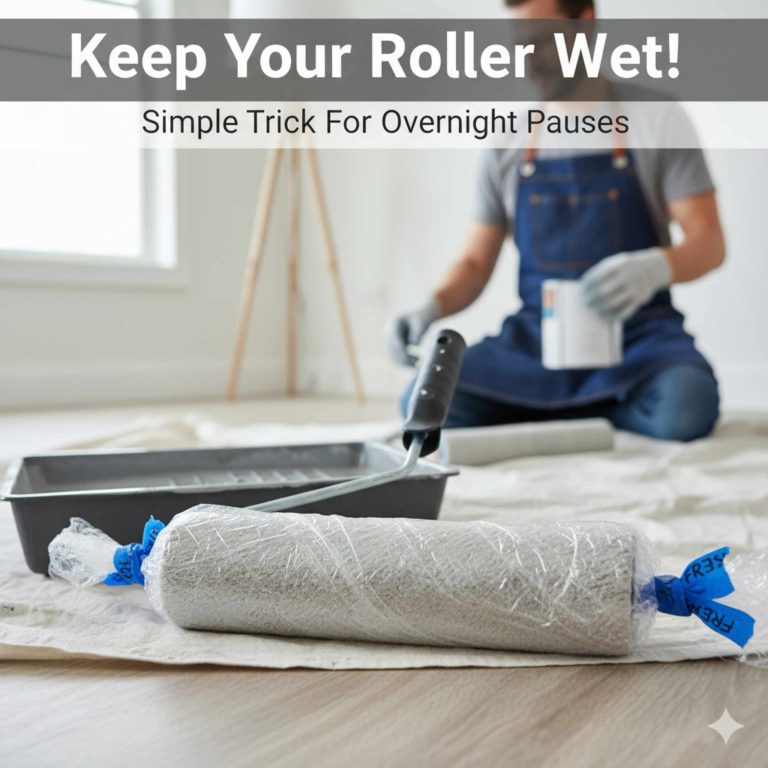
- Wait Between Coats: Pay close attention to the “recoat within” time on the can. Most Rustoleum products allow you to apply the next coat within about an hour. If you miss that window, you must wait a full 48 hours before recoating. Painting in between these times can cause the new coat’s solvents to react with the partially-cured layer underneath, resulting in a horrible, wrinkled texture.
- Allow for a Full Cure: Even after the paint is dry to the handle, it’s not ready for heavy use. Give it at least 24-48 hours (and up to a week for some enamel paints) to fully cure and harden. This ensures your project will stand up to the test of time.
Drying Times for Popular Rustoleum Products
Rustoleum offers a wide variety of spray paints, and not all of them dry at the same rate. Formulas designed for different purposes—like high heat or plastic bonding—have unique chemical compositions. Knowing the specifics for the product you’re using can help you plan your project timeline more accurately.
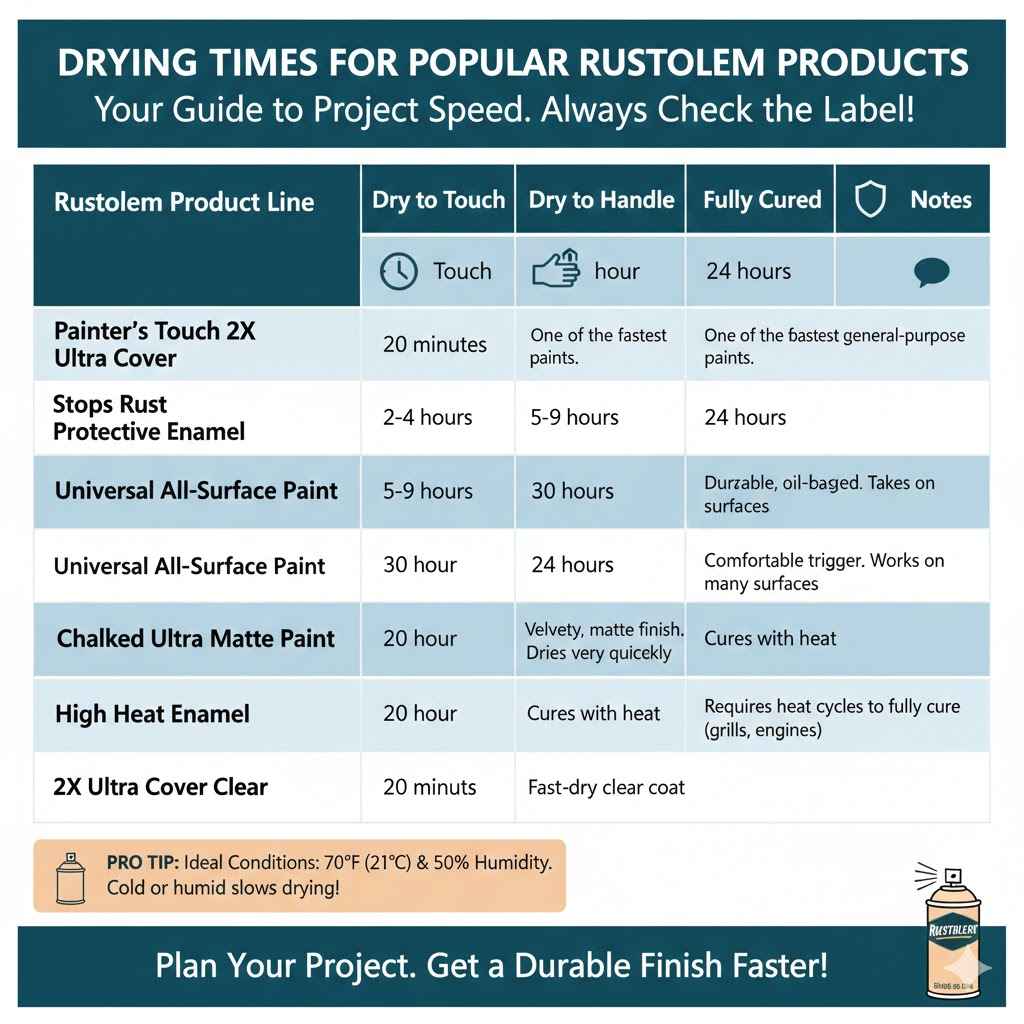
Here’s a comparison table of some of the most popular Rustoleum spray paint lines and their typical drying times under ideal conditions (70°F and 50% humidity). Always double-check the label on your specific can for the most accurate information!
| Rustoleum Product Line | Dry to Touch | Dry to Handle | Fully Cured | Notes |
|---|---|---|---|---|
| Painter’s Touch 2X Ultra Cover | 20 minutes | 1 hour | 24 hours | One of the fastest-drying general-purpose paints. |
| Stops Rust Protective Enamel | 2-4 hours | 5-9 hours | 24-48 hours | A durable, oil-based formula that takes longer to cure. |
| Universal All-Surface Paint | 30 minutes | 1 hour | 24 hours | Features a comfortable trigger and works on many surfaces. |
| Chalked Ultra Matte Paint | 20 minutes | 1 hour | 24 hours | Creates a velvety, matte finish. Dries very quickly. |
| High Heat Enamel | 1 hour | 2-4 hours | Cures with heat | Designed for grills and engines; requires heat cycles to fully cure. |
| 2X Ultra Cover Clear | 20 minutes | 1 hour | 24 hours | Similar fast-dry formula as the colored 2X paints. |
Frequently Asked Questions (FAQ)
1. How can I tell if Rustoleum spray paint is fully cured?
The best way to test for a full cure is the “fingernail test.” In an inconspicuous spot on your project, gently press your fingernail into the paint. If it leaves a dent or a mark, the paint is still soft underneath and needs more time to cure. If it feels hard and resists indentation, it’s fully cured and ready for action.
2. Can I use a hairdryer to make spray paint dry faster?
Yes, you can use a hairdryer on a low-heat, low-fan setting to speed up the initial “dry to touch” phase. However, be very careful. Keep the hairdryer moving and at least 6-8 inches away from the surface. Too much heat in one spot can cause the paint to bubble or scorch. A fan circulating air in the room is often a safer and more effective option for even drying.
3. Why is my Rustoleum spray paint still sticky after 24 hours?
If your paint is still tacky after a full day, it’s almost always due to one of three things: high humidity, cold temperatures, or applying a coat that was too thick. Move the item to a warmer, drier area with good air circulation. You can also place a dehumidifier in the room to help pull moisture from the air. In most cases, given the right conditions, it will eventually cure.
4. What is the absolute best temperature to spray paint?
The perfect temperature is around 70°F (21°C) with low humidity. This temperature is warm enough for the solvents to evaporate efficiently but not so hot that they evaporate too quickly. It gives the paint enough time to flow and level out into a smooth, professional-looking finish.
5. Does using a primer help spray paint dry faster?
Yes, in a way. A primer doesn’t change the chemical drying time of the topcoat, but it creates an ideal, non-porous surface. This prevents the topcoat from soaking into the material (like raw wood), which allows it to dry more evenly and often a little faster. It also provides better adhesion, leading to a more durable final result.
6. I missed the recoat window. Can I really not apply a second coat until 48 hours later?
It’s highly recommended that you wait. The “recoat within 1 hour or after 48 hours” rule is there for a reason. During that in-between period, the paint is in a delicate curing stage. The solvents from a new coat can soften and lift the first layer, causing it to wrinkle up like wrinkled skin. It’s a frustrating mistake to fix, so patience here will save you a huge headache.
Conclusion: Patience is Key to a Perfect Finish
Getting a beautiful, long-lasting finish with Rustoleum spray paint isn’t complicated—it just requires a little bit of knowledge and a healthy dose of patience. By understanding how temperature, humidity, and your own application technique affect the drying process, you can take control of your project and avoid common pitfalls like smudges, fingerprints, and sticky surfaces.
Remember the three golden rules: create a warm and dry environment, apply several thin and even coats instead of one thick one, and give your project plenty of time to fully cure. When you respect the process and follow these simple steps, you’ll be rewarded with a durable, professional-quality finish that you can be proud of.
So the next time you pick up a can of Rustoleum, you’ll know exactly what to do. You’ve got this! Now go ahead and transform something old into something new with confidence.