How Much Does a Pressure Treated Redwood Deck Cost Shocking
A pressure-treated redwood deck can be misleading. Redwood is naturally rot-resistant and rarely pressure-treated. A standard redwood deck costs $30 to $50 per square foot, while a pressure-treated pine deck costs $15 to $30 per square foot. The “shocking” part is you’re usually choosing one or the other, not a combination.
Thinking about building a new deck? That’s exciting! A beautiful outdoor space can completely change how you enjoy your home. But when you start looking at materials, things can get confusing fast. You might have heard about pressure-treated wood and the stunning beauty of redwood, leading you to ask about a “pressure-treated redwood deck.” It’s a perfectly logical question!
But here’s the thing—and it’s a bit of a surprise for many homeowners—those two terms don’t usually go together. Don’t worry, I’m here to clear up the confusion. We’ll break down the real costs, compare your actual choices, and help you decide on the perfect deck for your budget and your home. Let’s get started!
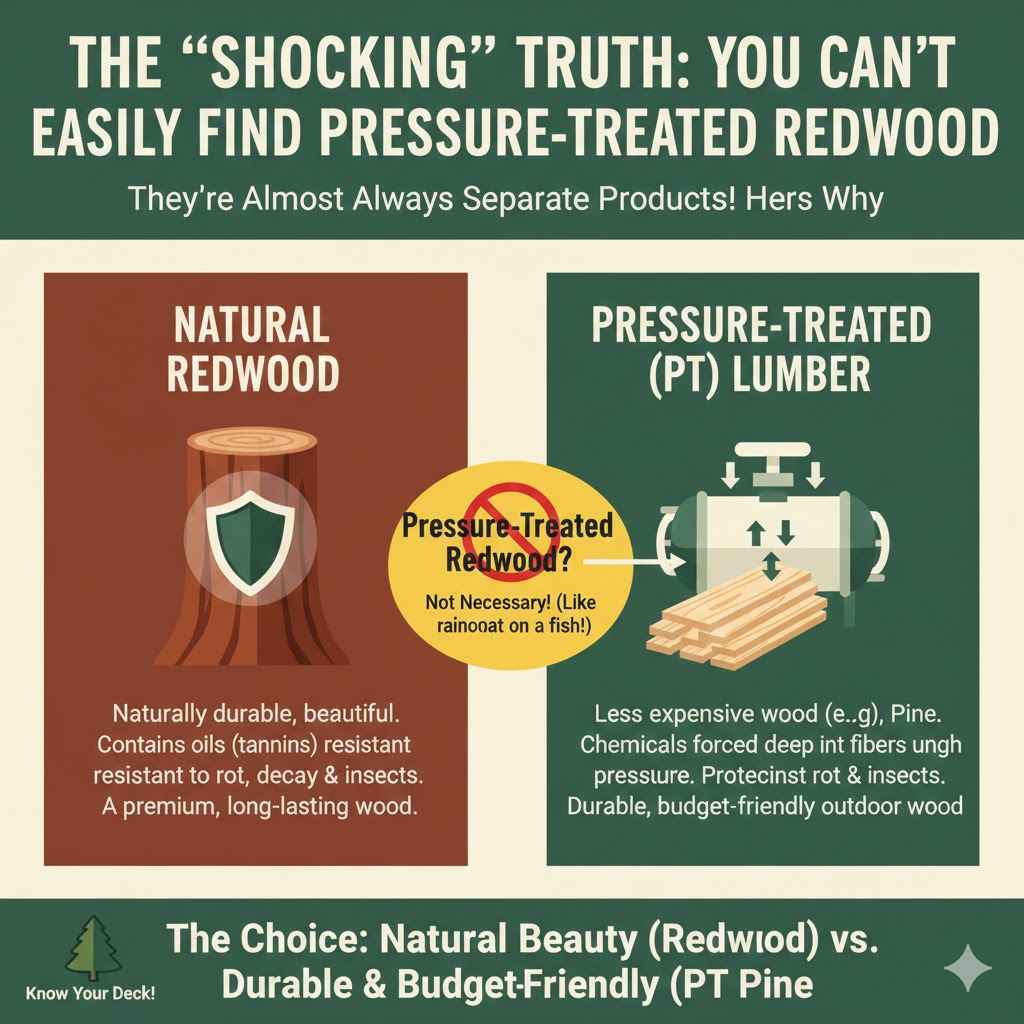
The “Shocking” Truth: Why You Can’t Easily Find Pressure-Treated Redwood
Let’s get this big question out of the way first. When you go to the lumberyard, you will see two main types of wood for decks: redwood and pressure-treated lumber. They are almost always separate products for a very good reason.
Redwood is a beautiful, naturally durable wood. It contains oils and compounds called tannins that make it naturally resistant to rot, decay, and insects. It’s like it has its own built-in defense system! Because of this, redwood doesn’t need to be treated with chemicals to last a long time outdoors.
Pressure-Treated (PT) wood, on the other hand, is usually a less expensive wood like Southern Yellow Pine or fir. On its own, pine would rot very quickly outside. To make it last, the lumber is placed in a special tank where chemical preservatives are forced deep into the wood fibers under high pressure. This process is what makes it “pressure-treated” and gives it a long lifespan for outdoor use.
So, why isn’t redwood pressure-treated? It’s simply not necessary. It would be like putting a raincoat on a fish! Treating redwood with chemicals would add extra cost to an already premium material without providing much extra benefit. The term “pressure-treated redwood” is a common point of confusion, but the real choice you have to make is between a naturally beautiful Redwood deck and a durable, budget-friendly Pressure-Treated Pine deck.
Let’s Compare the Real Decking Choices: Redwood vs. Pressure-Treated Pine
Now that we’ve cleared that up, let’s look at the costs of the two most popular decking options. Understanding the price difference is the first step to planning your project. The final price tag depends on materials, labor, size, and design, but we can break down the averages to give you a clear picture.
Cost Breakdown for a Redwood Deck
A redwood deck is prized for its stunning color and natural look. It feels premium because it is. You’re paying for that natural beauty and durability.
- Materials Cost: Redwood lumber is more expensive than PT pine. You can expect to pay between $18 to $30 per square foot just for the materials (deck boards, framing lumber, fasteners, and concrete for footings).
- Professional Installation Cost: Labor costs can vary widely by location, but a good rule of thumb is to budget an additional $15 to $25 per square foot for a professional builder.
- Total Estimated Cost: For a professionally installed redwood deck, you’re looking at a total cost of around $33 to $55 per square foot.
For a typical 200-square-foot redwood deck, this means a total project cost of $6,600 to $11,000.
Cost Breakdown for a Pressure-Treated Pine Deck
Pressure-treated pine is the most common decking material in the United States for one big reason: it’s affordable and it works. It may not have the rich color of redwood, but it’s a durable and reliable choice.
- Materials Cost: The materials for a PT pine deck are much more budget-friendly. Expect to pay between $8 to $15 per square foot for everything you need.
- Professional Installation Cost: Labor costs are generally the same regardless of the wood, so you can again budget for $15 to $25 per square foot.
- Total Estimated Cost: For a professionally installed pressure-treated pine deck, the total cost lands between $23 to $40 per square foot.
For that same 200-square-foot deck, a pressure-treated pine option would cost between $4,600 and $8,000. That’s a significant savings!
Deck Material Cost at a Glance
Sometimes seeing the numbers side-by-side makes it easier. Here’s a table that breaks down the estimated material costs per square foot. Remember, these are just for materials—not labor.
| Material Component | Redwood (per sq. ft.) | Pressure-Treated Pine (per sq. ft.) |
|---|---|---|
| Decking Boards | $8 – $15 | $3 – $6 |
| Framing (Joists, Beams, Posts) | $5 – $8 (Typically PT Pine is used for framing) | $4 – $7 |
| Fasteners & Hardware | $2 – $4 | $1 – $2 |
| Concrete & Footings | $1 – $2 | $1 – $2 |
| Estimated Total Materials | $16 – $29 | $9 – $17 |
Note: It’s common practice to use pressure-treated lumber for the deck’s substructure (the framing) even when using redwood for the surface boards. This saves money and puts the most durable, chemically-treated wood in contact with the ground.
Factors That Can Shock Your Budget (In a Good or Bad Way!)
The cost per square foot is a great starting point, but several other things can make your final price go up or down. Being aware of these can help you stay on budget.
1. Deck Size and Shape
This is the most obvious factor. A larger deck requires more materials and more labor, so it will always cost more. But shape matters, too! A simple square or rectangular deck is far easier (and cheaper) to build than a complex, multi-level deck with curves or intricate patterns.
2. Height and Foundation
A low-to-the-ground deck requires less material for support posts and stairs, making it more affordable. A second-story deck needs much deeper footings, taller support posts, and more extensive bracing, all of which add to the cost. The type of soil on your property can also affect the foundation requirements set by your local building codes.
3. Railings and Stairs
Railings and stairs can be surprisingly expensive. A simple wood railing is the most cost-effective. If you want to upgrade to fancier options like metal balusters, glass panels, or composite railings, your budget will need to grow. The more stairs you need, the higher the cost as well.
4. Your Location
Where you live has a big impact on cost. Lumber prices and labor rates vary significantly from one city to another. Urban areas with a higher cost of living will almost always have higher deck building costs than rural areas. It’s always a good idea to get quotes from a few local contractors.
5. Building Permits
Most towns and cities require a building permit for a new deck. The cost of a permit can range from $50 to over $500, depending on the size of your project and local regulations. Don’t skip this step! Building without a permit can lead to fines and trouble when you eventually sell your home. You can check your local municipality’s website for specific requirements.
6. DIY vs. Hiring a Pro
This is the biggest cost-saver of all. If you have the skills, tools, and time, building the deck yourself can cut the total cost nearly in half by eliminating labor expenses. However, be honest about your abilities. A poorly built deck can be unsafe and may cost more to fix in the long run. If you’re not confident, hiring a professional is a wise investment.
Is a Redwood Deck Worth the Extra Money?
Redwood is a significant investment, so is it the right choice for you? Let’s look at the pros and cons.
Pros of Redwood:
- Stunning Natural Beauty: Redwood has a deep, rich color that is hard to beat. It creates a high-end, luxurious look right from the start.
- Natural Resistance: As we discussed, it’s naturally resistant to rot and insects without the need for harsh chemicals. Many people prefer this for their families and the environment.
- Stays Cool: Redwood doesn’t absorb as much heat as composite decking, making it more comfortable for bare feet on a hot summer day.
- Longevity: A well-maintained redwood deck can last for 20-30 years or even longer. For more information on wood properties, the U.S. Forest Service’s Forest Products Laboratory is an excellent resource.
Cons of Redwood:
- High Cost: It is one of the more expensive wood decking options available.
- Softer Wood: Redwood is a softwood, which means it can be more easily scratched or dented by heavy furniture or pet claws compared to some hardwoods or pressure-treated pine.
- Requires Maintenance: To maintain its beautiful color, redwood needs to be cleaned and resealed every 1-2 years. If you don’t, it will fade to a silvery-gray color (which some people actually like!).
What About the Budget-Friendly Pressure-Treated Deck?
Pressure-treated pine is the go-to for a reason. It offers great value, but it’s important to know its downsides too.
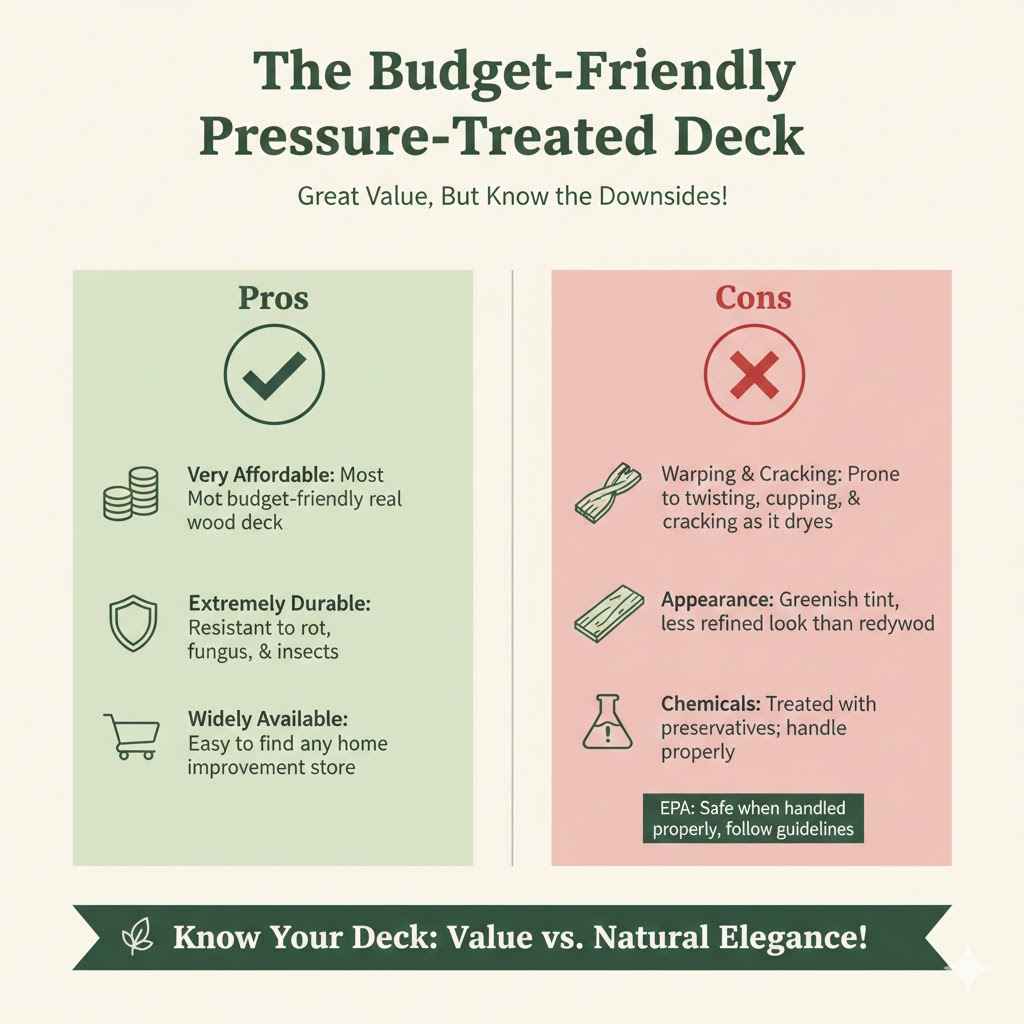
Pros of Pressure-Treated Pine:
- Very Affordable: It’s the most budget-friendly way to get a real wood deck. You get a lot of deck for your dollar.
- Extremely Durable: The chemical treatment makes it highly resistant to rot, fungus, and insects. It’s built to last in tough conditions.
- Widely Available: You can find PT lumber at any home improvement store, making it easy to source materials for your project.
Cons of Pressure-Treated Pine:
- Prone to Warping and Cracking: As PT lumber dries out, it can twist, cup, and crack. It’s important to use high-quality fasteners and proper installation techniques to minimize this.
- Appearance: Standard PT lumber has a greenish tint and a less refined look than redwood. While you can stain it, it will never quite match the natural elegance of a premium wood.
- Chemicals: The wood is treated with chemical preservatives. While modern treatments are safer than older versions, some people prefer to avoid them. According to the Environmental Protection Agency (EPA), treated wood is safe when handled properly, but it’s important to follow safety guidelines during construction.
Frequently Asked Questions (FAQ)
1. Why isn’t redwood usually pressure-treated?
Redwood naturally contains oils and tannins that make it resistant to rot and insects. Pressure-treating it with chemicals would be an unnecessary extra cost for a material that is already very durable on its own.
2. How long does a redwood deck last compared to a pressure-treated one?
Both types of decks can have a long lifespan if well-maintained. A redwood deck can last 20-30 years, while a pressure-treated pine deck typically lasts 15-25 years. The quality of construction and regular maintenance are the most important factors for longevity.
3. Can I build a deck myself to save money?
Absolutely! If you have good carpentry skills, the right tools, and an understanding of building codes, a DIY deck project can save you thousands of dollars in labor costs. Just be sure you’re confident in your ability to build a safe and sturdy structure.
4. Do I still need to seal a redwood deck?
Yes. While redwood is naturally rot-resistant, it is not waterproof. Applying a high-quality sealant every year or two will protect it from moisture damage, prevent cracking, and preserve its beautiful red color. Without a sealant, it will eventually turn a soft gray.
5. Is pressure-treated wood safe for my kids and pets?
Modern pressure-treated wood is much safer than older versions that contained arsenic. Today’s treatments are considered safe by the EPA for residential use. However, you should never burn treated wood, and it’s always a good idea to wash your hands after handling it during construction.
6. What is the best fastener for a redwood deck?
For redwood, you should always use high-quality stainless steel screws. Redwood’s natural tannins can react with galvanized fasteners, causing ugly black streaks on your beautiful new deck. Stainless steel prevents this reaction and resists rust.
7. Can I mix redwood and pressure-treated wood in my deck?
Yes, and it’s a very smart way to build! Many builders use pressure-treated lumber for the entire frame and support structure (the parts you don’t see) and then use beautiful redwood for the decking boards, railings, and stairs (the parts you do see). This gives you the best of both worlds: a durable, affordable foundation and a stunning, high-end surface.
Conclusion: Making the Best Choice for Your Home
So, the shocking truth about the cost of a “pressure-treated redwood deck” is that you’re really choosing between two different paths: the natural elegance of redwood or the rugged affordability of pressure-treated pine.
If your budget allows and you dream of a deck with breathtaking natural color and a premium feel, redwood is a fantastic investment that will bring you joy for decades. On the other hand, if you want a strong, durable, and reliable outdoor space without breaking the bank, a pressure-treated deck is an excellent and practical choice that has served millions of homeowners well.
No matter which material you choose, you are on your way to creating a wonderful new space for making memories with family and friends. Take your time, plan your budget, and don’t be afraid to ask for help. Happy building!