How Much Does a Wood Stove Increase Home Insurance: Proven
Installing a wood stove typically increases home insurance by 5% to 10%, or about $50 to $100 annually. The exact cost depends on your provider, professional installation, and the stove’s certification. Always notify your insurer before installation to ensure you remain covered and avoid having a future claim denied.
There’s nothing quite like the cozy warmth of a wood stove on a cold day. It crackles, glows, and makes a house feel like a home. But as you plan this wonderful addition, a practical question probably pops into your mind: “How will this affect my home insurance?” It’s a smart question to ask, and you’re not alone in wondering about it. Many homeowners worry that a wood stove will cause their insurance costs to skyrocket.
I’m here to tell you that it’s usually much more manageable than you think. You just need to know the right steps to take. In this guide, I’ll walk you through exactly why wood stoves impact insurance, how much you can expect to pay, and how to do everything correctly so you can enjoy that beautiful warmth with complete peace of mind. Let’s break it down together, step by step.
Why a Wood Stove Changes Your Home Insurance Policy
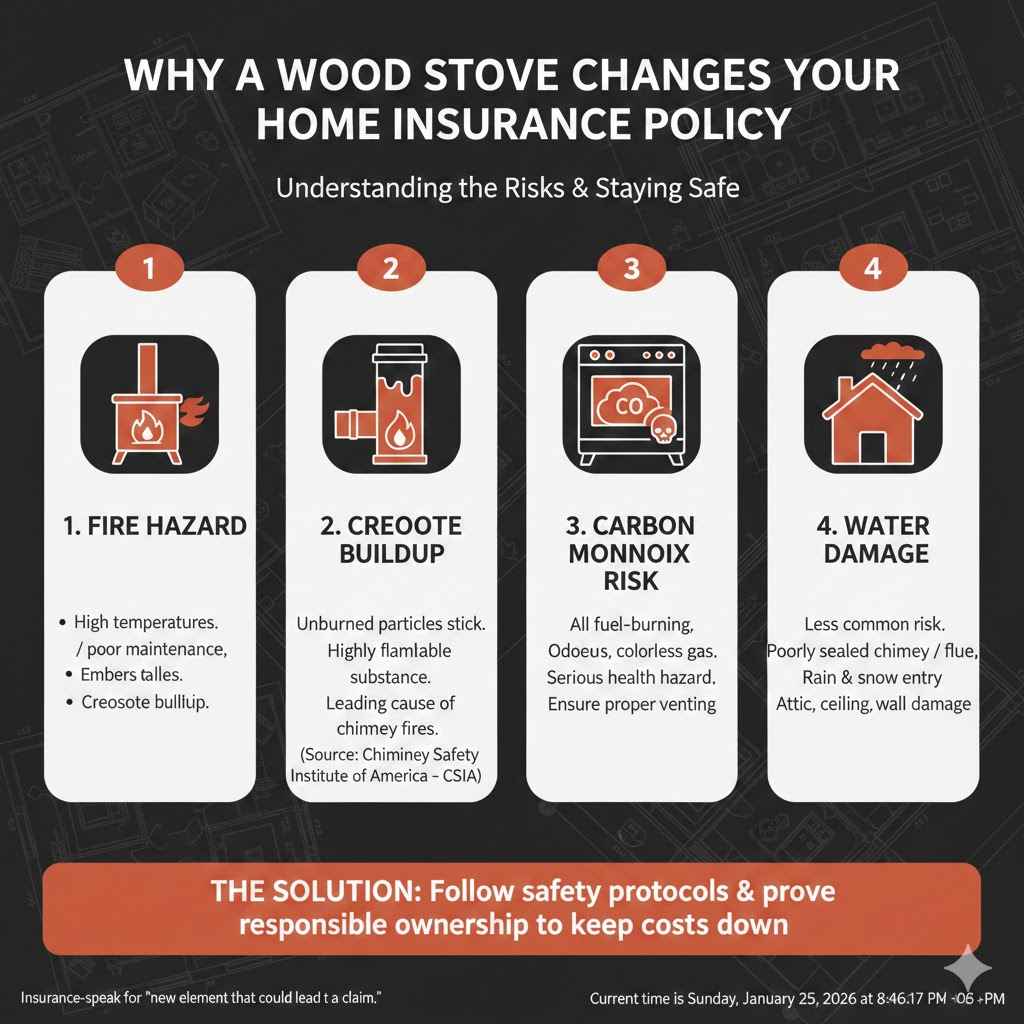
When you add a wood stove to your home, your insurance provider sees it as an increased risk. Don’t let that word scare you! It’s just insurance-speak for a new element that could potentially lead to a claim. For them, it’s all about numbers and safety. Their main job is to help you recover if something goes wrong, and a wood-burning appliance introduces new possibilities for that to happen.
Here are the primary reasons insurers adjust your policy:
- Fire Hazard: This is the most obvious reason. Wood stoves operate at very high temperatures. If installed improperly or poorly maintained, they can pose a fire risk. Embers can escape, flammable materials can be placed too close, and creosote can build up in the chimney.
- Creosote Buildup: When you burn wood, it releases unburned particles that travel up your chimney. These particles can stick to the inside of the flue, creating a thick, tar-like substance called creosote. According to the Chimney Safety Institute of America (CSIA), creosote is highly flammable and is the leading cause of chimney fires.
- Carbon Monoxide Risk: All fuel-burning appliances, including wood stoves, produce carbon monoxide (CO). If the stove isn’t vented properly, this odorless, colorless gas can leak into your home, which is a serious health hazard.
- Water Damage: This is less common, but a poorly sealed chimney or flue can allow rain and snow to enter your home, potentially causing water damage to your attic, ceilings, and walls over time.
Because of these added risks, your insurance company needs to adjust your premium to reflect the new level of coverage required. The good news is that by following safety protocols, you can prove to them that you’re a responsible homeowner, which helps keep those costs down.
The Big Question: How Much Will My Premium Actually Increase?
Alright, let’s get to the number you’re looking for. While every insurance company is different, you can generally expect your home insurance premium to increase by a small amount. Most homeowners see an increase of 5% to 10% of their annual premium. For some, it may be a flat annual fee, often between $50 and $100.
This is a much more manageable number than the huge spikes some people fear. It’s a small price to pay for the warmth and ambiance a wood stove provides, especially when you consider the potential savings on your heating bills.
To give you a clearer picture, here’s a simple table showing potential cost increases based on different annual insurance premiums.
| Current Annual Premium | Potential Increase (5%) | Potential Increase (10%) | New Estimated Annual Premium |
|---|---|---|---|
| $800 | $40 | $80 | $840 – $880 |
| $1,200 | $60 | $120 | $1,260 – $1,320 |
| $1,600 | $80 | $160 | $1,680 – $1,760 |
| $2,000 | $100 | $200 | $2,100 – $2,200 |
As you can see, the increase is usually quite reasonable. But what factors cause this number to go up or down? Let’s explore that next.
Key Factors That Determine Your Wood Stove Insurance Cost
The exact cost increase isn’t a one-size-fits-all number. Several key factors influence what your insurance company will charge. Understanding these will help you make smart choices that keep your premium as low as possible.
1. Professional and Certified Installation
This is, without a doubt, the most important factor. Almost every insurance company will refuse to cover a wood stove that was not installed by a certified professional. A DIY installation, no matter how well you think you did it, is a major red flag for insurers. They need proof that it meets all local building codes and safety standards.
In the United States, look for an installer certified by the National Fireplace Institute (NFI). They are trained in the proper techniques for safe installation, including correct clearances, venting, and hearth protection. Your insurer will ask for the installation certificate as proof.
2. The Type and Age of Your Wood Stove
Modern wood stoves are much safer and more efficient than older models. Insurers prefer new stoves that are certified by the Environmental Protection Agency (EPA). An EPA-certified stove burns wood more completely, which means it produces less smoke and creosote. This directly reduces the risk of a chimney fire.
If you are buying a used stove, your insurer may require it to be inspected and recertified, which can be difficult and costly. It’s almost always better to invest in a new, certified model.
3. Proper Clearances and Safety Measures
Your certified installer will ensure your stove is placed a safe distance from any combustible materials like walls, furniture, and curtains. This is called “clearance.” They will also install a proper non-combustible hearth pad underneath the stove. Your insurance company may even ask for photos to verify that these safety measures are in place.
4. Regular Maintenance and Cleaning
Insurers want to see that you are committed to maintaining your wood stove. This means scheduling an annual inspection and cleaning (a “chimney sweep”) by a certified professional. Keeping records of these cleanings is a great way to show your provider that you are a responsible owner. This proactive step helps prevent dangerous creosote buildup.
5. Your Home’s Location
Where you live can also play a role. If you live in a rural area far from a fire station, your premium might be slightly higher than for someone living in a city with a fire hydrant on their corner. The insurer considers the potential fire department response time when calculating your risk.
6. Your Specific Insurance Provider
Every company has its own rules and formulas for calculating risk. Some insurers are more comfortable with wood stoves than others. That’s why it’s always a good idea to shop around if your current provider’s quote seems too high or if they are unwilling to offer coverage.
A Step-by-Step Guide to Getting Insurance for Your Wood Stove
Feeling a little overwhelmed? Don’t be! Following the right process makes getting insured simple and stress-free. Here is your step-by-step plan for success.
Talk to Your Insurance Agent Before You Buy or Install.
This is the most critical step. Call your agent and tell them you’re considering installing a wood stove. Ask them about their specific requirements. They will tell you exactly what you need to do to be covered. Do not skip this step! Installing a stove first and telling them later can lead to a denial of coverage.
Hire a Certified Professional for Installation.
Once you have your insurer’s requirements, find a local, certified installer. Ask for their credentials (like NFI certification) and check their references. A professional will ensure your stove is installed correctly and according to all safety codes, which is exactly what your insurance company wants to see.
Keep All Your Paperwork in Order.
Your insurer will need documentation. Keep a file with everything related to your new stove, including:
The purchase receipt for the stove.
The stove’s manual and EPA certification details.
The installation receipt from your certified professional.
The installer’s certification number and contact information.
Clear photos of the installed stove, showing the clearances and hearth pad.
Schedule a Final Inspection (If Required).
Some insurance companies may want to send an inspector to your home to look at the installation before they finalize your policy. This is a good thing! It’s a final check to confirm that everything is safe. Be present for the inspection and answer any questions they have.
Review and Confirm Your New Policy.
Once your insurer has all the information, they will send you an updated policy declaration page. Review it carefully. You should see a note or “endorsement” about the wood-burning appliance and a clear breakdown of your new premium. If you have any questions, call your agent right away.
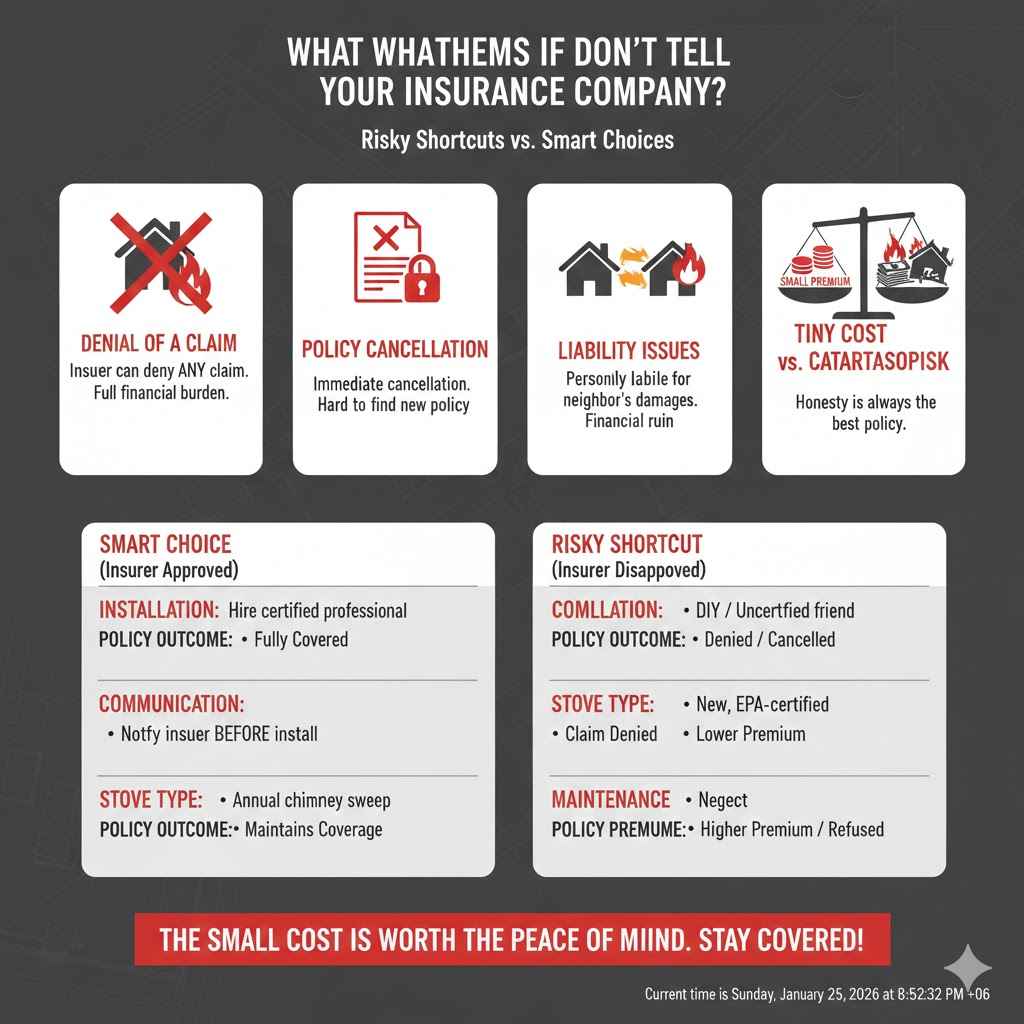
What Happens If You Don’t Tell Your Insurance Company?
You might be tempted to install a wood stove and just… not mention it to your insurer. Maybe you want to avoid the premium increase or the paperwork. I strongly advise against this. Hiding a wood stove from your insurance company is a huge gamble with devastating consequences.
Here’s what could happen:
- Denial of a Claim: If you have a house fire—even one that has nothing to do with the wood stove—your insurer could deny your entire claim once they discover the undisclosed stove. This could leave you with the full financial burden of rebuilding your home and replacing your belongings.
- Policy Cancellation: When an insurer discovers a “material misrepresentation” (like an undisclosed wood stove), they have the right to cancel your policy immediately. This could leave you uninsured and make it much harder to find a new policy elsewhere.
- Liability Issues: If a fire from your stove were to spread to a neighbor’s property, you could be held personally liable for the damages. Without proper insurance coverage, this could lead to financial ruin.
The small annual cost increase for insuring your stove is tiny compared to the catastrophic financial risk of not being covered. Honesty is always the best policy.
To make it even clearer, here’s a look at how smart choices compare to risky shortcuts when it comes to wood stoves and insurance.
| Action | Smart Choice (Insurer Approved) | Risky Shortcut (Insurer Disapproved) | Likely Insurance Outcome |
|---|---|---|---|
| Installation | Hire a WETT/NFI certified professional. | DIY installation or hire an uncertified friend. | Policy is updated with a small premium increase vs. Coverage denied or policy cancelled. |
| Communication | Notify your insurer before you install. | Install the stove and hope they don’t find out. | You are fully covered vs. A fire claim could be denied entirely. |
| Stove Type | Buy a new, EPA-certified stove. | Use an old, uncertified “antique” stove. | Lower premium due to reduced risk vs. Higher premium or insurer may refuse to cover it. |
| Maintenance | Get an annual chimney sweep and keep records. | “I’ll clean it when I see a problem.” | Maintains coverage and shows responsibility vs. Increased risk of fire and potential for claim issues. |
Frequently Asked Questions (FAQ)
1. Can I install a wood stove myself and still get insurance?
It is highly unlikely. Nearly all insurance companies require proof of installation by a certified professional (such as an NFI-certified installer in the U.S.). This is a non-negotiable safety requirement for them to extend coverage.
2. Do I need a special permit from my town to install a wood stove?
Most likely, yes. Many municipalities and local governments require a building permit for installing a wood-burning appliance. Your certified installer will know the local codes and can help you with the permitting process. Your insurance company may even ask to see the approved permit.
3. What is an EPA-certified wood stove and why does it matter?
An EPA-certified stove has been tested and proven to meet federal air quality standards. It burns wood more efficiently, producing less smoke and harmful emissions. For insurers, this also means less creosote buildup in the chimney, which significantly lowers the risk of a chimney fire.
4. How often should I have my chimney cleaned?
The standard recommendation from the National Fire Protection Association (NFPA) and other safety organizations is to have your chimney inspected and cleaned at least once a year. If you use your stove frequently, you may need it done more often.
5. Does a pellet stove affect insurance the same way as a wood stove?
Generally, pellet stoves are viewed as a slightly lower risk than wood stoves by insurers. This is because they have automated controls, burn cleaner, and have a lower risk of creosote buildup. However, you still must inform your insurer and follow all professional installation requirements. The premium increase may be slightly less for a pellet stove.
6. What should I do if my current insurance company won’t cover a wood stove?
Don’t panic! Insurance company policies vary widely. If your current provider refuses coverage, it’s time to shop around. Contact an independent insurance broker who can get quotes from multiple companies. You will likely find a provider who is happy to insure your home with a properly installed wood stove.
Enjoy Your Wood Stove with Confidence
A wood stove is more than just a heating source; it’s the heart of a home. It brings people together and offers a deep sense of comfort and self-reliance. While it does require a few extra steps with your home insurance, the process is straightforward and the cost is very manageable.
By communicating with your insurer from the start, hiring a certified professional for installation, and committing to regular maintenance, you are doing everything right. You are not only protecting your investment but also ensuring the safety of your home and family.
So go ahead and plan for that wonderful, warm addition to your home. Follow these simple guidelines, and you’ll be able to relax by the fire on a snowy evening with the complete peace of mind that you are safe, warm, and fully covered.