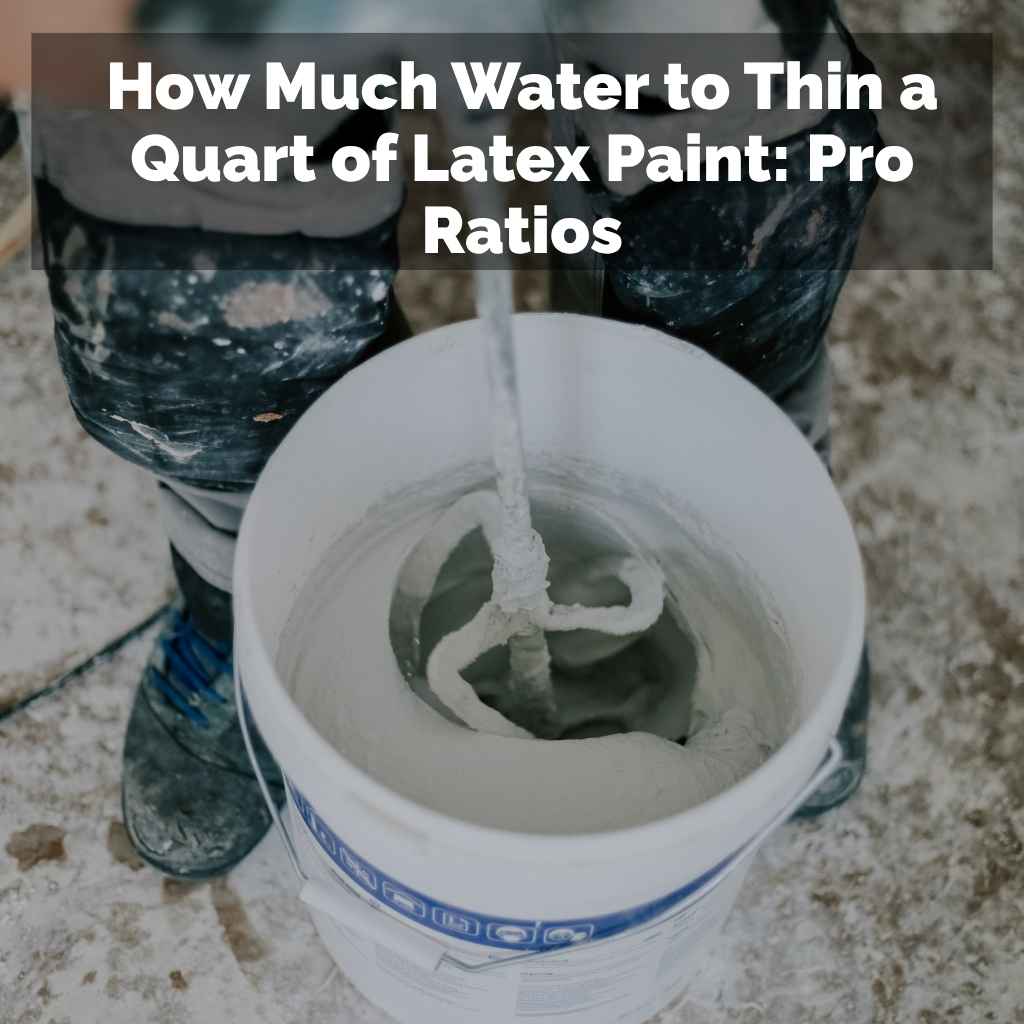
How Much Water to Thin a Quart of Latex Paint: Pro Ratios
Figuring out how much water to add to a quart of latex paint can be tricky, especially for folks new to painting. You want the paint to flow just right so it looks smooth and even, but too much water can make it thin and drippy. It’s a common question that many DIYers and even some pros ponder.
Don’t worry, this guide will make it super simple. We’ll walk through the best ways to get your paint ready for your next project. Get ready to learn the easy steps to paint perfection.
What is Paint Thinning And Why Do It
Paint thinning is a process where you add a liquid to paint to make it less viscous. This changes how the paint behaves, making it easier to apply in certain situations. For latex paint, water is the usual thinner.
Thinning is important because it affects the paint’s application properties, such as how it flows off a brush or roller, and how it sprays. Getting the right consistency ensures a smooth, even coat without drips or runs. This guide will explore How Much Water to Thin a Quart of Latex Paint: Pro Ratios to help you achieve a professional finish.
Understanding Paint Viscosity
Viscosity refers to a liquid’s resistance to flow. Think of honey versus water. Honey is very viscous, meaning it’s thick and flows slowly.
Water is much less viscous; it’s thin and flows easily. Paint has its own viscosity, which can change based on its formulation and temperature. For painting projects, controlling paint viscosity is key.
If paint is too thick, it can be hard to spread and might leave brush strokes. If it’s too thin, it can run down surfaces and not cover well.
Paint manufacturers carefully balance the ingredients in their products to achieve a certain viscosity. This balance is designed for typical application methods, like brushing or rolling. However, factors like temperature, humidity, or the specific tool you’re using can influence how the paint performs.
Understanding this helps explain why you might need to adjust the paint’s consistency sometimes.
Reasons to Thin Latex Paint
There are several good reasons to thin latex paint. One primary reason is for spray applications. Spray guns require paint to be much thinner than for brushing or rolling.
This allows the paint to atomize properly, creating a fine mist that lands evenly on the surface. Without thinning, the spray gun can clog, and the paint will not apply smoothly, resulting in a poor finish.
Another common reason is to improve the flow and leveling of the paint when brushing or rolling. Sometimes, especially in cooler temperatures or with certain paint types, the paint might feel a bit “sticky” or drag on the surface. Adding a small amount of water can make it glide on more smoothly, reducing brush marks and creating a more uniform appearance.
It helps the paint settle into a flatter finish.
Also, if you’re painting porous surfaces like raw wood or new drywall, the surface might absorb the paint very quickly. Thinning the paint slightly can help it penetrate a bit less aggressively and spread more evenly across the surface. This prevents blotchiness and ensures better coverage with the first coat.
When Not To Thin Paint
While thinning can be beneficial, it’s not always the right approach. If you are applying paint with a roller or brush in normal conditions and the paint is already flowing well, there is no need to thin it. Over-thinning can lead to several problems that are worse than not thinning at all.
One major issue is a loss of hiding power. Paint gets its coverage and opacity from the pigments suspended in the binder. When you add too much water, you dilute these pigments, meaning you’ll need more coats to achieve the same level of coverage.
This can also make lighter colors appear washed out or less vibrant.
Another problem is reduced durability and adhesion. The binder in the paint is what holds the pigment to the surface and provides the protective film. Adding too much water can weaken this binder, making the dried paint film less resistant to scrubbing, scratching, and general wear and tear.
In extreme cases, it can affect how well the paint sticks to the surface in the first place.
How Much Water to Thin a Quart of Latex Paint Pro Ratios
Understanding How Much Water to Thin a Quart of Latex Paint: Pro Ratios is essential for getting the best results from your painting projects. This section breaks down the recommended amounts for different application methods, offering clear guidance to avoid common mistakes. We will provide practical ratios that you can easily follow.
General Guidelines for Thinning
For most interior latex paints, a good starting point for thinning is very small amounts. Experts often suggest adding no more than 10% water by volume. This means for a quart of paint, which is about 32 fluid ounces, you would add no more than about 3.2 ounces of water.
However, it’s always best to start with less and add more if needed.
The goal is to achieve a consistency that flows smoothly without losing its body. Always add water gradually. Mix thoroughly after each addition to ensure the water is evenly distributed throughout the paint.
Stirring too vigorously can introduce air bubbles, which can cause defects in the finish. A gentle, consistent stirring motion is preferred.
Thinning for Brushing and Rolling
When brushing or rolling, you usually need to thin the paint very little, if at all. If the paint seems too thick and is leaving noticeable brush marks or is hard to spread evenly, you can add a small amount of water.
For a quart (32 oz.) of latex paint, try adding just 2 to 4 ounces of water. This is roughly 1/4 to 1/2 cup of water. Stir this in gently and test the consistency.
If it still feels too thick, you can add another ounce or two, but be very cautious. The paint should still have a creamy, but not watery, consistency. It should flow off your brush or roller easily but still have enough body to cover the surface well without dripping excessively.
A good test is to dip your brush into the paint. When you pull it out, the paint should coat the bristles evenly and drip off slowly, not in a thick blob or a fast stream. For rolling, the paint should load onto the roller evenly and spread with moderate pressure.
Thinning for Spraying
Spraying latex paint requires a significantly thinner consistency than brushing or rolling. The exact amount of water needed can vary greatly depending on the type of sprayer, the nozzle size, and the specific paint formula. However, general guidelines can help you get started.
For a quart (32 oz.) of latex paint, you might need to add anywhere from 8 to 16 ounces of water, or even more for some high-pressure, low-volume sprayers. This is a much larger amount, so it’s critical to add it in stages and test frequently. A common starting point is to add about 10-20% water and then add more in 5% increments until the paint sprays properly.
To test for spray consistency, use a viscosity cup or a simple test. Pour the thinned paint into a separate container. When you tilt it, it should flow like thin cream or heavy milk.
You can also test it with your specific sprayer on a scrap piece of cardboard. The spray pattern should be even with no “tails” or sputtering. If the paint is too thick, it will clog the sprayer and leave a rough, uneven finish.
Understanding the Role of Additives
Besides plain water, there are other additives you can use to modify paint consistency and performance. These are often called “paint extenders” or “conditioners.” They are designed to improve the paint’s flow, leveling, and open time without significantly reducing its solids content as much as water can.
Examples include latex paint extenders, which are typically acrylic polymers. These additives can help the paint flow out more smoothly, reduce brush marks, and extend the “open time” – the period during which the paint remains wet enough to be worked or blended. This is especially useful for large projects or when painting in warm, dry conditions where paint dries very quickly.
When using these additives, always follow the manufacturer’s instructions carefully. They are usually added in similar proportions to water, but their effect on the paint can be different. Some might also enhance durability or adhesion, whereas over-thinning with water can sometimes compromise these properties.
Key Factors Affecting Paint Thinning Needs
Several elements influence how much water, if any, your latex paint will need. Knowing these factors helps you make better decisions about thinning. It’s not always about following a strict ratio, but rather about adapting to the situation at hand.
Paint Type and Quality
Different types of latex paint have different formulations. For example, higher-quality paints often contain more solids, such as binders and pigments, which give them better coverage and durability. These paints might be thicker to begin with and may require less thinning for brushing or rolling.
They often perform better even when thinned slightly.
Economy paints, on the other hand, might have fewer solids and more fillers. They can sometimes be thinner from the start, or they might become noticeably less effective when thinned too much. Always check the paint can’s label for specific instructions or recommendations from the manufacturer.
Some high-end paints are specifically formulated for spraying and may already be at the correct viscosity.
Temperature and Humidity
Environmental conditions play a big role in how paint behaves. In hot, dry weather, paint tends to dry very quickly. This can make it harder to spread and can lead to lap marks where one stroke of paint meets another.
Thinning the paint slightly with water can extend its open time, allowing you more time to work with it.
Conversely, in cool, damp conditions, paint dries much slower. It might feel thicker and more resistant to flow. In such cases, a small amount of water can help it apply more easily.
However, if the temperature is too cold (below 50°F or 10°C), the paint may not cure properly, and thinning can further hinder its ability to form a good film.
Application Method
As discussed earlier, the tool you use to apply paint is a major factor. Brushes and rollers are designed to work with thicker paint. Spraying requires a much thinner consistency so the paint can pass through the nozzle and atomize into a fine mist.
When using a brush, you want enough body so the paint doesn’t drip everywhere. For rollers, a consistent load onto the roller cover is key. Spraying is the most demanding method regarding paint viscosity.
Different types of sprayers, like airless, HVLP (High Volume Low Pressure), or conventional sprayers, all have different viscosity requirements. An HVLP sprayer typically needs thinner paint than an airless sprayer.
Surface Preparation
The surface you are painting also affects how paint applies. Highly absorbent surfaces, like new drywall, unprimed wood, or plaster, will soak up the liquid from the paint. This can make the paint feel like it’s drying too fast or not spreading evenly.
In these cases, thinning the paint slightly can help it flow and spread more evenly. It allows the paint to form a more uniform film rather than being quickly absorbed into the substrate. However, if the surface is not properly primed, even thinned paint might not adhere well.
Proper priming is always the first step for good paint results.
Step-by-Step Guide to Thinning Latex Paint
Following these steps will help you successfully thin your latex paint. This process is designed to be easy to follow, even if you have never thinned paint before. We’ll cover everything from gathering supplies to testing your work.
-
Gather Your Supplies
Before you begin, make sure you have everything you need. You will need the can of latex paint, a clean container to mix the paint in (preferably transparent so you can see the consistency), a stirring stick or paint paddle, a measuring cup or scale, and the water you will use for thinning (distilled water is often recommended, but tap water is usually fine for most latex paints). Having a few clean rags handy is also a good idea for any spills. -
Determine Your Thinning Needs
Consider how you will be applying the paint. If you are brushing or rolling, you will need very little thinning, if any. If you are spraying, you will need to thin it much more. For general guidance, start by planning to add no more than 5-10% water for brushing/rolling and potentially 10-30% or more for spraying, adjusting as needed. -
Measure Your Paint and Water
Carefully measure the amount of paint you intend to thin. For a quart, that’s 32 fluid ounces. Then, measure the amount of water you will add. It’s best to start with a small amount, like 2 ounces of water for a quart of paint for brushing or rolling, or 6-8 ounces for spraying. You can always add more, but you can’t take it away. -
Combine and Mix Thoroughly
Pour the measured paint into your clean mixing container. Then, add the measured water. Use your stirring stick or paint paddle to mix the paint and water together. Stir gently but thoroughly, ensuring the water is completely incorporated into the paint. Scrape the sides and bottom of the container to make sure all the water is mixed in. Avoid whipping the paint, as this can create air bubbles. -
Test the Consistency
After mixing, test the paint’s consistency. For brushing or rolling, dip your brush in; the paint should flow off smoothly, not in thick globs or a fast stream. For spraying, pour some into a small cup and see how it flows. It should be like thin cream. You can also do a small test spray on cardboard. If it’s still too thick, add a little more water (1-2 ounces at a time for a quart) and mix again. Repeat this process until you achieve the desired consistency.
Common Mistakes to Avoid
Many painters make mistakes when thinning paint. One of the most common is adding too much water too quickly. This can lead to paint that is too thin, which then requires more coats, reduces durability, and can be hard to control.
Another mistake is not mixing thoroughly. If water isn’t fully blended, you might have areas of thin paint and areas of thick paint, leading to an uneven finish.
Using the wrong kind of liquid is also a pitfall. For latex paints, only water or specific latex paint conditioners should be used. Never use mineral spirits or other solvents, as they are meant for oil-based paints and will ruin latex paint.
Not testing the consistency before applying is another error. Always do a small test spray or apply a small brush stroke to check before committing to the entire project.
Tips for Success
Start with less water than you think you need. It is much easier to add more than to fix over-thinned paint. Always mix in small increments, stirring well after each addition.
Pay attention to the manufacturer’s recommendations on the paint can. Some paints are formulated to be used straight from the can for specific applications.
Consider the temperature and humidity. If it’s very warm, the paint will dry faster, and you might need slightly more thinning than if it’s cool. Keep your tools clean.
A dirty brush or roller can affect how paint applies, regardless of its thickness. Lastly, if you’re unsure, practice on a scrap piece of wood or cardboard first.
Pro Tips and Techniques for Perfect Paint Application
Achieving a flawless paint finish involves more than just thinning. There are many small techniques that professionals use to ensure their work looks its best. These tips help address common issues and elevate the final result.
Proper Stirring Techniques
When you first open a can of latex paint, it’s essential to stir it properly. Manufacturers often separate the pigments and binders during storage. Use a clean stir stick or a paint-mixing attachment for a drill.
Start by breaking up any settled pigment at the bottom of the can. Then, move the stick in a figure-eight pattern or a gentle circular motion.
For thinning, avoid over-mixing or whipping the paint, as this can introduce air bubbles. Air bubbles can pop as the paint dries, leaving small pits or craters on the surface. Gentle, consistent stirring that incorporates the thinner evenly throughout the paint is key.
This ensures a uniform consistency and application.
Using Paint Additives Correctly
Paint additives, like flow and leveling agents or retarders, can be very helpful. Flow and leveling agents help the paint spread smoothly and reduce brush marks. Retarders slow down drying time, which is beneficial in warm weather or for detailed work.
Always read the product label for specific instructions on how much to add.
For a quart of latex paint, the amount of additive is usually small, often just a few ounces. These additives are generally compatible with latex paints, but it’s always wise to test them on a small amount of paint first. Some additives might slightly alter the sheen or color of the paint.
Testing Paint Consistency with a Viscosity Cup
Professional painters often use a viscosity cup to accurately measure paint consistency. These cups have a small hole at the bottom. You fill the cup with paint, then time how long it takes for the paint to drain completely through the hole.
Different sprayers and applications have recommended drainage times.
For example, an airless sprayer might work best with paint that drains in 10-20 seconds, while an HVLP sprayer might need paint that drains in 30-40 seconds. This method provides a precise and repeatable way to ensure your paint is thinned correctly every time. You can purchase these cups from paint supply stores.
Case Study: Achieving a Smooth Finish on Trim
Sarah was repainting the trim in her living room. She wanted a smooth, glossy finish that looked professionally done. The latex enamel she chose was a bit thick for her liking, and she worried about visible brush strokes.
She decided to thin her paint slightly. For a quart of paint, she added about 3 ounces of water, mixing it gently. She then tested the consistency by brushing a small amount on a scrap piece of wood.
The paint flowed nicely, coating the brush and spreading easily without dragging. She then proceeded to paint the trim, using a high-quality fine-bristle brush. The thinned paint leveled out beautifully, leaving a smooth, even finish with minimal effort and no noticeable brush marks.
Scenario: Preparing Paint for an Airless Sprayer
Mark was painting the exterior of his house and decided to use an airless sprayer for efficiency. The paint, a standard exterior latex, was too thick for the sprayer to atomize properly. He knew he needed to thin it.
He started by adding about 8 ounces of water to a gallon of paint (which is roughly 10-15% thinning). He mixed it thoroughly. Then, he tested the consistency by spraying a small section of an old fence.
The spray pattern was still a bit heavy and uneven. Mark added another 4 ounces of water to the gallon and mixed again. He retested, and this time, the paint sprayed out in a fine, even mist, creating a smooth, consistent finish on the fence.
He continued with this ratio for the rest of the house, saving considerable time and achieving a professional look.
Frequently Asked Questions
Question: How much water should I add to a quart of semi-gloss latex paint for brushing?
Answer: For brushing semi-gloss latex paint, start with adding only 2 to 4 ounces of water per quart. Mix thoroughly and test the consistency before adding more. The paint should flow smoothly off the brush but still have body.
Question: Can I use tap water to thin latex paint?
Answer: Yes, for most latex paints, tap water is perfectly fine for thinning. Distilled water is sometimes recommended to avoid any mineral impurities, but tap water will generally work without issue for typical DIY projects.
Question: What happens if I add too much water to my latex paint?
Answer: Adding too much water can dilute the paint’s binders and pigments. This leads to reduced hiding power (requiring more coats), less durability, poor adhesion, and a finish that may be more prone to runs and drips.
Question: Should I thin paint for a high-gloss finish?
Answer: High-gloss paints can be more sensitive to thinning. While a small amount of thinning might be necessary for spraying, over-thinning can diminish the gloss level and affect the film’s integrity. Always test on a small area first.
Question: Is it better to use water or a paint conditioner to thin latex paint?
Answer: For brushing and rolling, small amounts of water are often sufficient. Paint conditioners or extenders are generally better for spraying or when you need to extend the open time of the paint. They can improve flow and leveling without reducing durability as much as water can.
Summary
Figuring out How Much Water to Thin a Quart of Latex Paint: Pro Ratios is about finding the sweet spot for application. For brushing and rolling, start with just a few ounces of water per quart. For spraying, you’ll need more, often measured in cups, but always add it slowly.
Pay attention to paint type, temperature, and your tools. Testing is key to avoid over-thinning.