How Do You Get Spray Paint off Your Skin: Quick & Effective Techniques
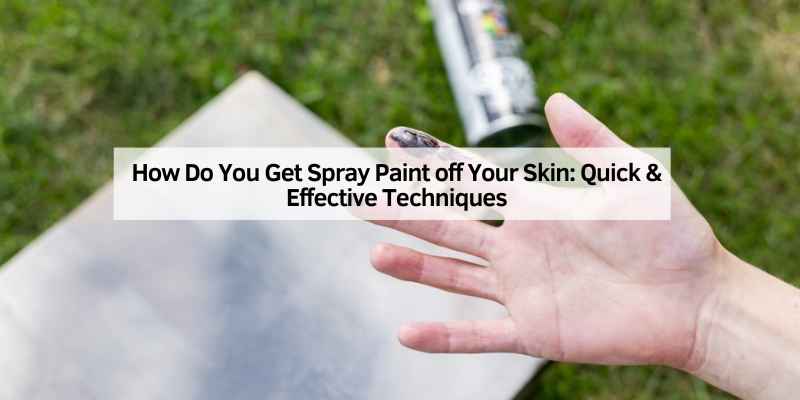
If the spray paint is still wet, wash with warm water and strong hand soap or dish soap right away; if it has dried, move to oil, petroleum jelly, or mineral oil first, then soap. Skip harsh solvents on sensitive skin. Waiting makes removal harder, and scrubbing too hard can irritate or crack skin.
What you’ll need
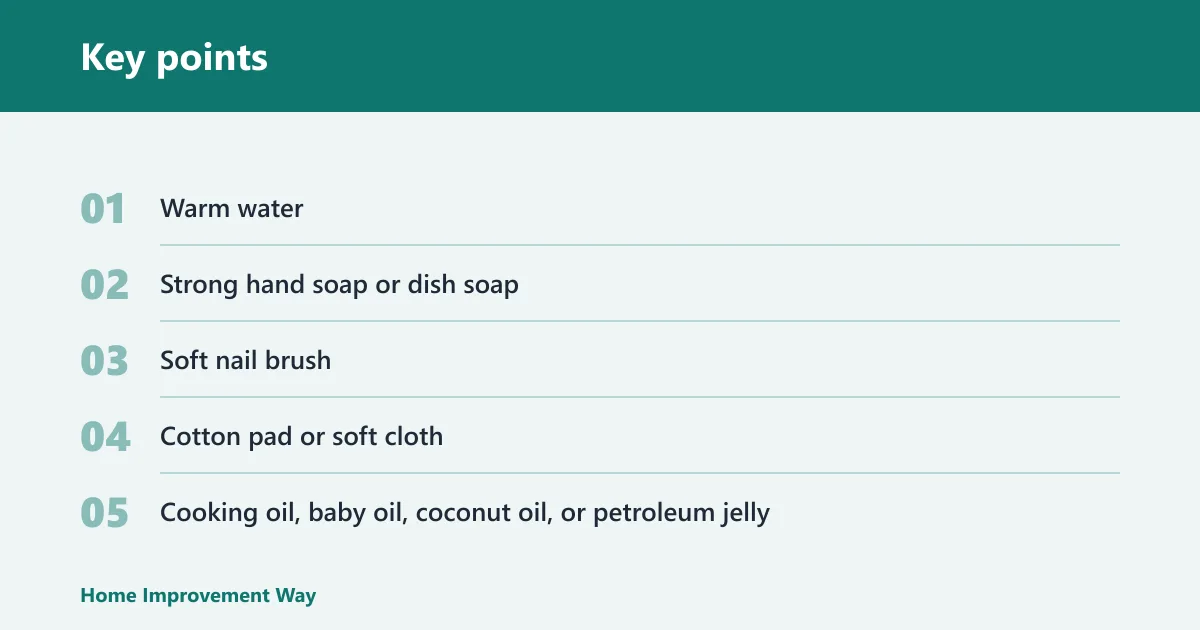


- Warm water
- Strong hand soap or dish soap
- Soft nail brush
- Cotton pad or soft cloth
- Cooking oil, baby oil, coconut oil, or petroleum jelly
- Rubbing alcohol for stubborn residue
- Moisturizer for aftercare
How do you get spray paint off your skin fast?
Start with warm water and soap while the paint is still fresh. That is the fastest skin-safe path for most overspray, and it works best before the paint fully cures. If paint remains after one careful wash, move to an oil-based step instead of scrubbing harder.
Quick steps
- Wet the painted area with warm water.
- Apply strong hand soap or dish soap.
- Rub gently for 20 to 30 seconds.
- Rinse and check for residue.
- Repeat once before moving to oil.
Say your fingertips picked up a light mist while painting a fence. One warm-water wash may clear most of it if you act right away. If the paint has already started to set around the cuticle, soap alone may leave a faint film that needs oil next.
Will soap and water remove spray paint from hands?
Yes, for fresh or still-tacky paint, soap and water are the first step and often enough on their own. Warm water works best with strong hand soap or dish soap, but some people find dish soap more drying or irritating than regular hand soap, so choose the gentler option first if your skin is sensitive.
How to scrub without irritating skin
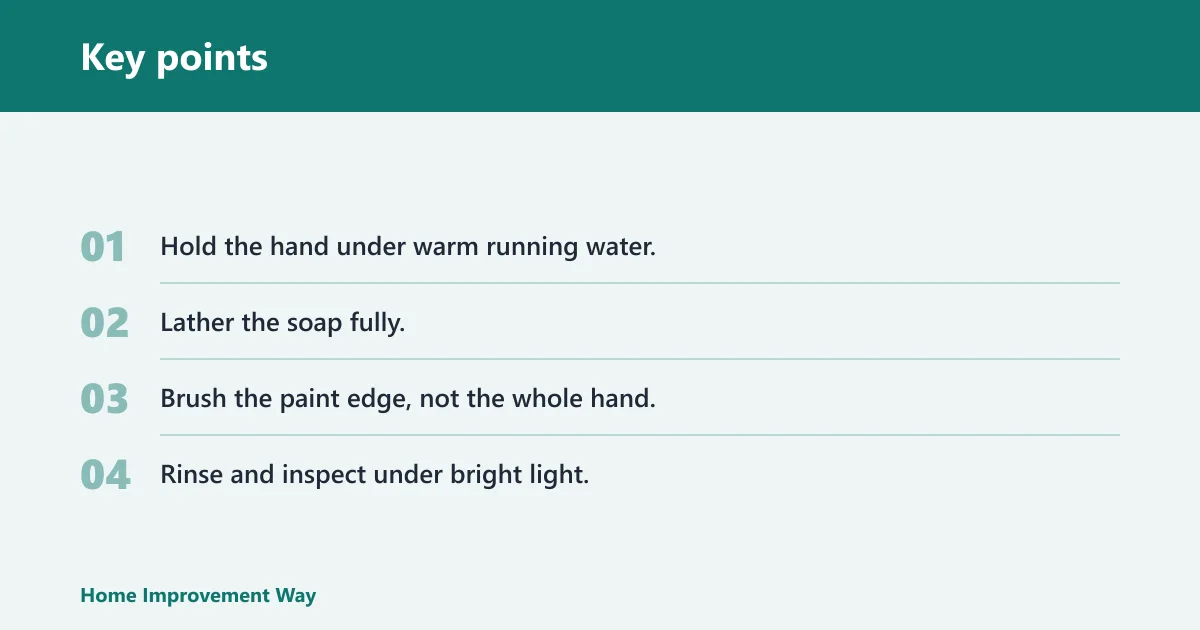
Use a soft nail brush only where paint sits in creases, under nails, or along cuticles. Keep pressure light. A hard scrub can turn the skin red before it removes much more paint.
- Hold the hand under warm running water.
- Lather the soap fully.
- Brush the paint edge, not the whole hand.
- Rinse and inspect under bright light.
What to do if paint is under nails
Work the soap under the nail edge with the brush tip, then rinse again. If residue stays put, switch to oil on a cotton pad and wipe along the nail margin instead of digging at it.
How do you get fresh spray paint off skin?
Fresh spray paint usually lifts with warm water, soap, and gentle rubbing. Removal is easier when you catch it before the paint fully cures. If the area is small, one careful wash may be enough; if overspray is heavier, add oil next rather than increasing pressure.
Best fresh-paint path
- Rinse with warm water.
- Wash with strong hand soap or dish soap.
- Use a soft nail brush around fingertips and cuticles.
- Rinse again.
- Apply moisturizer if the skin feels tight.
Suppose a thumb and two fingertips are speckled after a quick touch-up. Fresh paint on a small area often comes off with soap alone. If the same paint has been on the skin long enough to feel tacky, an oil step usually works better than repeating the same wash.
Is oil or alcohol better?
Oil is the better next step for most people because it is skin-safe and usually less irritating than alcohol. Use cooking oil, baby oil, or coconut oil first for tacky or touch-dry paint. Rubbing alcohol is a stronger backup for cured residue, but it can dry skin and should stay off broken or very irritated areas.
When oil makes sense
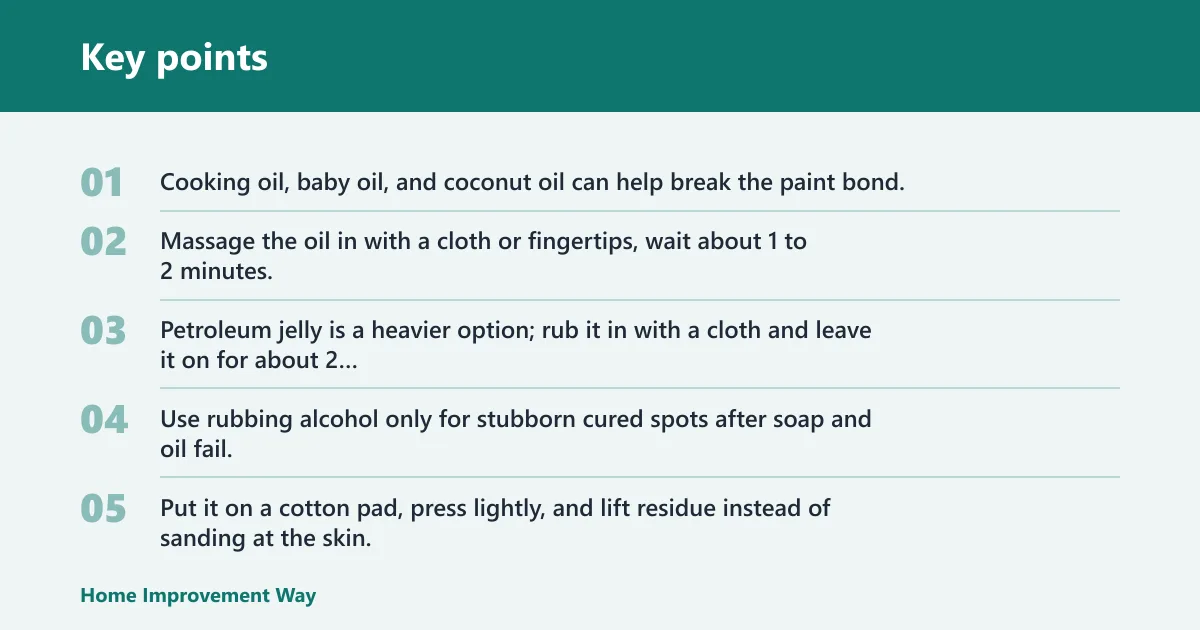
Cooking oil, baby oil, and coconut oil can help break the paint bond. Massage the oil in with a cloth or fingertips, wait about 1 to 2 minutes, then wipe and wash. Petroleum jelly is a heavier option; rub it in with a cloth and leave it on for about 2 to 3 minutes before wiping.
When alcohol is worth trying
Use rubbing alcohol only for stubborn cured spots after soap and oil fail. Put it on a cotton pad, press lightly, and lift residue instead of sanding at the skin. Follow with soap and moisturizer. Stop if the skin stings, turns red, or starts to feel hot.
Why acetone should stay out of routine cleanup
Do not make acetone your default choice. It is too aggressive for normal skin cleanup and can irritate or burn skin. If you are choosing between household options, oil or petroleum jelly is safer than jumping to acetone.
Best remover by paint stage and skin sensitivity
| Paint stage | Skin sensitivity | Recommended product | Estimated effort | Irritation risk | When to stop and seek medical advice |
|---|---|---|---|---|---|
| Fresh | Normal skin | Warm water + strong hand soap | Low | Low | Stop if the skin becomes red or raw after one or two gentle attempts |
| Tacky or touch-dry | Sensitive skin | Baby oil or coconut oil | Low to moderate | Low to moderate | Stop if the area burns, cracks, or stings with washing |
| Fresh to touch-dry | Normal skin | Cooking oil, then soap | Moderate | Low | Stop if residue remains after several gentle wipes and the skin is irritated |
| Cured | Normal skin | Petroleum jelly, then rubbing alcohol on a cotton pad | Moderate to high | Moderate | Stop if the skin turns red, burns, or does not improve after repeated gentle cleanup |
| Cured | Sensitive skin or broken skin | Petroleum jelly only, or medical advice if paint remains | Low to moderate | Moderate to high | Stop immediately if the skin is broken, blistered, or painful |
Common mistakes
The biggest mistake is scrubbing harder when paint resists. That often irritates skin before it removes much more residue. The next mistake is reaching for acetone too early. It should not be a routine skin cleaner.
- Do not grind at the skin with a stiff brush.
- Do not keep washing the same spot for long stretches.
- Do not use alcohol on cracked or broken skin.
- Do not skip moisturizer after repeated washing.
- Do not wait for dried paint to come off on its own if you can remove it sooner.
A common first-timer mistake is to use more pressure instead of a better remover. If a fingertip still looks speckled after soap and oil, pause, switch methods, and recheck after each pass.
When should you stop and get medical advice?
Stop cleanup if the skin burns, blisters, cracks, swells, or stays red after gentle washing. Get medical advice if spray paint gets in the eyes, lands on broken skin, or will not come off after several careful attempts. Sensitive skin and eczema need an earlier stop point.
What to do first
- Rinse with cool or lukewarm water.
- Do not scrub the area.
- Wash around broken skin, not through it.
- Use petroleum jelly only if the skin is intact.
For eczema-prone skin, the safest move is to keep the process short and stop earlier. If removal leaves the area sore, apply a bland moisturizer after washing and avoid more rubbing that day.
How long does spray paint take to cure on skin?
There is no single cure time for every spray paint. Cure time varies by product, coat thickness, temperature, and humidity. Fresh and touch-dry paint comes off more easily than cured paint, and once the paint has hardened, stronger cleanup steps are usually needed.
That is why the removal order changes with time. Warm water and soap are for fresh residue. Oils and petroleum jelly are for paint that has started to set. Rubbing alcohol is a last-resort step for cured spots on intact skin.
Frequently asked questions
What removes spray paint from skin without hurting it?
Warm water, strong hand soap, and then skin-safe oils are the least aggressive options. Baby oil and coconut oil are often a good next step for sensitive skin, while petroleum jelly can help with thicker residue. Avoid harsh scrubbing and keep acetone out of routine cleanup.
Is baby oil or coconut oil better for removing spray paint?
Both are reasonable skin-safe options, and the better choice usually comes down to what you already have and how your skin reacts. Baby oil is often a little easier to spread, while coconut oil can be massaged into the stain and may need a follow-up wipe. Either is gentler than alcohol.
Can rubbing alcohol remove dried spray paint from skin?
Yes, it can help with stubborn cured residue when soap and oil are not enough. Apply it to a cotton pad, press lightly, and wipe the paint instead of rubbing hard. Follow with soap and moisturizer, and stop right away if the skin stings or looks irritated.
Should you use acetone to remove spray paint from skin?
No, not as a routine choice. Acetone is too aggressive for normal skin cleanup and can irritate or burn skin. If you are deciding between household options, start with warm water and soap, move to oil or petroleum jelly, and save stronger solvents for situations a clinician specifically addresses.
What should you do if spray paint got on your hands while painting?
Wash your hands as soon as you can with warm water and strong hand soap, then check under nails and around cuticles. If the paint has already started to dry, use cooking oil or baby oil next. Put on moisturizer afterward to reduce dryness from repeated washing.
Sponsored / affiliate links. As an Amazon Associate I earn from qualifying purchases. I may earn additional commission from eligible campaigns.