How Thick Is a Standard Door? Full Guide
Ever wondered about the size of a typical door? It’s a simple question, but finding a clear answer can feel tricky sometimes. This is especially true when you’re just starting to look into home improvement or building projects.
Don’t worry, we’ll break down How Thick Is a Standard Door? Full Guide for you. We’ll make it super easy to follow, step by step.
Get ready to learn all about door thickness without any confusion.
Understanding Standard Door Thickness
This section is all about the basics of how thick most doors are. We will explore the common measurements you’ll find in homes and buildings. Understanding these standard sizes is key for many projects, whether you are replacing a door or just curious.
We’ll make sure you know exactly what to look for and why these sizes are used.
Common Door Thickness Measurements
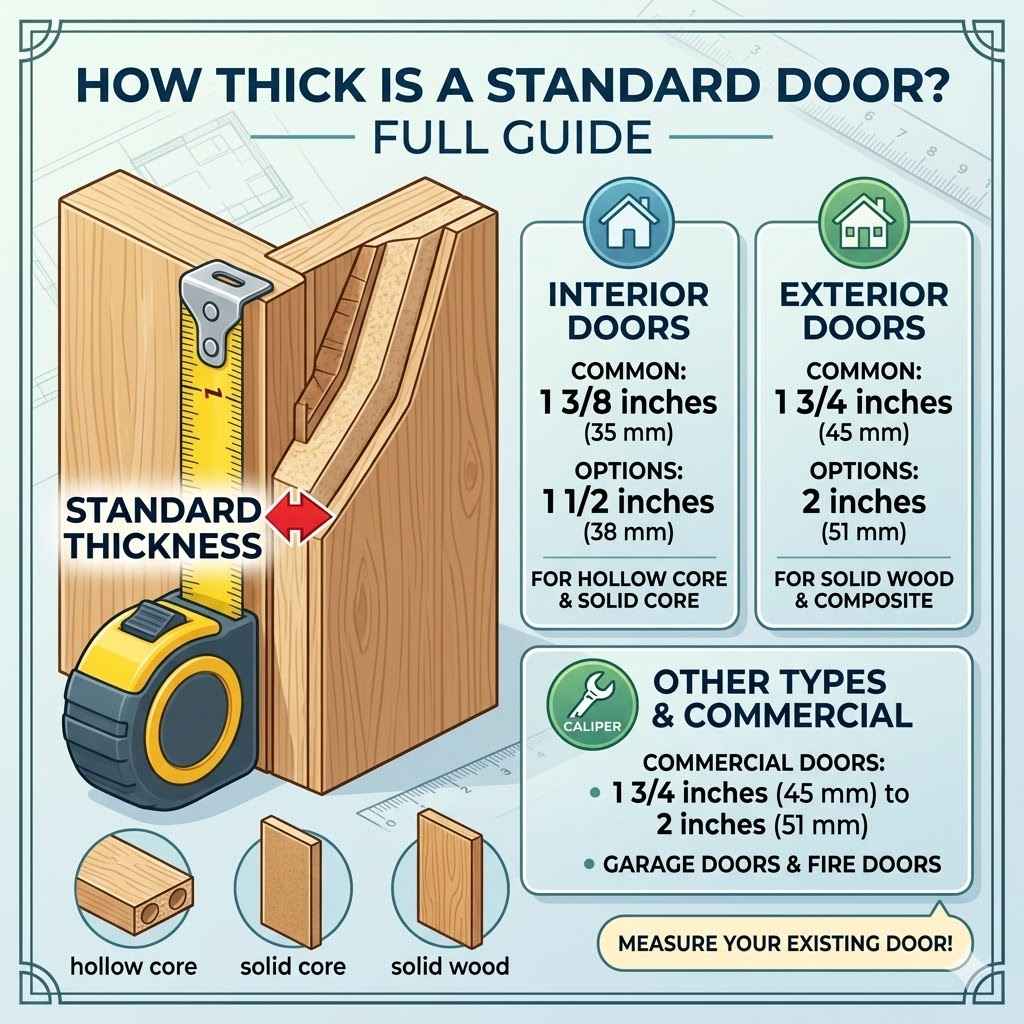
Most interior doors in homes are about 1 3/8 inches thick. This is a very common measurement that works well for typical interior door frames. It provides enough strength and stability for everyday use.
Exterior doors, on the other hand, are usually thicker to offer better security and insulation. They typically measure 1 3/4 inches in thickness. This extra thickness helps keep your home safe and warm or cool.
These standard sizes are not just random numbers. They are based on building codes, manufacturing ease, and the need for doors to fit standard hardware like hinges and doorknobs. Using these common thicknesses means you can easily find
1 3/8 Inch Doors StandardA door that is 1 3/8 inches thick is a very common choice for interior doors. Think of the doors in your bedrooms, bathrooms, and living areas. These doors are designed to be lightweight enough for easy opening and closing but sturdy enough for daily use.
Their thickness is ideal for the typical hinges and frames used in most homes. This measurement ensures a good balance between cost and functionality for many residential applications.
1 3/4 Inch Doors StandardDoors that are 1 3/4 inches thick are usually found on the exterior of a home. These include your front door, back door, and garage entry doors. The increased thickness provides greater strength against forced entry and better insulation against weather changes.
This makes them a more secure and energy-efficient option compared to thinner interior doors. Many security features, like deadbolt locks, are designed to work best with this thicker door profile.
Specialty Door ThicknessesWhile 1 3/8 and 1 3/4 inches are the most common, some doors come in different thicknesses. For instance, solid core doors or custom-made doors might be thicker. You might also find thinner doors, like bifold closet doors, which can be as thin as 1 inch.
However, for standard swinging doors, the two main measurements cover most situations. Knowing these exceptions helps avoid surprises when selecting doors for unique spaces.
Why Door Thickness Matters
The thickness of a door plays a significant role in several aspects of its performance. It affects its durability, its ability to block sound, and its security. A thicker door is generally more robust and can withstand more wear and tear over time.
It also tends to offer better soundproofing, which is great for creating quiet spaces.
For exterior doors, thickness is directly linked to energy efficiency and security. A thicker door with good insulation can help keep your home warmer in winter and cooler in summer, reducing energy costs. It also presents a stronger barrier to potential intruders.
The hardware you choose, like hinges and locksets, also needs to be compatible with the door’s thickness.
How to Measure Door Thickness
Measuring door thickness is straightforward. You can use a tape measure or a ruler. Simply open the door and measure the edge of the door slab itself, from one surface to the other.
Focus only on the door material, not any trim or molding. If you are measuring a door that is still in its frame, you can sometimes see the edge of the door clearly.
Alternatively, if you have removed the door, you can lay it flat and measure the side. For older doors or unusual sizes, using calipers can give a very precise measurement. If you’re unsure, it’s always a good idea to measure in a few different spots along the edge to ensure consistency, especially if the door is old or has undergone repairs.

Factors Influencing Door Thickness
Several factors determine why doors are made to specific thicknesses. These reasons are tied to the door’s intended use, the materials used, and the desired performance characteristics. We will look into these influences so you can better appreciate the design behind standard door sizes.
Interior vs. Exterior Doors
The primary difference in door thickness is between interior and exterior doors. Interior doors are generally lighter and less robust because they do not need to withstand harsh weather or provide high security. Their main purpose is to divide rooms and offer privacy.
Therefore, a standard 1 3/8 inch thickness is usually sufficient for these needs.
Exterior doors, however, face constant exposure to the elements and are a key part of your home’s security. They must be strong enough to resist impacts, insulate against temperature changes, and prevent unauthorized entry. This is why they are typically thicker, at 1 3/4 inches, and often made from more durable materials like solid wood, steel, or fiberglass.
Material Composition
The material from which a door is made significantly impacts its thickness and overall structure. Hollow-core doors, commonly used for interiors, have a thin veneer or skin with a hollow space inside. This makes them lightweight and cost-effective but also less durable and sound-resistant.
Their thin profile is sufficient for their intended interior use.
Solid-core doors, on the other hand, are made with a solid material filling the core, such as particleboard, composite wood, or solid wood. This makes them heavier, more durable, and better at blocking sound and heat. They are often used for interior doors where better performance is desired or for exterior doors that need strength.
Solid Wood Doors
Solid wood doors are a classic choice, offering natural beauty and durability. Their thickness can vary widely depending on the type of wood and the construction. However, standard solid wood interior doors often follow the 1 3/8 inch rule.
For exterior applications, solid wood doors are usually at least 1 3/4 inches thick, with premium options being even thicker for enhanced insulation and security. The natural density of wood contributes to its strength, and thicker planks provide more structural integrity.
Engineered Wood Doors
Engineered wood doors are made from composite materials like particleboard or MDF (medium-density fiberboard) covered with a wood veneer or laminate. Standard hollow-core doors use this construction method to keep costs down and weight low. Solid-core engineered wood doors, however, use denser composite materials for the core, offering improved strength and sound dampening while maintaining a consistent thickness.
These can be a good alternative to solid wood.
Metal Doors
Metal doors, typically made of steel or aluminum, are often used for exterior entrances and commercial applications due to their high security and durability. Standard steel entry doors are commonly 1 3/4 inches thick. They feature a metal skin over a core, which can be foam for insulation or sometimes solid wood or honeycomb materials for added strength.
The inherent strength of metal allows for a robust barrier even at standard thicknesses.
Fiberglass Doors
Fiberglass doors are known for their resistance to weather, impact, and corrosion, making them a popular choice for exterior use. They are manufactured to mimic the look of wood or metal but offer superior durability. Like steel doors, standard fiberglass entry doors are typically 1 3/4 inches thick.
Their construction often involves a foam core sandwiched between fiberglass skins, providing excellent insulation and strength without excessive weight.
Insulation and Soundproofing Properties
Door thickness directly affects how well a door can insulate against temperature and block sound. A thicker door generally provides a better barrier. For example, a 1 3/4 inch exterior door with a solid core and good weatherstripping will do a much better job of keeping your home’s temperature stable than a thin, hollow interior door.
When it comes to sound, a denser and thicker door can significantly reduce noise transmission between rooms. This is why solid-core doors are often preferred for bedrooms, home offices, or media rooms. The air gap in hollow-core doors allows sound waves to pass through more easily, making them less effective for soundproofing.
Sound Transmission Class (STC) Ratings
The effectiveness of a door’s sound-blocking ability is measured by its Sound Transmission Class (STC) rating. A higher STC rating means the door blocks more sound. Standard hollow-core interior doors typically have STC ratings around 20-26.
This is sufficient for basic privacy but not for blocking significant noise.
Solid-core interior doors usually have STC ratings between 28 and 35, offering noticeably better sound reduction. For maximum sound isolation, like in recording studios or home theaters, doors with STC ratings of 40 or higher are used, often requiring specialized construction and installation. The thickness and density of the door core are major factors contributing to these higher STC ratings.
Thermal Resistance (R-Value)
The thermal resistance, or R-value, of a door indicates how well it prevents heat transfer. A higher R-value means better insulation. Thicker doors, especially those with insulating cores like foam or wood, tend to have higher R-values.
Exterior doors are designed with this in mind to help maintain comfortable indoor temperatures and reduce energy bills.
For instance, a standard 1 3/8 inch hollow-core interior door has a very low R-value, as its primary function isn’t insulation. In contrast, a 1 3/4 inch steel or fiberglass exterior door with a foam core can have R-values ranging from R-5 to R-10 or even higher, depending on the specific construction and materials used. This difference in R-value significantly impacts your home’s energy efficiency.
Standard Door Dimensions Beyond Thickness
While thickness is important, doors also come in standard widths and heights. Knowing these dimensions is crucial for selecting the right door for any opening. We’ll cover the most common sizes you’ll encounter to ensure you have a complete picture.
Standard Door Widths
Door widths vary based on their intended use. For interior doors, common widths include 24, 28, 30, 32, and 36 inches. The 30-inch and 32-inch widths are very popular for most interior room doors.
Bedroom doors are often 30 or 32 inches wide, while bathroom doors might be slightly narrower at 28 or 30 inches. Hallway closets or smaller spaces might use 24-inch doors.
Exterior doors typically have fewer width options, with 36 inches being the most common standard width for single entry doors. Wider openings might require double doors. Accessibility standards often dictate wider doors, especially for main entrances and bathrooms.
Standard Door Heights
The standard height for most interior and exterior doors in North America is 80 inches, which is equivalent to 6 feet 8 inches. This is the most common height you will find, and it works well with standard ceiling heights in most homes.
However, taller ceilings are becoming more popular, leading to the increased availability of 8-foot (96 inches) doors. These taller doors can create a more grand and spacious feel. When measuring an existing door frame, always measure the height carefully.
Door Jambs and Frames
The door jamb, or frame, is an essential part of a door installation. It is the structure that surrounds the door opening and to which the door is attached. The thickness of the door is designed to fit within a standard door jamb.
For instance, a 1 3/8 inch door will typically fit in a jamb made for that thickness, often around 1 3/4 inches thick itself, allowing for hinges and a bit of clearance.
Similarly, a 1 3/4 inch door fits into a jamb designed for thicker doors, which might also be 1 3/4 inches wide. The jamb depth needs to match the thickness of the wall the door is being installed in. This coordination ensures the door closes properly and operates smoothly.
Common Door Types and Their Thickness
Doors come in many styles, and their construction often dictates their thickness. Understanding these types will help you choose the right door for your needs. We will explore popular door styles and how their thickness fits the How Thick Is a Standard Door?
Full Guide.
Hollow Core Doors
Hollow core doors are lightweight and affordable, making them a popular choice for interior doors. Their construction involves thin skins of wood veneer or hardboard stretched over a frame with a honeycomb paper or cardboard core inside. Because of this hollow nature, they are not very durable and offer poor sound insulation.
Standard hollow core doors are typically 1 3/8 inches thick.
Their low cost and light weight make them easy to install and handle. However, they are prone to damage from impacts, and you will hear most sounds passing through them. They are best suited for low-traffic areas where soundproofing is not a concern, like closet doors or secondary bedrooms.
Solid Core Doors
Solid core doors are made with a core of solid composite material, such as particleboard or engineered wood, sandwiched between wood veneers or skins. This construction makes them significantly heavier, more durable, and better at blocking sound than hollow core doors. They are often used as interior doors when enhanced performance is desired, or as exterior doors.
The thickness of solid core doors usually matches the standard door thicknesses, meaning they are commonly 1 3/8 inches for interior applications and 1 3/4 inches for exterior use. The solid core adds density, which improves their ability to dampen noise and resist impacts. They provide a more substantial feel and better privacy.
Panel Doors
Panel doors are a very traditional style, characterized by stiles (vertical parts) and rails (horizontal parts) that create recessed panels. These panels can be flat or raised. The thickness of a panel door depends on whether it is hollow or solid core.
Standard hollow core panel doors will be 1 3/8 inches thick. Solid core panel doors, offering better quality and performance, will typically be 1 3/8 inches for interior use and 1 3/4 inches for exterior use. The framing of stiles and rails also contributes to the overall robustness and appearance of the door.
Bifold Doors
Bifold doors are often used for closets or as room dividers. They consist of two or more panels hinged together that fold and slide along a track. Because they need to fold and move easily, bifold doors are usually thinner than standard swinging doors.
They can range in thickness from about 3/4 inch to 1 1/4 inches, depending on the material and design. You’ll find them made from wood, composite materials, or even louvers. Their thinness is a functional requirement for their folding mechanism.
French Doors
French doors are typically made of glass panels set within a frame, often used as patio doors or to connect rooms with a view. They are generally designed to be more decorative and functional for light.
Standard French doors, whether interior or exterior, are usually 1 3/4 inches thick. This thickness ensures they can accommodate the necessary hardware, such as multiple hinges and robust locking mechanisms, while providing adequate insulation and structural integrity. The larger glass panes can also influence the framing and overall thickness needed for stability.
Fire-Rated Doors
Fire-rated doors are specially constructed to resist the spread of fire for a specific period, often 20, 45, 60, or 90 minutes. These doors are crucial for safety in commercial buildings, apartment complexes, and some residential areas.
To achieve their fire-resistance ratings, fire-rated doors are significantly thicker and denser than standard doors. A 20-minute fire-rated door might be around 1 3/4 inches thick, similar to some exterior doors. However, higher ratings (like 60 or 90 minutes) require doors that can be 2 inches thick or more.
They often have a solid mineral core or other fire-resistant materials, along with special fire-resistant frames and hardware.
Practical Applications and Buying Tips
Now that you understand the different thicknesses and what influences them, let’s talk about how this knowledge helps in real-life situations. We’ll give you some practical tips for when you’re shopping for doors.
Replacing an Existing Door
If you are replacing an old door, the easiest way to ensure a proper fit is to measure the existing door slab. Measure the thickness, width, and height of the door itself. This will give you the exact dimensions you need.
For example, if you find your old interior door is 1 3/8 inches thick, you’ll want to buy a new interior door that is also 1 3/8 inches thick. If your exterior door is 1 3/4 inches, look for a
Buying Doors for New Construction
If you are building a new home or adding a new room, you have more flexibility. You can choose standard sizes or opt for custom dimensions. For standard construction, sticking to common door thicknesses like 1 3/8 inches for interiors and 1 3/4 inches for exteriors will save you money and make future replacements easier.
Consider the function of each door. For a home office where you want quiet, a solid core door, even if interior, might be a better choice than a hollow core. For an exterior door, prioritize security and insulation, which usually means a 1 3/4 inch solid door.
What to Ask When Shopping
When you visit a hardware store or lumber yard, don’t hesitate to ask questions. The staff can help you identify the correct door type and size. You can ask about the door’s construction (hollow core, solid core, material), its thickness, and its intended use (interior, exterior, fire-rated).
It’s also wise to ask about compatible hardware. For example, if you’re buying a new doorknob, make sure it’s designed to fit the thickness of the door you’ve chosen. Most standard doorknobs will fit either 1 3/8 or 1 3/4 inch doors, but specialty doors might require specific hardware.
When Standard Sizes Won’t Work
Sometimes, you might encounter an unusually sized opening. This could be due to older construction, unique architectural designs, or specific needs like accessibility. In such cases, standard doors might not fit without significant adjustments.
For openings that are too small, you might consider a custom-sized door. For openings that are too large, you could use a wider single door, double doors, or even build a wider frame. If the wall is thicker than standard, you might need a deeper jamb.
Always measure precisely and consult with a professional if you’re unsure.

Frequently Asked Questions
Question: What is the most common thickness for an interior door
Answer: The most common thickness for an interior door is 1 3/8 inches.
Question: Are exterior doors thicker than interior doors
Answer: Yes, exterior doors are typically thicker than interior doors, usually 1 3/4 inches compared to 1 3/8 inches for interiors.
Question: What does “solid core” mean for a door
Answer: Solid core means the door is filled with a dense material like particleboard or engineered wood, rather than being hollow.
Question: Can I use a 1 3/8 inch door for my front door
Answer: While technically possible, it’s not recommended for security and insulation. Exterior doors are usually 1 3/4 inches thick.
Question: How do I measure my door thickness
Answer: Open the door and measure the edge of the door slab itself from one surface to the other using a tape measure or ruler.
Summary
Understanding door thickness is simple. Interior doors are usually 1 3/8 inches, and exterior doors are 1 3/4 inches. These standard sizes ensure compatibility with hardware and frames.
Material and intended use, like security or soundproofing, drive these common dimensions. This guide helps you easily identify and choose the right door thickness for any project.