How to Keep a Couch from Sliding on Wood Floors
Does your couch take a little trip across the floor every time someone sits down? It’s a common problem, especially on smooth wood floors. This can be a little annoying for anyone trying to relax.
But don’t worry, it’s not a hard fix. We have easy steps to help you learn How to Keep a Couch from Sliding on Wood Floors so you can stop that sliding for good.
Stop Couch Slipping on Your Wood Floors
This section looks at the main reasons why couches slide on wood floors and why it’s a common issue for many homeowners. We will explore the science behind friction and how different materials interact. Understanding these basics is the first step to finding the right solution for your furniture.
The Science of Slipping and Sliding
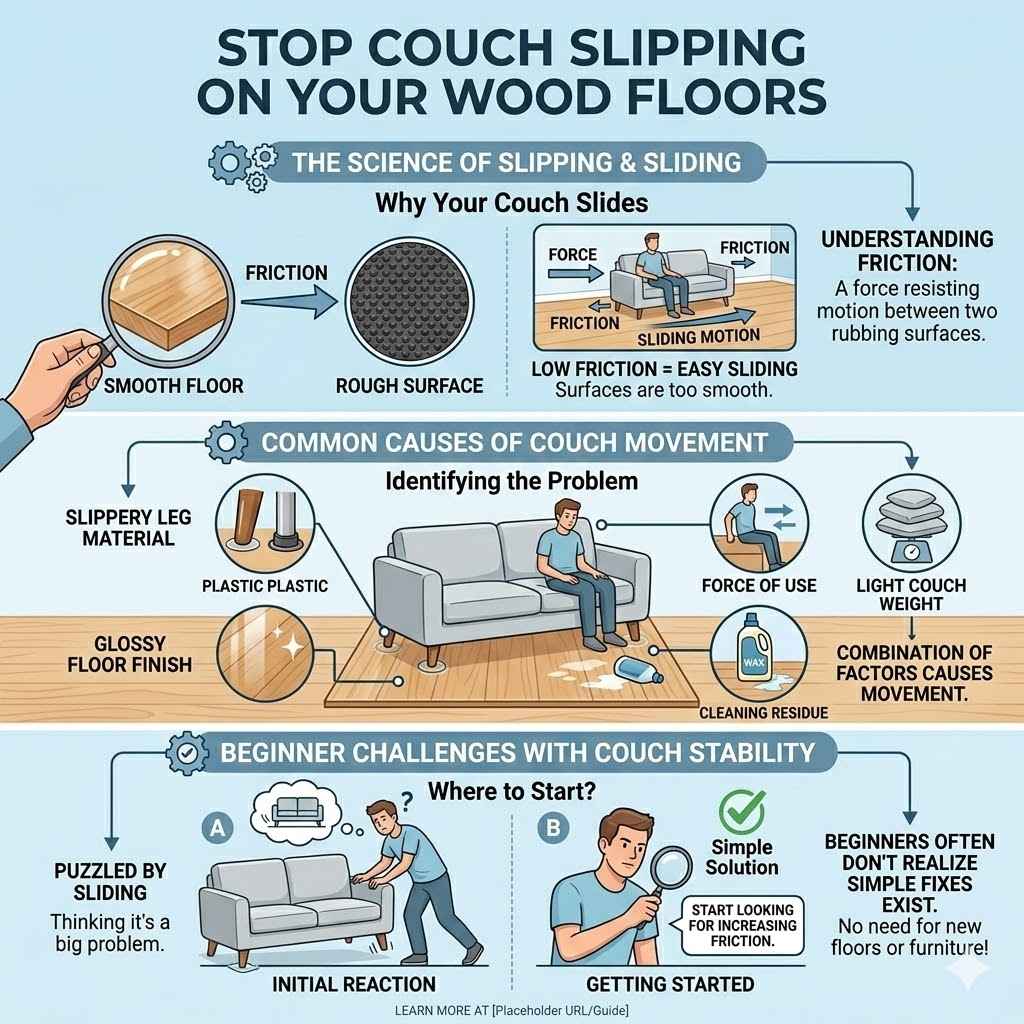
Wood floors look beautiful, but their smooth surface can make it hard for furniture to grip. This lack of grip causes that frustrating sliding. Factors like the type of wood finish, the weight of the couch, and even humidity can play a part.
When the bottom of your couch legs can’t get a good hold, they easily move.
Friction is key here. Friction is a force that resists motion when two surfaces rub against each other. A smooth surface like polished wood has less friction than a rough surface.
Couch legs, especially if they are made of smooth wood or plastic, don’t create enough friction. They just glide.
This is why understanding how to increase friction is so important. It’s like trying to walk on ice without special shoes; you just slide around. Your couch is essentially doing the same thing on your floors.
Common Causes of Couch Movement
Several things can make your couch more likely to slide. The most obvious is the material on the bottom of your couch legs. If they are smooth plastic, metal, or even polished wood, they offer little resistance to movement.
The finish on your wood floors also matters. A highly polished, glossy finish will be much slipperier than a matte or semi-gloss finish. Some finishes are designed to be very smooth and durable, which unfortunately makes them slippery.
Another factor is the weight distribution of your couch and who is using it. When people sit down or move around on the couch, they create forces that push the couch. If there’s not enough friction to counteract these forces, the couch will move.
Even cleaning products can leave a residue that makes floors more slippery. If you’ve recently waxed or polished your floors, this can temporarily increase the sliding problem.
Beginner Challenges with Couch Stability
Many people new to owning wood floors find this couch sliding problem quite puzzling. They might not realize how much the floor’s surface affects furniture stability. They might try pushing the couch back in place, only for it to slide again shortly after.
Beginners often don’t know where to start looking for solutions. They might think about buying a completely new couch or making permanent changes to their floor. These aren’t usually necessary.
The good news is that there are simple, effective ways to fix this. You don’t need to be a DIY expert or spend a lot of money. The solutions are usually very straightforward.
Simple Solutions to Prevent Couch Sliding
This part of the article will guide you through practical and easy-to-implement methods to stop your couch from sliding on wood floors. We will cover a variety of options, from quick fixes to more permanent solutions, so you can choose what best fits your needs and budget.
Non-Slip Couch Grippers and Pads
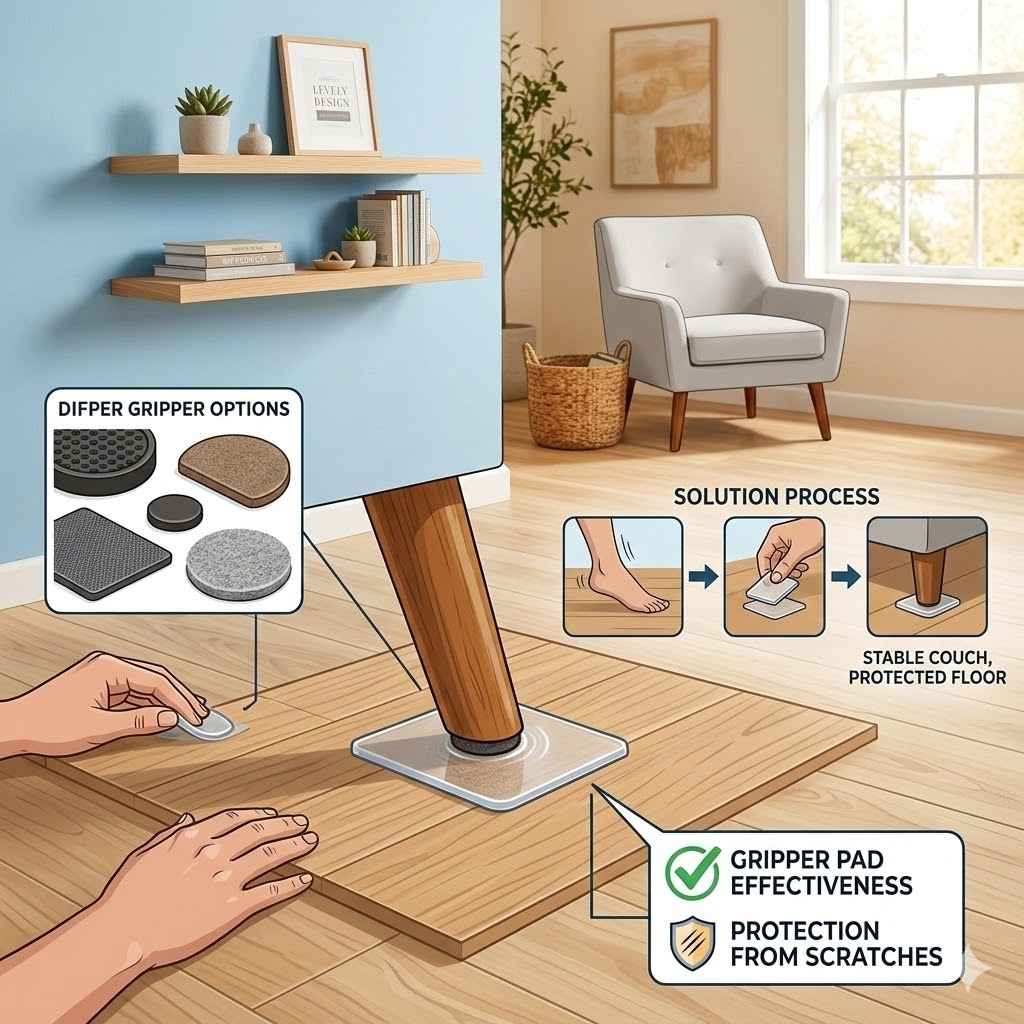
One of the easiest and most popular solutions is using non-slip grippers or pads. These are special items designed to go under your couch legs. They add much-needed friction between the couch and the floor.
These grippers often come in different materials. Rubber and felt are very common. Rubber provides excellent grip.
Felt is good too, and it also helps protect your floors from scratches, especially if the couch is moved slightly.
You can find these at most home goods stores or online. They are usually inexpensive and very simple to use. You just place them under each leg of your couch.
For best results, make sure they are the right size for your couch legs.
Some are adhesive, meaning they stick to the bottom of the legs. Others are designed to just sit there. The adhesive ones tend to stay in place better but can be harder to remove if you change your mind.
Rubber Grippers
This type of gripper is made from durable rubber. Rubber is known for its high friction coefficient, meaning it grips surfaces very well. When placed under couch legs, rubber grippers create a strong bond with the wood floor, significantly reducing any tendency to slide. They are often textured, which further increases the surface area for grip. Many are designed to be slightly compressible, allowing them to conform to the shape of the couch leg for a more secure fit.
Felt Pads with Rubber Backing
These pads offer a dual benefit. The top layer is often made of thick felt, which is great for preventing scratches on your wood floors if the couch is ever slightly nudged or moved. The underside, however, is made of a high-friction rubber. This rubber layer is what does the heavy lifting in preventing the slide. They are a good compromise if you’re concerned about both floor damage and couch movement.
Silicone Mats
Silicone is another material that offers excellent grip. Silicone mats are often thin and flexible, making them easy to place under any shape of couch leg. They are resistant to wear and tear and can handle a good amount of pressure without losing their grip. Their flexibility allows them to mold to the floor and leg, creating a more stable connection.
DIY Solutions Using Household Items
If you need a quick fix or prefer to use things you already have at home, there are a few DIY options. These can be surprisingly effective.
One common trick is to use old bath towels or thick fabric. Cut pieces of a non-slip rug pad or thick, textured fabric and place them under the couch legs. This adds bulk and friction.
Another idea is to use pieces of old yoga mats. Yoga mats are made of grippy materials designed to prevent slips. Cut them to size and place them under each leg.
Some people have success using pieces of shelf liner, the kind with a grippy, plastic-like texture. Cut it into squares and tuck it under the legs. Just ensure it’s thick enough to provide some cushioning and grip.
Cut Pieces of Non-Slip Rug Pad
If you have a rug pad that you use under carpets to stop them from slipping, you can cut off small sections of it. These pads are specifically designed to create friction between different surfaces. Cut them into shapes that fit neatly under each couch leg. The rubberized or textured underside of the rug pad will grip the wood floor, while the top side will grip the couch leg. This is a very effective and readily available solution for many households.
Old Yoga Mats
Yoga mats are made from materials like rubber or PVC, which offer excellent traction. If you have an old yoga mat lying around, you can cut it into small squares or circles to place under each couch leg. Ensure the mat is clean and dry before using it. The natural stickiness and texture of the yoga mat will prevent the couch from sliding. This is a sustainable way to reuse old items.
Shelf Liner
Many types of shelf liner, especially those with a pegboard or waffle pattern, are designed to grip shelves and prevent items from sliding off. These liners can be cut into small pieces and placed under couch legs. The patterned surface creates many points of contact and friction with the floor. Look for liners made of vinyl or rubber for the best grip.
Securing Couch Legs to the Floor
For a more permanent and secure solution, you can look at ways to physically attach the couch legs to the floor. This is usually not necessary for most people, but it offers the highest level of stability.
One method involves using small L-brackets. These metal brackets can be screwed into the bottom of the couch leg and then screwed into the subfloor underneath your wood flooring. This requires careful measurement and might involve lifting the couch.
Another approach, less invasive, is using furniture straps or anchors. These are often used for safety to prevent furniture from tipping over. Some types can be adapted to secure a couch to the floor or wall, thereby preventing sliding.
It is important to note that methods involving screwing into the floor may require professional help or could potentially damage your flooring if not done correctly.
Using L-Brackets
L-brackets are small metal braces shaped like the letter ‘L. One side of the bracket attaches to the couch leg, and the other side attaches to the floor. You would typically place the couch in its desired position, then mark where the legs meet the floor.
The bracket is then screwed into the bottom of the leg and the floor itself. This method provides a very strong anchor. However, it requires drilling into your floor, which might not be desirable for renters or if you want to move the couch later without leaving visible holes.
Furniture Straps and Anchors
These are commonly used to prevent furniture from tipping over, especially in homes with children or pets. While not their primary purpose, some anchoring systems can be adapted to limit lateral movement. You might attach one end of a strap to the couch frame and the other end to a securely fastened anchor point on the floor.
This would restrict the couch from sliding horizontally. It’s a less intrusive method than L-brackets but may require creative installation.
Choosing the Right Material for Your Couch Feet
Sometimes, the problem lies with the couch feet themselves. If they are worn down, very smooth, or made of a naturally slippery material, they contribute to the sliding.
Consider replacing feet that are made of plastic or polished metal with ones that have a more grippy bottom. Some furniture stores sell
If your couch has glides that are meant to protect floors but are too smooth, you can often
When buying new feet, look for materials like:
Rubber-soled feet
These are designed with a solid rubber bottom that provides excellent traction. They are often durable and come in various styles to match your furniture.
Felt-bottomed feet
These protect your floor and offer a good amount of grip, especially when paired with a slightly rougher upholstery fabric or if the couch has some weight on it.
Feet with integrated non-slip pads
Some modern furniture feet come with built-in non-slip features, combining style and function.
Advanced Strategies for Couch Stability
This section delves into more advanced or less common techniques for ensuring your couch stays firmly in place on your wood floors. We’ll discuss solutions that might involve modifying the couch slightly or using specialized products for maximum stability.
Custom Solutions and Professional Help
If standard solutions don’t work, or if you have a particularly heavy or valuable couch, you might consider custom solutions. This could involve working with a furniture repair shop or a handyman.
They can help attach more robust anti-slip mechanisms or even modify the couch legs. For instance, a carpenter could add rubber inserts or re-shape the legs to create better contact with the floor.
Another approach is to use industrial-strength non-slip mats designed for heavy equipment. While these might not be the most aesthetically pleasing, they can be very effective.
Remember to consider the weight of your couch. A very heavy couch will exert more downward pressure, which can sometimes help it grip better if the right materials are used.
Modifying Couch Legs
This involves altering the existing couch legs or replacing them with custom ones. For example, a skilled individual could rout out a small groove in the bottom of a wooden leg and inlay a piece of rubber. Alternatively, they could attach larger, thicker rubber pads that extend beyond the footprint of the original leg.
This ensures a broader contact area with the floor, increasing friction.
Using Heavy-Duty Mats
There are industrial-grade anti-slip mats made for environments like warehouses or gyms. These mats are constructed from very dense, high-traction rubber compounds designed to withstand extreme pressure and movement. While they may look utilitarian, they can be cut to size to fit under a couch and provide unparalleled grip.
They are a robust option for situations where standard solutions fail.
Weight and Distribution Considerations
The weight of the couch is a significant factor. A heavier couch is less likely to slide than a lighter one, all other things being equal. The way weight is distributed on the legs also matters.
If your couch has a frame that sits very low to the ground, you might have less space to add grippers. In such cases, thin, high-friction pads are essential.
The distribution of weight can be uneven if the couch is old or has a broken spring. This can cause certain legs to bear more weight, potentially making them slide more easily.
Consider the total weight of the couch and the people who will be using it. This helps in selecting a solution that can handle the combined forces.
Environmental Factors
Besides the couch and floor, environmental factors can also influence sliding.
Humidity: High humidity can make wood floors slightly more prone to expansion and contraction, which might affect how smoothly they slide. Very dry air can also cause wood to shrink, potentially creating small gaps.
Cleaning products: As mentioned, residues from floor cleaners, waxes, or polishes can make floors slick. Regular cleaning with appropriate products for wood floors, and avoiding excess application of polishes, can help maintain a good grip.
These factors are usually minor compared to the friction between the couch legs and the floor, but they can play a role.
Humidity’s Role
Wood is a hygroscopic material, meaning it absorbs and releases moisture from the air. Changes in humidity can cause wood floors to expand (in high humidity) or contract (in low humidity). This expansion and contraction can subtly alter the surface texture and flatness of the floor.
While not a primary cause of sliding, extreme humidity fluctuations might make the floor slightly more or less conducive to friction. Maintaining a consistent indoor humidity level is generally good for both wood floors and furniture.
Impact of Cleaning Products
The type and amount of cleaning product used on wood floors can significantly impact their slipperiness. Many wood floor cleaners are designed to leave a protective sheen, which can increase slipperiness if over-applied or if the product contains waxes or oils. Polishes and waxes, in particular, are designed to create a smooth, glossy surface, which inherently reduces friction.
For best results in preventing couch slippage, use cleaners specifically formulated for wood floors, and opt for matte or satin finishes over high-gloss ones when possible. Always follow product instructions carefully.
Comparing Solutions for Couch Stability
This section provides a comparative look at the different methods discussed for keeping your couch from sliding. We’ll highlight the pros and cons of each to help you make an informed decision.
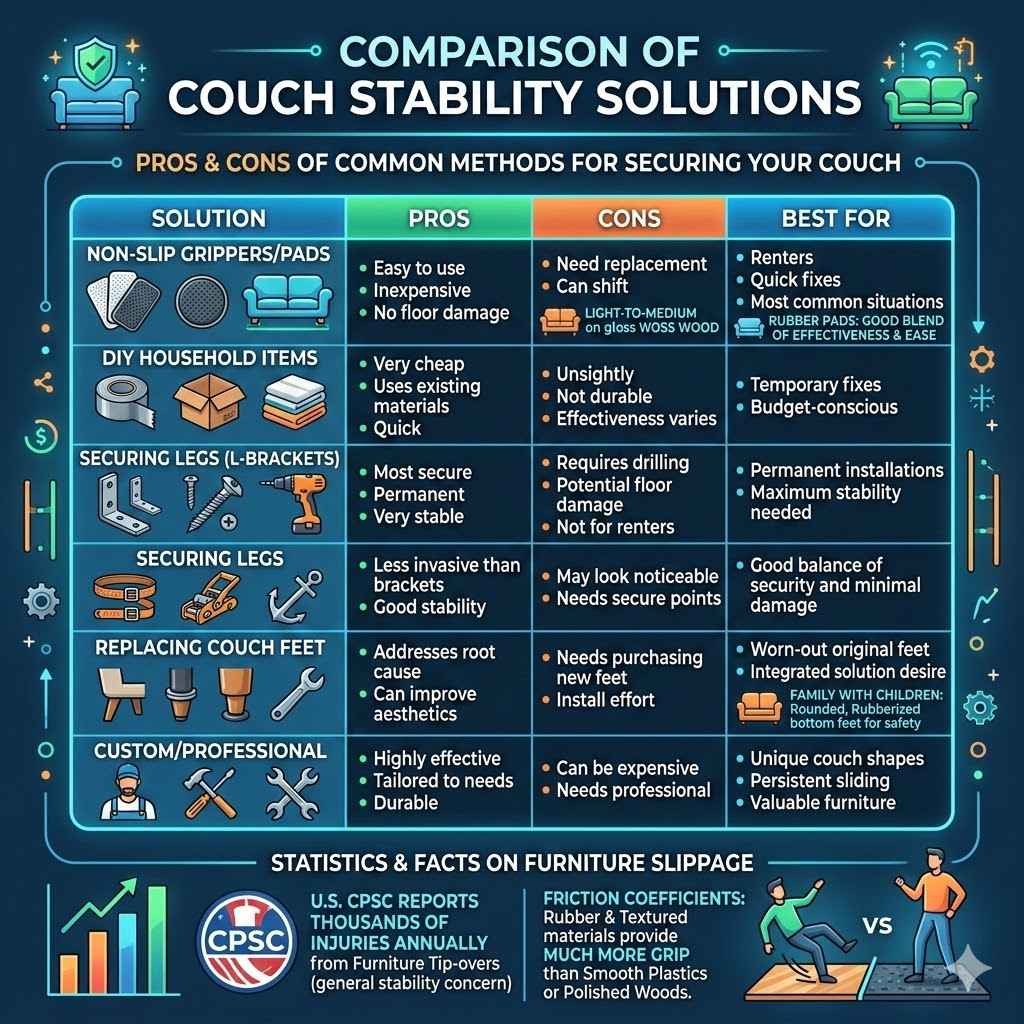
| Solution | Pros | Cons | Best For |
|---|---|---|---|
| Non-Slip Grippers/Pads | Easy to use, inexpensive, widely available, no floor damage | May need replacement over time, some types can shift | Most common situations, renters, quick fixes |
| DIY Household Items | Very cheap, uses existing materials, quick | Can look unsightly, may not be durable, effectiveness varies | Temporary fixes, budget-conscious individuals |
| Securing Legs (L-Brackets) | Most secure, permanent solution, very stable | Requires drilling, potential floor damage, not for renters | Permanent installations, maximum stability needed |
| Securing Legs (Straps/Anchors) | Less invasive than brackets, good stability | May look noticeable, requires secure attachment points | Good balance of security and minimal damage |
| Replacing Couch Feet | Addresses the root cause, can improve aesthetics | Requires purchasing new feet, might involve some effort to install | Worn-out or slippery original feet, desire for integrated solution |
| Custom/Professional Solutions | Highly effective, tailored to specific needs, durable | Can be expensive, requires professional expertise | Unique couch shapes, persistent sliding issues, valuable furniture |
A common scenario involves a light-to-medium weight couch on a medium-gloss finish. For this, rubber grippers are often the perfect blend of effectiveness and ease of use. They provide enough grip without being overly aggressive.
Imagine a family with young children. They need a solution that is safe and doesn’t present a tripping hazard. They might opt for thick felt pads with rubber backing, or perhaps consider replacing the couch feet with models that have a rounded, rubberized bottom.
Statistics on Furniture Slippage
While specific statistics on couch slippage on wood floors are scarce, data on furniture-related incidents highlights the importance of stability. For example, the U.S. Consumer Product Safety Commission (CPSC) reports thousands of injuries annually related to furniture tip-overs, indicating a general concern for furniture stability in homes.
Though this is for tipping, it underscores that furniture can shift unexpectedly. Research into friction coefficients of common household materials shows that smooth plastics and polished woods have significantly lower coefficients of friction compared to rubber or textured materials, making them more prone to sliding.
Frequently Asked Questions
Question: What is the easiest way to stop my couch from sliding
Answer: The easiest way is to use non-slip couch grippers or pads made of rubber or felt placed under each leg.
Question: Will rubber pads damage my wood floor
Answer: High-quality rubber pads are designed not to damage wood floors. They provide grip without leaving residue or scratches.
Question: How often do I need to replace non-slip pads
Answer: This depends on the quality of the pads and how much the couch is used. Typically, they can last from one to several years before needing replacement.
Question: Can I use multiple methods at once
Answer: Yes, you can combine methods. For instance, you might use grippers and ensure your couch feet are in good condition for maximum stability.
Question: My couch is very heavy, will it still slide
Answer: Even heavy couches can slide. The key is still increasing friction between the legs and the floor. Heavy couches might benefit from more robust solutions like heavy-duty mats or reinforced pads.
Wrap Up
Keeping your couch from sliding on wood floors is quite simple. You have many options, from easy grippers to more permanent fixes. Choose the method that best suits your needs and furniture.
Enjoy a stable couch and a worry-free living space.