How To Lock RV Door From Inside: Essential Guide
Locking your RV door from the inside is simple once you know the mechanism. Most RV doors use a combination of a slide bolt, a latch handle, and sometimes a deadbolt or secondary security latch. To secure your door, you typically slide the bolt across, ensure the main handle is set to the locked position, and then engage any secondary locks. This guide breaks down the common methods so you can feel safe resting in your home on wheels.
Welcome! If you own an RV, you know that peace of mind is essential for a great trip. One thing that often puzzles new RVers is the door lock. Unlike a house, RV doors have several different ways they can lock, and sometimes it’s not obvious which knob or lever does what. Feeling unsure about how to secure your entry when you’re sleeping inside is frustrating. Don’t worry! Locking an RV door from the inside is usually much easier than you think.
I’m Md Meraj, and I’ve spent years tinkering with RVs and home setups. Today, we’re going to walk through every common way to lock that door securely. We will look at simple slide bolts, tricky privacy locks, and how to ensure that handle doesn’t accidentally swing open. By the end of this, you’ll be locking up confidently every night. Let’s dive into making your RV feel like a safe fortress!
Understanding Your RV Door Security System
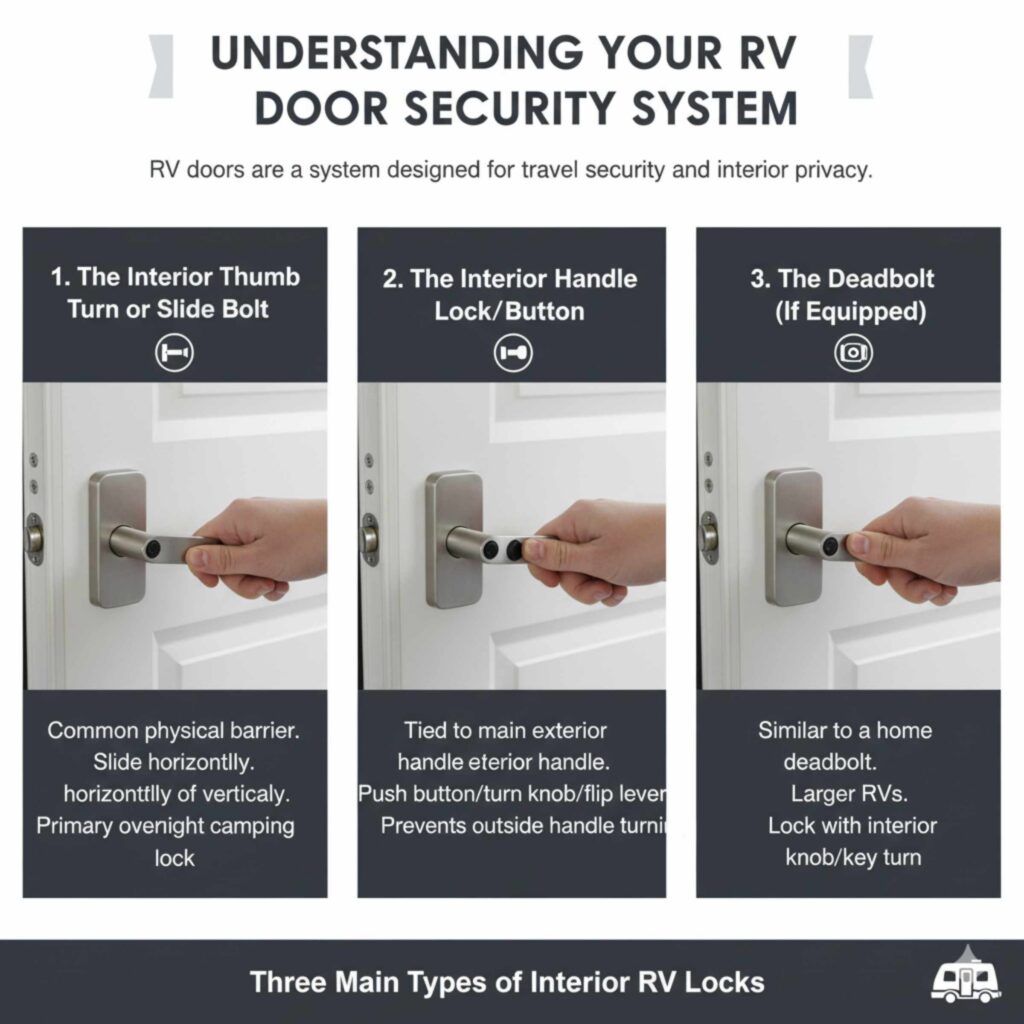
RV doors aren’t just one simple lock. They are usually a system designed for travel security and interior privacy. Think of it like a house door that also needs to withstand highway vibrations! Before we start locking things, it helps to know the common components you might find on your door.
The Three Main Types of Interior RV Locks
Most RV doors, whether they are on a travel trailer, fifth wheel, or motorhome, rely on one or a combination of these locking features when you are inside:
- The Interior Thumb Turn or Slide Bolt: This is the most common physical barrier. It’s usually a small metal or plastic lever you slide horizontally or vertically across the door frame or the door itself. This is often the primary mechanism used when camping overnight.
- The Interior Handle Lock/Privacy Button: This is tied to the main exterior door handle assembly. Often, pushing a button in, turning a small knob, or flipping a small lever on the interior handle assembly engages the lock, preventing the outside handle from turning.
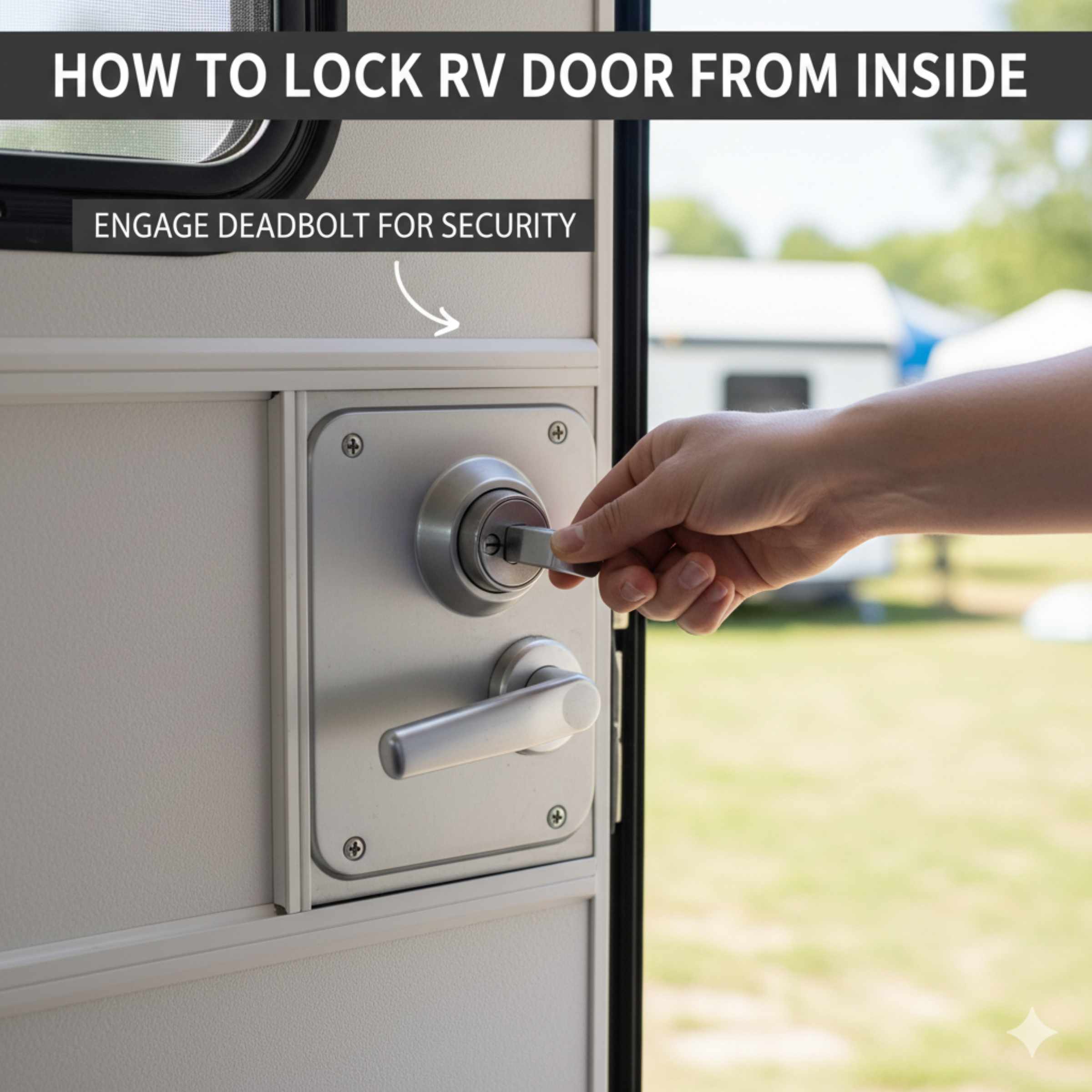
- The Deadbolt (If Equipped): Some larger RVs have a true deadbolt installed, similar to a home. Locking this from the inside is usually done with a small knob or key cylinder turn on the interior side plate.
How To Lock RV Door From Inside: Step-by-Step Guides
Since there isn’t one universal RV door, we will cover the three most common locking procedures. Check your door to see which mechanism you have. Remember, safety first—always make sure your RV is parked on level ground and the parking brake is set before you start securing it for the night.
Method 1: Using the Sliding Security Bolt (The Easiest Way)
This is the classic RV lock. It’s simple, effective, and doesn’t rely on batteries or complicated tumblers. It’s often found on the door frame near the main handle assembly.
Tools Needed:
None! This system is designed for quick, tool-free operation.
The Steps:
- Locate the Bolt: Look on the edge of the door frame (the part attached to the RV body) for a small metal or heavy plastic piece that can slide back and forth. Sometimes it’s mounted directly onto the door panel itself.
- Check the Alignment: Ensure the bolt is in the “unlocked” or “open” position (usually slid toward the door handle side).
- Engage the Lock: Firmly slide the bolt across the gap, so it slots securely into the keeper or hole on the opposite piece. You should feel it “catch.”
- Test It: Gently try to push the door open from the outside (if someone is with you) or pull the interior handle. If the bolt is fully engaged, the door should not budge. This is a great physical barrier against unwanted entry.
Md’s Tip: On very old or inexpensive RVs, these slide bolts can sometimes rattle while driving. A small piece of felt tape placed on the bolt or the receiver can stop that annoying noise!
Method 2: Locking via the Main Latch Handle Assembly
Many modern RV doors use a single, large handle assembly (often made by companies like Trimark or Bauer). Locking this from the inside usually involves a dedicated mechanism built into the handle unit.
The Steps:
- Examine the Interior Handle: Focus on the interior handle unit—the part you pull to open the door. Look for a small, dedicated button, knob, or turn-lock situated directly above or below the main door latch handle.
- Identify the Lock Position: For a push-button style, pushing the button in usually locks it. For a small knob, turning it 90 degrees might lock it. You should see a visual indicator (like a red/green line) showing if it is locked or unlocked.
- Engage the Privacy Lock: Press the button firmly or turn the knob until it clicks into the locked position.
- Verify the Handle Function: Once locked, try pulling the interior handle. It should feel stiff or refuse to move the latch mechanism. If the handle moves freely but the door doesn’t open, the primary lock is set.
- Secure the Exterior Handle: Crucially, many RV doors require the exterior handle to be in the “locked” position (using the exterior key) for the interior lock to be fully effective against prying. If you only use the interior lock, sometimes the exterior handle can still be jiggled open by a determined intruder.
Method 3: Activating the Deadbolt (For Extra Security)
If your RV has a second, smaller lock cylinder near the main handle—that’s your deadbolt. This adds a substantial layer of security, much like in a home.
The Steps:
- Locate the Interior Deadbolt Knob: This is typically a small, round knob that you turn manually. It will often have a small slot for a key if you need to lock it from the outside as well.
- Turn to Lock: Rotate the knob clockwise or counter-clockwise until it stops. You should feel it solidly engage into the door frame strike plate.
- Check the Throw: A deadbolt throws a heavy metal piece into the frame. If you look closely at the edge of the door, you should see the bolt extending fully.
- Combine with Other Locks: For maximum overnight security, engage the deadbolt AND the interior slide bolt (Method 1) if your door has both. This provides redundant security layers.
Advanced Security: Addressing Common RV Door Quirks
RV doors are exposed to a lot of movement and weather. Sometimes, they don’t behave like standard house doors. Here are a few common issues and fixes for locking up tight.
The Door Latch That Won’t Stay Locked
Sometimes, when you try to engage the interior slide bolt or the handle lock, the mechanism won’t seat correctly. This is often due to the door being slightly misaligned or the strike plate moving.
- Check Door Alignment: If the door seems too tight when you close it, the latch bolt might be hitting the frame instead of sliding into the hole. Try pressing the door gently inwards while sliding the lock.
- Lubrication is Key: Dry metal parts stick. Use a graphite lubricant or a silicone spray (never use oily lubricants like WD-40 on door mechanisms long-term, as they attract dust) on the sliding bolt mechanism and the latch. This helps it glide smoothly.
- Tighten Screws: Look at the plates holding the lock mechanisms to the door or frame. If the screws holding them in place are loose, the lock won’t line up. Tighten any loose screws carefully—don’t overtighten, as RV wood framing can strip easily.
What About the Screen Door?
Don’t forget the screen door! Many folks forget that while the main door is locked, the lightweight screen door can often be unlatched or simply pulled open, giving someone easy access to tamper with the main handle.
To secure the screen door, look for:
- A simple latch or hook: Slide this across.
- A pin lock: Some screen doors have a small metal pin you push through holes in both the screen frame and the main door frame. This physically ties the two doors together.
Table 1: Quick Troubleshooting Guide for Interior RV Locks
| Problem | Likely Cause | Quick Fix |
|---|---|---|
| Slide bolt won’t engage. | Door is sagging slightly, or mechanism is dirty. | Clean and lubricate the slide. Gently press the door inward while sliding. |
| Interior handle turns but door stays shut. | The main latch is locked, but the deadbolt is not engaged. | Ensure the exterior key lock is also fully turned to the locked position, if applicable. |
| Screen door is loose when the main door is locked. | Screen door locking pin or latch is open. | Secure the screen door latch or slide the connecting pin. |
Enhancing RV Door Security Beyond the Standard Lock
While knowing how to use the factory locks is step one, many experienced RVers add extra layers of security. This is especially true if you are boondocking or leaving the RV unattended for a short time. Enhancing security isn’t about being paranoid; it’s about smart preparation.
Adding Physical Barriers (The “No-Go” Zone)
These physical barriers make entry so difficult that most opportunistic thieves will simply move on to an easier target. These tools are easily removed when you are ready to leave.
Popular Physical Locking Additions:
- Door Bar/Rod Locks: These inexpensive, sturdy metal bars slide into place, bracing the door against the wall or floor. They are extremely effective against forced entry attempts from the outside.
- Hasp and Padlock System: Some owners install a simple metal hasp on the door frame and the door itself, allowing them to use a high-quality padlock through the loops. This provides a very robust lock point, often supplementing a weak factory deadbolt.
- Door Reinforcement Plates: The screws holding the latch assembly into the thin RV door can sometimes be pulled out relatively easily. You can purchase reinforcement plates that spread the load across a larger area of the door panel, making it much harder to kick in the lock area. Check resources from organizations like the National Fire Protection Association (NFPA) for general home security principles that can be adapted to RVs regarding door strength.
The Importance of Electronic Security
Modern technology offers great peace of mind. While these don’t lock the door from the inside physically in the traditional sense, they monitor the door state.
- Door/Window Sensors: Simple, battery-operated magnetic sensors placed on the door frame can trigger an alarm or send an alert to your phone if the door is opened while you are away or asleep.
- Cameras: A simple doorbell camera pointed at the main entry is an excellent deterrent and monitoring tool.
When To Upgrade Your RV Door Lock System
Sometimes, the factory lock just isn’t cutting it. If your RV is older, or if you just want the convenience of a smart lock, upgrading might be the answer. When considering an upgrade, always check compatibility with your existing door cut-out size.
Signs It’s Time for a New Lock:
- The key cylinder frequently sticks or requires jiggling to turn.
- The interior locking mechanism feels weak or overly loose.
- You are frequently leaving the RV unattended for long periods (e.g., storage).
Table 2: Comparing Lock Upgrade Options
| Upgrade Type | Pros | Cons | Best For |
|---|---|---|---|
| Heavy-Duty Mechanical Lock | No batteries required; very robust physically. | Requires drilling new holes if the original doesn’t align. | Maximum physical security. |
| Keypad/Smart Lock | Convenient keypad entry; remote monitoring possible. | Relies on batteries; potentially more complex installation. | Convenience and modern features. |
| Internal Security Bar | Affordable, instant, high-resistance barrier. | Must be installed manually every time; blocks passage if installed incorrectly. | Temporary high-security boost when parked. |
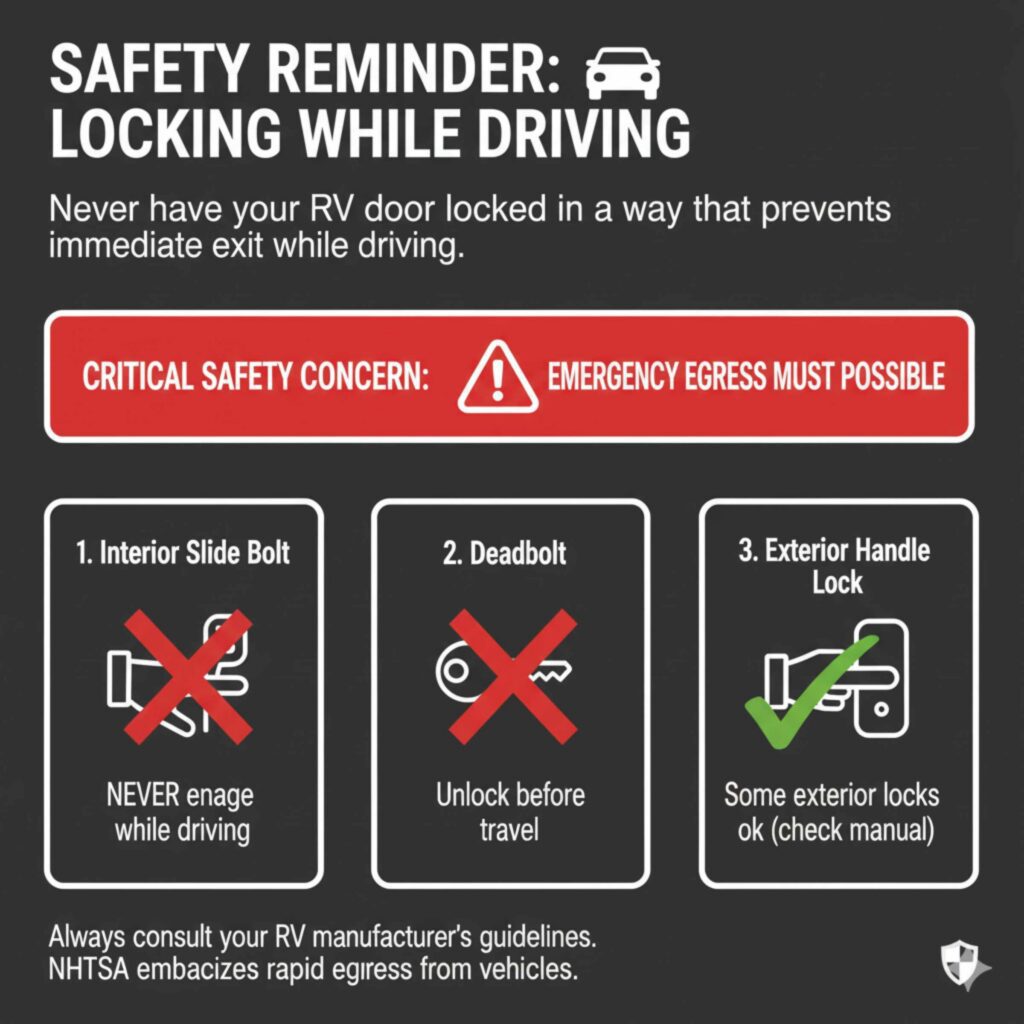
Safety Reminder: Locking While Driving
A critical point for all RV owners: You should never have your door locked in a way that prevents immediate exit while you are driving. This is a major safety concern in case of an emergency stop or accident.
The interior slide bolt (Method 1) should always be disengaged before starting the engine. If you use a deadbolt (Method 3), ensure it is unlocked. The only locks that might remain engaged while traveling are some exterior key locks that only allow the handle to be pulled to the unlatched position but don’t fully secure the mechanism. Always consult your RV manufacturer’s guidelines regarding travel lock procedures. For reference on safe vehicle operation, the National Highway Traffic Safety Administration (NHTSA) strongly emphasizes vehicle safety systems that allow for rapid egress.
Frequently Asked Questions (FAQ) About Locking RV Doors
Q1: Can someone unlock my RV door from the outside if I only use the interior thumb turn lock?
A: Often, yes, especially on older or cheaper models. The interior thumb turn only locks the interior handle mechanism. If the exterior key lock is unlocked, someone might be able to manipulate the external handle.
Q2: Why does my RV door have more than one lock?
A: RV doors often use multiple locking mechanisms for safety and flexibility. A slide bolt adds physical resistance, the handle lock controls the latch, and a deadbolt (if present) provides extra strength—similar to a house door.
Q3: Should I lock my RV door while driving?
A: No. You should never engage interior slide bolts or deadbolts while driving. In an emergency, all occupants must be able to exit quickly. Only manufacturer-approved travel locks should remain engaged while on the road.
Q4: Is the interior slide bolt enough for overnight security?
For most campgrounds, yes. However, for better protection—especially when boondocking—it’s best to combine the slide bolt with the main handle lock or deadbolt if your RV has one.
Q5: Are RV door locks as strong as house door locks?
Generally, no. RV doors are lighter and built for travel efficiency. That’s why using multiple locks and interior barriers is recommended, especially when sleeping or parking in remote areas.
Conclusion: Locking Your RV Door With Confidence and Peace of Mind
Locking your RV door from the inside doesn’t have to be confusing or stressful. As this guide shows, most RVs use a layered locking system—a slide bolt, an interior handle lock, and sometimes a deadbolt—each designed to work together to keep you safe while you rest inside your home on wheels. Once you understand what each component does, securing your RV becomes quick, logical, and reassuring.
The key takeaway is simple: use more than one lock whenever possible. A slide bolt offers immediate physical resistance, the handle lock prevents outside access, and a deadbolt (if equipped) adds real, home-style security. When combined, these locks provide solid protection without complicated tools or advanced skills. Add small habits—like checking alignment, keeping mechanisms clean, and securing the screen door—and you dramatically reduce weak points.
For RVers who want extra peace of mind, optional upgrades like door bars, reinforcement plates, or electronic sensors can further strengthen security, especially when boondocking or sleeping in unfamiliar areas. Just remember the most important safety rule: never lock the door in a way that prevents quick exit while driving.
At the end of the day, confidence comes from understanding. When you know how your RV door locks work—and how to use them properly—you can relax, sleep better, and enjoy the journey ahead. Your RV should feel like a sanctuary, and with the right locking routine, it absolutely can.