How to Make Black Paint at Home: Primary Colors vs Pigment
You can make black paint at home two ways: mix equal parts red, blue, and yellow paint, or blend charcoal powder or black iron oxide pigment into a binder like linseed oil or acrylic medium — the pigment route gives a truer, more consistent black. Using the wrong ratio of primaries usually produces a muddy brown instead of black. This guide covers both methods, plus how to store the finished paint so it doesn’t dry out or separate.
Quick Answer
For a true black, mix black iron oxide or charcoal powder into linseed oil, acrylic medium, or PVA glue. For a quick mix from what’s already on hand, combine equal parts red, blue, and yellow paint — add extra blue if the result looks brownish, since deeply pigmented primaries are needed to avoid a muddy tone.
Materials Needed
Making black paint at home needs only a handful of materials. Gather these before you start so the mix doesn’t dry out mid-project while you hunt for supplies.
Essential Supplies
- Pigment: charcoal powder or black iron oxide — iron oxide gives a denser, more opaque black
- Binder: linseed oil (oil-based), acrylic medium (water-based), or PVA glue (craft-grade)
- Mixing tools: a palette knife or small spoon
- Container: a small glass jar or bowl for mixing
- Water: for thinning water-based mixes to the right consistency
Optional Additives
- Flow improver: helps the paint spread smoothly
- Retarder: slows drying time for easier blending
- Preservative: extends shelf life beyond the usual six months
- Texture paste: adds surface texture for mixed-media work
Best Ready-Made Black Base Pick
Liquitex BASICS Acrylic Paint, Mars Black – $9.99
Skip the pigment-mixing chemistry entirely and start from a true, consistent black — then use the tinting tips in this guide to warm or cool it with a touch of red, blue, or yellow.
- Best for: A reliable, pre-mixed starting black to adjust from
- Why we picked it: Consistent Mars Black pigment, no muddy-brown risk from mixing primaries
- Main drawback: Costs more per project than raw charcoal or iron oxide pigment
Compare more black paint & pigment options
 Option 1 Black Iron Oxide Pigment, 5.3oz – $9.99
|
 Option 2 Apple Barrel Black Acrylic Paint, 8oz – $2.97
|
 Option 3 ARTISTRO Black Paint Markers (5-Pack) – $7.58
|
As an Amazon Associate we earn from qualifying purchases.
Safety Precautions
Black iron oxide is generally regarded as non-toxic when manufactured to consumer-product purity, with very low absorption through skin or the gut — but the dry powder form should still be handled with basic care.
📊 Iron oxide pigments used in coloring operations are classified by OSHA as a substance requiring standard dust-handling precautions, not a listed toxic hazard, when kept to high manufacturing purity. — Source: OSHA Standard Interpretations, Iron Oxides in Pigment Coloring
- Gloves: protect your hands from pigment staining and binder chemicals
- Goggles: shield eyes from splashes while mixing
- Mask: avoid inhaling dry pigment dust, especially with charcoal powder
- Ventilation: work in an open or well-ventilated area, particularly with oil-based binders
Preparing the Workspace
Choose a well-ventilated area with good lighting so you can judge the true color as you mix. Cover the work surface with newspaper or a plastic sheet, and keep a damp cloth nearby for quick cleanup. Have a trash can within reach for disposing of used mixing materials.
Choosing a Base Medium
The base medium determines how the finished paint dries and handles. Water-based options (acrylic, watercolor, tempera) dry fast, clean up with water, and produce little odor — a practical choice around kids. Oil-based options (linseed oil, poppy seed oil) dry slower, which gives more time to blend, and produce a richer, glossier finish, but need turpentine or mineral spirits for cleanup and a ventilated space to work in.
Mixing Primary Colors
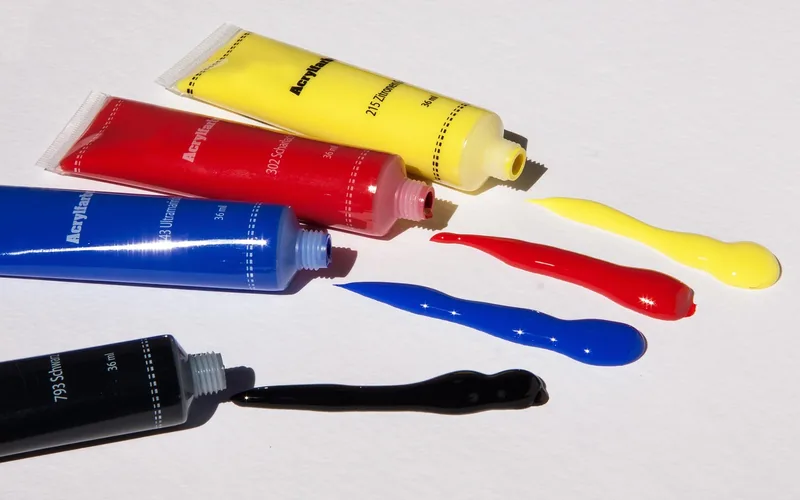
Painting uses subtractive color mixing: combining deeply pigmented red, blue, and yellow in equal parts concentrates enough pigment to read as black rather than a lighter secondary color. This only works reliably with strong, saturated pigments — thin or chalky primary colors tend to average out to brown instead.
- Start with equal parts of red, blue, and yellow paint.
- Mix thoroughly and check the resulting color.
- Add more blue if the mix looks warm or brownish.
- Add more red or yellow if the mix looks too cool or greenish.
| Primary Color | Starting Proportion | Adjustment |
|---|---|---|
| Red | 1 part | Increase for a warmer black |
| Blue | 1 part | Increase for a cooler, truer black |
| Yellow | 1 part | Increase for a warmer, lighter black |
A Second Method: Complementary Colors
If you don’t have all three primaries handy, mixing complementary color pairs works too — they cancel each other out into a deep near-black. Blue and orange is the most reliable pairing; alizarin crimson and phthalo green is a second option artists use for a slightly warmer result. Both need roughly equal parts and thorough mixing to avoid a visibly two-toned result.
Achieving the Right Shade
Start with equal parts red, blue, and yellow, which gives a dark brown rather than black. Add blue gradually until the mixture reads as near-black, testing in natural light rather than under artificial bulbs, which can shift how the color looks.
- Add blue for a cooler, darker tone
- Add red for a warmer, slightly lighter black
- Add yellow to lighten an overly dark mix
Once you’re happy with the shade, apply a small amount to your intended surface and let it dry completely before judging the final color — wet paint almost always looks darker than its dry, cured result.
“Mixing just any three tubes of primary colors doesn’t guarantee a true black — if the pigments aren’t deeply saturated, the result often lands on brown instead. Deeply pigmented primaries, or a dedicated black pigment like iron oxide, give a far more predictable result.”
Storing Homemade Paint
Use an airtight container — a glass jar with a tight lid or a plastic container with a snap-on lid both work well. Label the container with the date you mixed it so you can track its age at a glance.
| Container Type | Advantage |
|---|---|
| Glass jars | Non-reactive, and you can see the paint’s condition through the glass |
| Plastic containers | Lightweight and less likely to break if dropped |
Store containers in a cool, dark place — heat and light both speed up spoilage. Use the paint within about six months; if it develops a bad odor or an inconsistent texture, mix a fresh batch instead of risking it on a project.
Using Homemade Black Paint
Application Techniques
- Brushing: use a soft brush and thin layers to avoid clumping
- Sponging: dab lightly with a sponge for a textured effect
- Spraying: dilute slightly and use a spray bottle for an even coat
If you’re layering homemade black paint over a base coat, the same acrylic layering principles used in water marbling apply — thin, patient layers beat one thick coat every time.
Common Mistakes
- Skipping primer: always prime the surface first so the paint doesn’t soak in unevenly
- Overloading the brush: use small amounts to prevent dripping and uneven coats
- Not letting layers dry: rushing between coats is the most common cause of a muddy, streaky finish
And when you’re done for the day, clean dried paint off your brushes properly rather than letting it harden in the bristles — homemade batches with a higher pigment load tend to dry harder in a brush than store-bought paint does.
Frequently Asked Questions
What Ingredients Do I Need to Make Black Paint?
You need a black pigment — charcoal powder or black iron oxide — and a binder such as linseed oil, acrylic medium, or PVA glue. Mix them until smooth, adding water to thin a water-based mix to the right consistency.
Can I Use Natural Materials for Black Paint?
Yes. Charcoal powder and soot both give a rich, deep black and have been used as pigments for centuries. Grind charcoal into a fine powder before mixing it into your chosen binder for the smoothest result.
Why Does Mixing Red, Blue, and Yellow Give Me Brown Instead of Black?
It usually means the pigments aren’t saturated enough. Craft-grade paints are often cut with filler, which caps how dark the mix can get. Use artist-grade, deeply pigmented paint, or switch to a dedicated black pigment like iron oxide for a more predictable, true black.
Is Homemade Black Paint Long-Lasting?
Yes, if stored properly. Keep it in an airtight container, out of direct light and heat, and use it within about six months. A bad odor or an inconsistent texture means it’s time to mix a fresh batch.
Conclusion
Making black paint at home comes down to two reliable routes: a true black pigment like charcoal or iron oxide mixed into a binder, or equal parts of deeply pigmented red, blue, and yellow paint. The pigment method gives the most consistent, predictable black; the primary-color method works in a pinch with what’s already in your paint box. Store whichever batch you make in an airtight, labeled container, and test on your actual project surface before committing to a full coat.
See more color and paint project ideas in our Paint & Color Ideas hub.
Sponsored / affiliate links. As an Amazon Associate I earn from qualifying purchases. I may earn additional commission from eligible campaigns.