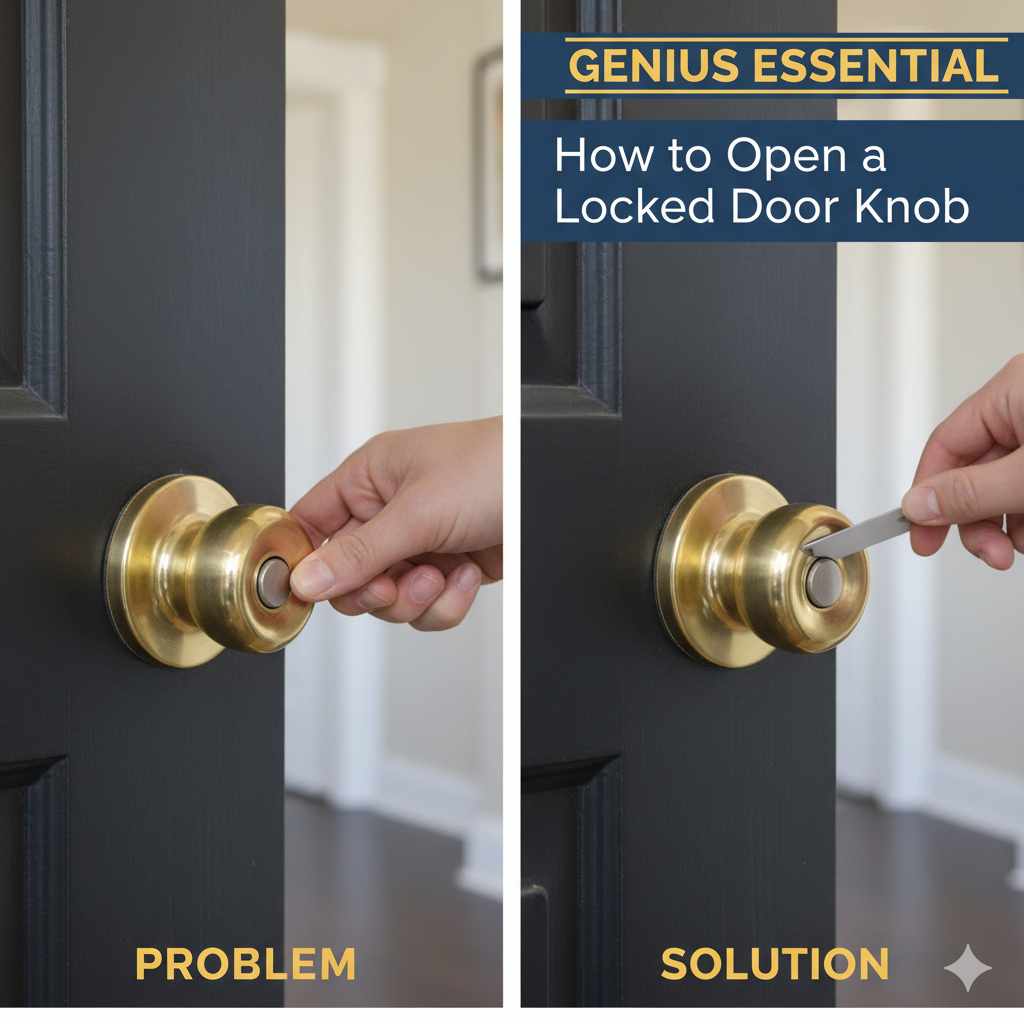
How to Open Locked Door Knob: Genius Essential
Quick Summary:
Stuck outside or inside? Learn simple, effective ways to open a locked door knob without a key. This guide covers common household items and basic techniques, empowering you to regain access quickly and safely. Master these essential skills for peace of mind.
Ever found yourself on the wrong side of a locked door? It’s a common, frustrating moment, whether you’ve misplaced your keys, the lock is stuck, or you’re simply trying to get into a room. Don’t worry! As your woodworking and home improvement guide, I’m here to show you that opening a locked door knob isn’t as complicated as it seems. With a few simple tools and techniques, you can handle this situation like a pro. We’ll walk through easy-to-follow steps that are safe and effective for most standard interior door knobs. Get ready to feel confident and capable!
Understanding Your Locked Door Knob
Before we dive into opening that stubborn door, let’s take a quick look at the types of knobs you might encounter. Most interior doors use a simple push-button or twist-lock mechanism. These are designed for privacy and are generally easy to bypass when you don’t have the key or the knob has jammed.
These privacy locks are different from high-security deadbolts. They usually have a small hole on the exterior side of the knob. This hole is the key to opening the door without a key. Inside, a simple mechanism keeps the door latched. When you don’t have the key, you’ll need a tool to engage that mechanism through the hole.
Understanding this basic design is the first step. It tells us that we’re not dealing with a complex security system, but rather a straightforward privacy feature. This knowledge helps us choose the right tool and method, ensuring we don’t damage the door or the knob in the process.
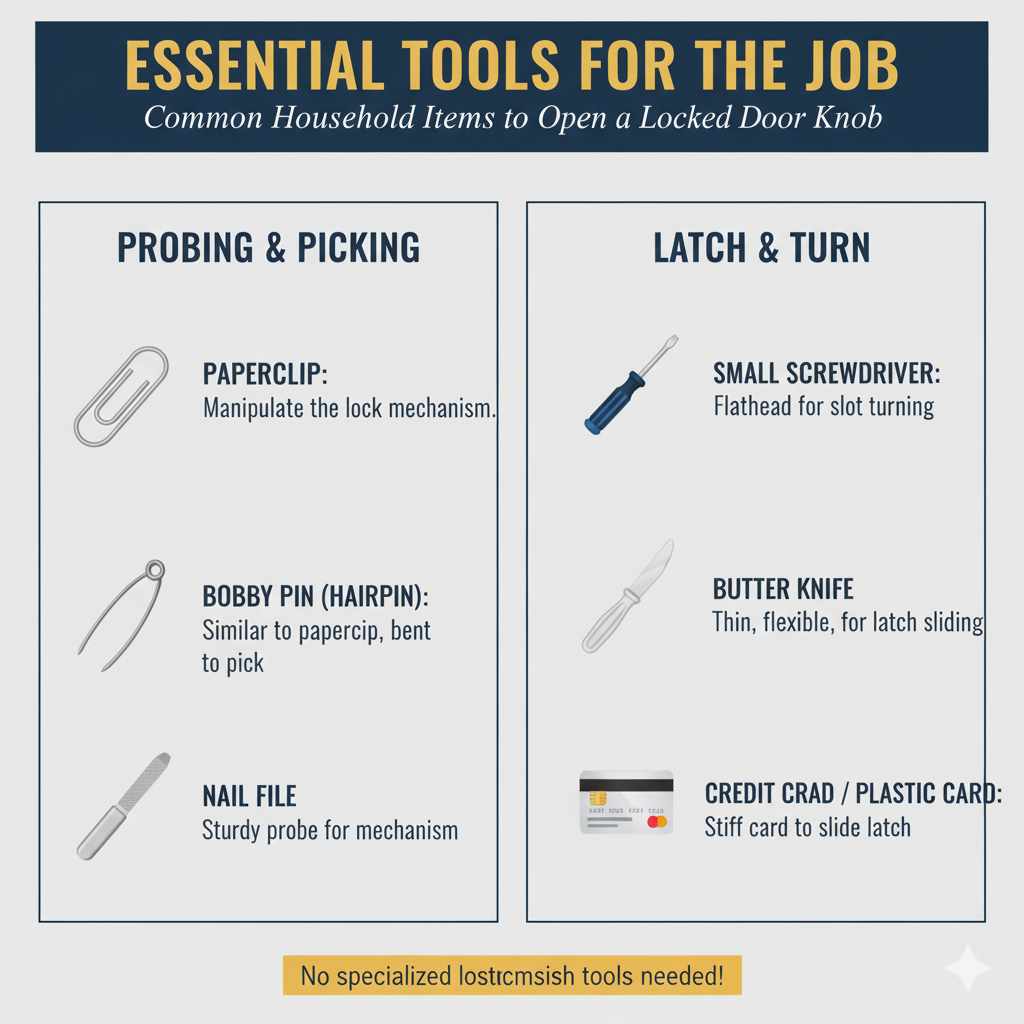
Essential Tools for the Job
The beauty of opening a locked door knob without a key is that you often don’t need specialized locksmith tools. Many everyday items can do the trick. Here are some of the most common and effective tools:
- Paperclip: A bent paperclip can act like a makeshift pick or probe.
- Bobby Pin (Hairpin): Similar to a paperclip, a bobby pin can be bent and used to manipulate the lock mechanism. This is one of the most popular methods for “how to open locked door knob with hairpin.”
- Small Screwdriver: A flathead screwdriver, especially a small one, is perfect for inserting into the slot and turning.
- Butter Knife: A thin, flexible butter knife can sometimes slide between the door and the frame to disengage the latch.
- Credit Card or Plastic Card: A stiff, thin card can be used to slide the latch back.
-
Nail File: A sturdy metal nail file can also work as a probing tool.

When choosing your tool, consider the size of the hole or slot on your doorknob. A tool that fits snugly but can still move is ideal. Remember, the goal is to gently engage the lock’s internal mechanism, not to force it.
Step-by-Step Guide: Opening Locked Door Knobs
Let’s get down to business! Here’s how you can open most common interior locked door knobs. We’ll cover the two most frequent types: the push-button lock and the twist-lock.
Method 1: The Push-Button Lock (Using the Small Hole)
This is the most common type of interior privacy lock. You’ll notice a small hole on the outside of the knob. This is what we need to access.
- Identify the Hole: Locate the small hole on the exterior side of the doorknob. It’s usually right in the center.
- Choose Your Tool: Grab a straightened paperclip, a bobby pin, or a small, thin screwdriver. Something that can fit into that hole and push.
- Insert the Tool: Gently insert your chosen tool into the hole. You should feel some resistance, which is the lock mechanism.
- Push Firmly: Apply steady, firm pressure inwards. You might need to wiggle the tool slightly as you push.
- Listen for a Click: If you’re successful, you’ll hear a small “click” sound. This means the button inside has retracted, and the door knob is unlocked.
- Turn the Knob: Once you hear the click, turn the doorknob. It should now open freely.
This method is often the quickest and easiest. It’s designed precisely for situations where you’ve accidentally locked yourself out of a bathroom or bedroom.
Method 2: The Twist-Lock (Using a Thin Object)
Some privacy knobs have a small slot instead of a hole. This is also designed to be opened with a thin, flat object.
- Locate the Slot: Look for a narrow slot on the exterior side of the doorknob.
- Select Your Tool: A small flathead screwdriver is ideal here. A sturdy metal nail file or even the edge of a strong coin might work in a pinch.
- Insert the Tool: Carefully insert the tip of your tool into the slot.
- Turn and Apply Pressure: Gently turn the tool as if you were trying to tighten a screw. At the same time, apply a little inward pressure. You’re trying to push the locking pin back into the knob.
- Feel for Release: You should feel a slight give or a click when the lock disengages.
- Open the Door: Once unlocked, turn the doorknob to open the door.
This method requires a bit more finesse. Patience is key, and avoid forcing the tool, as you could damage the slot or the internal mechanism.
Method 3: The Card Trick (For Spring Latches)
This method is best for doors where the latch hasn’t fully engaged or if the lock mechanism itself is jammed, but the latch is still accessible. This works best on doors that open away from you.
- Find a Suitable Card: Use a stiff, thin plastic card. An old gift card, library card, or even a laminated business card works well. A standard credit card might be too thick, but worth a try.
- Slide the Card into the Gap: Wedge the card into the gap between the door and the door frame, right where the latch is. Angle the card towards the doorknob.
- Apply Pressure and Wiggle: Push the card firmly into the gap while simultaneously wiggling the doorknob. You’re trying to force the angled edge of the latch bolt to retract.
- Tilt and Push/Pull: You might need to tilt the card inwards or outwards, and push or pull the door slightly as you work the card. The goal is to get the card to slide past the latch and push it back into the door.
- Open the Door: Once the latch is retracted, the door should open.
This method is a classic for a reason. It’s surprisingly effective for simple spring latches that aren’t fully locked or deadbolted. For more information on door hardware and latch types, resources like The Home Depot’s Door Hardware Buying Guide offer excellent insights into how these components work.
When to Call a Professional
While these DIY methods are great for common situations, there are times when you should step back and call a professional locksmith. Here are a few scenarios:
- High-Security Locks: If you’re dealing with a deadbolt, a security lock, or a commercial-grade lock, do not attempt to force it. These are designed to resist tampering.
- Damaged Lock: If the doorknob is already damaged, broken, or feels completely stuck, trying to force it might cause more expensive damage.
- Valuable Items Inside: If there are irreplaceable or highly valuable items on the other side of the door, it might be safer to get professional help to avoid accidental damage.
- No Success After Trying: If you’ve tried the methods above patiently and they aren’t working, it’s time to admit defeat and call in an expert.
- Privacy Concerns: If you’re concerned about your privacy or the security of your home, a locksmith can also advise on better locking mechanisms.
A good locksmith has the specialized tools and knowledge to open almost any lock without causing damage. It might cost a bit, but it’s often the safest and most efficient solution for complex lock issues. For guidance on when to hire a professional, the Associated Locksmiths of America (ALOA) provides helpful consumer advice.
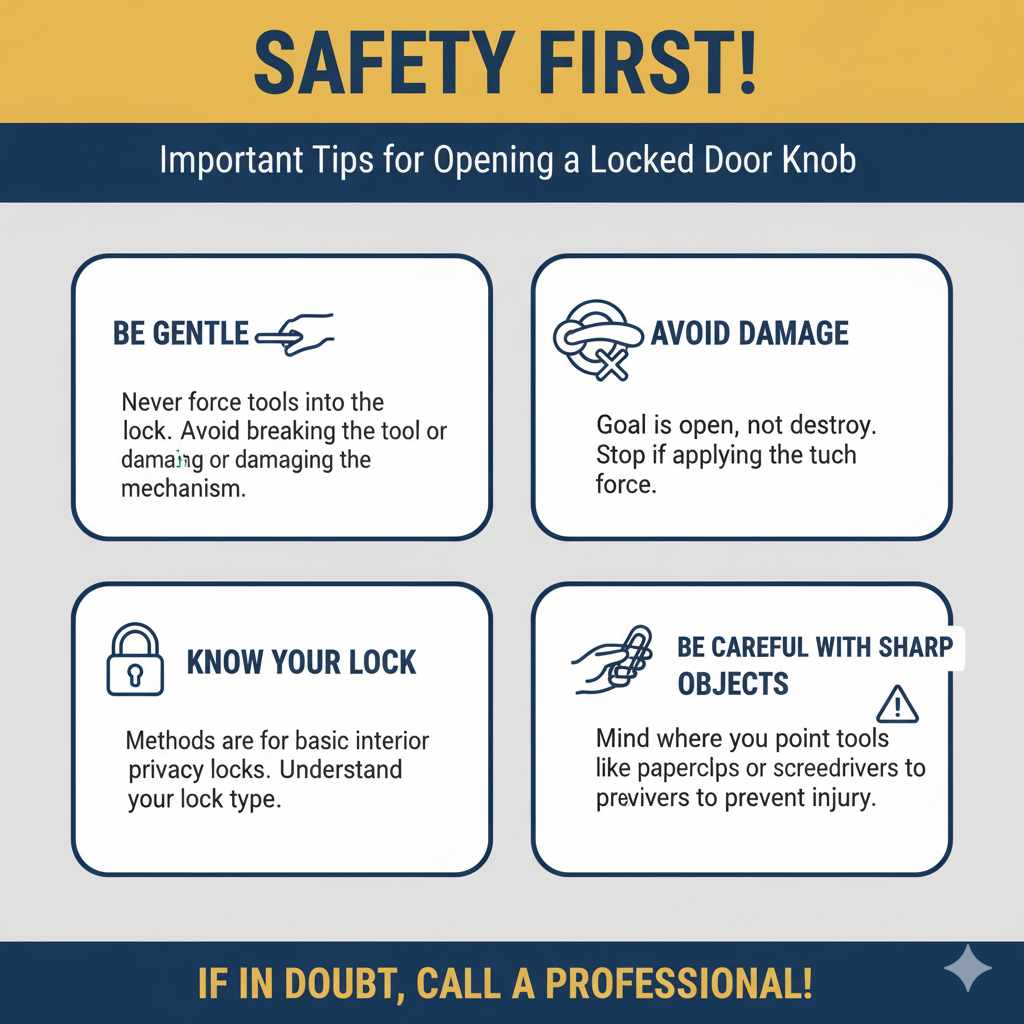
It’s crucial to approach any DIY lock-opening task with safety in mind. Here are a few tips to keep you safe:
- Be Gentle: Never force tools into the lock. You could break the tool off inside, making the problem worse, or damage the lock mechanism.
- Avoid Damage: The goal is to open the door, not to destroy the doorknob or door. If you feel you’re applying too much force, stop.
- Know Your Lock: Understand what type of lock you’re dealing with. The methods described are for basic interior privacy locks.
- Don’t Use Sharp Objects Carelessly: Be mindful of where you’re pointing sharp tools like paperclips or screwdrivers to avoid personal injury.
-
If in Doubt, Call a Pro: As mentioned, if you’re uncomfortable or unsure, a locksmith is your best bet.
Remember, these techniques are for emergency situations or minor inconveniences with simple locks. They are not intended for bypassing security on external doors or for any illegal purposes. Always ensure you have the right to access the door you are attempting to open.
Troubleshooting Common Issues
Sometimes, even with the right tools and techniques, a locked door knob can be stubborn. Here are some common problems and how to address them:
The Hole/Slot is Too Small for the Tool
If your paperclip or screwdriver is too thick, try using a thinner one. For paperclips, unbend them fully and then bend a small hook at the end. For bobby pins, you might need to carefully bend one leg straight to insert it, while keeping the other as a handle.
The Lock Mechanism Feels Stuck
Sometimes, the internal springs or pins can get a bit sticky. Try gently wiggling the tool while applying pressure. A tiny bit of graphite lubricant (never oil!) sprayed into the hole or slot might help, but use this sparingly as it can attract dust.
The Door Knob Itself is Loose or Broken
If the doorknob feels very loose or has visible damage, the internal mechanism might be compromised. In this case, forcing it could lead to more breakage. You might need to try gently prying the knob off its base (if possible) or call a locksmith. Sometimes, a loose knob can be tightened temporarily with a small screwdriver if you can access the set screws, which are often hidden under the knob base.
The Spring Latch is Jammed
If the door is slightly ajar and the latch won’t retract, the door might be binding against the frame. Try pushing or pulling the door firmly while working the card or tool. A bit of lubrication on the strike plate (where the latch enters the door frame) can also help.
Here’s a quick comparison of methods and their suitability:
| Method | Type of Lock | Best Tool | Difficulty | Notes |
|---|---|---|---|---|
| Push-Button Hole | Interior Privacy Lock with Hole | Paperclip, Bobby Pin, Thin Screwdriver | Easy | Most common and straightforward. |
| Twist-Lock Slot | Interior Privacy Lock with Slot | Small Flathead Screwdriver, Nail File | Medium | Requires a bit more finesse. |
| Card Trick | Spring Latch (not fully locked) | Plastic Card (gift card, etc.) | Medium | Works best on doors opening away from you; doesn’t bypass the lock mechanism itself. |
FAQ: Your Questions Answered
Q1: Can I really open a locked door knob with just a hairpin?
A1: Yes, absolutely! A hairpin (or bobby pin) is one of the most effective tools for opening standard interior privacy door knobs that have a small hole or slot. You can bend it to create a tool that fits into the hole and pushes the release mechanism.
Q2: Will these methods damage my door or doorknob?
A2: If done gently and correctly, these methods should not cause damage. The key is to use the right tool for the hole/slot and apply steady, not forceful, pressure. Forcing the tool or lock can lead to damage.
Q3: What’s the difference between an interior privacy lock and a security lock?
A3: Interior privacy locks are designed for rooms like bathrooms or bedrooms and are easily bypassed from the outside for emergencies. Security locks (like deadbolts on exterior doors) are much more robust and designed to prevent unauthorized entry, requiring a key or professional intervention.
Q4: My doorknob is jammed, not just locked. What should I do?
A4: If the knob is jammed and won’t turn even when unlocked, the internal mechanism might be broken or something is obstructing it. Try gently wiggling the knob while attempting to turn it. If that doesn’t work, it’s best to call a locksmith to avoid further damage.
Q5: How do I know if I have a spring latch or a deadbolt?
A5: A spring latch is usually part of the doorknob mechanism and has an angled bolt that retracts when you turn the knob. A deadbolt is a separate, heavier bolt that extends from the edge of the door and requires a key or thumbturn to operate. The methods described here are primarily for spring latches controlled by privacy knobs.
Q6: Is it legal to open a locked door knob without a key?
A6: It is legal to open a locked door knob if you own the property or have permission from the owner, and you are locked out of your own space. These techniques are intended for legitimate personal use, not for unauthorized entry.
Conclusion
Getting locked out can be a stressful experience, but with the simple techniques we’ve covered, you’re now well-equipped to handle most common interior door knob lockouts. From the trusty paperclip to the clever card trick, these methods rely on common household items and a bit of patience. Remember to always be gentle, assess your lock type, and know when it’s time to call in a professional locksmith. Mastering these essential DIY skills not only saves you time and money but also gives you a great sense of accomplishment and preparedness. So next time you find yourself in a bind, take a deep breath, grab your chosen tool, and confidently get that door open!