How to Remove Black Mold from Hardwood Floors Safely
Dealing with black mold on your beautiful hardwood floors can feel overwhelming, especially if you’ve never tackled it before. It might seem like a big, messy job, and you might worry about damaging your lovely floors. But don’t fret!
This guide breaks down exactly how to remove black mold from hardwood floors in a way that’s simple and effective. We’ll walk you through each step so you can get your floors clean and healthy again, making the process much easier than you might imagine.
Understanding Black Mold on Hardwood Floors
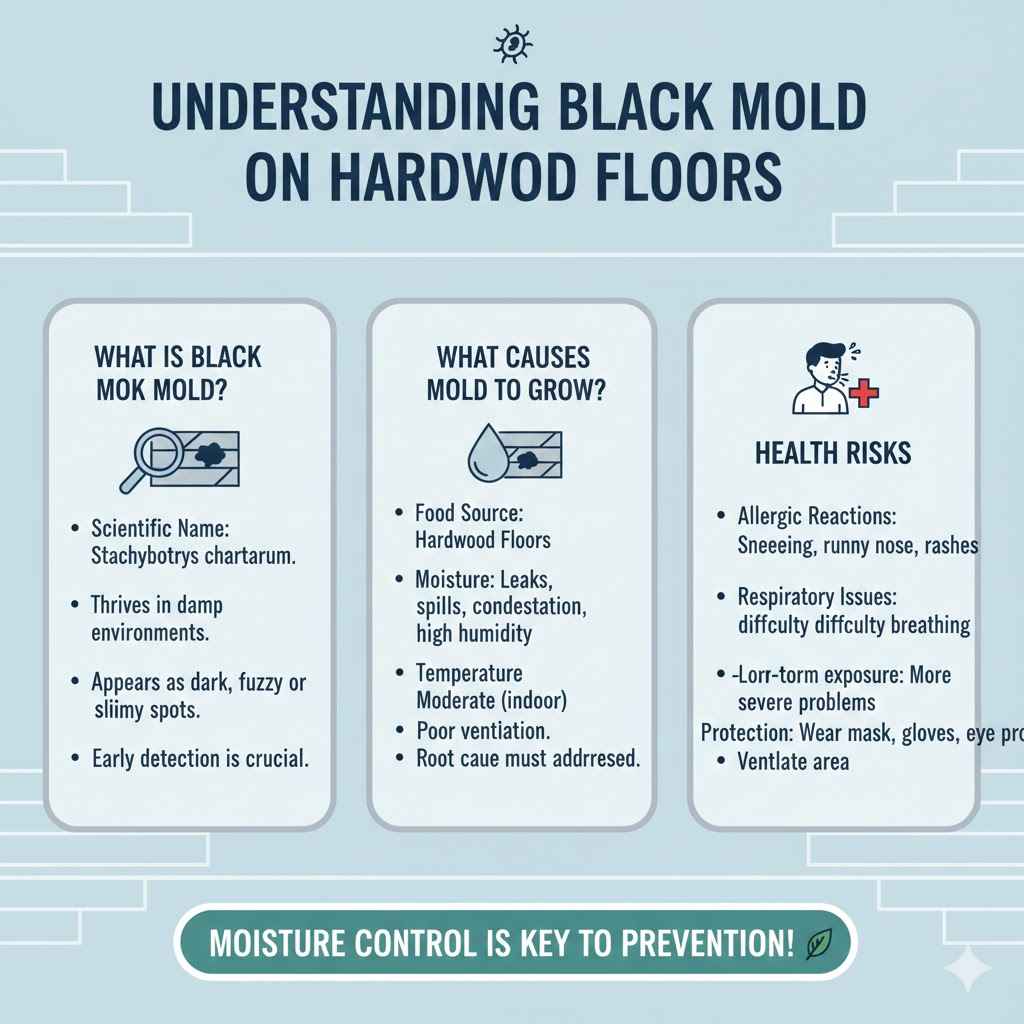
Black mold, often referred to scientifically as Stachybotrys chartarum, is a common household nuisance that thrives in damp environments. When it appears on hardwood floors, it signals a moisture problem that needs to be addressed. This type of mold can grow on porous materials like wood, especially if there’s been water damage or consistent high humidity. Identifying the source of moisture is key to preventing mold from returning.
Mold spores are microscopic and can spread easily through the air. On hardwood, they often appear as dark spots, ranging from greenish-black to solid black. The texture can be fuzzy or slimy, depending on the surface and how long it’s been present. It’s important to know that not all black spots on wood are mold, but if you suspect mold, it’s best to treat it as such. Early detection and removal are crucial to protect your home and your health.
What Causes Mold to Grow on Hardwood
Mold needs three main things to grow: a food source, moisture, and the right temperature. Hardwood floors provide the food source. Moisture can come from many places, such as leaky pipes, spills that aren’t cleaned up quickly, condensation, or even high humidity levels indoors. Without proper ventilation, moisture can get trapped between floorboards or seep into the wood.
Temperature plays a role too, as mold generally prefers moderate temperatures found in most homes. This means if you have a moisture problem, mold is likely to appear. Addressing the root cause of dampness is just as important as cleaning the mold itself. Failure to do so means the mold will likely come back.
Health Risks Associated with Black Mold
Exposure to black mold can cause various health issues. Some people are more sensitive than others. Symptoms can include allergic reactions like sneezing, runny nose, red eyes, and skin rashes. For those with asthma or other respiratory problems, mold exposure can trigger asthma attacks or make breathing difficult.
Long-term exposure to mold can lead to more severe health problems. It is important to take precautions when cleaning mold, such as wearing gloves, a mask, and eye protection. Ventilating the area during and after cleaning is also recommended. If you or someone in your household has a mold allergy or respiratory condition, consider professional mold remediation.
How to Remove Black Mold from Hardwood Floors Safely
Removing black mold from hardwood floors involves several steps to ensure it’s gone completely and doesn’t return. Safety is the first priority. You’ll need to protect yourself and the surrounding areas.
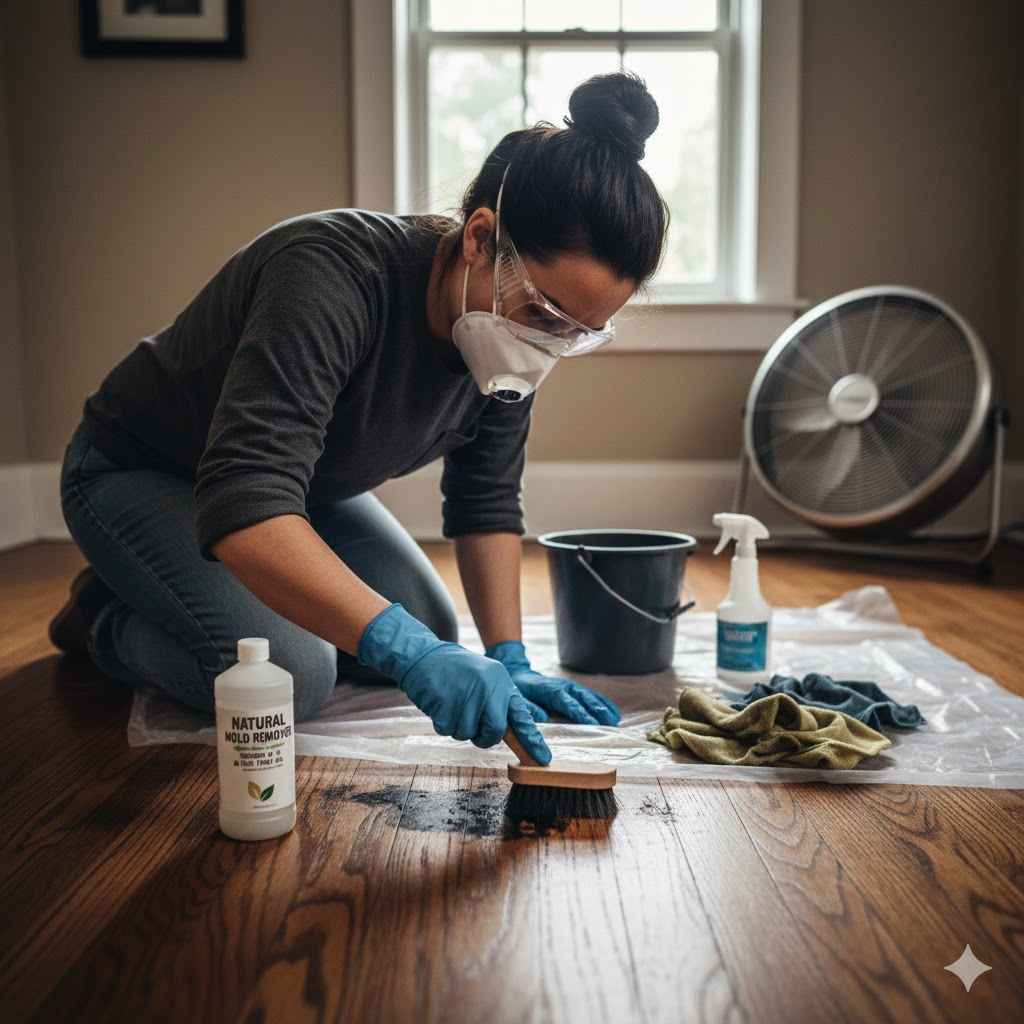
First, ensure the area is well-ventilated. Open windows and doors if possible. Wear protective gear: rubber gloves, an N95 respirator mask, and eye protection. This prevents you from inhaling mold spores or getting them on your skin.
Next, identify the extent of the mold problem. Small spots are manageable with DIY methods, but large areas might require professional help. Always test cleaning solutions in an inconspicuous spot first to ensure they don’t damage your floor’s finish.
The cleaning process itself involves using a safe and effective solution. Avoid harsh chemicals that can harm your floors or your health. Gentle, natural cleaners are often best. After cleaning, thoroughly dry the area to prevent regrowth.
Gathering Your Cleaning Supplies
Before you start, gather everything you need. This ensures a smooth process without interruptions. Having all your supplies ready makes the job much easier and more efficient.
Here’s a list of common items you will need:
Protective gear: Rubber gloves, N95 respirator mask, safety goggles.
Cleaning cloths or sponges: Use soft, white cloths or non-abrasive sponges. Avoid colored ones that could bleed dye onto the floor.
Buckets: You will need at least two buckets – one for the cleaning solution and one for rinse water.
Vacuum cleaner with a HEPA filter: This is important for removing loose spores without spreading them.
Cleaning solution: Common options include a mixture of water and white vinegar, or a mild dish soap solution.
Drying cloths: Clean, dry towels for thoroughly drying the floor.
Fan: To help speed up the drying process.
Using a HEPA filter vacuum is crucial because it traps mold spores effectively. Regular vacuums can release these tiny particles back into the air, which is counterproductive.
Choosing the Right Cleaning Solution
Selecting the correct cleaning solution is important for effective mold removal without damaging your hardwood floors. Some household cleaners can be too harsh and might strip the finish or discolor the wood.
A popular and effective DIY solution is a mixture of equal parts white vinegar and water. White vinegar is acidic and can kill many types of mold.
Another option is a mild dish soap and water solution. This can help lift surface mold and grime. However, soap alone may not kill the mold spores.
Baking soda is also a useful natural cleaner. A paste made with baking soda and water can be used for scrubbing. It’s a mild abrasive and deodorizer.
Always dilute cleaning solutions properly. Concentrated cleaners can be too strong. After cleaning, it’s essential to rinse the area thoroughly with clean water and then dry it completely.
Step-by-Step Mold Removal Process
Let’s walk through the process of how to remove black mold from hardwood floors step by step.
1. Prepare the Area.
Clear furniture and rugs from the affected area.
Put on your protective gear: gloves, mask, and goggles.
Open windows for ventilation.
2. Vacuum Loose Spores.
Use a vacuum cleaner with a HEPA filter to gently vacuum the visible mold and surrounding areas. This removes loose spores before you start wiping.
3. Apply Cleaning Solution.
Mix your chosen cleaning solution (e.g., equal parts white vinegar and water).
Dampen a clean cloth or sponge with the solution. Do not saturate the floor.
Gently wipe the moldy areas. Work from the outside of the moldy spot inward to avoid spreading spores.
4. Scrub Gently.
If the mold is stubborn, you can use a soft-bristled brush or a baking soda paste for gentle scrubbing. Be careful not to damage the wood’s finish.
5. Rinse the Area.
Dampen a clean cloth with plain water and wipe the area to remove any cleaning solution residue.
6. Dry Thoroughly.
Use clean, dry towels to wipe the floor completely dry.
Place a fan to ensure the area dries quickly and completely. Moisture is mold’s best friend, so thorough drying is critical.
7. Dispose of Materials.
Seal all used cloths, sponges, and the vacuum bag (if applicable) in a plastic bag before disposing of them. This prevents spores from escaping.
This method is effective for surface mold. If mold has penetrated deeply into the wood or subfloor, professional assessment might be necessary.
Preventing Future Mold Growth on Hardwood
Once you’ve successfully removed the mold, the next crucial step is to prevent it from coming back. This involves managing moisture levels in your home and ensuring good air circulation.
Regular inspection of your floors and surrounding areas can help catch potential problems early. Pay attention to areas that are prone to moisture, such as bathrooms, kitchens, and basements.
Good ventilation is key. Use exhaust fans in bathrooms and kitchens. Ensure that your HVAC system is working efficiently to control humidity. Consider using a dehumidifier in damp areas.
Fixing any leaks promptly is also vital. Check for plumbing leaks under sinks or behind appliances. Even small leaks can create a breeding ground for mold.
Controlling Humidity Levels
Humidity is a major contributor to mold growth. Keeping indoor humidity levels between 30% and 50% is ideal for preventing mold.
You can monitor humidity with a hygrometer, an inexpensive device available at hardware stores. If your home’s humidity is consistently high, consider using a dehumidifier.
Ensure proper ventilation in all rooms. bathrooms and kitchens should have exhaust fans that vent outside. If you have a crawl space or basement, make sure it’s properly ventilated and waterproofed if necessary.
Leaks from pipes, roofs, or windows can introduce moisture. Repair these leaks immediately. Even condensation on cold pipes can be a source of dampness.
Check for condensation on windows, especially during colder months. This indicates high indoor humidity and poor insulation.
Maintaining Proper Ventilation
Good airflow is essential to keep hardwood floors dry and mold-free. Stagnant, humid air is a mold magnet.
Ensure that air can circulate freely around your floors. Avoid blocking vents with furniture. Regularly clean air vents to ensure they are not clogged with dust.
If you have an attic or crawl space, make sure it has adequate ventilation. This helps prevent moisture buildup that can seep into your home.
During warmer months, open windows when weather permits to allow fresh air in. This naturally reduces indoor humidity and improves air quality.
Consider using ceiling fans to keep air moving, especially in rooms prone to dampness. This creates a less hospitable environment for mold spores.
Addressing Underlying Moisture Issues
Mold cannot grow without moisture. Therefore, identifying and fixing the source of water intrusion is paramount to permanent mold removal and prevention.
Common sources of moisture include:
Plumbing leaks: Check under sinks, around toilets, and behind appliances.
Roof leaks: Inspect your attic and ceilings for water stains after rain.
Window and door leaks: Ensure seals are intact and caulk is in good condition.
Foundation cracks: Water can seep into basements and crawl spaces through cracks.
Condensation: High humidity can cause condensation on pipes, walls, and windows.
Once a moisture source is found, it must be repaired. This might involve fixing a leaky pipe, repairing your roof, or sealing foundation cracks. After repairs, allow the affected areas to dry completely before resuming normal use.
When to Call a Professional
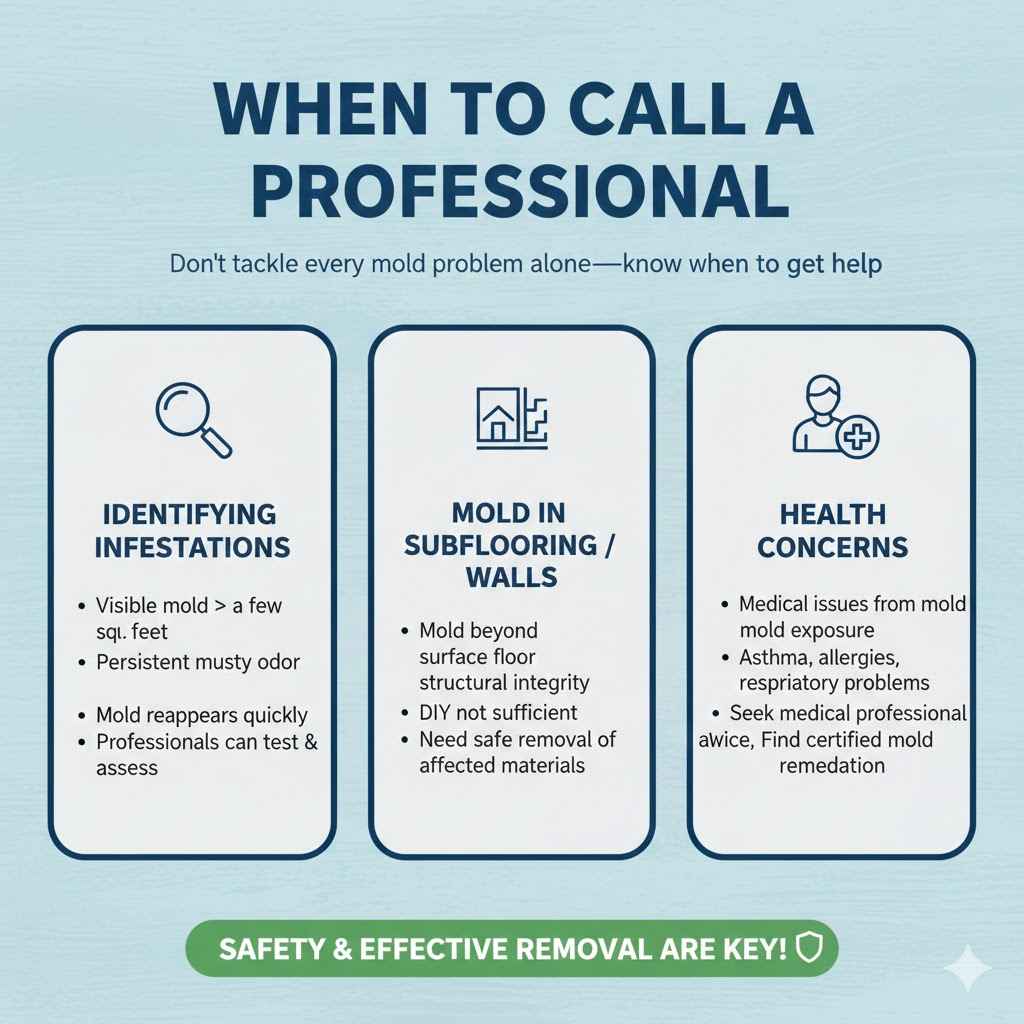
While you can handle small mold issues yourself, there are times when calling a professional is the wisest choice. If you’re unsure about the extent of the mold or if it covers a large area, it’s best to seek expert help.
Professionals have specialized equipment and knowledge to safely and effectively remove mold. They can also identify and address the underlying moisture problems that led to the mold growth.
If you or your family members experience health issues related to mold exposure, a professional remediation service can ensure the mold is completely eradicated, creating a healthier living environment.
Identifying Large Mold Infestations
Large mold infestations can be hard to tackle on your own. If the mold covers an area larger than a few square feet, it’s a good idea to call in experts.
Signs of a large infestation include widespread visible mold growth, a persistent musty odor even after cleaning, or mold that reappears quickly after you’ve cleaned it.
Professionals have the tools to test for mold and determine the best course of action. They can also perform air quality testing to ensure your home is safe.
Dealing with Mold in Subflooring or Walls
If mold has spread beyond the surface of your hardwood floors and into the subflooring or walls, this is a serious issue. Mold can compromise the structural integrity of your home.
DIY cleaning methods are usually not enough for mold that has penetrated structural materials. In these cases, professional mold remediation is necessary.
They will safely remove affected materials, clean the area, and ensure it’s properly sealed and dried to prevent recurrence.
Seeking Expert Advice for Health Concerns
If you suspect mold is affecting your health, it’s important to consult a medical professional. They can help diagnose any mold-related illnesses.
For mold remediation, look for certified professionals who have experience with hardwood floors and mold removal. They can ensure the job is done correctly and safely.
Frequently Asked Questions
Question: Can I use bleach to remove mold from hardwood floors?
Answer: While bleach can kill mold on some surfaces, it’s generally not recommended for hardwood floors. Bleach can damage the wood finish, discolor the wood, and its fumes can be harmful. It also doesn’t penetrate porous materials effectively, so mold might return.
Question: How quickly does mold grow on hardwood floors?
Answer: Mold can start to grow on hardwood floors within 24 to 48 hours after a moisture problem occurs. The speed of growth depends on the amount of moisture, temperature, and the presence of mold spores.
Question: Is it safe to clean mold myself?
Answer: For small, surface mold spots, it is generally safe to clean yourself if you take proper precautions. Always wear protective gear like gloves, a mask, and eye protection, and ensure good ventilation. For larger areas or if you have respiratory issues, professional help is advised.
Question: What does the mold smell like?
Answer: Mold often has a distinct musty or earthy smell. This smell can be noticeable in damp areas or when mold is present, even if you can’t see it yet.
Question: How can I tell if it’s mold or just a stain on my hardwood floor?
Answer: Mold often has a fuzzy or slimy texture and can be raised or slightly sunken into the wood. Stains are usually flat and may have a different color or pattern. If you’re unsure, it’s best to treat it as mold and clean it carefully.
Summary
Effectively removing black mold from hardwood floors is achievable by following a safe, step-by-step approach. Prioritize your health with protective gear and ventilation. Clean with gentle solutions like vinegar and water, rinse thoroughly, and dry completely to prevent its return. Addressing moisture sources is key to long-term success.