How to Remove Glued Down Wood Floors: Pro Tools
Taking up floors that are glued down can seem tricky at first. Many people wonder about the best way to get the job done without making a big mess or causing damage. This is why learning How to Remove Glued Down Wood Floors: Pro Tools Near You is a common question.
It might feel like a big task, but it really doesn’t have to be. We will walk through a simple plan to help you tackle this project easily.
Removing Glued Down Wood Floors Easy Steps
Getting rid of glued-down wood flooring is a common home improvement task. Many homeowners face this challenge when renovating or updating their living spaces. The adhesive used to secure these floors can make removal difficult, often requiring more than just basic tools.
This section breaks down the process into manageable steps, focusing on efficiency and safety.
We will explore the most effective methods for tackling glued-down wood. This includes identifying the right tools and understanding the techniques that save time and effort. The goal is to make this often-tough job feel much simpler for anyone taking it on.
Gathering Your Essential Tools
Before you start, having the right tools makes a big difference. You need things that can safely pry up the wood and cut through stubborn glue. Having a good set of tools means you can work smarter, not harder.
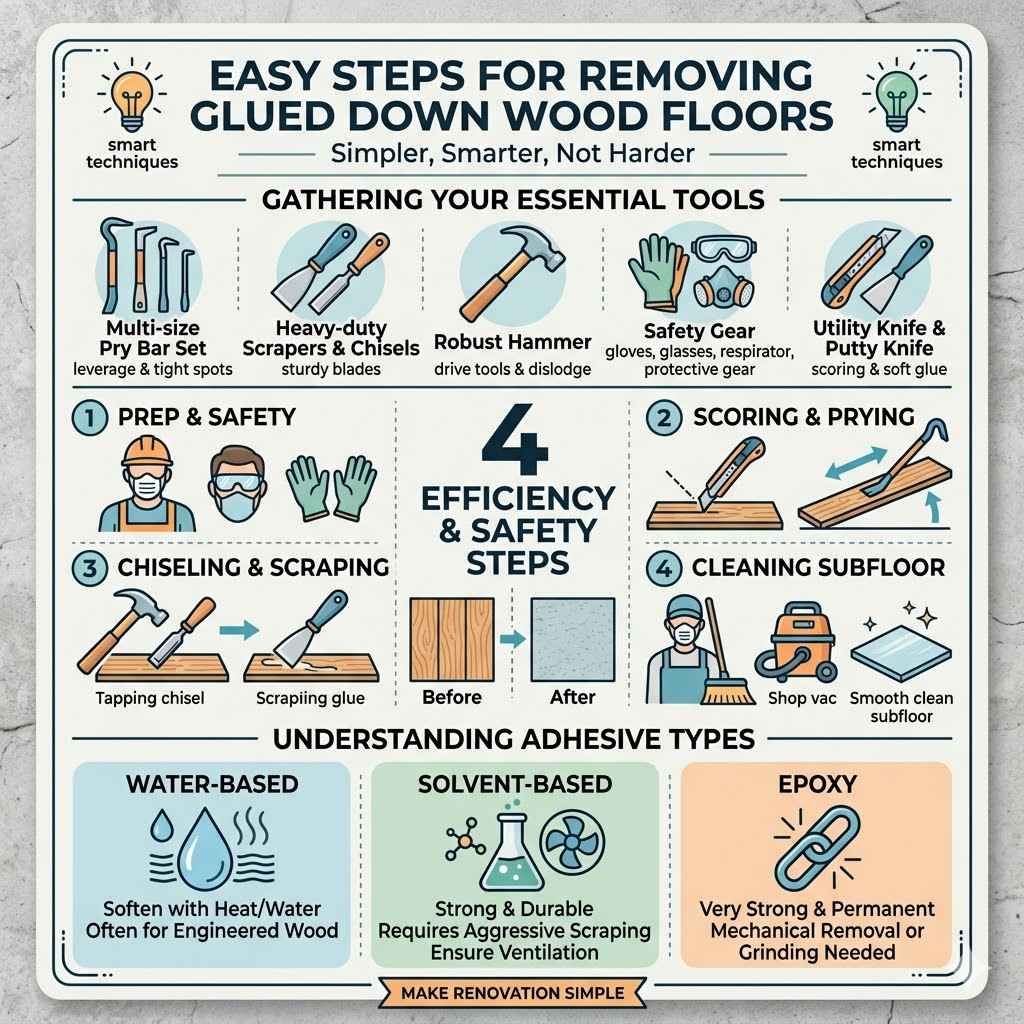
Here are the key items you will want to have ready:
Pry Bar Set: A good set of pry bars, including a longer one for leverage and a smaller one for tight spots, is crucial. They help you lift and separate the wood planks from the subfloor. The longer bars give you more pushing power, and the shorter ones let you get into nooks and crannies to loosen stubborn planks.
Scrapers and Chisels: Heavy-duty floor scrapers and sharp wood chisels are essential for removing the glue residue left on the subfloor. You need tools with sturdy blades that can withstand forceful scraping without bending or breaking. Different sizes can help you tackle both large areas and small, stuck-on bits of adhesive.
Hammer: A robust hammer, like a claw hammer or a mallet, is needed to tap chisels and pry bars. It helps to drive tools under the flooring or to dislodge stubborn pieces. A good hammer provides the force needed to break the bond of the old adhesive.
Safety Gear: Always protect yourself. This means sturdy gloves, safety glasses to keep debris out of your eyes, and a dust mask or respirator. When removing old flooring, dust and small particles can become airborne, so breathing protection is very important.
Utility Knife: A sharp utility knife is useful for scoring the edges of the flooring or cutting through any felt or underlayment that might be stuck to the glue. This can help loosen the bond and make prying easier.
Putty Knife or Spreader: For applying new adhesive if needed later, or for scraping away softer glue residue, a sturdy putty knife is handy.
Understanding the Adhesive Types
Different glues require different removal tactics. Knowing what you are dealing with helps you pick the best tools and methods. Some glues are water-based and easier to soften, while others are very strong and require more elbow grease.
Common types of adhesives used for wood floors include:
Water-Based Adhesives: These are often used for engineered wood flooring. They tend to soften with water or heat, making them easier to scrape away. If you can identify this type, you might be able to use a damp cloth or a steamer to loosen the bond before prying.
Solvent-Based Adhesives: These are stronger and more durable. They do not soften easily with water and often require more aggressive scraping or chemical removers. Proper ventilation is key when working with these as they can release fumes.
Epoxy Adhesives: Very strong and permanent, epoxy glues are tough to remove. They usually require mechanical removal with scrapers, chisels, or even grinding tools. Heat may sometimes help, but care must be taken not to damage the subfloor.
How to Remove Glued Down Wood Floors: Pro Tools Near You
When you are ready to tackle the removal of glued-down wood floors, having the right equipment is key. This is where knowing about “pro tools” becomes really helpful. These are tools that make the job faster and less of a struggle.
You don’t need to be a professional contractor to use them, and many are available at your local hardware store or tool rental center.
This section is all about pointing you towards the best tools that can make the difference between a day of frustration and a successful project completion. We will look at tools that are designed for this specific task, making it much easier to lift stubborn flooring.
Leveraging Power Tools for Efficiency
For very stubborn glue or large areas, power tools can be a lifesaver. They offer more force and speed than manual tools, significantly reducing the time and effort required. When considering How to Remove Glued Down Wood Floors: Pro Tools Near You, power tools are often what pros rely on.
Here are some power tools that can greatly help:
Flooring Scraper with Blade Attachment: These are essentially powered scrapers. A machine vibrates a sharp blade back and forth, allowing you to quickly scrape away glue residue. They are very effective for large areas of stubborn adhesive and can save a lot of physical strain.
Oscillating Multi-Tool: With the right blade, an oscillating multi-tool can be surprisingly effective. It can cut through old adhesive or even carefully cut along the edges of planks to break the glue bond without damaging the subfloor. It’s a versatile tool for many demolition and renovation tasks.
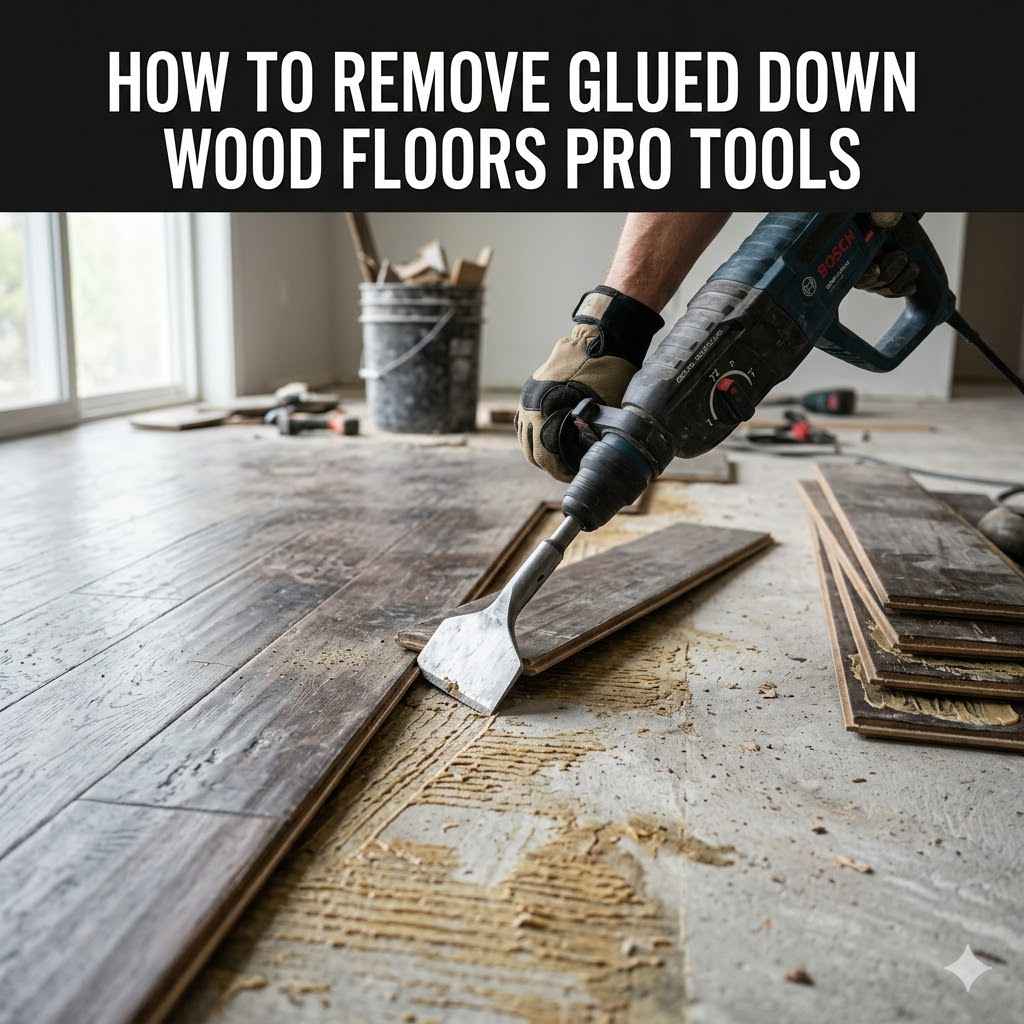
Rotary Hammer with Scraper Attachment: For extremely difficult glue or concrete subfloors, a rotary hammer with a wide scraper bit can power through. This tool delivers forceful blows and rotation, making quick work of tough adhesives. However, it requires careful handling to avoid damaging the subfloor.
Heat Gun: A heat gun can soften certain types of adhesives, making them easier to scrape away. Apply heat to a small section at a time and immediately try to scrape it. Be cautious, as excessive heat can damage some subfloors or release fumes.
When using power tools, always follow the manufacturer’s instructions and wear all necessary safety gear. These tools are powerful, and proper operation is essential for both safety and effectiveness.
Finding Pro Tools Locally
You might be wondering where to find these helpful tools. The good news is that many of them are readily available. You can often rent specialized power tools if you only need them for a short time.
Here are some common places to look:
Local Hardware Stores: Stores like Home Depot, Lowe’s, or Ace Hardware carry a wide range of hand tools and often rent out power equipment. They are also a great place to ask staff for advice.
Tool Rental Centers: Dedicated tool rental shops often have the most professional-grade equipment available for rent. This can be a cost-effective option if you need a powerful machine for a few days.
Online Retailers: Websites like Amazon or specialized tool suppliers offer a vast selection of tools for purchase. You can often find competitive prices and a wide variety of brands.
Considering How to Remove Glued Down Wood Floors: Pro Tools Near You involves looking at both purchasing and renting. For tools you might use often, buying is best. For specialized or expensive equipment, renting makes more sense.
Step-by-Step Guide to Removing Glued Floors
Now that you know what tools you need, let’s get to the actual process. Following these steps will help you remove your glued-down wood floors methodically and safely. It is important to work in small sections and take your time to avoid unnecessary damage or injury.
This guide breaks down the entire removal process, from the initial preparation to the final cleanup, ensuring you have a clear roadmap to success.
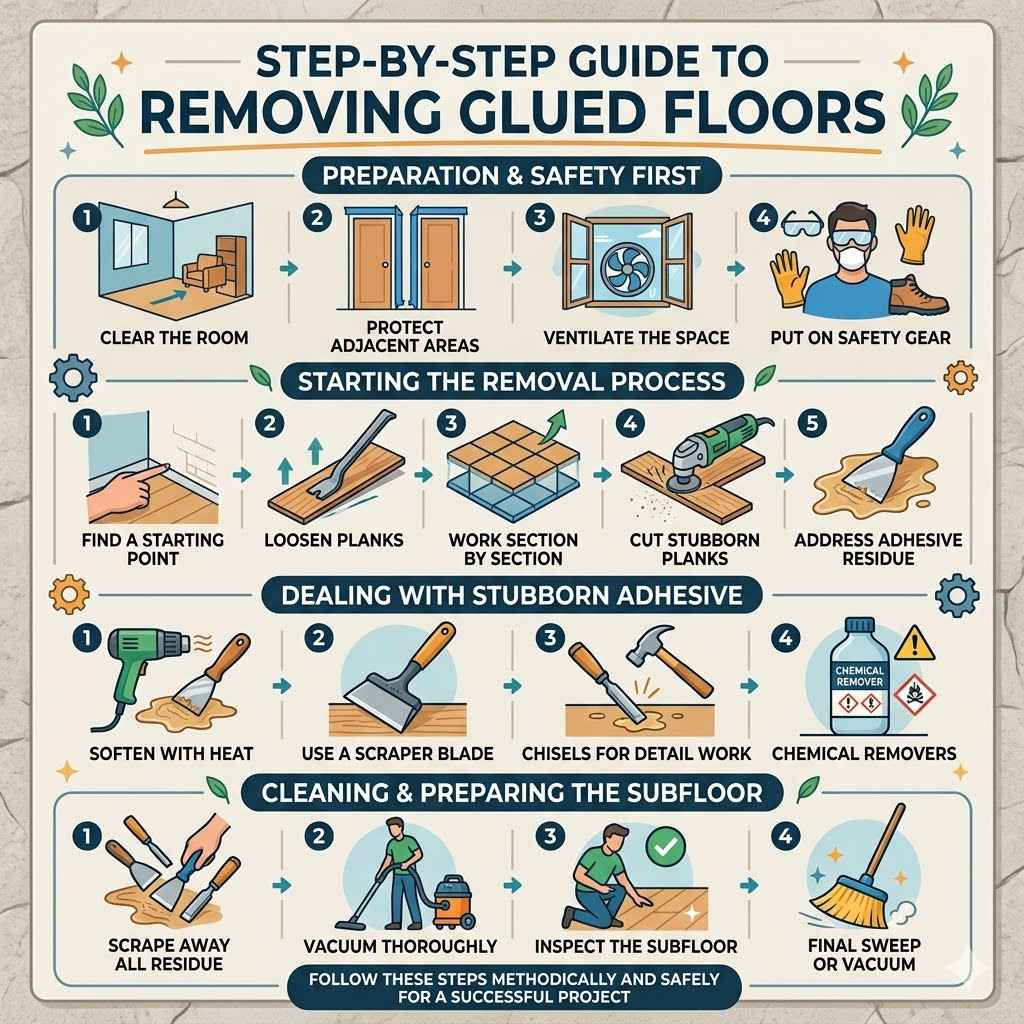
Preparation and Safety First
Before you even pick up a tool, preparation is key. This means clearing the room and ensuring you have a safe working environment.
Here’s how to prepare:
Clear the Room: Remove all furniture, rugs, and decor from the area. The more open the space, the easier and safer it will be to work.
Protect Adjacent Areas: Use plastic sheeting and painter’s tape to cover doorways and vents leading to other rooms. This helps contain dust and debris.
Ventilate the Space: Open windows and doors to ensure good airflow, especially if working with adhesives that might release fumes.
Put on Safety Gear: Wear your safety glasses, sturdy gloves, long pants, and closed-toe shoes. A dust mask or respirator is also highly recommended.
Starting the Removal Process
Once you are prepared and protected, you can begin removing the flooring. It’s best to start in a corner or along an edge.
Follow these steps:
Find a Starting Point: Look for a loose edge or a natural starting point, usually along a wall.
Loosen Planks: Use a pry bar to get under the edge of a floorboard. Gently lever it up. If it’s very stuck, you might need to tap the pry bar with a hammer.
Work Section by Section: Pry up one plank at a time. As you lift a plank, try to pull it away from the adhesive. If the adhesive is very strong, you might need to use a scraper to get underneath it.
Cut Stubborn Planks: If planks are extremely difficult to lift, you may need to use a reciprocating saw or an oscillating tool to cut them into smaller, more manageable pieces. Be very careful not to cut into the subfloor below.
Address Adhesive Residue: As you remove planks, you will see the glue left on the subfloor. Use your scrapers and chisels to remove as much of this as possible while the area is still accessible.
Dealing with Stubborn Adhesive
Sometimes, the glue is the hardest part. It can stick stubbornly to the subfloor, and you need to be persistent.
Here are tips for tough glue:
Soften with Heat: If you suspect a water-based or some solvent-based adhesive, a heat gun can help. Apply heat to a small area and then immediately scrape. Work in small, manageable sections.
Use a Scraper Blade: For thick, hardened glue, a heavy-duty floor scraper is essential. Position the blade firmly under the glue and push or pull with force.
Chisels for Detail Work: For small, tough spots or edges, a sharp wood chisel can be very effective. Tap it gently with a hammer to work it under the glue.
Chemical Removers (Use with Caution): For extremely difficult adhesives, specialized chemical removers are available. Always follow product instructions precisely, ensure good ventilation, and wear appropriate protective gear, as these can be strong.
When it comes to the question of How to Remove Glued Down Wood Floors: Pro Tools Near You, having a good scraper and possibly a heat gun will be invaluable for these stubborn sections. These tools are designed to tackle the toughest adhesives.
Cleaning and Preparing the Subfloor
Once all the wood flooring is removed, the subfloor needs to be clean and smooth for whatever you plan to do next. This might involve installing new flooring or just preparing it for a coating.
Final subfloor preparation steps:
Scrape Away All Residue: Go over the entire subfloor with your scrapers and chisels. You want to remove every last bit of glue.
Vacuum Thoroughly: Use a shop vacuum to suck up all dust, wood particles, and glue fragments.
Inspect the Subfloor: Check the subfloor for any damage, such as cracks or loose boards. Repair any issues as needed.
Final Sweep or Vacuum: Give the subfloor one last sweep or vacuum to ensure it’s perfectly clean.
Frequently Asked Questions
Question: What is the easiest way to remove glued down wood floors?
Answer: The easiest way often involves using a floor scraper with a sharp blade, and for very tough jobs, a powered scraper or oscillating tool. Always start by prying up the edges and working your way across the room.
Question: Do I need special tools to remove glued down wood floors?
Answer: You need sturdy hand tools like pry bars and scrapers. For faster removal, power tools like a flooring scraper or oscillating tool are highly recommended, and these can often be rented locally.
Question: How do I get the glue off the subfloor after removing the wood?
Answer: Use a floor scraper, chisel, or a powered scraper to remove the glue residue. For certain types of glue, heat from a heat gun can help soften it, making it easier to scrape.
Question: Can I remove glued down wood floors myself?
Answer: Yes, you can remove glued down wood floors yourself. It requires patience and the right tools, but it is a manageable DIY project.
Question: How long does it take to remove glued down wood floors?
Answer: The time it takes varies greatly depending on the size of the room, the type of adhesive, and the tools you use. A small room with easy-to-remove glue might take a few hours, while a large room with stubborn adhesive could take a full day or more.
Summary
Removing glued down wood floors can be a challenge, but it’s achievable with the right approach and tools. Knowing How to Remove Glued Down Wood Floors: Pro Tools Near You empowers you to choose the best equipment. By preparing properly, using appropriate hand and power tools, and working step-by-step, you can effectively clear your subfloor for its next phase.
Remember to prioritize safety throughout the process.