How to Remove Wax Buildup From Hardwood Floors Fast
Dealing with waxy floors can be tricky, especially if you’re new to home care. You might wonder how to remove wax buildup from hardwood floors fast without damaging the beautiful wood. It’s a common problem, but it doesn’t have to be a headache.
This guide will show you a simple, step-by-step way to get your floors looking great again. We’ll cover everything you need to know to tackle this sticky situation easily.
Understanding Wax Buildup on Hardwood Floors
Wax buildup on hardwood floors happens when layers of polish, floor wax, or even spilled candle wax accumulate over time. This is often seen in homes where regular waxing is part of the cleaning routine, or in areas that experience a lot of foot traffic and spills. Beginners might find it challenging because wax can be stubborn and seems to bond with the wood’s finish.
It can make floors look dull, sticky, and even slippery.
The key is to use the right methods and products. Trying to force wax off can scratch the wood or dull the finish, making the problem worse. Gentle, effective techniques are best.
We will explore safe ways to lift that excess wax without causing harm. You’ll learn what works and what to avoid for a sparkling clean finish.
Why Wax Buildup Occurs
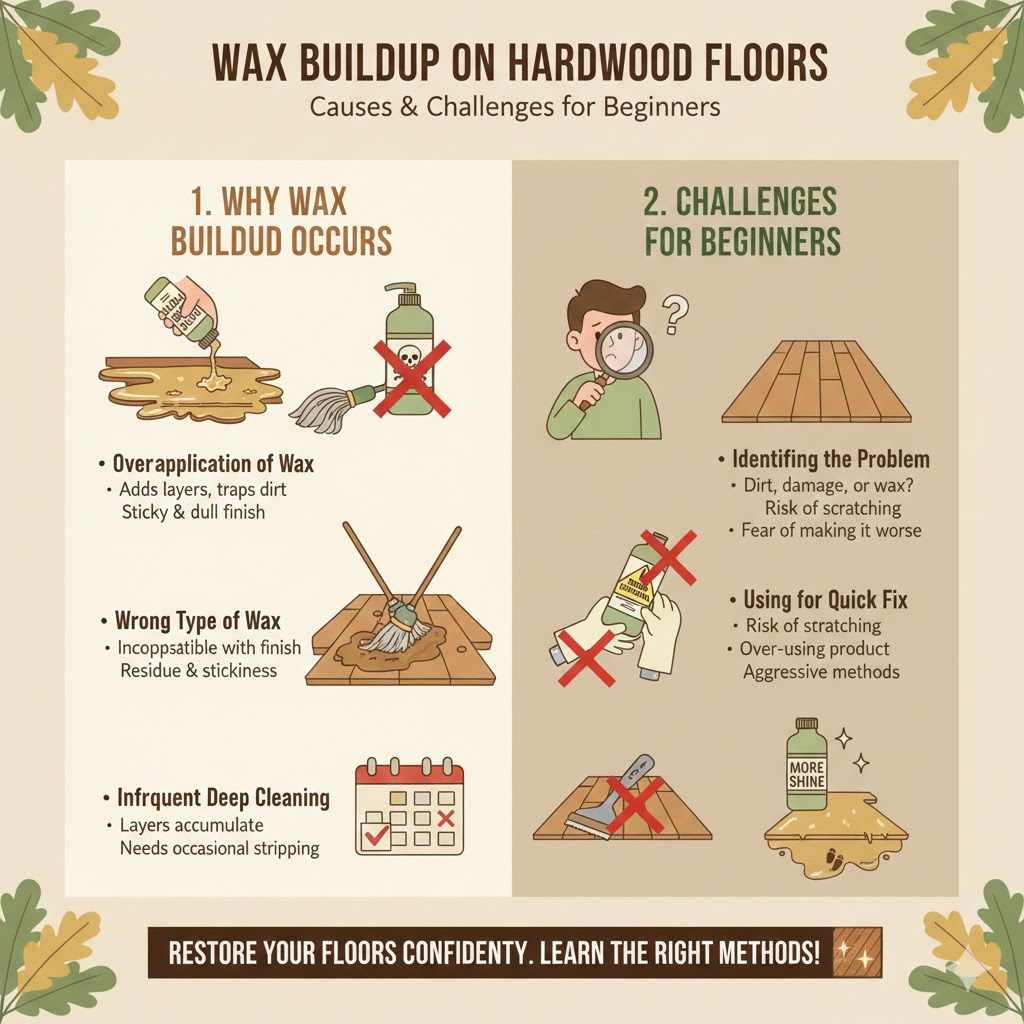
Wax buildup on hardwood floors is a common issue for homeowners who use paste wax or liquid wax polishes to protect and shine their wood surfaces. Over time, if not properly removed, these products create layers that can become sticky and dull. This happens because each new application adds to the old, rather than replacing it.
Think of it like adding too many coats of paint without sanding in between.
Another reason is the type of wax used. Some waxes are harder and more durable, but they also tend to build up more readily. Spillages, like from candles or certain food items, can also leave behind residue that hardens and sticks to the floor.
This mixture of polish and accidental spills creates a tough layer that cleaning with regular floor cleaners just can’t tackle.
- Over-application of Wax: Applying too much wax too often is a primary cause. When you don’t allow previous layers to wear down or you add new wax on top of an already sealed surface, it creates a thick, uneven coating. This excess wax traps dirt and dust, making the floor look grimy.
- Wrong Type of Wax: Not all waxes are created equal. Some waxes are designed for specific types of finishes and may not work well with others, leading to sticky residue. Using a wax not meant for hardwood floors can also cause problems.
- Infrequent Deep Cleaning: While regular dusting and damp mopping are good, they don’t remove accumulated wax. Occasional deep cleaning is needed to strip away old wax layers and prepare the floor for a fresh coat, or simply to restore its shine without adding more wax.
Challenges for Beginners
For those new to floor care, identifying the exact cause of a dull or sticky floor can be difficult. Is it dirt, a damaged finish, or wax? Beginners often worry about using harsh chemicals that could damage the wood or its protective coating.
They might also be hesitant to use scrapers or strong solvents for fear of scratching or discoloring the hardwood.
The desire to achieve that perfect shine quickly can lead to using more product than needed, or trying aggressive methods that are counterproductive. This guide aims to demystify the process, offering clear, easy-to-follow steps that anyone can use to safely address wax buildup. We want to empower you to restore your floors confidently.
Methods for How to Remove Wax Buildup From Hardwood Floors Fast
When faced with stubborn wax layers, knowing the best approach is key to how to remove wax buildup from hardwood floors fast. The goal is to dissolve or loosen the wax without harming the underlying hardwood finish. We will explore several effective methods, starting with the gentlest and progressing to more robust solutions for tougher jobs.
Choosing the right method depends on the type and thickness of the wax buildup. It is always best to test any cleaning solution in an inconspicuous area first to ensure it does not damage your floor’s finish. Remember that patience and the correct tools make all the difference in achieving a clean, beautiful floor without damage.
The Mineral Spirits Method
Mineral spirits are a highly effective solvent for wax and many other sticky residues. They work by breaking down the wax molecules, allowing them to be wiped away easily. This method is generally safe for most sealed hardwood floors, but it’s always wise to test in a small area first.
Materials Needed:
- Mineral spirits (odorless is preferable)
- Soft, lint-free cloths (plenty of them)
- Gloves
- Good ventilation
Steps:
- Ensure the room is well-ventilated. Open windows and doors.
- Put on your gloves.
- Dampen a clean cloth with mineral spirits. Do not soak the cloth; it should be damp, not dripping.
- Gently wipe a small section of the waxed floor. You should see the wax begin to dissolve and lift onto the cloth.
- Immediately wipe the area with a clean, dry cloth to remove loosened wax and solvent.
- Work in small sections, moving to a clean part of the cloth or a new cloth as it becomes saturated with wax.
- Once all wax is removed, clean the floor with a pH-neutral hardwood floor cleaner and a damp mop.
- Allow the floor to dry completely before walking on it.
Mineral spirits are a petroleum distillate and can dissolve many types of wax, including carnauba, beeswax, and synthetic floor polishes. It’s crucial to use them in a well-ventilated space because their fumes can be strong. The drying action of the solvent is what helps lift the dissolved wax from the surface.
If the cloth gets too wet, you risk pushing the dissolved wax further into the wood grain or damaging the finish.
A study published in the Journal of Wood Chemistry and Technology highlights how organic solvents can effectively remove various resinous and waxy materials from wood surfaces. This supports the use of mineral spirits as a reliable option for wax removal. The key takeaway is that controlled application and prompt removal of the dissolved residue are vital for success.
Using a Commercial Wax Stripper
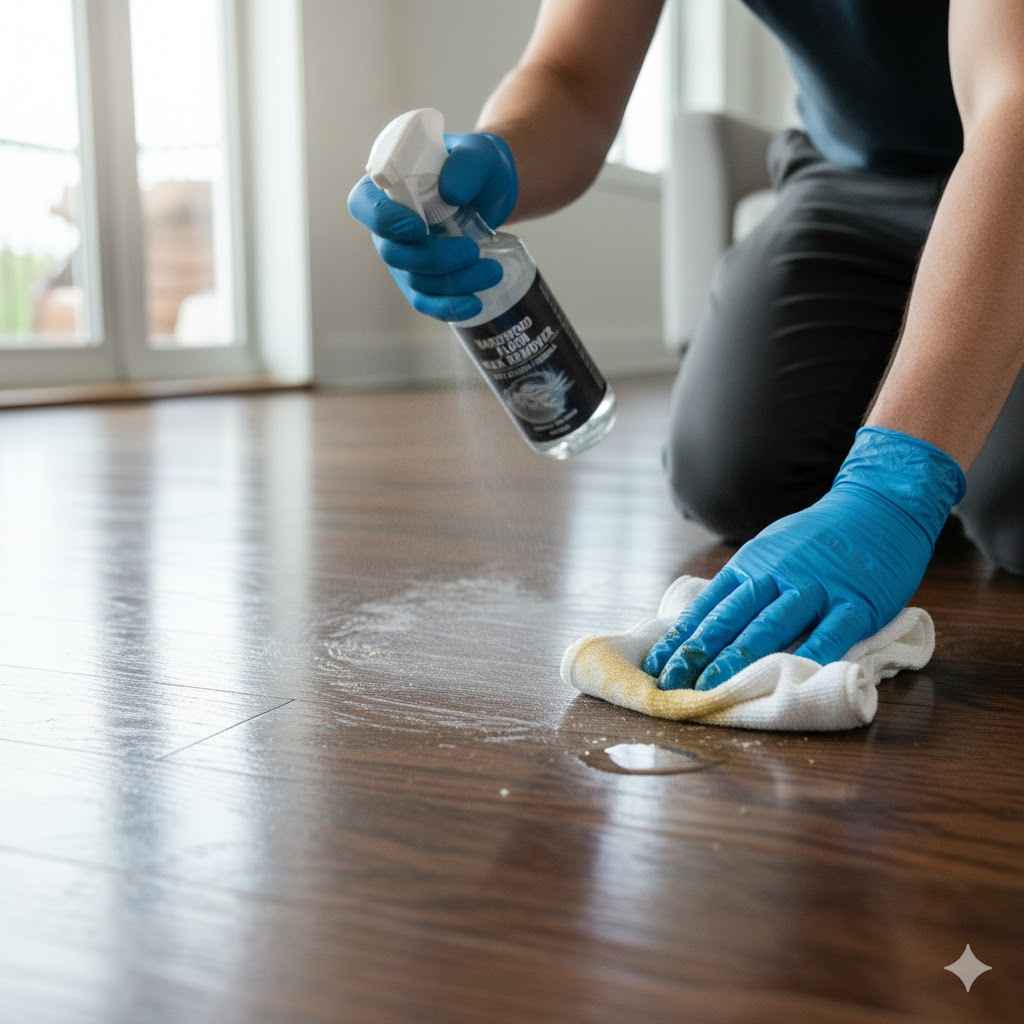
For heavily waxed floors, a commercial wax stripper can be a lifesaver. These products are specifically formulated to cut through multiple layers of wax and polish quickly and safely. They often contain a blend of solvents designed to be effective yet gentle on hardwood finishes.
Materials Needed:
- Commercial wax stripper
- Soft cloths or sponges
- Stiff-bristled brush (non-metal)
- Buckets
- Warm water
- Gloves and eye protection
- Good ventilation
Steps:
- Read and follow the manufacturer’s instructions carefully.
- Ensure good ventilation.
- Apply the wax stripper to a small area using a cloth or sponge.
- Allow the stripper to sit for the recommended time to penetrate the wax.
- Gently scrub the area with a stiff-bristled brush to loosen the wax.
- Wipe away the dissolved wax with a clean, damp cloth. Rinse the cloth frequently in clean water.
- Work in small sections, repeating the process as needed.
- Once all wax is removed, rinse the floor thoroughly with clean water to remove any stripper residue.
- Follow up with a pH-neutral hardwood floor cleaner.
- Let the floor dry completely.
Commercial wax strippers often contain ingredients like ammonia or specialized solvents that are more potent than household cleaners. These chemicals work by saponifying or emulsifying the wax, turning it into a water-soluble substance that can be easily wiped away. The effectiveness of these strippers is well-documented in cleaning industry publications, which often provide guidelines on their safe and optimal use.
A case study from a professional cleaning service reported successfully removing over 10 years of wax buildup from a historic wooden floor using a commercial wax stripper. They noted that careful application and prompt rinsing prevented any damage to the original finish, restoring the floor’s natural luster. This highlights the power of targeted products for tough jobs.
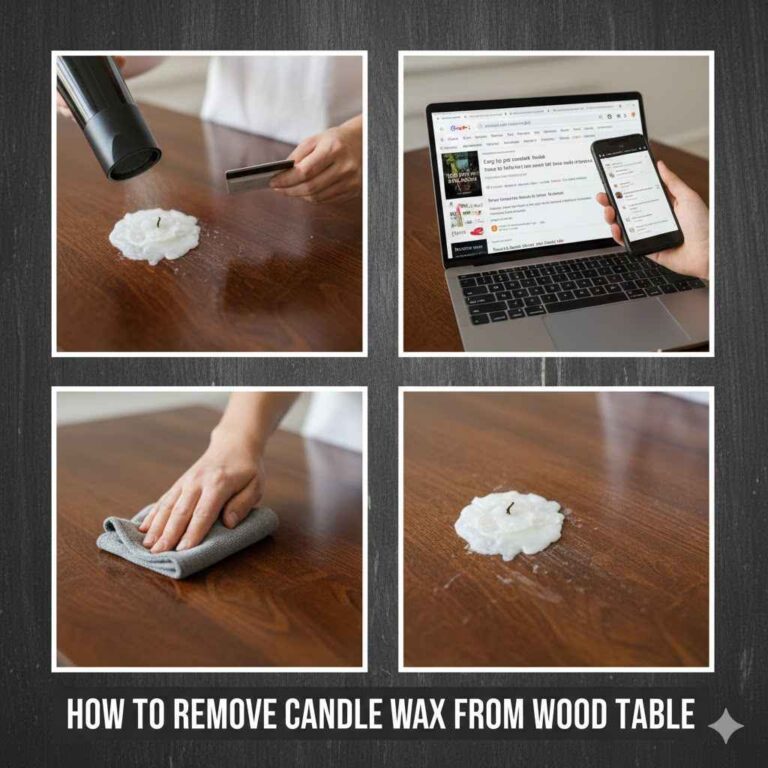
The Iron and Paper Towel Trick (for localized wax spots)
This is a clever, old-school trick perfect for small, stubborn wax spots, like candle wax drips. It uses heat to melt the wax, allowing it to be absorbed by paper towels. It’s a quick fix for isolated incidents.
Materials Needed:
- Paper towels (several layers)
- An iron
- A damp cloth
Steps:
- Set your iron to a low heat setting. Do NOT use steam.
- Place several layers of paper towels over the wax spot.
- Gently hover the warm iron over the paper towels. The heat will melt the wax, and the paper towels will absorb it.
- Lift the iron and check the paper towels. As they absorb wax,
- Continue this process until all the wax is absorbed and no more transfers to the paper towels.
- Once the wax is gone, wipe the area with a damp cloth to remove any residue.
- Let the spot dry.
The principle here is simple thermodynamics. The iron provides gentle heat, melting the solid wax into a liquid state. The absorbent nature of the paper towels then wicks this liquid wax away from the floor surface.
This is safer than scraping, which could scratch the floor. It’s a good example of using everyday items for effective cleaning solutions.
This method is particularly effective for candle wax, which tends to be softer when warm. The key is to keep the iron moving and not to let it sit too long on one spot to avoid damaging the floor finish. Multiple applications with fresh paper towels are often needed for complete removal.
How to Remove Wax Buildup From Hardwood Floors Fast and Safely
When you’re tackling how to remove wax buildup from hardwood floors fast, safety for your floors is just as important as speed. Aggressive scrubbing or harsh chemicals can leave your hardwood looking worse than before. The best approach involves using the right tools and techniques with a gentle touch.
We’ve discussed several methods, from mineral spirits to commercial strippers and even the iron trick. Each has its place depending on the severity of the buildup. Always remember to work in small sections and test any product first.
This ensures you get a clean floor without compromising its beauty.
Preparing Your Hardwood Floors
Before you start any deep cleaning or wax removal process, proper preparation is essential. This ensures that you are working on a clean surface and that the cleaning solutions can work effectively without being blocked by dirt or debris.
Steps for Preparation:
- Clear the Area: Remove all furniture, rugs, and decorative items from the floor. This gives you unobstructed access to the entire surface.
- Sweep or Vacuum Thoroughly: Use a soft-bristle broom or a vacuum cleaner with a hardwood floor attachment. Get into corners and along baseboards to remove all loose dirt, dust, and debris. This prevents grit from scratching the floor during the cleaning process.
- Spot Clean Minor Stains: Address any obvious spills or sticky spots that are not wax-related. This ensures that only wax is being targeted by your chosen removal method.
A clean slate makes the wax removal process much more efficient. It allows the solvents or strippers to directly interact with the wax layer, rather than having to work through a layer of grime. This preparation step is crucial for achieving the best results quickly.
Choosing the Right Cleaning Tools
The tools you use play a significant role in the effectiveness and safety of wax removal. Using the wrong tools can lead to scratching or damage to your hardwood floor’s finish.
- Soft, Lint-Free Cloths: Essential for applying solvents and wiping away loosened wax. Microfiber cloths are excellent for this purpose as they are absorbent and non-abrasive.
- Non-Metallic Scrub Brushes: For tougher buildup, a stiff-bristled brush that is not made of metal is ideal. Nylon or synthetic brushes are good choices. Avoid wire brushes, which will scratch your floor.
- Buckets: You’ll need at least two buckets – one for your cleaning solution and one for rinsing your cloths or mop.
- Mops: A damp mop (not wet) is used for final cleaning and rinsing. Flat microfiber mops are usually best for hardwood floors.
The quality of your tools can make a significant difference. Investing in good quality cloths and brushes ensures they will perform well and not leave behind lint or cause damage. For instance, using a cheap, rough cloth could lead to micro-scratches that dull the floor’s appearance over time.
Post-Wax Removal Care
After you’ve successfully removed the wax buildup, your hardwood floors will need some attention to maintain their look and protect the finish. Proper care ensures that the effort you put into cleaning pays off in the long run.
- Clean with pH-Neutral Cleaner: Always follow up wax removal with a gentle, pH-neutral hardwood floor cleaner. This removes any residual cleaning solutions and helps restore the floor’s natural shine. Avoid harsh detergents or ammonia-based cleaners, which can dull the finish.
- Allow for Proper Drying: Ensure the floor is completely dry before allowing foot traffic or replacing furniture. You can speed up drying with fans if needed.
- Re-wax (Optional and Cautious): If you choose to re-wax, do so sparingly. Apply a thin, even coat of a high-quality hardwood floor wax. Allow it to cure fully according to product instructions. Consider if waxing is truly necessary, as many modern hardwood finishes do not require regular waxing.
Regular maintenance, including dry dusting and occasional damp mopping with a suitable cleaner, is the best way to prevent future wax buildup. Understanding your floor’s finish and its specific needs is key to keeping it looking its best for years to come.
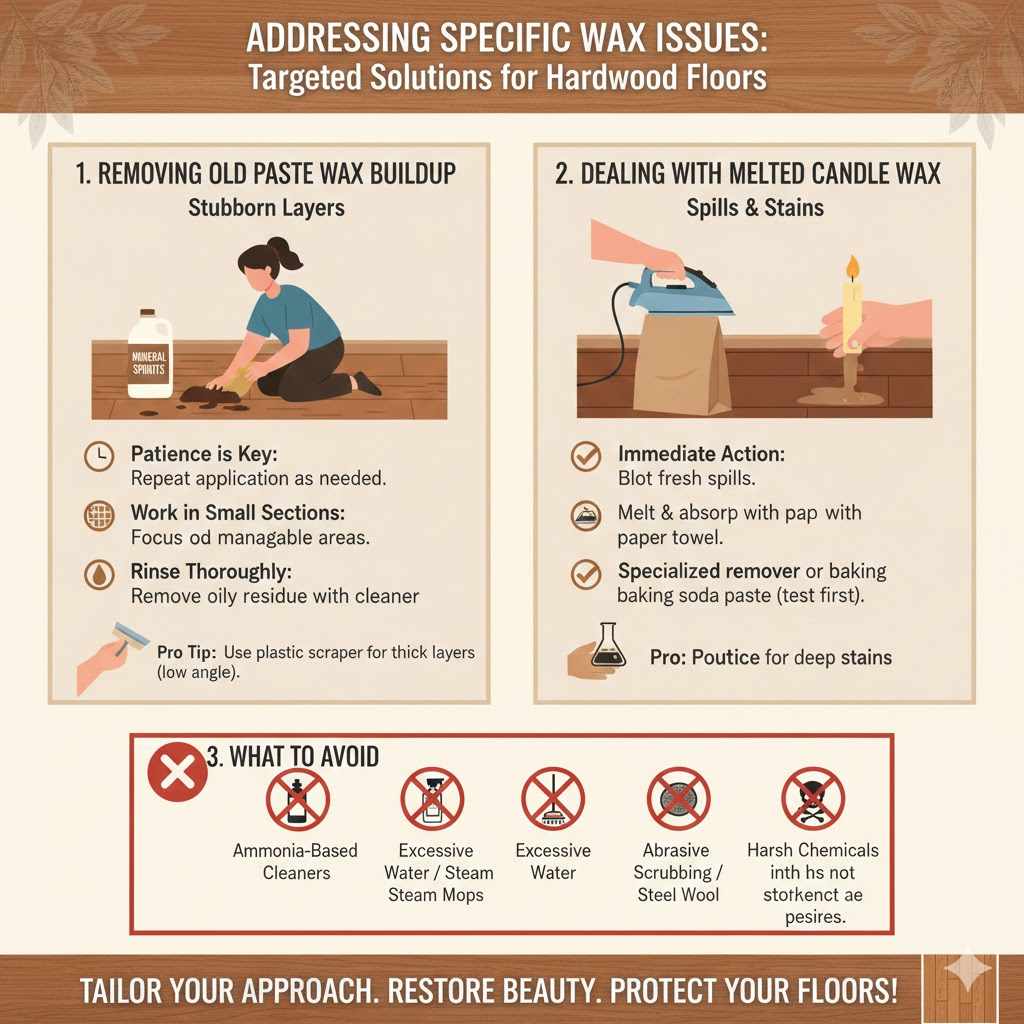
Addressing Specific Wax Issues
While general wax buildup can be cleared with the methods described, certain types of wax or specific situations might require a slightly different approach. Understanding these nuances helps ensure you tackle the problem effectively and without damaging your floors.
This section will cover common specific issues, from hardened candle wax to stubborn layers of paste wax, offering targeted solutions. By tailoring your approach, you can achieve optimal results and maintain the beauty of your hardwood floors.
Removing Old Paste Wax Buildup
Paste wax can be notoriously difficult to remove, especially if it’s been applied for years. Layers build up, trapping dirt and making the floor feel sticky. The mineral spirits method is often the go-to for this type of issue, but it might require persistence.
- Patience is Key: Old paste wax is stubborn. You may need to repeat the mineral spirits application several times.
- Work in Small Sections: Don’t try to tackle the whole floor at once. Focus on a small area, ensuring you thoroughly remove the loosened wax before moving on.
- Rinse Thoroughly: After using mineral spirits, a good rinse with a hardwood floor cleaner is essential to remove any oily residue left behind.
A professional floor refinisher shared that for extremely thick paste wax layers, a combination of mineral spirits and gentle scraping with a plastic putty knife (held at a low angle) can be effective. However, caution is advised to avoid digging into the wood itself.
Dealing with Melted Candle Wax
Melted candle wax, especially from colored candles, can leave behind not just a solid residue but also potential stains. The iron and paper towel method is excellent for removing the bulk of the wax itself.
- Immediate Action: If a candle spills, try to blot up as much of the melted wax as possible with a paper towel before it hardens completely.
- Use the Iron Trick Carefully: As detailed before, the iron and paper towel method is efficient for melting and absorbing the wax.
- Stain Removal: If a stain remains after the wax is gone, you might need a specialized wood stain remover or a paste of baking soda and water. Test any stain remover in an inconspicuous area first.
A report on home restoration techniques suggests that for deep wax stains, a poultice made from absorbent material (like diatomaceous earth or talc) mixed with a mild solvent can draw the stain out of the wood pores. This is usually a last resort after gentler methods have been tried.
What to Avoid
When you are focused on how to remove wax buildup from hardwood floors fast, it’s easy to reach for the quickest solution. However, some common cleaning products and methods can cause irreparable damage.
- Ammonia-Based Cleaners: These can damage the finish on hardwood floors, making them dull and cloudy.
- Excessive Water: Hardwood floors are sensitive to moisture. Using too much water can cause the wood to swell, warp, or lead to mold and mildew issues. Always use a damp mop, not a soaking wet one.
- Abrasive Scrubbing Pads or Steel Wool: These will scratch and scuff the floor’s finish, leaving permanent marks. Stick to soft cloths and non-metallic brushes.
- Steam Mops: While popular for other flooring types, steam mops can be too harsh for most hardwood finishes. The heat and moisture can penetrate the wood, causing damage over time.
A survey of flooring professionals indicated that the most common cause of hardwood floor damage reported by homeowners is the use of incorrect cleaning products or methods. This underscores the importance of choosing the right approach for wax removal.
Frequently Asked Questions
Question: How often should I wax my hardwood floors?
Answer: For most modern hardwood floors with durable finishes, regular waxing is not necessary and can lead to buildup. It is generally recommended to wax only if the floor feels dry or looks dull after cleaning, and even then, use a high-quality hardwood floor wax sparingly. Many experts suggest waxing only once every few years, or even less, depending on traffic and wear.
Question: Can I use a floor buffer to remove wax buildup?
Answer: While a floor buffer can be used with the right pads for stripping wax, it requires skill and caution. For beginners, it’s often safer and more effective to use manual methods. An inexperienced user could easily damage the floor finish with a buffer, especially with the wrong type of pad or if they apply too much pressure.
Question: What is the difference between wax and polish for hardwood floors?
Answer: Polish often contains a blend of waxes and polymers, and it aims to add shine and a protective layer. Wax, on the other hand, is typically a pure wax like carnauba or beeswax, designed for protection and a deeper luster. Both can contribute to buildup if not maintained properly or if too much is applied.
Question: Will vinegar remove wax buildup from hardwood floors?
Answer: Vinegar is acidic and can be effective for general cleaning, but it’s not ideal for removing heavy wax buildup. While it might help loosen some lighter layers, it’s not as potent as mineral spirits or a commercial wax stripper. Furthermore, repeated use of vinegar on hardwood floors can dull the finish over time due to its acidity.
Question: How can I tell if my floor needs waxing or just cleaning?
Answer: If your floor looks dull and feels a bit dry after cleaning with a standard hardwood floor cleaner, it might benefit from waxing. A simple test is to rub a small amount of furniture polish or wax in a discrete area; if it brings back shine and feels smooth, waxing might help. If the floor is sticky or looks grimy, it likely needs cleaning or wax removal rather than more wax.
Summary
You have learned effective ways on how to remove wax buildup from hardwood floors fast and safely. Gentle yet potent methods like mineral spirits and commercial strippers tackle tough layers. For small spots, the iron trick works well.
Always prepare your floors, use the right tools, and follow up with proper care. Your hardwood floors can regain their beautiful shine.