How to Tell if Concrete Is Dry Enough to Paint
Many folks wonder about How to Tell if Concrete Is Dry Enough to Paint. It’s a common question, especially when you’re excited to get your project finished. Concrete needs to be just right before you add paint, or the paint might not stick well.
This can be tricky if you’re new to concrete work. Don’t worry, though! We’ll break it down with simple steps you can follow.
Let’s look at easy ways to check your concrete’s readiness.
Why Concrete Moisture Matters for Painting
Getting concrete dry before painting is super important for a good paint job. If the concrete is still wet inside, moisture can get trapped. This trapped moisture has nowhere to go when you paint over it.
Over time, this can cause problems like paint peeling, bubbling, or even the concrete itself breaking down. Think of it like trying to stick a sticker onto a wet surface; it just doesn’t hold well. A dry concrete surface lets the primer and paint bond properly, creating a lasting finish.
Paint is designed to stick to a porous surface that allows for proper adhesion. When concrete is wet, the pores are filled with water, preventing the paint from making direct contact with the concrete material. This lack of direct contact is the root cause of paint failure.
Various types of concrete coatings, including sealers, stains, and epoxies, all require a dry substrate for optimal performance and longevity. Even a small amount of residual moisture can compromise the entire project.
The curing process of concrete involves a chemical reaction called hydration, where cement mixes with water. This process continues for a long time, but the concrete feels dry to the touch relatively quickly. However, being dry to the touch doesn’t mean it’s dry enough for painting.
There’s still moisture deep within the concrete’s pores. Experts often say concrete can take weeks or even months to fully dry out to a level suitable for painting, depending on weather and thickness.
Understanding Concrete Moisture Levels
Concrete is made of cement, water, and aggregates like sand and gravel. When you mix cement with water, a chemical reaction happens. This reaction is called hydration.
It makes the concrete hard and strong. But this process also means there’s a lot of water inside the concrete, even after it looks dry on the surface. This internal moisture is the main issue when you want to paint.
Moisture can also come from the ground below the concrete slab. This is called hydrostatic pressure. Water from the soil can seep up through the concrete if it’s not properly sealed.
This is a common problem in basements or garages. If you paint over concrete with moisture coming up from the ground, the paint will likely fail. It’s like painting over a leak; the water will eventually push the paint off.
The moisture content in concrete is often measured as a percentage. For painting, you typically want the moisture content to be very low. Different paints and coatings have different requirements.
Some might be okay with a bit more moisture, while others need it to be almost bone dry. Knowing the specific needs of the paint you plan to use is a good first step before you even start checking the concrete.
Factors Affecting Concrete Drying Time
Several things influence how fast concrete dries. The weather plays a big role. Warm, dry, and breezy conditions help water evaporate quickly.
Cold, humid, or rainy weather slows down drying a lot. If you’re painting in the winter or during a damp spell, you’ll have to wait much longer for the concrete to dry out enough.
The thickness of the concrete slab also matters. A thin concrete patio will dry faster than a thick concrete foundation. Thicker slabs hold more moisture and take longer to release it.
Also, the type of concrete mix used can affect drying. Some mixes are designed to dry faster, while others take more time.
Any coatings or sealants already on the concrete can also affect drying. If there’s an old sealant that’s not letting moisture escape, the new paint might have trouble adhering. You might need to remove old coatings first.
Also, consider the surrounding environment. If the concrete is covered by a roof or is in a shaded area, it will dry slower than concrete exposed to direct sun.
Simple Ways to Check Concrete Moisture
There are several easy ways to check if your concrete is dry enough for painting. You don’t need special tools for most of these. These simple tests can give you a good idea if your concrete is ready or if you need to wait longer.
They are practical and help avoid costly mistakes down the road by ensuring your paint job lasts.
These methods are designed for homeowners and DIYers who want reliable results without professional equipment. While professional moisture meters offer precise readings, these at-home tests are often sufficient for determining if painting is a good idea. They help you make an informed decision based on observable results, making the process less of a guessing game.
Let’s explore these straightforward techniques.
The Plastic Sheet Test
This is one of the most common and effective DIY tests. You’ll need a piece of plastic sheeting, about 3 feet by 3 feet. It should be a clear, non-porous type, like polyethylene.
Tape all four edges of the plastic sheet firmly to the concrete surface using painter’s tape or a strong, water-resistant tape. Make sure there are no gaps where air or moisture can escape or enter.
Leave the plastic sheet in place for at least 24 hours, and ideally 48 hours. After this time, carefully remove the tape and peel back the plastic. Check the underside of the plastic.
If you see condensation or water droplets, it means moisture is coming up from the concrete. This indicates the concrete is not dry enough for painting. If the underside of the plastic is dry and clear, the concrete is likely ready.
This test works by trapping any moisture vapor that rises from the concrete. When the warm, moist air hits the cooler plastic, it condenses into visible water droplets. The amount of condensation can give you an idea of how much moisture is present.
A small amount of fogging might be acceptable for some paints, but significant droplets mean you must wait longer. This is a crucial step before applying any coating.
The Smell Test
Sometimes, your nose knows. Fresh concrete has a distinct smell that’s different from old, dry concrete. If you can still smell a strong, damp, or earthy odor coming from the concrete, it’s a sign that it’s still holding a lot of moisture.
Dry concrete usually has a neutral smell or a very faint mineral scent.
This test is subjective and best used in combination with other methods. However, it’s a quick check you can do while you’re waiting for other tests. If the concrete smells noticeably damp, it’s probably not ready.
This is especially true if you’re painting an interior concrete floor in a room that is supposed to be dry and clean-smelling.
Think about the smell after a rainstorm versus a dry summer day. The same principle applies to concrete. The damp smell indicates evaporating moisture.
If you’re planning to use a paint that requires a very dry surface, like an epoxy garage floor coating, a strong damp smell is a clear warning sign. Don’t rely on this test alone, but it’s a helpful indicator.
The Feeling Test
This is the simplest test. Just touch the concrete surface with your hand. Does it feel cool or damp to the touch?
If it does, especially in shaded areas or after a period of no sun, it’s likely still holding moisture. Dry concrete will feel neutral or even warm if it’s been in the sun.
You can also try pressing on the concrete with your finger. If you can feel any give or if it feels soft, that’s a sign of excess moisture. This test is more about immediate surface feel.
It won’t tell you about moisture deep inside the slab, which is why it’s good to pair it with the plastic sheet test.
Another variation is to rub your hand over the surface. If your hand feels noticeably wet afterward, or if you see a dark, wet patch appear where you rubbed, the concrete is too damp. This test is particularly useful for outdoor surfaces that are exposed to the elements.
It gives you a tactile sense of the surface’s moisture level.
More Advanced Checking Methods
While the simple tests are good, sometimes you need more certainty. For professional results or when using high-performance coatings, more precise methods are available. These methods can give you a numerical reading of the moisture content, leaving less to guesswork.
These advanced methods are often used by painting contractors or concrete professionals. They ensure that the surface is prepared to the exact specifications required by the paint manufacturer. Investing in or renting a moisture meter can save you from costly paint failures and rework.
Using a Concrete Moisture Meter
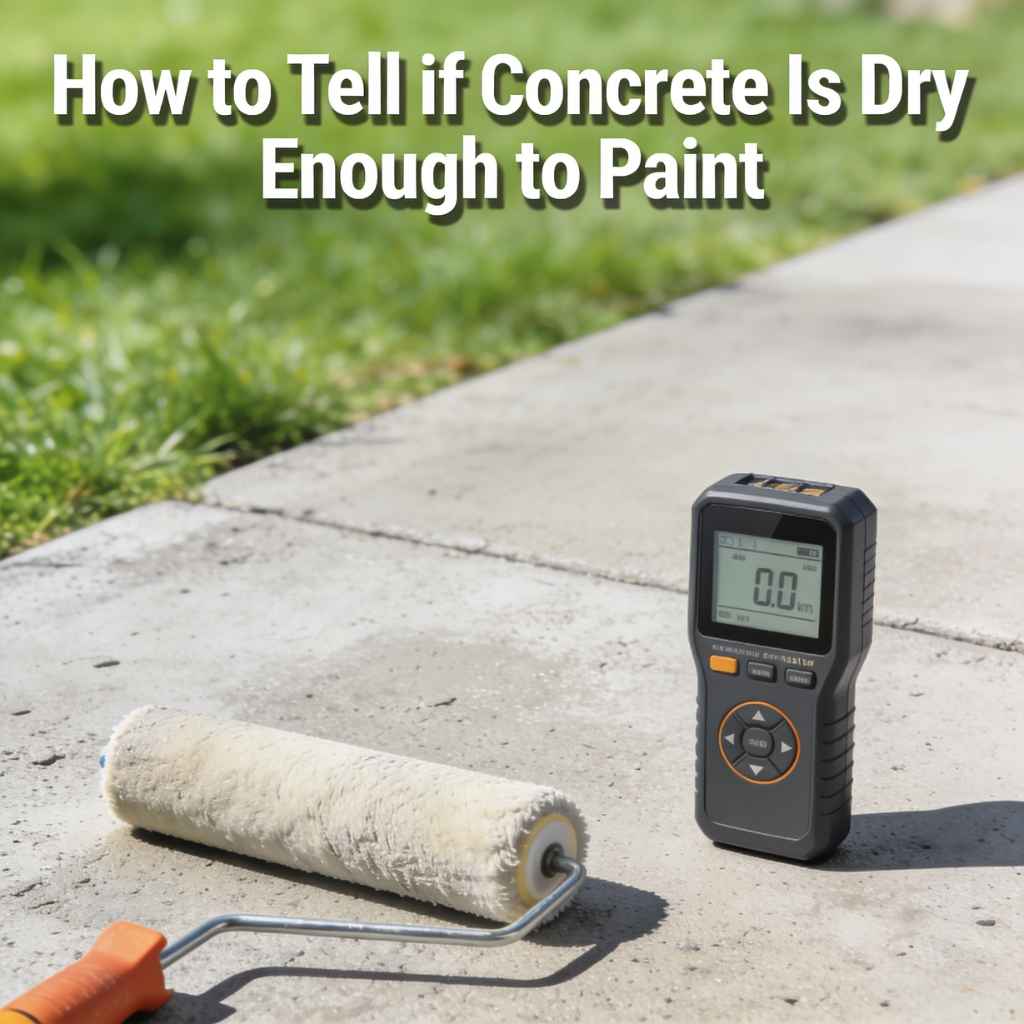
A concrete moisture meter is a tool specifically designed to measure the moisture content within concrete. There are two main types: penetrating meters and surface meters. Penetrating meters are more accurate as they measure moisture several inches into the slab, where most of the trapped moisture resides.
Surface meters measure only the very top layer.
To use a penetrating meter, you insert probes into the concrete surface or follow the manufacturer’s instructions for testing different depths. The meter then provides a digital reading. For surface meters, you simply place the device on the concrete, and it gives a reading.
Always consult the meter’s manual for how to interpret the readings and what levels are acceptable for painting.
For instance, a common recommendation for many paints is a Relative Humidity (RH) of 75% or less when using in-situ probes, or a surface moisture reading below 5%. Different coatings have different thresholds. For example, some high-solids epoxy coatings might require an RH of 70% or less.
Always check your paint’s technical data sheet for the most accurate specifications.
Calcium Chloride Test Kits
Calcium chloride test kits are a bit more involved but provide a precise measurement of the moisture vapor emission rate (MVER) from the concrete surface. These kits contain a dish with calcium chloride, a weighing dish, and a scale. You place the calcium chloride on the weighing dish inside the concrete enclosure (created by the dish and plastic dome), and seal it to the concrete.
After 60 to 72 hours, you remove the calcium chloride and weigh it again. The amount of moisture it has absorbed from the concrete is then calculated to determine the MVER. This reading is usually given in pounds per 1,000 square feet per 24 hours (lbs/1000 sq ft/24 hr).
Again, the acceptable level varies by paint type, but values below 3 lbs are often ideal for most coatings.
These tests are considered highly reliable for professionals. They directly measure the amount of water vapor escaping the concrete, which is exactly what you want to control before painting. The detailed instructions provided with these kits are important to follow precisely for accurate results.
They are a good option if you need a definitive answer.
In-Situ Relative Humidity (RH) Testing
This is considered the most accurate method for measuring moisture within concrete. It involves drilling holes into the concrete slab and inserting special probes that measure the relative humidity inside the concrete. These probes are left in place for a specified period, usually 24-72 hours, to allow them to acclimate and take readings.
The RH probes give you a direct reading of the moisture level within the concrete matrix itself, not just at the surface. This is crucial because moisture can be trapped deep within the slab. Most manufacturers of high-performance coatings, like epoxies and polyurethanes, require RH readings below 75%, and often below 70% or even 60%.
This method requires specialized equipment and careful execution. It’s typically performed by concrete testing professionals. However, understanding what this test measures can help you when discussing your project with a contractor or when interpreting professional reports.
It provides a comprehensive picture of the concrete’s internal moisture conditions.
Preparing Concrete for Painting
Once you’ve determined your concrete is dry enough, proper preparation is key. Even dry concrete needs to be clean and sound for paint to adhere well. Think of preparation as the foundation for a good paint job.
Skipping steps here can lead to problems later, even if the moisture level was perfect.
Cleaning the concrete removes dirt, dust, grease, and any other contaminants that could prevent the paint from sticking. A clean surface ensures that the paint can form a strong bond directly with the concrete. This is essential for durability and appearance.
Cleaning the Concrete Surface
Before you even think about painting, the concrete must be thoroughly cleaned. Start by sweeping away any loose debris, dirt, or leaves. For tougher dirt, grime, or old stains, you might need to use a concrete cleaner or degreaser.
Follow the product instructions carefully, and always rinse the surface thoroughly afterward.
Power washing is an excellent way to clean concrete. It can remove stubborn dirt and mildew. Ensure you use the correct pressure setting to avoid damaging the concrete surface.
After washing or power washing, allow the concrete to dry completely again. This might take a day or two depending on the weather, even after you’ve already passed your moisture tests.
Don’t forget to check for any oil or grease stains. These can be particularly difficult to remove. You might need a specialized concrete degreaser.
If stains are very deep, they might still affect paint adhesion. In some cases, you might need to use a concrete stain remover product or a concrete resurfacer if the stains are too severe.
Etching Concrete for Better Adhesion
For many types of concrete paints and coatings, etching the surface is highly recommended. Etching creates a slightly rough texture on the concrete, similar to medium-grit sandpaper. This texture gives the paint something to grip onto, improving its ability to bond securely.
The most common way to etch concrete is by using a diluted acid solution, often a phosphoric or muriatic acid-based concrete etcher. You can buy these at hardware stores. Follow the manufacturer’s instructions precisely, as acid can be dangerous.
Wear protective gear like gloves, eye protection, and long sleeves. Be sure to neutralize the acid afterward with a baking soda and water solution, and then rinse thoroughly.
Alternatively, for a less aggressive approach, you can use a concrete cleaner that also provides some etching. Mechanical grinding with a concrete grinder is another option, but this is more intensive and usually reserved for professionals or large projects. The goal is to open up the pores of the concrete, allowing the primer and paint to penetrate and create a strong mechanical bond.
Applying Primer and Sealers
Once the concrete is clean, etched, and completely dry, applying a primer is often the next step. A good primer seals the concrete and provides a uniform surface for the topcoat of paint. It helps the paint adhere better and can prevent issues like uneven color or sheen.
Choose a primer specifically designed for concrete surfaces.
Some paints are “self-priming,” meaning they don’t require a separate primer. However, for the best results and longevity, especially on challenging surfaces, using a primer is usually a good idea. Always read the paint manufacturer’s recommendations.
If you’re using a water-based concrete paint, use a water-based primer. If using an oil-based product, use an oil-based primer.
After the primer has dried according to the manufacturer’s instructions, you can apply your chosen concrete paint. Some projects might also benefit from a clear sealer applied over the paint to add extra protection and shine. Again, ensure each layer is completely dry before applying the next.
When to Wait Longer
Sometimes, despite your best efforts, the concrete just isn’t ready. It’s better to wait longer than to rush and ruin your paint job. Patience is a virtue in DIY projects, especially with concrete and paint.
If your tests consistently show moisture, especially after a week or more of dry weather, there might be an underlying issue. This could be related to drainage around your foundation or a higher-than-normal water table. In such cases, addressing the source of the moisture might be necessary before you can successfully paint.
Here are some signs that tell you to wait:
- The plastic sheet test shows significant condensation or water droplets. This is a clear sign that moisture is still escaping the concrete.
- The concrete still feels noticeably cool or damp to the touch, even on a warm, sunny day. This indicates that the surface hasn’t fully warmed and dried.
- You can still detect a strong, damp, or earthy smell from the concrete surface. This suggests moisture is actively evaporating.
- Your moisture meter readings are consistently above the acceptable threshold for your chosen paint or coating. This is the most definitive indicator.
If you’re experiencing any of these issues, it’s best to be patient. You can try to speed up the drying process by increasing air circulation. Open windows and doors in enclosed spaces, and use fans.
For outdoor areas, ensure they are exposed to sun and wind as much as possible. You might need to wait several more days or even weeks.
Consider the season as well. Concrete dries much more slowly in cool, humid weather. If it’s constantly raining or the humidity is very high, you may have to wait for a stretch of drier, warmer weather.
Sometimes, waiting a few extra weeks can make all the difference for a paint job that looks great and lasts for years.
Frequently Asked Questions
Question: How long does concrete typically take to dry before painting?
Answer: Concrete drying time varies greatly. It can take anywhere from a few days to several weeks or even months. Factors like weather, thickness, and air circulation play a big role.
It’s always best to test rather than guess.
Question: Can I paint over slightly damp concrete?
Answer: Generally, no. Painting over damp concrete can cause the paint to peel, bubble, or fail. Most paints require the concrete to be completely dry to ensure proper adhesion and a long-lasting finish.
Question: What happens if I paint concrete that is not dry enough?
Answer: If you paint concrete that is too damp, the moisture trapped within can cause the paint to delaminate (peel away), blister, or bubble. It can also lead to efflorescence, which is a white, powdery deposit that can appear on the surface.
Question: Are there special paints for damp concrete?
Answer: While some paints are formulated to be more tolerant of residual moisture, they still require the concrete to be reasonably dry, not wet. It’s rare to find paints that can be applied to truly wet concrete and provide a durable, lasting finish.
Question: Can I speed up the drying process for concrete?
Answer: Yes, you can help speed up drying by increasing air circulation with fans, opening windows, and ensuring good ventilation. For outdoor areas, direct sunlight and wind are also beneficial. Avoiding painting during humid or rainy weather is also key.
Wrap Up
Knowing How to Tell if Concrete Is Dry Enough to Paint is key to a successful project. Simple tests like the plastic sheet method and feeling the surface give good clues. For more certainty, moisture meters offer precise readings.
Always clean, etch, and prime the concrete for best adhesion. Patience is crucial; waiting for dry concrete ensures your paint job lasts.