How to Use a Multimeter Tester Safely
A multimeter measures voltage, resistance, and current, but using one safely around household circuits means selecting the right function before you touch a live wire and understanding what each setting actually does to the circuit. This guide covers the safety rules that matter most, plus the setup mistake that damages more meters than any other.
Why resistance and continuity require a dead circuit
The resistance and continuity functions work by sending a small current from the meter’s own internal battery through the circuit and measuring what comes back. If the circuit is still energized when you do this, you are mixing the meter’s test current with the house’s line voltage, which can damage the meter’s internal components and, depending on the meter, create a real shock or arc risk. Always confirm a circuit is de-energized, ideally by testing at the panel and again at the point of work, before switching to ohms or continuity mode.
The mistake that destroys multimeters
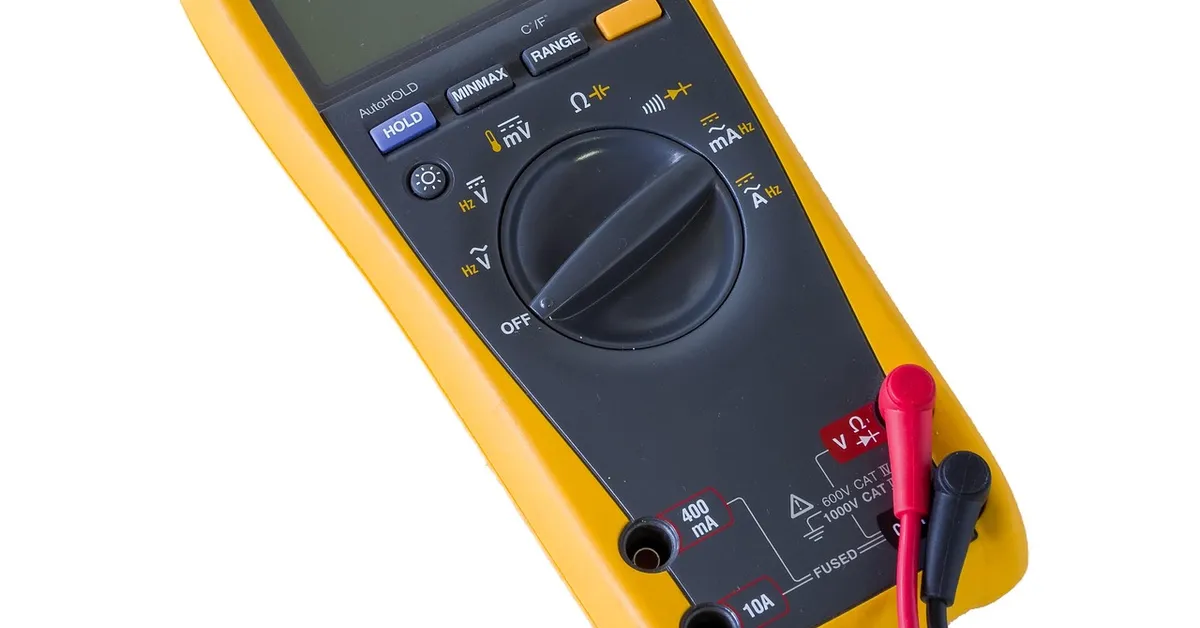
The single most common way a multimeter gets destroyed is leaving the red lead plugged into the 10A or 20A current jack after measuring amperage, then switching the dial to voltage and probing a live outlet. Because the current jack has almost no internal resistance, this effectively creates a dead short across the circuit through the meter itself, often blowing the meter’s internal fuse or, on cheap meters without one, the meter itself. Get in the habit of moving the red lead back to the standard voltage/ohms jack immediately after any current measurement.
Meter category ratings matter
Multimeters carry a CAT (category) rating that reflects how much transient voltage spike they are built to withstand. CAT II meters are meant for outlet-level work like testing a lamp or appliance cord. CAT III meters are rated for distribution panels and branch circuit wiring inside a house, which is where most homeowner electrical troubleshooting actually happens. CAT IV covers the utility connection and meter base, where transient spikes can be largest. Using a CAT II meter to test inside a breaker panel is a real safety gap, not just a technicality.
Basic measurement technique
Plug the black lead into the COM jack every time, regardless of what you are measuring. For voltage, plug the red lead into the V jack and touch the probes across (in parallel with) the two points you are measuring, such as the two slots of an outlet. For resistance or continuity, do the same on a de-energized circuit. Current measurement requires breaking the circuit and placing the meter in series, which is riskier and rarely necessary for basic homeowner diagnostics, so most non-professionals can skip it entirely. Before probing anything live, inspect the leads themselves for cracked insulation or exposed wire, and where possible keep one hand away from grounded metal to reduce the path a shock could take through your body.
Frequently Asked Questions
What does OL mean on a multimeter display?
OL stands for open loop or overload, meaning the value being measured exceeds the meter’s current range, or on continuity mode, that there is no continuous path (an open circuit). Try a higher range or check that the connection is actually intact.
Can I use a multimeter on a live wire?
Voltage measurement is designed to be done on live circuits, that is its purpose, but resistance and continuity are not and should only be used on de-energized circuits.
Is an auto-ranging multimeter safer than a manual-range one?
Auto-ranging meters reduce the chance of selecting too low a range for an unexpectedly high voltage, which lowers the risk of an overload situation, making them a reasonable choice for anyone not deeply familiar with expected circuit values.
Sponsored / affiliate links. As an Amazon Associate I earn from qualifying purchases. I may earn additional commission from eligible campaigns.