Is Denatured Alcohol Same as Paint Thinner
Many people wonder if denatured alcohol and paint thinner are the same thing. It’s an easy question to ask when you’re working on a project and need to clean something up or prepare a surface. Sometimes the names sound alike, and they both seem like they’re for cleaning.
This can be confusing for beginners. Don’t worry! We’ll break it down simply.
We will explain what each one is and help you figure out if they are interchangeable. Stick around to learn the clear differences.
Understanding Denatured Alcohol
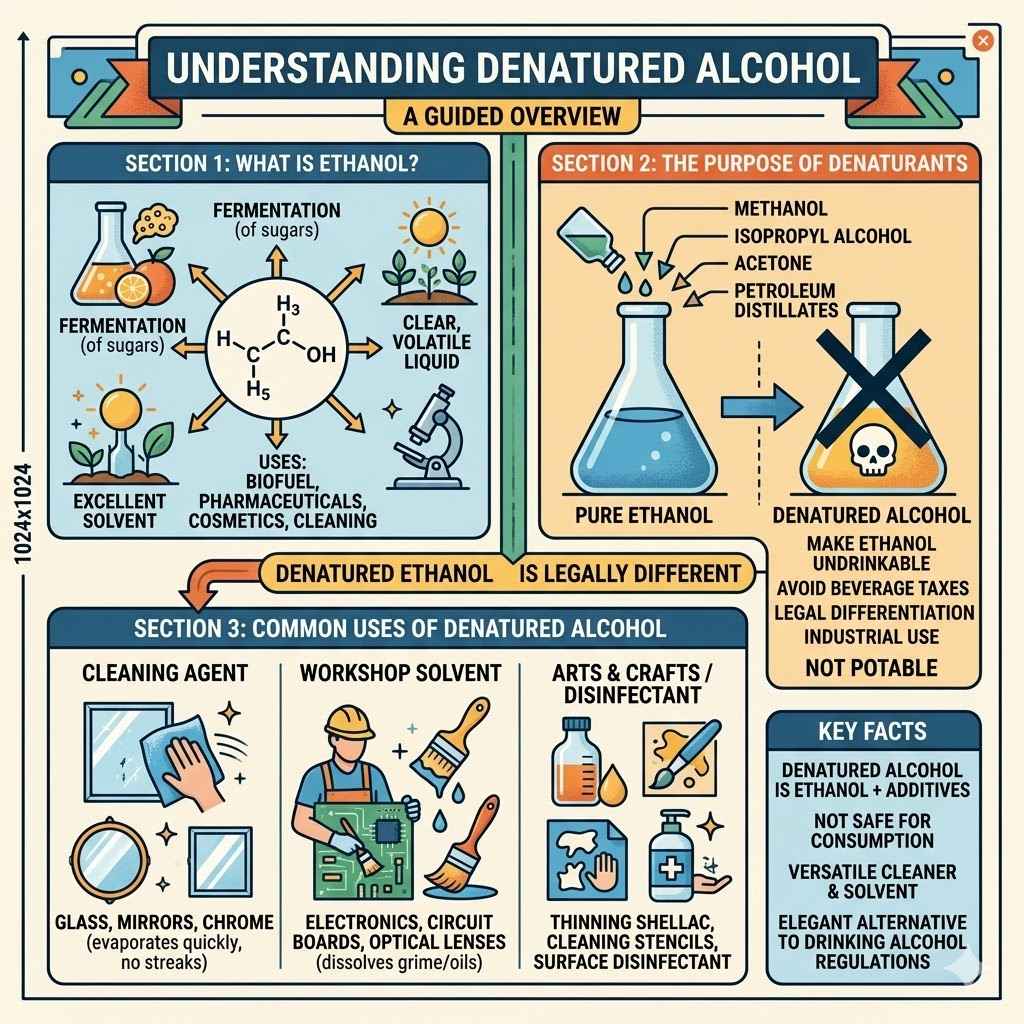
Denatured alcohol is a common solvent with many uses around the house and in workshops. It’s essentially ethanol, the same alcohol found in drinks, but with additives to make it unfit for consumption. These additives, or “denaturants,” are key to its identity and purpose.
They are added to avoid taxes on alcoholic beverages and to create a product meant for industrial and cleaning applications.
The process of denaturing ethanol changes its properties enough that it is legally considered different from potable alcohol. This makes it readily available for a wide range of tasks without the strict regulations tied to drinking alcohol. Its versatility makes it a staple for many DIYers and professionals alike, from cleaning electronics to preparing surfaces for painting.
What is Ethanol
Ethanol is a simple alcohol with the chemical formula C2H5OH. It is a clear, colorless, volatile liquid with a characteristic odor. Ethanol is produced through the fermentation of sugars by yeast.
This process is ancient and is the basis for alcoholic beverages like beer, wine, and spirits. In its pure form, it is an excellent solvent and can be used as a fuel source.
Ethanol’s ability to dissolve many substances makes it useful in various industries. It’s used in pharmaceuticals to extract medicinal compounds, in cosmetics as a solvent or preservative, and in laboratories for cleaning and as a reagent. The high purity of industrial or laboratory-grade ethanol is important for these applications.
Ethanol is also a key component in many household cleaning products. Its disinfecting properties are well-known, making it effective against bacteria and viruses. When it evaporates, it leaves little residue, which is beneficial for cleaning delicate surfaces where water might cause damage.
The Purpose of Denaturants
Denaturants are added to ethanol to make it undrinkable. This is done for tax reasons, as alcoholic beverages are heavily taxed, while industrial alcohol is not. Common denaturants include methanol, isopropyl alcohol, acetone, or petroleum distillates.
The specific mixture of denaturants can vary depending on the intended use of the denatured alcohol.
These additives change the taste and smell of the ethanol, making it unappealing and potentially harmful if ingested. This allows it to be sold at a much lower cost than beverage alcohol. The addition of denaturants does not significantly hinder ethanol’s solvent properties for most common applications.
The choice of denaturant is often regulated. For example, methanol is a common denaturant, but its toxicity means that denatured alcohol containing methanol should be handled with care. Denatured alcohol is also often referred to by different names depending on the denaturants used, such as methylated spirits.
Common Uses of Denatured Alcohol
Denatured alcohol is a versatile cleaner and solvent. It is frequently used to clean glass, mirrors, and chrome because it evaporates quickly and leaves no streaks. It is also a popular choice for cleaning electronic components, circuit boards, and optical lenses due to its ability to dissolve grime and oils without damaging sensitive materials.
In the workshop, it serves as a pre-paint surface preparation agent, removing grease and oils that could prevent paint from adhering properly. It is also used to clean paint brushes and other tools after using oil-based paints and varnishes. Some people use it as a disinfectant for surfaces or as a hand sanitizer.
Denatured alcohol is also used in arts and crafts for various purposes, such as thinning shellac or cleaning stencils. Its ability to dissolve certain resins and pigments makes it valuable in these creative pursuits.
Exploring Paint Thinner
Paint thinner is a term that covers a broad category of solvents designed specifically for thinning paints and cleaning painting equipment. Unlike denatured alcohol, which is primarily ethanol with denaturants, paint thinner is often a blend of different chemicals, or a single chemical solvent, chosen for its effectiveness with specific types of paint. The exact composition can vary greatly depending on the brand and the type of paint it is intended for.
Its primary role is to reduce the viscosity of paint, making it easier to apply by brush, roller, or spray. It also helps in cleaning paint spills and brushes after painting. Because it’s formulated for paint, its solvent power is often stronger and more specific than that of denatured alcohol for certain paint resins.
The diverse nature of paint thinners means one type might not be suitable for all paints. Using the wrong thinner can ruin a paint job or damage your tools. It’s important to know what type of paint you are using to select the correct thinner.
Types of Paint Thinners
Paint thinners are not a single product but a family of solvents. The most common types include mineral spirits, turpentine, acetone, and lacquer thinner. Each has different properties and is best suited for different types of paints and cleaning tasks.
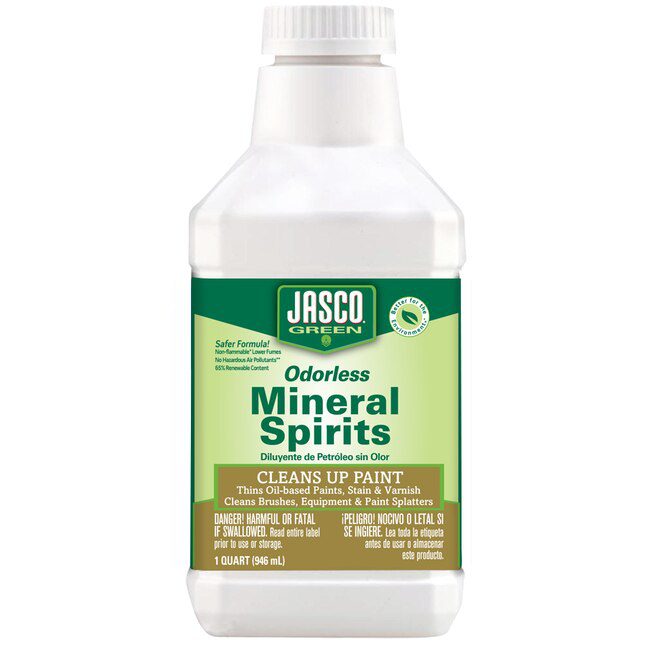
Mineral spirits, also known as white spirit or Stoddard solvent, are petroleum-based solvents. They are commonly used to thin oil-based paints, varnishes, and enamels. They are also effective for cleaning brushes and equipment used with these types of paints.
Mineral spirits evaporate slower than some other thinners, which can be an advantage for achieving a smooth finish.
Turpentine, derived from pine trees, is another traditional solvent for oil paints. It has a distinctive strong odor and is effective at thinning oil-based paints and cleaning brushes. However, it can sometimes be more expensive and harder to find than mineral spirits.
Solvent Power and Paint Compatibility
The effectiveness of a paint thinner depends on its solvent power. This refers to its ability to dissolve or break down other substances, in this case, paint resins and binders. Different paint types use different binders, such as oil, acrylic, latex, or lacquer.
For oil-based paints, mineral spirits or turpentine are typically used. These solvents are designed to work with the oil-based binders to achieve the desired consistency and drying time. For paints like lacquers or enamels, stronger solvents like acetone or lacquer thinner might be required because these paints contain more resilient resins that need a more potent solvent to break down.
Using the wrong thinner can have negative consequences. For instance, using a strong solvent like acetone on a latex paint might cause it to become sticky or gummy, making it impossible to apply correctly. Conversely, using a mild solvent like mineral spirits on a lacquer might not be strong enough to thin it properly.
Safety and Handling of Paint Thinners
Paint thinners are generally more hazardous than denatured alcohol and require careful handling. They are often flammable, with low flash points, meaning they can easily ignite. Proper ventilation is crucial when using paint thinners to avoid inhaling fumes, which can be harmful and cause dizziness or respiratory irritation.
Always use paint thinners in a well-ventilated area, preferably outdoors or with windows and doors open. Wearing protective gear, such as chemical-resistant gloves and eye protection, is also highly recommended. Avoid contact with skin and eyes.
Storage is another important safety consideration. Paint thinners should be stored in tightly sealed containers away from heat, sparks, and open flames. They should also be kept out of reach of children and pets.
Disposal of paint thinner should follow local regulations, as many are considered hazardous waste.
Is Denatured Alcohol the Same as Paint Thinner
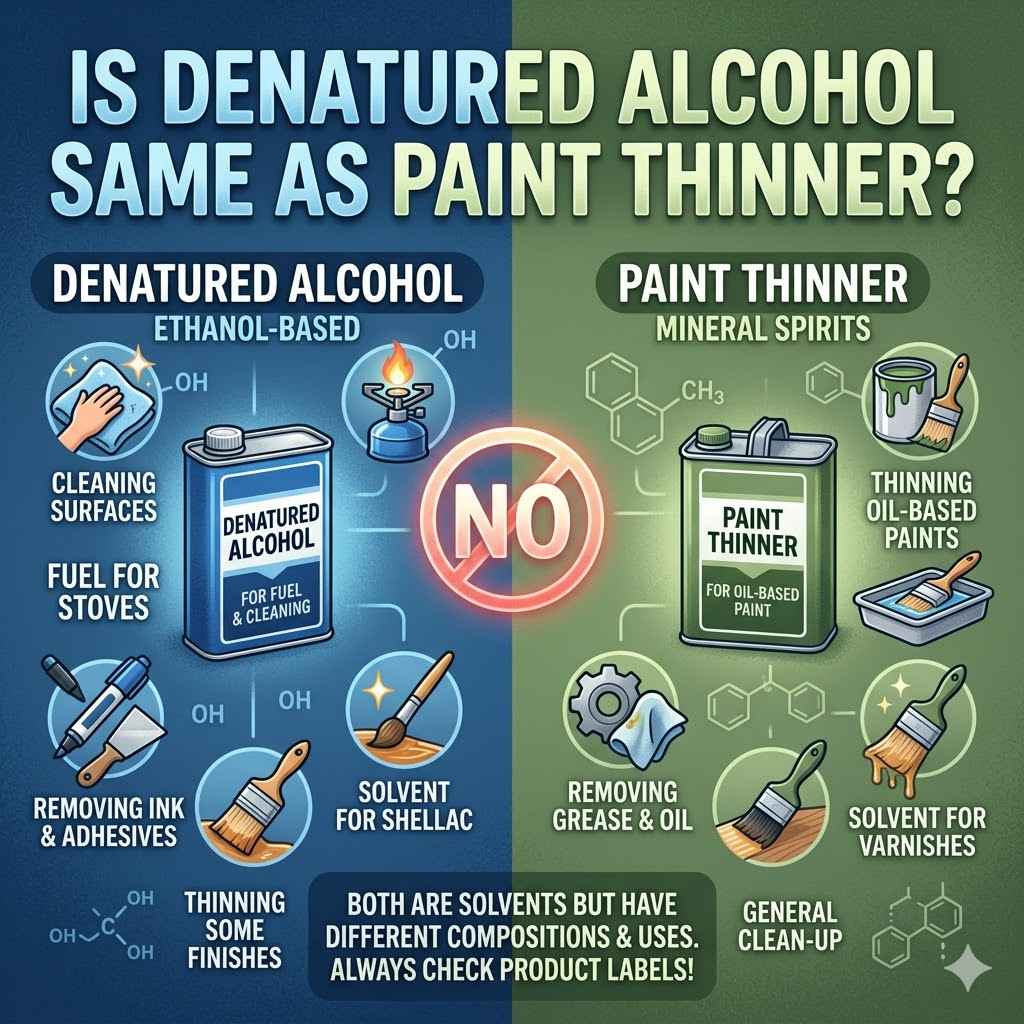
So, to answer the question directly: No, denatured alcohol is generally not the same as paint thinner, although there can be some overlap in their uses, especially for light cleaning. Paint thinner is a broader category of solvents with specific formulations designed to work with different types of paint. Denatured alcohol is primarily ethanol with additives that make it undrinkable.
Think of it this way: all paint thinners are solvents, and denatured alcohol is also a solvent. However, not all solvents are paint thinners, and denatured alcohol is not typically categorized as a primary paint thinner. The key differences lie in their chemical composition, intended purpose, and strength of solvent power.
While denatured alcohol can be used to clean certain light paint residues or prepare surfaces for painting, it is often not as effective as a dedicated paint thinner for thinning paint itself or for cleaning up tough paint jobs. The specific type of paint you are working with will dictate which solvent is most appropriate.
Chemical Composition Differences
The fundamental difference lies in their chemical makeup. Denatured alcohol is ethanol (C2H5OH) that has been modified with denaturants like methanol or isopropyl alcohol. The purpose of these denaturants is to make it unfit for drinking, not necessarily to enhance its ability to dissolve paint.
Paint thinners, on the other hand, are formulated with specific solvents that are effective at breaking down the resins and binders found in various types of paints. For example, mineral spirits are a blend of aliphatic hydrocarbons. Acetone is a ketone.
Lacquer thinner is a blend of solvents like ketones, esters, and aromatic hydrocarbons.
These different chemical structures give each solvent unique properties. Some are good at dissolving oils, others at breaking down plastics, and some at cleaning sticky residues. Denatured alcohol’s primary strength is its ability to dissolve polar substances and act as a disinfectant, rather than being a powerful solvent for complex paint formulations.
Application and Effectiveness
When it comes to applying paint, thinning is crucial for achieving the desired flow and coverage. Denatured alcohol is generally not an effective thinner for most common types of paint like oil-based or latex paints. It might slightly alter the consistency of some very specific types of coatings, but it’s not its intended purpose.
Paint thinners are specifically designed for this. Mineral spirits or turpentine will thin oil-based paints, allowing them to spread more easily. Lacquer thinner is necessary for thinning lacquers and some automotive finishes because it can dissolve their tougher resins.
Using denatured alcohol for this would likely not work and could even create an undesirable finish.
For cleaning, there’s more overlap. Denatured alcohol is excellent for cleaning glass, removing sticky labels, and disinfecting surfaces. It can clean up some light paint splatters, especially water-based ones.
However, for cleaning brushes or equipment used with oil-based paints or tough finishes, a dedicated paint thinner like mineral spirits or a stronger solvent is usually needed for thorough cleaning.
When to Use Which Solvent
Deciding between denatured alcohol and paint thinner depends entirely on your task. If you need to clean glass, electronic components, or disinfect a surface, denatured alcohol is often a great choice. It evaporates cleanly and is relatively safe to use with proper precautions.
If you are working with paints, varnishes, or lacquers, you will need a paint thinner. For oil-based paints, mineral spirits are a common and effective choice. For lacquers or specialized coatings, you’ll need to consult the paint manufacturer’s recommendations, which might call for lacquer thinner or acetone.
It’s always best to check the label of your paint product. It will usually specify the recommended solvent for thinning and cleaning. This ensures you use the right product for the job, leading to better results and avoiding damage to your project or tools.
Practical Examples and Scenarios
To really understand the difference, let’s look at some common situations where you might reach for one or the other. These examples highlight why using the correct solvent matters.
Scenario 1 Cleaning Up After an Oil-Based Paint Job
Imagine you’ve just finished painting a piece of furniture with an oil-based enamel paint. You have brushes and rollers that are covered in wet paint. You need to clean them so you can use them again or dispose of them properly.
In this case, denatured alcohol would likely not be sufficient. While it can dissolve some lighter substances, oil-based paint is designed to be durable and requires a stronger solvent. You would reach for a paint thinner like mineral spirits.
Mineral spirits are formulated to break down the oil resins in the paint, allowing you to effectively wash the paint out of the brush bristles and rollers.
If you tried to clean them with denatured alcohol, you would probably find that the paint remains sticky and clings to the brushes. This would ruin the brushes and make them unusable for future projects. The paint thinner, however, would cut through the oil, leaving your tools clean and ready for storage or reuse.
Scenario 2 Cleaning a Smudged Window
Now, consider a different task: cleaning a window that has some smudges and streaks on it. You want a crystal-clear finish without leaving any residue.
Here, denatured alcohol is an excellent choice. Its ability to quickly evaporate and dissolve light oils and grime makes it perfect for glass. You can spray some denatured alcohol onto a microfiber cloth and wipe down the window.
It will cut through fingerprints and smudges, drying rapidly to a streak-free shine.
Using a strong paint thinner like mineral spirits on a window might leave an oily residue or even damage some window sealants. While some window cleaners contain solvents, they are usually milder formulations. Denatured alcohol provides the right balance of cleaning power and fast, clean evaporation for this particular job.
Scenario 3 Preparing a Surface for Painting
You’re about to paint a metal cabinet. Before you apply primer, you need to make sure the surface is perfectly clean. It might have grease, oil, or old wax from manufacturing or handling.
Denatured alcohol is a very common and effective choice for this surface preparation. It will readily dissolve and lift away oils and greases without leaving behind any residue that could interfere with paint adhesion. A quick wipe-down with denatured alcohol on a clean cloth is often all that’s needed to ensure a smooth, clean surface for priming and painting.
While some paint thinners could also clean the surface, denatured alcohol is often preferred because it dries very quickly and doesn’t leave the slight oily film that some mineral spirits might. This quick drying time means you can move on to priming much sooner.
Comparing Denatured Alcohol and Paint Thinner in a Table
To make the differences even clearer, let’s look at a comparison of their key characteristics.
| Feature | Denatured Alcohol | Paint Thinner (General) |
|---|---|---|
| Primary Ingredient | Ethanol with denaturants (e.g., methanol) | Varies widely; e.g., mineral spirits, acetone, turpentine, lacquer thinner blends |
| Main Purpose | Cleaning, disinfecting, solvent for certain applications | Thinning paints, cleaning paint brushes and equipment |
| Solvent Strength for Paint | Limited; not effective for thinning most paints | Formulated to be effective for specific paint types |
| Common Uses | Glass cleaning, electronics cleaning, surface prep, disinfectant | Oil-based paint thinning, lacquer thinning, cleanup of oil-based and lacquer paints |
| Evaporation Rate | Fast | Varies by type, generally slower than denatured alcohol |
| Flammability | Flammable | Highly flammable |
| Odor | Alcoholic, sometimes sharp | Varies widely; often strong and chemical |
As the table shows, while both are solvents, their intended jobs are quite different. Denatured alcohol is a general-purpose cleaner and a mild solvent. Paint thinner is a specialized tool designed to interact with paint.
Statistics on Solvent Usage
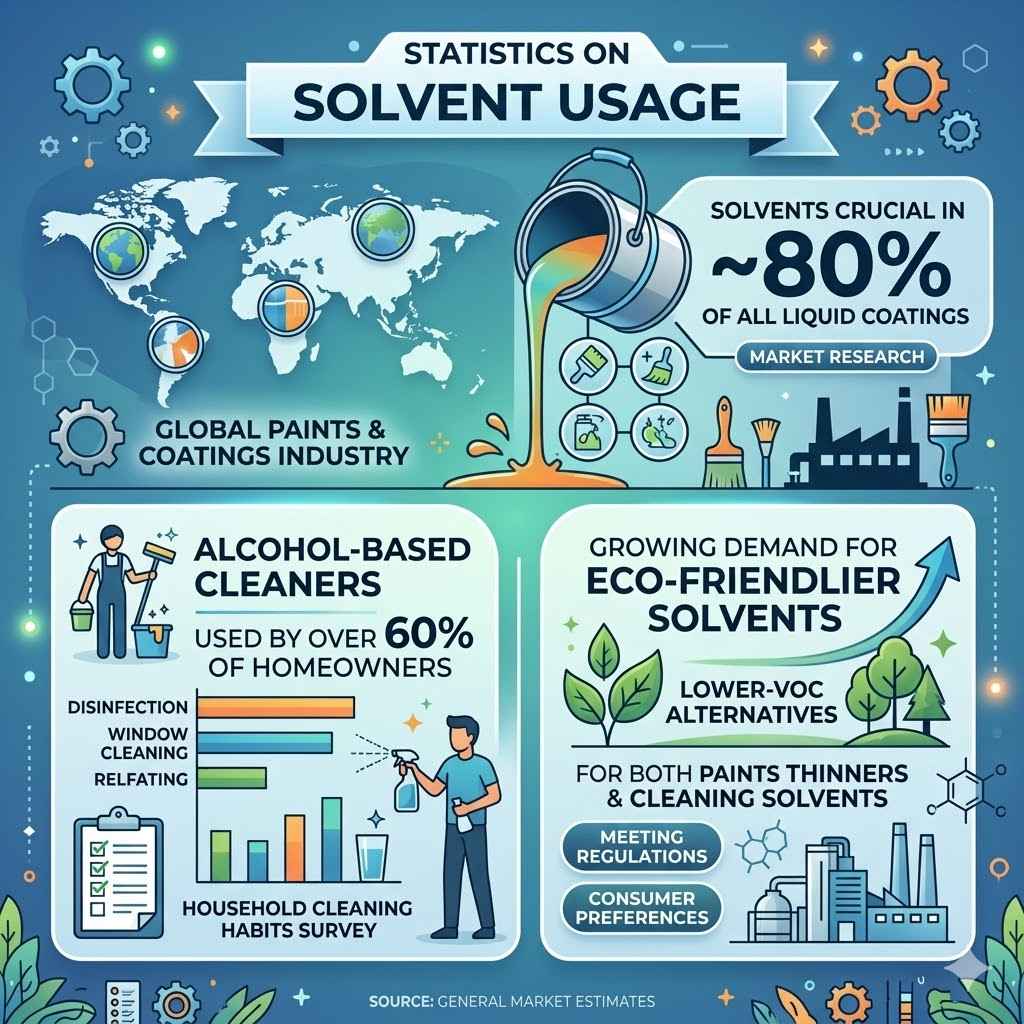
Understanding how solvents are used can provide context. While specific statistics for the direct comparison of denatured alcohol versus paint thinner in home use are hard to isolate, general trends in solvent usage offer insights.
According to market research, the global paints and coatings industry is a significant consumer of solvents. Solvents are crucial components in about 80% of all liquid coatings produced worldwide, playing a role in both application and cleaning. This highlights the widespread need for products like paint thinners.
In contrast, denatured alcohol finds its place in a broader consumer market, including cleaning products, pharmaceuticals, and personal care items. A survey on household cleaning habits found that over 60% of homeowners regularly use alcohol-based cleaners for tasks ranging from disinfection to window cleaning, indicating its significant role as a household solvent.
The demand for eco-friendlier solvents is also growing, influencing both categories. Manufacturers are developing lower-VOC (Volatile Organic Compound) alternatives in both paint thinners and cleaning solvents to meet environmental regulations and consumer preferences. This means even within the categories of “paint thinner” and “denatured alcohol,” formulations can vary.
Frequently Asked Questions
Question: Can I use denatured alcohol to thin latex paint?
Answer: No, denatured alcohol is not suitable for thinning latex paint. Latex paints are water-based, and while denatured alcohol is a solvent, it does not effectively thin them. You should use water to thin latex paint.
Using denatured alcohol could make the paint gummy or cause other application issues.
Question: Is paint thinner safe to use as a disinfectant?
Answer: While some components in paint thinners may have disinfectant properties, they are generally not recommended or safe for use as disinfectants on surfaces that come into contact with people or food. Paint thinners are often harsh chemicals and can be toxic if inhaled or absorbed through the skin. Denatured alcohol is a much safer and more effective disinfectant for household use.
Question: Can I clean oil-based paint brushes with denatured alcohol?
Answer: Denatured alcohol is not the best choice for cleaning oil-based paint brushes. It may remove some of the paint, but it won’t be as effective as a dedicated paint thinner like mineral spirits. Mineral spirits are designed to dissolve the oil-based binders in the paint, allowing for a thorough cleaning of the brushes.
Question: Are all paint thinners the same?
Answer: No, not all paint thinners are the same. There are different types of paint thinners, such as mineral spirits, turpentine, acetone, and lacquer thinner. Each type is formulated to work with specific kinds of paint.
For example, mineral spirits are for oil-based paints, while lacquer thinner is for lacquers.
Question: Can denatured alcohol be used to clean greasy surfaces?
Answer: Yes, denatured alcohol is effective at cleaning greasy surfaces. It is a good solvent for many types of oils and greases. It evaporates quickly and leaves surfaces clean without residue, making it a good choice for preparing surfaces before painting or for general degreasing tasks.
Summary
In summary, denatured alcohol and paint thinner are distinct products. Denatured alcohol is mainly ethanol made undrinkable, great for general cleaning and disinfecting. Paint thinners are specialized solvents like mineral spirits or lacquer thinner, designed to work with specific paints.
Always check your paint’s label for the right solvent.