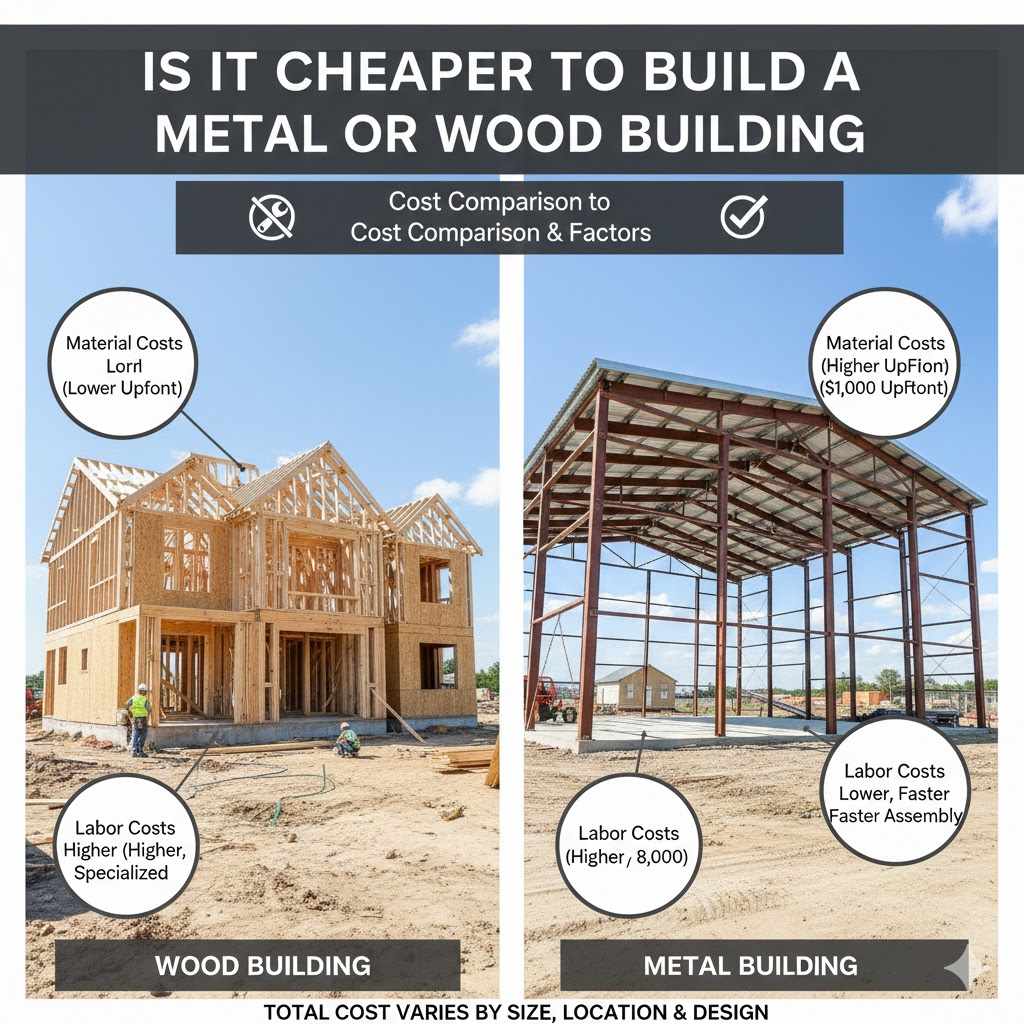
Is It Cheaper To Build A Metal Or Wood Building?
Many folks wonder, Is It Cheaper to Build a Metal or Wood Building? It can seem tricky to figure out when you’re just starting. You see different prices and materials, and it’s easy to get confused. This guide will make it simple.
We will walk through everything step-by-step so you can clearly see the costs involved. Get ready to find the answer you need to move forward with your project.
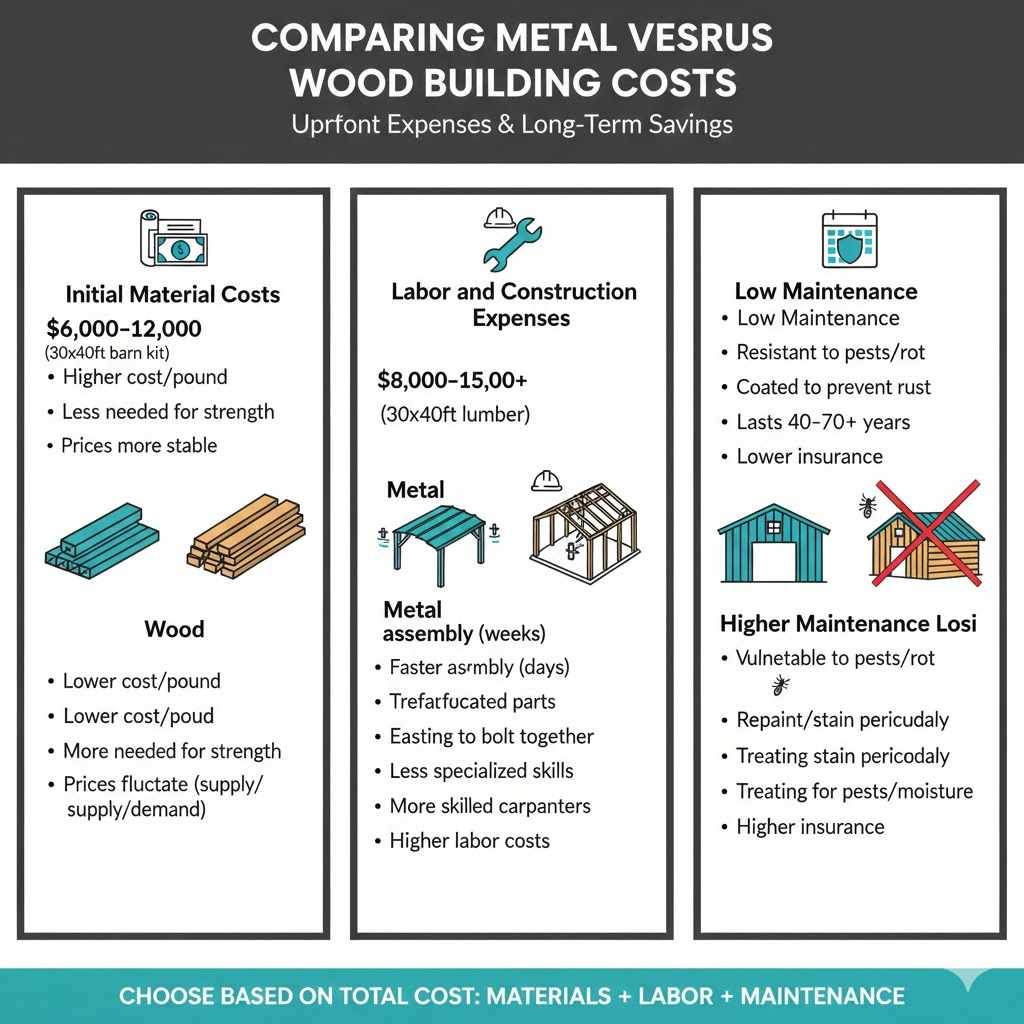
Comparing Metal Versus Wood Building Costs
Deciding between a metal or wood building involves looking at more than just the initial price tag. The total cost includes many things that add up over time. These include materials, labor, maintenance, and even how long the building lasts.
Understanding each of these parts helps you see the whole picture better. This section will break down the upfront expenses and long-term savings for both metal and wood structures.
Initial Material Costs
When you first buy materials, metal and wood can have different price points. Steel often costs more per pound than lumber. However, you might need less steel to achieve the same strength as wood.
This can sometimes balance out the cost. Also, wood prices can change a lot based on availability and where you live.
For example, a standard 30×40 foot metal barn kit might cost around $6,000 to $12,000 for the materials. This includes the steel panels, framing, and fasteners. A similar-sized wood barn, if you were to build it from scratch with new lumber, could range from $8,000 to $15,000 or more.
These are just estimates, and actual costs depend on many factors. These factors include the specific gauge of steel, the type of wood (like pine, oak, or treated lumber), and whether you buy pre-cut kits or raw materials.
Key points about initial material costs:
- Steel prices are generally more stable than wood prices. Wood costs can fluctuate due to supply and demand, as well as seasonal availability.
- The cost of steel is often measured per ton or per linear foot of sheeting, while lumber is usually priced per board foot. This difference in measurement can make direct comparisons confusing.
- Treated lumber, which resists rot and insects, costs more than untreated wood. However, it’s often necessary for outdoor structures to ensure longevity.
- Metal building kits can sometimes be more cost-effective because they are mass-produced and designed for efficient assembly, reducing waste.
Labor and Construction Expenses
Putting up a building takes time and skilled workers, which means labor costs. Metal buildings are often designed for faster assembly. This can mean fewer labor hours are needed.
Many metal buildings use pre-fabricated parts that bolt together easily. This can reduce the need for highly specialized carpentry skills.
Wood buildings, on the other hand, often require more traditional construction methods. This can involve cutting, framing, and joining wood pieces. This process might take longer and potentially require more experienced carpenters.
The complexity of the design also plays a big role. A simple post-and-beam wood structure will be less labor-intensive than a more complex stick-built house.
A common scenario is building a simple workshop. A metal building might be erected by a small crew in a few days. A similar wood structure could take a week or more for a carpentry crew.
This difference in construction time directly impacts the total labor cost. If you plan to do some of the work yourself, the labor savings can be significant for either material.
Consider these aspects of labor:
- Metal buildings often come with detailed assembly manuals. This can simplify the process and may allow for DIY construction, significantly cutting labor costs if you have the time and ability.
- Wood construction may require more specialized tools and techniques. This could increase the cost if you need to hire experienced professionals for every step.
- The foundation requirements can also affect labor. Some metal buildings might need simpler foundations than certain wood structures that require more extensive footings or support systems.
- Permit and inspection costs might also differ slightly depending on local building codes for metal versus wood structures.
Maintenance and Longevity
Over many years, how much you spend on upkeep makes a big difference. Metal buildings are known for being low maintenance. They are resistant to pests like termites and don’t rot.
The steel can be coated to prevent rust. Regular cleaning and checking for minor dents are usually all that’s needed.
Wood buildings, while beautiful, require more attention. They can be vulnerable to insects, rot, and weather damage. You might need to repaint or stain the wood periodically.
Treating for pests and sealing against moisture are also common maintenance tasks. Over decades, these ongoing costs can add up significantly.
A typical metal roof might last 40-70 years with minimal intervention. A wood roof or siding might need significant repairs or
Think about these maintenance points:
- Wood structures may require treatments for mold and mildew, especially in humid climates. These treatments add to ongoing expenses.
- Metal buildings are generally more resistant to fire hazards compared to wood, which can also translate to lower insurance premiums in some areas.
- The ability of metal to withstand extreme weather like high winds and heavy snow can mean fewer costly repairs after storms compared to wood structures.
- Paint or coating on metal buildings can fade over time and may need reapplication, but this is typically less frequent than wood staining or painting.
Factors Influencing the Cost Comparison
The decision of whether metal or wood is cheaper isn’t a simple yes or no. Many specific things about your project will sway the answer. Location, size, intended use, and local building codes all play important roles.
Let’s explore these key elements that shape the final price.
Size and Design Complexity
A building’s size is a direct driver of cost. Bigger buildings naturally use more materials and require more labor. However, the design itself matters a lot.
A simple rectangular metal shed is very different from an ornate, custom-designed wooden cabin.
For straightforward, open-span structures like garages or storage sheds, metal often proves more cost-effective. The modular nature of steel framing allows for efficient use of materials and faster construction. This is especially true for larger spans where wood framing can become more complex and expensive due to the need for strong support beams.
If you need a building with many rooms, complex angles, or specific architectural features, wood construction might offer more flexibility. Custom woodworking allows for intricate designs that are harder and costlier to achieve with standardized metal components. However, for basic shapes, metal usually wins on cost.
Consider these design aspects:
- Simple, single-story rectangular designs are generally cheaper to build in either material. Adding multiple stories or complex shapes increases costs significantly.
- Open interior spaces, common in metal buildings, reduce the need for internal support walls, thus lowering material and labor costs for that specific feature.
- Custom architectural elements like unique rooflines, dormers, or intricate window placements are often easier and more cost-effective to implement with wood.
- The ability to easily modify or expand a building later can be a factor. Wood structures are generally more adaptable for future renovations or additions compared to pre-engineered metal buildings.
Local Building Codes and Permits
Building regulations vary greatly from place to place. What’s allowed and required in one town might be different in another. These codes can impact the cost of your project by specifying the types of materials you must use or the standards your building must meet.
Some areas have specific requirements for structural integrity, fire resistance, or insulation. For instance, a location prone to hurricanes might mandate stronger framing than an area with mild weather. This could favor the inherent strength of steel or require more robust wood construction techniques.
Getting permits also costs money. The fees can depend on the size and complexity of the structure. Sometimes, metal buildings might face stricter zoning laws or require more detailed engineering approvals than traditional wood-framed buildings.
Always check with your local building department before you start planning.
Here are key code considerations:
- Some local codes may have specific energy efficiency requirements that might add insulation costs to either material type. Metal buildings may require more robust insulation systems to match wood’s natural thermal properties.
- Zoning ordinances can dictate the aesthetics of buildings in certain neighborhoods, potentially influencing material choices. Some residential areas might favor the look of wood over metal.
- Building permits are often priced based on the estimated construction value. The perceived value of a metal building versus a wood one might influence these fees.
- Disaster preparedness codes, such as those for seismic activity or high winds, can significantly impact structural requirements and therefore costs for both materials.
Intended Use of the Building
What you plan to do in your building matters a lot for its cost. A simple storage shed has different needs than a workshop, a home office, or a residential dwelling.
For agricultural use, like barns or equipment storage, metal buildings are very popular. They offer wide, open spaces and are resistant to harsh weather. Their lower maintenance is also a plus for busy farm operations.
The cost per square foot for a basic agricultural metal building is often very competitive.
If you’re building a place to live or a space that needs a lot of insulation and interior finishing, like a home or a sophisticated workshop, wood construction often provides better options. Wood is easier to insulate effectively and finish with drywall or paneling. This can lead to a more comfortable and aesthetically pleasing space, but at a potentially higher initial cost.
Think about the building’s purpose:
- Residential homes are almost universally built with wood framing due to its versatility for interior finishing, insulation, and plumbing/electrical work. Metal framing for homes is possible but less common and often more expensive.
- Garages and workshops often benefit from the durability and open space of metal buildings, making them a cost-effective choice for functional storage.
- Commercial buildings can go either way, with metal often chosen for speed of construction and cost, while wood might be selected for specific aesthetic or regulatory reasons.
- Agricultural structures frequently favor metal due to its resilience against weather and pests, as well as the ability to create large, unobstructed interior spaces.
Cost Breakdown: Metal Buildings
Metal buildings, often referred to as pre-engineered metal buildings (PEMBs) or steel buildings, are a popular choice for many reasons. Their appeal often lies in their durability, speed of construction, and relatively straightforward cost structure. However, like any construction project, there are various components that contribute to the final price.
Components of a Metal Building’s Cost
When you buy a metal building, the price typically includes several key elements. These are the primary steel framing components, the roof and wall panels, and often the fasteners and connection hardware. Some kits also include basic doors and windows, though more custom options will cost extra.
The main frame usually consists of rigid steel frames, which are pre-fabricated and designed to bolt together. The exterior is covered with corrugated steel panels, which serve as both the outer skin and structural sheathing. The insulation you choose, if any, is also a significant cost factor.
Basic buildings might have minimal or no insulation, while others designed for climate control will require substantial amounts.
Foundation costs are usually separate and depend on your site conditions. Installation labor is another major part of the overall expense, although it’s often less than for wood structures of similar size due to faster assembly times.
Here’s a look at typical cost components:
- Steel frame components: This includes the primary beams, columns, and secondary framing elements like purlins and girts. The strength and gauge of the steel directly influence this cost.
- Roof and wall panels: These are typically galvanized steel sheets with various profiles and coatings. The thickness, coating type (e.g., Kynar 500), and color affect the price.
- Insulation systems: Options range from basic fiberglass batts to more advanced multi-layer insulated panels, each with a different price point and R-value.
- Fasteners and hardware: Bolts, screws, sealants, and flashing kits are essential for assembly and weatherproofing, and their cost is usually bundled into the kit price.
Pros and Cons for Cost Savings
The main cost-saving advantage of metal buildings is their speed of assembly. Because components are pre-fabricated to exact specifications, they can often be erected much faster than wood structures. This reduces labor hours and associated expenses.
Furthermore, metal buildings are highly resistant to termites, rot, and fire, which can lead to lower insurance premiums and reduced long-term maintenance costs compared to wood.
However, there are potential cost downsides. The initial material cost for steel can be higher than for basic lumber. Customization can also become expensive quickly.
Adding extra doors, windows, specific paint finishes, or complex roof designs can significantly drive up the price. If the building requires extensive insulation for climate control, the cost can also increase substantially, as metal is a poor insulator on its own.
A case study from a farmer needing a new tractor storage shed found that a 40×60 foot metal barn kit cost around $10,000. Professional installation added another $5,000. A comparable wood structure, built from scratch, would have cost an estimated $15,000 in materials plus $8,000 in labor, for a total of $23,000.
The metal option saved over $8,000 in this scenario.
Key cost advantages and disadvantages:
- Advantage: Faster erection time leads to lower labor costs and quicker project completion, allowing for earlier use of the building.
- Advantage: High durability and resistance to pests and weather reduce long-term maintenance and repair expenses, offering better value over the building’s lifespan.
- Disadvantage: Initial material cost can be higher than basic lumber, especially for larger or more complex designs that require heavier gauge steel.
- Disadvantage: Customization beyond standard options can be costly. Features like specialized windows, doors, or unique rooflines add expense.
- Disadvantage: Metal itself is a poor insulator, requiring additional costs for effective insulation if climate control is needed, which can significantly increase the overall price.
Cost Breakdown: Wood Buildings
Wood buildings have been a staple of construction for centuries. Their familiarity and versatility make them a popular choice for a wide range of applications. While often perceived as more traditional, wood construction offers its own set of cost considerations, both upfront and over time.
Components of a Wood Building’s Cost
The cost of a wood building is made up of several parts. The primary material is lumber, which includes framing studs, beams, joists, and rafters. Plywood or oriented strand board (OSB) is used for sheathing the walls and roof.
Additionally, you’ll need materials for the foundation, roofing shingles or other covering, siding, windows, doors, and all the necessary fasteners and adhesives.
The type and grade of lumber used significantly affect the price. Using structural beams versus standard studs, or choosing hardwoods over softwoods, will change the material cost. The complexity of the architectural design, such as steep roof pitches or custom window placements, also adds to the material requirements and labor.
Insulation is typically easier and more integrated into wood-frame construction, often placed between studs and joists. Finishing materials like drywall, paint, flooring, and trim are also significant costs, especially if you’re aiming for a high-end finish.
Here’s a breakdown of common costs:
- Lumber: This is the main material, including framing, studs, beams, and trusses. Prices vary greatly by wood species, grade, and market conditions.
- Sheathing: Plywood or OSB panels are used to cover the frame, providing structural stability and a surface for siding and roofing.
- Roofing: Shingles (asphalt, wood, or metal), membranes, or other roofing materials are needed to protect the structure from the elements.
- Siding: Exterior finishes like wood clapboard, vinyl, stucco, or fiber cement boards add to the cost and aesthetic.
- Foundation: Concrete footings, slab, or basement walls are essential structural elements.
Pros and Cons for Cost Savings
One of the major cost advantages of wood construction is its flexibility and availability. Lumber is a widely available material, and its price can sometimes be more stable or even lower than steel, depending on the market. Wood is also easier to work with for custom designs and modifications.
If you plan to do a lot of the labor yourself, wood construction is often more approachable for DIYers due to familiar techniques and readily available tools.
However, wood buildings can be more susceptible to damage from pests like termites and carpenter ants, as well as rot from moisture. These issues can lead to significant repair costs over time. Wood is also more flammable than steel, which can sometimes result in higher insurance premiums.
Furthermore, the construction process for wood buildings can be more time-consuming, leading to higher labor costs if you hire professionals for the entire job.
For example, a homeowner wanted to build a 16×20 foot backyard office. A basic wood-framed structure, with the homeowner doing much of the labor, cost approximately $10,000 in materials. Hiring a contractor for a similar-sized metal office building with comparable insulation and finishes would have cost around $15,000.
However, the wood building required regular pest inspections and sealing of the exterior, adding about $200 annually, which over 20 years would be $4,000.
Key cost advantages and disadvantages:
- Advantage: Lumber can sometimes be less expensive than steel upfront, especially for smaller or less complex structures.
- Advantage: Wood is very adaptable for custom designs, renovations, and DIY projects, potentially reducing specialized labor or design fees.
- Advantage: Natural insulation properties of wood can contribute to energy efficiency, potentially reducing heating and cooling costs over time, though often supplemented.
- Disadvantage: Susceptibility to termites, rot, and moisture damage can lead to higher long-term maintenance and repair expenses.
- Disadvantage: Construction can be more labor-intensive and time-consuming, increasing professional labor costs if not doing it yourself.
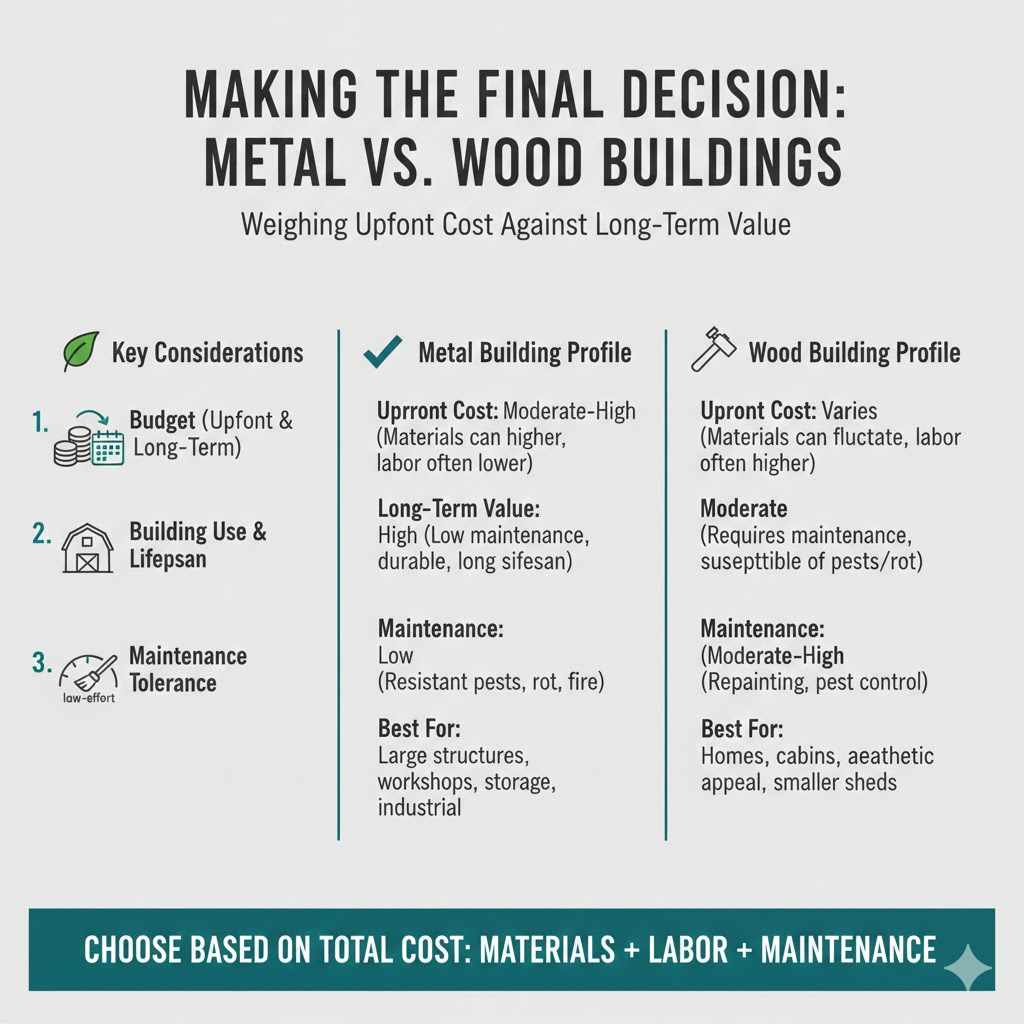
Making the Final Decision
Deciding whether metal or wood is cheaper for your building project comes down to weighing all the factors. It’s not just about the price you pay today, but also the expenses you’ll face in the future. Think about how long you need the building to last, how you will use it, and what kind of maintenance you’re willing to do.
Consider your budget carefully, but also look at the long-term picture. A slightly higher upfront cost for a more durable material might save you a lot of money on repairs and upkeep down the road. Likewise, if you need a structure quickly and are looking for the lowest possible initial investment for a basic purpose, metal might be the way to go.
Ultimately, the “cheaper” option depends on your unique situation. By understanding the material costs, labor, maintenance, and longevity of both metal and wood, you can make an informed choice that best fits your needs and your wallet.
Frequently Asked Questions
Question: Which building material is generally faster to erect metal or wood
Answer: Metal buildings are generally faster to erect because their components are pre-fabricated and designed to bolt together quickly, reducing on-site labor time.
Question: Which building material is more resistant to pests like termites
Answer: Metal buildings are highly resistant to pests like termites and insects because they are made of steel, whereas wood can be susceptible to infestation.
Question: Which material typically requires more ongoing maintenance metal or wood
Answer: Wood buildings typically require more ongoing maintenance, such as painting, sealing, and pest treatments, compared to metal buildings which are generally low-maintenance.
Question: Is the initial material cost for metal buildings always higher than wood
Answer: Not always. While steel can have a higher per-pound cost, the overall material cost can be comparable or even lower for metal buildings due to efficient design and less waste, especially for basic structures.
Question: Which material offers more flexibility for custom designs and renovations
Answer: Wood offers more flexibility for custom designs and future renovations. It is easier to cut, shape, and add to compared to pre-engineered metal building systems.
Summary
Is it cheaper to build a metal or wood building? Metal often wins on faster construction and lower long-term maintenance. Wood can be cheaper upfront for simple designs and offers more custom building flexibility.
Consider your budget, intended use, and how long you need the building to last to make the best choice for your project.