Laminate Vs Engineered Wood: Key Differences
Choosing new flooring can be tricky, especially when you see terms like laminate and engineered wood. Many people find the Laminate vs Engineered Wood: Key Differences confusing because they sound similar but are made differently. This can make picking the right floor for your home feel like a puzzle.
Don’t worry though! We’ll break down everything you need to know in a way that’s super easy to follow. Get ready to learn the simple steps to tell them apart so you can make a confident choice.
Understanding Laminate Flooring
Laminate flooring offers a budget-friendly and versatile option for many homes. It’s known for its ability to mimic the look of natural materials like wood, stone, and tile at a fraction of the cost. This makes it a popular choice for homeowners looking to update their spaces without breaking the bank.
Its construction also contributes to its ease of installation and maintenance.
What is Laminate Flooring?
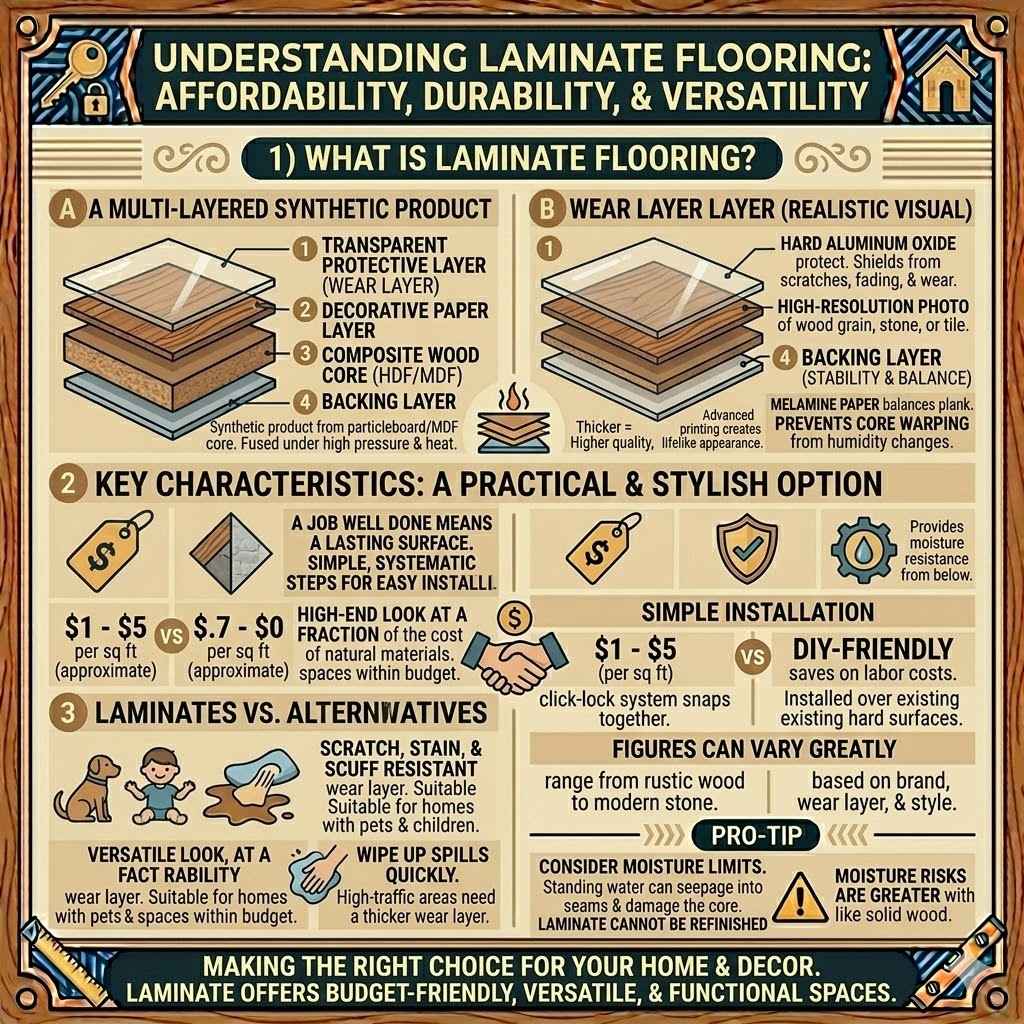
Laminate flooring is a synthetic product made from multiple layers fused together using a lamination process. At its core, it’s a composite wood product, usually made from particleboard or medium-density fiberboard (MDF). This core layer provides the structural integrity of the flooring plank.
The top layer is what you see and interact with. It’s a high-resolution photographic image, often of wood grain, stone, or tile. This image is printed onto a decorative paper layer.
This is what gives laminate its realistic appearance.
Above the decorative layer is a transparent protective layer called the wear layer. This wear layer is typically made of aluminum oxide, a very hard and durable material. It shields the decorative layer from scratches, fading, and wear and tear.
The thicker and higher quality the wear layer, the more durable the laminate will be. Think of it as a clear shield protecting the beautiful design underneath.
The layers are fused together under high pressure and heat. This process creates a strong, stable plank that is resistant to moisture and impact. The different layers work together to create a floor that is both attractive and functional for everyday living.
Construction Layers of Laminate
Backing Layer: This is the bottom layer, often made of melamine-impregnated paper. It provides stability, moisture resistance from below, and helps to balance the plank. This layer prevents the core from warping due to humidity changes in the subfloor.
Core Layer: This is the thickest layer and is typically made of high-density fiberboard (HDF) or medium-density fiberboard (MDF). It’s essentially a very dense wood composite. This layer provides the structural support for the entire plank. It’s also where the tongue-and-groove or click-lock system is milled, allowing planks to connect easily. The density of the core impacts the overall durability and resistance to denting.
Decorative Layer: This layer is a high-quality photograph of wood, stone, or tile. It’s printed on paper and is responsible for the visual appeal of the flooring. The realism of this layer varies significantly between brands and price points. Advanced printing techniques can create incredibly lifelike textures and patterns.
Wear Layer: This is the transparent top coating, usually made of aluminum oxide. It’s the primary defense against scratches, stains, and fading from sunlight. The thickness of the wear layer, often measured in mils, determines the laminate’s resistance to damage. A thicker wear layer means a longer-lasting floor in high-traffic areas.
Key Characteristics of Laminate Flooring
Laminate flooring is celebrated for its durability and ease of care. Its wear layer makes it quite resistant to everyday scuffs and scratches. This is a significant advantage for homes with children or pets.
Spills can usually be wiped up quickly without causing damage, though prolonged exposure to standing water is still not recommended.
Another major benefit is its affordability. Compared to solid hardwood or even some engineered wood options, laminate is significantly less expensive. This allows for a high-end look at a more accessible price point.
It’s a great way to achieve a designer look on a budget.
Installation is often simpler than traditional flooring. Many laminate products use a click-lock system, meaning planks snap together without the need for glue or nails. This “floating floor” installation is DIY-friendly, saving on professional labor costs.
The planks can often be installed over existing hard-surface flooring, reducing prep work.
Visually, laminate can be incredibly versatile. With advanced printing technology, it can convincingly mimic the look of almost any type of wood, stone, or tile. This allows for a wide range of design possibilities to match any décor.
You can find styles that range from rustic reclaimed wood to sleek modern stone.
However, laminate is not waterproof. While it can handle minor spills effectively, standing water can seep into the seams and damage the core, causing it to swell and warp. Also, while the wear layer is tough, it can be scratched or gouged by very sharp objects or heavy furniture if not properly protected.
It also cannot be refinished like solid wood, so damaged planks must be replaced.
Pros and Cons of Laminate Flooring
Laminate flooring offers many advantages that make it a popular choice for many households. One of its biggest draws is its affordability. It provides the aesthetic appeal of hardwood or stone at a much lower price point.
This makes beautiful flooring accessible to a wider range of budgets.
Durability is another strong point. The wear layer on top is designed to resist scratches, dents, and stains. This makes it a practical choice for busy households with children and pets.
It can withstand a good amount of foot traffic and daily wear and tear.
Installation is often straightforward, especially with click-lock systems. This means many homeowners can install it themselves, saving on labor costs. It can also often be installed over existing flooring, reducing the need for extensive subfloor preparation.
However, laminate does have some drawbacks. It is not waterproof. While it can tolerate some moisture, prolonged exposure to standing water can cause the core to swell and warp.
This limits its use in very wet areas like full bathrooms or basements prone to flooding. Also, unlike hardwood, laminate flooring cannot be sanded down and refinished. If a plank is severely damaged, it needs to be replaced.
The sound can also be an issue for some. Laminate can sometimes sound hollow when walked on, especially if not installed over a good underlayment. This can be mitigated with proper padding, but it’s something to consider.
When to Choose Laminate
Laminate flooring is an excellent choice for living rooms, dining rooms, bedrooms, and hallways. These are areas that typically have moderate foot traffic and are less exposed to standing water. Its resistance to scratches makes it suitable for homes with pets, provided spills are cleaned up promptly.
If you are on a tight budget but want the look of hardwood, stone, or tile, laminate is a fantastic option. It allows you to achieve a high-end aesthetic without the high cost. It’s also a great choice for rental properties or for homeowners who plan to renovate again in the future, as its affordability makes it a less permanent, high-stakes decision.
DIY enthusiasts will appreciate the ease of installation offered by many laminate products. The click-lock systems make it possible for beginners to achieve professional-looking results. This saves both time and money on installation.
For areas where moisture is a concern, such as kitchens or bathrooms, it’s best to opt for waterproof laminate options or consider other materials. While some laminates have improved water resistance, they are generally not considered a suitable replacement for tile or vinyl in consistently wet environments.
Exploring Engineered Wood Flooring
Engineered wood flooring offers a compelling alternative to solid hardwood. It combines the natural beauty of real wood with enhanced stability and versatility. This innovative construction makes it suitable for a wider range of applications within the home.
Its layered design addresses some of the common issues faced with traditional solid wood.
What is Engineered Wood Flooring?
Engineered wood flooring is a type of hardwood flooring constructed from multiple layers of wood and wood composites. Unlike solid hardwood, which is milled from a single piece of wood, engineered wood has a more complex build designed for stability and adaptability.
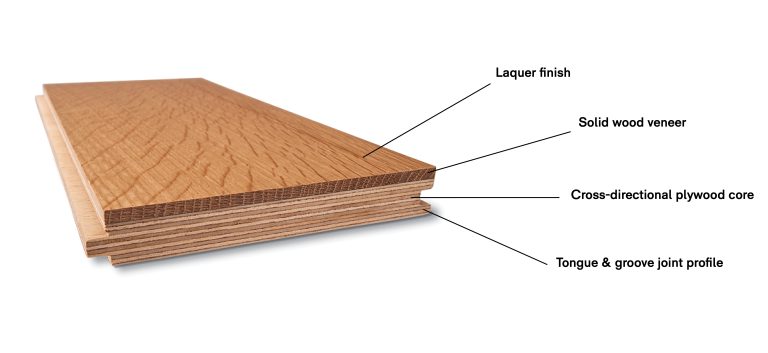
The top layer, known as the wear layer or veneer, is made of real hardwood. This is the part that provides the natural wood grain, color, and texture you see and feel. The thickness of this hardwood veneer can vary, affecting its durability and how many times it can be refinished.
Beneath the hardwood veneer are several layers of wood composites, such as plywood or high-density fiberboard (HDF). These layers are stacked perpendicularly to the grain of the layer above and below. This cross-grain construction is key to the stability of engineered wood.
This perpendicular layering counteracts the natural tendency of wood to expand and contract with changes in humidity and temperature. This makes engineered wood much more stable than solid hardwood, which can warp, cup, or gap in environments with fluctuating moisture levels. This enhanced stability allows it to be installed in more places within a home.
The layers are bonded together under high pressure and heat. This fusion creates a strong, durable plank that retains the authentic look of real wood while offering improved performance in various conditions. The overall thickness of the plank and the veneer thickness are important factors when evaluating quality.
Construction Layers of Engineered Wood
Top Layer (Veneer): This is the most visible and important layer for aesthetics. It consists of a thin slice of real hardwood, such as oak, maple, walnut, or cherry. The thickness of this veneer dictates how many times the floor can be sanded and refinished over its lifespan. Thicker veneers offer more refinishing opportunities and a more premium feel.
Middle Layers (Core): These layers are typically made of plywood, which is formed by gluing together thin sheets of wood veneer. The grain of each successive layer runs perpendicular to the one below it. This cross-ply construction is the secret to engineered wood’s stability, resisting expansion and contraction.
Bottom Layer (Backer): The bottom layer is also usually made of plywood or a similar wood composite. It provides a stable base for the plank and helps to balance the construction, further enhancing its resistance to moisture and warping. Some engineered wood floors may have additional stabilizing layers.
Key Characteristics of Engineered Wood Flooring
Engineered wood flooring boasts the genuine look and feel of real wood. Because the top layer is actual hardwood, it offers the natural variations in grain, color, and texture that people love about wood floors. This provides a sense of warmth and luxury to any space.
Its primary advantage is its enhanced stability. The cross-layered construction makes it far less prone to expanding and contracting due to humidity changes compared to solid hardwood. This means it can be installed in areas where solid hardwood might not be suitable, such as basements or rooms with radiant heating.
Installation flexibility is another significant benefit. Engineered wood can be installed using various methods, including glue-down, nail-down, or a floating installation with a click-lock system. This adaptability allows it to be used over concrete slabs, existing floors, or even in areas with subfloor irregularities.
While it has a real wood veneer, it’s not as resilient to deep scratches or gouges as some laminates might appear. However, many engineered wood floors can be sanded and refinished one or more times, depending on the thickness of the top veneer. This allows for restoration and extending the life of the floor if it becomes worn.
The cost of engineered wood is typically higher than laminate but generally lower than solid hardwood of comparable quality. This makes it a more accessible way to enjoy the authentic beauty of hardwood floors in more areas of the home. The price can vary significantly based on the wood species, veneer thickness, and brand.
Some engineered wood floors can also be sensitive to excessive moisture. While more stable than solid hardwood, prolonged exposure to standing water can still cause damage, particularly to the core layers or the adhesives used. It’s important to maintain a controlled environment and clean up spills promptly.
Pros and Cons of Engineered Wood Flooring
Engineered wood flooring offers a beautiful and practical way to incorporate real wood into your home. Its most significant advantage is the authentic hardwood experience it provides. The top layer is genuine wood, giving you the natural beauty, warmth, and unique character that only real wood can offer.
Its superior stability is another major plus. The cross-layered construction resists expansion and contraction caused by humidity fluctuations. This makes it suitable for installation in areas where solid hardwood might fail, such as basements, kitchens, or rooms with in-floor heating systems.
It offers a level of design freedom that solid wood doesn’t.
Installation is often more versatile. It can be glued down, stapled down, or installed as a floating floor, making it adaptable to various subfloors, including concrete. This flexibility can simplify the installation process and open up more possibilities for placement.
Furthermore, many engineered wood floors can be refinished. Depending on the thickness of the top hardwood veneer, you can sand down minor scratches or worn areas and apply a new finish to revitalize the floor. This can extend its lifespan and allow you to change its look over time.
On the downside, engineered wood is generally more expensive than laminate flooring. While often less costly than solid hardwood, it still represents a significant investment. The cost can be a deciding factor for many homeowners.
The durability of the veneer is also important; very thin veneers cannot be refinished.
While more stable than solid wood, it is still not entirely waterproof. Excessive standing water can still damage the core layers or cause the adhesive to fail, leading to warping or delamination. Therefore, it’s not always the best choice for areas like full bathrooms where water is consistently present.
When to Choose Engineered Wood
Engineered wood flooring is an excellent choice for almost any room in the house, including living areas, bedrooms, hallways, and dining rooms. Its real wood surface provides the sought-after warmth and elegance of hardwood.
It is particularly well-suited for spaces where humidity levels can fluctuate, such as basements or kitchens. Its stable construction helps it withstand these environmental changes better than solid hardwood. This makes it a more reliable option for these potentially challenging areas.
Homeowners who want the genuine look and feel of real wood but are concerned about the limitations of solid hardwood in certain climates or installations will find engineered wood to be a great compromise. It offers a high-quality aesthetic with enhanced performance.
If you plan to install flooring over concrete or in a room with radiant heating, engineered wood is often the preferred choice due to its stability and compatibility with these installation methods. Always check the manufacturer’s guidelines for specific heating system compatibility.
Consider engineered wood if you appreciate the possibility of refinishing your floors in the future to refresh their look or repair minor damage. The ability to sand and reapply a finish can significantly extend the life and beauty of your investment, provided the veneer is thick enough.
Laminate vs Engineered Wood Key Differences Explained
Understanding the distinctions between laminate and engineered wood flooring is crucial for making an informed decision. While both offer appealing looks and can mimic natural materials, their construction and performance characteristics are quite different. These differences impact their durability, cost, installation, and suitability for various areas of your home.
Let’s break down the core contrasts.
Material Composition
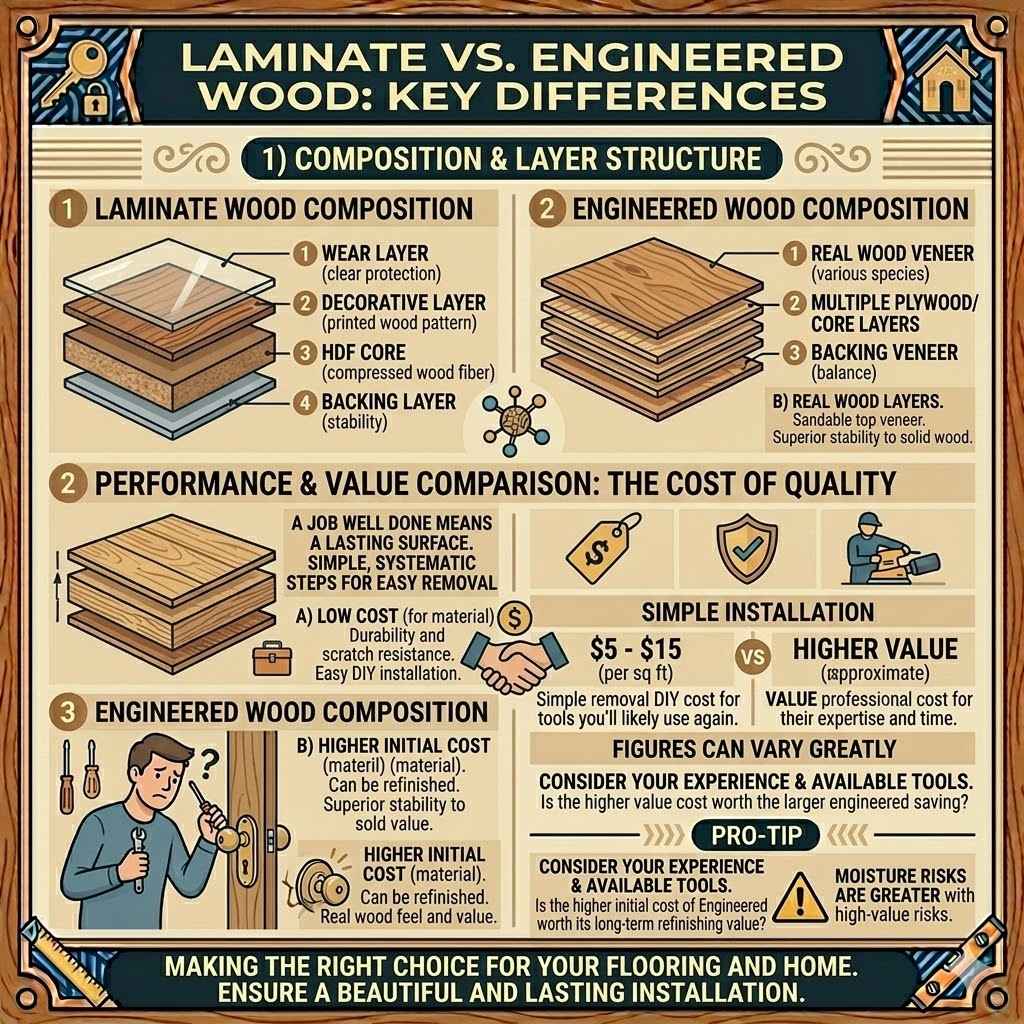
The fundamental difference between laminate and engineered wood lies in what they are made of. Laminate flooring is a synthetic product that uses a photographic image to represent wood, stone, or tile. It has no real wood in its decorative layer.
Engineered wood flooring, on the other hand, has a top layer made of genuine hardwood veneer. This means you are walking on real wood, with all its natural beauty and characteristics. Beneath this real wood layer are composite wood layers that provide stability.
This core difference means that the look of laminate is printed, while the look of engineered wood is natural and authentic. The feel underfoot can also differ. While high-quality laminate can be convincing, the natural variations and depth of real wood in engineered products are unmatched.
The construction of laminate is typically a composite wood core topped with a decorative image and a protective wear layer. Engineered wood uses multiple layers of real wood and wood composites, with a significant real wood veneer on top.
Durability and Longevity
When it comes to durability, both laminate and engineered wood offer good performance, but in different ways. Laminate flooring is known for its tough wear layer, which is highly resistant to scratches and stains. This makes it a great choice for high-traffic areas and homes with pets.
However, laminate is not waterproof. If exposed to significant moisture, the core can swell and become permanently damaged. Also, once the wear layer is deeply scratched or gouged, it cannot be repaired or refinished.
The decorative layer is printed, so it can’t be renewed.
Engineered wood flooring, with its real wood veneer, can also be scratched or dented. The level of scratch resistance depends on the hardness of the wood species used for the veneer and its thickness. The advantage is that many engineered wood floors can be sanded and refinished one or more times to repair damage and restore their appearance.
The stability of engineered wood means it’s less prone to warping in response to humidity changes. This longevity is enhanced by its ability to be refreshed. The overall lifespan of both flooring types depends heavily on the quality of the product and the care it receives.
A well-maintained engineered wood floor can last for decades, potentially longer if refinished.
A common statistic points to the wear layer thickness for laminate. For residential use, a wear layer of 6 to 10 mils is typically sufficient for moderate traffic, while 10 to 17 mils is recommended for heavy traffic. For engineered wood, the veneer thickness is the key metric, with 2mm or more generally considered good for refinishing.
Water Resistance
Water resistance is a key differentiating factor. Laminate flooring is generally not waterproof. While it can handle minor spills if wiped up quickly, prolonged exposure to standing water can cause the core material to absorb moisture, leading to swelling, warping, and irreparable damage.
There are some newer “waterproof” laminate options available. These often use enhanced core materials and improved locking systems to provide a higher degree of moisture resistance. However, even these are typically best suited for areas with occasional spills, not constant submersion.
Engineered wood flooring is also not inherently waterproof, but its stability makes it more forgiving than solid hardwood in areas with moderate humidity. Because its layers are bonded together and the wood is more dimensionally stable, it’s less likely to warp or cup if a spill occurs and is cleaned up promptly.
It’s still essential to clean up spills on engineered wood floors immediately. Standing water can damage the wood veneer, the adhesives holding the layers together, or even seep into the subfloor. For areas that are consistently wet, such as full bathrooms or laundry rooms, tile or luxury vinyl plank (LVP) are usually the most appropriate choices.
According to industry reports, standard laminate can start to show damage from standing water within 24-72 hours. Engineered wood, while better, can also be affected within a similar timeframe if water is not removed. Special waterproof core laminates may offer protection for longer periods.
Cost and Value
When comparing the cost, laminate flooring is typically the more budget-friendly option. Its synthetic nature and simpler manufacturing process make it significantly less expensive per square foot than engineered wood. This affordability is one of its primary selling points.
Engineered wood flooring falls in the mid-range of flooring costs. It’s more expensive than laminate because it incorporates real hardwood. However, it is usually less costly than solid hardwood of similar quality, especially when considering the installation flexibility it offers.
The value proposition for each flooring type depends on your priorities. If budget is the main concern and you want a good-looking floor for low-to-moderate traffic areas, laminate offers excellent value. Its ease of installation can also save on labor costs, further enhancing its affordability.
For those who desire the authentic look and feel of real wood and are willing to invest a bit more for that natural beauty and potential for refinishing, engineered wood provides great value. Its enhanced stability and installation versatility also contribute to its long-term worth. A quality engineered wood floor can significantly increase a home’s appeal and resale value.
Here’s a general cost comparison:
| Flooring Type | Average Cost Per Square Foot (Material Only) |
|---|---|
| Laminate Flooring | $2 – $7 |
| Engineered Wood Flooring | $5 – $12 |
| Solid Hardwood Flooring | $7 – $15+ |
Installation Methods
The installation methods available for laminate and engineered wood also present key differences. Many laminate floors utilize a click-lock system, creating a “floating floor.” This means the planks are not attached to the subfloor; they are joined together, and the floor essentially rests on top of an underlayment. This makes it very DIY-friendly.
Engineered wood flooring offers more installation flexibility. It can also be installed as a floating floor using a click-lock system, similar to laminate. However, it can also be glued down directly to the subfloor or stapled or nailed down, especially thicker planks.
The glue-down method provides a very secure and stable installation, often resulting in a quieter feel underfoot. Nail-down or staple-down methods are more traditional for wood flooring and require specific tools and a suitable subfloor, usually plywood or OSB.
The choice of installation method can affect the overall cost, with professional installation adding to the total price. The type of subfloor you have will also dictate which installation methods are possible. For example, floating floors are often recommended over concrete subfloors.
Here’s a look at typical installation methods:
- Laminate: Primarily floating (click-lock). Some older or specific types might be glue-down.
- Engineered Wood: Floating (click-lock), glue-down, or nail/staple-down.
Maintenance and Care
Maintaining both laminate and engineered wood floors is generally straightforward, but there are some specific considerations. For laminate, daily cleaning involves sweeping or vacuuming (with a soft brush attachment to avoid scratches). For tougher spots, use a damp mop with a floor cleaner specifically designed for laminate.
Avoid using excessive water on laminate floors. Never use steam mops, as the steam can penetrate the seams and damage the core. Do not use abrasive cleaners or waxes, as they can dull the finish or damage the wear layer.
Promptly wipe up any spills to prevent moisture from seeping in.
Engineered wood floors require similar daily cleaning: sweeping or vacuuming with a soft brush attachment. For damp cleaning, use a slightly damp mop and a pH-neutral wood floor cleaner. Again, avoid excess water and never use steam mops.
Harsh chemicals or abrasive scrubbers should also be avoided.
For both flooring types, using furniture pads on the legs of chairs and tables is highly recommended to prevent scratches. Doormats at all entrances can help trap dirt and grit that can scratch floors.
A key difference in care relates to refinishing. Laminate cannot be refinished. If it gets significantly damaged, the planks must be replaced.
Engineered wood, if it has a thick enough veneer, can be sanded and refinished, which is a major maintenance advantage for extending its life and appearance.
Comparing Laminate Vs Engineered Wood: Key Differences in Practice
When you’re standing in the showroom or looking at options online, it helps to see how these differences play out in real-life scenarios. Understanding the practical implications of laminate versus engineered wood will guide you to the best choice for your specific needs and lifestyle. Let’s explore some common situations.
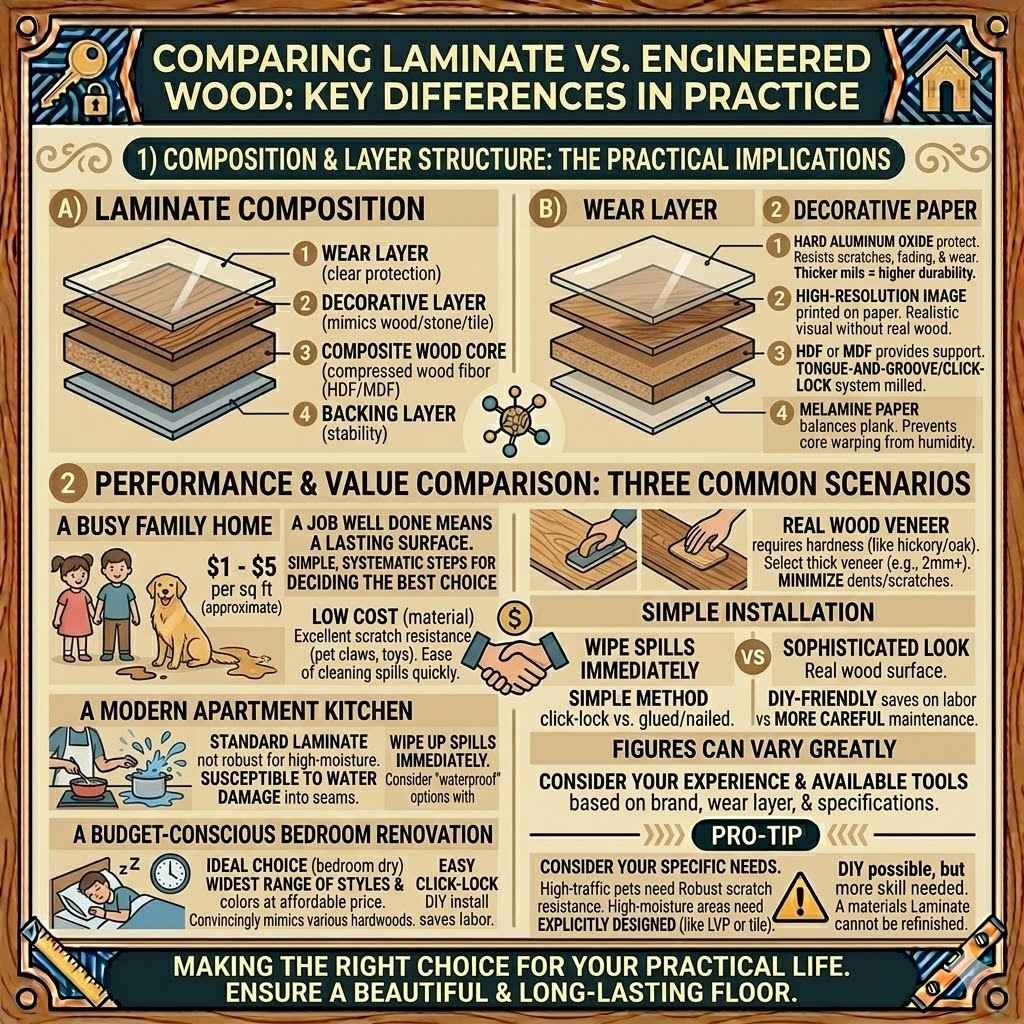
Scenario 1 A Busy Family Home
Imagine a household with two young children and a golden retriever. This home experiences high foot traffic, occasional spills from juice boxes, and muddy paw prints. The priority is durability, ease of cleaning, and resistance to scratches.
In this scenario, high-quality laminate flooring with a thick wear layer (e.g., 12 mils or more) would be a very practical choice. Its excellent scratch resistance would protect against pet claws and toy scuffs. The ease of cleaning up spills quickly would prevent damage.
If a plank gets severely damaged, replacing a single plank in a laminate floor is often manageable.
Engineered wood could also work, but it would require more careful consideration. You would need to select a species known for its hardness (like hickory or oak) and a thick veneer (2mm or more). You’d also need to be diligent about wiping up spills immediately and protecting furniture legs with pads to minimize the risk of dents and scratches.
The appeal of real wood might be worth the extra caution.
For this busy family, the overall cost-effectiveness and robust scratch resistance of laminate might tip the scales, especially if the budget is a primary factor. However, if the family prioritizes the natural beauty of real wood and is prepared for slightly more careful maintenance, engineered wood with the right specifications is also a viable option.
Scenario 2 A Modern Apartment Kitchen
Consider a homeowner in a modern apartment looking to update their kitchen. The space experiences daily cooking activity, occasional water splashes from the sink, and general foot traffic. The key requirements are moisture resistance, ease of maintenance, and a sleek appearance.
For a kitchen environment, water resistance is paramount. Standard laminate would not be ideal due to its susceptibility to water damage. While some “waterproof” laminates exist, they might not be the most robust solution for a high-moisture area like a kitchen.
Always check specific product warranties for kitchen use.
Engineered wood flooring with a good quality veneer and proper installation could be suitable, provided spills are addressed promptly. Its real wood surface offers a sophisticated look that many homeowners desire in a kitchen. However, it’s still not completely waterproof.
A more practical choice for this scenario might be a luxury vinyl plank (LVP) or tile, which are specifically designed for high-moisture environments. However, if the homeowner is set on wood or wood-look flooring, a high-quality engineered wood floor installed with a waterproof adhesive and very diligent spill cleanup would be considered. Waterproof laminate options could also be explored if they meet the specific needs and the homeowner is comfortable with their performance.
The best recommendation here would be to prioritize materials explicitly designed for kitchens. If forced to choose between laminate and engineered wood for a kitchen, the engineered wood with its better stability would likely be the less risky choice, but still requires careful management of moisture. A top-tier engineered hardwood with a robust sealant would be preferable.
Scenario 3 A Budget-Conscious Bedroom Renovation
Imagine someone looking to refresh their bedroom without spending a lot of money. The room has light foot traffic, and the main goal is to create a warm and inviting atmosphere with an attractive floor. The budget is a significant consideration.
In this case, laminate flooring would likely be the ideal choice. It offers the widest range of styles and colors at the most affordable price point. You can find laminate that convincingly mimics the look of various hardwoods, giving the bedroom a beautiful upgrade without breaking the bank.
The ease of installation with click-lock systems also means that a DIY renovation is very feasible, saving further on labor costs. Bedrooms are typically dry environments with less risk of spills or heavy traffic, making laminate a perfectly suitable and practical option.
Engineered wood would offer a more premium feel with real wood, but it would come at a higher cost. While it would also be suitable for a bedroom, the budget constraint might make it less accessible. If the homeowner is willing to stretch their budget slightly for the genuine wood experience, engineered wood is a step up in luxury.
Given the primary goal of budget-conscious renovation and light traffic, laminate presents the best combination of aesthetics, cost, and ease of installation for a bedroom. It allows for a significant visual improvement while keeping expenses in check.
Frequently Asked Questions
Question: Is laminate flooring completely waterproof?
Answer: No, standard laminate flooring is not waterproof. While it can resist minor spills if cleaned up quickly, prolonged exposure to standing water can cause the core to swell and damage the flooring.
Question: Can engineered wood flooring be refinished?
Answer: Yes, many engineered wood floors can be sanded and refinished one or more times. This ability depends on the thickness of the real hardwood veneer on top of the plank.
Question: Which is more expensive laminate or engineered wood?
Answer: Laminate flooring is generally less expensive than engineered wood flooring. Engineered wood is a mid-range option, typically costing more than laminate but less than solid hardwood.
Question: Which flooring is better for a basement laminate or engineered wood?
Answer: Engineered wood is often a better choice for basements due to its enhanced stability and resistance to humidity changes compared to solid hardwood. However, neither is fully waterproof, and waterproof luxury vinyl plank (LVP) is often the most recommended for basements prone to moisture.
Question: Does laminate have real wood in it?
Answer: No, standard laminate flooring does not contain real wood in its decorative layer. It uses a photographic image of wood grain printed onto a core material.
Summary
The key differences between laminate and engineered wood boil down to their core materials and construction. Laminate uses a photographic layer for its appearance, offering affordability and scratch resistance. Engineered wood features a real hardwood veneer on top, providing authentic beauty and the potential for refinishing.
While neither is waterproof, engineered wood’s stability makes it more forgiving in varied conditions. Consider your budget, lifestyle, and the specific room when making your choice.