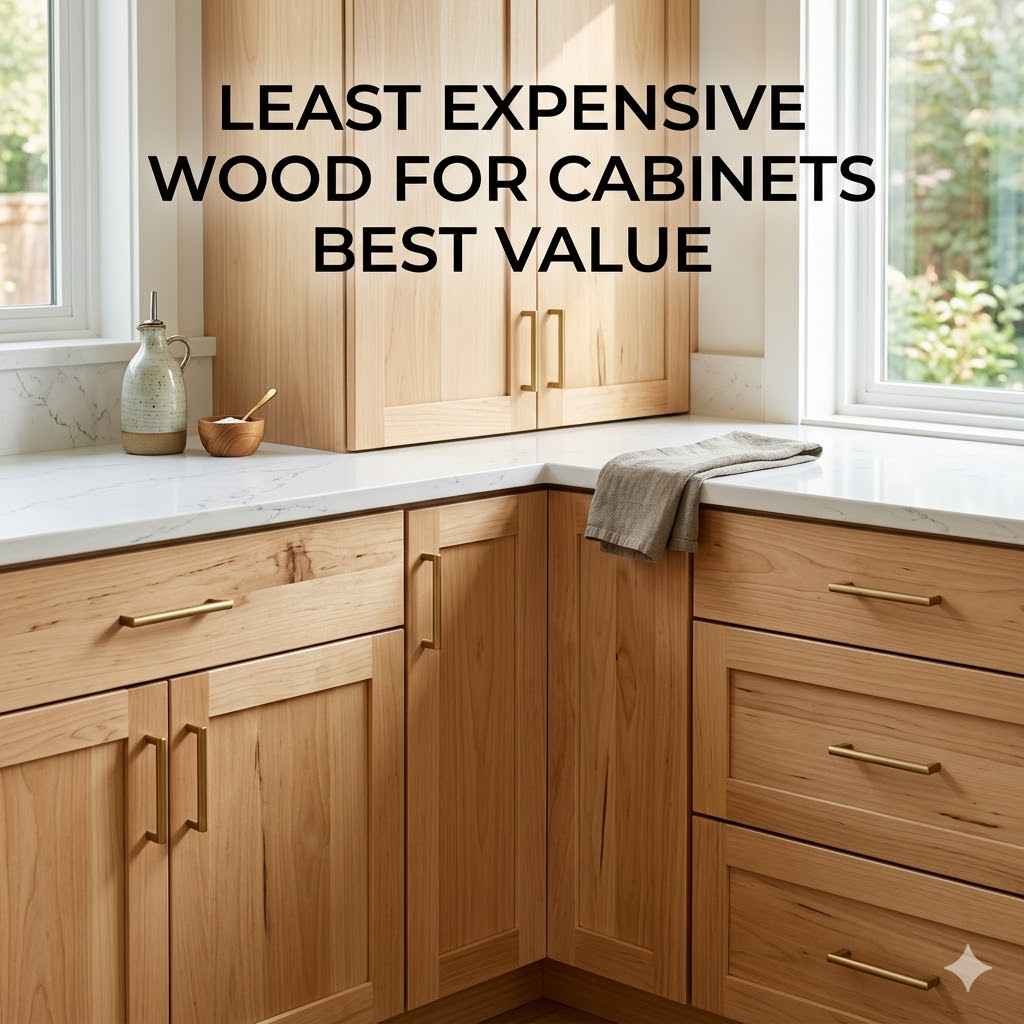
Least Expensive Wood for Cabinets: Best Value
Finding the right wood for your cabinets can feel tricky, especially when you want to save money. You might wonder about the Least Expensive Wood for Cabinets: Best Value Guide 2026 and what really works for your home. It’s easy to get lost in all the options.
But don’t worry, we’ll make it simple. We’ll walk you through everything step-by-step so you can pick the best value without any hassle. Let’s find the perfect fit for your kitchen or bathroom!
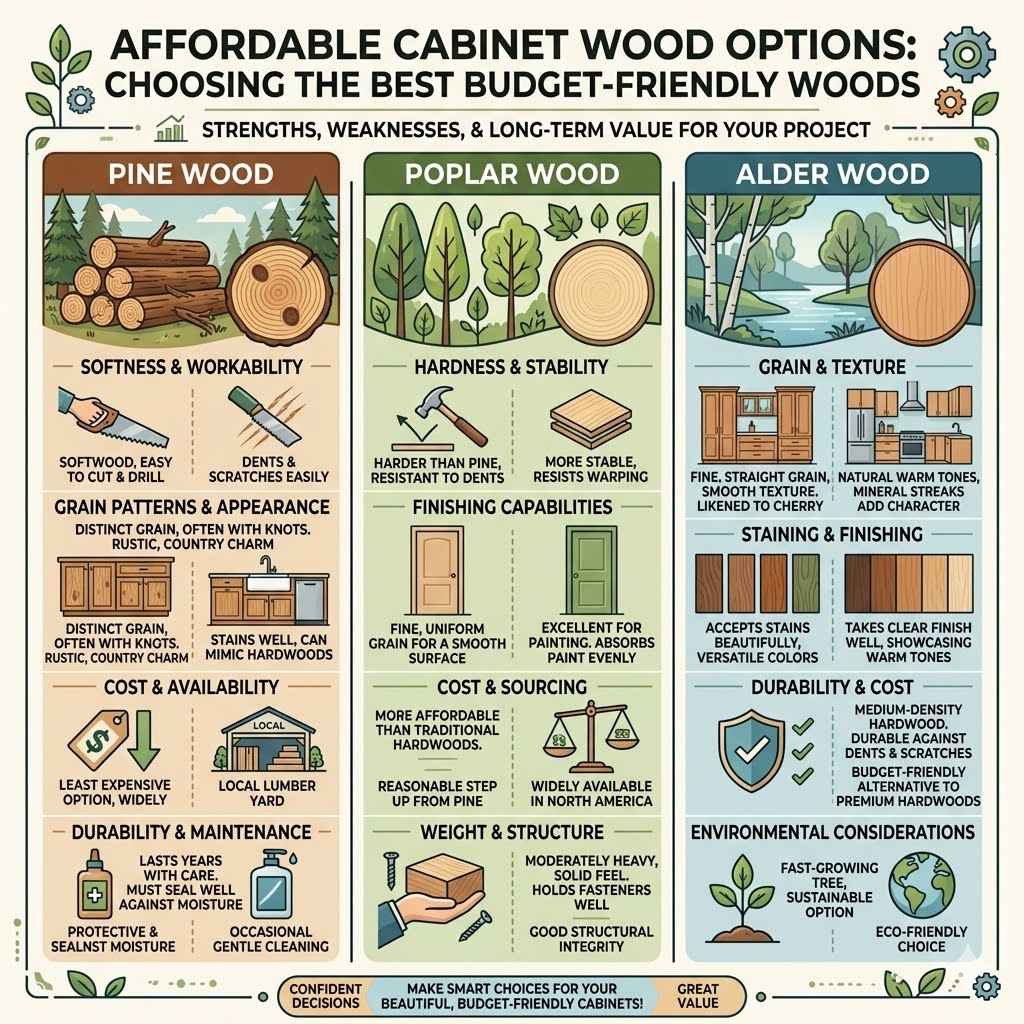
Choosing Affordable Cabinet Wood Options
This section explores the most budget-friendly woods you can use for cabinets. We look at their strengths, weaknesses, and how they hold up over time. Understanding these options helps you make smart choices for your project.
We want to give you clear information so you can feel confident in your decisions. This will help you get beautiful cabinets that don’t cost too much.
Pine Wood for Cabinets
Pine is a popular choice for budget-friendly cabinets because it’s widely available and relatively soft. This softness makes it easier to work with, which can save on labor costs if you’re doing it yourself. Pine can also be stained to look like more expensive hardwoods, offering great versatility for your design.
Softness and Workability: Pine is a softwood. This means it’s not as dense as hardwoods like oak or maple. Because it’s softer, it’s easier to cut, drill, and sand. This makes it a good option for DIY projects or when you need custom shapes. However, its softness also means it can dent and scratch more easily than hardwoods. You need to be careful to avoid damage during installation and use.
Grain Patterns and Appearance: Pine often has a distinct grain pattern with knots. These knots can add a rustic charm to your cabinets, especially if you like a country or farmhouse style. If you prefer a very smooth, uniform look, you might need to select knot-free pine or fill the knots before finishing. Pine takes stains well, but the color can vary depending on the specific type of pine and how it’s prepared.
Cost and Availability: Pine is generally one of the least expensive wood options. Its widespread growth means it’s readily available in most areas, which helps keep prices down. You can often find pine boards at lumber yards and home improvement stores. This accessibility is a big plus for any project budget.
Durability and Maintenance: While not as durable as hardwoods, pine can last for many years with proper care. It’s important to seal pine cabinets well to protect them from moisture and stains. Occasional cleaning with a mild soap and water solution is usually sufficient. Avoid harsh chemicals that can damage the finish.
Poplar Wood for Cabinets
Poplar is another cost-effective wood that offers a good balance of price and performance. It’s a bit harder than pine, making it more resistant to dents. Poplar also has a fine, even grain that is easy to paint or stain.
This makes it a versatile choice for many cabinet styles.
Hardness and Stability: Poplar is considered a hardwood, though it’s on the softer side compared to oak or maple. It’s more durable than pine, meaning it’s less likely to get dinged or scratched. This stability is important for cabinet doors that are opened and closed frequently. Poplar also tends to be more resistant to warping than some softer woods.
Finishing Capabilities: Poplar has a fine, uniform grain that creates a smooth surface. This makes it an excellent candidate for painting. It absorbs paint evenly, resulting in a clean, professional finish. While it can be stained, the grain is not as pronounced as in oak, so you might not get the same depth of color. However, it can achieve a good painted look.
Cost and Sourcing: Poplar is typically more affordable than traditional hardwoods but usually costs a bit more than pine. It’s widely available in North America. Its reasonable price point makes it a popular choice for homeowners looking for a step up from the cheapest options without breaking the bank.
Weight and Structure: Poplar is a moderately heavy wood. This gives cabinets a solid feel. Its structural integrity is good for cabinet construction, especially for cabinet doors and drawer fronts. It holds screws and other fasteners well.
Alder Wood for Cabinets
Alder is a great middle-ground option. It’s more affordable than maple or cherry but offers a beautiful, consistent look. Alder has a fine grain and is known for its smooth texture, which makes it easy to finish.
It’s a good choice if you want a natural wood look without the high cost of premium hardwoods.
Grain and Texture: Alder has a fine, straight grain with a subtle texture. It’s often compared to cherry or birch but at a lower price. The wood typically has a light brown to reddish-brown color. It can sometimes have mineral streaks, which add character. The smooth texture makes it pleasant to touch and easy to work with.
Staining and Finishing: Alder accepts stains very well, allowing for a wide range of color possibilities. It can be stained to mimic more expensive woods. It also takes a clear finish beautifully, showcasing its natural warm tones. This makes it very adaptable to different kitchen or bathroom designs.
Durability and Cost: Alder is considered a medium-density hardwood. It’s harder and more durable than pine, offering better resistance to dents and scratches. While not as hard as oak or maple, it provides good value for its price. It is a more budget-friendly alternative to many popular hardwoods.
Environmental Considerations: Alder is a fast-growing tree. This makes it a more sustainable option compared to some slower-growing hardwoods. Sourcing alder can be more environmentally friendly, which is a plus for eco-conscious consumers.
Understanding Wood Plywood and MDF for Cabinets
While solid wood is traditional, engineered wood products like plywood and MDF offer compelling advantages, especially for budget-conscious projects. These materials can be more stable and often come at a lower price point. They are excellent alternatives for cabinet boxes and even doors when used correctly.
Plywood for Cabinet Boxes
Plywood is made by layering thin sheets of wood veneer together. This construction makes it very strong and resistant to warping, cracking, and shrinking. For cabinet boxes, furniture-grade plywood is a fantastic choice.
It’s durable, stable, and more affordable than solid wood panels of the same size.
Construction and Strength: Plywood consists of several thin layers of wood, called veneers, glued together with their grain patterns running in alternating directions. This cross-graining technique gives plywood exceptional strength and stability. It’s much less prone to warping or splitting than solid wood, especially when exposed to moisture or humidity changes. This is vital for the structural integrity of cabinet boxes.
Types of Plywood: For cabinets, you’ll typically want to use birch, oak, or maple plywood. These hardwoods offer a smoother finish and better appearance if any part of the cabinet box will be visible. For areas that will be completely hidden, less expensive utility plywood can be an option, but check for voids. The number of plies (layers) also affects strength; more plies generally mean a stronger panel.
Cost-Effectiveness: Plywood is generally less expensive than solid wood panels of equivalent size and quality. It’s also often more dimensionally stable, meaning you have less waste due to warping or defects. This makes it an economical choice for building entire cabinet carcasses. Manufacturers can also produce large panels efficiently, contributing to lower costs.
Finishing and Appearance: The surface of plywood can be finished like solid wood. Hardwood veneer plywoods can be stained or painted to match the cabinet doors. The edges of plywood, however, show the layers. These edges may need to be covered with edge banding or trim for a more finished look.
Medium-Density Fiberboard MDF
MDF is made from wood fibers that are pressed and bound together with resin. It creates a very smooth, dense, and stable panel. MDF is an excellent material for painted cabinet doors and drawer fronts.
It doesn’t have a visible grain pattern, which is perfect for a sleek, modern look. It’s also very affordable.
Composition and Properties: MDF is created by breaking down hardwood or softwood into fine wood fibers. These fibers are then mixed with wax and resin binders. The mixture is then compressed under high pressure and temperature. This results in a very dense, uniform panel that has no visible grain pattern. This uniformity is key to its finishing capabilities.
Ideal Use Cases: MDF is most commonly used for painted cabinet doors, drawer fronts, and decorative trim. Its smooth surface is perfect for a flawless paint finish. It’s also used for shelving and some cabinet carcasses, though it can be heavier than plywood and may sag over time if not adequately supported. It’s not ideal for areas that will get very wet.
Cost and Value: MDF is one of the most economical materials for cabinet components. Its production process is efficient, and it uses wood waste products. This makes it a highly cost-effective option for achieving a high-end look on a budget. It provides excellent value, especially for painted finishes.
Working with MDF: MDF is easy to cut and machine, allowing for intricate designs and clean edges. However, it is very heavy and can dull tools quickly. It also produces fine dust when cut, so proper ventilation and a dust mask are essential. The edges of MDF are porous and will absorb paint unless they are properly sealed.
Considering Laminate and Thermofoil Finishes
Beyond the core wood material, the finish you choose significantly impacts both cost and appearance. Laminate and thermofoil are popular choices because they offer durable, attractive surfaces at a fraction of the price of solid wood or high-quality veneers.
Laminate Cabinet Finishes
Laminate is a synthetic material made from layers of paper or fabric impregnated with resin and fused together under heat and pressure. It’s then printed with a decorative pattern, often mimicking wood grain, stone, or solid colors. This layer is then bonded to a substrate, usually particleboard or MDF.
Construction and Durability: Laminate is made of layers, with the top layer being a clear protective sheet over a decorative print. This makes it very resistant to scratches, stains, and fading. It’s a durable surface that can withstand daily use in a busy kitchen. The quality of the laminate can vary, with higher-pressure laminates being the most robust.
Appearance Options: Laminate offers an almost endless array of colors, patterns, and textures. You can find laminates that realistically mimic the look of various hardwoods, granite, or even metal. This versatility allows for immense design flexibility, from modern minimalist to traditional styles, all at a budget-friendly price.
Cost and Maintenance: Laminate is significantly less expensive than most natural wood veneers or solid hardwoods. It’s also very easy to clean and maintain. A damp cloth and mild soap are usually all that’s needed. This low maintenance further adds to its value proposition.
Limitations: While durable, laminate is not as forgiving as solid wood. If it chips or scratches deeply, it can be difficult to repair. The edges can also be susceptible to moisture if not properly sealed. Unlike real wood, it doesn’t have the same natural warmth or character.
Thermofoil Cabinet Finishes
Thermofoil is a vinyl material applied to an MDF substrate using heat and vacuum. The vinyl is printed with a decorative design, typically a solid color or a wood grain pattern. It creates a seamless, smooth surface.
Manufacturing Process: Thermofoil involves applying a vinyl film over an MDF core. The film is heated, and then a vacuum is used to press it tightly onto the MDF, conforming to any shapes or routed designs. This process creates a smooth, one-piece surface with no seams. It’s often used for cabinet doors and drawer fronts.
Aesthetic Appeal: Thermofoil offers a clean, modern look, especially in white or gloss finishes. It can also replicate wood grains quite effectively, providing an affordable alternative to real wood. The seamless nature means there are no visible edge bands, giving it a very sleek appearance.
Cost and Affordability: Thermofoil is one of the most budget-friendly cabinet finishes available. It’s significantly cheaper than painted finishes or natural wood. This makes it an attractive option for large kitchen renovations or for those on a tight budget.
Durability and Potential Issues: Thermofoil can be quite durable against everyday wear and tear. However, it is susceptible to damage from high heat, such as from ovens or toasters placed too close. It can also peel or delaminate over time, especially in humid environments or if moisture seeps under the vinyl. Repairs can also be challenging.
Best Value Wood for Cabinets Comparison Table
To help you visualize the differences between the most affordable wood options, here’s a quick comparison. This table highlights key features like cost, durability, and appearance for the least expensive wood for cabinets.
| Wood Type | Approximate Cost (per board foot) | Durability | Appearance / Finish | Best For |
|---|---|---|---|---|
| Pine | $2 – $4 | Low to Medium (softwood) | Knots, rustic charm, stains well | Country/farmhouse style, DIY projects, accent pieces |
| Poplar | $3 – $5 | Medium (hardwood) | Smooth, even grain, excellent for paint | Painted cabinets, modern or traditional styles, good all-around |
| Alder | $4 – $6 | Medium (hardwood) | Fine grain, smooth texture, takes stain well | Natural wood look, stained cabinets, mid-range budget |
| Plywood (Hardwood Veneer) | $5 – $8 (per sheet) | High (for boxes) | Varies by veneer, smooth, stable | Cabinet boxes, shelving, structural components |
| MDF | $2 – $4 (per sheet) | Medium (dense) | Very smooth, no grain, ideal for paint | Painted cabinet doors, drawer fronts, decorative elements |
This table provides a snapshot to help you quickly assess the Least Expensive Wood for Cabinets: Best Value Guide 2026. Remember that prices can fluctuate based on location, demand, and specific grade of wood.
Real-Life Examples and Scenarios
Seeing how others have used affordable materials can be very inspiring. These examples show how you can achieve beautiful results without spending a fortune. They offer practical insights into what works in real homes.
Scenario 1 A Young Family’s Kitchen Renovation
A young family wanted to update their kitchen but had a limited budget. They decided to use poplar for their cabinet doors and drawer fronts.
- They chose a simple shaker style for the doors.
- They painted the doors a soft, neutral gray.
- For the cabinet boxes, they used good quality birch plywood. This gave them a strong and stable structure.
- They installed sleek, modern hardware.
The result was a bright, stylish kitchen that looked much more expensive than it was. The poplar painted beautifully, and the plywood boxes were very durable. This approach saved them thousands compared to using solid hardwoods.
Scenario 2 A Budget-Friendly Bathroom Makeover
For a small bathroom vanity, a homeowner wanted something durable and water-resistant without a high price tag. They opted for alder for the vanity doors and a sealed plywood for the cabinet box.
- Alder was chosen for its fine grain and ability to take a stain. They chose a clear coat finish to highlight the natural wood tones.
- The cabinet box was constructed from high-quality moisture-resistant plywood.
- They added simple, brushed nickel hardware.
The alder gave the bathroom a warm, natural feel. The plywood box ensured the vanity would hold up well in the humid bathroom environment. This project delivered both style and practicality within their budget.
Scenario 3 DIY Project Using Pine for Open Shelving
A DIY enthusiast wanted to add open shelving to their dining area. They decided to use knotty pine for its rustic charm and affordability.
- They purchased knotty pine boards from a local lumber yard.
- The boards were cut to size and sanded smooth.
- They applied a dark walnut stain followed by a protective polyurethane finish.
- The shelves were mounted using sturdy metal brackets.
The result was a set of attractive, functional shelves that added character to the room. The visible knots in the pine provided a charming, rustic look. This DIY project was completed with minimal cost.
Important Considerations for Budget Cabinetry
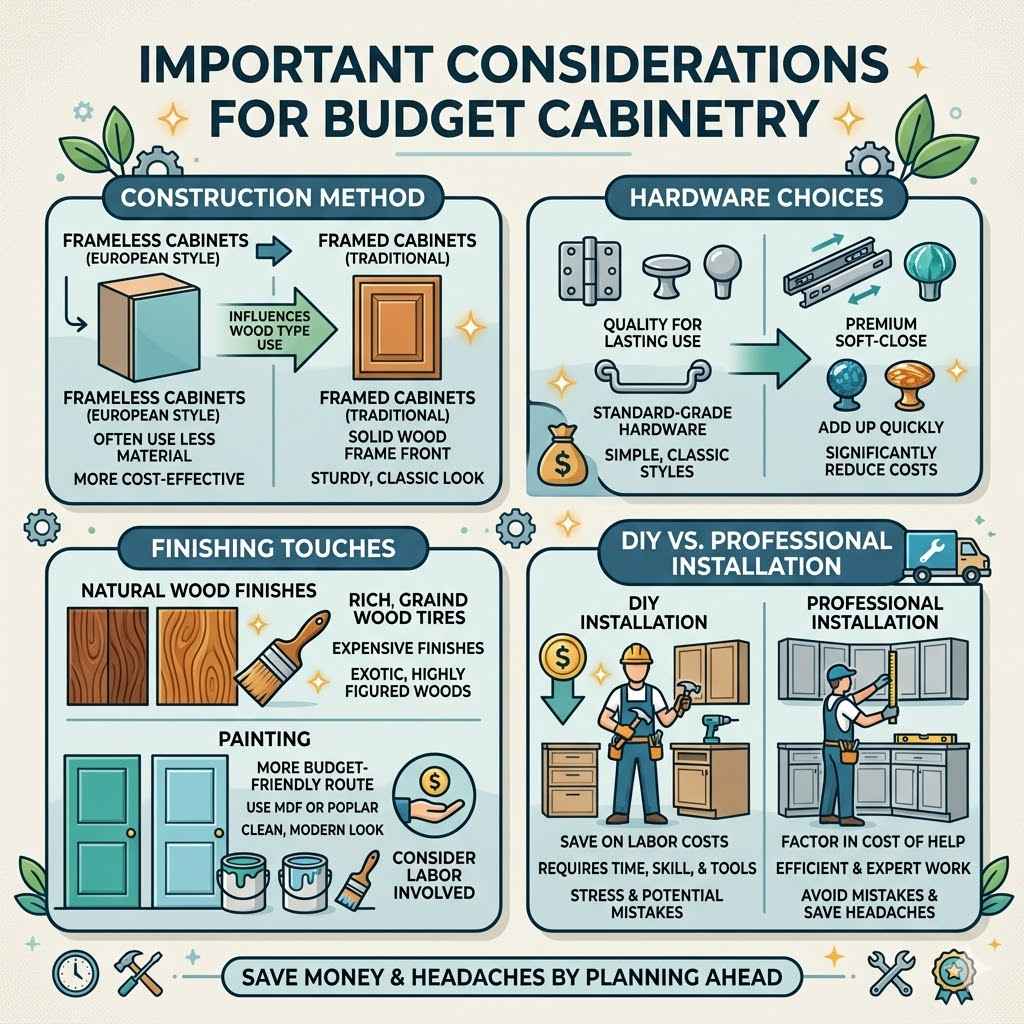
When you’re looking for the cheapest wood for cabinets, it’s not just about the material itself. Several other factors play a big role in the final cost and overall value. Thinking about these details ahead of time can save you money and headaches.
Construction Method: The way cabinets are built affects the total cost. Frameless cabinets (European style) often use less material and can be more cost-effective. Framed cabinets have a solid wood frame on the front. The construction method can also influence the type of wood or engineered material you can use most effectively.
Hardware Choices: Hinges, drawer slides, and knobs or pulls can add up quickly. While you want quality that lasts, opting for standard-grade hardware instead of premium soft-close options can significantly reduce costs. Simple, classic hardware styles often cost less and look great.
Finishing Touches: The finish you choose is a major cost factor. Natural wood finishes can be expensive, especially if you choose exotic or highly figured woods. Painting, especially with MDF or poplar, is often a more budget-friendly route. Consider the labor involved in the finish, too.
DIY vs. Professional Installation: Installing cabinets yourself can save a lot on labor costs. However, this requires time, skill, and tools. If you’re not comfortable with installation, factor in the cost of professional help. Sometimes, the savings from DIY aren’t worth the stress or potential mistakes.
Frequently Asked Questions
Question: What is the absolute cheapest wood for cabinets
Answer: Pine is typically the least expensive wood option for cabinets, especially for DIY projects. Its softness and availability make it budget-friendly, though it can dent more easily.
Question: Is plywood a good option for cabinet boxes
Answer: Yes, furniture-grade plywood is an excellent and cost-effective option for cabinet boxes. It is strong, stable, and less prone to warping than solid wood.
Question: Can I paint inexpensive wood for cabinets
Answer: Absolutely. Poplar and MDF are fantastic choices for painted cabinets. They offer smooth surfaces that take paint very well, giving a clean, modern look.
Question: What is the best value for painted cabinets
Answer: For painted cabinets, the best value usually comes from using MDF for doors and drawer fronts and good quality plywood for the cabinet boxes. This combination is affordable and provides a durable finish.
Question: Are laminate cabinets a good choice for low budgets
Answer: Yes, laminate cabinets are a very budget-friendly choice. They offer a wide range of designs and are durable and easy to clean, making them a great value for the price.
Summary
For the Least Expensive Wood for Cabinets: Best Value Guide 2026, pine, poplar, and alder are top wood choices. Engineered options like plywood and MDF offer great value for boxes and painted fronts. Laminate and thermofoil provide affordable, durable finishes.
Focus on these materials for savings.