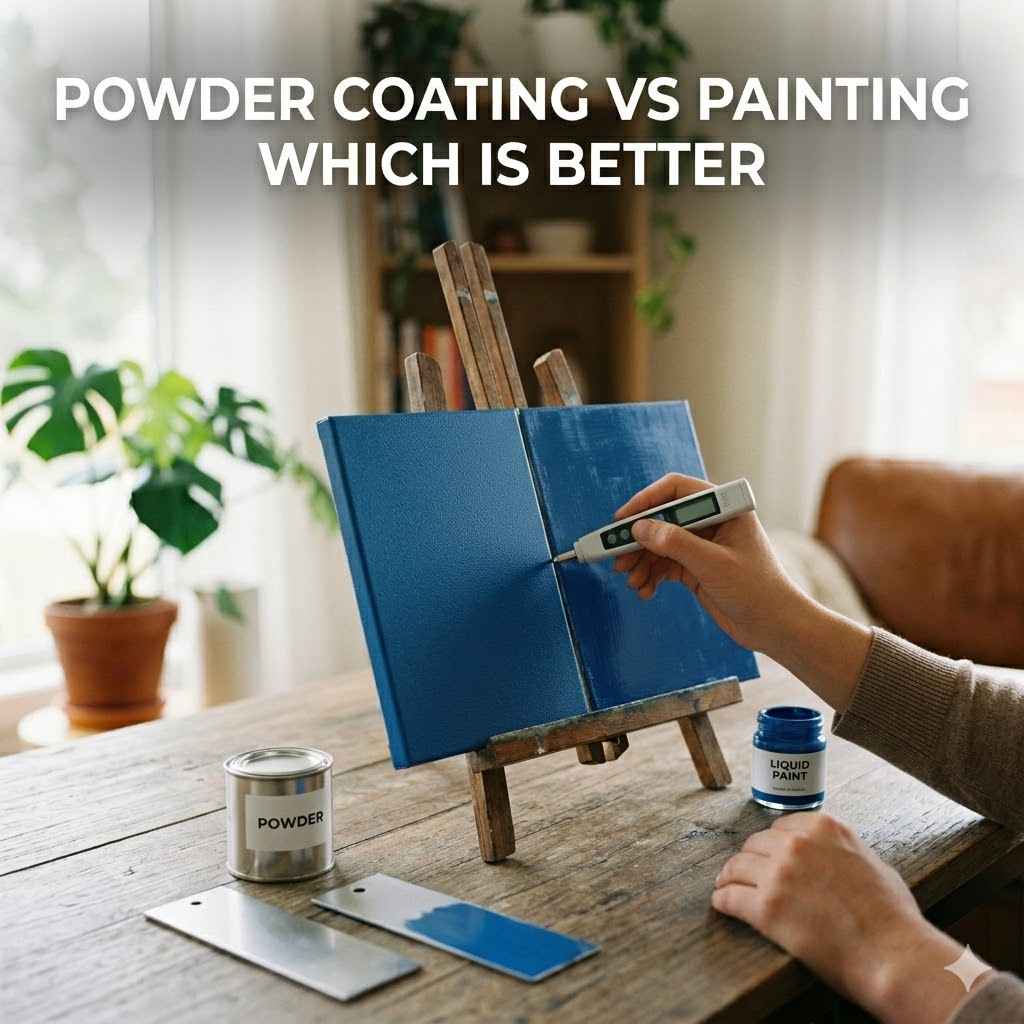
Powder Coating vs Painting Which Is Better
Choosing between powder coating and painting can feel tricky, especially if you’re new to finishing projects. Both methods make things look good and protect them, but they work differently and have unique pros and cons. It’s common to wonder which one is the right choice for your needs.
Don’t worry, we’ll break down Powder Coating vs Painting: Which Is Better? in a simple way. We’ll look at what makes each one special so you can pick the best option for your project. Let’s see what these finishes can do.
Understanding Powder Coating and Painting
This section explains the basic differences between powder coating and traditional liquid painting. We will look at how each process works, the materials involved, and the fundamental application methods. This helps set the stage for understanding why one might be preferred over the other in different situations.
It’s about getting a clear picture of the starting point.
What Is Powder Coating
Powder coating is a finishing process where a dry powder, made from finely ground pigments and resin, is applied electrostatically to a surface. This charged powder sticks to the electrically grounded object. Once applied, the object is heated in a curing oven.
The heat melts the powder, causing it to flow and form a smooth, continuous, and durable coating. It’s a bit like baking a cake, but for metal or other materials.
The powder itself is made of several components. There are resins that form the main film, pigments for color, curing agents that help the coating harden, and additives for specific properties like flow or texture. The type of resin used—like polyester, epoxy, or a mix—determines the coating’s resistance to chemicals, UV light, and physical damage.
The electrostatic application is a key part of powder coating. A spray gun uses high voltage to charge the powder particles. As the particles move towards the object, they are attracted to it because the object is grounded.
This ensures that even hard-to-reach areas and corners get a good coat. The efficiency of material use is high because overspray can often be collected and reused.
What Is Liquid Painting
Liquid painting involves applying a liquid coating, such as enamel, latex, or urethane paint, using various methods like spraying, brushing, or rolling. The liquid paint contains pigments, binders (resins), solvents, and additives. Once applied, the solvents evaporate, and the binders cure and harden, forming a protective and decorative film on the surface.
This is the more traditional and familiar method of applying color and protection.
The binders in liquid paint are what hold the pigment particles together and make the paint stick to the surface. Solvents, like water or mineral spirits, are used to dissolve the binders and make the paint thin enough to apply smoothly. As the paint dries, these solvents evaporate into the air, leaving behind the solid coating.
This evaporation process can sometimes release volatile organic compounds (VOCs), which can be an environmental concern.
Paint can be applied in many ways. Spray guns are common for smooth, even finishes, especially on large or complex items. Brushes and rollers are useful for smaller areas or when a specific texture is desired.
The thickness of the paint layer can be controlled by the applicator and the type of paint used. Multiple coats are often applied to achieve the desired depth of color and level of protection.
Key Differences Summarized
The primary distinction lies in their physical state during application. Powder coating uses a dry powder applied electrostatically and then heat-cured. Liquid painting uses a liquid form applied by various means, with solvents evaporating for drying.
This difference leads to variations in durability, environmental impact, and application process.
Application Process
Powder coating requires specialized equipment, including an electrostatic spray gun and a curing oven. The object must be clean and often pre-treated. The spray gun charges the powder, which adheres to the grounded object.
Then, it goes into an oven to melt and cure.
Liquid painting can be done with simpler tools like brushes or rollers, or with spray guns. It doesn’t typically require a curing oven, as it air dries through solvent evaporation or chemical reactions. Pre-treatment is still important for good adhesion.
Durability and Performance
Powder coating generally offers a tougher, more resilient finish. It is highly resistant to chipping, scratching, fading, and corrosion. The uniform, thicker film created by powder coating provides excellent protection against wear and tear.
Many powder coatings are also resistant to chemicals and UV radiation, making them suitable for outdoor use.
Liquid paints vary widely in durability. High-quality paints, like automotive-grade enamels or two-part polyurethanes, can offer good protection and longevity. However, many common paints may be more prone to chipping, scratching, and fading over time, especially when exposed to harsh conditions.
The effectiveness depends heavily on the paint formulation and application quality.
Advantages of Powder Coating
Powder coating offers several compelling advantages that make it a preferred choice for many applications. Its superior durability, environmental friendliness, and efficient application process contribute to its growing popularity. We’ll explore these benefits in detail to understand why it stands out.
Superior Durability and Protection
One of the biggest draws of powder coating is its exceptional toughness. The fused powder creates a seamless, non-porous finish that is remarkably resistant to impacts, scratches, and chips. This makes it ideal for items that experience heavy use or are exposed to rough handling.
Unlike traditional paint, powder coating doesn’t crack or peel easily, providing long-lasting protection against wear and tear.
Furthermore, powder coatings offer excellent corrosion resistance. Because the coating is a continuous film without the tiny pinholes that can sometimes occur in liquid paint, it acts as a superior barrier against moisture and corrosive substances. This is particularly important for metal parts that might be exposed to the elements or chemicals.
Many powder coatings also resist fading from UV exposure, keeping items looking vibrant for years.
Environmental Friendliness
Powder coating is considered more environmentally friendly than traditional liquid painting. A key reason for this is that it contains no volatile organic compounds (VOCs). VOCs are solvents found in many liquid paints that can evaporate into the atmosphere during the drying process, contributing to air pollution and potential health issues.
Since powder coating uses a dry powder and is cured by heat, there are no VOC emissions.
Another environmental benefit is the efficiency of the application. Overspray in powder coating can often be collected and reused, meaning less material waste. This high transfer efficiency minimizes the amount of material that ends up in landfills or as hazardous waste.
The reduced need for solvents also means less packaging and transport of hazardous materials.
Efficiency and Cost-Effectiveness
While the initial setup for powder coating might seem more involved, it can be very cost-effective in the long run. The durability of the finish means items coated with powder require less frequent maintenance and touch-ups, saving on labor and material costs over their lifespan. The longevity of the coating also reduces replacement costs for frequently used items.
The high transfer efficiency of powder coating also contributes to cost savings. A larger percentage of the applied powder actually adheres to the part, meaning less material is wasted compared to some liquid painting methods. Although powder itself might sometimes be more expensive per pound than basic liquid paint, the overall operational costs can be lower due to reduced waste, fewer reworks, and less need for extensive ventilation systems compared to spray painting.
Advantages of Liquid Painting
Liquid painting has been the go-to method for finishing surfaces for a long time, and it still holds significant advantages. Its versatility, ease of application, and wide range of available finishes make it a practical and popular choice for many projects. Let’s explore why liquid painting remains a strong contender.
Versatility in Application
Liquid painting is incredibly versatile. It can be applied to a vast array of materials, including metal, wood, plastic, plaster, and more. The application methods are also diverse, ranging from simple brushstrokes for detailed work to professional spray application for smooth, uniform finishes.
This adaptability means liquid paint can be used for everything from small DIY projects to large-scale industrial coatings.
The range of finishes achievable with liquid paint is also enormous. You can find paints in almost any color imaginable, with different sheens from matte to high gloss, and even special effects like metallic or textured finishes. This allows for a high degree of customization and aesthetic control, making it possible to achieve very specific looks.
Ease of Application and Touch-Ups
One of the most significant advantages of liquid painting for many users is its ease of application, especially for DIY projects. Basic painting can be done with readily available tools like brushes, rollers, and simple spray cans. This accessibility makes it a practical choice for homeowners and hobbyists who may not have access to specialized industrial equipment.
Repairing liquid paint is also relatively straightforward. If a painted surface gets scratched or damaged, it’s usually possible to touch it up by applying more paint. This is often easier than trying to repair a damaged powder-coated surface, which might require re-coating the entire piece to ensure a uniform finish.
This ease of repair can save time and resources.
Cost-Effectiveness for Small Projects
For smaller projects or when compared to the initial investment in powder coating equipment, liquid painting can be more cost-effective. The materials themselves can be less expensive, especially for common types of paint. Furthermore, the basic tools needed for painting are widely available and affordable, making it an accessible option for individuals and small businesses.
The lack of need for specialized ovens or electrostatic equipment means lower startup costs. If you only need to paint a few items occasionally, buying a few cans of paint and some brushes is much cheaper than investing in a full powder coating setup. This makes liquid painting a very practical choice for DIY enthusiasts and for quick fixes.
Powder Coating vs Painting Which Is Better For You
Deciding between powder coating and liquid painting truly depends on your project’s specific needs and priorities. There isn’t a single “better” option; rather, there’s a more suitable one. We will look at factors like durability, appearance, environmental concerns, and cost to help you make an informed choice.
Durability Needs
If your project demands extreme toughness and resistance to wear, chips, and corrosion, powder coating is generally the superior choice. Items that will be frequently handled, exposed to harsh weather, or subjected to significant stress benefit greatly from the robust nature of a powder-coated finish. For instance, outdoor furniture, automotive parts, and industrial equipment often use powder coating to ensure longevity.
However, if your project is primarily decorative or will not face extreme conditions, high-quality liquid paint can provide adequate protection and a beautiful finish. For indoor furniture, wall art, or items that are not handled roughly, liquid paint can be perfectly sufficient and more cost-effective.
Appearance and Finish Options
Both powder coating and liquid painting offer a wide range of colors and finishes. Powder coating excels in producing smooth, uniform, and aesthetically pleasing results, often with a satin or matte appearance, though glossy finishes are also available. It tends to have a more consistent look across the entire surface.
Liquid painting offers an even broader spectrum of finishes, including intricate effects like pearlescent, metallic, and textured looks that are harder to achieve with powder coating. If you are aiming for a very specific or unique visual style, liquid paint provides more flexibility. The ability to achieve a perfectly smooth, mirror-like gloss is often easier with liquid paints.
Environmental and Health Considerations
When environmental impact and health are major concerns, powder coating has a distinct advantage due to its lack of VOCs. This makes it a much cleaner option for both the environment and the applicators. If you are working in an area with strict air quality regulations or have personal health sensitivities, powder coating is the preferred choice.
While advances have been made in low-VOC and water-based liquid paints, many traditional paints still release VOCs. If choosing liquid paint, selecting eco-friendly options and ensuring proper ventilation during application is important.
Budget and Scale of Project
For large-scale industrial applications or projects where long-term durability is paramount, powder coating can be more cost-effective due to its longevity and reduced maintenance. The initial investment in equipment might be higher, but it can pay off over time.
For small DIY projects, occasional use, or when budget is the primary constraint, liquid painting is usually the more economical choice. The low cost of materials and basic tools makes it accessible for anyone. If you need to paint just one item or a small batch, liquid paint is almost always the cheaper option.
Real-Life Examples
Consider a bicycle frame. For a mountain bike that will be ridden on rough trails, subjected to rocks, mud, and impacts, powder coating offers superior chip and scratch resistance, maintaining its appearance and protecting the metal from rust for longer. For a casual cruiser bicycle used on smooth paths, a good quality liquid paint might suffice, offering a wider range of color choices and being more budget-friendly for a hobbyist.
Another example is outdoor signage. A metal sign exposed to sun, rain, and wind will benefit immensely from the corrosion and UV resistance of powder coating, ensuring it remains legible and attractive for many years. A temporary banner or a sign for indoor use might be adequately served by a durable liquid paint, offering quicker application and lower cost.
| Feature | Powder Coating | Liquid Painting |
|---|---|---|
| Durability | Very High (chip, scratch, corrosion resistant) | Varies (can be good with high-quality paints) |
| VOCs | None | Present in many types |
| Application | Electrostatic spray, heat cure | Spray, brush, roll; air or heat cure |
| Finish Options | Smooth, consistent, good color range | Vast color and effect options |
| Cost (Initial) | Higher equipment cost | Lower equipment cost |
| Cost (Long Term) | Often lower due to durability | Can be higher due to maintenance/re-coating |
Maintenance and Repair
When considering the long-term care of a finished surface, the maintenance and repair aspects of both powder coating and liquid painting play a significant role in their overall practicality. Understanding these differences can influence your choice, especially for items that require ongoing upkeep or are prone to damage.
Powder Coating Maintenance
Powder-coated surfaces are known for their low maintenance requirements. Due to their inherent durability and resistance to environmental factors, they typically only need routine cleaning to keep them looking their best. A simple wash with mild soap and water is usually sufficient to remove dirt, grime, or salt residue.
It’s important to avoid abrasive cleaners or harsh chemicals that could potentially dull the finish.
The resistance to chipping and peeling means that powder coating stays intact for a long time, reducing the need for frequent touch-ups. This makes it a very hands-off option once applied. Even when exposed to elements like UV rays or moisture, the coating generally holds up well without significant degradation.
Repairing Powder Coating
Repairing minor damage to powder coating can be challenging and often requires re-coating. Small scratches or chips might be noticeable, and trying to “touch up” with liquid paint can result in a mismatch in texture, sheen, and durability, making the repair visible. For significant damage, it’s usually best to have the entire part stripped and re-coated to achieve a uniform and durable finish.
There are some specialized kits and techniques for repairing powder coating, particularly for very small areas or deep scratches. However, these repairs may not always blend seamlessly with the original coating. For most people and for optimal results, professional re-coating is the recommended solution for damaged powder-coated items.
Liquid Painting Maintenance
The maintenance of liquid-painted surfaces varies greatly depending on the quality of the paint and its application. High-quality, well-applied paints will require less frequent cleaning and are more resistant to staining and fading. Generally, most painted surfaces can be cleaned with mild detergents and water.
However, liquid paints are more susceptible to wear and tear. They can chip, scratch, fade, and be affected by solvents or harsh cleaning agents over time. Regular inspection for signs of damage is important to prevent more extensive issues like rust formation if the coating is compromised.
Repairing Liquid Painting
One of the major advantages of liquid painting is the ease of repair. Minor scratches, chips, or scuffs can often be easily fixed by cleaning the area, applying a primer if necessary, and then painting over the damaged spot. With a little care and the right paint match, these repairs can be virtually unnoticeable.
For larger areas of damage, liquid paint still offers a simpler repair process than powder coating. You can often re-paint an entire panel or section without needing specialized equipment like a curing oven. This makes liquid paint a more forgiving option for projects that might experience wear and tear or require frequent aesthetic updates.
Frequently Asked Questions
Question: Is powder coating more durable than paint?
Answer: Yes, generally powder coating is considered more durable. It is highly resistant to chipping, scratching, fading, and corrosion, offering a tougher finish than most liquid paints.
Question: Which is better for outdoor use powder coating or painting?
Answer: Powder coating is often better for outdoor use due to its superior resistance to UV rays, moisture, and corrosion, which helps it last longer in harsh weather conditions.
Question: Can you paint over powder coating?
Answer: It is possible to paint over powder coating, but it can be difficult. The surface typically needs thorough cleaning and preparation, and adhesion might be an issue. It’s often best to strip and reapply rather than paint over.
Question: Is powder coating more expensive than painting?
Answer: The initial cost of powder coating can be higher due to equipment and specialized application. However, over the long term, its superior durability and lower maintenance needs can make it more cost-effective.
Question: Which method is more environmentally friendly powder coating or painting?
Answer: Powder coating is more environmentally friendly because it contains no volatile organic compounds (VOCs) and produces less waste compared to many liquid painting processes.
Conclusion
Choosing between powder coating and painting depends on your priorities. If unmatched durability, corrosion resistance, and environmental safety are key, powder coating is the strong winner. For broad creative options, easier repairs, and budget-friendly small jobs, liquid painting shines.
Both offer excellent protection and aesthetics when applied correctly.