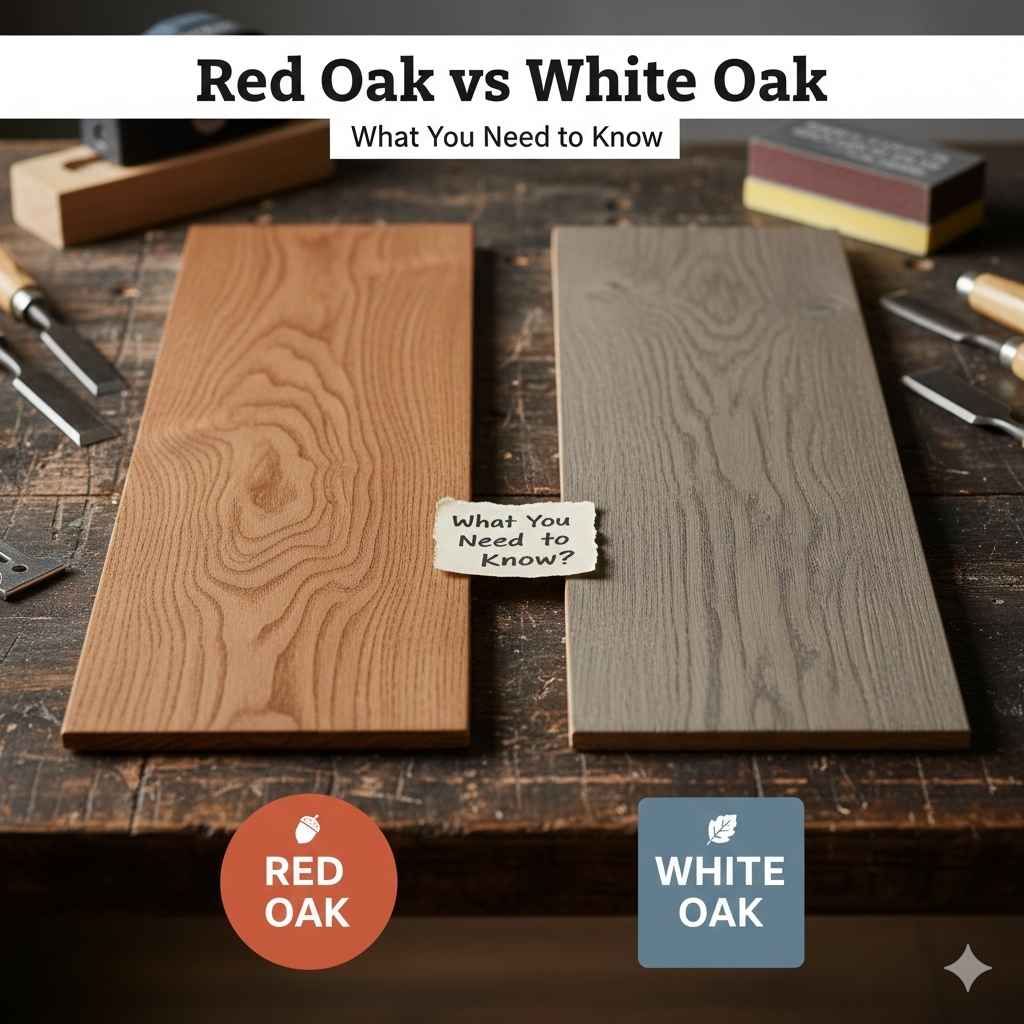
Red Oak vs White Oak: What You Need to Know
Figuring out the differences between Red Oak vs White Oak: Key Differences Explained can seem tricky at first. Many people find it hard to tell them apart, and that’s okay! Don’t worry, though. This post will break it down in a simple way. We’ll explore each type of oak tree, so you can easily spot the key differences. Get ready to learn some cool facts about these trees and how to tell them apart with helpful visuals and examples.
Comparing Red Oak and White Oak: An Overview
Red oak and white oak are two common types of trees found in many forests. They both belong to the oak family, but they have distinct traits. Their wood is used for many different things, from making furniture to building houses. Knowing the difference is important if you’re a woodworker, a homeowner, or just someone who enjoys nature. We’ll start with a general overview of each type, covering how they look, where they grow, and what makes them special. That gives you a foundation for what’s next.
Appearance and Characteristics
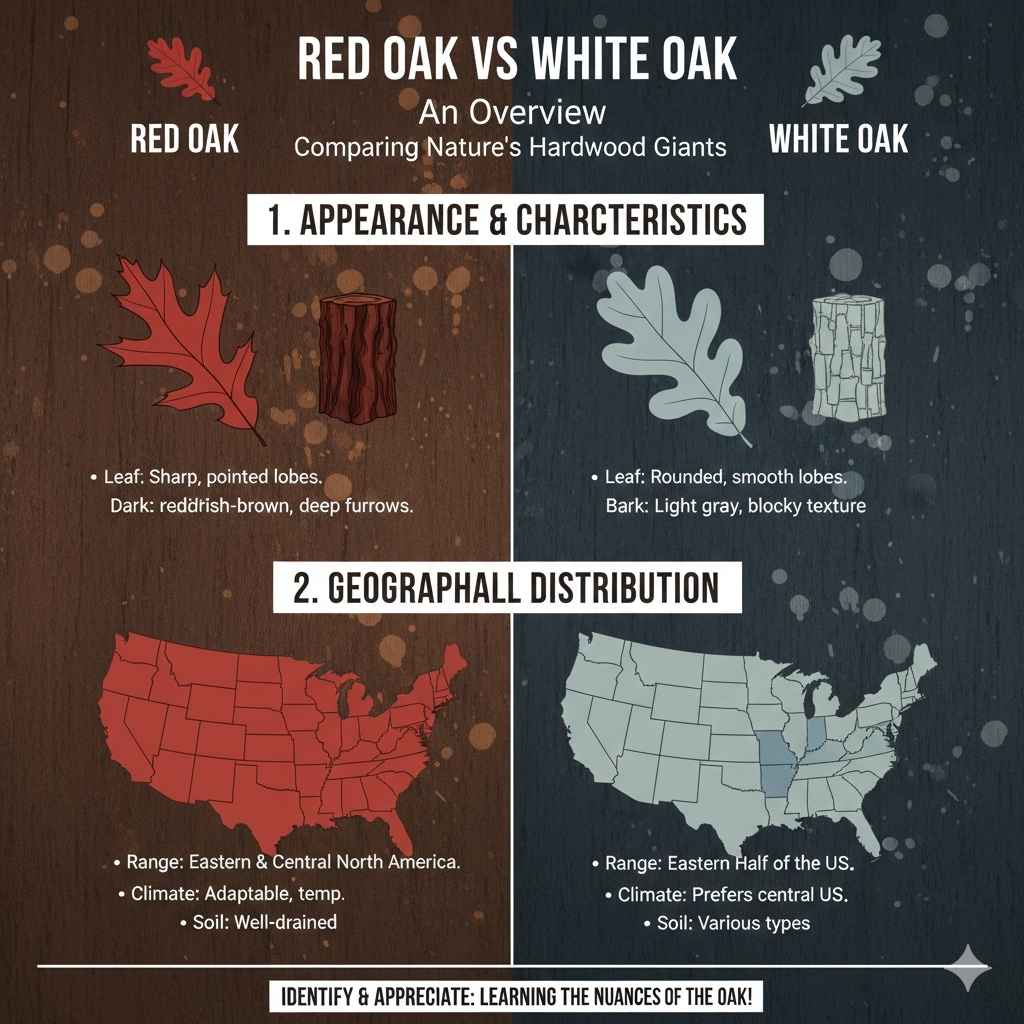
The first thing people notice is how they look. Red oaks and white oaks have different leaf shapes and bark textures. Red oaks typically have leaves with pointed lobes, like the tips of a crown. Their bark has ridges with a reddish tone. White oaks have rounded lobes on their leaves, like a gentle wave, and their bark is usually lighter gray and has a blocky texture. These visual differences are often the easiest way to tell them apart when you see them in the forest. Further, you may notice these differences from up close, so let’s explore.
- Leaf Shapes: Red oak leaves have sharp, pointed lobes, while white oak leaves have rounded lobes.
- Bark Texture and Color: Red oak bark is often dark with reddish tones and smooth ridges. White oak bark is lighter gray and has a blocky appearance.
- Acorns: The acorns of red oaks mature in two years and have a shallow cap. White oak acorns mature in one year and often have a warty cap.
- Size and Growth: Both can grow very tall, but their speed of growth and overall size can vary depending on the area.
These features give you a general idea of what to expect when you encounter these trees in their natural settings. The leaves, bark, and acorns of each type are key indicators. Once you learn to recognize these, identifying the tree becomes much easier. It’s like learning the alphabet before you can read a book.
Geographical Distribution
Where these trees grow can also give you clues. Red oaks are found across a wider area, from the eastern United States all the way to the Midwest. White oaks are also common in the eastern United States, but their range may be slightly more focused on the central and eastern regions. They like different climates and soil types. The presence of one species versus the other can depend on the environment, providing useful context. Knowing the typical locations can help narrow down which tree you are likely looking at.
- Red Oak Range: Widely distributed across eastern and central North America.
- White Oak Range: Primarily found in the eastern half of the United States.
- Climate Preferences: Both grow in temperate climates, but they adjust to different levels of moisture and sun exposure.
- Soil Requirements: Both prefer well-drained soil, but they can adapt to a variety of soil types.
The region you’re in provides an important clue. If you’re in the Midwest, you’re more likely to see a red oak. If you’re in the coastal areas of the East Coast, you might encounter a white oak. The local area helps provide clues about which oak you are looking at.
Wood Properties of Red Oak and White Oak
The type of wood determines its usefulness. The qualities of the wood play a big role in how it’s used. Both red oak and white oak wood are popular in the construction and furniture industries, but they have distinct traits. Knowing these can help you decide which wood is best for a specific project. We’ll cover the details of each, including their grain, hardness, and resistance to water.
Grain and Texture
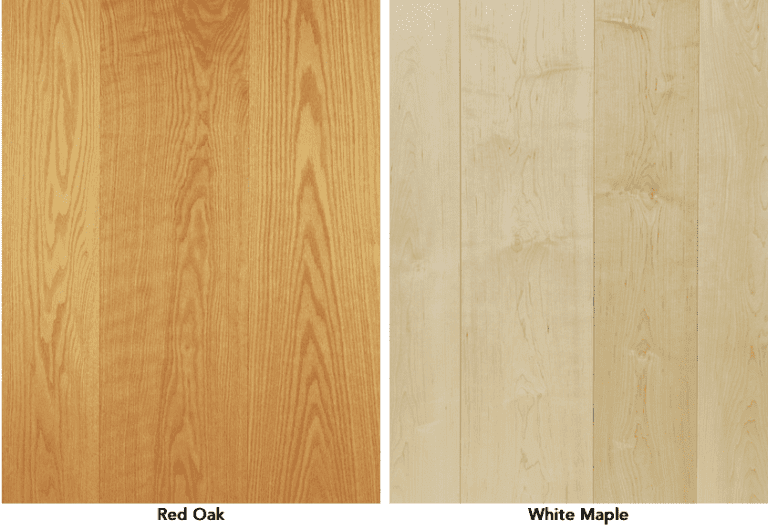
The grain of wood affects its look and strength. Red oak has a coarser grain, which gives it a more open texture. This makes the wood appear rougher. White oak has a tighter, finer grain, resulting in a smoother texture. This different grain creates visual and functional differences. Knowing these distinctions can help you determine the kind of use for which they are best suited.
- Red Oak: Has a more open and porous grain, which creates a rougher texture.
- White Oak: Has a tighter grain with fewer pores, leading to a smoother texture.
- Appearance: Red oak often has more prominent grain patterns. White oak has a more uniform, refined appearance.
- Workability: The grain influences how easy the wood is to cut, shape, and finish.
The texture affects how the wood feels and how it absorbs finishes. When you run your hand across a finished piece of wood, the grain makes a big difference. The grain also changes how the wood behaves when it’s being worked, such as sawing or drilling.
Durability and Water Resistance
These qualities are important, especially if the wood will be exposed to moisture or wear. White oak is known for its excellent resistance to water, due to the structure of its cells. This resistance makes it a great choice for things like boat building and outdoor furniture. Red oak is less resistant to water but is still a durable wood. Its durability can be suitable for a variety of indoor projects. These differences make one tree a better choice than the other.
- Water Resistance: White oak is naturally resistant to water because of tyloses (blockages in the pores), making it ideal for wet environments.
- Decay Resistance: Both are moderately resistant to decay, but white oak generally lasts longer outdoors.
- Strength: Both types of wood are strong. However, white oak is slightly more durable for certain applications.
- Uses: Due to these different properties, white oak is frequently used for boat building, while red oak is well-suited for furniture and flooring.
Knowing this information helps you make an informed decision. For example, if you’re building a deck, white oak would be a better choice. For indoor furniture, red oak would work well. Understanding the durability and water resistance will increase the longevity and suitability of a project.
Practical Applications of Red Oak vs White Oak
The unique qualities of each wood type lead to its selection for different tasks. Red oak and white oak are used in construction, furniture making, and other crafts. Understanding these applications helps illustrate the practical value of knowing the differences. Let’s see how each wood shines in the real world.
Building and Construction
In construction, both red oak and white oak are commonly used, but for different purposes. White oak is favored for exterior applications. Red oak is often used for indoor elements. The choice depends on the specific project and the environment. This means there’s a big impact depending on which wood you select for the job. Let’s explore the uses of the two types in construction.
- Flooring: Both are used for flooring, but white oak’s water resistance makes it a favorite for areas prone to moisture.
- Cabinets: Red oak is often used to make beautiful and durable cabinets.
- Framing: Both can be used, but white oak may be preferred where moisture resistance is a priority.
- Exterior: White oak is excellent for outdoor decking and siding, thanks to its durability against the elements.
This is where the qualities we’ve already discussed come into play. White oak’s ability to resist water makes it ideal for outdoor uses. Red oak is a perfect choice for cabinets and interior trim, adding beauty and strength to your home. Selecting the right wood will make a real difference in the quality and longevity of your building projects.
Furniture and Crafts
The same characteristics that make these trees suitable for construction also influence their use in furniture and crafts. Red oak is popular for its beautiful grain pattern, while white oak is valued for its strength and its ability to withstand wear. Each has a special role. Let’s look at how furniture makers and craftspeople use them.
- Furniture: Red oak is a top choice for tables, chairs, and other furniture. White oak provides strength and durability to pieces of furniture.
- Crafts: Both are great for various crafts, from carving to turning, due to their workability.
- Finishing: Red oak accepts stains and finishes well. White oak also takes finishes easily, with its tight grain giving it a sleek look.
- Design: Woodworkers choose the best type based on their project’s appearance and performance needs.
Whether you’re making a dining table or a small wooden box, these woods offer excellent options. White oak is great where longevity is key. Red oak is great when you want a beautiful look. This gives designers options for their projects.
Key Differences Summarized
Let’s sum up the main differences between red oak and white oak. This will help you easily recognize these trees and choose the best wood for your needs. The key features we’ve covered have a significant effect on the wood’s appearance, performance, and where and how it is most suitable. Here’s a quick comparison:
| Feature | Red Oak | White Oak |
|---|---|---|
| Leaves | Pointed lobes | Rounded lobes |
| Bark | Reddish tones, ridges | Light gray, blocky |
| Acorns | Two-year maturation, shallow cap | One-year maturation, warty cap |
| Grain | Coarse, open | Fine, tight |
| Water Resistance | Less resistant | Highly resistant |
| Common Uses | Furniture, cabinets, flooring | Boats, outdoor furniture, decking |
This side-by-side comparison makes it easier to remember the key points. This quick guide will help you identify the species you are dealing with. Using it will make you more confident. You can now tell the difference at a glance. It will help make choosing the right wood for projects easier.
Real-Life Examples and Scenarios
To really cement your knowledge, let’s explore some real-life examples and situations where you might encounter these trees. This makes it easier to understand their applications and the impacts of selecting one type over the other.
- A homeowner wants to build a deck. They want a wood that will last for years, withstanding rain and sun. After learning about the two types of oak, they choose white oak due to its greater water resistance and durability.
- A furniture maker is creating a dining table. They choose red oak for its beautiful grain patterns. They stain and finish the wood to enhance its natural appearance.
- A boat builder needs a wood to create a sturdy hull. The boat builder selects white oak for its water resistance and strength. This protects the boat.
These real-world examples give you a clearer idea of how each type of wood is used and what makes it the right choice for a specific job. Seeing these applications in action makes the differences more meaningful and helps you apply your new knowledge.

Frequently Asked Questions
Question: How can I tell the difference between red oak and white oak trees in winter?
Answer: Even when the leaves are gone, the bark is a good indicator. Red oak has darker bark with ridges, and white oak has lighter, blockier bark. You can also look at the shape of the buds, which also provides clues.
Question: Which type of oak is best for outdoor projects?
Answer: White oak is generally the better choice for outdoor projects because it is very resistant to water and decay.
Question: Is red oak stronger than white oak?
Answer: Both types are strong, but white oak is slightly more durable, and better able to withstand wear and tear. Red oak is still very strong and suitable for many uses.
Question: What do you call the process of filling in the pores of wood to make it smooth?
Answer: The process is called wood filling. It’s often done with Red Oak due to its more open grain. This step can improve the appearance of the wood and the way it takes a finish.
Question: Are there any other ways to tell these trees apart?
Answer: Yes, the acorns can help. Red oak acorns take two years to mature, and white oak acorns mature in one year. Also, the size and shape of the tree can vary, but this is less reliable than other indicators.
Final Thoughts
You now know the main differences between Red Oak vs White Oak: Key Differences Explained. You can identify the differences between the two based on their appearance, wood properties, and common uses. From their leaf shapes and bark textures to their varying levels of water resistance, each type of tree has unique qualities. Red oak is commonly used for furniture and interior projects, while white oak shines in outdoor construction and boatbuilding. You can now approach projects with greater confidence, better understand the trees around you, and make informed choices about your woodworking projects.