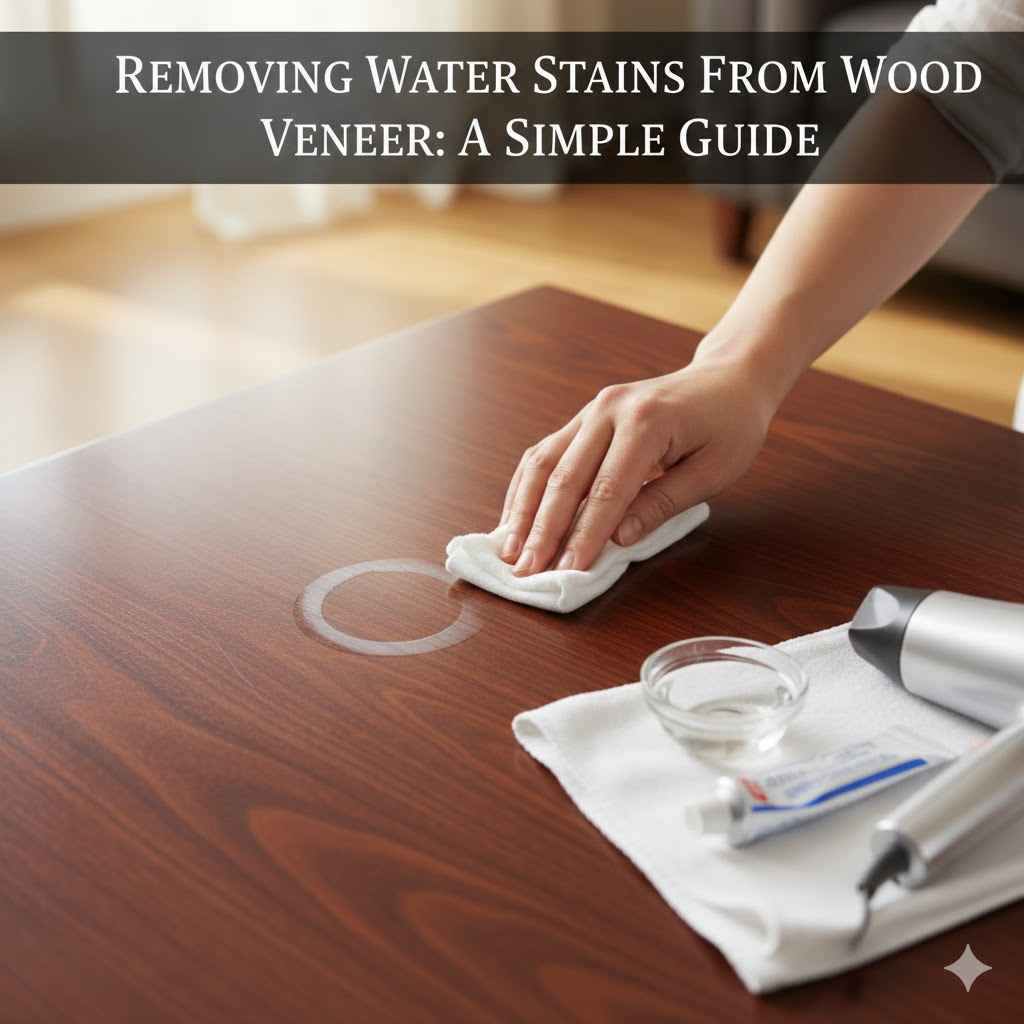
Removing Water Stains From Wood Veneer: A Simple Guide
Dealing with water stains on wood veneer can be a bummer. It’s a common problem because veneer is delicate, and water can easily seep in. Many people find it tough because they worry about making things worse. But don’t sweat it! Cleaning these stains doesn’t have to be hard. We’ll explore the basics of How to Remove White Water Stains From Wood Veneer step by step. Get ready; we’ll show you how to get your wood looking great again.
Recognizing and Assessing Water Damage on Veneer
Before jumping into solutions, you must figure out what you’re up against. Water stains can look different depending on how long the water sat there and the type of finish on the veneer. Some stains are light and superficial, while others are deep and stubborn. This initial assessment will help you pick the best cleaning method. Ignoring this step could lead to ineffective cleaning or, worse, damage to the veneer. You’ll learn to spot different kinds of water damage and how to figure out if your veneer needs a light touch or a bit more muscle.
Types of Water Damage
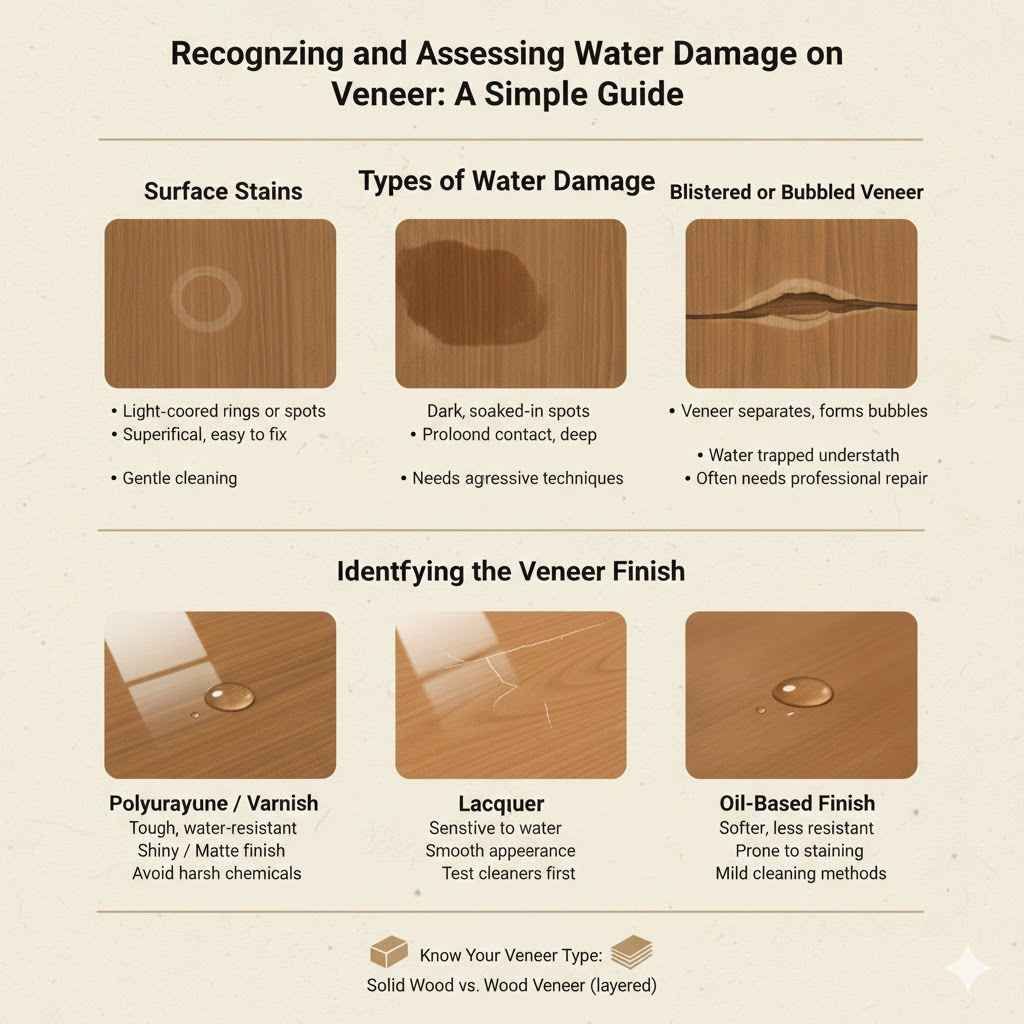
Water damage on wood veneer comes in different forms, each requiring a slightly different approach. Knowing the type of damage helps you choose the right cleaning technique. Different types of water damage create different visual markers and often require varying levels of effort to address. The sooner you identify the problem, the better chance you have of restoring your wood veneer to its former beauty. Common forms of water damage you may find include.
Surface Stains: These are light-colored rings or spots that sit on the surface of the veneer. They often result from brief contact with water and haven’t penetrated deeply into the wood. Surface stains are usually the easiest to fix, responding well to gentle cleaning methods.
Surface stains are usually easy to spot because they’re on the surface. These lighter stains are caused by water that hasn’t seeped in. Usually, a gentle approach with things you might already have around the house is enough to fix these.
Penetrated Stains: These stains appear darker and may seem to have soaked into the wood. These are caused by more prolonged water contact and water has soaked beneath the surface. Penetrated stains need more aggressive techniques because the water has gone deeper into the veneer.
Penetrated stains show that water has been there for a while and gone deep. These are darker stains that can be a bit harder to fix. You’ll need to use techniques to remove the water that soaked into the veneer.
Blistered or Bubbled Veneer: This is the most serious form, where the veneer has separated from the core material, forming bubbles or blisters. This usually happens when water gets between the veneer and the substrate. Blistered veneer often needs professional help, as it may involve replacing the veneer or gluing it back down.
If you see bubbles or blisters, the veneer has come loose, usually because of water trapped underneath. This needs special care and is usually the toughest damage to handle. Sometimes, the veneer needs to be reattached or replaced.
Identifying the Veneer Finish
Understanding the type of finish on your veneer is vital for effective cleaning. Common finishes include polyurethane, lacquer, varnish, and oil-based finishes. Each finish reacts differently to water and cleaning agents. The wrong cleaning method can damage or strip the finish. It’s also important to identify your type of veneer. Solid wood and wood veneer will respond differently to the same cleaning solutions. This knowledge helps you choose cleaning methods and helps you avoid damaging your wood furniture. Knowing the finish helps you select the correct cleaning methods to protect the wood’s beauty.
Polyurethane: This finish is usually tough and water-resistant, often appearing shiny or glossy. It is durable and relatively easy to clean. You can usually use gentle cleaners, but avoid harsh chemicals.
Polyurethane is usually tough, and water rolls right off it. Usually, you can clean it without problems. It is shiny or glossy, which helps you identify it.
Lacquer: Lacquer finishes can be more sensitive to water damage and chemical cleaners. Lacquer finishes typically have a smooth appearance, but they can be more easily affected by water. Always test cleaners in a hidden spot first.
Lacquer can be damaged easier and can be more sensitive. You may have to be more careful here because water and chemicals may cause problems. Always try any cleaning solution in a hidden spot first.
Varnish: Varnish provides a durable protective layer, making the wood more water-resistant. Varnish looks different depending on the type and can range from glossy to matte. Testing cleaners is still a good idea because of the variety of varnish.
Varnish is a good protector, and it handles water better. Varnish can be glossy or matte, but it’s a good idea to test cleaners just to be safe.
Oil-Based Finishes: These often have a softer look and can be more susceptible to water damage and staining. This finish can soak in the water, so it’s best to be careful. Use mild cleaning methods and avoid harsh chemicals.
Oil-based finishes are softer and can be more prone to water damage. Avoid strong cleaners because the finish might get soaked in.
Effective Ways to Remove White Water Stains From Wood Veneer
Once you’ve identified the type of water damage and veneer finish, you can start the cleaning. Many techniques can help you restore your wood veneer. From simple household items to slightly more advanced methods, the following steps are your guide. The key is to start with the least aggressive approach and adjust as needed. You want to bring back the beauty of your furniture without causing more damage.
Using Heat to Remove Stains
Heat can often lift stains from the veneer’s surface. This method works by encouraging moisture to evaporate from the wood. It can be useful for light to moderate water rings. Using heat is one of the oldest methods, often using a hairdryer, and is easy to try before anything else. Remember to use low heat settings and move the heat source constantly to avoid damage. This method is a gentle approach, which is ideal if you’re a beginner.
Hairdryer Method: Set your hairdryer to a low or medium heat setting. Hold it several inches away from the stain and move it in a circular motion. Watch for the stain to fade. Keep moving the hairdryer to avoid overheating a single spot, which can damage the veneer.
A hairdryer is the first step you should try. Keep the heat moving, and use a low setting to remove the water without damage.
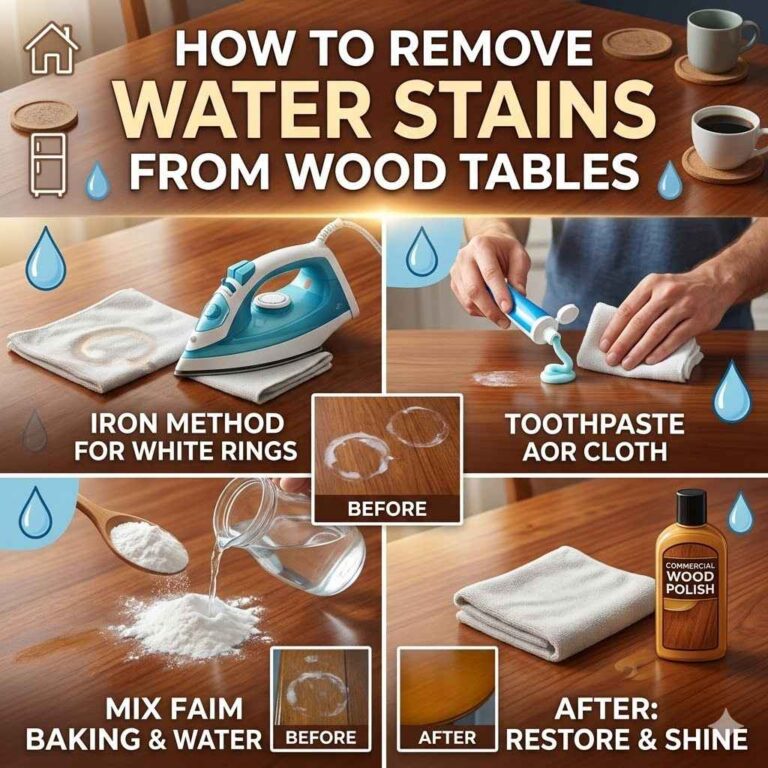
Iron and Cloth Method: Place a clean, dry cloth (like a cotton t-shirt) over the stain. Set your iron to a low heat setting and gently iron over the cloth. Move the iron over the area, applying light pressure. Check frequently to see if the stain is lifting and replace the cloth if it becomes wet. This can be used for more stubborn stains.
If the hairdryer doesn’t work, try an iron and a cloth. Use a low heat setting and apply light pressure to see if the stain starts to lift.
Precautions: Always test these methods in an inconspicuous area first. Overheating can damage the veneer, causing it to blister or discolor. If the stain doesn’t lift with low heat, don’t increase the temperature. Instead, switch to a different method.
Test in a hidden spot first. Use a low heat setting to be safe. If the stain is difficult to remove, try a different solution.
Using Household Solutions
If heat alone isn’t enough, you can use common household items. These methods often work for removing water stains. Remember to test any solution in an area that isn’t seen first to make sure it doesn’t harm the finish. Using a gentle approach is always the best way to remove these white stains. Start with the easiest method and then move on to others, if necessary.
Mayonnaise: Apply a small amount of mayonnaise to the stain. Let it sit for a few minutes, then wipe it off with a clean, soft cloth. The oil in the mayonnaise can help lift the stain.
Mayonnaise can work because it has oil. Put a little mayonnaise on the stain, wait a little while, then wipe it off with a cloth.
Toothpaste: Use non-gel toothpaste and apply a tiny amount to the stain. Gently rub it in with a soft cloth. Wipe away with a clean, damp cloth. The abrasive nature of toothpaste can help lift the stain, but use it with caution to avoid scratching.
Non-gel toothpaste can help rub away the stain. Be careful because the toothpaste can be abrasive and can scratch the wood veneer.
Vinegar and Oil: Mix equal parts of white vinegar and olive oil. Dip a soft cloth in the solution and gently rub the stain. The vinegar can help lift the stain, while the oil helps restore the finish.
Combine white vinegar and olive oil, and then wipe the stain. The vinegar can lift the stain, and the oil can protect the finish.
Cleaning Products and Techniques
When the stain is more stubborn, you may want to use special cleaning products. Always try a test spot before fully applying any cleaning product. This helps you to make sure the solution doesn’t damage the veneer. When using cleaners, follow the directions closely to prevent any harm to the veneer. You can easily remove these stains by taking things slowly.
Wood Polish: Some wood polishes contain ingredients that can help diminish water stains. Apply the polish according to the product directions and buff with a clean cloth. It can restore shine and reduce the stain’s appearance.
Wood polish can sometimes make water stains go away. Follow the directions, and then shine the wood.
Wood Cleaner: Use a wood cleaner meant for the type of finish on your veneer. Spray the cleaner on a cloth, not directly on the veneer. Gently wipe the stain, and then wipe with a clean, damp cloth. Wood cleaners are formulated to safely clean wood surfaces.
Use wood cleaner. Spray it on a cloth and then clean the stain. Wipe with a damp cloth.
Mineral Spirits: For oil-based finishes, mineral spirits can sometimes help lift stains. Test in a hidden area first. Dip a cloth in the mineral spirits, gently rub the stain, and wipe clean. Be careful using mineral spirits; make sure your room is well-ventilated.
If you have an oil-based finish, try mineral spirits. Be careful and test it in a spot you can’t see.
Preventing Future Water Damage
Preventing water damage is vital to keeping your wood veneer furniture in good condition. Taking the right steps can help you avoid water stains. It’s also better in the long run than having to clean them. Proper care includes protection, regular cleaning, and some smart habits that can protect your veneer furniture. Small actions can save you time and protect your furniture in the long run.
Protective Measures
Protecting your furniture is the best way to avoid water stains. Simple actions can help keep water from damaging your veneer. These protective steps can make a big difference in the wood’s condition and lifespan.
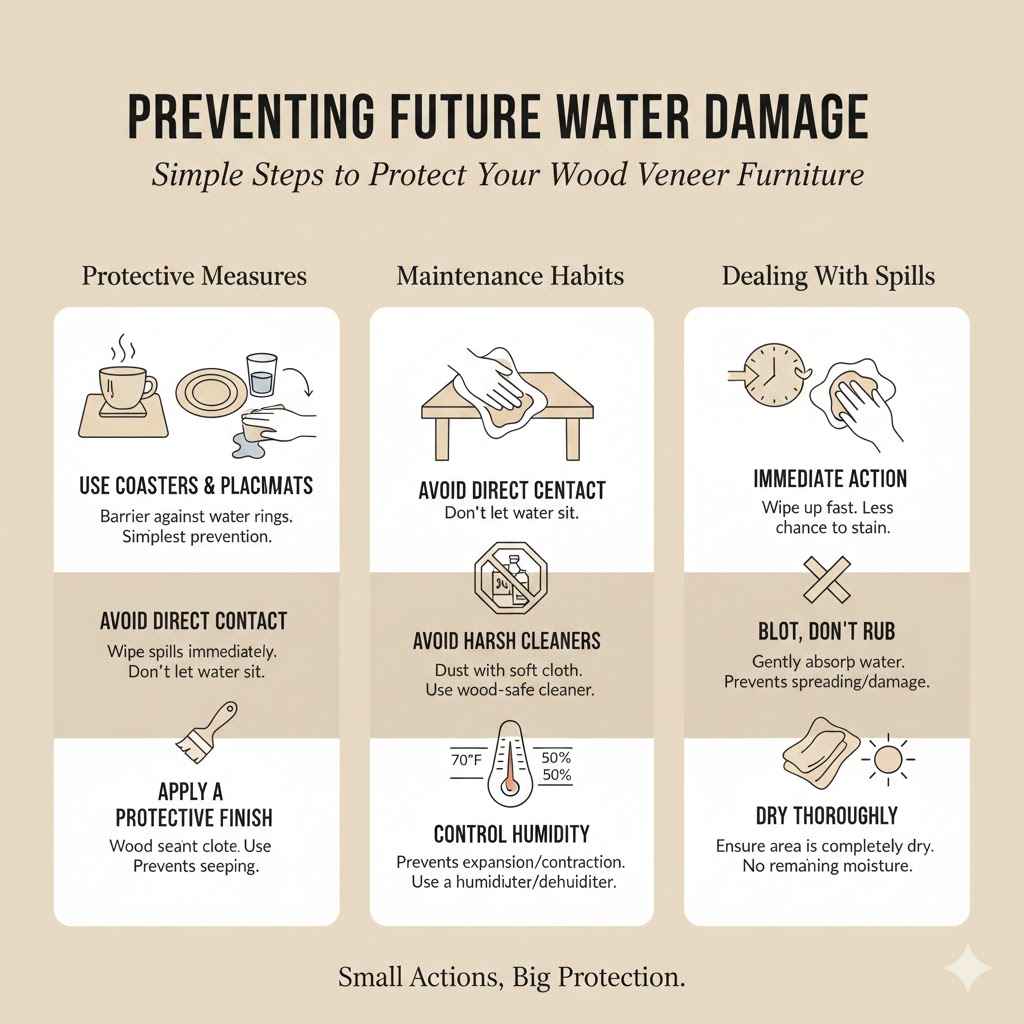
Use Coasters and Placemats: Always use coasters under glasses and placemats under dishes to protect the veneer from water rings. This is the simplest way to prevent direct water contact.
Use coasters under glasses and placemats under dishes to protect the veneer from water rings. This is the simplest way to prevent direct water contact.
Avoid Direct Contact with Water: Wipe up spills immediately. Don’t let water sit on the surface for any amount of time. Even a few minutes can cause stains.
Clean up spills right away, so the water doesn’t sit on the surface.
Apply a Protective Finish: Consider applying a protective finish like a wood sealant. This creates a barrier against water. This helps prevent water from seeping into the veneer.
Consider applying a wood sealant to help protect against water.
Maintenance Habits
Regular care and maintenance are also important to protect your veneer furniture. Regularly cleaning and maintaining your furniture can prevent water stains. These practices can help keep your furniture looking good for years. Make cleaning and maintenance a regular part of your home care routine.
Regular Cleaning: Dust your furniture regularly with a soft cloth. Clean with a wood-safe cleaner occasionally. This helps remove dirt and grime that can make water stains more visible.
Clean your furniture with a soft cloth. Use a safe cleaner now and then.
Avoid Harsh Cleaners: Don’t use harsh chemicals or abrasive cleaners that can damage the finish. Stick to mild soaps or cleaners made for wood. Harsh cleaners can strip away the protective finish and make the veneer more vulnerable.
Don’t use cleaners that are too strong. Use soaps that are made for wood.
Control Humidity: Keep your home at a consistent humidity level. This helps prevent the veneer from expanding and contracting. This can also cause damage and make it more susceptible to water damage.
Keep the humidity level in your home stable to protect your wood veneer.
Dealing With Spills
Knowing how to handle spills right away can make a difference. Taking quick action can stop water from damaging the veneer. Always react immediately to prevent stains from forming.
Immediate Action: When a spill happens, wipe it up immediately with a soft, absorbent cloth. Don’t let the water sit on the veneer. The faster you act, the less likely a stain is to form.
When you spill water, wipe it up fast with a soft cloth.
Blot, Don’t Rub: When cleaning a spill, blot the area gently. Avoid rubbing, which can spread the water and potentially damage the finish. Blotting is gentler and prevents the water from seeping further into the wood.
Gently blot the spill and avoid rubbing.
Dry Thoroughly: After wiping up a spill, ensure the area is completely dry. Use a clean, dry cloth to remove any remaining moisture. This prevents water from causing damage.
After wiping up the spill, make sure the area is completely dry.
Frequently Asked Questions
Question: Can I use bleach to remove water stains from my wood veneer?
Answer: No, you should not use bleach on wood veneer. Bleach can damage or discolor the wood and strip the finish. It’s better to use methods designed for wood.
Question: What’s the best approach if the water stain doesn’t come off?
Answer: Start with gentle methods like heat or mayonnaise. If the stain persists, move on to more aggressive cleaners. Always test in a hidden area first. If all else fails, consider professional help.
Question: How often should I clean my veneer furniture?
Answer: Dust your furniture regularly, at least once a week. Clean with a wood-safe cleaner as needed, depending on how often it’s used and what it’s exposed to. Usually, a few times a year is sufficient.
Question: Can I use furniture polish to protect against water damage?
Answer: Furniture polish can help by creating a barrier, but it doesn’t provide complete protection. It is best to use coasters, and placemats, and clean up spills immediately. It’s not a substitute for proper care.
Question: What should I do if my veneer is peeling or separating from the wood?
Answer: If the veneer is peeling or separating, it needs professional attention. You may try to glue it back, but it might need to be replaced. Contact a furniture repair specialist.
Final Thoughts
Removing water stains from wood veneer can be a manageable task with the right approach. Knowing the type of damage and the veneer finish is key to choosing the right cleaning method. From using heat and household items to cleaning products, you have several options. Start gently and try your way to more aggressive approaches as needed. Following these methods, you will be well on your way to bringing back the appearance of your wood veneer. Taking these steps protects your wood veneer and helps it last a long time.