Sequoias vs Redwoods: Spotting the Differences in Giant Trees
Figuring out Sequoias vs Redwoods: What’s the Difference? can feel tricky at first. These massive trees look alike, so it’s common to get confused. Don’t worry, it’s easier than you think! This post breaks down everything simply. We’ll explore the main differences step by step. Get ready to become a giant tree expert!
What Sets Sequoias and Redwoods Apart?
The first step in differentiating between Sequoias and Redwoods is recognizing their unique characteristics. These giants are both impressive, but they inhabit different areas and have distinct features. Focusing on the basics, like where they grow, their bark, and the shape of their needles, can help you tell them apart. We’ll begin by looking at their homes and then move on to the physical aspects that make them unique.
Home Sweet Home: Where Do They Live?
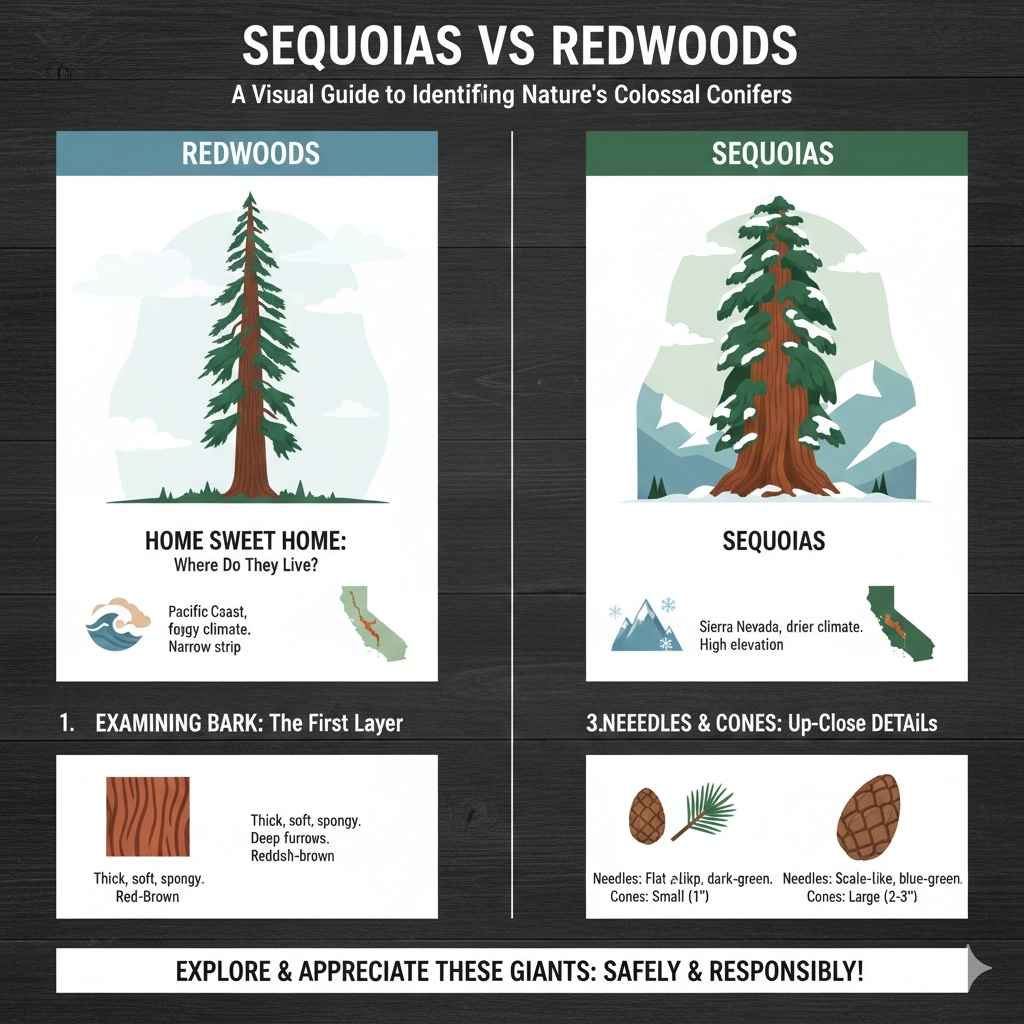
Location is a primary clue. Redwoods primarily grow in a narrow coastal belt along California and a small portion of Southern Oregon. They thrive in the moist, foggy climate. Sequoias, on the other hand, love the drier, high-elevation slopes of the Sierra Nevada Mountains in California. Knowing where you are helps eliminate one tree from the equation. Spotting the area allows you to narrow down the possibilities immediately.
- Redwoods: They love the Pacific Coast, growing in a thin strip near the ocean. The fog helps them get the water they need.
- Sequoias: These trees prefer higher altitudes, usually in the Sierra Nevada mountains. They like the drier conditions there.
- Think Location: If you’re near the coast, it’s likely a redwood. If you’re in the mountains, it’s probably a sequoia.
- Climate Matters: Redwoods like it wet and foggy. Sequoias prefer it drier with snowy winters.
For example, if you are hiking through a forest in Yosemite National Park, you are most likely encountering Sequoias. Conversely, a walk in Muir Woods National Monument almost certainly includes Redwoods. This immediate environmental assessment provides a great starting point for identification.
Examining Bark: The First Layer
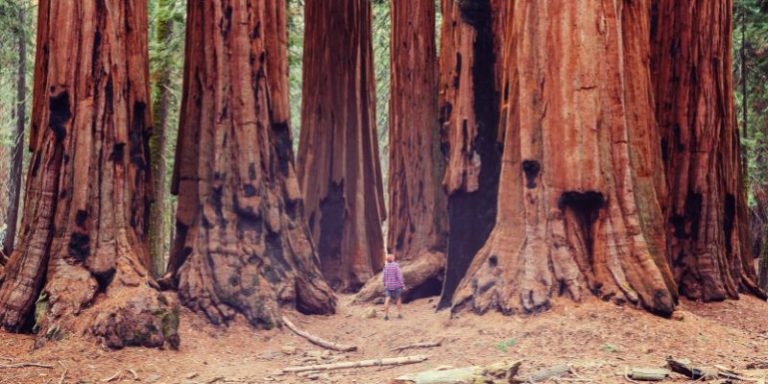
Another easy way to distinguish between the two is by their bark. Redwood bark is thick, spongy, and reddish-brown, often with deep furrows. It feels soft to the touch and helps them resist fire. Sequoia bark is also thick, but it’s more fibrous and a richer reddish-cinnamon color. It feels less spongy and often has a textured appearance.
- Redwood Bark: Soft, spongy, and reddish-brown with deep furrows. Think of it as a soft, protective layer.
- Sequoia Bark: Fibrous, a rich reddish-cinnamon color, and less spongy. It looks almost corded.
- Touch Test: If the bark feels soft and deeply furrowed, it’s likely a redwood. If it’s more textured, it’s a sequoia.
- Color Clues: Redwoods have a reddish-brown color, while Sequoias have a more cinnamon-red hue.
Imagine running your hand along each type of tree. The differences in texture and color are readily noticeable. The Redwood’s bark can appear like thick, soft blankets, whereas the Sequoia’s bark may resemble twisted ropes, offering clues to their differing survival strategies. These strategies have adapted over time to thrive in diverse environments.
Size and Shape: Seeing the Bigger Picture of Sequoias vs Redwoods
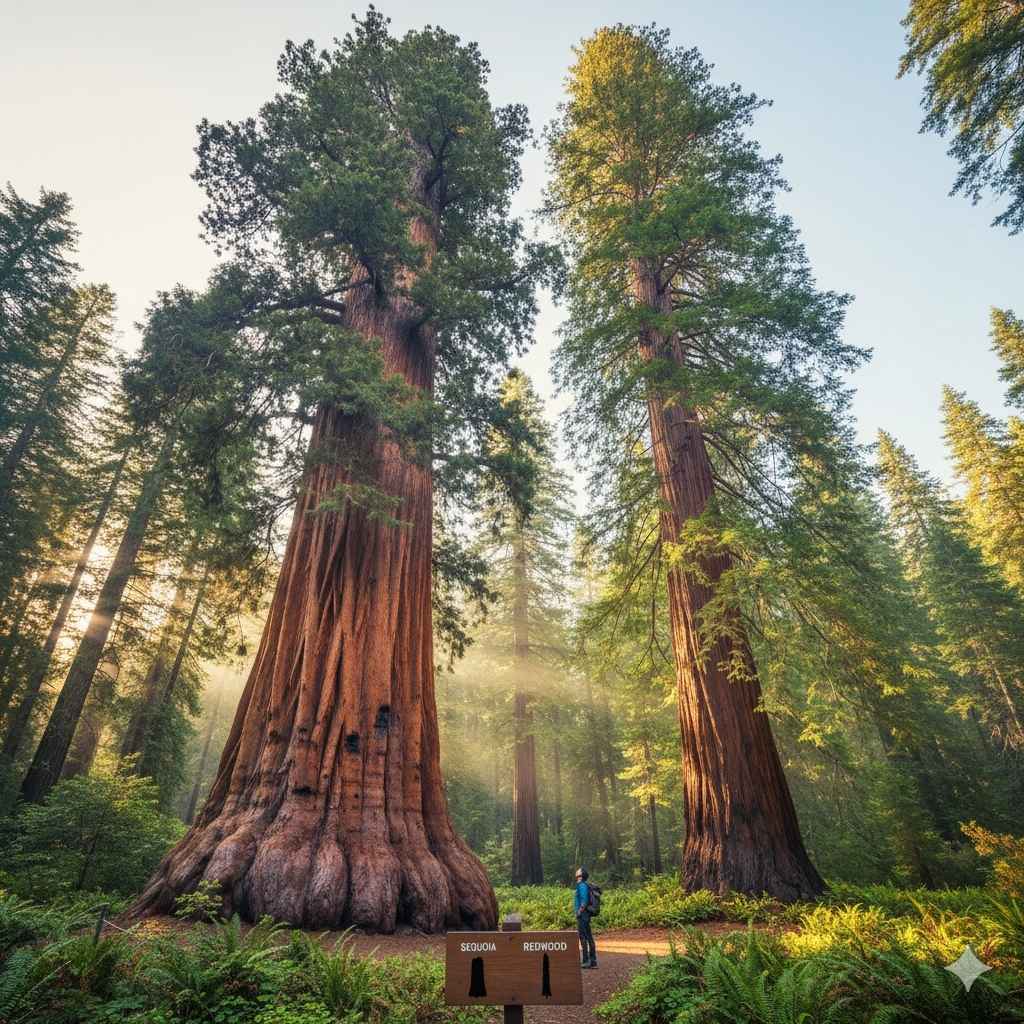
The height and shape of a tree are essential clues. While both are giants, they grow differently. Redwoods often grow taller, and their slender, straight shape gives them a striking appearance. Sequoias are massive but not quite as tall. Their trunks are huge, and they tend to have a broader base and a more conical shape.
Height and Trunk: Measuring the Giants
Both are impressively tall, but Redwoods usually win in the height competition. Redwoods can be the tallest trees on Earth, reaching over 350 feet. Sequoias are still enormous, but their height usually maxes out around 275 feet. Focus on the trunk’s girth as well; Sequoias often have larger diameters, which adds to their overall volume.
- Redwood Height: Known as the tallest trees, often exceeding 300 feet.
- Sequoia Height: Massive, but generally not as tall as Redwoods, around 250-280 feet.
- Trunk Size: Sequoias have wider trunks in diameter, giving them greater mass.
- Visual Comparison: Look at the tree’s overall shape. Redwoods are generally more slender, while Sequoias are more robust.
A good example of Redwood height is Hyperion, standing at over 379 feet tall, a testament to their vertical dominance. The General Sherman Tree in Sequoia National Park, the largest tree by volume, perfectly demonstrates the Sequoia’s impressive girth. This contrast emphasizes how shape and volume help differentiate the two.
Tree Shape: Silhouettes Against the Sky
The shape helps greatly. Redwoods usually grow straight up like towering columns, with minimal taper. Sequoias have a more conical shape, with a broader base that tapers more noticeably as they reach the top. It is similar to a giant Christmas tree in appearance. Observing the overall shape of the tree provides an immediate visual cue.
- Redwood Shape: Tall and straight, like a tall, thin pillar.
- Sequoia Shape: Broader at the base, tapering up to a more conical shape.
- Crown Form: Redwoods usually have a more streamlined crown.
- Overall Impression: The impression is key. Redwoods are sleek, while Sequoias appear more massive and broad.
If you’re looking at a forest, observe how each tree fits into the surrounding landscape. The straight, slender Redwoods create a cathedral-like feeling, while the broader Sequoias give a sense of stability. Comparing the trees’ silhouettes against the sky provides excellent visual clues.
Leaves and Cones: The Details that Matter for Sequoias vs Redwoods
The differences go beyond size and habitat. A closer examination of the leaves and cones provides more details. This information helps to positively identify the tree. Leaves and cones provide additional evidence to tell you which giant you are viewing.
Leaf Characteristics: Needles vs. Scales
The leaves are very different. Redwoods have flat, needle-like leaves, similar to fir trees, about an inch long. They are arranged in two rows along the branches. Sequoia leaves are scale-like, shaped like tiny, overlapping plates, and are tightly packed against the branches.
- Redwood Leaves: Flat needles, arranged in two rows.
- Sequoia Leaves: Scale-like, tightly packed against the branch.
- Feel and Look: Redwoods have soft, flexible needles. Sequoias have small, pointy scales.
- Branch Appearance: Redwood branches look like a feathery spray. Sequoia branches look more dense.
Imagine running your hand along a branch. The difference in leaf structure becomes immediately apparent. The needles of the Redwood feel soft and inviting, while the scale-like leaves of the Sequoia create a denser and more compact branch appearance. These differences highlight the distinct evolutionary pathways of these tree species.
Cone Characteristics: Size and Shape
The cones are also very different. Redwood cones are small, oval-shaped, and about an inch long. Sequoia cones are larger, egg-shaped, and can be up to 4 inches long. The cones provide another key visual distinction.
- Redwood Cones: Small, oval, and about an inch long.
- Sequoia Cones: Larger, egg-shaped, and up to 4 inches long.
- Cone Size: Sequoias have the larger cones.
- Shape Comparison: Redwood cones are more delicate, while Sequoia cones are more robust.
If you find cones on the ground, compare their sizes and shapes. The Redwood cones are small and easy to hold in your palm. The Sequoia cones feel heavier and are much more noticeable. The cone size is another reliable clue to pinpoint which type of giant you are looking at.
Sequoias vs Redwoods in the Ecosystem
Both tree species play vital parts in the ecosystem. Their forests support many different animals, from insects to birds to mammals. These trees shape the landscape, influencing water flow and the way other plants can grow. The health of the ecosystem depends on these giants.
Role in the Ecosystem: Habitats and Habitats
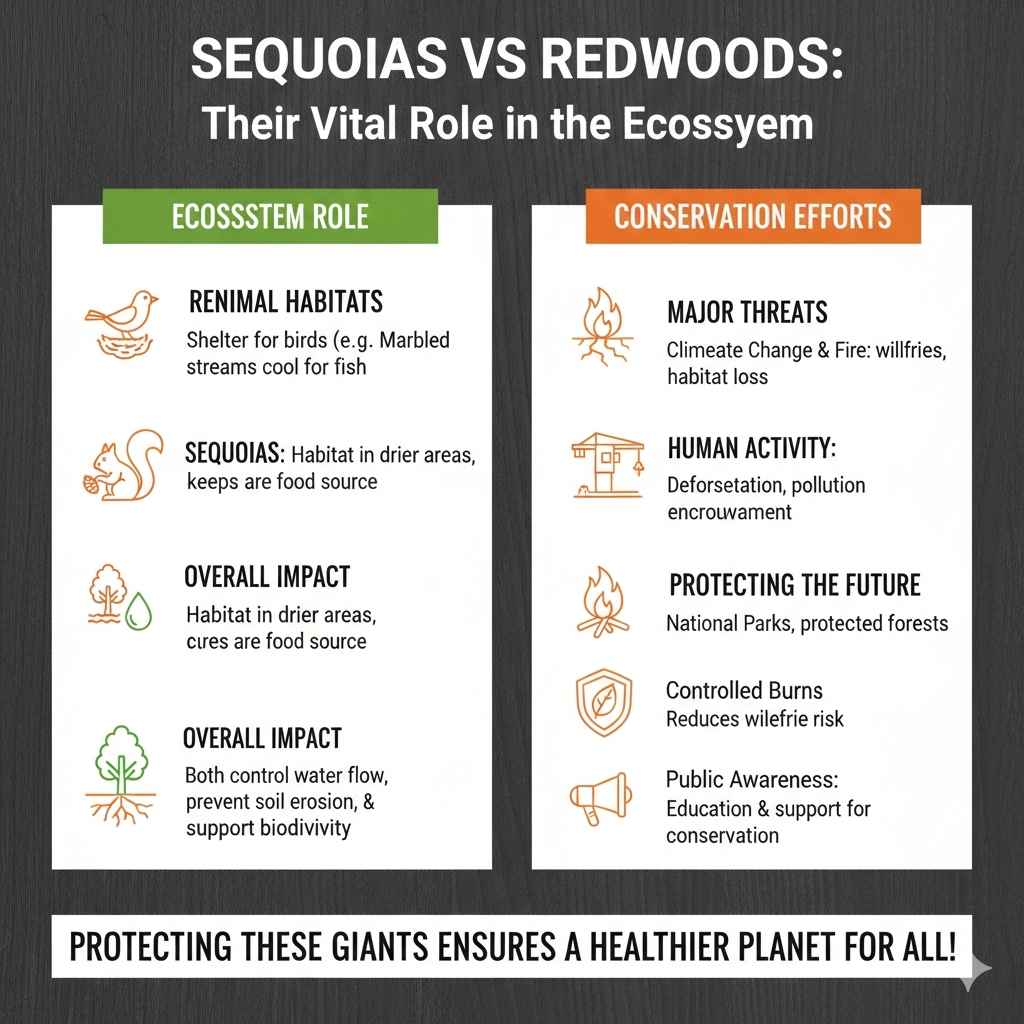
Redwoods provide shelter for birds, such as the marbled murrelet, which nests in the redwood canopy. The shade also helps keep streams cool, benefiting fish. Sequoias are crucial for providing habitat in drier environments. Their cones are a food source for some animals.
- Redwood Benefits: Provide shade, control stream temperatures.
- Sequoia Benefits: Support habitats in drier environments.
- Animal Habitats: Both trees offer shelter.
- Overall Impact: Both contribute to forest health and biodiversity.
The trees’ presence shapes the landscape. Their roots help prevent soil erosion and stabilize slopes, creating healthier environments for all living things. These giants create a foundation that supports multiple levels of ecosystems in their surrounding areas.
Conservation Efforts: Protecting the Giants
Both Redwoods and Sequoias face dangers like climate change, fire, and human activity. Many organizations work to protect these forests through land acquisition, controlled burns to reduce wildfire risk, and raising public awareness. Conservation efforts are crucial.
- Threats: Climate change and fire are a growing concern.
- Conservation: Preserving lands is vital.
- Active Measures: Controlled burns decrease fire risks.
- Public Awareness: Helping people know about these giants improves protection.
By protecting these trees, we protect not only their beauty and grandeur but also the rich biodiversity they support. Preserving these giants ensures their continued existence for future generations. Organizations and local communities play an important role in this conservation effort.
Frequently Asked Questions
Question: Can Redwoods and Sequoias live in the same place?
Answer: No, Redwoods and Sequoias have different growing requirements. Redwoods prefer moist, coastal areas, while Sequoias thrive in drier, higher-elevation areas.
Question: How can I tell the difference between their bark?
Answer: Redwood bark is soft, spongy, and reddish-brown with deep furrows. Sequoia bark is fibrous, a rich reddish-cinnamon color, and less spongy.
Question: Which is taller, Redwoods or Sequoias?
Answer: Redwoods are generally taller. They are known as the tallest trees on Earth, reaching over 300 feet, while Sequoias reach around 250-280 feet.
Question: What do the leaves look like?
Answer: Redwood leaves are flat needles arranged in two rows. Sequoia leaves are scale-like, tightly packed against the branch.
Question: Are these trees protected?
Answer: Yes, both Redwoods and Sequoias are protected in various parks and reserves. Efforts are ongoing to ensure their preservation for future generations.
Final Thoughts
So, the next time you see a giant tree, you’ll be well-prepared to identify it. Remember to check where it grows, look at the bark, and consider the shape, needles, and cones. Now you understand how to spot the differences between Sequoias vs Redwoods: What’s the Difference? You now have the knowledge to impress your friends or family on your next outdoor adventure. Enjoy exploring these magnificent trees and appreciate all their unique qualities!