Sequoia vs Redwood Trees: Size, Bark & Lumber Compared
Coast redwoods are the tallest trees on Earth (the tallest known reaches 380 feet), while giant sequoias are the most massive by trunk volume, with bark up to 3 feet thick — but almost all lumber sold as “redwood” comes from the coast redwood, not the sequoia. Confusing the two matters if you’re buying lumber: giant sequoia wood is essentially never sold commercially. This woodworking-focused guide covers size, bark, cones, and what each species’ wood is actually like to build with.
Sequoia vs. Redwood: A Woodworker’s Quick Guide
For woodworkers, the terms “Sequoia” and “Redwood” get used almost interchangeably, but they’re different species with different wood. This guide lays out what actually separates them — size, bark, cones, habitat, and, most importantly for anyone buying lumber, what their wood is like to work with.
What’s the Difference Between a Sequoia and a Redwood Tree?
Both trees are massive, reddish-brown, and native to California, but they’re distinct species. The core differences are in their ultimate size, bark thickness, cone size, and preferred growing environment. Think of them as cousins, not twins — closely related, but not the same tree.
The Giants of California: Unpacking the Differences
Here’s what sets these two tree types apart in detail.
1. Size and Species
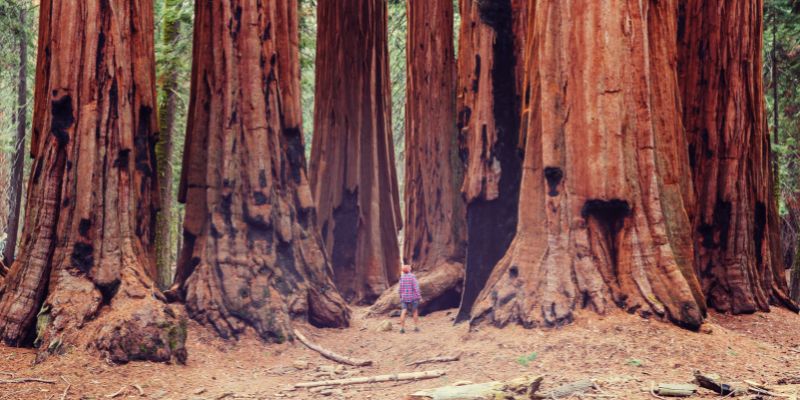
Giant Sequoia (Sequoiadendron giganteum): the largest trees on Earth by volume. They aren’t the tallest, but their trunks are massive — the General Sherman Tree in Sequoia National Park is the largest known living single-stem tree by volume.
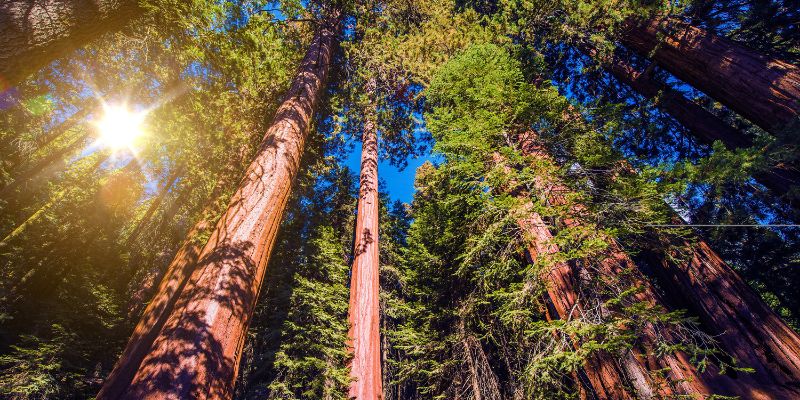
Coast Redwood (Sequoia sempervirens): the tallest trees on Earth, with the tallest known specimen (Hyperion) reaching 380 feet. Their trunks are more slender than a giant sequoia’s. They’re also the only living species in the genus Sequoia.
2. Bark Characteristics
Giant Sequoia bark is thick, fibrous, and deeply furrowed — 1 to 3 feet thick at the base, in shades of reddish to cinnamon-orange. That thickness insulates the tree against low-intensity fire, which historically helped open its seed cones.
Coast Redwood bark is also reddish-brown and fibrous but noticeably thinner, typically 4 to 12 inches. Old-growth coast redwood bark often weathers to a charcoal-gray, and the tree survives fire by resprouting from burls rather than relying on thick bark alone.
3. Cones and Seeds
Giant Sequoia cones run 1.5 to 2.5 inches long, oval and woody, and can take up to two years to mature. They often stay closed on the tree for years, sometimes needing fire heat to open and release seeds.
Coast Redwood cones are smaller still — about 0.5 to 1 inch, egg-shaped and less woody. They mature in a single season and release seeds readily without needing fire.
4. Habitat and Distribution
Giant Sequoias grow only on the western slopes of the Sierra Nevada, California, at 4,000–8,000 feet elevation, in about 80 scattered groves that depend on winter snowpack and summer drought.
Coast Redwoods grow along the Pacific coast from Northern California into southern Oregon, almost always within about 50 miles of the coast, where fog supplies moisture through the dry summer.
5. Lifespan
Giant Sequoias can live up to 3,000 years, making them among the longest-lived organisms on Earth. Coast Redwoods typically live up to 2,000 years — still ancient by any standard, just shorter-lived than their Sierra Nevada relatives.
6. Wood Properties (For the Woodworker)
Giant Sequoia wood is lighter, softer, and more brittle than Coast Redwood, and less resistant to decay. Because harvesting it is heavily restricted and the trees are protected, Giant Sequoia lumber essentially doesn’t exist on the commercial market.
Coast Redwood lumber is prized for its strength-to-weight ratio, dimensional stability, and natural resistance to decay and insects — a property that comes from tannins in the heartwood, not resin. It’s relatively lightweight, easy to work with, and has a straight grain, which is why it’s a popular choice for outdoor decking, fencing, and interior finishing.
Sequoia vs. Redwood: A Comparative Table
Here’s a summary table of the key distinctions, including lumber-relevant details.
| Feature | Giant Sequoia (Sequoiadendron giganteum) | Coast Redwood (Sequoia sempervirens) |
|---|---|---|
| Maximum Size | Largest by volume (massive trunk girth) | Tallest trees in the world (great height) |
| Height | Up to ~320 feet (98 meters) | Up to 380 feet (116 meters) — the Hyperion tree |
| Trunk Girth | Can exceed 100 feet (30 meters) in circumference | Typically narrower than Giant Sequoias |
| Bark Thickness | 1 to 3 feet (0.3 to 0.9 meters) | 4 to 12 inches (10 to 30 cm) |
| Cone Size | 1.5 to 2.5 inches (3.8 to 6.4 cm) | 0.5 to 1 inch (1.3 to 2.5 cm) |
| Lifespan | Up to 3,000 years | Up to 2,000 years |
| Primary Habitat | Sierra Nevada, California (4,000–8,000 ft elevation) | Pacific coast, N. California to S. Oregon |
| Commercially Sold Lumber? | No — protected, rarely harvested | Yes — standard lumberyard “redwood” |
| Wood Properties | Lighter, softer, more brittle, less decay-resistant | Strong-to-weight ratio, stable, decay- and insect-resistant |
📊 The tallest known coast redwood measures 380 feet, while the tallest giant sequoia tops out around 320 feet — yet a giant sequoia trunk can exceed 100 feet in circumference, far thicker than any redwood. Height and volume are two different records. Source: Save the Redwoods League
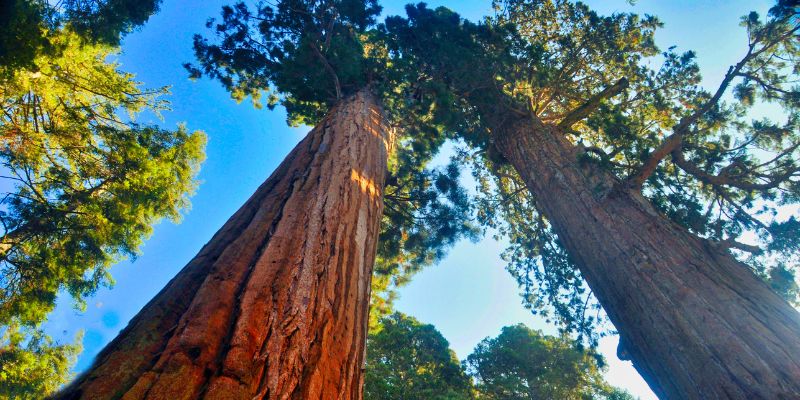
Both trees belong to the same subfamily, Sequoioideae, within the cypress family (Cupressaceae), with ancient lineages once widespread across the globe. “Redwood” itself just describes the reddish-brown heartwood both species share, which is part of why the names get used loosely.
For a long time, casual naming wasn’t precise, and any massive reddish tree in California got called a “redwood” regardless of which genus it actually belonged to.
A Note on “Redwood” vs. “Sequoia” in Lumber
At a lumber yard or online, wood labeled simply “Redwood” is coast redwood (Sequoia sempervirens). Giant Sequoia lumber is exceptionally rare due to conservation protections and the trees’ limited range — if you’re shopping for redwood lumber, you’re buying coast redwood. For species-level technical data, The Wood Database’s coast redwood profile is a solid reference.
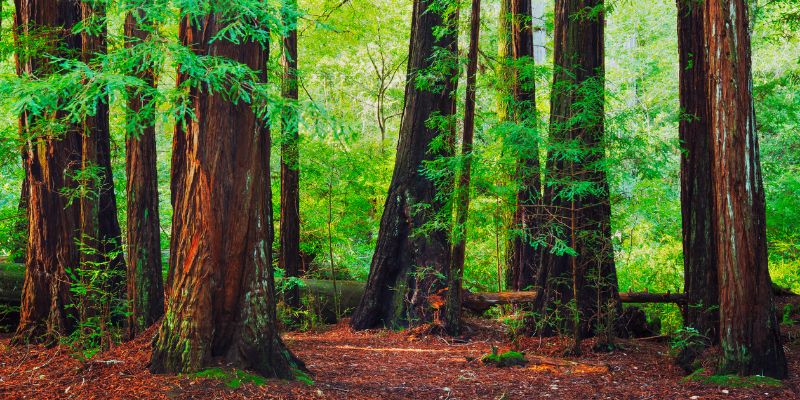
Working with Redwood Lumber: A Woodworker’s Perspective
Redwood lumber is a rewarding material, especially for outdoor projects where its natural resistance to decay and insects shines. Typical retail pricing runs roughly $4.75–$7.00 per board foot for basic grades, up to $8.50–$12.50 for premium clear grades, depending on region and mill availability.
Key characteristics that make redwood a favorite among woodworkers:
- Durability: natural oils and tannins resist moisture, rot, and insect damage, so outdoor projects last for years.
- Stability: redwood doesn’t warp, twist, or shrink as much as many species when humidity changes.
- Workability: lightweight and easy to cut, shape, and fasten — takes screws and nails well and sands smooth.
- Aesthetics: rich reddish-brown color and straight grain, and it finishes well in multiple ways.
“Coast redwood lumber is very soft and lightweight, with a decent strength-to-weight ratio, and is also exceptionally stable, with very little shrinkage or seasonal movement.”
Tips for Using Redwood Lumber
- Outdoor projects: ideal for decks, fences, pergolas, outdoor furniture, and planter boxes.
- Interior projects: works well for paneling, trim, and decorative elements where its color stands out.
- Finishing: left unfinished, it weathers to silvery-gray; a sealant or stain maintains the color and adds protection.
- Fasteners: use stainless steel or galvanized fasteners to avoid rust stains on outdoor projects.
Best Redwood Finish Pick

Ready Seal Redwood Stain & Sealer, 1 Gallon – $39.99
A one-coat oil sealer tinted to match redwood’s natural color — the “Finishing” tip in this guide’s redwood lumber section recommends sealing to keep that color from weathering to silver-gray.
- Best for: New or cleaned redwood decking, fencing, and outdoor furniture
- Why we picked it: Penetrating oil formula matches the natural stability this guide’s Workability section describes
- Main drawback: Needs reapplication every 2–3 years on sun-exposed decking
Compare more redwood project supplies
 Semi-Transparent Pick Olympic Maximum Redwood Stain & Sealer, 1 Gallon – $41.48
|
 Max-Durability Pick DEFY Extreme Redwood Stain & Sealer, 1 Gallon – $49.99
|
 Fastener Pick 304 Stainless Steel Exterior Deck Screws (80 pcs) – $9.99
|
As an Amazon Associate we earn from qualifying purchases.
Common Woodworking Projects Using Redwood
- Outdoor benches and chairs: durability makes them ideal for garden seating.
- Planter boxes: rot resistance means planters last for years.
- Decking: a classic choice for long-lasting outdoor decks.
- Privacy fences: a natural-looking, durable barrier.
- Birdhouses: a small project that shows off redwood’s natural properties.
Frequently Asked Questions
What’s the difference between a sequoia and a redwood tree?
Giant sequoias (Sequoiadendron giganteum) are the most massive trees on Earth by trunk volume, with bark up to 3 feet thick, and grow only in the Sierra Nevada. Coast redwoods (Sequoia sempervirens) are the tallest trees on Earth, with thinner bark and needle-like foliage, and grow in a narrow coastal fog belt from Northern California into Oregon.
Is a sequoia the same as a redwood?
No. They’re closely related cousins in the same subfamily (Sequoioideae) but different genera and species. “Redwood” is often used loosely for both, but lumber sold as “redwood” almost always comes from the coast redwood, not the giant sequoia.
Which is bigger, a sequoia or a redwood?
It depends on the measurement. Coast redwoods are taller — the tallest known specimen reaches 380 feet. Giant sequoias are more massive — their trunks can exceed 100 feet in circumference, giving them far greater wood volume despite being shorter.
Can you buy giant sequoia lumber?
Rarely. Giant sequoias are protected and slow to regenerate, so their lumber isn’t commercially harvested. Nearly all lumber labeled “redwood” at a lumberyard or online is coast redwood, not giant sequoia.
How long do sequoias and redwoods live?
Giant sequoias can live up to 3,000 years; coast redwoods typically live up to 2,000 years, with some documented specimens older than that. Both are among the longest-lived tree species on Earth.
Conclusion: Appreciating the Giants
Sequoias and Redwoods are both awe-inspiring, but they’re distinct in size, bark, cones, lifespan, and habitat. Understanding the difference matters most at the lumberyard: nearly all lumber sold as “redwood” comes from the coast redwood, since giant sequoia lumber is essentially never commercially available.
Whether you’re standing beneath them in a national park or building a deck with their lumber, knowing these distinctions connects you a little more deeply to two of the most remarkable tree species on Earth.
Sponsored / affiliate links. As an Amazon Associate I earn from qualifying purchases. I may earn additional commission from eligible campaigns.