Should You Paint the Ceiling White? (LRV, Cost & Exceptions)
White ceilings work in most rooms because true whites carry a Light Reflectance Value (LRV) of 82–90%, bouncing far more light than any colored paint — but a north-facing room with cool-toned walls can look flat and clinical under stark white. Using ordinary wall paint instead of dedicated ceiling paint is the most common mistake, since it takes extra coats to hide roller marks and texture that flat ceiling paint hides in one pass. This guide covers the LRV numbers that matter, when white is the wrong call, and the real cost difference between ceiling paint and wall paint.
Quick Answer
Yes, for most rooms — white ceilings reflect 82–90% of light (measured as LRV), make rooms feel taller and brighter, and hide drywall seams better than any sheen. Skip white only in low-light north-facing rooms, rooms with vaulted or coffered ceilings you want to highlight, or where a designer accent color is the intended focal point.
What “White Ceiling” Actually Means (LRV Explained)
Light Reflectance Value (LRV) is an industry scale, used by architects and interior designers, that measures the percentage of light a paint color bounces back into a room. It runs from 0 (absolute black, reflects nothing) to 100 (theoretical pure white). Most true white ceiling paints score between 82 and 90 LRV; an off-white or “warm white” can drop to the 70s, which is still bright but noticeably less reflective. The higher the LRV, the more a white ceiling amplifies whatever light — natural or artificial — is already in the room. Our full paint color ideas library covers LRV and sheen for walls and trim too, not just ceilings.
📊 Flat paint reflects light diffusely at 0–5% sheen gloss level, while eggshell adds 10–25% sheen — but sheen and LRV are different measurements. LRV is about color reflectance; sheen is about surface gloss. A flat white ceiling paint with an 85 LRV still looks brighter than a glossy off-white with a 65 LRV. Source: paint industry sheen/LRV standards, 2026.
Benefits of Painting Ceilings White
Painting ceilings white is a smart default for most homes because of two measurable effects: light distribution and perceived height.
Enhancing Room Brightness
White paint’s high LRV reflects more light than darker or more saturated colors, so a room with limited natural light looks brighter without adding a single fixture. This matters most in interior rooms, basements, and north-facing spaces where daylight is already scarce.
Creating a Spacious Feel
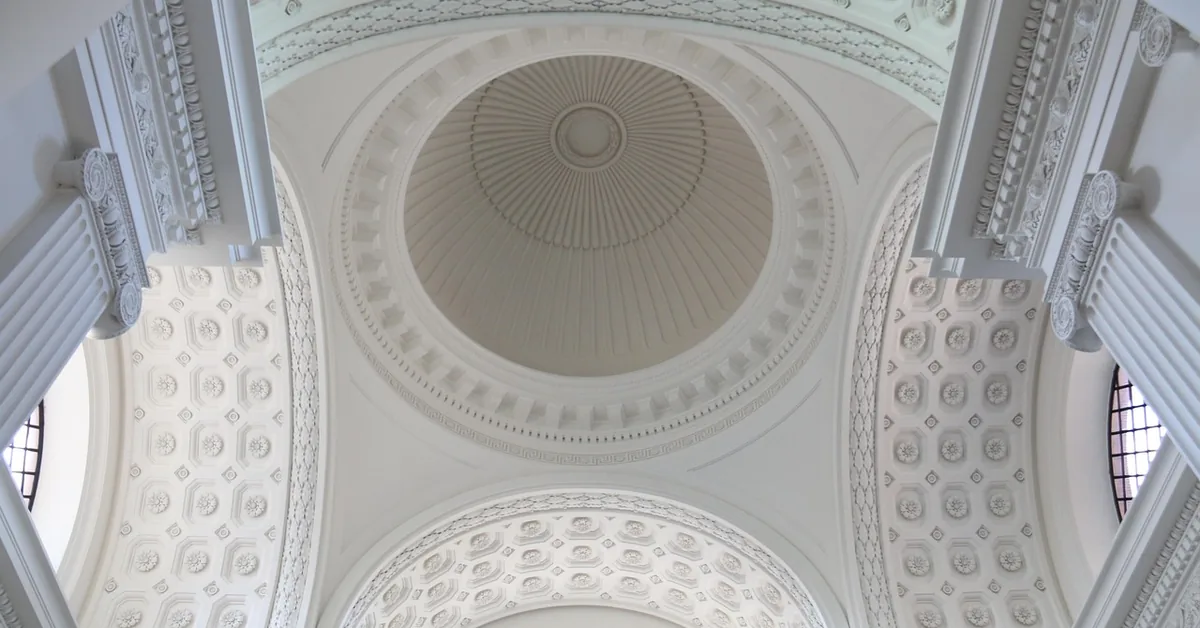
A white ceiling recedes visually, which makes the ceiling plane feel higher than it is. This trick works especially well in rooms under 8 feet of ceiling height, where a dark or saturated ceiling color can make the room feel like it’s closing in.
| Benefit | Why It Happens |
|---|---|
| Enhancing Room Brightness | 82–90 LRV reflects more usable light than any colored paint |
| Creating a Spacious Feel | Light ceilings visually recede, making rooms feel taller |
| Hiding Minor Flaws | Flat finish scatters light instead of highlighting texture or seams |

Drawbacks of White Ceilings
White is not free of trade-offs. Two issues come up most often once the paint has dried.
Highlighting Imperfections
White ceilings can highlight cracks, nail pops, and uneven texture more than a mid-tone color, because shadows cast by surface irregularities show up clearly against a bright, high-LRV background. A darker or more saturated color disguises the same flaws far better.
Maintenance and Staining
Water stains, smoke, and dust show up fast on white. A leaking pipe or a candle-heavy room will leave a visible yellow or gray shadow on white ceiling paint months before it would show on a mid-tone color. Touch-ups are easy since white is simple to match, but they come up more often.
Ceiling Paint vs. Wall Paint: Why the Product Matters
Ceiling paint is a distinct product category, not just “wall paint in white.” According to Sherwin-Williams’ official ceiling paint line, it’s formulated thicker, with more binders and pigment, specifically to resist drips on an overhead surface and hide texture and seams in one coat — something standard wall paint, even in flat sheen, isn’t built to do as efficiently. Ceiling paint is sold almost exclusively in flat finish, since flat is what scatters light evenly and disguises drywall tape lines.
The trade-off: ceiling paint is less washable and less durable than wall paint, which is fine since ceilings rarely get touched. Using leftover wall paint on a ceiling usually means an extra coat to get the same hiding power — and extra coats are the single biggest driver of cost overruns on a ceiling repaint. If you’re comparing brands for the whole room, see our Valspar vs. Sherwin-Williams comparison for how the major lines stack up on ceiling-grade flat finishes.
“Ceiling paint is formulated to prevent drip while painting, resulting in an even coat… [and] typically comes in a flat finish because it absorbs light, minimizes imperfections and reduces glare for a uniform appearance.”
Best Ceiling Paint Pick

Glidden Flat Ceiling Paint (1 Qt) – $15.60
A true dedicated ceiling paint, not a repurposed wall paint — the one-coat hiding power this guide’s “Ceiling Paint vs. Wall Paint” section covers, sized right for a single average bedroom ceiling.
- Best for: Standard bedroom or living room ceiling, one coat over existing white
- Why we picked it: High-hiding flat formula built specifically for ceilings, not walls
- Main drawback: Quart size only covers roughly 90–100 sq ft — buy two for anything larger
Compare more ceiling paint options
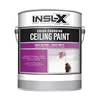 Option 1 INSL-X Color-Changing Ceiling Paint (1 Gal) – $41.99
|
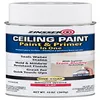 Option 2 Zinsser Paint & Primer in One (13 oz) – $8.97
|
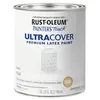 Option 3 Rust-Oleum Painter’s Touch Flat White – $16.98
|
As an Amazon Associate we earn from qualifying purchases.
Alternative Ceiling Colors
White isn’t mandatory. Two alternative approaches show up most often in real renovations.
Bold Colors for Impact
Deep blues, greens, or charcoal on a ceiling draw the eye upward and read as an intentional design choice rather than a leftover default. This works best in dining rooms, powder rooms, and larger spaces with enough natural light that the lower LRV doesn’t make the room feel dim.
Muted Tones for Subtlety
A soft gray, greige, or pale blue on the ceiling still carries a relatively high LRV — often 60–75 — so the room stays bright while getting a slightly warmer, less clinical feel than stark white. This is a common middle-ground pick for bedrooms.
Room-by-Room Guide
Orientation and room function change the calculation more than personal taste alone.
Living Room Considerations
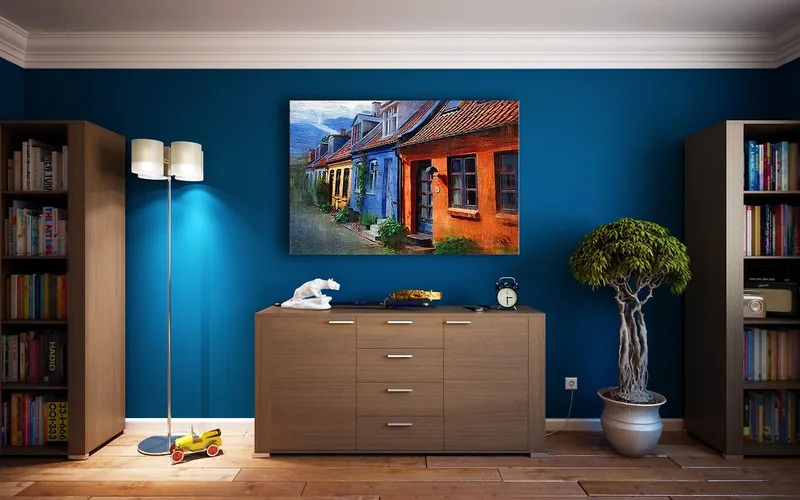
White ceilings make a living room feel larger and brighter, especially useful if the walls are a bold or dark color. In a living room with light, neutral walls, an all-white room can feel sterile — a soft warm-white or pale gray ceiling adds contrast without sacrificing much brightness.
Bedroom Ambiance
White keeps a bedroom feeling airy and calm, and it’s the safer resale choice. If the room faces north and gets cool, flat daylight, a warm white (LRV in the high 70s to low 80s, with a slight yellow or cream undertone) reads more inviting than a stark, blue-leaning white.
Kitchens and Bathrooms
These rooms benefit most from white’s practical side: it’s easiest to match for touch-ups after steam, grease, or humidity exposure, and a high-LRV ceiling helps compensate for rooms with few or no windows.
Matching Ceiling Color With Walls
Matching the ceiling to the walls, or deliberately contrasting them, are both valid design choices — the results just look different. For a step-by-step approach to getting the sheen and undertone right, see our guide on how to match ceiling paint.
Coordinating Shades
Using the same color on ceiling and walls removes the visual “stopping point” where wall meets ceiling, which makes small rooms feel more continuous and larger. This works best with lighter colors; a dark color wrapped floor-to-ceiling needs strong natural or artificial light to avoid feeling like a cave.
Contrast Techniques
A white ceiling against colored walls is the classic contrast approach — it draws the eye upward and reads as taller. The reverse, a darker ceiling over lighter walls, grounds a tall or vaulted room and adds intimacy, but needs enough ceiling height to avoid feeling low.
Expert Opinions
Interior designers and professional painters generally agree on the fundamentals, even when they disagree on when to break the rule.
Interior Designer Insights
Designers commonly default to white because it’s a neutral backdrop that won’t clash with future wall color or decor changes, and its high LRV compensates for rooms with limited natural light. Some now push back on “white by default,” arguing a ceiling should be a deliberate choice, not an unquestioned habit.
Professional Painter Advice
Painters favor white ceilings for practical reasons: dedicated ceiling paint applies more evenly, hides roller marks and texture better than a tinted wall paint, and touch-ups are simple to color-match. It’s also the safest color for resale, since it reads as neutral to the widest range of buyers.
DIY vs. Hiring a Professional
Cost is usually the deciding factor between doing it yourself and hiring out.
📊 Professional ceiling painting runs about $1 to $3 per square foot, or roughly $150–$300 for a standard 12×12 room, including prep and two coats — vaulted or textured ceilings push that toward $2–$6 per square foot. Source: HomeGuide 2026 painting cost data.
Cost Implications
| Option | Typical Cost | What’s Included |
|---|---|---|
| DIY | $30–$60 | Paint, roller, tray, painter’s tape for one room |
| Professional | $150–$300 | Labor, prep, drop cloths, two coats, cleanup |
Quality of Finish
- DIY: Can result in uneven roller marks or lap lines, especially on a first attempt.
- Professional: Sprayed or back-rolled application gives a consistent, streak-free finish.
For a single room with a flat ceiling in good condition, DIY with the right dedicated ceiling paint is usually the better value. For vaulted ceilings, popcorn texture, or stain-blocking work, the labor and equipment a professional brings justifies the extra cost.

Final Decision-Making Tips
Work through these questions before committing to a color.
Assessing Your Needs
Start with the room’s purpose and ceiling height. Small or low-ceilinged rooms benefit most from white’s height-boosting effect. Bold-walled rooms often need a white ceiling to balance the color; neutral-walled rooms have more freedom to try a colored ceiling instead.
Long-Term Considerations
White is the easiest color to repaint over later and the safest for resale value, since it reads as neutral to the widest range of buyers. If you plan to sell within a few years, white ceilings remain the lower-risk default — but if you’re staying long-term and want a distinctive look, this is exactly the kind of decision worth breaking the default for.
Frequently Asked Questions
Why Paint Ceilings White?
White ceilings reflect 82–90% of light (measured as LRV), which brightens a room and creates the illusion of extra height, making spaces feel larger and more open than a colored ceiling would.
Does White Ceiling Paint Affect Room Temperature?
Yes, indirectly. White ceilings reflect more light and radiant heat than dark colors, which can slightly reduce how warm a sunlit room feels and modestly cut cooling costs in warmer climates — though wall color and windows have a much bigger effect than ceiling color alone.
Is White Ceiling Paint Hard to Maintain?
No. White ceiling paint is easy to maintain and simple to touch up since matching white is straightforward. The trade-off is that stains, dust, and water damage show up sooner on white than on a mid-tone or darker color.
Can White Ceilings Match Any Decor?
Yes. White is a neutral backdrop that works with any wall color or design style, from modern to traditional, which is why it remains the default choice for resale-focused renovations.
Is Ceiling Paint Different From Wall Paint?
Yes. Ceiling paint is a thicker, flat-only formula built for one-coat hiding power and drip resistance on overhead surfaces. Wall paint comes in more sheens and is formulated for washability, which ceilings rarely need.
What LRV Should I Look for in Ceiling Paint?
Look for an LRV of 82 or higher for a true bright white. Anything in the 70s will still read as white in most lighting but reflects noticeably less light, which matters more in rooms with few windows.
Conclusion
White ceilings remain the right default for most rooms: high LRV, a spacious feel, and easy resale appeal. The exceptions are north-facing rooms that feel cold under stark white, and rooms where a colored ceiling is a deliberate design statement rather than an afterthought. Whichever direction you choose, use dedicated ceiling paint rather than leftover wall paint — it’s the difference between one clean coat and three uneven ones.
Test a sample patch under your room’s actual lighting before committing to a full repaint, since paint can look lighter or darker than the sample depending on sheen and light source. That five-minute test prevents the most common regret homeowners report after a ceiling repaint.
Sponsored / affiliate links. As an Amazon Associate I earn from qualifying purchases. I may earn additional commission from eligible campaigns.