Should I Turn My Aquarium Light Off at Night?
Hey there, fellow fish enthusiast! If you’re sitting there staring at your glowing aquarium, wondering whether you should flip the switch off at night, you’re not alone. I’ve been there, gazing at my tank’s shimmering lights, questioning what’s best for my fish, plants, and the whole underwater world I’ve built. It’s a simple question, but the answer isn’t always straightforward. Should I turn my aquarium light off at night? Let’s dive into this topic together, exploring what’s best for your tank and why it matters.
I’ve spent years tinkering with my own setups, learning from mistakes, and talking to other hobbyists, so I’m excited to share what I’ve discovered. This guide will walk you through everything you need to know, from fish behavior to plant health, energy savings, and more. Let’s get started!
Why Aquarium Lighting Matters
When I first set up my aquarium, I didn’t think much about lighting. I figured a bright tank looked cool, so I left the lights on all the time. Big mistake! Lighting isn’t just about making your tank look pretty (though it does that too). It plays a huge role in the health of your fish, plants, and even the bacteria that keep your tank’s ecosystem balanced.
Fish, like us, need a regular day-night cycle to thrive. In the wild, they experience natural sunlight that rises and sets. Constant light messes with their internal clocks, stressing them out. I noticed my betta fish acting sluggish when I left the lights on too long. Plants also rely on light for photosynthesis, but they need darkness to rest, just like we do. Too much light can also cause algae to take over your tank, turning your pristine setup into a green mess. Trust me, scrubbing algae off glass isn’t fun.
Lighting affects water temperature too. I learned this the hard way when my tank overheated one summer. Keeping lights on 24/7 can raise the water temperature, which isn’t great for most fish. So, getting your lighting schedule right is key to a happy, healthy aquarium.
The Natural Day-Night Cycle for Fish
Fish aren’t that different from us when it comes to needing rest. In nature, they follow the sun’s rhythm—light during the day, darkness at night. This cycle helps regulate their behavior, from feeding to sleeping. Some fish, like tetras, even “sleep” by hovering in place or hiding when it’s dark. I remember watching my neon tetras dim their colors at night, almost like they were powering down.
If you keep your aquarium light on all night, you’re disrupting this natural rhythm. It’s like leaving a bedroom light on while you’re trying to sleep. Fish can get stressed, which weakens their immune systems and makes them more prone to illness. I had a guppy that started hiding all the time when I left the lights on too long. Once I started turning them off at night, he perked right up.
Nocturnal fish, like some catfish, are an exception. They’re active at night and might not mind dim lighting. But even they don’t need bright aquarium lights blazing all night. A little moonlight effect, which some LED systems offer, can mimic natural conditions without overwhelming your tank.
How Plants in Your Aquarium Respond to Light
If you’ve got live plants in your tank, like I do in my 20-gallon setup, lighting is even more important. Plants use light for photosynthesis, which helps them grow and produce oxygen for your fish. But here’s the thing: plants need a break too. They don’t photosynthesize at night. Instead, they use this time to process nutrients and “rest.”
I used to leave my lights on for 12 hours or more, thinking my plants needed it. Turns out, most aquarium plants do fine with 8-10 hours of light. Any more, and you’re inviting algae to crash the party. I had a bad algae bloom in my tank once, and it was a pain to clean up. Cutting back on light time helped a lot. If you’ve got high-light plants like dwarf baby tears, you might need a bit more light, but even they don’t need it 24/7.
Algae and Lighting: The Unwanted Guest
Let’s talk about algae. It’s the bane of every aquarist’s existence. When I started out, I didn’t realize how much light fuels algae growth. Algae loves light, especially if your tank has nutrients like nitrates or phosphates floating around. Leaving your aquarium light on all night is like throwing an all-you-can-eat buffet for algae.
I learned this when my tank turned green overnight (or so it felt). The water was cloudy, and my glass was covered in a slimy film. After some research and a good tank cleaning, I figured out that my 24/7 lighting was the culprit. Now, I stick to a strict schedule—8 hours of light for my low-light plants, 10 for my more demanding ones. If you’re battling algae, try cutting back your light time and cleaning your tank regularly. It makes a huge difference.
Energy Savings and Cost Considerations
Running an aquarium isn’t cheap. Between the filter, heater, and lights, the costs add up. I was shocked when I checked my electric bill after setting up my first tank. Leaving the lights on all night doesn’t just stress your fish—it hits your wallet too.
Most aquarium lights, especially LEDs, don’t use a ton of power, but it adds up over time. For example, a 20-watt LED running 24 hours a day uses about 14.4 kilowatt-hours a month. At an average U.S. electricity rate of 16 cents per kilowatt-hour, that’s over $2 a month for one tank. If you’ve got multiple tanks like I do, those dollars stack up fast.
Turning off your lights at night can cut that cost in half. Plus, it extends the life of your bulbs or LED system. I switched to a timer for my tanks, and it’s been a game-changer. I set it to turn off at night and on in the morning, so I don’t even have to think about it.
Using Timers and Smart Lighting Systems
Speaking of timers, they’re a lifesaver. I used to forget to turn my lights off, especially on busy days. Now, I use a simple plug-in timer that costs about $10. You can set it to mimic a natural day-night cycle, turning lights on in the morning and off at night. It’s one less thing to worry about.
If you want to get fancy, smart lighting systems are awesome. I upgraded one of my tanks to a smart LED system that lets me control the light from my phone. Some even have sunrise and sunset modes that gradually dim or brighten the lights, which is less jarring for fish. These systems can be pricey, but they’re worth it if you want precise control. For my budget tank, though, a basic timer does the job just fine.
Exceptions: When to Keep Lights On
Okay, so most of the time, turning off your aquarium light at night is the way to go. But there are a few exceptions. If you’re breeding certain fish, like discus, you might need to keep low lights on to monitor fry or prevent stress. I tried breeding guppies once, and a dim light at night helped the fry feel secure.
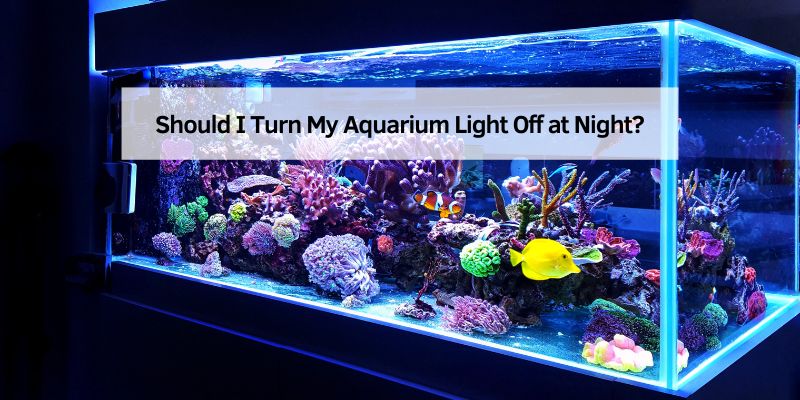
Some tanks, like those with corals or high-light plants, need specific lighting schedules. For example, reef tanks often use a 12-hour cycle with a mix of blue and white light to mimic ocean conditions. If you’re not sure what your setup needs, check with a local aquarium store or online forums. I’ve gotten great advice from hobbyist groups on Reddit.
How Long Should Aquarium Lights Be On?
So, how long should you keep your lights on? It depends on your tank. Here’s a quick guide based on my experience:
| Tank Type | Recommended Light Duration | Notes |
|---|---|---|
| Fish-Only Tank | 6-8 hours | Enough for fish to have a normal day-night cycle. |
| Low-Light Planted Tank | 8-10 hours | Good for plants like Java fern or Anubias. Watch for algae. |
| High-Light Planted Tank | 10-12 hours | For demanding plants like carpeting species. Use CO2 to prevent algae. |
| Reef Tank | 10-12 hours | Use a mix of blue and white light. Corals need specific spectrums. |
| Breeding Tank | 8-12 hours | Dim light at night may help fry or sensitive species. |
This table is a starting point. Every tank is unique, so keep an eye on your fish and plants. If your fish seem stressed or algae starts creeping in, adjust the schedule. I tweak my timers every few months based on how my tanks are doing.
Moonlight Effects and Nighttime Viewing
Sometimes, I just want to watch my tank at night. It’s relaxing, right? But blasting the full lights isn’t the answer. Many modern aquarium lights come with a “moonlight” mode—a soft blue glow that mimics natural moonlight. It’s gentle enough not to stress your fish but lets you enjoy the tank after dark.
I added a moonlight LED strip to my 55-gallon tank, and it’s been a game-changer. My nocturnal catfish come out to play, and the tank looks magical without disrupting the ecosystem. If your light doesn’t have this feature, you can buy a cheap LED strip for under $20. Just make sure it’s low-intensity to avoid stressing your fish.
My Personal Routine and Tips
After years of trial and error, I’ve settled on a routine that works for my tanks. My fish-only tank gets 8 hours of light, from 10 a.m. to 6 p.m. My planted tank gets 10 hours, from 9 a.m. to 7 p.m. I use timers for both, so I don’t have to remember to flip switches. If I’m home and want to enjoy the tank at night, I turn on the moonlight mode for an hour or two.
Here are some tips I’ve picked up:
- Get a timer. It’s cheap and makes life easier.
- Watch your fish. If they’re hiding or acting weird, your lighting might be off.
- Clean regularly. Less light means less algae, but you still need to stay on top of tank maintenance.
- Test your schedule. Start with 8 hours and adjust based on your tank’s needs.
- Invest in quality lights. Good LEDs save energy and let you customize settings.
Common Mistakes to Avoid
I’ve made plenty of mistakes with aquarium lighting, so let me save you some trouble. Don’t leave your lights on 24/7—it stresses fish and fuels algae. Don’t assume more light is better for plants; it’s not. And don’t skip a timer thinking you’ll remember to turn the lights off. Life gets busy, and you’ll forget—I did!
Another mistake is using the wrong light spectrum. I once bought a cheap bulb that was too red, and my plants barely grew. Stick to lights designed for aquariums, with a mix of blue and white for fish or full-spectrum for plants. If you’re unsure, ask your local fish store for recommendations.
Conclusion
So, should you turn your aquarium light off at night? In most cases, yes! Your fish, plants, and wallet will thank you. Mimicking a natural day-night cycle keeps your tank’s ecosystem balanced, reduces stress, and prevents algae from taking over. I’ve seen the difference in my own tanks—happier fish, healthier plants, and lower electric bills. Whether you use a simple timer or a fancy smart light, setting a consistent schedule is the key to success.
Take it from me, someone who’s made every mistake in the book: a little planning goes a long way. So, grab a timer, experiment with your lighting, and enjoy your beautiful aquarium. Happy fishkeeping!
FAQs
Should I turn off my aquarium light every night?
Yes, you should turn off your aquarium light at night in most cases. It mimics the natural day-night cycle that fish and plants need to stay healthy. A 6-10 hour light period works for most tanks. If you have special fish or corals, check their specific needs.
Can I leave my aquarium light on for 24 hours?
No, leaving your light on 24/7 is a bad idea. It stresses fish, encourages algae growth, and wastes energy. Even plants don’t need constant light—they require a dark period to rest. Stick to a schedule of 8-12 hours, depending on your tank.
Do fish need complete darkness at night?
Most fish do best with darkness at night to mimic their natural environment. Some nocturnal fish, like catfish, are okay with dim light, but bright lights can stress them. A moonlight LED can let you view the tank without disturbing your fish.
How can I prevent algae growth with aquarium lighting?
To prevent algae, limit your light to 8-10 hours a day and use a timer for consistency. Clean your tank regularly to reduce nutrients that algae feed on. If algae is still a problem, reduce light time or intensity and consider adding algae-eating fish or snails.
Are moonlight LEDs safe for my aquarium at night?
Yes, moonlight LEDs are safe and great for nighttime viewing. They provide a soft glow that doesn’t disrupt your fish’s sleep cycle. Just make sure the light is low-intensity and only used for a few hours at night.