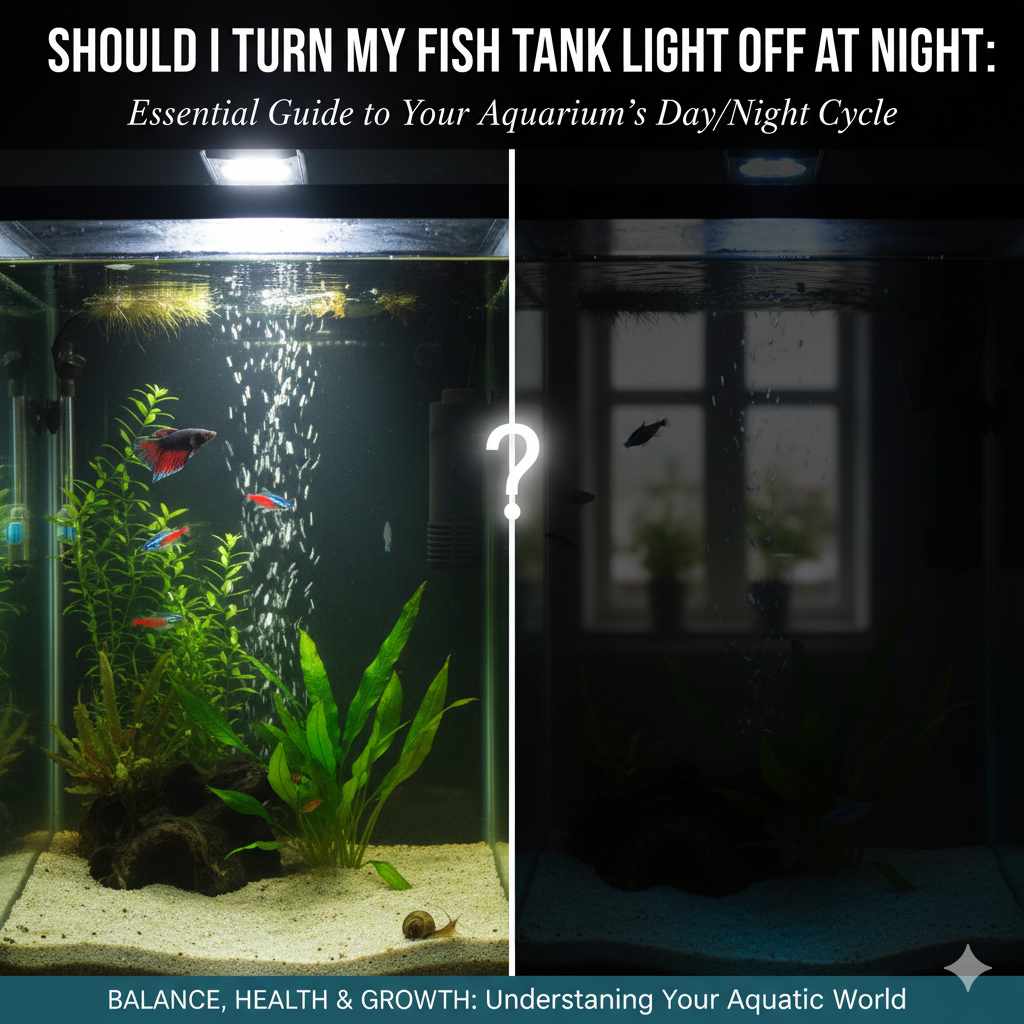
Should I Turn My Fish Tank Light Off At Night: Essential Guide
Yes, you absolutely should turn your fish tank light off at night. Leaving it on 24/7 can harm your fish, disrupt their natural cycles, and encourage algae growth. Providing a consistent day-night cycle is crucial for a healthy aquarium.
Welcome, fellow home improvers! Setting up a beautiful fish tank can bring so much life and tranquility to your home. It’s like having a living piece of art. But as you get started, a common question pops up: what about the light? Should it be on all the time, or should you turn it off at night? It’s easy to feel a bit unsure, especially when you want the best for your aquatic friends. Don’t worry, this is a really common question, and figuring it out is simpler than you might think. We’ll walk through exactly why it matters and what the best practice is, step-by-step. Let’s dive in and make sure your fish are happy and healthy!
The Importance of a Day-Night Cycle for Your Fish
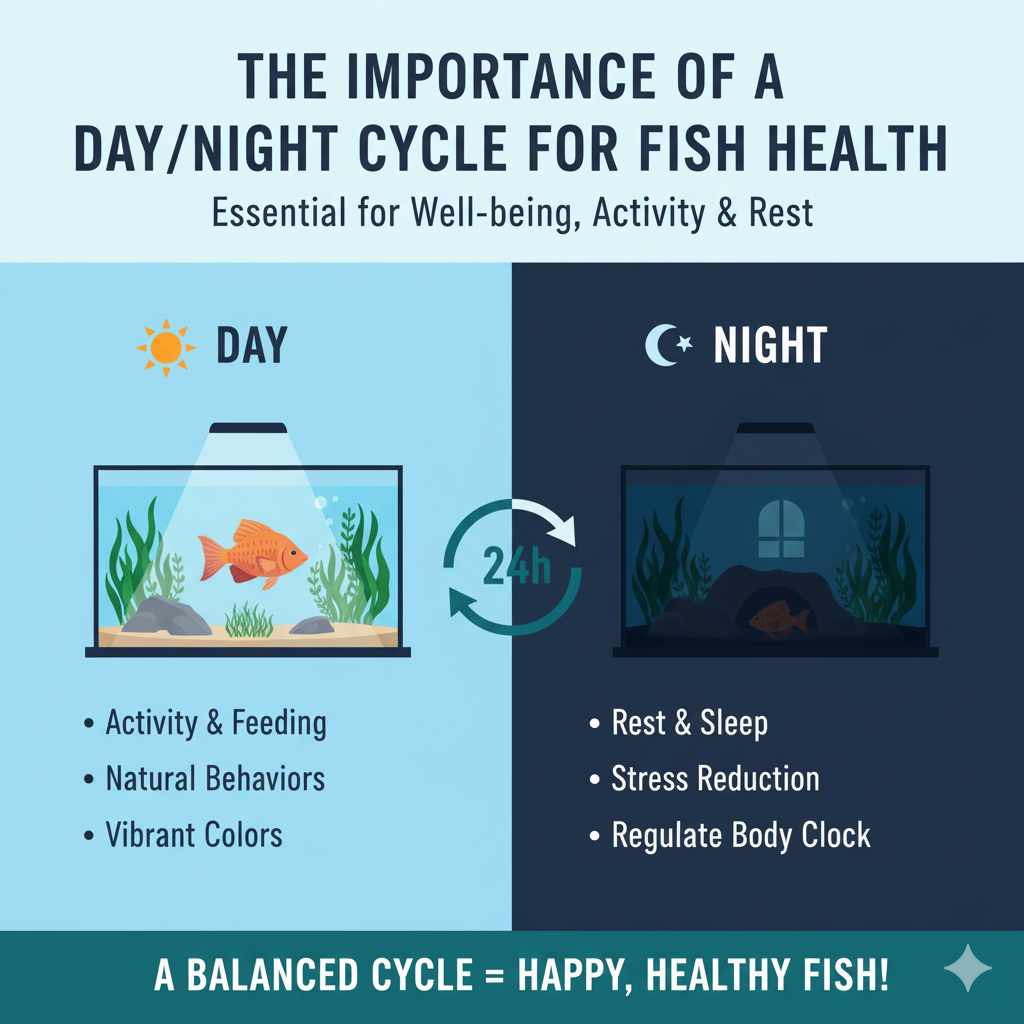
Think about your own life. You have daytime for activity and nighttime for rest, right? Fish are no different! They rely on a natural rhythm of light and darkness to know when to be active, when to eat, and when to sleep. This cycle is super important for their overall health and well-being. Without it, they can get stressed, confused, and even sick. It’s one of those fundamental things that makes a big difference in keeping your aquarium thriving.
Just like we feel better after a good night’s sleep, fish need their downtime. This period of darkness helps them to:
- Regulate their internal body clocks.
- Reduce stress levels.
- Promote natural behaviors like resting and hiding.
- Prevent overfeeding and digestive issues.
When their environment is constantly lit, it can disrupt these essential biological processes. It’s like trying to sleep with a bright light on in your bedroom all night – it’s not conducive to rest!
Why Turning Off Your Fish Tank Light is Essential
So, why is this a big deal? Leaving the aquarium light on all the time can actually cause a number of problems. It’s not just about the fish; it affects the whole tank ecosystem. Understanding these potential issues will help you see why a little bit of darkness is a good thing.
Disruption of Fish Sleep Cycles
Most aquarium fish, like many creatures, need a period of darkness to rest and sleep. They don’t sleep like humans, with closed eyes, but they do enter a state of reduced activity and rest. A constant light source prevents them from entering this crucial resting state. This can lead to:
- Increased stress and anxiety in fish.
- Weakened immune systems, making them more susceptible to disease.
- Behavioral changes, such as lethargy or aggression.
- Reduced appetite and poor growth.
Imagine trying to work or study with constant bright lights on; it would be hard to focus and rest. Fish experience something similar when their environment doesn’t offer a clear signal for nighttime.
Algae Blooms and Growth
This is one of the most visible and frustrating side effects of leaving the aquarium light on too long. Algae are plants, and like all plants, they need light to grow. The more light you provide, the more fuel you give the algae. Leaving the light on 24/7 is like giving algae a constant buffet. This can result in:
- Unattractive green or brown film on tank glass and decorations.
- Overgrowth that can smother live plants.
- A murky or unsightly aquarium environment.
- Increased maintenance for you to clean it up.
While a little bit of algae is normal and can even be a food source for some fish, excessive growth is a clear sign that something in your tank’s environment needs adjusting. Light is a primary factor in controlling this.
Impact on Live Plants
If you have live plants in your aquarium, they also need a light-dark cycle. While plants need light for photosynthesis, they also require a rest period. Too much light can actually stress them out, leading to yellowing leaves or stunted growth. A consistent light schedule helps them to thrive, just as it does for your fish.
A good rule of thumb for most planted tanks is to provide about 8-10 hours of light per day. Too little light, and your plants won’t grow well. Too much, and you can encourage algae or stress the plants themselves. Finding that balance is key, and it starts with a timed light cycle.
Can Fish See in the Dark?
Yes, most fish can see in low light conditions, and many are adapted to see in near-total darkness. Their eyes have evolved to detect movement and shapes even when light levels are very low. This helps them navigate their environment, find food, and avoid predators during their natural active periods, which often occur at dawn and dusk. While they don’t need bright light to see, a complete absence of light for extended periods isn’t ideal either, as they rely on subtle light cues.
How Long Should the Fish Tank Light Be On?
So, we know we need to turn it off, but for how long? The general consensus among aquarium keepers is to provide about 8 to 12 hours of light per day. This range mimics a natural daylight cycle and is sufficient for most fish and live plants.
Here’s a breakdown of what influences the ideal duration:
- Fish Species: Some fish are naturally more active at dawn and dusk, while others are more diurnal (active during the day). Researching your specific fish can help you fine-tune their light schedule.
- Live Plants: As mentioned, live plants typically need 8-10 hours of light to photosynthesize effectively.
- Algae Control: Shorter light periods (closer to 8 hours) can help manage algae growth.
- Personal Preference: You might want the tank lit when you’re home to enjoy it, but this should still be within a reasonable timeframe.
A good starting point is 10 hours of light per day. You can adjust this based on your observations of your fish and the health of your tank.
Setting Up a Timer: The Easiest Solution
The best and easiest way to ensure your fish tank light is turned off at night is to use an automatic timer. This takes all the guesswork and daily hassle out of the equation. You set it once, and it does the rest!
Types of Timers
There are a few types of timers you can use:
- Mechanical Timers: These are the older, more traditional timers. You plug the light into the timer, and the timer plugs into the wall. You then set pins on a dial to indicate when you want the power to turn on and off. They are usually quite affordable and simple to use.
- Digital Timers: These offer more precise control. You can often program multiple on/off cycles throughout the day and sometimes even set specific days. They tend to be a bit more expensive but offer greater flexibility.
- Smart Plugs/Smart Timers: These connect to your home’s Wi-Fi and can be controlled via a smartphone app. You can set schedules, turn the light on or off remotely, and sometimes even monitor energy usage. This is the most modern and flexible option.
For most beginners, a simple mechanical or digital timer is perfectly adequate and cost-effective. You can find these at most hardware stores, electronics stores, or online retailers.
How to Set Up Your Timer
Setting up a timer is usually very straightforward. Here are the general steps:
- Choose Your Light Schedule: Decide on your desired on and off times. For example, you might want the light on from 10 AM to 8 PM (10 hours).
- Plug the Timer into the Wall Outlet: Ensure it’s a suitable outlet for your timer type.
- Plug Your Fish Tank Light into the Timer: Make sure the light’s plug fits securely into the timer’s outlet.
-
Program the Timer:
- Mechanical Timer: Rotate the dial to the current time and set the pins for when you want the light to turn on and off. Refer to the timer’s instructions for specifics.
- Digital Timer: Follow the on-screen prompts or manual instructions to set the current time and then program your desired on/off times.
- Smart Plug: Download the corresponding app and follow the setup instructions to connect the plug to your Wi-Fi and create a schedule.
- Test the Timer: Manually turn the timer on and off to ensure it’s working correctly before relying on it.
Using a timer is one of the best habits you can develop as an aquarium owner. It ensures consistency, which is key for a stable and healthy tank environment. For more information on aquarium lighting and its impact, resources like the Aquarium Science website offer a wealth of knowledge.
What to Do If You Don’t Have a Timer
Life happens, and sometimes you might forget to plug in the timer, or perhaps you’re still waiting for one to arrive. If you can’t use a timer immediately, don’t panic! You can still manage by being diligent about manually turning the light on and off.
Manual Operation Tips
- Establish a Routine: Try to turn the light on and off around the same time each day. Link it to another daily activity, like your morning coffee or dinner.
- Use Reminders: Set an alarm on your phone or a sticky note on your fridge as a reminder.
- Be Consistent: Even if you miss the exact mark by an hour or two, consistency is more important than perfect timing.
- Prioritize Darkness: If you have to choose between leaving it on a bit longer or turning it off a bit early, it’s generally better to err on the side of more darkness than continuous light.
While manual operation works, it’s much easier and more reliable to use a timer. It removes the human error factor and ensures your fish get the consistent cycle they need, day in and day out. Think of the timer as a helping hand for your aquarium.
Troubleshooting Common Issues
Even with the best intentions and a timer, you might encounter a few snags. Here are some common issues and how to address them:
Problem: Excessive Algae Growth
Cause: Light left on too long, too intense light, or too many nutrients in the water.
Solution:
- Reduce the duration the light is on (aim for 8-10 hours).
- Consider lowering the light intensity if your fixture allows.
- Perform regular water changes to remove excess nutrients.
- Introduce algae-eating fish or invertebrates if appropriate for your tank size and inhabitants.
Problem: Fish seem stressed or lethargic
Cause: Inconsistent light schedule, light left on 24/7, or other water quality issues.
Solution:
- Ensure the light is off for at least 12-14 hours each day.
- Check water parameters (ammonia, nitrite, nitrate, pH) to rule out other causes of stress.
- Ensure there are hiding places in the tank where fish can feel secure.
Problem: Timer isn’t working
Cause: Faulty timer, incorrect programming, or power issue.
Solution:
- Test the timer with another device to see if it receives power.
- Review the programming instructions carefully.
- If the timer is faulty, replace it.
Observing your fish and tank conditions is the best way to catch and fix problems early. Don’t be afraid to make small adjustments to your lighting schedule or other routines if you notice something isn’t quite right.
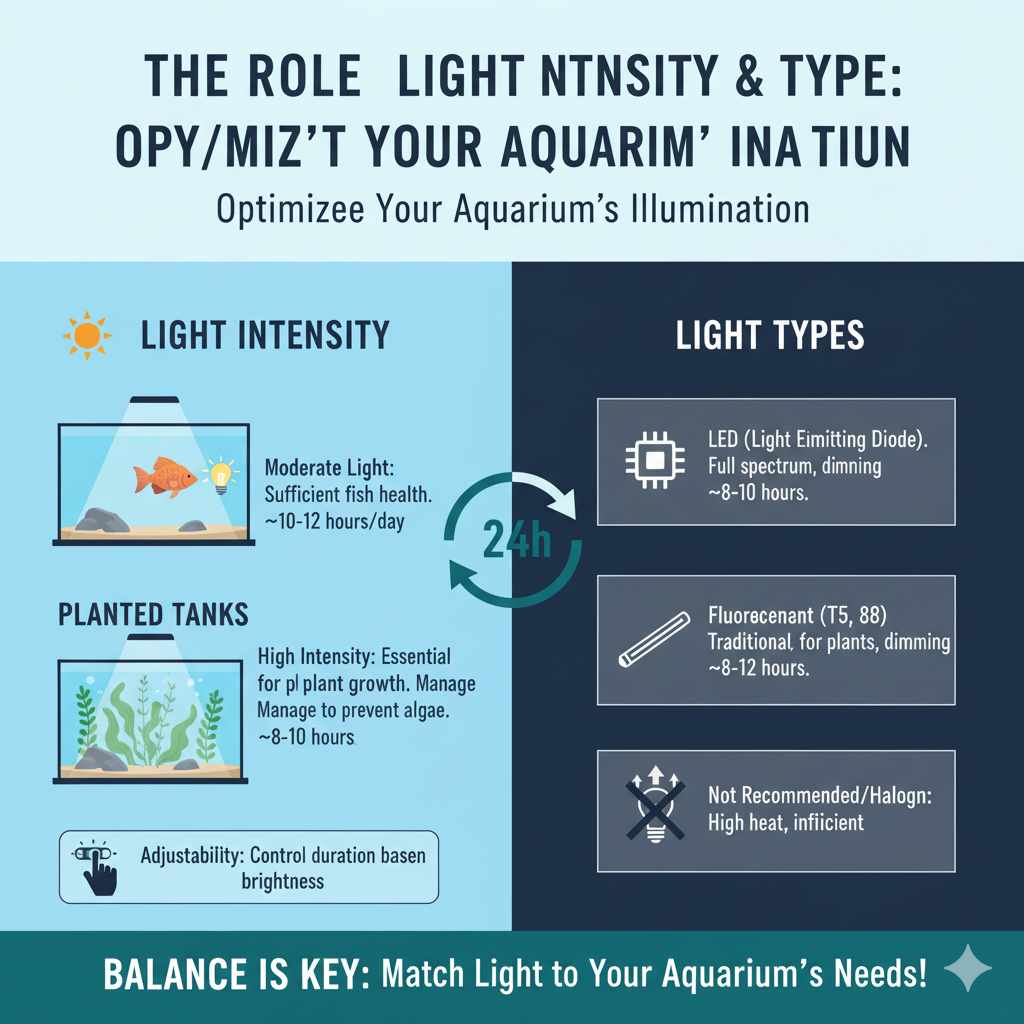
The Role of Light Intensity and Type
It’s not just about how long the light is on, but also how bright it is and what kind of light it is. Different types of lights serve different purposes.
Light Intensity
Aquarium lights vary greatly in intensity. A powerful LED light designed for lush plant growth will have a much bigger impact on algae and fish than a simple, low-wattage fluorescent bulb. If you have a very bright light, you might need to keep the duration shorter, perhaps closer to 8 hours, to prevent algae blooms.
Consider these points:
- For Fish-Only Tanks: A moderate light is usually sufficient. You don’t need intense lighting.
- For Planted Tanks: Higher intensity lights are often needed for plant growth, but this also means more potential for algae if not managed.
- Adjustability: If your light fixture has adjustable intensity settings, use them! This gives you more control.
Light Types
- LED (Light Emitting Diode): These are very popular, energy-efficient, and can offer a wide spectrum of light. Many have features like dimming and color control.
- Fluorescent (T5, T8): These are a more traditional option, still effective for many setups, especially for plants.
- Incandescent/Halogen: These are generally not recommended for aquarium lighting due to high heat output and inefficiency.
The type of light you use will influence how long you should run it. For instance, a very bright LED setup might only need 8 hours, while a dimmer fluorescent might be fine for 10-12 hours.
A Quick Comparison: Light On vs. Light Off
To make things super clear, let’s look at the pros and cons of each scenario. This will help you decide what’s best for your tank.
| Scenario | Pros | Cons |
|---|---|---|
| Light ON 24/7 |
Always visible for viewing. |
Disrupts fish sleep cycles, causes stress. Promotes excessive algae growth. Can stress live plants. Higher energy consumption. |
| Light OFF at Night (8-12 hours ON) |
Allows fish to rest and exhibit natural behaviors. Helps control algae growth. Supports healthy live plant growth. More energy efficient. Promotes a stable ecosystem. |
Tank is dark during off hours (though fish can see). Requires a timer or manual effort to manage. |
As you can see, the benefits of turning the light off at night far outweigh any perceived advantages of leaving it on continuously. It’s a fundamental step towards a balanced and healthy aquarium.
Frequently Asked Questions (FAQ)
Q1: Can my fish get enough oxygen if the light is off at night?
A1: Yes, absolutely. Oxygen levels in an aquarium are primarily maintained by surface agitation from filters or air stones, and by the activity of plants and beneficial bacteria. The light itself doesn’t directly provide oxygen. As long as your filter is running, your fish will have plenty of oxygen.
Q2: Will my fish get lonely or bored if the lights are off?
A2: Fish don’t experience loneliness or boredom in the same way humans do. They respond to their environment and biological needs. Darkness is a natural part of their cycle, allowing them to rest and recharge, which is essential for their well-being.
Q3: What if I have a night-time viewing light?
A3: Many aquarists use low-intensity blue or red “moon lights” for nighttime viewing. These are generally much dimmer than daytime lights and have minimal impact on fish sleep cycles or algae growth. If you use one, ensure it’s very dim and only on for a short period after the main light is off.
Q4: How do I know if my light is too bright?
A4: Signs of a light being too bright include rapid algae growth (especially green spot algae), fish hiding excessively, or plants developing bleached or burnt-looking tips. You can test this by reducing the light duration or intensity and observing the results.
Q5: Can I leave the light on for 24 hours if I have no live plants?
A5: Even without live plants, it’s strongly recommended to turn the aquarium light off at night. Fish still need a rest period, and continuous light can still lead to stress and algae issues. A 24/7 light cycle is unnatural and detrimental to the inhabitants.
Q6: Should I turn the light off during water changes?
A6: It’s generally a good practice to turn the light off during water changes, especially if you’re disturbing the substrate or plants significantly. This can help reduce stress on the fish and prevent algae from getting an uncontrolled burst of light while the tank is in flux.
Conclusion
So, there you have it! The question of “should I turn my fish tank light off at night” has a clear and resounding answer: yes! Providing a consistent day-night cycle is a cornerstone of responsible aquarium keeping. It’s not just about aesthetics; it’s crucial for the health, well-being, and natural behaviors of your fish, and it’s a key strategy in keeping bothersome algae under control. Investing in a simple timer is one of the easiest and most effective steps you can take to ensure a thriving, beautiful, and balanced aquarium. By mimicking nature’s rhythm, you’re setting your aquatic friends up for a happy and healthy life. Happy fishkeeping!