What Are Passage Door Knobs: Essential Guide
Passage door knobs are simple, non-locking knobs used on interior doors like closets and hallways, designed for easy passage rather than security. They offer a straightforward way to operate doors, providing privacy without the complexity of locks. This guide explains their function, types, and installation, making them a simple DIY upgrade.
Hey there, DIY enthusiasts and home improvers! Md Meraj here. Ever found yourself staring at a door knob, wondering what makes one different from another? It’s a common question, especially when you’re tackling a home project and want to get the details just right. Some doors need to lock, while others just need to open and close smoothly. That’s where passage door knobs come in. They might seem simple, but understanding them is key to choosing the right hardware for your home. Don’t worry, it’s not complicated at all! We’ll break down exactly what passage door knobs are, why you might need them, and how they work. By the end of this guide, you’ll feel confident choosing and even installing them yourself. Let’s dive in and demystify these essential door components!
What Exactly Are Passage Door Knobs?
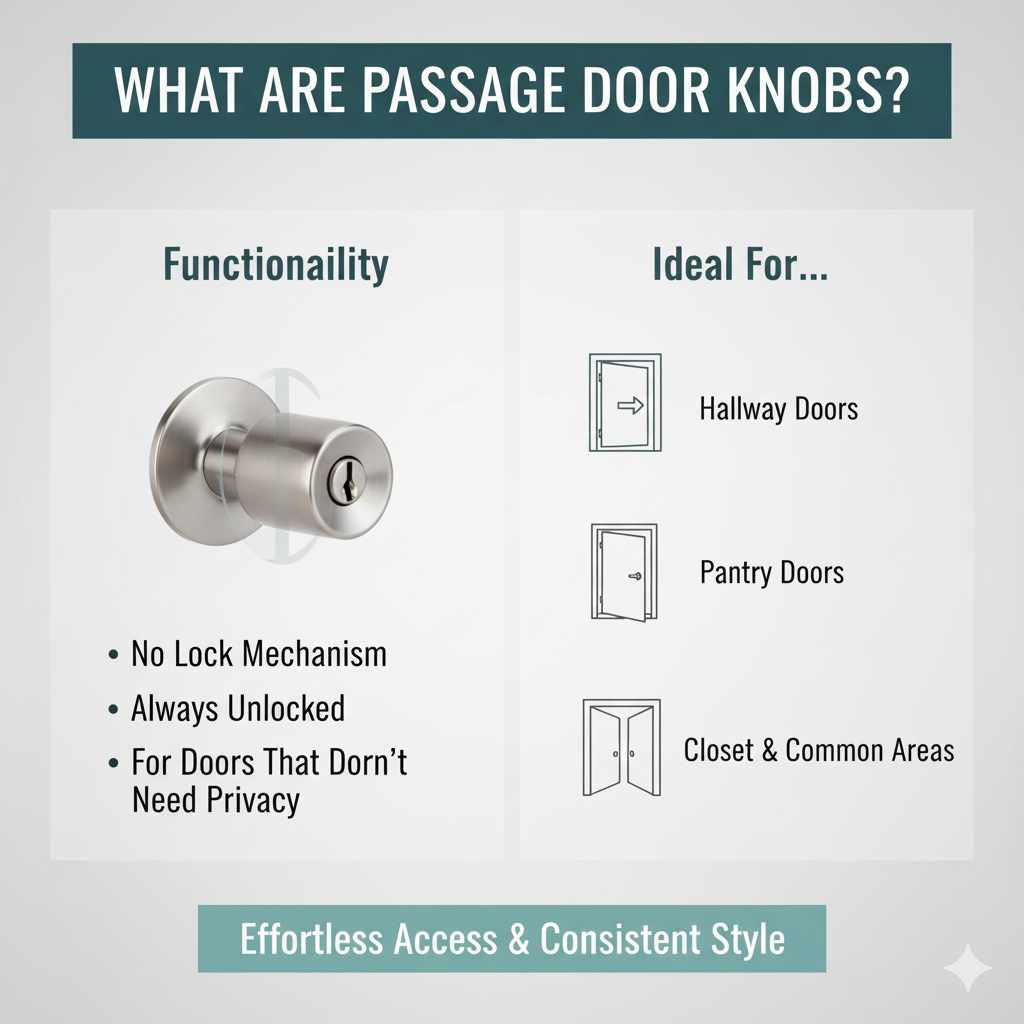
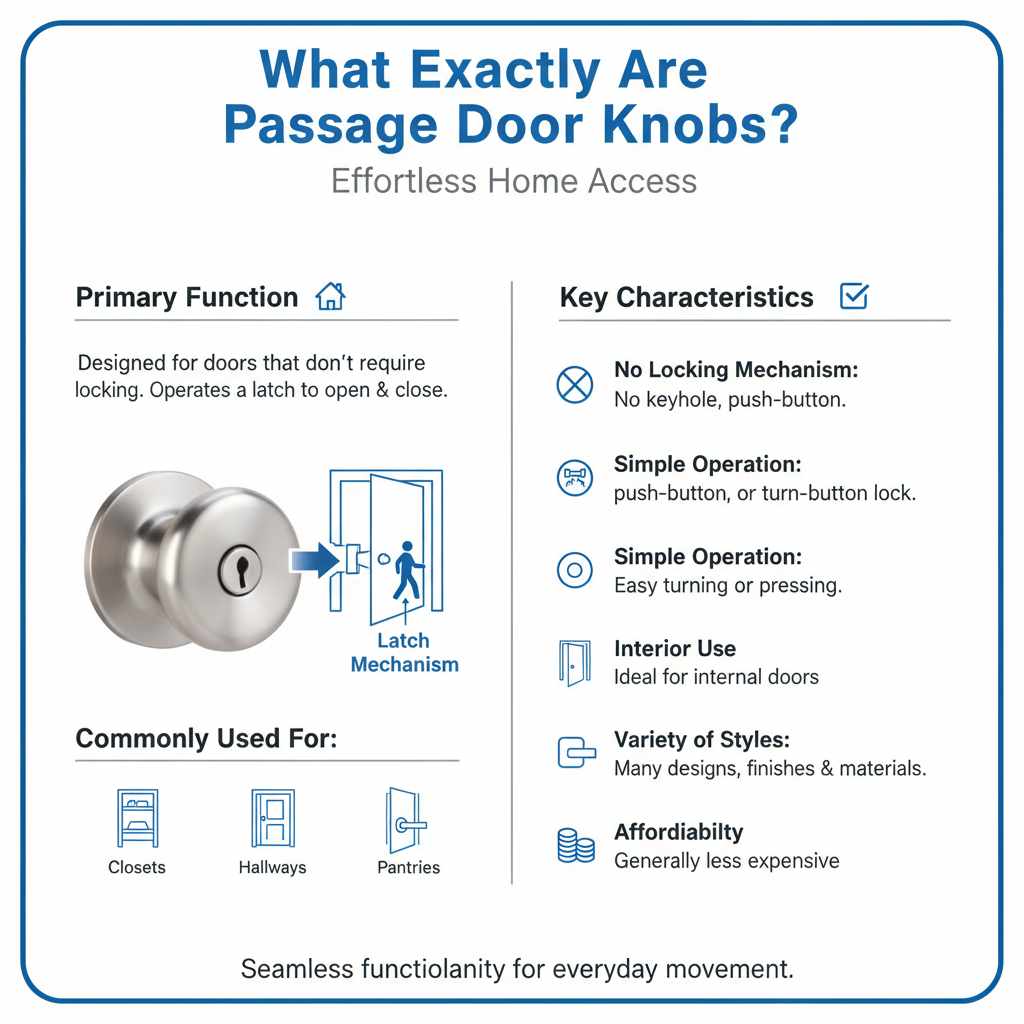
At its core, a passage door knob is a type of door hardware designed for doors that don’t require locking. Think about the doors in your home that you use every day for simple movement from one room to another, like your closet doors, hallway doors, or even the doors to your pantry. These are prime candidates for passage door knobs. Their primary function is to operate the latch mechanism that keeps the door closed but not locked. They are all about easy access and smooth operation, ensuring you can move freely throughout your home without any security concerns.
Unlike keyed entry knobs or privacy knobs (which have a locking mechanism), passage knobs are purely mechanical. You simply turn the knob or press a lever to retract the latch and open the door. They are designed for convenience and are a staple in most homes for interior doors where privacy or security isn’t a concern, or where a separate lock (like a deadbolt on an exterior door) handles the security needs.
Key Characteristics of Passage Door Knobs:
- No Locking Mechanism: This is their defining feature. They do not have a keyhole or a push-button/turn-button lock.
- Simple Operation: Designed for easy turning or lever pressing to open and close.
- Interior Use: Typically used on interior doors where security is not the main concern.
- Variety of Styles: Available in a wide range of designs, finishes, and materials to match your home’s decor.
- Affordability: Generally less expensive than locking doorknobs due to their simpler construction.
Understanding these characteristics helps you identify them and choose the right ones for your specific needs. They are the unsung heroes of everyday home access, providing seamless functionality where it’s needed most.
Why Choose Passage Door Knobs? The Benefits
Choosing the right door knob might seem like a small decision, but it can significantly impact the functionality and feel of your home. Passage door knobs offer a set of advantages that make them an excellent choice for many interior doors. Their simplicity is their greatest strength, leading to a variety of practical benefits for homeowners.
Ease of Use and Accessibility
The most immediate benefit of a passage door knob is its straightforward operation. There are no locks to fumble with, no keys to find. This makes them incredibly easy to use for everyone in the household, from young children to seniors. For doors that are frequently used throughout the day, like those leading to a living room, kitchen, or a busy hallway, the instant access provided by a passage knob is invaluable. It contributes to a smooth, uninterrupted flow within your home.
Cost-Effectiveness
When you’re on a budget or simply looking for the most practical solution, passage door knobs are often the most affordable option. Because they lack the complex internal mechanisms required for locking, their manufacturing costs are lower. This translates to a lower price tag for you, the consumer. For projects where you need multiple knobs for interior doors, opting for passage knobs can lead to significant savings without sacrificing functionality.
Versatility in Design
Don’t let their simplicity fool you; passage door knobs come in an astonishing array of styles, finishes, and designs. Whether your home boasts a modern, minimalist aesthetic, a rustic farmhouse charm, or a classic traditional look, there’s a passage knob to match. You can find them in finishes like brushed nickel, polished brass, oil-rubbed bronze, matte black, and more. This allows you to use them not just for function but also as a subtle design element that enhances your interior decor. You can coordinate them with other hardware in your home, like cabinet pulls or light fixtures, for a cohesive look.
Ideal for Specific Door Types
Passage knobs are perfectly suited for doors where security is not a primary concern. This includes:
- Closet Doors: You don’t need to lock your clothes away!
- Hallway Doors: Connecting rooms or providing access to different areas.
- Pantry Doors: Easy access for grabbing ingredients.
- Interior Room Doors (without need for lock): For bedrooms or studies where a separate lock might be used if needed, but daily access is keyless.
- Laundry Room Doors: Simple access to your laundry space.
In these scenarios, a passage knob provides the necessary function without unnecessary complexity or cost.
Low Maintenance
With fewer moving parts compared to locking mechanisms, passage door knobs tend to be more durable and require less maintenance over time. They are less likely to get jammed or break due to a malfunctioning lock. This means fewer potential headaches and a more reliable hardware solution for your home.
In summary, passage door knobs are a smart choice for their ease of use, affordability, design flexibility, and suitability for everyday interior doors. They offer a practical and stylish solution for smooth, everyday access throughout your home.
Understanding the Anatomy of a Passage Door Knob
Even though passage door knobs are simple, knowing their parts can be helpful, especially if you ever need to replace or adjust one. They are designed to be user-friendly and easy to install, and understanding their basic components makes the process even smoother. Let’s break down the main parts you’ll find on a typical passage knob set.
A standard passage knob set usually consists of two knobs (one for each side of the door) and a latch mechanism that passes through the edge of the door. These components work together to open and close the door.
Key Components:
- Knobs (or Levers): These are the parts you grasp and turn. They come in various shapes, sizes, and styles (round, oval, lever-style) and are available in many finishes to match your home’s decor.
- Spindle: This is a square rod that connects the two knobs. When you turn one knob, the spindle rotates, which in turn operates the latch mechanism.
- Latch Mechanism (or Latch Bolt Assembly): This is the crucial part that retracts when you turn the knob, allowing the door to open, and extends when the door is closed to keep it shut. It includes a spring-loaded bolt with a beveled edge that slides into the strike plate on the door frame.
- Rose: This is the decorative plate that sits behind the knob, covering the hole drilled into the door. It provides a finished look and helps secure the knob assembly to the door.
- Screws: Typically, two long screws pass through the rose plates and connect the knob assemblies on either side of the door, holding everything securely in place.
- Strike Plate: This is a metal plate, usually L-shaped or rectangular, that is attached to the door frame. It has a hole or slot that the latch bolt extends into when the door is closed, keeping it securely shut.
- Screws for Strike Plate: Smaller screws that secure the strike plate to the door frame.
Here’s a simple table illustrating these components and their primary role:
| Component | Primary Role | Description |
|---|---|---|
| Knobs/Levers | Operation | The parts you turn or push to retract the latch. |
| Spindle | Connection | Connects both knobs and transfers rotation to the latch. |
| Latch Mechanism | Door Holding | Retracts to open, extends to keep door closed. |
| Rose | Aesthetics & Mounting | Decorative plate covering the door hole; secures knob. |
| Screws (for knob set) | Assembly | Hold the knob mechanism together through the door. |
| Strike Plate | Door Frame Engagement | Plate on frame where latch bolt enters to secure door. |
Understanding these parts demystifies the hardware. When you’re looking at a new set or troubleshooting an issue, knowing what each piece does makes it much easier to identify problems or select the right replacement. For example, if your door isn’t closing properly, you might look at the latch bolt or the strike plate alignment.
Types of Passage Door Knobs
While all passage door knobs serve the same basic purpose – to operate a door latch without locking – they come in different styles and forms. The type you choose often comes down to aesthetics and personal preference. Here are the most common types you’ll encounter:
1. Round Knobs
These are the classic, traditional door knobs. They are typically spherical or slightly flattened spheres. Their simple, rounded design has been a popular choice for decades. They are easy to grip and operate, making them a functional and timeless option.
2. Oval Knobs
Similar to round knobs, oval knobs offer a slightly more ergonomic grip. Their elongated shape can feel more comfortable in the hand for some people. They also come in a variety of decorative styles and finishes.
3. Lever Handles
Lever-style passage door knobs have become increasingly popular, especially for their ease of use. Instead of turning a knob, you push down on a lever. This is particularly beneficial for individuals with limited hand strength or mobility, making them an accessible option. They also offer a more contemporary look for many homes.
According to the Americans with Disabilities Act (ADA) Standards for Accessible Design, lever handles are often preferred for their ease of operation, as they can be operated with a closed fist and do not require tight grasping or pinching.
4. Specialty Passage Knobs
Beyond the basic shapes, you’ll find passage knobs designed for specific applications or aesthetics:
- Mortise Passage Knobs: These are part of a mortise lock system, which is a more robust and often older style of lockset. While they function as passage knobs, they are installed into a pocket (mortise) cut into the edge of the door.
- Flush Pulls and Recessed Pulls: While not technically “knobs,” these are often used on sliding doors or bi-fold doors where a protruding knob isn’t practical. They are designed to be flush with the door surface or recessed into it, allowing for easy gripping and pulling.
- Knobs for Bi-Fold Doors: These are often smaller and designed to not interfere with the folding action of the doors.
Choosing the Right Style:
When selecting a type of passage door knob, consider:
- Aesthetics: Does it match your home’s overall style?
- Ergonomics: Is it comfortable to use for all members of your household? Lever handles are often recommended for accessibility.
- Door Type: Some styles are better suited for specific door types (e.g., lever for accessibility, flush pulls for sliding doors).
- Functionality: Ensure it’s appropriate for a non-locking interior door.
Most DIYers will be choosing between the common round, oval, or lever styles for standard swinging interior doors. Each offers a slightly different look and feel, but all provide the core function of a passage knob.
How to Install a Passage Door Knob: A Step-by-Step Guide
Installing a new passage door knob is a fantastic DIY project that can be completed in under an hour, even if you’re new to home improvement. It’s a rewarding task that instantly updates the look of a door and ensures smooth operation. Here’s a straightforward guide to help you through it.
Tools and Materials You’ll Need:
- New passage door knob set (including knobs, spindle, latch mechanism, rose plates, and screws)
- Screwdriver (usually a Phillips head, but check your new hardware)
- Measuring tape
- Pencil
- Chisel and hammer (optional, for mortising if needed)
- Drill with appropriate drill bits (optional, for new installations)
- Safety glasses
Step 1: Remove the Old Door Knob (If Applicable)
If you’re replacing an old knob, start by removing it. Most knob sets have small set screws on the underside of the knob or decorative covers (roses) that can be pried off to reveal screws. Unscrew these and pull the two knob assemblies apart. Then, slide out the latch mechanism from the edge of the door.
Step 2: Prepare the Door for the Latch Mechanism
The latch mechanism fits into a hole drilled into the edge of the door. If you’re replacing an old knob, this hole should already be there. If not, or if you’re installing a new knob on a new door, you’ll need to drill a 1-inch or 1 1/8-inch hole (check your knob’s specifications) centered 36-38 inches from the floor. Then, use a chisel to create a mortise (a rectangular recess) on the edge of the door so the latch plate sits flush with the door’s edge. Insert the latch mechanism into the hole and secure it with its screws.
Step 3: Install the First Knob Assembly
Take one of the new knobs and its corresponding rose plate. Slide the spindle through the hole in the latch mechanism. Position the rose plate against the door, ensuring the spindle passes through the center hole of the rose. If your knob set uses screws that go through the rose and into the other side, you’ll do this in a later step.
Step 4: Install the Second Knob Assembly
Take the second knob and its rose plate. Align the spindle from the first knob with the hole in the second knob. Slide the second knob assembly onto the spindle and press it firmly against the door. Ensure the rose plate sits flat against the door surface.
Step 5: Secure the Knob Set
Now, you’ll secure the two knob assemblies together. Most modern knob sets use two long screws that pass through the rose plate on one side, through pre-drilled holes in the latch mechanism, and into the threaded holes on the rose plate of the other knob. Insert these screws and tighten them with your screwdriver. Tighten them evenly, alternating between screws, until the knobs are snug and don’t wobble.
For some knob sets, especially older or decorative ones, you might need to screw the roses directly to the door. Always refer to the manufacturer’s instructions that came with your specific hardware.
Step 6: Install the Strike Plate
Close the door gently. You should feel the latch bolt extend and catch the edge of the door frame. Mark the position of the latch bolt on the door frame. Open the door and align the new strike plate with your mark. You may need to chisel a small recess for the strike plate to sit flush with the frame. Secure the strike plate to the door frame using the provided screws.
Step 7: Test the Operation
Open and close the door several times. Test the knob to make sure the latch retracts smoothly and extends fully when the door is closed. Ensure the door closes securely and stays shut. If the latch doesn’t fully engage with the strike plate, you might need to adjust the strike plate’s position or the mortise on the door frame.
Congratulations! You’ve successfully installed a new passage door knob. This simple upgrade can make a noticeable difference in the look and feel of your doors.
Passage Knobs vs. Other Types of Door Knobs
It’s easy to get confused when looking at the variety of door knobs available. While they all serve to operate a door, their functions and applications differ significantly. Understanding these differences helps you choose the right knob for the right door. Passage door knobs are just one type in a family of door hardware.
Here’s a breakdown of the most common types of door knobs and how they compare to passage knobs:
1. Passage Door Knobs
- Function: Operates a latch to open/close a door.
- Locking: No locking mechanism.
- Typical Use: Interior doors like closets, hallways, pantries where security is not needed.
- Key Feature: Simplicity and ease of access.
2. Privacy Door Knobs
- Function: Operates a latch and includes a simple locking mechanism.
- Locking: Yes, usually with a push-button or turn-button on the interior knob. Often has an emergency release slot on the exterior knob.
- Typical Use: Interior doors where privacy is needed but high security isn’t paramount, such as bathrooms and bedrooms.
- Key Feature: Provides privacy without a key.
3. Keyed Entry Door Knobs (or Entrance Knobs)
- Function: Operates a latch and includes a lock that requires a key.
- Locking: Yes, with a key cylinder on the exterior knob and typically a thumb-turn on the interior knob.
- Typical Use: Exterior doors of homes and apartments, or interior doors requiring secure access (e.g., a home office).
- Key Feature: Security via a key.
4. Dummy Door Knobs
- Function: Provides a pull or a decorative handle only. It does not operate any latch mechanism.
- Locking: No.
- Typical Use: Doors that don’t need to latch or close, such as the inactive side of double doors, closet doors that slide, or decorative purposes.
- Key Feature: Purely decorative or for pulling doors open.
Here’s a table summarizing the key differences:
| Knob Type | Primary Function | Locking Mechanism? | Typical Application |
|---|---|---|---|
| Passage | Operate latch for opening/closing | No | Closets, hallways, pantries |
| Privacy | Operate latch; provide privacy | Yes (push-button/turn-button) | Bathrooms, bedrooms |
| Keyed Entry | Operate latch; provide security | Yes (key) | Exterior doors, secure interior doors |
| Dummy | Decorative pull; no latch operation | No | Inactive double doors, sliding doors |
Choosing the correct type of knob ensures your doors function as intended. For instance, using a passage knob on a bathroom door would be a mistake, as it wouldn’t offer any privacy. Conversely, using a keyed entry knob on a closet door is unnecessary complexity and expense.
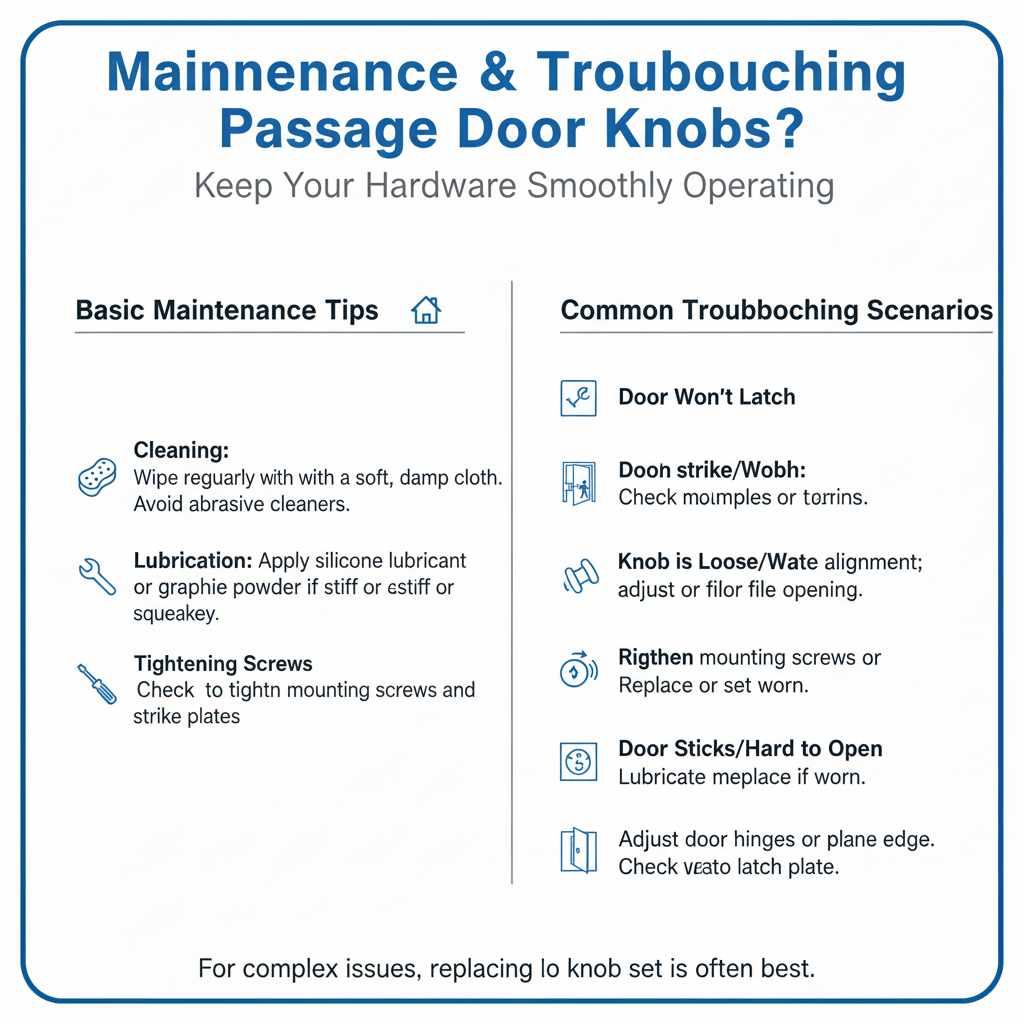
Maintenance and Troubleshooting Passage Door Knobs
Passage door knobs are generally low-maintenance, but like any hardware, they can occasionally develop issues. A little regular care and knowing how to troubleshoot common problems can keep them working smoothly for years.
Basic Maintenance Tips:
- Cleaning: Wipe down knobs regularly with a soft, damp cloth. For tougher grime or to restore shine, use a mild soap and water solution. Avoid abrasive cleaners, as they can damage the finish. For specific finishes like polished brass or oil-rubbed bronze, check manufacturer recommendations to avoid damaging the patina or coating.
- Lubrication: If a knob feels stiff or squeaky, it might need lubrication. A quick spray of a silicone-based lubricant or graphite powder inside the mechanism (where the spindle enters the knob) can often resolve this. Insert the straw attachment of the lubricant can and spray briefly. Work the knob back and forth to distribute the lubricant.
- Tightening Screws: Periodically check the screws that hold the knob set together and the screws for the strike plate. Loose screws can cause wobbling, make the knob feel loose, or affect the latch’s engagement. Tighten them as needed, but be careful not to overtighten, which can strip the threads.
Common Troubleshooting Scenarios:
-
The Door Won’t Latch:
- Problem: The latch bolt doesn’t extend fully or doesn’t catch the strike plate.
- Solution: Check if the latch mechanism is properly seated in the door edge. Ensure the strike plate on the door frame is aligned correctly with the latch bolt. You might need to slightly adjust the position of the strike plate or file the opening in the strike plate larger. Also, check that the spindle is properly connected to both knobs and engaging the latch mechanism.
-
The Knob is Loose or Wobbly:
- Problem: The knob feels loose on the door.
- Solution: Tighten the main mounting screws that hold the two knob assemblies together. If your knob has a small set screw on the underside, tighten that. Ensure the rose plates are snug against the door.
-
The Knob is Stiff or Hard to Turn:
- Problem: The knob doesn’t turn smoothly.
- Solution: This often indicates a need for lubrication. Apply a silicone-based lubricant or graphite powder as described in the maintenance section. If the problem persists, the internal mechanism might be worn or damaged, and you may need to replace the knob set.
-
The Door Sticks or is Hard to Open/Close:
- Problem: The door rubs against the frame or is difficult to operate.
- Solution: This is usually an issue with the door or frame alignment, not the knob itself. Check if the door has sagged on its hinges. You may need to adjust the hinges or plane the edge of the door where it’s sticking. Ensure the latch bolt isn’t catching too tightly on the strike plate.
For more complex issues, or if the knob mechanism seems broken, replacing the entire passage knob set is often the most straightforward and cost-effective solution. Thankfully, as we’ve seen, installation is a manageable DIY task.
Frequently Asked Questions About Passage Door Knobs
Q1: What is the main difference between a passage knob and a privacy knob?
The main difference is that a privacy knob has a locking mechanism (usually a push-button or turn-button) to secure the door from the inside, while a passage knob has no locking function at all. Passage knobs are for doors that don’t need privacy or security, like closets.
Q2: Can I use a passage knob on my bathroom door?
No, it’s generally not recommended. Bathroom doors require privacy. You should use a privacy knob or a keyed entry knob on a bathroom door to prevent unwanted entry.
Q3: Are passage door knobs difficult to install?
Not at all! Passage door knobs are one of the easiest types of door hardware to install. Most installations can be completed in about 30 minutes with just a screwdriver. They are a great beginner DIY project.
Q4: How do I know if I need to buy a “right-handed” or “left-handed” passage knob?
Passage door knobs are almost always universal and do not have a handedness. The knobs and latch mechanism are designed to work regardless of which side of the door they are on. This simplifies purchasing and installation.
Q5: What is the best finish for passage door knobs?
The best finish depends on your home’s decor. Popular choices include brushed nickel (modern, durable), polished brass (classic, elegant), oil-rubbed bronze (traditional, rustic), and matte black (contemporary, bold). Consider the existing hardware and style of your home.
Q6: My new passage knob set came with two long screws. Where do they go?
These long screws are essential for connecting the two knob assemblies through the door. They typically pass through the decorative rose on one side, through the latch mechanism, and screw into the threaded holes on the rose of the knob on the other side. Tighten them evenly to secure the knob set.
Q7: Can I replace just one knob if it’s broken, or do I need to replace the whole set?
It’s almost always best to replace the entire set. The internal mechanisms of the knobs and the latch are designed to work together. If one part is worn or broken, the other is likely not far behind, and getting a matching set ensures proper function and a cohesive look.
Conclusion
Navigating the world of door hardware might seem daunting at first, but understanding the role of each component, like the humble passage door knob, makes all the difference. We’ve explored what passage door knobs are – simple, non-locking mechanisms perfect for interior doors where easy access is key. You’ve learned about their benefits, from cost-effectiveness and ease of use to their versatility in design, and discovered the different types available, including classic knobs and modern levers.
We’ve also walked through the straightforward process of installing a passage door knob, proving that this is a DIY task well within your reach. By knowing the parts, understanding the differences between passage knobs and their privacy or entry counterparts, and knowing how to perform basic maintenance, you can confidently select, install, and care for the door hardware in your home. These small upgrades contribute significantly to both the functionality and the aesthetic appeal of your living space, giving you that satisfying feeling of accomplishment that comes from a job well done. So go ahead, tackle that door project with confidence – your home will thank you for it!