What Grit Sandpaper to Remove Stain From Wood: Expert Tip
Choosing the right sandpaper grit can be tricky when you want to remove wood stain. Beginners often wonder where to start, feeling a bit lost with all the numbers. It might seem complicated, but it really doesn’t have to be.
This guide will walk you through it step-by-step, making it easy to find exactly what you need. We will cover everything you need to know to get your wood looking just right after stain removal.
Choosing the Right Grit Sandpaper for Stain Removal
This section will guide you through selecting the correct sandpaper grit for removing stain from wood. It is a critical step in refinishing wood projects, as using the wrong grit can lead to damage or ineffective stain removal. We aim to provide clear instructions and expert advice so you can confidently tackle your wood staining projects.
Understanding grit makes a big difference in the final look of your wood.
Understanding Sandpaper Grits Explained
Sandpaper comes with numbers, and these numbers tell you how rough or fine the sandpaper is. Lower numbers mean coarser sandpaper, which has larger grit particles. These are great for removing a lot of material quickly, like old paint or thick stain.
Higher numbers mean finer sandpaper, with smaller grit particles. These are used for smoothing out surfaces and preparing them for finishing. For stain removal, you often start with a coarser grit and then move to finer grits to smooth the wood surface.
This progressive sanding ensures you remove the stain effectively without damaging the wood itself.
The grit size is measured by how many grit particles can fit across one inch of sandpaper. So, a 60-grit sandpaper has 60 grit particles per inch, making them quite large and aggressive. On the other hand, a 220-grit sandpaper has 220 much smaller particles packed into each inch, creating a much smoother surface.
The coarseness determines how much material it will remove and how fast. When removing stain, you need grits that are strong enough to lift the stain but not so strong that they gou and damage the wood grain. This balance is key to a successful refinishing project.
Different types of wood may also react differently to sanding. Softwoods like pine can be easily gouged by coarse grits, so a slightly finer starting grit might be necessary. Hardwoods like oak or maple are more durable and can often withstand more aggressive sanding.
Always consider the type of wood you are working with when making your selection. Experimenting on an inconspicuous area of the wood can also help you determine the best approach.
Common Sandpaper Grits and Their Uses
Sandpaper grits are typically categorized into coarse, medium, and fine. Coarse grits range from 10 to 40. They are ideal for heavy-duty work like removing thick coatings, shaping wood, or stripping old finishes.
If you have a very stubborn or thick stain, you might start with something in this range. However, using grits this low on wood that is already in decent condition can cause deep scratches that are hard to remove later.
Medium grits fall between 50 and 120. These are your workhorses for most sanding tasks. They are good for removing moderate amounts of material, leveling surfaces, and smoothing out the marks left by coarser grits.
When removing stain, you will likely use grits in this range after an initial aggressive pass if needed. A 60-grit or 80-grit sandpaper is often a good starting point for removing stain without being overly destructive.
Fine grits range from 150 to 220 and above. These are used for final smoothing and surface preparation before applying finishes like paint, stain, or varnish. They remove very little material but create a very smooth surface.
While not directly used for removing stain, you will use finer grits after the stain removal is complete to prepare the wood for its new finish. A 120-grit or 150-grit sandpaper is often used to smooth the wood after the bulk of the stain is gone, before progressing to even finer grits.
Coarse Grits 10-40
Grit sizes in the 10-40 range are very aggressive. They are made with large, sharp grit particles. These particles quickly cut into wood, removing material at a high rate.
Think of them as heavy-duty removers. They are excellent for stripping multiple layers of old paint, varnish, or thick, stubborn stain. When tackling a project with a very old and deeply ingrained stain, a 40-grit or 60-grit sandpaper might be your first choice.
However, their aggressiveness means they can easily scratch and damage the wood if not used carefully. You must follow up with finer grits to remove these deep scratches. Over-sanding with these can also alter the shape of wood pieces.
Medium Grits 50-120
This range of sandpaper grits offers a good balance for many woodworking tasks. Grits from 50 to 120 are less aggressive than coarse grits but still effective at removing moderate amounts of material. They are perfect for smoothing surfaces after initial rough sanding or for removing lighter stains and finishes.
If you are trying to remove a medium-thickness stain or just want to refresh the wood’s surface, starting with an 80-grit or 100-grit sandpaper is a smart move. This grit range helps to smooth out the wood and remove any imperfections without causing excessive damage. It’s also the typical range for preparing wood before applying a new stain or finish.
Fine Grits 150-220 and Higher
Sandpapers with grits of 150, 180, 220, and even higher are considered fine. They feature much smaller grit particles that are packed more closely together. These grits are not designed for removing stain or heavy material.
Instead, their primary purpose is to smooth the wood surface to a silky finish. After you have removed the old stain and sanded the wood with medium grits, you will use fine grits to prepare it for a new coating. For example, sanding with 150-grit, then 180-grit, and finally 220-grit will give you a surface that is ready for a smooth stain application or a clear coat.
Skipping these fine grits will result in a rough finish.
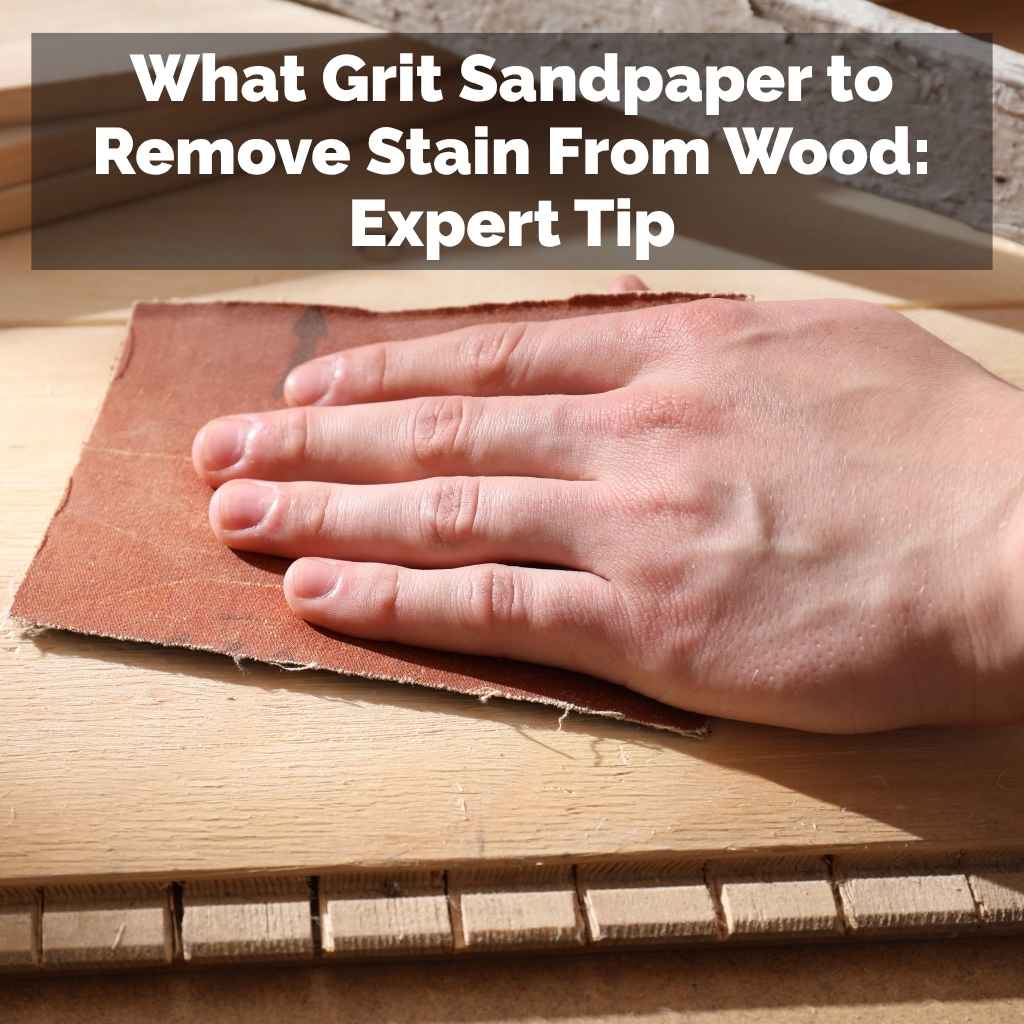
What Grit Sandpaper to Remove Stain From Wood? Expert Tip
When it comes to the specific question of What Grit Sandpaper to Remove Stain From Wood? Expert Tip, the answer often depends on how heavy the stain is. For most common situations, starting with a medium-coarse grit is recommended.
A 60-grit or 80-grit sandpaper is a great starting point. These grits are coarse enough to remove the stain effectively without being so aggressive that they instantly damage the wood. They balance the need for removal power with the necessity of preserving the wood’s integrity.
It’s about getting the job done efficiently while minimizing the risk of creating deep scratches.
If the stain is particularly old, deep, or has multiple layers, you might need to begin with an even coarser grit. Consider a 40-grit or 50-grit sandpaper for these tougher jobs. However, it is absolutely crucial to follow up immediately with finer grits.
After using a 40-grit sandpaper, you must move to at least an 80-grit, then a 120-grit, and finally a 150- or 220-grit to smooth out the wood. For lighter stains or if you are just trying to lighten the existing color, starting with an 80-grit or 100-grit might be sufficient. Always test on a hidden area first.
The goal is to remove the stain in stages. You want to progressively remove coarser scratches with finer grits. Using a single, very coarse grit and stopping there will leave the wood looking rough and damaged.
The final outcome will depend on your patience with the sanding process. After the stain is removed to your satisfaction, you will then progress through the finer grits to prepare the wood for its next finish. This systematic approach ensures a beautiful, smooth result.
Sanding Techniques for Stain Removal
Proper sanding techniques are as important as selecting the right grit sandpaper when removing wood stain. Applying too much pressure, sanding against the grain, or using inconsistent strokes can lead to an uneven finish, deep scratches, or even damage to the wood. This section covers the best practices to ensure an effective and efficient stain removal process, leaving your wood surface ready for its next transformation.
Mastering these techniques will save you time and effort.
Sanding With the Grain
One of the most fundamental rules in sanding is to always sand in the direction of the wood grain. Wood grain runs lengthwise along the wood fibers. When you sand with the grain, your sandpaper removes wood particles in a way that follows these natural lines.
This creates long, slender scratches that are less noticeable and easier to blend into the natural appearance of the wood. The wood appears smooth because the sanding marks are aligned with its natural texture.
Sanding against the grain, however, creates short, choppy, and deep scratches that run perpendicular to the wood’s natural flow. These scratches are very conspicuous and difficult to remove, even with finer grits of sandpaper. They will catch the light and make the wood look dull and damaged, no matter how smooth the rest of the surface feels.
Even if you are using a power sander, always guide it parallel to the wood grain. Taking your time to follow the grain is a small effort that makes a huge difference in the final look of your project.
Consider a simple analogy: imagine brushing your hair. You would brush from the roots to the tips, following the natural direction of your hair. Brushing against the grain would be messy and ineffective.
Sanding wood is similar. Always move your sandpaper in the same direction the wood fibers grow. This simple habit ensures a professional and clean finish, making your hard work shine through.
Applying the Right Amount of Pressure
The pressure you apply while sanding directly impacts how quickly and effectively the stain is removed, as well as the potential for damaging the wood. When using a coarser grit sandpaper for initial stain removal, you can apply moderate pressure. This helps the sandpaper cut into the stain and wood efficiently.
However, it’s crucial to avoid pressing down too hard, as this can lead to gouging and deep scratches that are challenging to repair.
As you progress to finer grits, you should significantly reduce the pressure. Fine grits are designed to smooth the surface, not to remove material quickly. Applying heavy pressure with fine grit sandpaper can actually burn the wood or create an uneven, hazy finish.
The sandpaper should glide over the surface. Let the grit do the work for you. Light, even pressure is key for achieving a smooth, uniform surface at every stage of the sanding process.
An effective way to gauge pressure is to feel the resistance. If you feel significant drag or resistance, you might be pressing too hard. The goal is a smooth, consistent sanding action.
If you are using a random orbital sander, the machine’s weight is often enough. You should guide the sander rather than force it. For hand sanding, a gentle, even pressure across the entire surface is best.
Using Power Sanders vs. Hand Sanding
For large projects or heavily stained surfaces, power sanders can significantly speed up the process. Random orbital sanders are popular because they create a smooth finish with minimal risk of creating circular sanding marks, provided you use them correctly. Belt sanders are more aggressive and best suited for initial, heavy material removal but require careful handling to avoid damaging the wood.
Detail sanders are useful for reaching tight corners and intricate areas.
Hand sanding is more time-consuming but offers greater control, especially on delicate or intricately shaped pieces. It’s also more budget-friendly. For areas that power sanders can’t reach, or for fine-tuning the finish, hand sanding is indispensable.
Many professionals use a combination of both. They might start with a power sander for efficiency on flat surfaces and then switch to hand sanding for edges, curves, and final smoothing. This hybrid approach leverages the strengths of each method.
Regardless of the tool, always wear appropriate safety gear, including eye protection and a dust mask. Sanding generates a lot of fine dust, which can be harmful to inhale. Power sanding, in particular, can produce dust clouds quickly.
Ensure your workspace is well-ventilated. If using a power sander, keep it moving constantly to prevent it from digging into one spot.
Example Scenario: Refinishing an Old Oak Table
Let’s imagine you have an old oak dining table with a dark, somewhat worn stain. You want to strip it down to bare wood and reapply a lighter stain. For this task, the expert tip What Grit Sandpaper to Remove Stain From Wood?
Expert Tip comes into play. You’ll start with a 60-grit or 80-grit sandpaper. Using a random orbital sander, you’ll work in long, even strokes, always following the direction of the oak’s prominent grain.
You’ll apply moderate pressure, allowing the sander to do the heavy lifting, but ensuring you cover the entire surface systematically.
After the majority of the stain is removed, and you notice the wood appearing lighter, you’ll switch to a finer grit. Next, you’ll use a 120-grit sandpaper. The goal here is to smooth out the scratches left by the 60- or 80-grit paper.
You’ll still use the random orbital sander, but with lighter pressure. This step is crucial for preparing the wood for the next stage. You’ll continue to sand until all the deeper scratches are gone and the surface feels noticeably smoother.
Finally, you’ll move to a 150-grit or 180-grit sandpaper to further refine the surface. This will remove any faint scratches from the 120-grit and create a very smooth canvas. If you plan to apply a very dark or oil-based stain, you might even go up to 220-grit.
This staged approach, moving from coarser to finer grits, ensures that the old stain is completely removed and the wood is in prime condition for its new finish. The result will be a beautifully smooth table ready for its next chapter.
Choosing Between Different Types of Sandpaper
Beyond grit size, sandpaper also comes in various materials and backing types, each suited for different applications. Understanding these differences can help you make more informed choices for your wood stain removal projects. The right sandpaper material can enhance efficiency and effectiveness, while the backing can influence durability and flexibility.
This section explores the most common types and what they mean for your work.
Sandpaper Materials
The abrasive grains on sandpaper are made from different materials, each with its own cutting properties. The most common are aluminum oxide, silicon carbide, and garnet. Aluminum oxide is the most widely used and is a good all-around choice for wood.
It is durable, long-lasting, and effective for both rough sanding and finer finishing. It’s a good workhorse for removing stain.
Silicon carbide is harder and sharper than aluminum oxide, making it a faster-cutting abrasive. It’s excellent for sanding hard materials like metal, plastics, and glass, but it can also be used on wood, especially for removing stubborn finishes. However, it can be more brittle than aluminum oxide and may break down faster on softer woods.
It’s a good option when you need aggressive cutting power.
Garnet is a natural abrasive that is softer than aluminum oxide and silicon carbide. It is often used for finer sanding applications and is known for producing a very smooth finish. It wears down faster than synthetics but is gentler on wood.
While not typically the first choice for aggressive stain removal, it can be useful in later stages of refinement if you want a very polished look.
Backing Types
The material the abrasive grains are glued to is called the backing. This can be paper, cloth, or film. Paper-backed sandpaper is the most common and cost-effective.
It comes in various weights, from light ‘A’ weight for fine sanding to heavy ‘E’ or ‘F’ weight for more aggressive sanding. Paper is suitable for most hand sanding and is available in all grit sizes and abrasive materials.
Cloth-backed sandpaper is more durable and flexible than paper. The cloth backing resists tearing and cracking, making it ideal for sanding curved surfaces or for use with power sanders where the paper might tear. It’s also generally more expensive than paper-backed sandpaper.
For stain removal tasks that involve a lot of flexing or are on irregular shapes, cloth-backed sandpaper can be a better investment.
Film-backed sandpaper uses a plastic film as the backing. It is very strong, waterproof, and provides a consistent grit height, which leads to a more uniform finish. It’s often used for high-precision sanding applications and can be very effective for fine finishing.
However, it is typically more expensive and might be overkill for basic stain removal, though it offers excellent durability.
Open-Coat vs. Closed-Coat Sandpaper
Another important distinction is whether sandpaper is open-coat or closed-coat. In closed-coat sandpaper, the abrasive grains cover the entire surface of the backing. This provides maximum cutting power but also means the sandpaper can load up quickly with dust and debris, reducing its effectiveness.
It’s often used for harder materials or when a very aggressive cut is needed initially.
Open-coat sandpaper has the abrasive grains spaced farther apart, with gaps on the surface. This spacing allows dust and debris to fall away from the cutting surface more easily, preventing the sandpaper from clogging up as quickly. For sanding wood, especially when removing stain which can be gummy, open-coat sandpaper is often preferred.
It lasts longer and maintains its cutting ability for a greater period, making it more efficient for wood projects.
Most sandpaper designed for woodworking is open-coat. When you are removing stain from wood, the particles of stain and wood dust will be generated. An open-coat sandpaper will do a better job of shedding this material, keeping the abrasive surface exposed and ready to cut.
This makes the sanding process smoother and requires less frequent cleaning or replacement of the sandpaper.
Example Scenario: Stripping Varnish from a Wooden Chair
Consider a wooden chair with several layers of old varnish and some underlying stain. To effectively strip this, you’ll want a durable and aggressive sandpaper. For the initial stripping, a good choice would be an 80-grit or 100-grit aluminum oxide sandpaper with an open-coat design.
The aluminum oxide provides good cutting power, and the open-coat construction will help prevent it from clogging with varnish and stain residue. You might opt for a cloth-backed version if you’re doing a lot of hand sanding around curves, as it offers better flexibility and durability than paper.
If you find the varnish is particularly tough, a silicon carbide open-coat sandpaper in a similar grit range (e.g., 80-grit) could also be a viable option for its faster cutting ability. Once the bulk of the varnish and stain is removed, you would then transition to finer grits, perhaps 120-grit, then 180-grit, and finally 220-grit, to smooth the wood surface. For these later stages, paper-backed aluminum oxide sandpaper is usually sufficient and more economical.
The key is to select a sandpaper type that can handle the material being removed while also being flexible enough for the chair’s contours.
Troubleshooting Common Sanding Issues
Even with the right grit and techniques, sanding can sometimes present challenges. Issues like uneven sanding, clogged sandpaper, or deep scratches can occur. Knowing how to identify and fix these problems can save your project from disaster.
This section offers practical solutions to common sanding woes, ensuring you can overcome obstacles and achieve a smooth, professional finish.
Dealing with Uneven Sanding
Uneven sanding often happens when pressure is not applied consistently or when using a power sander without keeping it constantly moving. If you notice lighter or darker patches, or areas that seem less smooth than others, it means you need to go back and re-sand. Start with the grit you were using or one step coarser if the unevenness is significant.
Focus on the areas that need correction, ensuring you sand them thoroughly before moving back to the surrounding areas.
When hand sanding, try to use long, overlapping strokes and visualize a grid pattern. This ensures you cover every inch of the surface evenly. With a random orbital sander, keep the sander moving at a steady pace and avoid dwelling on one spot.
If the unevenness is due to deep scratches, you might need to return to a coarser grit to remove them, then re-work your way back up through the finer grits. Patience is key here; don’t rush the process.
It’s also important to consider the lighting. Sometimes unevenness is more visible under certain light conditions. Try to inspect your work from different angles and under good lighting to catch any inconsistencies.
Good lighting can reveal sanding marks you might otherwise miss until it’s too late to fix easily.
Preventing Sandpaper Clogging
Sandpaper clogs when dust and debris from the wood or finish get trapped between the abrasive grains, preventing them from cutting effectively. This is more common with softer woods, sticky finishes, or when using closed-coat sandpaper. To prevent clogging, use open-coat sandpaper whenever possible, as it sheds debris more easily.
Regularly clean your sandpaper. You can use a wire brush or a stiff bristle brush to gently remove dust and debris from the surface of the sandpaper. For stubborn clogs, you can try using a rubber sanding eraser, which is designed to lift lodged particles.
If the sandpaper is too clogged to be effectively cleaned, it’s often more efficient to replace it. Over-clogged sandpaper will not sand effectively and can even burn the wood.
For power sanders, consider using ones with dust collection systems. These systems help to remove dust from the surface as you sand, significantly reducing clogging and creating a cleaner working environment. Ensure the vacuum bag or canister is emptied regularly.
Removing Deep Scratches
Deep scratches are usually caused by using too much pressure, sanding against the grain, or by debris caught under the sandpaper. The first step is to identify the depth of the scratch. If it’s a very deep scratch, you might need to start with a coarser grit than you originally planned, perhaps going back one or two steps.
For example, if you were sanding with 120-grit and notice a deep scratch, you might need to go back to 80-grit to remove it.
Once you’ve used a coarser grit to remove the scratch, you must meticulously re-sand the entire area, working your way back up through the grits. Don’t just sand the scratch; sand the entire surface or section to ensure consistency. For instance, if you had to use 80-grit to fix a scratch on a tabletop, you would then need to sand with 120-grit, then 180-grit, and perhaps 220-grit to bring it back to the desired smoothness.
It’s a process of starting over from the grit you used to fix the scratch.
Sometimes, a very deep scratch might require wood filler. If the scratch is too deep to be removed by sanding without significantly altering the wood’s shape or profile, using a quality wood filler that matches the final desired color of the wood might be the best solution. After the filler has dried, it can be sanded smooth, and then you can continue with the standard sanding progression.
Scenario: Sanding Scratches After Stain Removal
Imagine you’ve just finished removing stain from a wooden chest, and you notice a few noticeable scratches from the initial sanding pass with 80-grit sandpaper. You used an open-coat aluminum oxide paper, but a small piece of debris got lodged, creating a deeper line. To fix this, you need to use a coarser grit, say 60-grit sandpaper, but only on the scratched area and slightly beyond.
You’ll sand gently with the grain, just enough to level the scratch.
After the scratch is gone, you’ll then resume your normal sanding progression. This means you’ll move back to 80-grit to smooth out the marks from the 60-grit. Then, you’ll move to 120-grit, followed by 180-grit, and finally 220-grit sandpaper to ensure the entire surface is uniformly smooth and ready for a new stain.
This methodical approach ensures the repair is seamless and the overall finish is consistent.
Preparing Wood for a New Finish After Stain Removal
Once the old stain is successfully removed and the wood is sanded smooth, the preparation for a new finish is critical. This stage ensures that your new stain or protective coating adheres properly and looks its best. It involves a final clean-up and often a light sanding with very fine grit sandpaper.
This section details the steps needed to get your wood surface perfectly ready for its new life.
Final Cleaning and Dust Removal
After your final sanding pass, there will be a fine layer of wood dust on the surface. This dust must be completely removed before applying any finish. Use a tack cloth for this purpose.
A tack cloth is a sticky material designed to pick up fine dust particles. Wipe the entire surface gently with the tack cloth, ensuring you get into all crevices and corners. You may need to use several tack cloths, as they become less effective as they pick up more dust.
Alternatively, you can use a vacuum cleaner with a brush attachment to remove most of the dust, followed by a dry microfiber cloth. Compressed air can also be used to blow dust off surfaces, but be careful not to blow it into areas you’ve already cleaned. It’s always best to work in a well-ventilated area, and ideally, let the dust settle for a few minutes after vacuuming or blowing before proceeding with the tack cloth.
A completely dust-free surface is the goal.
It’s also important to avoid touching the sanded wood surface with your bare hands after the final sanding and cleaning. The natural oils from your skin can transfer to the wood, potentially affecting how the finish adheres or looks. Wearing clean cotton gloves is a good practice at this stage.
The Importance of Fine Grits for Finishing
The final sanding grits play a crucial role in the appearance of your new finish. After removing the stain and sanding with medium grits (like 100 or 120), you’ll move to finer grits such as 150, 180, and 220. These grits don’t remove much material; instead, they gently abrade the surface, closing the pores of the wood and creating a very smooth, even texture.
This smoothness is essential for a professional-looking finish.
If you skip the fine grits and apply a new stain or finish over wood that was only sanded with coarser grits, the finish may appear dull, streaky, or uneven. The stain might soak into the wood inconsistently, and protective coatings might not adhere as well, leading to premature wear. The fine grit sanding ensures that the surface is uniform and receptive to whatever you plan to apply next, whether it’s a rich stain, a vibrant paint, or a durable clear coat.
For some finishes, especially clear coats, you might even go up to 320-grit or 400-grit sandpaper for an exceptionally smooth surface. The higher the grit number, the smoother the wood will feel. Always follow the grit progression systematically, moving from one grit to the next higher number without skipping any.
This ensures a truly refined surface ready for its final coating.
Checking for Remaining Stain
Before you apply a new finish, it’s essential to ensure that all traces of the old stain have been removed. Sometimes, stain can get into the pores of the wood, and even after sanding, a faint color might remain. A good way to check is to wipe the sanded wood with a damp (not wet) cloth.
If any color transfers to the cloth, it means there’s still stain remaining. You’ll need to go back to a slightly coarser grit to remove it.
Another method is to apply a pre-stain wood conditioner or a clear sealant to a small, inconspicuous area. If the area darkens noticeably, it indicates residual stain. If you are aiming for a completely bare wood look before applying a new stain, you might need to sand further.
However, if you plan to apply a darker stain over the existing wood, some residual color might not be an issue and could even add depth to the new finish. Decide on your desired outcome before your final sanding passes.
If the goal is to reveal the natural wood color, then ensuring all stain is gone is paramount. Pay close attention to the wood grain, as stain can seep into the deeper parts. A thorough inspection under good light is your best bet.
If you are unsure, it is always better to sand a little more than to have lingering stain that affects your new finish.
Frequently Asked Questions
Question: What is the best grit sandpaper to remove old, dark stain from pine wood?
Answer: For old, dark stain on pine wood, start with an 80-grit sandpaper. Pine is a softwood and can be easily damaged, so avoid very coarse grits like 40 or 50 unless absolutely necessary. Use an open-coat sandpaper if possible.
After removing the bulk of the stain with 80-grit, progress to 120-grit, then 180-grit, and finally 220-grit to smooth the wood.
Question: Can I use steel wool to remove wood stain instead of sandpaper?
Answer: While steel wool can remove some stain, it is generally less effective and can leave behind fine metal fibers that can rust and stain the wood later. Sandpaper, especially in the correct grits, provides more controlled and predictable results for complete stain removal. It is recommended to stick to sandpaper for best results.
Question: How do I know when I’ve sanded enough to remove the stain?
Answer: You know you’ve sanded enough when the wood appears to be its natural color without any visible dark patches or remnants of the old stain. A good test is to wipe the surface with a damp cloth; if no color transfers to the cloth, the stain is likely removed. The wood should also feel smooth to the touch.
Question: Should I sand with or against the wood grain when removing stain?
Answer: Always sand with the direction of the wood grain. Sanding against the grain will create deep, noticeable scratches that are very difficult to remove, even with finer grits. Following the grain ensures a smoother finish and makes the sanding marks less visible.
Question: What happens if I use too fine a grit to remove stain?
Answer: If you use a grit that is too fine, it won’t be effective at removing the stain. Fine grits are designed for smoothing, not for stripping material. You’ll end up working much harder for very little result, and the stain will likely remain embedded in the wood pores.
Summary
Choosing the right grit sandpaper to remove wood stain is key. Start with a medium-coarse grit like 60 or 80, always sanding with the grain and applying even pressure. Progress through finer grits to smooth the wood.
Clean thoroughly after sanding to prepare for your new finish. This systematic approach ensures a beautiful result.