What Is ABS Warning Light: Essential Guide
The ABS warning light means there’s an issue with your car’s Anti-lock Braking System. It’s usually safe to drive, but get it checked soon to ensure your brakes work correctly in emergencies.
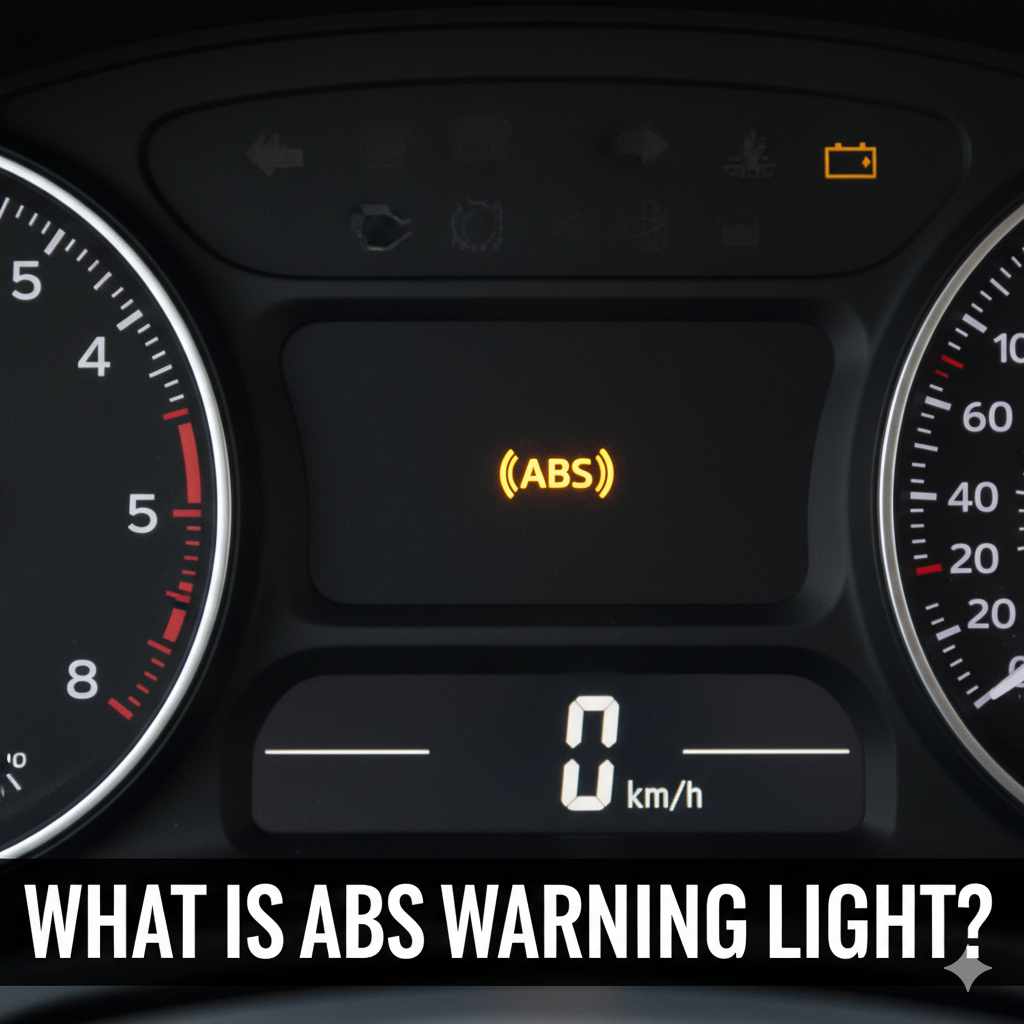
Ever see that little orange or yellow light pop up on your dashboard, the one with “ABS” inside a circle? It can be a bit startling, especially when you’re just trying to get from point A to point B. Don’t worry, you’re not alone! Many folks wonder what that ABS warning light really means and if it’s a big deal. Think of it like a friendly heads-up from your car, letting you know its advanced braking system might need a little attention. We’ll break down exactly what the ABS system is, why that light might come on, and what you can do about it. By the end, you’ll feel confident understanding this important safety feature.
Understanding Your Car’s ABS System
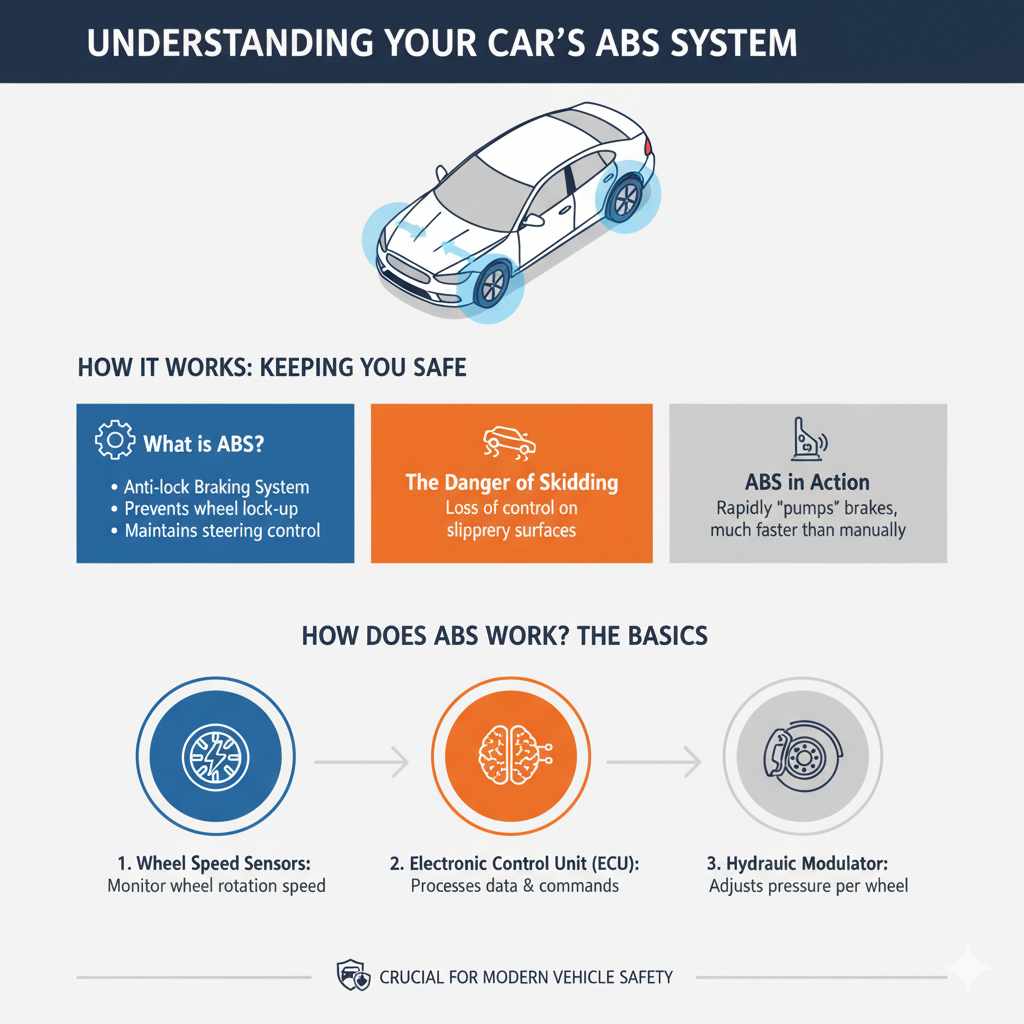
ABS stands for Anti-lock Braking System. It’s a clever piece of technology designed to prevent your wheels from locking up when you brake hard, especially in slippery conditions like rain or ice. When your wheels lock up, you lose steering control, and your car can skid uncontrollably. The ABS system uses sensors on each wheel to detect if a wheel is about to lock. If it does, the system rapidly pulses the brakes on that specific wheel, allowing it to keep rotating. This helps you maintain steering control and stop more effectively.
Think of it this way: Imagine slamming on the brakes in an older car without ABS. The wheels might stop spinning entirely, and you’d just slide. With ABS, it’s like the car is “pumping” the brakes for you incredibly fast, much faster than you could manually. This sophisticated system is a crucial part of modern vehicle safety, and the warning light is there to let you know it’s working as it should, or if something needs a look.
How Does ABS Work? The Basics
At its core, the ABS system has a few key components that work together:
- Wheel Speed Sensors: These are small sensors located near each wheel. They constantly monitor how fast each wheel is spinning.
- Hydraulic Modulator (or Actuator): This is the “brain” of the ABS. It receives information from the wheel speed sensors and can control the brake pressure going to each wheel.
- Electronic Control Unit (ECU): This is the computer that processes the data from the sensors and tells the hydraulic modulator what to do.
When you brake, the ECU monitors the wheel speed sensors. If one wheel starts to slow down much faster than the others (indicating it’s about to lock up), the ECU signals the hydraulic modulator. The modulator then momentarily reduces the brake pressure to that specific wheel, allowing it to regain traction and spin again. This cycle happens many times per second, creating a pulsing sensation you might feel in the brake pedal when ABS is actively working. It’s a remarkably quick and efficient process designed for your safety.
Why Is the ABS Warning Light On? Common Causes
Seeing the ABS warning light can be concerning, but it doesn’t always mean a catastrophic brake failure. Most of the time, it indicates an issue with the ABS system itself, not necessarily your regular braking power. Here are some of the most common reasons the light might illuminate:
1. Low Brake Fluid Level
This is often the simplest fix. Your car’s braking system, including ABS, relies on hydraulic fluid to operate. If the brake fluid level is too low, it can trigger the ABS warning light. This can happen due to a leak in the brake system or simply because your brake pads are wearing down, which uses up more fluid. It’s important to check your brake fluid level regularly. If it’s low, topping it up might solve the problem, but it’s also a good idea to have a mechanic check for leaks.
2. Dirty or Damaged Wheel Speed Sensors
The wheel speed sensors are critical for ABS operation. They can become dirty from road grime, salt, or mud, which can interfere with their ability to accurately read wheel speed. Sometimes, these sensors can also become damaged from road debris or during tire changes. If a sensor is dirty, cleaning it might fix the issue. If it’s damaged, it will need to be replaced.
3. Issues with the ABS Modulator or Pump
The ABS modulator and its associated pump are more complex components. If either of these parts malfunctions, the ABS system won’t be able to do its job, and the warning light will come on. These are typically more expensive repairs and will require a professional diagnosis.
4. Problems with the ABS Control Module (ECU)
The electronic control module is the computer that manages the entire ABS system. Like any computer, it can sometimes fail or have software glitches. If the ABS control module is faulty, it will prevent the system from functioning correctly, triggering the warning light.
5. Other Minor Electrical Issues
Sometimes, the ABS light can be triggered by minor electrical problems, such as a blown fuse related to the ABS system or a loose wire connection. These are usually easier to fix but can be tricky to pinpoint without proper diagnostic tools.
6. Recent Brake Work
If you’ve recently had work done on your brakes, such as replacing brake pads or rotors, it’s possible that something wasn’t reconnected properly, or the system needs to “relearn” its settings. Sometimes, the ABS light might come on briefly after brake work and then go off on its own.
What to Do When the ABS Warning Light Comes On
Seeing that ABS light can make you a little nervous, but here’s a calm, step-by-step approach to handling it. Remember, the ABS system is a safety enhancement, not your primary braking mechanism. Your regular brakes will still work, but they might not perform as well in a sudden stop or on slippery surfaces.
Step 1: Don’t Panic – Assess Your Brakes
The first and most important thing is to stay calm. When the ABS light comes on, your regular braking system is usually still functional. Gently apply your brakes and notice how they feel. Do they still stop the car effectively? Is the brake pedal firm, or does it feel spongy?
If your brakes feel normal and stop the car well: This is a good sign. The issue is likely with the ABS system specifically, not your entire braking capability. You can usually continue driving, but it’s best to get it checked out as soon as possible. Avoid hard braking unless absolutely necessary.
If your brakes feel weak, spongy, or the pedal goes to the floor: This is a more serious situation. This could indicate a problem with your conventional braking system in addition to or instead of the ABS. Pull over safely as soon as you can and consider having your vehicle towed to a mechanic. Do not drive if your regular brakes are compromised.
Step 2: Check Your Owner’s Manual
Your car’s owner’s manual is a treasure trove of information! It will often explain what specific warning lights mean for your particular make and model. It might also offer basic troubleshooting steps or advise you on what to do when the ABS light is illuminated. It’s a great first resource to consult.
Step 3: Check Brake Fluid Level (If Comfortable)
If you’re comfortable and know where to find it, check your brake fluid reservoir. It’s usually a small, translucent plastic container under the hood, often near the brake master cylinder. Look for the “MIN” and “MAX” lines on the side of the reservoir. If the fluid is below the “MIN” line, this could be the culprit.
Important Note: If the fluid is low, it’s crucial to figure out why. Is there a leak? Are your brake pads worn down significantly? Simply topping up the fluid might be a temporary fix, but you’ll want to address the underlying cause.
Step 4: Consider Recent Events
Did the light come on after hitting a big pothole? After driving through a deep puddle or heavy snow? After having your car serviced? These details can provide valuable clues for a mechanic. For example, hitting a significant bump could have dislodged a sensor or wiring. If it came on after service, double-check with the mechanic who performed the work.
Step 5: Get It Diagnosed by a Professional
For most ABS warning light issues, the best course of action is to take your car to a trusted mechanic or dealership. Modern cars have complex electronic systems, and diagnosing ABS problems often requires specialized diagnostic tools that can read error codes from the ABS control module. These tools can pinpoint the exact issue, whether it’s a faulty sensor, a problem with the module, or something else entirely.
Mechanics use devices like OBD-II scanners to communicate with your car’s computer. These scanners can retrieve Diagnostic Trouble Codes (DTCs) that the ABS system has stored. For example, a code like “C0022 – Wheel Speed Sensor Circuit Malfunction” tells the mechanic exactly which sensor or circuit to investigate.
Troubleshooting Tips: What You Can Check Yourself
While many ABS issues require professional tools, there are a few simple checks you can perform yourself before heading to the mechanic. These are beginner-friendly steps that can sometimes save you a trip and a bit of money.
1. Visual Inspection of Sensors and Wiring
Carefully look at the ABS sensors on each wheel. They are usually small units attached to the suspension or brake assembly, with wires running from them. Check for any obvious signs of damage, such as cracks, fraying wires, or debris lodged against them. Also, check the wiring harness connected to the sensor. Sometimes, a wire might have come loose or been damaged by road debris. Gently try to ensure the connectors are seated firmly.
Safety First: Make sure your car is safely parked on a level surface with the parking brake engaged. If you need to get under the car, use jack stands for support. Never rely solely on a jack.
2. Check Fuses
Your car’s fuse box often contains fuses specifically for the ABS system. Consult your owner’s manual to locate the ABS fuse(s). Check if any of them have blown. A blown fuse will have a broken wire inside it. If you find a blown fuse, replace it with a new one of the exact same amperage rating. If the new fuse blows again immediately, it indicates a more significant electrical problem that needs professional attention.
3. Clean Wheel Speed Sensors (Carefully!)
If you suspect dirt is the issue and can safely access the sensors, you can try cleaning them. Use a soft brush or compressed air to gently remove any accumulated dirt, grime, or road salt. Be very careful not to damage the sensor or its wiring. This is a delicate component, so avoid using harsh chemicals or abrasive materials.
4. Resetting the System (Use with Caution)
In some cases, particularly after minor electrical disturbances or after cleaning sensors, the ABS warning light might be a “ghost” code. Some people have had success by disconnecting the car battery for about 15-30 minutes. This can sometimes reset the car’s computer modules.
Caution: Disconnecting the battery will reset your car’s clock, radio presets, and other electronic settings. It may also affect how your car’s engine management system performs until it relearns its parameters. This is generally a safe step, but always proceed with care.
Understanding ABS Light vs. Brake Warning Light
It’s important to know the difference between the ABS warning light and the regular brake warning light. They often look similar but have different meanings and urgency levels.
The ABS warning light (usually a circle with “ABS” inside) specifically indicates a problem with the Anti-lock Braking System. As we’ve discussed, your regular brakes will likely still work, but the anti-lock feature might not. This is generally less immediately critical than a problem with the main braking system.
The brake warning light (often an exclamation mark in a circle, or the word “BRAKE”) typically indicates a more serious issue with your conventional braking system. This could mean low brake fluid, a problem with the brake pedal, or a failure in the hydraulic brake lines. When this light comes on, you should stop driving as soon as it is safe to do so and have your vehicle inspected immediately. This light can also come on temporarily when you first start your car as a system check, or if the parking brake is engaged.
Here’s a quick table to help differentiate:
| Warning Light Symbol | Meaning | Urgency |
|---|---|---|
| ABS (in a circle) | Issue with Anti-lock Braking System | Moderate – Get checked soon, regular brakes likely still work. |
| BRAKE or ! (in a circle) | Serious issue with conventional braking system (e.g., low fluid, system failure) | High – Stop driving safely and get immediate inspection. |
When to Call a Professional Mechanic
While some basic checks are possible for DIY enthusiasts, there are definite times when it’s best to leave the diagnosis and repair to the experts. Trusting a professional ensures the job is done right and your safety systems are fully functional.
Signs You Need a Mechanic:
- If your regular brakes feel compromised: As mentioned, if your brake pedal is spongy, goes to the floor, or the car takes much longer to stop, do not drive. Get it towed.
- If the ABS light is on along with other warning lights: If multiple warning lights illuminate simultaneously, it can signal a more complex electrical or system issue.
- After you’ve tried basic checks and the light remains on: If cleaning sensors or checking fuses didn’t resolve the issue, it’s time for professional tools.
- When dealing with the ABS modulator, pump, or control module: These are complex and critical components that require specialized knowledge and equipment to diagnose and replace.
- If you’re not comfortable working on your car’s braking system: Brakes are a crucial safety component. If you have any doubts about your ability to safely diagnose or repair the problem, it’s always best to consult a professional.
A good mechanic will have the proper diagnostic equipment to read the ABS trouble codes, perform system tests, and accurately identify the faulty component. They can then perform the necessary repairs, ensuring your ABS system is functioning correctly and safely. Reputable resources like the National Highway Traffic Safety Administration (NHTSA) provide information on vehicle safety systems, including ABS, highlighting their importance.
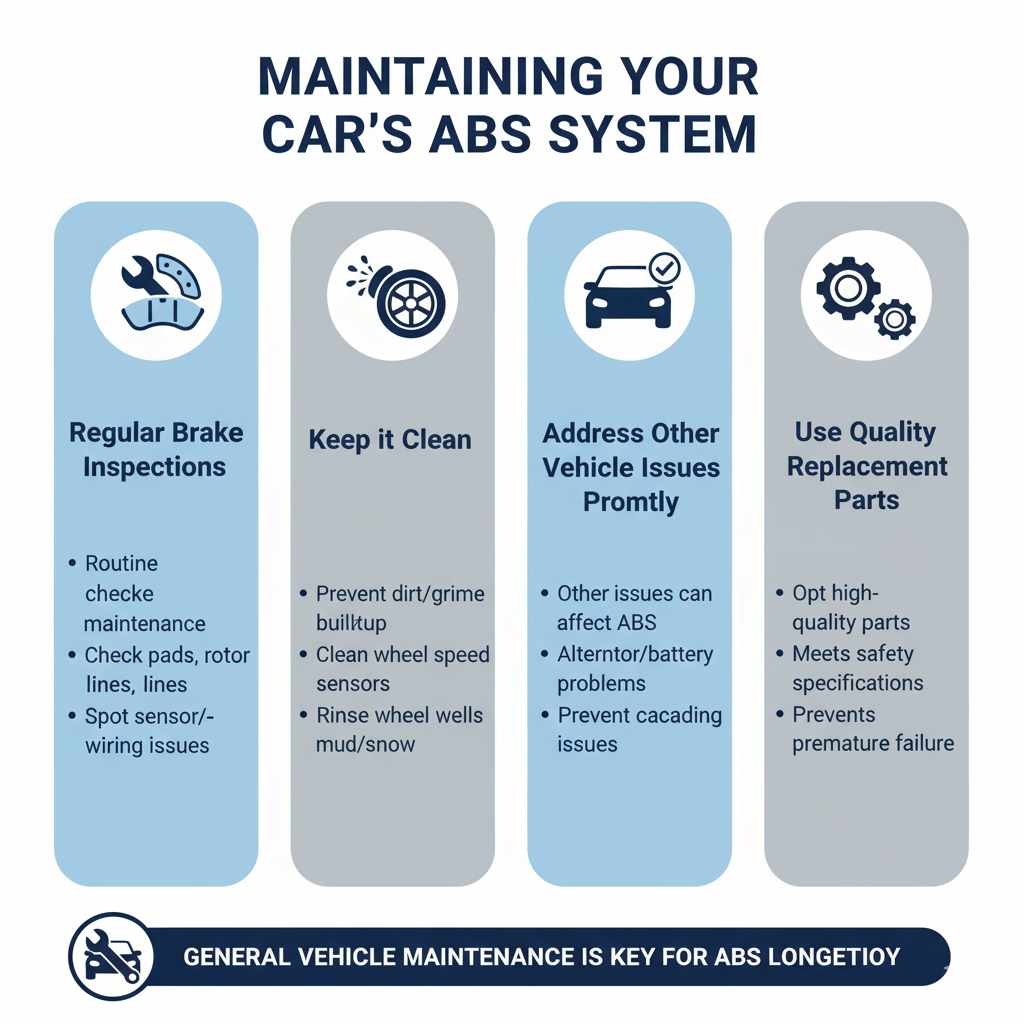
Maintaining Your ABS System
Just like any other part of your car, your ABS system benefits from regular maintenance. While you don’t “service” the ABS itself like an oil change, keeping up with general vehicle maintenance is key to its longevity and proper function.
Regular Brake Inspections
Have your brakes inspected regularly as part of your car’s routine maintenance schedule. This includes checking brake pads, rotors, and brake lines. A mechanic can spot potential issues with the ABS sensors or wiring during these inspections.
Keep it Clean
While you can’t directly clean the ABS components easily, keeping your wheels and wheel wells relatively clean can help prevent excessive dirt and grime buildup around the wheel speed sensors. After driving in muddy or snowy conditions, a gentle rinse of the wheel areas can be beneficial.
Address Other Vehicle Issues Promptly
Sometimes, issues in other parts of your car can indirectly affect the ABS. For example, problems with the alternator or battery can cause electrical system fluctuations that might trigger warning lights. Keeping your vehicle in good overall condition helps prevent these cascading problems.
Use Quality Replacement Parts
If a component of your ABS system needs replacement, always opt for high-quality parts. Cheap, unbranded parts might not meet the strict specifications required for safety systems like ABS, potentially leading to premature failure or incorrect operation.
Frequently Asked Questions (FAQ) About the ABS Warning Light
Q1: Can I drive with the ABS warning light on?
A: Generally, yes, you can drive with the ABS warning light on. Your regular brakes will still function. However, the anti-lock feature will be disabled, meaning your wheels could lock up during hard braking, potentially leading to a loss of steering control, especially in slippery conditions. It’s recommended to have the system checked and repaired as soon as possible.
Q2: How much does it cost to fix an ABS warning light?
A: The cost can vary significantly depending on the cause. A blown fuse or a dirty sensor might be a very inexpensive fix, possibly just a few dollars for a fuse or a small labor charge for cleaning. However, replacing a wheel speed sensor can cost anywhere from $100 to $300, and a faulty ABS control module or hydraulic modulator can cost upwards of $500 to $1000 or more, including parts and labor.
Q3: Will my car fail an inspection if the ABS light is on?
A: In many regions, a lit ABS warning light will cause your vehicle to fail a safety inspection. While the inspection might primarily focus on the functionality of the standard braking system, a fault in a critical safety system like ABS is often a reason for failure.
Q4: Is it safe to drive in the rain or snow with the ABS light on?
A: It is not recommended to drive in adverse conditions like rain or snow with the ABS light on. The ABS system is specifically designed to help maintain control during emergency braking in these situations. Without it, your wheels could lock up, making it harder to steer and stop safely.
Q5: How long does it take to fix an ABS warning light?
A: For simple issues like a blown fuse or a dirty sensor, the repair might take less than an hour. However, diagnosing and replacing more complex components like the ABS control module or hydraulic pump can take several hours, sometimes even a full day, depending on the complexity and part availability.
Q6: What happens if I ignore the ABS warning light?
A: If you ignore the ABS warning light, you risk not having the anti-lock braking function when you need it most. This could lead to accidents, especially in emergency braking situations or on slippery roads. Additionally, a minor ABS issue could potentially worsen over time or lead to related problems in your braking system.
Conclusion
Seeing the ABS warning light on your dashboard can be a little unnerving, but as we’ve explored, it’s usually a sign that the Anti-lock Braking System itself needs attention, rather than your entire braking system failing. Understanding what ABS does – helping you steer and stop safely during hard braking – is the first step. We’ve covered the common culprits, from low brake fluid and dirty sensors to more complex electronic issues. Remember, your regular brakes are likely still working, but it’s crucial not to ignore that light. Take a deep breath, check your owner’s manual, perform any simple checks you’re comfortable with, and when in doubt, always consult a trusted mechanic. Getting your ABS system checked promptly ensures you can rely on your car’s safety features when you need them most, giving you peace of mind on every drive. Happy (and safe) motoring!