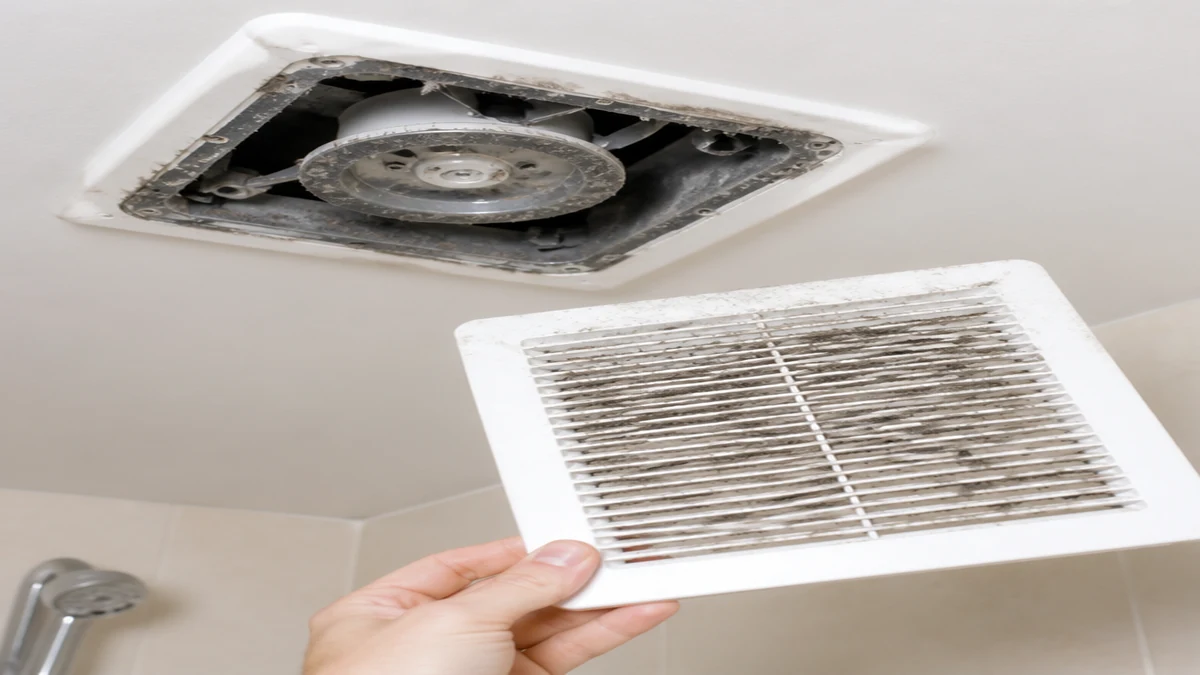
What Makes a Bathroom Fan Noisy? Rattles, Hums, Squeaks, and Safe Checks
Different bathroom fan noises point to different problems: a rattle usually means something loose, a hum with no airflow usually means a stuck blade, and a squeal almost always means a dry bearing. This guide breaks down each noise type so you know what you are actually dealing with before opening anything up.
Rattling
A rattle is almost always mechanical and minor: a loose grille cover vibrating against the housing, mounting screws that have worked loose over years of vibration, or debris such as a dust clump or insulation fragment caught against the spinning blade. Open the grille with the power off and look and listen before assuming anything more serious; most rattles disappear entirely after a thorough cleaning and re-tightening of the visible screws.
Humming without airflow
If the fan hums but you feel no air movement at the grille, the motor is energized but the blade is not turning freely, which usually means a seized bearing or a blade physically jammed against the housing by debris or a bent motor mount. A hum can also come from using a dimmer switch on a fan that was not designed for one, since dimmers modulate power in a way that some fan motors respond to with an audible buzz rather than smooth operation; swapping to a standard on/off switch resolves that version of the problem.
Squealing or high-pitched whining
This is almost always a dry motor bearing. Dust mixes into the factory grease over years of operation and gradually grinds down the bearing surfaces, producing a rising squeal that gets worse over time. A small number of older fans have an actual oil port on the motor housing that accepts a drop of lightweight machine oil, but most fans made in the last couple of decades use sealed bearings that cannot be lubricated, meaning a persistent squeal usually means the motor, or the whole fan unit, needs replacing rather than servicing.
Buzzing and whistling
A buzz can come from a loose wire nut connection vibrating inside the junction box, or from the backdraft damper flap in the duct fluttering in the airflow. A whistling sound from the ductwork itself usually means the duct diameter is undersized for the fan’s rated airflow, or that the duct run has a tight bend or kink creating turbulence; neither of these is a fan defect, they are duct sizing or routing issues that show up as fan noise.
Safe checks before you call anyone
Always cut power at the breaker before opening the housing to inspect the blade or wiring. With power off, check that the blade spins freely by hand, look for visible dust buildup or debris, and confirm the grille and housing screws are snug. Restore power briefly and listen carefully to isolate whether the noise is coming from the motor itself or from the duct and damper, since that distinction determines whether cleaning, a motor swap, or duct work is the actual fix. A fan more than 15 years old that develops any of these noises is often simply reaching the end of its typical service life, even if it still technically runs.
Frequently Asked Questions
Can I fix a squealing bathroom fan myself?
If the motor has an oil port, a drop of lightweight machine oil can sometimes quiet it temporarily, but most sealed-bearing motors cannot be serviced this way and need a replacement motor or fan unit.
How long do bathroom fans typically last before getting noisy?
Most bathroom fans last 10 to 15 years before bearing wear starts producing noticeable noise, though heavy dust exposure or a consistently humid bathroom can shorten that lifespan.
Should I be worried about a noisy fan, or just annoyed?
Most noises described here are wear issues, not hazards. See our bathroom fan noisy fix guide for a full walkthrough of fixes once you have identified which type of noise you are hearing.
Sponsored / affiliate links. As an Amazon Associate I earn from qualifying purchases. I may earn additional commission from eligible campaigns.