What to Put Under Bed Frame on Hardwood Floors
Choosing the right things to place under your bed frame on hardwood floors can feel like a puzzle, especially for those new to home setup. It’s easy to wonder if you’re doing it right to protect your nice floors. You want to stop scratches and keep your bed steady.
Don’t worry, it’s simpler than it sounds. This guide will walk you through exactly What to Put Under Bed Frame on Hardwood Floors step by step, so you can feel confident about your choice and get your bedroom looking just right.
Protecting Your Hardwood Floors From Bed Frames
Hardwood floors look beautiful, but they can get scratched easily. When you put a bed frame directly on them, the constant pressure and movement can cause damage. This section explains why this is a problem and what you can do about it.
We’ll look at the main reasons you need protection and introduce the types of items that help.
Why Protect Hardwood Floors Under Beds
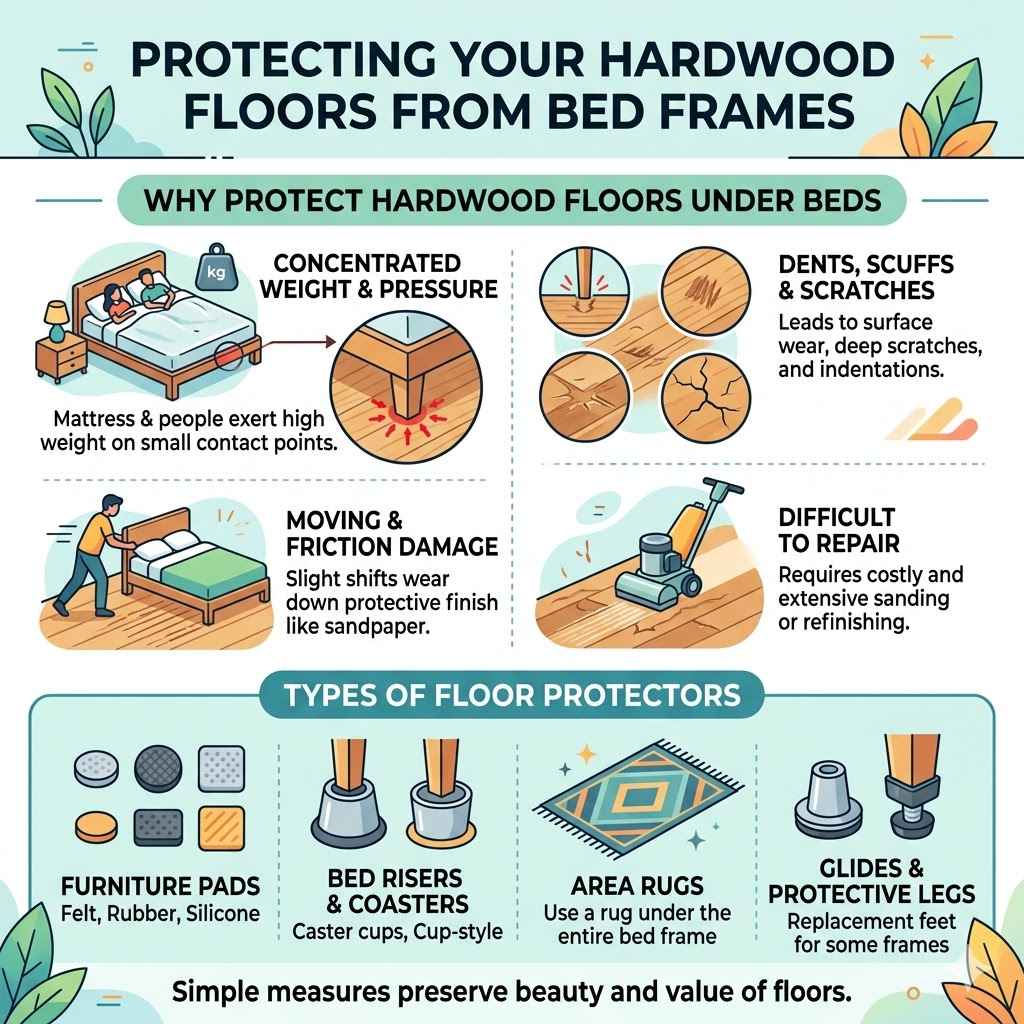
Bed frames, especially those with legs or a base that sits directly on the floor, can become major culprits for floor damage. The weight of the mattress and people using the bed concentrates onto small points of contact. Over time, this can lead to dents, scuffs, and scratches that are difficult or impossible to remove without refinishing the floor.
Moving the bed, even slightly, can drag the frame across the floor’s surface. This friction acts like sandpaper, wearing down the protective finish and eventually the wood itself. This is particularly true for older hardwood floors that might have a less durable finish.
New floors are also susceptible to damage from sharp edges or rough materials on the bed frame legs.
The goal is to create a buffer. This buffer needs to be strong enough to support the bed frame’s weight but also smooth and resilient enough to prevent any abrasive contact with the hardwood. It should also help distribute the weight more evenly across a larger area, reducing pressure points.
Common Types of Damage to Watch For
Scratches: These are often the first sign of trouble. Small, thin lines appear on the floor surface. They happen when the bed frame drags or when small particles get trapped between the frame and the floor.
Scratches can vary in depth. Light scratches might only affect the top finish layer. Deeper scratches can go into the wood itself, requiring sanding and refinishing.
Preventing them is always easier than fixing them.
Dents and Gouges: These are more serious than scratches. They occur when significant pressure is applied to a small area, like the corner of a bed frame leg. This can permanently deform the wood.
Dents are like little valleys pressed into the floor. Gouges are deeper cuts, often caused by sharper parts of the frame or by something getting dragged under the bed. These often need professional repair.
Wear Marks: This happens when the finish on the floor wears away in a specific pattern. It’s often seen directly under the bed frame legs or along the path where the bed is regularly moved.
Wear marks look like dull patches or areas where the color of the floor seems faded. This is because the protective coating has been rubbed off. It makes the floor look older and less attractive.
Solutions For What to Put Under Bed Frame on Hardwood Floors
Now that we know why protection is needed, let’s explore the best options for what to put under your bed frame. These solutions range from simple pads to more substantial furniture pieces. Each has its own benefits for protecting your floors and keeping your bed stable.
Furniture Leg Protectors and Floor Savers
These are the most common and often the easiest solutions. They are small items designed to fit onto the legs of furniture. They create a barrier between the leg and the floor.
Felt Pads: These are soft, thin pads usually made of felt or a similar fabric. They stick to the bottom of furniture legs. They work by providing a smooth surface that glides over the floor.
Felt pads are excellent for preventing scratches. They are best suited for furniture that doesn’t experience a lot of lateral movement. If the bed is moved often or with a lot of force, felt pads can wear out or get snagged.
They are also very affordable and come in various sizes.
Rubber or Silicone Pads: These are more durable than felt and offer better grip. They can help prevent the bed frame from sliding too much. They are good for distributing weight.
Rubber pads can be a good choice if you’re worried about the bed frame moving. However, some types of rubber can leave marks on certain types of hardwood finishes over time. It’s wise to test a small, hidden area first.
Plastic or Nylon Glides: These are hard plastic pieces. They are often screwed or nailed into the bottom of furniture legs. They are very durable.
Plastic glides are ideal for very heavy furniture. They allow the furniture to slide easily. However, they are not ideal for preventing scratches.
They can still create wear marks if debris gets under them.
Area Rugs and Mats
Placing an area rug under your bed can offer substantial protection. It acts as a large protective layer for the entire area your bed occupies.
Area Rugs
An area rug provides a soft surface that absorbs impact and prevents direct contact between the bed frame and the floor. It also adds to the room’s décor.
Material Matters: Choose rugs made from natural fibers like wool or cotton, or durable synthetic materials like nylon. Avoid rugs with rough backing or plastic components that could scratch the floor.
Natural fibers are generally softer and less likely to cause damage. Synthetic rugs need careful selection. Look for ones with a smooth, tightly woven backing.
Avoid anything that feels stiff or plasticky.
Rug Pads: Always use a rug pad under your area rug. This adds an extra layer of cushioning and prevents the rug from sliding. It also protects the rug itself from wear.
A good rug pad is essential. It should be designed for hardwood floors. Some pads are made of felt, others are a combination of felt and rubber.
This extra layer is key to floor protection.
Size and Placement: Ensure the rug is large enough to extend beyond the bed frame legs. This way, the frame sits entirely on the rug.
A rug that is too small won’t provide full coverage. The bed frame legs might still touch the floor around the edges. Measure your bed and the available floor space carefully to choose the right size rug.
Drafting Mats or Runners
These are similar to rugs but are often made of more durable, industrial-style materials. They are great for high-traffic areas or where extra protection is needed.
Durability: Mats made of thick rubber, vinyl, or commercial-grade carpet offer excellent durability and spill resistance.
These materials can withstand a lot of weight and movement. They are also easy to clean. This makes them a practical choice for busy households.
Non-Slip Backing: Look for mats with a non-slip backing that is safe for hardwood floors. This prevents the mat itself from causing damage or becoming a tripping hazard.
A mat that moves easily can cause its own set of problems. The backing needs to grip the floor without leaving residue or scratching. Check product descriptions for hardwood floor compatibility.
Custom Solutions and DIY Options
Sometimes, standard solutions aren’t quite right. You might need something a bit more specific for your bed frame or your floor. DIY solutions can be a cost-effective way to get the protection you need.
Plywood or Hardboard Squares: Cutting squares of plywood or hardboard can create a solid base. Place these under the bed frame legs.
This is a very strong option. It distributes weight over a larger area. You can cut them to size.
Ensure the edges are smooth to avoid scratching. Painting or varnishing them can add a nice finish.
Thick Cardboard: For a temporary or very low-cost solution, thick, sturdy cardboard can work. It offers some cushioning.
This is not a long-term solution. Cardboard can compress over time. It can also absorb moisture and get damaged.
It’s best for very light use or a short period.
Carpet Scraps: If you have leftover carpet pieces, these can be used as protective pads.
Cut the carpet scraps to size and place them under the bed frame legs. Ensure the carpet pile is dense and the backing is smooth. This can provide good cushioning and prevent scratches.
Bed Risers
Bed risers are blocks or extensions that lift your bed higher off the floor. They are usually placed under the bed frame legs. They serve a dual purpose: increasing storage space and protecting the floor.
Types of Bed Risers
Plastic Risers: These are common, affordable, and durable. They often have a hollow center, which can be used for storage.
Plastic risers come in various heights and styles. Look for ones with wide bases to distribute weight effectively. They are easy to install and remove.
Wood Risers: These can offer a more decorative look and are very sturdy. They might be solid blocks or hollow units.
Wood risers can blend in better with bedroom furniture. They are generally very stable. Ensure the wood is smooth and has a protective finish to avoid any damage to the floor.
Metal Risers: These are typically very strong and durable, often used with metal bed frames.
Metal risers offer excellent support. They are usually designed to fit specific frame types. Ensure they have protective caps on the bottom.
Benefits of Bed Risers
Increased Height and Storage: Risers lift your bed, creating more space underneath for storage boxes or other items. This is a big plus for smaller rooms.
Having extra storage can really help declutter your bedroom. You can store seasonal clothing, extra bedding, or personal items out of sight.
Improved Airflow: Lifting the bed can improve air circulation around and under it, which can be beneficial for mattress longevity and room hygiene.
Good airflow helps prevent moisture buildup. This can keep your mattress fresher and extend its life. It also helps keep dust bunnies from accumulating too much.
Floor Protection: When used correctly, risers with wide, flat bases distribute the bed’s weight. This significantly reduces pressure points on the hardwood floor.
The key is the base. A wide, flat base is much better than a narrow leg. It spreads the load.
Specialized Furniture Pads
Beyond the common felt pads, there are specialized options designed for specific needs. These can offer superior protection for expensive hardwood floors.
Heavy-Duty Furniture Cups: These are large, often circular or square, cups made from thick, durable materials like dense rubber or polyurethane. The bed frame legs sit inside these cups.
These are excellent for very heavy bed frames. They offer maximum weight distribution and prevent any contact between the frame and the floor. The material is chosen to be non-marking and protective.
Interlocking Floor Mats: Similar to gym or play mats, these can be used to create a larger protective area. They interlock like puzzle pieces.
You can customize the size and shape of the area you want to protect. They offer good cushioning. Ensure the material is safe for hardwood floors and won’t leave residue.
Choosing the Best Option for You
Selecting the right method depends on several factors. Think about your bed frame, your floors, and how you use your bedroom. Here’s how to make the best choice.
Consider Your Bed Frame Type
The design of your bed frame matters a lot. Some frames have four distinct legs. Others have a solid base or a platform design.
Legged Frames: If your bed has individual legs, you’ll likely need individual protectors for each leg. Felt pads, rubber pads, or furniture cups work well here.
For frames with many small legs, a large rug or mat might be more practical than trying to put protectors on every single one.
Platform Beds: Platform beds often have a solid base or wider support structures. These distribute weight more evenly.
For platform beds, a rug or mat that covers the entire base area is a good option. If the platform has feet, focus on protecting those specific points.
Metal Frames: Metal bed frames can sometimes have sharp edges or thin legs that are prone to causing damage.
Metal frames often require more robust protection. Consider heavy-duty furniture cups or a thick rug.
Assess Your Hardwood Floor Condition
The condition and type of your hardwood floors will influence your decision. Are they newly installed or older? What kind of finish do they have?
Newer Floors: If your floors are brand new and have a pristine finish, you’ll want the most protective options. Avoid anything that could potentially scratch or discolor the finish.
For new floors, premium felt pads or thick, high-quality rug pads are excellent starting points. Always test in an inconspicuous area if unsure.
Older Floors: Older floors might already have some wear and tear. You might need solutions that not only protect but also help to mask minor imperfections.
A thick area rug can cover a multitude of sins. It also offers excellent protection against future damage.
Finish Type: Some finishes are more sensitive than others. Polyurethane finishes are generally durable, but wax finishes can be more delicate.
Research your floor’s finish. If it’s a delicate finish, opt for very soft materials like high-density felt pads or natural fiber rugs.
Your Lifestyle and Needs
Consider how you live. Do you have pets? Do you move your furniture often?
Are you looking for a temporary or permanent solution?
Pets and Children: If you have pets or small children, you might need solutions that are durable and easy to clean.
Pets can scratch floors with their claws, and children might drag toys. A washable rug or durable floor mats can be a good choice.
Frequent Moving: If you rearrange your bedroom furniture often, choose floor protectors that are easy to move and reapply.
Felt pads with strong adhesive are usually good for this. Larger rugs might be less practical if you move furniture frequently.
Aesthetics: The solution should also complement your bedroom’s style. Some options are more visible than others.
A beautiful area rug can enhance your room’s look. Simple felt pads are almost invisible. Choose what fits your decor.
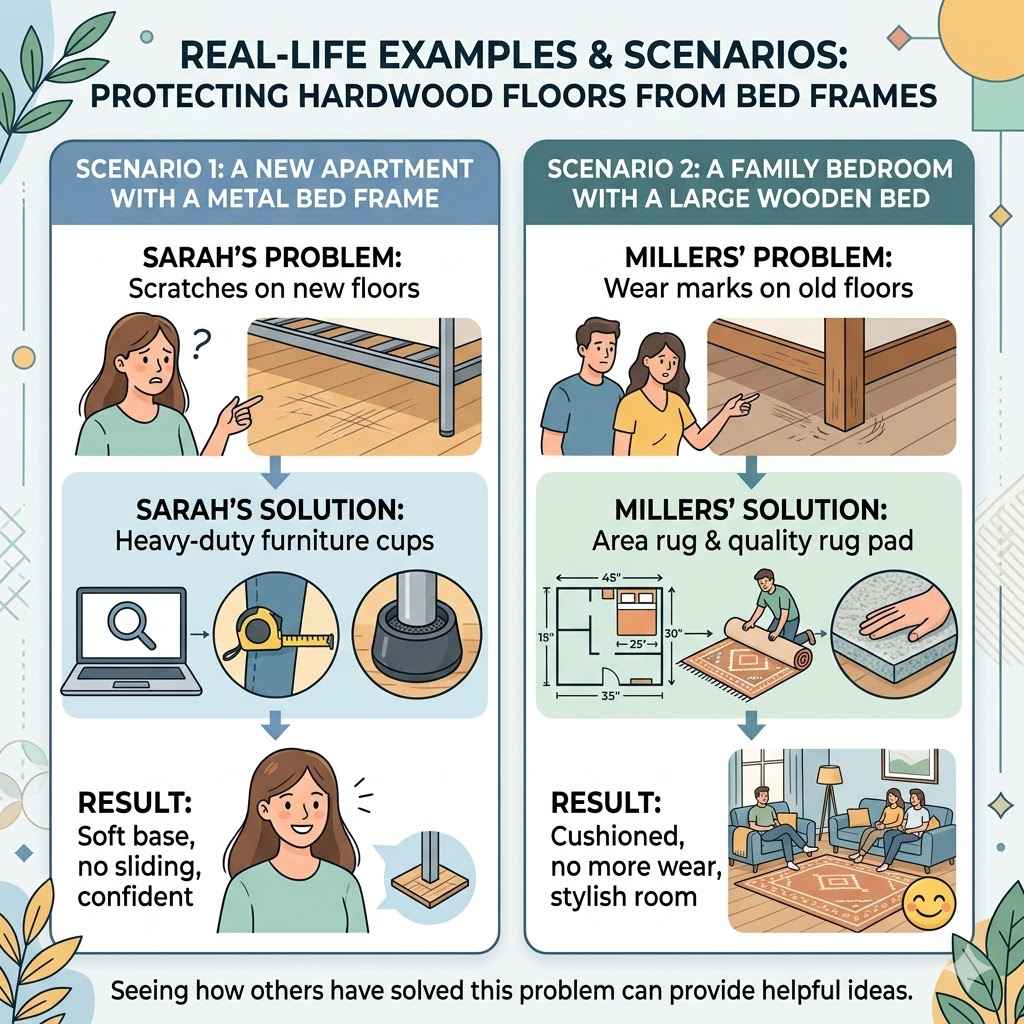
Real-Life Examples and Scenarios
Seeing how others have solved this problem can provide helpful ideas. Let’s look at a few common situations and their solutions.
Scenario 1 A new apartment with a metal bed frame
Sarah just moved into a new apartment with beautiful, brand-new hardwood floors. Her bed frame is a simple metal one with four slender legs. She’s worried about scratching the new floors when she moves the bed or if it shifts.
- Sarah researches floor protectors for metal bed frames. She finds heavy-duty furniture cups designed for this purpose.
- She measures the diameter of her bed frame legs to ensure the cups will fit snugly.
- She purchases four thick, rubberized furniture cups with a non-slip interior.
- Once the bed is in place, she carefully lifts each leg and slides it into a furniture cup.
- Result: The rubber cups provide a soft, wide base for the metal legs. They prevent any scratching, and the slight grip keeps the bed from sliding easily. The floors are protected, and Sarah feels confident.
Scenario 2 A family bedroom with a large wooden bed
The Miller family has a large, solid wood bed in their master bedroom. The frame has wide, flat feet that rest directly on their older hardwood floors. They’ve noticed some wear marks around the edges of the feet.
- The Millers decide an area rug is the best solution for their large bed.
- They measure the area under the bed, ensuring the rug will extend at least a foot beyond all sides of the frame.
- They choose a low-pile wool rug that is durable and unlikely to cause friction.
- They also purchase a high-quality rug pad made for hardwood floors. This adds cushioning and prevents the rug from sliding.
Result: The rug and pad completely cover the bed frame’s contact points. The floors are now protected from any further wear marks. The rug also adds a cozy feel to the room.
Frequently Asked Questions
Question: What is the absolute best thing to put under a bed frame on hardwood floors
Answer: The best option depends on your specific bed frame and floors. For maximum protection, a thick area rug with a high-quality rug pad is often ideal, especially for larger frames. For individual legs, heavy-duty furniture cups are very effective.
Question: Can felt pads damage hardwood floors
Answer: High-quality felt pads designed for furniture are generally safe for hardwood floors. However, if the felt wears thin or if debris gets trapped, they could potentially cause scratching. It’s important to check them regularly and replace them when they show signs of wear.
Question: How often should I check my floor protectors
Answer: You should check your floor protectors at least every few months, or whenever you notice the bed has shifted. Look for signs of wear, debris, or damage to the protector or the floor itself.
Question: What if my bed frame has no legs and sits flat on the floor
Answer: If your bed frame has a solid base that sits flat on the floor, placing a large area rug or a protective mat underneath the entire frame is the best approach. This distributes the weight and prevents friction.
Question: Can I use old carpet scraps to protect my floors
Answer: Yes, old carpet scraps can offer some protection, especially if they are thick and have a smooth backing. Cut them to fit under the bed frame legs. However, ensure they are clean and dry to prevent moisture damage or attracting pests.
Summary
Protecting your hardwood floors from your bed frame is straightforward. You can use simple felt pads for individual legs, or opt for larger solutions like area rugs and furniture cups. Consider your bed frame’s design, your floor’s condition, and your lifestyle to pick the best method.
This ensures your floors stay beautiful while your bed stays stable.