What Type Of Exterior Paint Finish Is Best For Wood
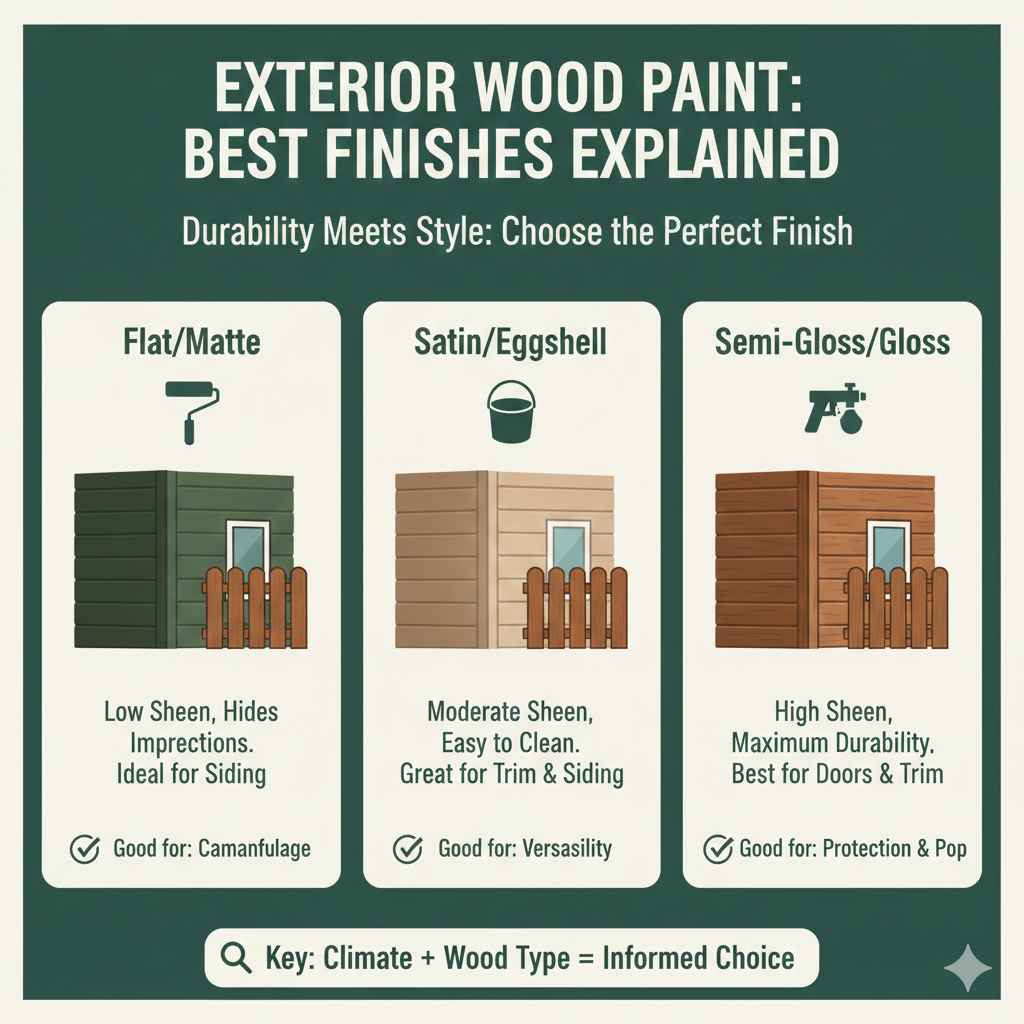
The best exterior paint finish for wood is generally satin or semi-gloss. Satin offers a beautiful balance of durability and low sheen, hiding minor flaws well. Semi-gloss provides superior protection against weather and is easiest to clean, perfect for trim and doors where high traffic demands maximum resilience.
Picking the right paint finish for your wood siding, trim, or deck can feel overwhelming. You want something that looks great, lasts long, and resists sun and rain. Many homeowners worry about choosing a finish that shows every tiny scratch or knot in the wood. Don’t stress! With a little know-how, you can confidently select the perfect sheen for your project.
I’m Md Meraj, and I’ve walked this path many times, guiding folks just like you to professional-looking results. We will break down the world of paint finishes—flat, matte, eggshell, satin, semi-gloss, and high-gloss—and show you exactly which one suits your outdoor wood project best.
Let’s dive in and make sure your next exterior paint job is a lasting success!
Choosing an exterior paint finish isn’t just about looks; it’s about defense. The sheen of the paint determines how well it bounces water away, how easily it cleans up after a harsh winter, and how much the underlying wood surface shows through. For wood, which naturally expands and contracts with the weather, durability is key.
For most general exterior wood surfaces, like siding, the top choices are Satin or Low-Lustre. However, if you are painting high-contact areas like railings or window trim, you need something tougher, like Semi-Gloss. We will explore why these specific finishes win out for outdoor wood protection.
Understanding Paint Finishes: The Sheen Spectrum
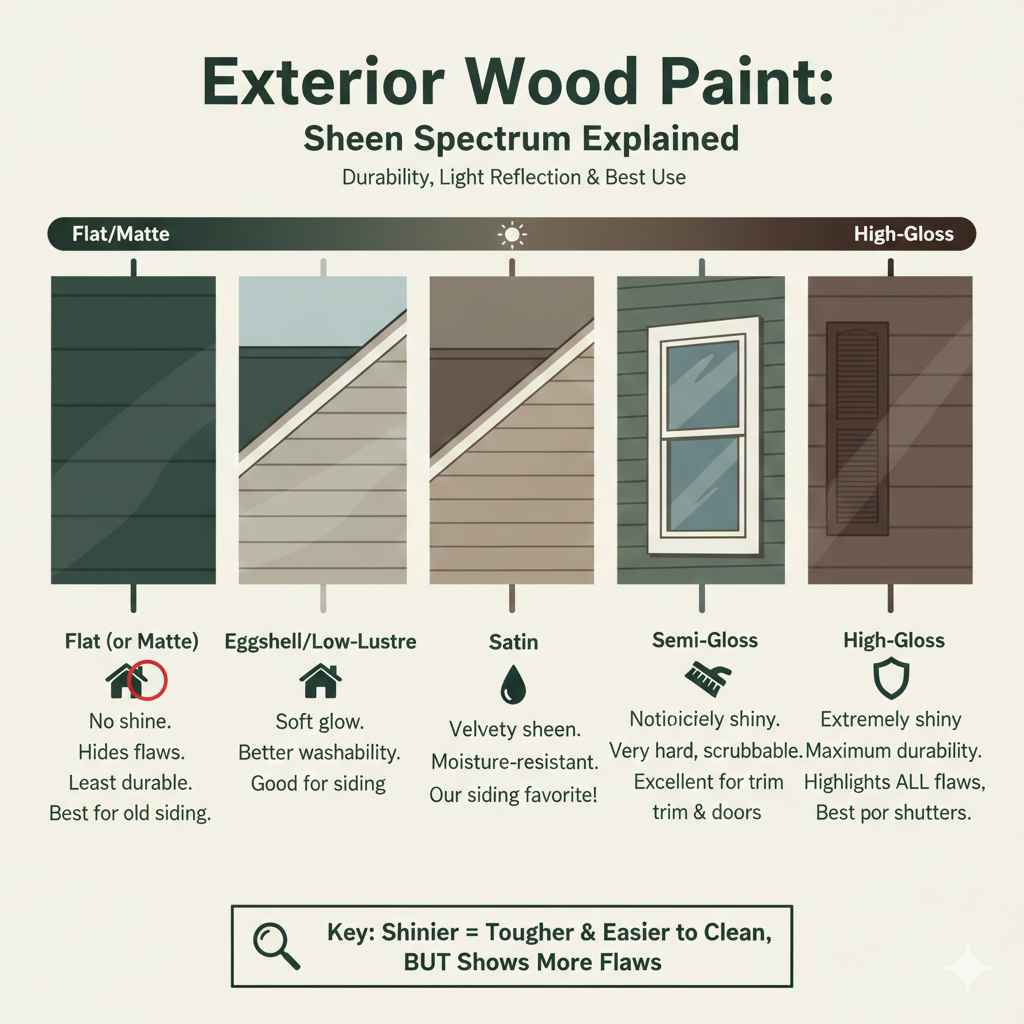
Paint finishes, often called ‘sheens,’ describe how much light the dried paint reflects. The general rule is: shinier finishes are tougher and easier to clean, but they also highlight surface imperfections more clearly. Flatter finishes hide flaws but offer less protection.
Here is a breakdown of the common finishes you will find in the exterior paint aisle:
- Flat (or Matte): Almost no shine. It soaks up light. Great for hiding serious imperfections on old wood but offers the least durability.
- Eggshell/Low-Lustre: A very slight, soft glow. It’s a popular indoor choice, but on exteriors, it offers a gentle upgrade in washability over flat paint.
- Satin (or Low-Lustre/Flat Enamel): Our sweet spot for siding! It has a soft, velvety sheen. It resists moisture well and hides minor wood grain imperfections better than glossier options.
- Semi-Gloss: Noticeably shiny. This finish is very hard and highly resistant to moisture, mildew, and scrubbing. Excellent for trim, doors, and window sashes.
- High-Gloss: Very shiny, like glass. Extremely durable, but it reflects so much light that every bump, crack, or bit of rough sanding will be perfectly visible. Used sparingly, usually on shutters or decorative trim.
The Expert Recommendation: Best Finishes for Specific Wood Areas
The best finish depends entirely on what you are painting. A large area of siding requires a different balance of durability and aesthetics than a small, high-touch area like a door handle surround.
1. Exterior Wood Siding (Clapboard, Shingles, T1-11)
For the main body of your house, you need a finish that weathers well, handles temperature swings, and looks good even if the wood underneath isn’t perfectly smooth. This is where the balance matters most.
Best Choice: Satin or Low-Lustre
- Why it works: Satin offers great dirt resistance and washability (essential for wood siding) without magnifying every ripple in the wood grain. It provides the protection you need against rain without making your house look too shiny.
- Tip: If your wood is older or slightly rough, leaning towards the lower end of the satin spectrum (sometimes called “flat matte exterior”) will hide imperfections best.
2. Window Trim, Fascia, and Eaves
These areas are directly exposed to sun, rain splashing up from the ground, and more handling during window washing. They need maximum defense.
Best Choice: Semi-Gloss
- Why it works: Semi-gloss creates a harder film. This makes it incredibly resistant to moisture penetration and easier to wipe clean when dirt collects along the window frame. The slight gloss also provides a nice visual contrast against flatter siding.
- Safety Note: When painting trim, ensure your preparation (sanding, priming) is excellent, as the gloss will reveal any skipped spots.
3. Exterior Doors and Railings (High-Contact Areas)
Doors and railings take a beating from hands, shoes, pets, and constant moisture exposure. They require the toughest coating possible.
Best Choice: Semi-Gloss or High-Gloss (If you love shine)
- Why it works: Glossy finishes cure harder. This means they resist scuffing, chipping, and sticking (especially important on doors that expand and contract in humidity) much better than softer finishes. High-gloss delivers the ultimate in cleanability and longevity for these spots.
4. Wood Decks and Porches (Horizontal Surfaces)
Decking is unique because it faces moisture directly from above (rain) and below (ground evaporation), plus constant foot traffic. Paint is generally not the first recommendation for decks; stains are often preferred. However, if you must paint a deck…
Best Choice: Specialized Deck Enamel or Heavy-Duty Exterior Acrylic in Satin/Low-Lustre
- Caution: Standard wall paint, even in satin, will fail quickly on a horizontal deck surface underfoot. You must use a paint specifically designed for decking, which has more flexibility to handle the constant flexing of the wood.
- Pro Tip: For decks, many pros suggest a textured sealant or solid stain, as paint chips easily when worn down by traffic, requiring frequent maintenance. Always check the product specifications from manufacturers like Sherwin-Williams or Behr for deck applications.
Comparison Table: Exterior Wood Finishes at a Glance
To make your decision simple, here is how the common exterior finishes stack up against each other for general wood use:
| Finish Type | Visual Look | Durability / Washability | Hides Imperfections? | Best Use on Wood |
|---|---|---|---|---|
| Flat / Matte | No shine; very dull | Lowest; stains easily | Excellent | Rarely recommended; perhaps very weathered, hidden siding. |
| Satin (Recommended) | Soft, velvety sheen | Good; washes well | Good | Siding, Shingles, Soffits |
| Semi-Gloss (Recommended) | Moderate, noticeable shine | Very High; highly scrubbable | Fair (shows minor flaws) | Trim, Railings, Doors, Window Frames |
| High-Gloss | High reflection, mirror-like | Highest; extremely durable | Poor (shows everything) | Shutters, highly decorative accent pieces. |
The Role of Paint Chemistry: Oil vs. Latex (Water-Based)
The finish (sheen) is only half the battle. The type of paint base you choose—acrylic latex (water-based) or oil-based (alkyd)—dramatically impacts durability, drying time, and finish quality on wood.
For modern exterior wood painting, 100% acrylic latex paints are usually the easiest and most reliable choice for DIYers.
Acrylic Latex Paints (Water-Based)
These are the go-to for almost all exterior wood applications today. They are user-friendly and excellent performers.
- Flexibility: Wood constantly moves due to humidity changes (expanding and contracting). Acrylic paints remain flexible, meaning they resist cracking and peeling better than older oil paints.
- Drying Time: They dry fast, allowing you to apply multiple coats in one day.
- Cleanup: Easy cleanup with soap and water.
- Fade Resistance: Acrylics resist chalking and fading from UV rays exceptionally well.
Alkyd (Oil-Based) Paints
While less common now due to VOC restrictions and cleanup difficulty, oil-based paints still have niche uses.
- Hardness: Oil paints dry to an extremely hard shell, which used to be considered the best for high-wear trim.
- Adhesion: They often adhere incredibly well to previously painted, oil-primed surfaces.
- Downsides: They yellow over time (even exterior ones), take days to fully cure, and clean up requires harsh solvents like mineral spirits. They also become brittle and are prone to cracking on wood that moves a lot.
Meraj’s Verdict: Stick to a high-quality, 100% acrylic exterior paint. Modern acrylic formulas offer durability that rivals or beats old oil-based paints, especially when applied over a good primer. Look for products specifically labeled for “Exterior Wood Siding and Trim.
The Essential Preparation Steps: Why Finish Fails
No matter how perfect your chosen sheen is, if the prep work is skimped on, the finish will fail—peeling, blistering, or cracking within a year. For wood, preparation is 80% of the job!
The Federal Housing Administration (FHA) emphasizes proper surface preparation as crucial for exterior coatings longevity. Improper sealing of bare wood is the number one cause of premature coating failure on siding.
Step 1: Clean Thoroughly
Wood absorbs dirt, mildew, and chalking paint residue. The new paint needs a clean surface to stick to. Pressure washing is fast, but do it gently on wood siding to avoid gouging the surface. A gentle cleaning solution (like a mix of trisodium phosphate or a dedicated deck cleaner) is often best.
- Rinse thoroughly until no soap residue remains.
- Allow the wood to dry completely—this can take several days if the wood is deeply saturated.
Step 2: Scrape and Sand
For peeling or flaking areas, use a paint scraper to remove all loose material until you reach sound, bare wood or tightly adhering old paint. Then, sand the edges where the old paint meets the bare wood to create a smooth transition.
If repainting, a light sanding (e.g., 80-100 grit) over the entire surface scuffs up the old finish, giving the primer and topcoat something to grip onto.
Step 3: Prime Bare Wood (Crucial Step!)
Never paint bare, weathered wood without primer. Bare wood is extremely porous and absorbs the binders out of the topcoat paint, leading to a chalky, dull, and rapidly failing finish.
Use a high-quality exterior primer that is formulated for bonding to bare wood. If you have redwood, cedar, or cypress, use a stain-blocking primer to prevent those natural oils from bleeding through your final color, especially if you choose a lighter topcoat color.
Step 4: Apply the Finish Coat
When applying your chosen finish (Satin or Semi-Gloss), follow the manufacturer’s recommendation for coats. Two coats are almost always necessary for exterior wood to achieve the advertised sheen, color depth, and full weather resistance.
The Aesthetics Factor: How Sheen Affects Wood Appearance
While durability is paramount, we also want our homes to look great. The sheen directly influences how we perceive the wood beneath the paint.
Hiding Imperfections
If you have older wood siding with knots that push through, small cracks, or uneven boards, higher sheen levels (like semi-gloss) will act like a magnifying glass. The light reflects off the tiny dips and bumps, making them stand out.
Conversely, flatter finishes (satin or matte) diffuse the light. This softens the overall appearance, making small imperfections much less noticeable. This is why Satin is the standard recommendation for siding.
Creating Contrast and Detail
For contrast, professional painters almost always use a different sheen on the trim than on the body of the house. This adds architectural interest.
- Siding (Body): Satin or Low-Lustre
- Trim, Windows, Doors: Semi-Gloss
This difference in light reflection makes the trim “pop” and defines the lines of your home, even if both the body and trim are the same color!
Durability and Maintenance: Long-Term Planning
When deciding between Satin and Semi-Gloss for your main siding, think about how often you want to paint again.
Cleaning Frequency
Exterior wood collects dust, pollen, bird droppings, and pollution. Glossier paints form a tighter, smoother surface film that is harder for dirt to stick to and easier to wash off without damaging the underlying layer.
If you live on a busy road or near trees that drip sap, the superior washability of a Semi-Gloss might make it worth the slight increase in visible flaws.
Moisture Management
Water is the enemy of exterior wood. If water penetrates the coating, it leads to blistering, cracking, and eventual rot. Higher sheens (Satin and above) tend to have better water resistance because the pigment and binder particles are packed more tightly together, leaving fewer microscopic pathways for moisture to follow.
According to guidance from preservation specialists, minimizing moisture intrusion is key to extending the life of wood structures. A high-quality exterior paint film, properly applied, achieves this goal effectively.
Choosing the Right Paint for Wood Type (Cedar vs. Pine)
Different woods react differently to paint and primer:
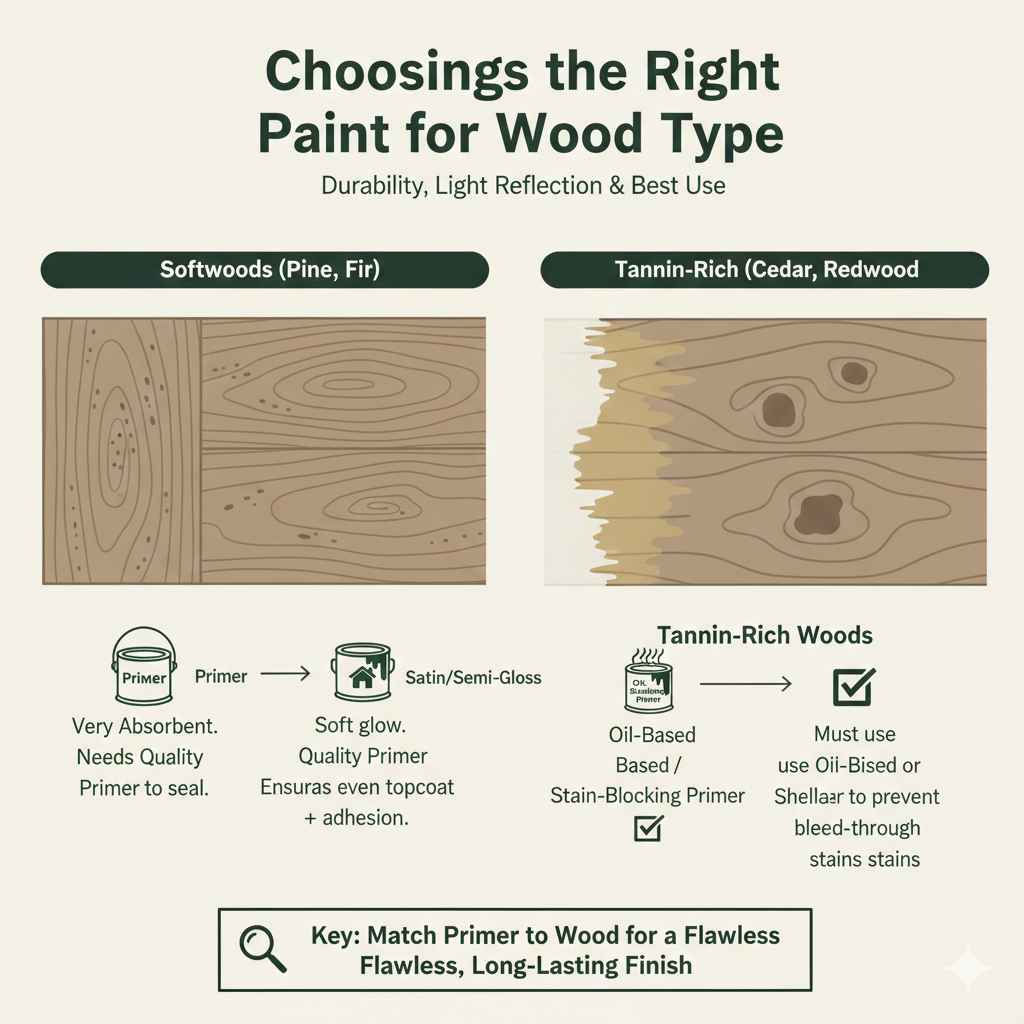
- Softwoods (Pine, Fir): These woods are very absorbent. They desperately need a quality primer to seal the surface before any finish coat goes on. A good primer ensures your satin or semi-gloss topcoat dries evenly and adheres properly.
- Tannin-Rich Woods (Cedar, Redwood): These beautiful woods release natural tannins (oils) that can bleed through light-colored primers and topcoats, causing ugly brown or yellow stains. For these woods, you absolutely must use an oil-based primer or a specialized shellac/stain-blocking latex primer before applying your final exterior finish.
FAQ: Exterior Paint Finishes for Wood
Q1: Can I use interior flat paint on my exterior wood shed?
A: No, you should avoid it. Interior paints lack the crucial mildewcides, UV stabilizers, and extreme flexibility needed to handle temperature swings and harsh sun/rain exposure outside. They will chalk, fade, and peel very quickly.
Q2: What is the absolute easiest finish to paint as a beginner?
A: Satin finish is the most forgiving for large surfaces like siding. Because it hides minor brush strokes and surface prep mistakes better than glossier paints, it builds confidence quickly while still offering decent weather protection.
Q3: Do I have to use a high-gloss finish on my front door?
A: Not at all! While high-gloss is the toughest, many people find it too shiny for a welcoming look. Semi-gloss offers nearly the same protection but with a more modern, softer shine that works perfectly well on front doors.
Q4: How long should I wait between priming and applying the topcoat on a humid day?
A: Always check the can, but generally, latex paints require the surface to be dry to the touch and cured enough not to be tacky. On humid days, water-based paints dry much slower. Instead of the 2–4 hours listed on the can, you might need to wait 6–8 hours or even overnight to ensure the primer is fully dry before applying your protective topcoat finish.
Q5: If my siding is currently a very glossy paint, can I paint satin over it?
A: Yes, but only if you thoroughly sand the existing glossy paint first! If you don’t sand, the new satin paint won’t have anything to grab onto and will likely peel off when the weather changes. A good wash and a dulling of the surface with 100-grit sandpaper is necessary for a successful topcoat application.
Q6: Is exterior paint always sold in these different sheens?
A: Yes, reputable exterior paint lines offer their top formulas in Flat, Satin, and Semi-Gloss options specifically designed for outdoor wood. Always confirm the label specifies “Exterior.”
Conclusion: Choosing Confidence Over Confusion
As we wrap up, remember this simple guide: If you are covering a large, flat area of wood siding, reach for the Satin finish for that perfect blend of easy maintenance and flaw-hiding beauty. If you are tackling trim, doors, or railings that face heavy weather and use, step up to Semi-Gloss for maximum longevity and washability.
The most important takeaway I can give you, friend, is this: your finish choice matters far less than your preparation. Clean that wood down, scrape off all the loose stuff, and apply a premium exterior primer dedicated to sealing bare wood. Do those three things right, and whether you choose Satin or Semi-Gloss, your paint job will look fantastic and last for years to come. You’ve got this!