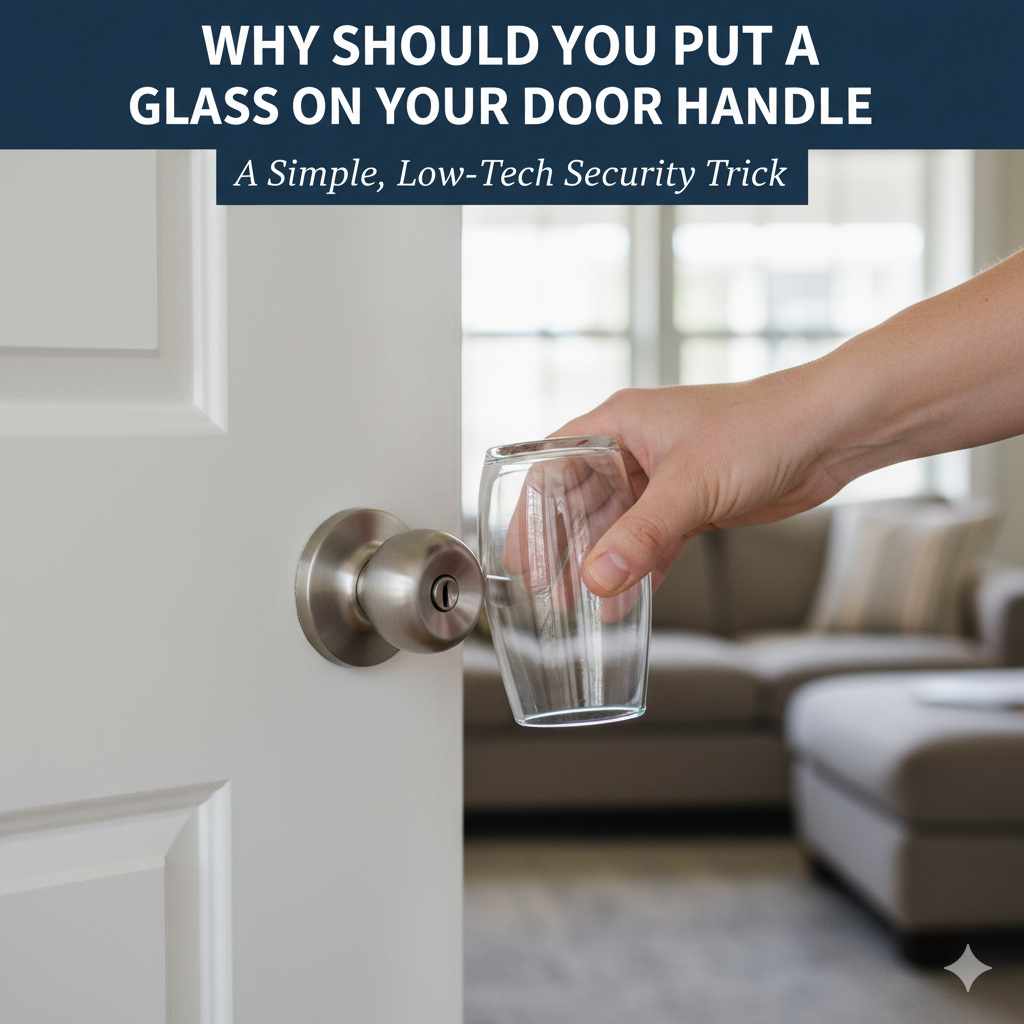
Why Should You Put A Glass On Your Door Handle: Genius Safety
Quick Summary:
Putting a glass on your door handle is a surprisingly simple yet genius safety hack. It acts as a visual and physical deterrent, making it harder for intruders to operate the handle and signaling to potential threats that the home is protected and occupied. This easy DIY tip enhances your home security without breaking the bank.
Welcome, DIY enthusiasts and home improvers! Today, we’re diving into a clever, budget-friendly safety tip that might sound a little unusual at first: placing a glass on your door handle. If you’ve ever worried about home security, especially at night or when you’re away, this simple trick can offer a significant peace of mind. It’s one of those ingenious solutions that leverages common household items to create a more secure environment. We’ll walk through exactly why this works, how to do it effectively, and what benefits it brings to your home’s safety. Get ready to boost your home security with this straightforward, practical method!
The “Glass on the Door Handle” Safety Hack: A Genius Solution
You might be wondering, “A glass? On my door handle? How does that possibly improve security?” It’s a fair question! This method isn’t about making your door impenetrable like a vault, but rather about adding layers of deterrence and early warning. Think of it as a smart, passive security system that uses simple physics and psychology to your advantage. It’s a method that’s been passed down and adapted, proving its effectiveness over time. In a world where we’re constantly looking for ways to make our homes safer, this accessible trick stands out for its simplicity and surprising impact.
Why This Simple Trick Works Wonders
The effectiveness of placing a glass on your door handle boils down to a few key principles of home security:
- Deterrence: A visible obstacle like a glass can make a potential intruder pause. They might assume the door is secured in a way they can’t easily bypass, or that the occupants are more vigilant.
- Noise Alarm: If an intruder attempts to turn the handle, the glass is likely to fall and break, creating a loud noise. This can startle the intruder, alert anyone inside the home, and potentially draw the attention of neighbors.
- Physical Obstacle: While not a lock, the glass can make it slightly more awkward and time-consuming to operate a standard door handle, especially if it’s placed strategically.
- Psychological Impact: The presence of an unexpected item like a glass can signal that the homeowner is security-conscious, making the house appear a less appealing target.
Understanding the Mechanics: How the Glass Acts as a Deterrent
Let’s break down the physics. Most standard door handles require a turning or pushing motion to disengage the latch. When a glass is precariously balanced on the handle, any attempt to turn or push it will likely destabilize the glass. The weight and shape of the glass, combined with the movement of the handle, create an imbalance that leads to the glass falling. The resulting crash is often loud enough to:
- Immediately alert residents inside.
- Potentially scare off an intruder who prefers to operate unseen and unheard.
- Signal to neighbors that something is amiss.
It’s a low-tech alarm system that requires no batteries, no wiring, and no expensive installation. It’s a testament to how simple, everyday objects can be repurposed for significant benefit. For more on home security basics, you can always refer to resources like the U.S. Department of Justice’s Office of Justice Programs, which offers extensive information on crime prevention and home safety.

Setting Up Your Glass Door Handle Alarm: A Step-by-Step Guide
Implementing this safety measure is incredibly straightforward. You don’t need any special tools or skills. Here’s how to do it:
Choosing the Right Glass
Not all glasses are created equal for this purpose. You want something that:
- Has a stable base: A wider, flatter base will be more stable on the handle.
- Is not too heavy: You don’t want something so light that a strong breeze could knock it over, but not so heavy that it might damage the handle or door frame if it falls.
- Is easily breakable (or at least noisy): A thin glass will likely shatter, creating a more significant alarm than a thick, sturdy tumbler.
- Is disposable or inexpensive: You don’t want to use your favorite wine glasses! Old drinking glasses, jam jars, or even sturdy plastic cups can work.
Consider using a glass that you wouldn’t mind breaking. Thrift stores are excellent places to find suitable, inexpensive glasses. For example, a simple, straight-sided tumbler is often a good choice.
Placement is Key
The goal is to place the glass so that any attempt to operate the handle will dislodge it.
- Clean the door handle: Ensure the handle is free of dirt or moisture that could make the glass slip.
- Position the glass: Carefully balance the chosen glass on top of the door handle. For most lever-style handles, placing it directly on the lever itself is effective. For round knobs, you might need to find a slightly different angle, perhaps resting it on the neck of the knob where it meets the door.
- Test stability (gently): Lightly touch the handle to ensure the glass is balanced but will tip with even slight pressure. You want it to be stable enough to stay put under normal conditions but sensitive enough to fall when the handle is operated.
It’s crucial to ensure the glass won’t easily fall off on its own due to vibrations or accidental bumps. The ideal placement creates a precarious balance.
When to Use This Method
This is particularly useful during times when you want an extra layer of security and are more vulnerable:
- At night: When everyone is asleep, a noise alarm can be invaluable.
- When you’re home alone: It provides an audible alert if someone tries to enter.
- When traveling: If you’re concerned about your home while away, this can be a simple deterrent for opportunistic burglars, especially if paired with other security measures.
- On doors with less robust locks: For secondary doors or windows that might not have the strongest locking mechanisms.
Remember, this is an additional security measure, not a replacement for proper locks. Always ensure your doors and windows have sturdy deadbolts and functioning locks.
Pros and Cons of the Glass Door Handle Hack
Like any security measure, this method has its advantages and disadvantages. Understanding them will help you decide if it’s the right fit for your needs.
Advantages
The benefits of this simple hack are numerous:
- Cost-Effective: Uses existing household items, making it virtually free.
- Easy to Implement: Requires no tools, skills, or complex instructions.
- Audible Alert: Creates noise to alert occupants and potentially scare intruders.
- Deterrent: The unusual setup might deter some potential intruders.
- Non-Intrusive: Doesn’t permanently alter your doors or locks.
- Portable: Can be moved to different doors as needed.
Disadvantages
It’s also important to be aware of the limitations:
- False Alarms: Pets, strong vibrations, or even accidental bumps could cause the glass to fall, leading to unnecessary noise.
- Glass Breakage: You’ll need to clean up broken glass if it falls, which can be a hazard.
- Limited Effectiveness: It won’t stop a determined intruder who knows how to bypass simple deterrents or has tools.
- Aesthetics: It might not be the most visually appealing solution for some homeowners.
- Not a Replacement for Locks: It should always be used in conjunction with proper, sturdy locks.
It’s a good idea to weigh these points against your personal security concerns and home environment.
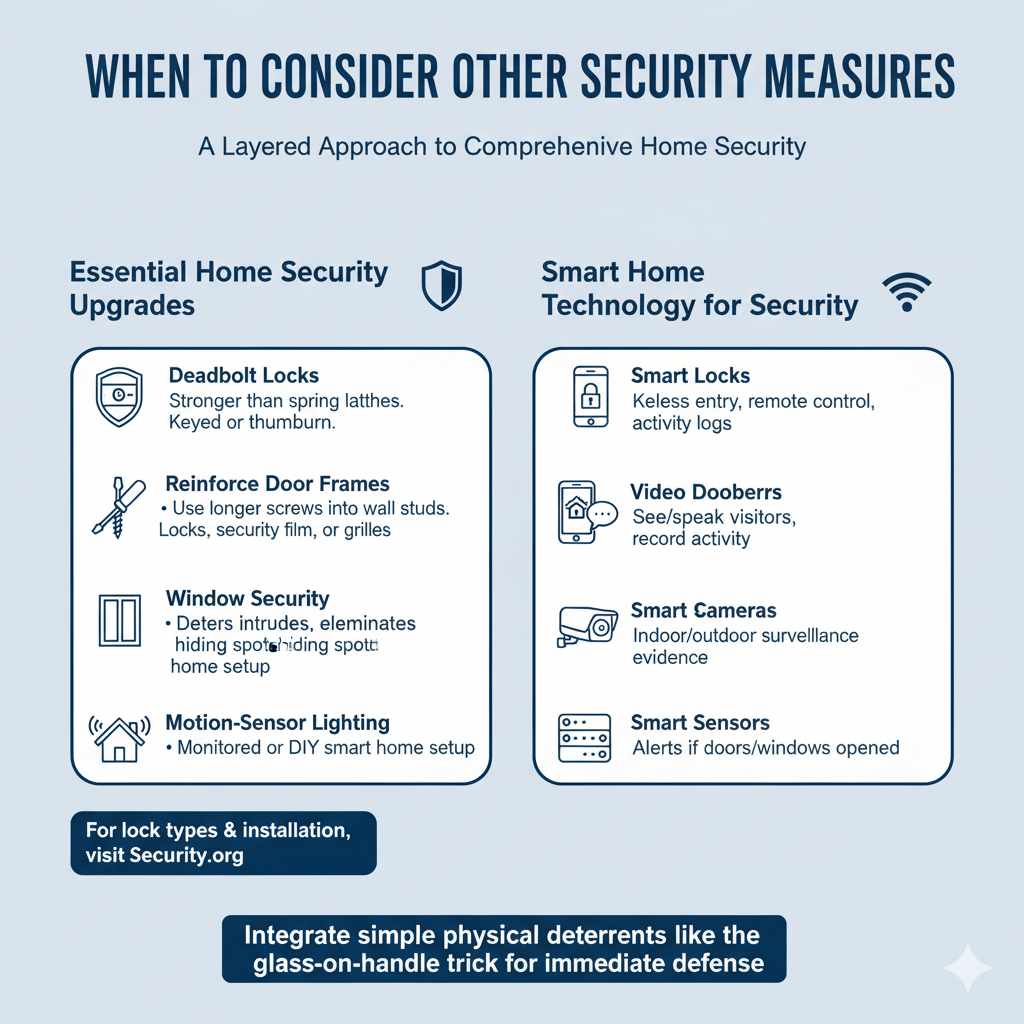
When to Consider Other Security Measures
While the glass on the door handle is a clever trick, it’s essential to recognize its limitations. For comprehensive home security, it should be part of a layered approach. Here are some other crucial security measures to consider:
Essential Home Security Upgrades
These are foundational steps for any homeowner:
- Deadbolt Locks: Ensure all exterior doors have strong, properly installed deadbolt locks. A deadbolt is far more secure than a spring latch alone. For guidance on lock types and installation, resources from organizations like the Security.org can be very informative.
- Reinforce Door Frames: Weak door frames can be kicked in. Reinforcing them with longer screws that go into the wall studs significantly increases resistance.
- Window Security: Don’t forget windows! Window locks, security film, and even decorative grilles can enhance security.
- Motion-Sensor Lighting: Well-placed outdoor lighting can deter intruders by eliminating dark hiding spots.
- Security System: For a higher level of protection, consider a professionally monitored security system or a DIY smart home security setup.
Smart Home Technology for Security
The digital age offers numerous advanced security solutions:
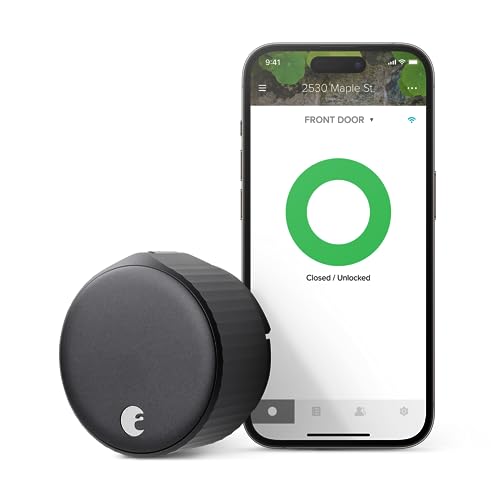
- Smart Locks: Offer keyless entry, remote locking/unlocking, and activity logs.
- Video Doorbells: Allow you to see and speak to visitors remotely and record activity at your doorstep.
- Security Cameras: Indoor and outdoor cameras provide surveillance and evidence if an incident occurs.
- Smart Sensors: Door and window sensors can alert your phone if they are opened.
Integrating these technologies can create a robust security network. However, even with advanced systems, simple physical deterrents like the glass on the handle can offer an immediate, low-tech layer of defense.
Comparing Security Methods: A Quick Overview
To help visualize the different approaches to home security, let’s look at a comparison table. This isn’t to say one is definitively “better,” but rather to highlight their typical characteristics.
| Security Method | Cost (Typical) | Ease of Implementation | Deterrence Level | Alert Type | Maintenance |
|---|---|---|---|---|---|
| Glass on Door Handle | Very Low (Free) | Very Easy | Low to Moderate | Audible (Noise) | Requires cleanup if broken; needs repositioning |
| Standard Deadbolt Lock | Moderate | Easy to Moderate | High | Physical Barrier | Occasional lubrication/check |
| DIY Smart Home Security System | Moderate to High | Moderate | Moderate to High | App Notification, Audible Alarm | App updates, battery changes |
| Professionally Monitored System | High (Installation & Monthly Fees) | Professional Installation | Very High | App Notification, Audible Alarm, Professional Response | System checks, potential service calls |
As you can see, the glass on the door handle occupies a unique niche as an extremely low-cost, easy-to-implement option that provides a basic alert and deterrence. It complements, rather than replaces, more substantial security measures.
Common Questions About the Glass Door Handle Safety Hack
We’ve covered the basics, but you might still have a few questions. Here are some common ones addressed:
What kind of glass is best?
A simple, sturdy drinking glass with a flat base works well. Avoid very thin or delicate glassware, as it might break too easily from minor vibrations. A glass that’s slightly heavier will be more stable but still prone to falling when the handle is turned.
Will this damage my door handle?
Generally, no. If you use a standard drinking glass and place it carefully, it shouldn’t cause damage. The weight of a typical glass is unlikely to harm most metal or sturdy door handles. However, if you have a very delicate or antique handle, it’s wise to test its resilience first or opt for a lighter plastic cup.
What if I have pets?
This is a significant consideration. If you have cats or dogs that might jump on furniture near the door or otherwise disturb the glass, this method might lead to frequent false alarms and a lot of broken glass. In such cases, you might need to reconsider this specific hack or only use it when pets are secured elsewhere.
Can this be used on all types of doors?
It’s most effective on doors with standard lever-style handles or doorknobs where a glass can be balanced. Sliding doors or doors with complex locking mechanisms might not be suitable for this method.
Is this legal?
Yes, this is a perfectly legal, non-malicious method of enhancing your personal home security. It’s a passive deterrent and alert system.
How often should I check or replace the glass?
If the glass is intact and hasn’t fallen, it can be left in place. You should check it periodically to ensure it’s still balanced. If it breaks, clean up the glass immediately and replace it with another suitable option. If you’re concerned about aesthetics or potential breakage, you can simply remove it when not needed.
What are the risks of using a glass?
The primary risks are accidental breakage (leading to cleanup hazards and noise), false alarms, and the fact that it’s not a foolproof security measure. It’s a deterrent and an alert, not a lock.
Conclusion: A Simple Step for Enhanced Peace of Mind
So, there you have it – the surprisingly effective “glass on the door handle” safety hack! It’s a testament to how we can use everyday items to create a safer environment for ourselves and our families. This method offers a low-cost, easy-to-implement way to add an extra layer of security, acting as both a deterrent and an audible alarm.
While it’s not a replacement for robust locks and a comprehensive security strategy, it’s an excellent addition, especially for those times when you want that extra bit of reassurance. Whether you’re home alone, traveling, or simply want to sleep a little sounder, this simple trick can provide significant peace of mind. Remember to choose your glass wisely, place it carefully, and always ensure your primary locks are in good working order. With this clever, DIY approach, you’re taking a proactive step towards a more secure home. Happy (and safe) home improving!