Wood Burning Stove: Catalytic Vs Non-Catalytic Guide
Choosing a wood burning stove can feel a bit tricky, especially when you see terms like “catalytic” and “non-catalytic.” It’s easy to get lost in the details. But don’t worry, this guide is here to help you figure it all out. We’ll break down the Wood Burning Stove: Catalytic vs Non-Catalytic Guide 2026 in a way that’s super easy to grasp.
Get ready for a simple, step-by-step look at what makes these stoves different and which one might be best for you.
Understanding Wood Burning Stove Types
Wood burning stoves are a popular way to heat homes, offering warmth and a cozy atmosphere. At their core, these stoves work by burning wood to produce heat. However, not all wood stoves operate the same way.
The primary distinction lies in how they manage the combustion process and emissions. This leads to two main categories: catalytic and non-catalytic stoves. Each design uses different methods to achieve efficiency and reduce pollution.
The technology behind these stoves aims to make the burning of wood cleaner and more effective. This involves controlling the air supply and managing the temperature inside the firebox. By understanding these basic principles, you can better appreciate the differences between catalytic and non-catalytic models.
This knowledge is key to making an informed decision for your home heating needs.
How Non-Catalytic Wood Stoves Work
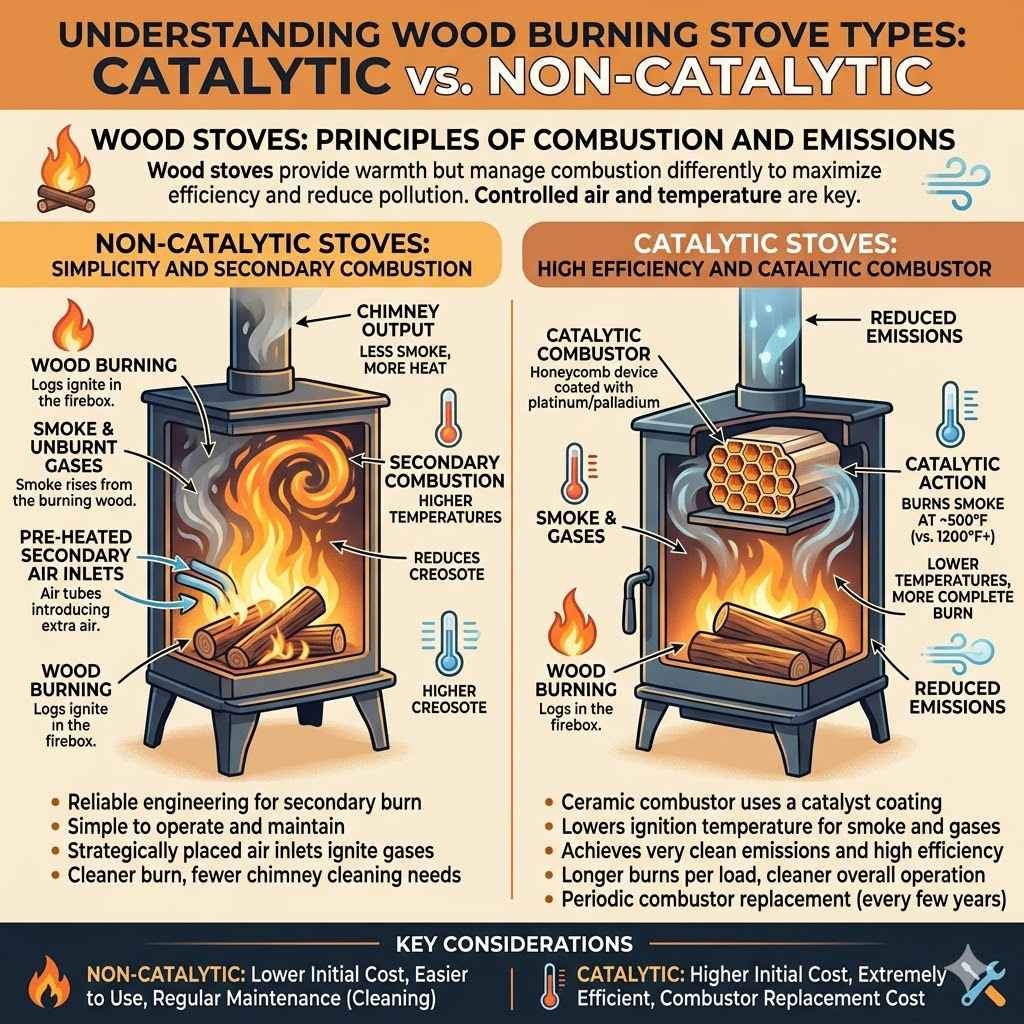
Non-catalytic wood stoves are the simpler of the two designs. They rely on basic physics and engineering to achieve efficient combustion. This type of stove uses a design that encourages secondary combustion.
It does this by introducing pre-heated air into the firebox above the burning logs. This extra air mixes with the smoke and unburnt gases, causing them to ignite and burn at higher temperatures.
The key elements of a non-catalytic stove are its carefully shaped firebox and a set of air inlets. These inlets are strategically placed to deliver secondary air. This process leads to a more complete burn of the wood.
It means less smoke goes up the chimney and more heat is released into your room. They are often seen as more straightforward to operate and maintain compared to their catalytic counterparts.
Secondary Combustion in Non-Catalytic Stoves
Secondary combustion is the star of the show in a non-catalytic stove. When wood burns, it releases gases and smoke. In a basic stove, much of this escapes up the chimney.
A non-catalytic stove is built to capture these gases. It heats them up and mixes them with a fresh supply of air. This mixture is then ignited.
Think of it like a second chance to burn fuel that would otherwise be wasted.
This burning of smoke creates a hotter fire. It also produces less creosote, which is the tar-like substance that can build up in chimneys. Less creosote means fewer chimney fires and less cleaning.
The design of the firebox, often with baffles or heat shields, helps to keep the gases hot enough for this secondary burn to happen effectively.
How Catalytic Wood Stoves Work
Catalytic wood stoves are a bit more complex. They use a special device called a catalytic combustor. This is a ceramic component coated with a rare metal, usually platinum or palladium.
Its job is to lower the temperature at which smoke and gases will burn. This allows for a more complete burn even at lower temperatures.
When smoke and gases pass through the hot catalytic combustor, the coating helps them burn at much lower temperatures than they normally would. This means more heat is extracted from the wood. It also means fewer pollutants are released into the atmosphere.
These stoves are known for their high efficiency and very clean emissions.
The Role of the Catalytic Combustor
The catalytic combustor is the heart of a catalytic stove. It acts like a catalyst in a chemical reaction. It doesn’t get used up, but it speeds up the burning of smoke.
Without the combustor, the smoke would need to be much hotter to burn. With it, the smoke burns at temperatures around 500 degrees Fahrenheit, whereas it would normally need 1200 degrees Fahrenheit or more.
This ability to burn at lower temperatures is what makes catalytic stoves so efficient. They can burn longer on a single load of wood. This also means they produce less smoke and fewer harmful emissions.
The combustor needs to be replaced periodically, typically every few years, as its coating can degrade over time. This is a key maintenance consideration for these stoves.
Comparing Catalytic and Non-Catalytic Stoves
When you look at catalytic versus non-catalytic wood stoves, there are clear differences in how they perform and what they require. Each type has its own strengths and weaknesses. Your choice will depend on what matters most to you, whether it’s ease of use, fuel efficiency, initial cost, or maintenance.
It’s helpful to think about the overall experience of owning and operating each type. Non-catalytic stoves are often praised for their simpler operation. Catalytic stoves are lauded for their ability to extract maximum heat and minimize pollution.
We’ll break down these key differences point by point.
Efficiency and Heat Output
Catalytic stoves generally boast higher efficiency ratings. This is because the catalytic combustor allows for a more complete burn of the wood. It extracts more heat from each log.
This means you can often burn fewer logs to achieve the same amount of warmth. It also means the stove can operate efficiently at lower temperatures, which is great for milder days.
Non-catalytic stoves are also efficient, especially newer models with advanced secondary combustion. However, they typically require hotter firebox temperatures to achieve their peak efficiency. This might mean you need to burn more wood, or larger pieces of wood, to keep the fire going strongly.
Both types can produce a lot of heat, but catalytic models are often considered more fuel-wise.
Emissions and Environmental Impact
Catalytic stoves are designed to significantly reduce emissions. By burning smoke at lower temperatures, they release fewer particulate matter and harmful gases into the air. This makes them a more environmentally friendly option.
Many catalytic stoves meet strict emission standards, like those set by the EPA. This is a major benefit for those concerned about air quality.
Non-catalytic stoves have improved greatly over the years. Modern designs with effective secondary combustion can also produce low emissions. However, generally speaking, catalytic stoves achieve lower emission levels.
This is because the combustor’s action is so effective at burning off pollutants. If minimizing your environmental footprint is a top priority, a catalytic stove might be the better choice.
Operation and User Experience
Operating a non-catalytic stove is often seen as more straightforward. You load the wood, light the fire, and the secondary combustion system takes over as the firebox heats up. It’s a more direct process of building and maintaining a fire.
They can be more forgiving if you’re new to wood burning.
Catalytic stoves require a slightly different approach. You need to get the stove hot enough for the catalytic combustor to engage properly. This usually involves starting with a hotter fire.
Once engaged, the stove can often be operated at a lower burn rate, providing a longer, steadier heat. Some users find the bypass lever, used to start the fire or reload wood without smoke, a bit of an extra step.
Maintenance Requirements
Non-catalytic stoves generally have simpler maintenance. The main task is regular chimney cleaning to prevent creosote buildup. You also need to keep the firebox clean and ensure the air inlets are not blocked.
Catalytic stoves have an additional maintenance item: the catalytic combustor. This component needs to be inspected periodically and eventually replaced, typically every few years. The cost of replacement combustors can add to the ongoing expenses of owning a catalytic stove.
It’s also important to avoid overheating the combustor, which can damage it prematurely. This means following the manufacturer’s instructions carefully.
Cost Considerations
Generally, catalytic wood stoves tend to have a higher upfront purchase price than non-catalytic models. This is due to the more complex design and the inclusion of the specialized catalytic combustor. The cost of replacing the combustor over time also adds to the long-term expense.
Non-catalytic stoves are often more budget-friendly initially. Their simpler construction usually translates to a lower price tag. However, if you burn a lot of wood, the potentially higher fuel consumption compared to a very efficient catalytic stove might balance out the initial savings over many years.
It’s a trade-off between upfront investment and ongoing fuel costs.
Choosing the Right Wood Burning Stove For You
Deciding between a catalytic and non-catalytic wood stove boils down to your personal priorities and how you plan to use the stove. Both types can provide excellent heat and a wonderful ambiance. However, they cater to slightly different needs and preferences.
Consider what aspects of your home heating are most important to you.
Think about your lifestyle, your budget, and your environmental concerns. This will help guide you to the best fit. We’ll explore some scenarios to make this decision clearer.
When to Choose a Catalytic Stove
A catalytic stove is a great choice if your main goals are maximum fuel efficiency and the lowest possible emissions. If you live in an area with strict air quality regulations, a catalytic stove is often required. They are ideal for people who want to get the most heat out of every log and minimize their environmental impact.
These stoves are also good for those who don’t mind a bit more attention to operation. Learning to manage the bypass lever and understanding the combustor’s needs is part of the process. If you’re looking for a high-tech, super-efficient heating solution and are prepared for the associated maintenance, a catalytic stove might be perfect.
- Maximum Efficiency: Catalytic stoves excel at extracting heat from wood, making them very fuel-efficient. This means you use less wood to keep your home warm.
- Lowest Emissions: They produce significantly fewer pollutants, which is better for air quality and often required in certain areas.
- Longer Burn Times: Once the combustor is engaged, these stoves can often maintain a steady heat for extended periods on a single load of wood.
For example, a homeowner in a densely populated area concerned about air quality might opt for a catalytic stove. They find they use 30% less firewood annually compared to their old non-catalytic model. This also reduces the frequency of trips to the woodshed.
When to Choose a Non-Catalytic Stove
A non-catalytic stove is an excellent option for those who prefer simplicity and ease of operation. If you’re new to wood burning or enjoy a more traditional approach to managing a fire, this might be your best bet. They are often more affordable upfront and require less specialized maintenance.
These stoves are also very capable of heating a home effectively. With modern designs, their efficiency and emission levels are impressive. If you don’t have strict emission regulations in your area and value a straightforward user experience, a non-catalytic stove is a fantastic choice.
They are forgiving and provide reliable warmth.
- Simpler Operation: They are generally easier to start and manage, making them user-friendly for beginners.
- Lower Upfront Cost: Non-catalytic stoves typically cost less to purchase initially.
- Less Specialized Maintenance: Maintenance mainly involves standard chimney sweeping, with no costly combustor replacements needed.
Consider a family living in a rural area where wood is readily available. They might choose a non-catalytic stove for its robust and simple design. They appreciate being able to easily control the fire and are comfortable with regular chimney cleaning as their primary maintenance task.
They find it provides ample heat for their larger home.
Catalytic vs. Non-Catalytic Stove Comparison Table
| Feature | Catalytic Stove | Non-Catalytic Stove |
|---|---|---|
| Efficiency | Very High (often 75%+) | High (often 65-75%) |
| Emissions | Very Low | Low (especially modern models) |
| Operation Complexity | Slightly more complex (requires managing combustor) | Simple and straightforward |
| Maintenance | Includes combustor inspection/replacement | Primarily chimney cleaning |
| Upfront Cost | Higher | Lower |
| Fuel Consumption | Lower | Higher (potentially) |
| Combustor Lifespan | 3-7 years (varies) | N/A |
The table above gives a quick overview of the key differences. For instance, a homeowner looking at long-term fuel savings and environmental benefits might lean towards the catalytic stove, accepting the higher initial cost and combustor replacement factor. Conversely, someone focused on immediate affordability and ease of use would likely favor a non-catalytic model.
Understanding Key Terms and Concepts
To make the best decision about your wood burning stove, it helps to understand a few important terms. These words describe how the stoves work and what makes them different. Knowing what they mean will make you feel more confident about your choice.
We’ll go over these concepts so you can easily talk about them and understand the specifications of different stoves. It’s all about making informed choices for your home.
Combustion
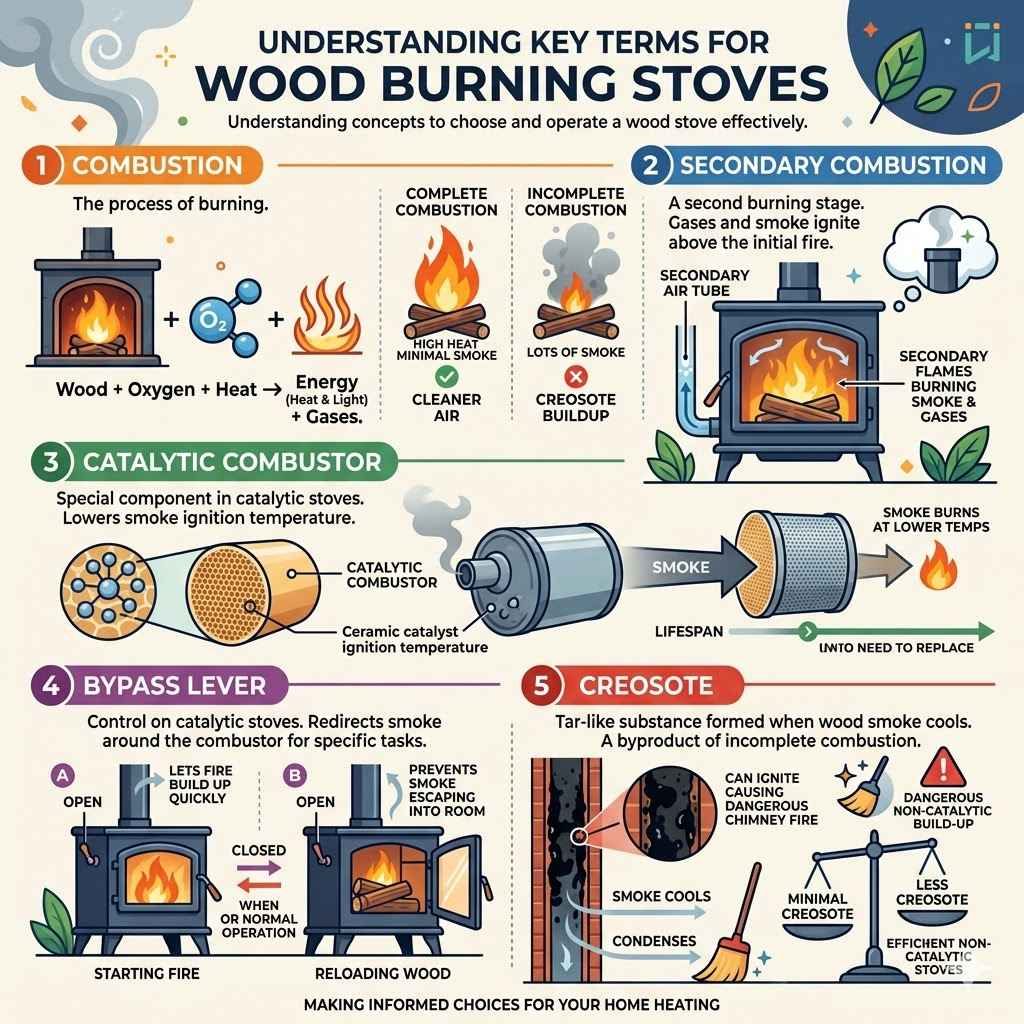
Combustion is simply the process of burning. When wood burns, it reacts with oxygen in the air to produce heat, light, and gases. It’s a chemical reaction that releases energy.
In a wood stove, we want this reaction to be as complete as possible. This means burning all the combustible material in the wood and smoke.
Complete combustion produces more heat and fewer harmful byproducts. Incomplete combustion leaves unburnt fuel in the smoke, which can lead to creosote buildup and pollution. Both catalytic and non-catalytic stoves aim for more complete combustion, but they use different methods to achieve it.
Secondary Combustion
Secondary combustion is a second burning stage that occurs after the initial combustion of the wood. When wood burns, it releases gases and smoke. These gases are still combustible.
In a non-catalytic stove, the design of the firebox allows these gases to mix with pre-heated air and burn.
This process happens above the main wood fire. It burns off smoke and gases that would otherwise go up the chimney. This makes the fire hotter, more efficient, and cleaner.
It’s a key feature of modern wood stoves that improves performance significantly. Some newer non-catalytic stoves have highly effective secondary burn systems.
Catalytic Combustor
A catalytic combustor is a special component found in catalytic wood stoves. It’s a ceramic honeycomb structure coated with a catalyst, like platinum. Its purpose is to lower the ignition temperature of smoke.
It allows smoke and gases to burn at much lower temperatures than they normally would.
This makes the burning process more efficient and cleaner. The combustor needs to be heated to a certain temperature to work. It also has a limited lifespan and needs to be replaced eventually.
Think of it as a filter that burns off impurities at a lower heat.
Bypass Lever
The bypass lever is a control found on most catalytic wood stoves. It allows you to temporarily direct smoke and gases around the catalytic combustor. This is useful for a few reasons.
When you first start the stove, the combustor isn’t hot enough to work, so the bypass lets the fire build up quickly without sending smoke into the room.
It’s also used when you reload the stove. Opening the bypass briefly prevents smoke from escaping into your home when you open the door. Once the new wood is in place and the door is closed, you can close the bypass lever to send the smoke through the combustor to burn it off.
It’s a crucial part of operating a catalytic stove safely and effectively.
Creosote
Creosote is a black, tar-like substance that forms when wood smoke cools and condenses. It’s a byproduct of incomplete combustion. Creosote can build up inside your chimney flue.
If it gets too thick, it can ignite, causing a dangerous chimney fire. Both types of stoves aim to reduce creosote.
Catalytic stoves are very good at reducing creosote because they burn smoke more completely. Non-catalytic stoves, especially those with good secondary combustion, also produce less creosote than older, simpler designs. Regular chimney cleaning is essential for any wood stove to prevent dangerous buildup.
Frequently Asked Questions
Question: Which type of stove is easier to use for a beginner?
Answer: Non-catalytic stoves are generally considered easier for beginners. Their operation is more straightforward, involving simply building a fire and letting the stove do its work. Catalytic stoves require a bit more attention, like managing the bypass lever.
Question: Do catalytic stoves require special wood?
Answer: No, both catalytic and non-catalytic stoves should burn dry, seasoned hardwood for best results. Wet or unseasoned wood will produce more smoke and creosote, regardless of the stove type.
Question: How often does a catalytic combustor need to be replaced?
Answer: The lifespan of a catalytic combustor varies, but they typically need replacement every 3 to 7 years. This depends on how the stove is operated and maintained.
Question: Are catalytic stoves really more efficient?
Answer: Yes, catalytic stoves are generally more efficient. They extract more heat from the wood due to the combustion process facilitated by the catalytic combustor, leading to less fuel consumption.
Question: Can I convert a non-catalytic stove to a catalytic one?
Answer: No, you cannot easily convert a non-catalytic stove to a catalytic one. The designs are fundamentally different, and a catalytic stove requires specific firebox engineering to accommodate the combustor.
Conclusion
Deciding between a catalytic and non-catalytic wood burning stove comes down to your priorities. Catalytic models offer superior efficiency and lower emissions, ideal for eco-conscious users and those in regulated areas. Non-catalytic stoves provide simpler operation and a lower initial cost, making them great for newcomers and those valuing ease.