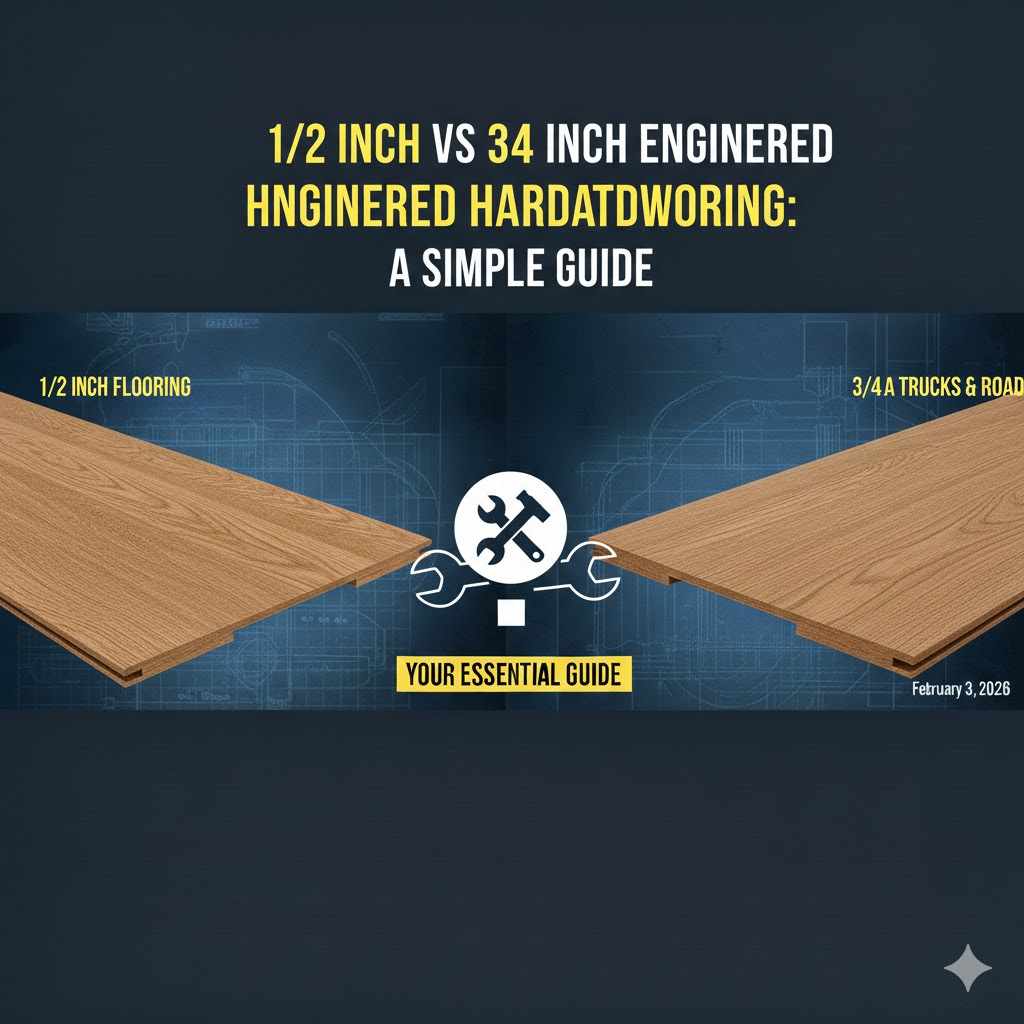
1/2 Inch vs 3/4 Inch Engineered Hardwood Flooring: A Simple Guide
Choosing between 1/2 Inch vs 3/4 Inch Engineered Hardwood Flooring can feel tricky if you’re just starting out. It’s common to get confused by all the numbers and options. This guide aims to clear things up, making your choice much easier. We’ll break down everything you need to know step-by-step, ensuring you feel confident in your decision. Get ready to explore the differences and pick the best flooring for your home!
What Is Engineered Hardwood Flooring?
Engineered hardwood flooring is a fantastic choice for many homes. Unlike solid hardwood, which is made from a single piece of wood, engineered hardwood is constructed with multiple layers. The top layer is a real hardwood veneer, the part you see and walk on. This veneer provides the beautiful look and feel of solid hardwood. The core of engineered flooring is typically made of plywood or high-density fiberboard (HDF). This multi-layer construction gives engineered hardwood several advantages.
One of the main benefits is its stability. Engineered hardwood is less likely to warp, expand, or contract due to changes in temperature and humidity compared to solid hardwood. This makes it a great option for basements, areas with radiant heat, or regions with fluctuating climates. Furthermore, engineered hardwood is often more affordable than solid hardwood, offering a cost-effective way to get the real wood aesthetic. It is also often easier to install, as it can be glued down, floated, or clicked together, depending on the specific product.
Construction Breakdown
Engineered hardwood flooring’s durability stems from its layered construction. The top layer, or wear layer, is crucial for both appearance and longevity. This layer is a thin slice of real hardwood, available in various species, grades, and finishes. It’s what gives your floor its character and determines how well it withstands scratches and wear. The thickness of this wear layer directly impacts the floor’s lifespan; thicker wear layers can be refinished multiple times.
- Wear Layer: The top layer, made of real hardwood, determines the floor’s appearance and durability.
- Core Layer: Typically plywood or HDF, providing stability and support.
- Backing Layer: A balancing layer that helps prevent warping and moisture damage.
Below the wear layer, the core layer provides the structural integrity of the flooring. This core is usually composed of multiple layers of plywood or high-density fiberboard (HDF). The core’s strength and stability are essential for resisting moisture and movement. Finally, the backing layer, often made of a similar material to the core, adds balance and prevents the planks from warping. This multi-layered structure makes engineered hardwood a reliable choice for different environments. This construction also often allows engineered hardwood to be installed over existing subfloors.
Types of Engineered Hardwood
Engineered hardwood comes in several styles, and knowing these options helps narrow your choices. Different types cater to different needs and preferences. You can pick from numerous species of wood, like oak, maple, or walnut, each with its own grain patterns, colors, and durability. The type of wood influences the overall look and feel of your space. Different finishes, such as matte, satin, or gloss, control how light reflects off the floor and affect the floor’s maintenance needs.
- Species: Oak, maple, and walnut are popular choices, each with unique characteristics.
- Finish: Matte, satin, and gloss finishes affect both the look and maintenance requirements.
- Construction: Differences in the core material can influence performance and cost.
- Installation Type: Options like glue-down, floating, or click-lock systems offer different benefits.
The core construction varies, with plywood and HDF being common. Plywood cores provide excellent dimensional stability, while HDF cores can offer enhanced resistance to dents. Additionally, the installation method affects the overall project. Some engineered hardwood planks click together for a floating floor, while others are glued directly to the subfloor. Each choice comes with its own set of advantages and considerations, affecting cost and ease of installation. Choosing the right type of engineered hardwood depends on factors like your budget, the area’s exposure to moisture, and your personal style preferences.
Examining the Thickness Difference in Engineered Flooring
The thickness of engineered hardwood flooring, specifically the difference between 1/2 Inch vs 3/4 Inch Engineered Hardwood Flooring, plays a significant role in its performance, stability, and suitability for various applications. It influences everything from how the floor feels underfoot to how many times it can be refinished. Understanding this distinction is key to making the best choice for your needs. The thickness also affects installation considerations and the potential for long-term maintenance.
Choosing the correct thickness impacts the longevity and aesthetics of your flooring project. The overall thickness of engineered hardwood is a result of the core layers combined with the hardwood wear layer. While the wear layer is important, the total thickness affects the overall performance. A thicker floor generally feels sturdier and can better handle heavier foot traffic. Moreover, the type of subfloor and installation method also influence the optimal thickness for your project. Evaluating these factors beforehand will help guarantee a successful flooring installation that meets your long-term needs and preferences.
1/2 Inch Engineered Hardwood
1/2 inch engineered hardwood flooring often presents an attractive option due to its balance of cost-effectiveness and performance. This thickness is typically more affordable than 3/4 inch options, making it an excellent choice for budget-conscious projects. While it provides good stability and durability, it may not be suitable for all situations. It performs well in most residential settings, offering a solid surface underfoot. It’s also often easier to install, particularly if the existing subfloor is in good condition.
- Cost: Generally more budget-friendly.
- Stability: Adequate for most residential applications.
- Installation: Easier to install over level subfloors.
- Refinishing: May allow for fewer refinishes due to a thinner wear layer.
1/2 inch engineered hardwood may have a thinner wear layer compared to its thicker counterparts, meaning it can be refinished fewer times. The number of times you can refinish your floor directly affects its lifespan. For instance, a thicker wear layer allows for more sanding and refinishing, extending the lifespan. However, in low-traffic areas or spaces where refinishing isn’t a top priority, the 1/2 inch option can be a perfect fit. The installation method also influences the overall project. A level subfloor is crucial for 1/2 inch flooring. This can be more challenging if the subfloor has imperfections, which may require extra preparation to level the surface properly.
3/4 Inch Engineered Hardwood
3/4 inch engineered hardwood flooring is considered a more premium option, offering enhanced durability and a robust feel. It usually costs more than the 1/2 inch option. However, the investment can pay off in terms of longevity and performance. This thickness often features a thicker wear layer, which allows for more refinishing cycles. This extends the life of the flooring and offers greater resistance to wear and tear. Furthermore, the thicker planks generally offer greater stability, reducing the likelihood of movement and unevenness over time.
- Cost: Generally more expensive.
- Durability: Greater resistance to wear and tear.
- Refinishing: More refinishing cycles are possible.
- Feel: Provides a more substantial feel underfoot.
The substantial feel and increased durability make 3/4 inch engineered hardwood ideal for high-traffic areas, such as living rooms, hallways, and commercial spaces. Although the installation might be more complex and the cost higher, the added durability often leads to a greater return on investment. Furthermore, the greater thickness can help conceal minor imperfections in the subfloor. While it provides benefits, it is worth comparing it with the 1/2 inch option. Consider the needs of the space and the long-term budget to ensure you select the best flooring for your project.
Installation Methods and Their Impact
The choice of installation method significantly impacts the overall performance and longevity of both 1/2 Inch vs 3/4 Inch Engineered Hardwood Flooring. Whether you select a glue-down, floating, or nail-down installation will affect the floor’s stability, the feel underfoot, and even the cost of the project. Each method suits different subfloors and applications. Furthermore, the specific installation technique you choose must be compatible with the thickness of the flooring. Understanding these factors will ensure a successful installation.
Different installation methods offer unique benefits and have different requirements. For example, glue-down installations provide excellent stability, particularly in areas with high moisture. Floating floors are often easier to install, making them a great choice for DIY projects. The choice of installation method also impacts the preparation needed for the subfloor. A perfectly level subfloor is often critical for certain methods, so knowing these details will prepare you for the project. Understanding these methods is key to achieving a professional, long-lasting finish.
Glue-Down Installation
Glue-down installation is a method where engineered hardwood planks are adhered directly to the subfloor using a special adhesive. This approach offers significant advantages, including superior stability and reduced noise. It creates a solid bond between the flooring and the subfloor. This bond helps minimize movement, making it a great option for high-traffic areas and regions with significant climate changes. Glue-down installations generally require a well-prepared subfloor to ensure a strong and lasting bond.
- Stability: Provides a solid bond, reducing movement.
- Noise Reduction: Minimizes noise compared to floating installations.
- Subfloor Requirements: Requires a perfectly level subfloor.
- Moisture Resistance: Works well in areas exposed to moisture.
A major benefit of glue-down installations is their suitability for areas with moisture concerns, such as basements or rooms near ground level. The direct bond to the subfloor helps prevent moisture from seeping under the floor, reducing the risk of warping and damage. However, glue-down installations can be more complex and often require professional installation, which adds to the overall cost. Furthermore, removing a glued-down floor can be challenging and sometimes requires specialized tools. The correct adhesive and proper subfloor preparation are crucial for success, ensuring the floor’s long-term performance and durability.
Floating Floor Installation
Floating floor installation involves laying engineered hardwood planks without attaching them to the subfloor. Instead, the planks are connected to each other, forming a “floating” surface that rests on the subfloor. This method is popular due to its ease of installation and suitability for various subfloors. It is especially useful in situations where the subfloor has minor imperfections or if you prefer a less permanent installation. Floating floors often use a click-lock system that makes installation straightforward.
- Ease of Installation: Great for DIY projects, typically easier and faster to install.
- Subfloor Tolerances: More forgiving of minor subfloor imperfections.
- Expansion Gaps: Requires expansion gaps around the perimeter of the room.
- Noise Considerations: May require an underlayment to reduce sound.
A key advantage of floating floors is their adaptability. They can be installed over a variety of subfloors, including concrete, plywood, and existing flooring. They are also less sensitive to minor subfloor imperfections. Additionally, the click-lock system often simplifies installation, making it a great choice for DIY projects. However, floating floors require the use of an underlayment, which can affect the overall cost. Additionally, floating floors must be allowed room to expand and contract with changes in humidity. Expansion gaps are needed around the room’s perimeter to accommodate movement. With careful planning and attention to detail, you can achieve a professional and long-lasting result.
Nail-Down Installation
Nail-down installation is a more traditional method suitable for engineered hardwood flooring that involves attaching the planks directly to a wood subfloor using nails or staples. This technique is often used in new construction or when the existing subfloor is made of wood. The choice of nails or staples, along with the correct angle and spacing, is crucial for securing the flooring properly. Nail-down installations provide a secure and stable floor. It’s important to use the correct fasteners and follow best practices.
- Subfloor Requirement: Requires a wood subfloor for fastening.
- Stability: Provides a secure and durable floor.
- Professional Installation: Often requires professional expertise.
- Limited Application: Not suitable for concrete subfloors.
One of the primary advantages of a nail-down installation is the exceptional stability and the ability to withstand heavy foot traffic. The direct attachment to the subfloor creates a solid and robust flooring system. However, this installation method isn’t suitable for concrete subfloors, which require a different approach. Furthermore, nail-down installations often require professional expertise due to the specific techniques and tools needed. Proper nail spacing, angle, and type of fastener are critical to a successful and long-lasting installation. For areas that can accommodate this method, the final result is a beautiful and reliable hardwood floor.
Choosing the Right Flooring for Your Needs
Picking between 1/2 Inch vs 3/4 Inch Engineered Hardwood Flooring isn’t just about thickness; it’s about matching your flooring choice to your specific needs. Several factors influence the best choice, from the amount of foot traffic to the subfloor type and your budget. Thinking about these aspects before you buy will ensure the final result will meet your expectations and stand the test of time. Considering these elements will help guide you toward the right flooring solution.
The right decision depends on your living space, including considerations like the room’s purpose and the level of use it will receive. For example, a busy hallway needs more robust flooring than a spare bedroom. Budget constraints also play a significant role, as do installation requirements and long-term maintenance needs. Understanding these factors will assist you in making an informed choice, leading to a flooring solution that delivers both aesthetic appeal and long-term functionality. Considering these elements beforehand will help you.
Assessing Traffic and Usage
The level of traffic your flooring will experience is a critical factor when selecting between 1/2 inch and 3/4 inch engineered hardwood. High-traffic areas, like entryways, living rooms, and kitchens, benefit from the added durability that 3/4 inch flooring provides. This thickness can withstand greater wear and tear, and the thicker wear layer provides more opportunities for refinishing. The intended use of the space greatly influences the type of flooring you should choose.
- High-Traffic Areas: Choose 3/4 inch flooring for its durability.
- Low-Traffic Areas: 1/2 inch may suffice, offering a cost-effective solution.
- Refinishing Potential: 3/4 inch allows more refinishing cycles.
- Commercial Spaces: Usually require 3/4 inch for its robustness.
In low-traffic rooms, such as guest bedrooms or home offices, 1/2 inch engineered hardwood can be a good option. It offers a balance between cost and performance without the need for extreme durability. Consider areas that will be exposed to specific conditions. The wear layer’s thickness plays an important role. A thicker wear layer allows for more sanding and refinishing, and this can extend the floor’s life. Understanding the usage and maintenance needs of your space will help you choose the best thickness for lasting performance.
Considering Subfloor Type and Condition
The type and condition of your subfloor significantly influence whether 1/2 inch or 3/4 inch engineered hardwood flooring is the superior choice. A level and stable subfloor is essential for any flooring installation. However, the requirements can vary depending on the thickness of the flooring. Understanding your subfloor’s condition, whether it’s concrete, plywood, or something else, is key to choosing the correct flooring type and installation method. Proper preparation and subfloor assessment are essential.
- Concrete Subfloors: Generally require a glue-down or floating installation.
- Wood Subfloors: Can accommodate nail-down, glue-down, or floating installations.
- Uneven Subfloors: May require leveling before installation.
- Installation Method: Affects the subfloor preparation needed.
If you have a concrete subfloor, you’ll generally need to choose a glue-down or floating installation. These methods work best because they don’t involve nailing or stapling into the concrete. For wood subfloors, you have more options. You can use nail-down, glue-down, or floating installations, which offers flexibility. The subfloor’s condition plays a significant role in your choice. Uneven subfloors need to be leveled before installation. This step is essential for both the appearance and the structural integrity of your flooring. Properly evaluating your subfloor and choosing the correct installation method are key steps to a great-looking and long-lasting hardwood floor.
Budget and Long-Term Value
Budget and long-term value are key considerations when deciding between 1/2 Inch vs 3/4 Inch Engineered Hardwood Flooring. While the upfront cost of 3/4 inch flooring might be higher, it often provides greater durability and longevity. This can result in lower long-term costs. The initial investment has to be weighed against the expected lifespan and maintenance needs. Thinking about these aspects before the final decision can affect the overall cost of ownership.
- Initial Cost: 1/2 inch is generally more affordable upfront.
- Lifespan: 3/4 inch often lasts longer due to its thicker wear layer.
- Maintenance Costs: 1/2 inch might require more frequent refinishing.
- Resale Value: 3/4 inch flooring can sometimes increase property value.
The initial cost of 1/2 inch flooring is generally lower, making it attractive for those on a tight budget. However, its thinner wear layer could mean that you need to refinish it more often. The additional costs involved over time should be considered. 3/4 inch engineered hardwood often provides better long-term value, even if the initial investment is greater. Its increased durability and ability to withstand wear and tear result in a longer lifespan. The flooring you choose also can affect your home’s resale value, and choosing durable flooring can be a good investment. Before making a final decision, evaluate all associated costs, including installation, maintenance, and refinishing, to determine the option that provides the best value.
| Feature | 1/2 Inch Engineered Hardwood | 3/4 Inch Engineered Hardwood |
|---|---|---|
| Cost | Lower | Higher |
| Durability | Good for moderate traffic | Excellent for heavy traffic |
| Wear Layer Thickness | Thinner | Thicker |
| Refinishing Potential | Fewer refinishes possible | More refinishes possible |
| Installation | Easier, more DIY friendly | More complex, often requires professionals |
Frequently Asked Questions
Question: Is 1/2 inch or 3/4 inch engineered hardwood better for a basement?
Answer: 3/4 inch engineered hardwood is often better for basements due to its enhanced durability and the potential for greater resistance to moisture.
Question: Can I install 1/2 inch engineered hardwood over existing tile?
Answer: Yes, you can install 1/2 inch engineered hardwood over existing tile, as long as the subfloor is level and prepared properly with an appropriate underlayment.
Question: How many times can I refinish 3/4 inch engineered hardwood?
Answer: You can often refinish 3/4 inch engineered hardwood multiple times, typically 2-3 times, depending on the thickness of the wear layer.
Question: Is 1/2 inch engineered hardwood suitable for commercial use?
Answer: 1/2 inch engineered hardwood might be okay for light-duty commercial spaces with light foot traffic, but 3/4 inch is usually a better option.
Question: Does the subfloor type affect the installation method?
Answer: Yes, the subfloor type significantly affects the installation method. Concrete subfloors often require a glue-down or floating installation, while wood subfloors can accommodate various methods, including nail-down.
Final Thoughts
Choosing between 1/2 Inch vs 3/4 Inch Engineered Hardwood Flooring comes down to evaluating your specific needs and priorities. The 1/2 inch option offers a cost-effective solution suitable for low-traffic areas and DIY projects, providing a balance of aesthetics and affordability. On the other hand, the 3/4 inch flooring provides superior durability and a more substantial feel, making it the better choice for high-traffic zones and areas where longevity is a primary concern. The ideal choice depends on factors like traffic levels, subfloor type, budget, and desired lifespan. Carefully consider these aspects to pick the option that best fits your needs.
Before making a purchase, explore samples and consider all related costs. By carefully weighing these factors, you can make a choice that will deliver both beauty and function to your space for many years to come. Remember to think about what is most important to you and your home! Now, explore your options and select the ideal engineered hardwood flooring for a stunning finish!