Oak vs Maple Tree: Which Should You Plant in Your Yard?
Oak trees live 200 to 300+ years on deep taproots, while silver maple grows faster but develops shallow roots that can crack foundations within 10 feet of a house. Choosing the wrong species near a structure risks costly repairs later. This guide compares oak and maple leaf shape, root safety, lifespan, and which fits a small versus large yard.
Quick Answer
Oak trees grow slowly but live 200-300+ years on deep, non-invasive taproots, making them safe near structures. Maple trees, especially silver maple, grow faster with brighter fall color, but their shallow, spreading roots can crack foundations, sidewalks, or pipes within about 10 feet of a house.
Oak Tree Characteristics
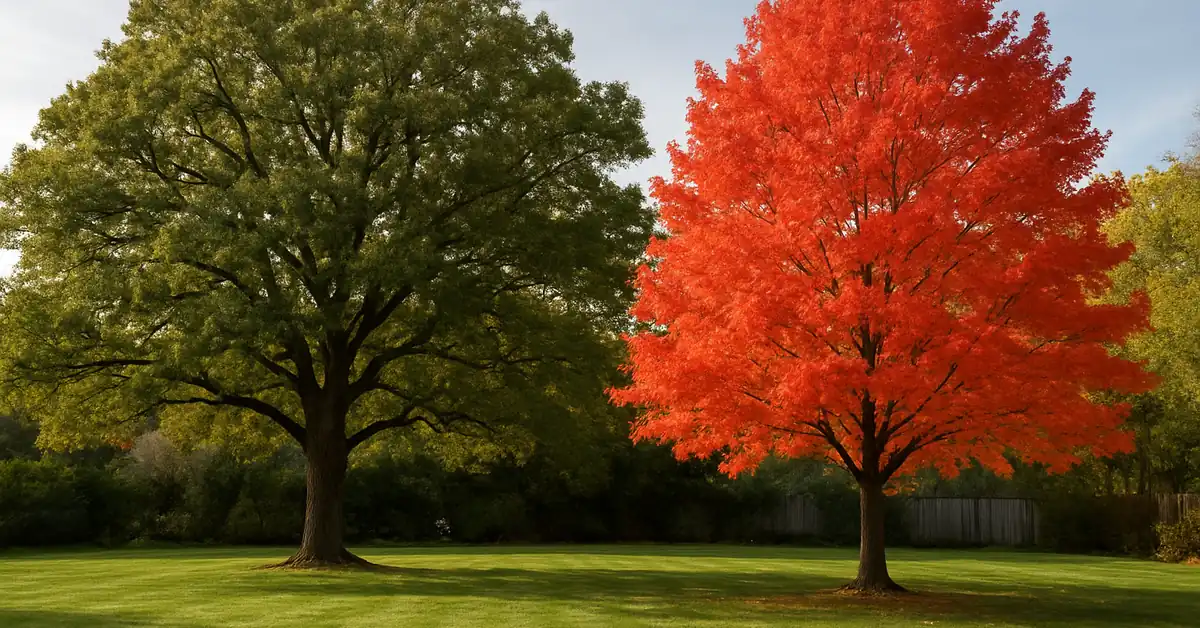
Oak growth speed depends on the species: red oak can add 2 to 3 feet a year, while white oak grows closer to 1 foot a year. Either way, oaks build dense, strong wood and can live for centuries. Their branches spread wide, giving mature trees a broad, rounded shape.
Oak leaves grow in an alternate pattern along the twig — one leaf per node, not paired — with lobed edges that are rounded on white oaks and pointed on red oaks. Leaf color shifts from summer green to brown or red in autumn, and oak leaves often stay on the tree longer into winter than maple leaves do.
| Species | Region |
|---|---|
| White Oak | Eastern United States |
| Red Oak | North America |
| Black Oak | Central and Eastern United States |
Maple Tree Characteristics
Maple trees grow in cooler climates and generally reach maturity faster than oaks. Unlike oak’s alternating leaf pattern, maple leaves and buds grow in opposite pairs directly across from each other on the twig — one of the fastest ways to tell the two trees apart at a glance, even without leaves in winter.
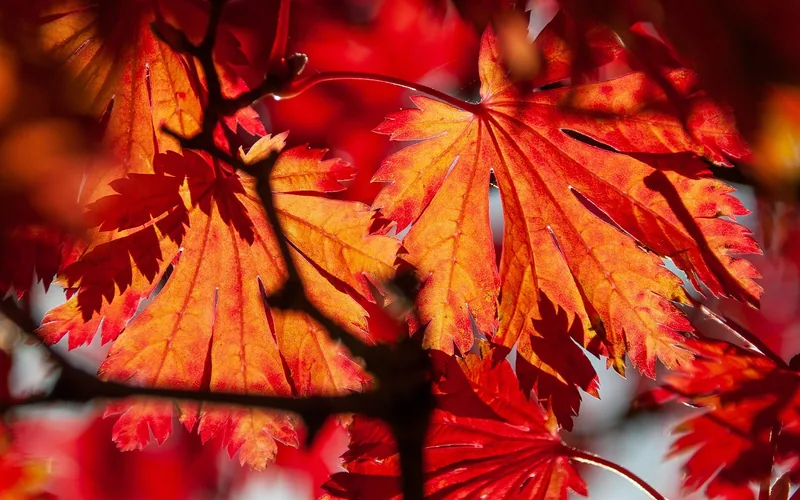
Maple leaves have a five-pointed, hand-like shape and turn bright green in summer before shifting to red, orange, or yellow in fall. Maple fruit is a winged samara (a “helicopter seed”) that spins to the ground, while oak fruit is an acorn — an easy identifier for either tree at any age.
Sugar maple is prized for maple syrup and can live 200 to 300 years in good conditions, though city-planted maples often decline after 80 to 100 years due to soil compaction and heat. Oak and maple wood both machine well once harvested, but as living trees they have very different root behavior — covered next.
Do Oak or Maple Tree Roots Damage House Foundations?
Silver maple and Norway maple develop the most aggressive shallow root systems of the two genera, making them far more likely than oak to crack foundations, sidewalks, and driveways. Oak trees generally send roots deeper into the soil, so mature oaks planted near a home cause fewer structural problems — though no tree should be planted right against a foundation.
As a practical rule, monitor any tree growing within 10 feet of a foundation, and treat one within 5 feet as a genuine concern depending on the species. Less invasive maple options for tight yards include Japanese maple and Amur maple, both of which have far less aggressive root systems than silver maple.
📊 Oak species are cited in roughly 11% of homeowner-reported foundation problems tied to tree roots, while silver maple is repeatedly flagged as one of the most aggressive shallow-rooted species for foundation and sidewalk damage. — Source: Purdue University Forestry & Natural Resources Extension
“White oaks are among the longest-lived trees in North America, with documented specimens surviving 500 to 600 years — far outliving most maples planted in the same yard.”
Best Root Barrier Pick
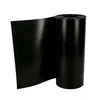
Samunewbee 60Mil HDPE Root Barrier (35 ft) – $99.99
A 24-inch-deep, 60mil-thick HDPE barrier sized to redirect a shallow-rooted maple like silver maple away from a foundation, matching the 10-foot monitoring rule this guide covers.
- Best for: protecting a foundation, walkway, or driveway from an existing shallow-rooted maple
- Why we picked it: 24-inch depth and 60mil thickness match the deep-root blocking this guide’s foundation-safety section recommends
- Main drawback: requires trenching to install correctly, which is real digging work
Compare more root barrier options
 Option 1 DeepRoot Root Barrier (28 Linear Ft) – $275.66
|
 Option 2 Heavy-Duty Root Blocker Roll (50 ft) – $151.99
|
 Option 3 Convivium Root Barrier (17in x 20ft) – $56.99
|
As an Amazon Associate we earn from qualifying purchases.
Climate And Soil Preferences
Oak trees prefer sunny sites with well-drained clay or sandy soil and deep room to spread their roots. They tolerate temperate climates well but struggle in extreme cold or heat. Maple trees prefer cooler climates and moist, well-drained sandy loam, and most maples tolerate more shade than oaks.
Both trees adapt over time, but check your USDA hardiness zone and soil drainage before planting either one — a tree planted in the wrong zone grows slower and is more prone to disease regardless of species.
Maintenance And Care
Prune oak trees in winter, while they’re dormant, to reduce the risk of oak wilt disease spreading through open cuts. Prune maple trees in late summer instead of spring — cutting a maple in early spring causes heavy sap “bleeding” from the cuts.
Inspect both trees for pests and discolored leaves regularly, and remove affected branches promptly. Water young oaks deeply about once a week; young maples typically need water twice a week, especially during dry spells. Fertilize both in early spring with a balanced, slow-release fertilizer — avoid over-fertilizing, which can burn new roots.
Environmental Benefits
Both trees support wildlife: oaks host birds, squirrels, and insects in their bark and canopy, while maples offer food and shelter for deer and birds. Oak trees store carbon for centuries in their dense trunks, while faster-growing maples absorb carbon quickly during their shorter active growth years — both help offset a home’s carbon footprint.
Landscape Design Considerations
Oak trees can reach 60 to 100 feet tall and need a large yard; maples vary widely by species, from container-sized Japanese maples under 10 feet to shade maples around 50 to 70 feet. Choose oak for a big property that needs permanent shade, and a smaller maple species for a compact yard.
Oak’s thick roots make it harder to grow plants directly underneath; maple’s comparatively thinner roots (aside from silver maple’s surface roots, covered above) are friendlier to underplanting. Maples generally shed their leaves faster in fall, so factor leaf cleanup into your choice.
Cost And Availability
Nursery prices vary by size, species, and region — larger, more established trees cost significantly more than young saplings. Oak trees are often priced higher than common maples because of their slower nursery growth cycle, though prices vary a lot by supplier. When buying any ornamental tree, including specialty options like a dwarf weeping cherry, choose a certified nursery and inspect the root ball before buying.
Both trees are a long-term investment: oaks grow slower but add value for decades, while faster-growing maples deliver shade and fall color sooner. Weigh maintenance costs, not just the purchase price, when budgeting for either tree.
Personal Preferences
Oak trees have a strong, sturdy silhouette with deep green, classic leaves and dense shade. Maple trees are more vibrant, with red and orange fall color and a lighter, narrower canopy. Oak is associated with strength and longevity in folklore; maple is best known commercially for sugar maple syrup production. If you also compare their lumber for a furniture or flooring project, see how their wood grain and hardness differ in our wood species comparison guide.
Frequently Asked Questions
How To Tell The Difference Between An Oak And Maple Tree?
Oak trees have lobed leaves with rounded or pointed tips growing in an alternate pattern along the twig. Maple trees feature hand-shaped, pointed lobed leaves growing in opposite pairs. Oak acorns are oval, while maple seeds are V-shaped samaras. Oak bark is rough and grooved; maple bark is smoother with vertical ridges.
What Is Better, Oak Or Maple?
Oak is durable, with a rich grain, perfect for furniture. Maple is lighter, offering smooth finishes for flooring. Choose oak for warmth and elegance, maple for modern and bright spaces. Both are excellent hardwoods; your choice depends on desired aesthetics and usage.
Is Maple Close To Oak?
Maple and oak are different types of trees. They belong to separate botanical families. Maple trees are part of the Sapindaceae family, while oak trees belong to the Fagaceae family. Both trees are valued for their wood but have distinct characteristics and uses.
How To Tell If A Tree Is An Oak Tree?
Identify an oak tree by its lobed leaves with rounded or pointed tips growing in an alternate pattern. Check for acorns, the tree’s fruit. Oak bark is thick and ridged. The tree’s stature is often large and sturdy. Oak trees grow in diverse climates and have distinct wood grain patterns.
Do Maple Tree Roots Damage House Foundations?
Yes, especially silver maple and Norway maple, which grow shallow, wide-spreading roots that can crack sidewalks, driveways, and foundations within about 10 feet of a house. Oak trees generally pose less risk because they grow a deep taproot instead. If planting a maple close to a structure, choose a less invasive species such as Japanese maple or sugar maple.
Conclusion
Choose oak if you have a large yard and want a low-root-risk, centuries-long shade tree; choose maple if you want faster growth, vivid fall color, and don’t mind more careful species selection near paved areas or a foundation. Check your yard size, soil, and hardiness zone before planting either one.
Sponsored / affiliate links. As an Amazon Associate I earn from qualifying purchases. I may earn additional commission from eligible campaigns.